Archive

September 2026

Browsing

Jalen Hurts once again proved why he is the heartbeat of the Philadelphia Eagles, guiding his team through a grueling battle in Nashville to secure a narrow 24-20 victory over the Tennessee Titans. It was a game defined by extreme conditions, as players fought through a heat advisory with turf temperatures soaring well above 100 degrees. Despite tossing two interceptions and facing a late deficit, Hurts remained composed under pressure, orchestrating a masterful final drive that covered 62 yards in eight plays to seal the win.

The climax came with less than two minutes remaining and the Eagles trailing by three. With no timeouts left and a fierce Titans defense led by Jeffery Simmons crashing around him, Hurts leaned on DeVonta Smith to move the chains. Smith was the unsung hero of the afternoon, hauling in 10 catches for 117 yards and providing the critical nineteen yard gain that set up the finale. In the end, it was undrafted free agent Darius Cooper who caught the three yard touchdown pass with just nine seconds on the clock, marking his first career score and cementing an unlikely victory for Philadelphia.

While the result keeps the Eagles at a perfect two zero start, the win came at a significant physical cost. The training room will be busy this week after Saquon Barkley suffered a stinger early in the game and tight end Dallas Goedert departed with a knee injury. Even star defender Jalen Carter struggled with lingering ailments throughout the contest. These injuries highlighted vulnerabilities in an offensive line currently shuffling positions due to losses elsewhere, leaving Philly’s rushing attack stagnant with only 89 total yards on the day.

Despite some inconsistent play from rookie receiver Makai Lemon and questions surrounding new coordinator Sean Mannion’s offensive rhythm, there were bright spots beyond Hurts and Smith. Veteran kicker Jake Elliott showed signs of returning to peak form by nailing a massive fifty eight yard field goal that gave Philadelphia vital breathing room earlier in the match. As Head Coach Nick Sirianni noted after the game, this victory served as a testament to Hurts’ leadership and preparation, proving that his habitual discipline allows him to thrive even when everything else seems to be melting away.

Federal judges in Minnesota tasked with deciding a flood of habeas petitions challenging the detention of immigrants swept up during President Donald Trump’s Operation Metro Surge weren’t working entirely on their own — behind the scenes, they were regularly consulting one another through running email threads and developing tools to quickly handle recurring legal questions.

The behind-the-scenes coordination among Minnesota’s federal bench, revealed in a New York Times report Thursday, included regular meetings, running email threads, an informal spreadsheet created by court clerks showing which judges to turn to with particular legal questions and templates some judges developed to quickly issue orders when similar detention disputes repeatedly came before the court.

The disclosures are fueling questions over whether the judges were colluding on separate cases involving the same Trump administration immigration policies, or simply sharing expertise to manage an extraordinary caseload.

FEDERAL JUDGE TIES ICE AGENTS’ HANDS WITH RULING ON WARRANTLESS SOUTHERN CALIFORNIA ARRESTS

“The idea of a running email chain involving a variety of cases — it strikes me as very weird and frankly unprecedented,” Robert Luther III, a professor at George Mason University’s Antonin Scalia Law School whose work includes federal courts and judicial ethics, told Fox News Digital. Federal judges can and routinely do consult colleagues, Luther said, particularly about procedural or evidentiary questions. But each judge is ultimately responsible for independently deciding the cases assigned to them — a distinction Luther said makes the coordination significant.

The disclosures have also drawn criticism from the Trump administration on two fronts. Department of Homeland Security (DHS) General Counsel James Percival accused the former chief judge who led the district during Metro Surge of “essentially conspiring with his judicial colleagues” to thwart federal immigration enforcement. The Justice Department (DOJ), meanwhile, questioned the decision by sitting judges to give extensive on-the-record interviews about their experience with the administration’s immigration operation.

Seven of the district’s judges spoke to the Times for Thursday’s report, including former Chief Judge Patrick Schiltz, who sat for a 90-minute interview about the court’s experience during Metro Surge. Schiltz declined to discuss ongoing cases, according to the Times, but described what happened in Minnesota’s federal court as having “created a grave threat to the rule of law.”

“It is remarkable that sitting federal judges are giving on-the-record interviews attacking this Administration’s policies rather than ruling from the bench,” a Justice Department spokesperson told Fox News Digital. “If judges followed the law in adjudicating cases, there wouldn’t be an ‘overwhelming’ habeas caseload. Judges who have made public comments on pending or related matters should consider whether recusal is warranted going forward.”

OBAMA, BIDEN JUDGES DRAW FRESH FIRE AS TRUMP’S IMMIGRATION COURT CLASHES HEAT UP: ‘ALMOST IMPOSSIBLE’

But Chief Judge Eric Tostrud, who was himself among the Minnesota judges interviewed by the Times, rejected suggestions that the coordination described in the report compromised individual decision-making. He told Fox News Digital that every member of the bench independently decided the merits of each petition assigned to them, while pointing to an extraordinary surge in litigation — from 12 alien-detainee habeas petitions during all of 2024 to 1,427 through August of this year — and noting that many involved similar or identical, often novel, legal questions.

“The bottom line is that each of us made an independent decision with respect to the merits of each and every petition we were assigned,” Tostrud told Fox News Digital.

Tostrud stressed that the judges did not uniformly reach the same conclusions, saying that while some reached the same result on certain legal questions, they “reached different outcomes regarding other legal questions.” He said the judges’ ability to communicate helped them resolve the cases quickly and thoughtfully, regardless of whether individual petitions were granted.

What exactly the judges were sharing behind the scenes, however, remains unclear. Tostrud declined to disclose the contents of the court’s internal working materials, saying documents created by judges and court staff “are not public.”

TRUMP ADMINISTRATION’S IMMIGRATION PUSH FUELS ICE’S BIGGEST ARREST MONTH IN AGENCY HISTORY

That distinction could be significant, according to Luther, who said administrative templates are commonplace in federal courts, but drew a line between those and templates touching the substance of a case.

“Templates that deal with administrative matters strike me as entirely appropriate and commonplace in federal courts,” Luther said. “Templates for substantive matters — that seems like something altogether different.”

The coordination unfolded amid a broader clash between Minnesota’s federal bench and the Trump administration over Operation Metro Surge. The dispute came as immigration litigation inundated the district. During the first three months of 2026, Minnesota’s federal court received 1,116 habeas petitions, compared with just two during the same period the previous year, according to the Times. Court staff worked 16-hour days, seven days a week, to process the incoming cases.

Patrick Schiltz, who served as the district’s chief judge during Metro Surge before taking senior status — a form of semi-retirement — this summer, emerged as a prominent judicial critic of the administration’s handling of the operation. In a Jan. 28 order, Schiltz accused ICE of violating nearly 100 court orders during that month and warned that “ICE is not a law unto itself.”

OBAMA JUDGE’S PECULIAR TRUMP REBUKE IGNITES FURY OVER ‘UNPROFESSIONAL’ LANGUAGE: ‘EMBARRASSMENT’

The cases cited in Schiltz’s January list of alleged violations have largely concluded, according to the Times, which reported that the administration ultimately corrected the issues flagged by the court in many of them.

DOJ said its review of the cases found that in the “large majority” of them, detainees were released on time and no violation occurred, while in most of the remaining cases the department said it ultimately did what the court ordered despite missing an additional deadline.

MASSACHUSETTS’ HIGHEST COURT PUBLICLY REPRIMANDS JUDGE ACCUSED OF ENABLING IMMIGRANT TO ESCAPE ICE

Federal judicial ethics rules generally prohibit judges from publicly commenting on the merits of pending or impending cases, but permit judges to explain court procedures and engage in broader speaking and teaching about the law, legal system and administration of justice.

The DOJ argued that judges who publicly commented on pending or related matters should consider whether recusal is warranted. The Times reported, however, that Schiltz declined to discuss ongoing cases, while Judge Nancy Brasel, a Trump appointee who also participated in the interviews, defended judges’ ability to speak publicly about judicial independence.

“We are allowed to speak out about judicial independence,” Brasel told the Times. “And so we should, in order to keep it.”

Luther, however, took a different view of the judges’ decision to participate in the interviews.

“Judges should be speaking through their judicial orders, not through their surrogates at The New York Times,” he told Fox News Digital.

Rep. María Elvira Salazar, a Republican who represents a solidly red district in Miami, has broken with the president on immigration as the midterms cycle hits a fever pitch.

“Mr. President, some of your immigration enforcement efforts have gone too far,” Salazar said in a newly released campaign advertisement. “Be careful what your advisors are telling you about immigration policy. The same Hispanics who helped you get to the White House in 2024 feel betrayed today. You can be for immigration what Lincoln was for slavery and Reagan was for communism.

“I’m not talking about giving them amnesty. I’m talking about giving them a dignified life in this promised land.”

THE HISPANIC VOTE IS UP FOR GRABS IN 2026; CANDIDATES WHO IGNORE IT WILL LOSE

A Fox News poll released Wednesday found President Donald Trump’s overall approval rating at 39%, with 61% of registered voters disapproving of his job performance.

Voters disapprove of Trump generally by a margin of 61% to 39%, according to the poll. On immigration, however, only 56% of voters are unhappy with the president’s performance, beating out his handling of the economy and foreign policy.

VOTERS SAY REPUBLICANS OUTDO DEMOCRATS ON THESE KEY ISSUES: FOX NEWS POLL

Salazar’s break with the president on immigration follows a legislative record that has combined tougher enforcement measures with support for legal status reforms.

During her time in Congress, Salazar has supported tougher border enforcement while also backing legislation that would provide legal status to some long-term noncitizens, including through the bipartisan DIGNITY Act.

She also voted for the 2023 Secure the Border Act and the 2025 Laken Riley Act, which expanded immigration enforcement and required the detention of certain undocumented immigrants accused of crimes.

TRUMP ADMIN MARKS 15 STRAIGHT MONTHS WITH ZERO BORDER RELEASES AS APPREHENSIONS PLUNGE 94%

Trump’s hardline stance on immigration, likewise, is nothing new.

The issue defined his initial rise to power during the 2016 presidential election, and he leaned heavily into promises of deportations while on the campaign trail in 2024. Amid the president’s hawkish rhetoric, Hispanics in places such as the Miami metropolitan area and along the Southern border shifted heavily to the right.

Trump has endorsed Salazar’s bid for re-election.

The Salazar campaign did not respond to a request for comment when reached by Fox News Digital on Thursday.

Ashley Biden, the daughter of former President Joe Biden and First Lady Jill Biden, threatened to sue a former Democratic fundraiser for spilling secret internal discussions about her father’s cognitive and political decline in the 2024 presidential election.

Lindy Li, a former Democratic fundraiser who switched her party affiliation over unheeded warning signs about Biden’s decline in the 2024 election, said Ashley Biden posted the threat to Instagram in February of last year.

“They wanted to scare me. That was the goal,” Li told Fox News Digital.

Li’s account of the threat, in her view, was one of the many attempts to intimidate her that she received after deciding to speak out about the fear, disorganization and secrecy that had paved the path for Biden to run for re-election in 2024 despite looming concerns about his age. Also, the fact that those threats never materialized is evidence to Li that even her critics recognize the validity of her testimony.

EX-DEM FUNDRAISER TORCHES BIDEN AS BOOK LAUNCH IMPLODES: ‘NO ONE WANTS TO READ’

Li described the threat from Ashley Biden in her book, “Unburdened.”

“Ashley later threatened to sue me for saying there was a cover-up of her father’s decline, lashing out on Instagram with a bravado so crude it bordered on parody: ‘This woman is a bonavide [sic] liar. Karma is a real bad b—-, Lindy,’” she wrote.

“’I don’t know you but can’t wait to meet your a– in court. Ready for a lawsuit? Let’s go! I won’t put up with this BS anymore.’”

In an interview with Fox News Digital, Li showed screenshots of the post, which she said was taken down just a day later.

She recalled thinking it was odd; beyond the lawsuit threat, Ashley Biden claimed she didn’t know who Li was. But Li had met Ashley Biden on a number of occasions and shared pictures of the two of them with Fox News Digital as proof.

“Doesn’t even pass the smell test,” Li said.

EX-DEM INSIDER DROPS BOMBSHELL ON WHERE HARRIS RANKED IN SECRET POLL FOR BIDEN REPLACEMENTS

As a top fundraiser for both Biden and Harris, Li worked closely with top donors, high-profile members of the party and the Democratic National Committee (DNC). When she decided to go public with revelations about Biden’s age, she said the retaliation began immediately.

“When I went on Shannon’s show to say Biden needs to step aside — and three hours later he did — my access immediately vanished and all my fears about speaking up were justified,” Li told Fox News Digital.

“I knew that if I spoke up my life would be ruined and frankly, in that respect, it was. I was never invited to the White House again, never spoke to Biden again. Prior to that, I was invited to the White House every two to three weeks. There was always some event.”

When Li brought Ashley Biden’s threat to her legal representation, her lawyers dismissed the possibility but said that the Bidens would likely try to avoid a painful disclosure battle that could drag more details into the public eye over his cognitive decline.

EX-DEM INSIDER EXPOSES WHAT HARRIS TOLD TOP DONORS DAYS BEFORE BIDEN DROPPED OUT: ‘INSULTING’

“My lawyer’s eyes lit up: ‘You want her to use you. The discovery would be incredible,’” she recalled. “Truth, after all, remains the strongest shield against defamation.”

“Everything I said was true so… I’m still waiting to hear exactly what I said that is legally actionable,” Li said.

Representation for Ashley Biden did not immediately respond to a request for comment.

For Allen Eden, the owner of Original Saw Co. in Britt, Iowa, the current economic climate feels less like a dip and more like a vice. His business produces industrial power saws, but lately, he has spent more time worrying about the skyrocketing cost of basic components than the machines themselves. One small motor bracket that once cost forty two dollars recently jumped to eighty seven dollars. To protect himself from future spikes and unpredictable shortages, Eden has begun hoarding inventory, a risky move when financing that stock is becoming increasingly expensive. It is an awful situation, he says, reflecting a sentiment shared by thousands of mid sized manufacturers across the country.

American companies are currently trapped in a punishing three way squeeze. Trade tariffs have driven up the price of raw materials like steel and aluminum, while geopolitical instability has sent fuel costs soaring, making it more expensive to manufacture and ship goods. Now, the Federal Reserve’s decision to raise interest rates to combat inflation has added a third layer of pressure. For smaller businesses that rely on short term loans rather than deep cash reserves, these rate hikes translate immediately into higher operating costs, leaving executives with little choice but to pass those expenses on to consumers.

This volatility is creating a stark divide within corporate America. Tech giants and financial institutions with massive cash piles remain largely insulated from these shifts. However, capital intensive industries such as automotive parts and logistics are feeling the heat intensely. In suburban Detroit, Lucerne International was forced to cancel plans for a fifty million dollar forging plant after tariffs tore holes in their global supply chain. Other firms haven’t fared as well; Spanish supplier Grupo Antolin recently filed for bankruptcy protection in the United States, explicitly citing energy costs and trade barriers as catalysts for their collapse.

Even retail titans aren’t entirely immune to the chaos. Executives at Home Depot have noted that any benefits gained from tariff refunds are being completely wiped out by the rising cost of energy and materials. As CEOs across various sectors report raising prices faster than they have in decades, there is a growing sense of uncertainty about where the ceiling actually sits. Until borrowing costs stabilize or supply chains find a new equilibrium, many American manufacturers fear they are simply fighting a losing battle against forces beyond their control.

For decades, Bill Franke built a global aviation empire by mastering the art of the bargain. As the co-founder of Indigo Partners and chairman of Frontier Airlines, Franke became the architect of the ultra-low-cost model, making a fortune by stripping away every possible luxury and charging passengers for everything from carry-on bags to specific seat assignments. In the past, he famously dismissed travelers who expected free amenities as spoiled brats, arguing that those seeking comfort should pay for it rather than expecting the airline to absorb the cost.

However, times are changing, and so is Franke’s philosophy. The 89-year-old industry veteran has revealed that Frontier plans to introduce first-class seats on its Airbus fleet next year and is integrating SpaceX’s Starlink Wi-Fi into its cabins. While he insists these aren’t meant to rival the opulence of high-end international carriers like Singapore Airlines, he admits that providing consumers with an upscale option is now a strategic necessity. This pivot comes as the rigid budget model faces a harsh reality check driven by soaring pilot salaries, rising maintenance costs, and a massive surge in demand for premium travel experiences.

The shift is also a response to how the broader market has evolved. Major players like United and Delta have effectively weaponized Franke’s own playbook, introducing their own bare-bones economy fares while simultaneously expanding their luxury suites. With traditional giants adopting low-cost tactics at the bottom end of the market, budget carriers can no longer rely solely on being the cheapest ticket in town to survive. The collapse of Spirit Airlines earlier this year served as a stark reminder that simply running lean may not be enough to ensure sustainability in a volatile economic climate marked by fluctuating fuel prices and post-pandemic shifts in passenger behavior.

Despite these concessions toward comfort, Franke maintains that price remains the primary driver for many travelers, particularly younger flyers and middle-class families. He views these additions not as an abandonment of his principles but as necessary adjustments to stay competitive within a mature US market. While he believes such luxuries might still be unnecessary in emerging markets like Peru or Hungary, he acknowledges that fighting for survival in America requires a more flexible approach to what happens inside the cabin.

Nansi Lynch spent nearly three decades working as a school bus driver, balancing her mornings and evenings with running a gym she co owns with her son. While she never attended college herself, she wanted to ensure her children had every opportunity to succeed in the workforce. To make that happen, she took out federal parent PLUS loans to fund their degrees. Now 60 years old and eyeing retirement, Lynch finds herself trapped by a staggering 156,000 dollar balance that shows no sign of disappearing.

The financial burden is compounded by an interest rate of over nine percent, one of the highest available for federal loans. Because Lynch relied on income driven repayment plans and periodic deferments during gaps in employment, interest continued to pile up behind the scenes. This created a cycle where the total owed grew far beyond what she originally borrowed. With an annual salary of around 45,000 dollars from her driving job, the weight of six figure debt has become an insurmountable wall between her and the retirement she hoped to enter within five years.

Beyond the monthly payments, the debt has crippled Lynch’s ability to grow her small business. When she applied for a Small Business Administration loan to move her gym to a better location, the request was denied specifically because her debt load was already too high. Despite these hardships, Lynch refuses to let her children help with the payments, noting that they are already struggling with their own bills in a difficult economy. She would rather continue working well into her sixties or seventies than pass the financial burden back onto the very people she sacrificed for.

Looking back, Lynch says she does not regret providing an education for her children but warns others about the dangers of uncapped borrowing. She describes the current system as broken, pointing to recent graduates at her gym who hold expensive degrees yet cannot find stable employment. For Lynch, the lesson is a painful one about the true cost of parental sacrifice in an era of skyrocketing tuition and predatory interest rates that can follow a borrower long after their children have graduated.

For many American workers, hitting sixty feels like entering a precarious dead zone where they are viewed as too old to hire but remain far too young to retire. This gap is often exacerbated by the timing of government benefits, with Social Security typically unavailable until age 62 and Medicare not kicking in until 65. For those caught in the middle, a sudden layoff can trigger a crisis of confidence and financial stability, leaving seasoned professionals wondering why their decades of experience are suddenly seen as a liability rather than an asset.

Cynthia Hennessy experienced this firsthand after being laid off from her corporate law position at age 61 following a company reorganization. Despite twenty five years of service, she found herself struggling against an invisible age ceiling, famously sharing her frustration on social media after being rejected for a job driving the Oscar Mayer Wienermobile because the company preferred recent college graduates. While Hennessy eventually found fulfillment in a lower paying role at the Make A Wish Foundation, her journey highlights the psychological toll of late career unemployment and the feeling that one has become obsolete in the eyes of recruiters.

Other workers have responded to this systemic bias by abandoning the corporate world entirely to reclaim control over their livelihoods. Todd Fannin, who faced a cycle of downsizing and relocations throughout his fifties while working in insurance, reached a breaking point at age 61. Rather than risk another layoff, he and his wife invested three hundred thousand dollars from their retirement savings to open an outdoor living franchise in Georgia. It was a gamble born out of necessity, driven by the desire to build an asset they owned rather than relying on an employer who might see them as expendable due to their age.

Some have managed to turn these professional crises into unexpected second acts through sheer persistence and pivot strategies. Margaret Bowles found herself unemployed as an attorney during the Great Recession at age 60, sending out thousands of resumes without response. Out of desperation, she leaned into her passion for sports photography, transforming a weekend hobby into a full time career shooting for major outlets like the Associated Press and covering NFL games. While these success stories offer hope, they underscore a harsh reality for aging Americans whose skills remain sharp even as their opportunities shrink within traditional employment structures.

For Casey Pruim, running a dairy farm in Abbotsford, British Columbia, is a game of precision and timing. Every two days, 28,000 litres of raw milk leave his property to enter a complex distribution network designed on the belief that there will always be a buyer. However, that stability has vanished following the implementation of a fifty percent tariff by U.S. President Donald Trump on twenty billion dollars worth of Canadian goods. While much of Pruim’s milk stays within Canada, the sudden freeze in American sales has sent ripples through the provincial marketing system, leaving farmers wondering where their surplus will go.

The unique nature of dairy farming makes these trade tensions particularly volatile. Because cows cannot simply be turned off like a faucet, farmers face a harrowing dilemma when processors lose their export markets due to being priced out by tariffs. If the demand drops sharply, producers may be forced to dump fresh milk or take the drastic step of reducing their herds. Dylan Kruger from BC Dairy noted that while it is too early to determine if new international markets can mitigate the losses, the atmosphere remains one of profound uncertainty and instability for family businesses across the province.

This conflict stems from long standing disputes over Canada’s supply management system, which uses production quotas and import controls to stabilize prices for local farmers. Washington has characterized this system as protectionist and unfair to American producers, leading President Trump to claim via social media that Canada has been ripping off the United States for years. Canadian officials strongly reject this narrative, pointing out that despite current tensions, Canada actually runs a significant dairy trade deficit with its southern neighbor and provides substantial tariff free access to U.S. imports under existing agreements.

Economists warn that the immediate shock of losing such a massive market is nearly impossible to absorb quickly because profit margins are thin and alternative buyers do not appear overnight. Bryan Yu of Central 1 credit union suggested that while Canadian consumers might temporarily soak up some extra supply, there will likely be short term pain for many producers navigating these uncharted waters. Meanwhile, Prime Minister Mark Carney has signaled that Canada will not back down, implementing retaliatory tariffs on billions of dollars in U.S. goods as part of an effort to build economic resilience against aggressive foreign trade policies.

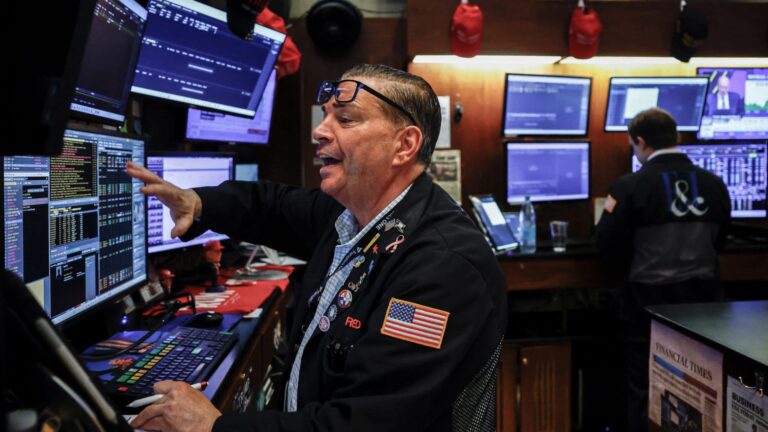
Wall Street has spent the last year cheering a wave of upbeat earnings driven largely by the relentless march of artificial intelligence, but experts warn that this momentum may be hiding some structural weaknesses. According to Ben Snider, the chief US equity strategist at Goldman Sachs, the massive capital expenditure boom in AI has acted as a powerful engine for the S&P 500, accounting for nearly half of its earnings growth this year. However, Snider suggests that this specific tailwind is likely to fade starting next year, regardless of whether companies continue to pour money into AI infrastructure.

The concern is not necessarily that an AI bubble is about to burst in a dramatic crash, but rather that the current pace of growth is unsustainable. A significant portion of the market’s success has relied on semiconductor companies enjoying astronomical profit margins due to skyrocketing demand and limited supply. As supply chains stabilize and potential price corrections hit chips, those margins could shrink, leaving overall index earnings vulnerable. If the cost of hardware drops or investment slows slightly, the very sector that propelled the market forward could become a source of disappointment for investors.

Adding to this fragility is a less visible contributor to Big Tech’s bottom line: gains from private investments. These paper profits have padded earnings reports without generating actual cash flow, creating an illusion of strength that may vanish soon. Snider warns that removing this other income could create a substantial drag on S&P 500 earnings growth by 2027 compared to previous years. While the long term promise of AI remains intact, the immediate financial numbers suggest that the easy wins provided by initial infrastructure spending are coming to an end.