Archive

September 2026

Browsing

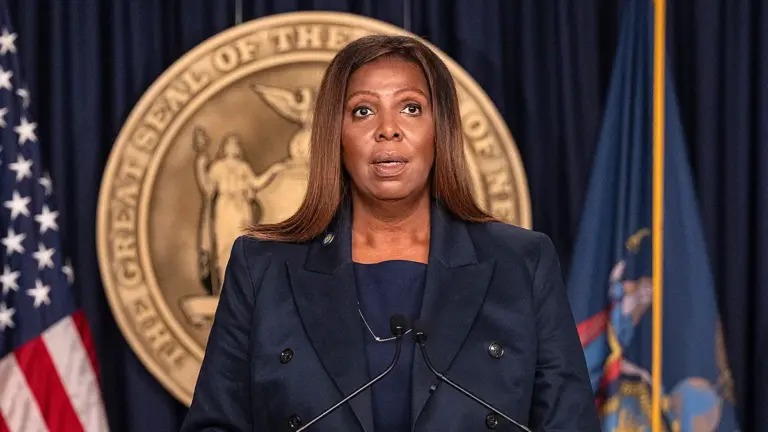
A New York prosecutor accused state Attorney General Letitia James’ office of directing employees to “find and pursue crimes” involving President Donald Trump and entities tied to him, according to a report.

The allegation stems from an email sent by Assistant Attorney General Daniel Wiesenfeld, who works in the Investor Protection Bureau of the New York Office of the Attorney General, which is led by Shamiso Maswoswe, the Times Union reported. The email was allegedly later wiped from the office’s servers, according to the outlet, while James’ office dismissed the matter as a personnel issue and rejected claims that the office was targeting people based on political beliefs.

Wiesenfeld alleged that Maswoswe directed him to target “Trump himself, Truth Social, Hewlett Packard (DOJ approved merger)… without having a credible reason for targeting [these] organizations and individuals,” according to the Times Union.

Maswoswe previously worked as a trial attorney in the Justice Department’s Public Integrity Section from January 2016 until her termination in December 2017, under Trump’s first term. In February 2021, she filed a discrimination lawsuit against the Justice Department, alleging she was unfairly terminated and subjected to discrimination based on her race, pregnancy and caregiving responsibilities.

TRUMP’S LAWYERS PUT DEM AG ON NOTICE FOR TARGETING HIS FAMILY IN NY FRAUD FIGHT: ‘CANNOT STAND’

Wiesenfeld reportedly sent an agency-wide email to colleagues Friday with instructions “to find and pursue crimes committed by specific individuals and organizations affiliated with Donald Trump,” the Times Union reported.

The email reportedly was then allegedly wiped from servers, with a subsequent email sent from James’ general counsel, Kumiki Gibson, informing employees that it was an “internal” matter and no employees were “in danger,” the Times Union reported.

“This is a personnel matter. The Office of the Attorney General is committed to upholding New York’s laws and protecting the rights and freedoms of all New Yorkers, regardless of political beliefs. We strongly reject any assertion to the contrary,” a spokesperson for the Office of the New York Attorney General told Fox News Digital.

The New York Post reported Wiesenfeld was placed on paid administrative leave.

“This is more proof of the weaponization of the justice system by Letitia James to target President Trump and her political opponents. The far-left Democrats lawfare against President Trump, his family, and allies must stop,” White House spokesperson Lauren Bis told Fox News Digital.

Before Maswoswe joined James’ office in February 2022, she filed a discrimination suit against the DOJ.

LETITIA JAMES HAMMERED AFTER NY MEDICAID FRAUD UNIT FUNDING FROZEN OVER INEFFECTIVE ENFORCEMENT

She filed a complaint in February 2021 alleging she was unfairly fired during the Trump administration in 2017 and discriminated against for being Black and having a child.

Maswoswe accused the DOJ of race discrimination due to her Zimbabwean descent and was scrutinized over her pregnancy, breastfeeding and caregiving responsibilities – seeking reinstatement, back pay and damages, according to court docs.

In 2023, the two parties reached a settlement with Maswoswe, awarding her $795,000 to resolve all claims related to her employment and lawsuit. 

DOJ expressly denied that Maswoswe’s claim were true and the agreement says the payment was a compromise of disputed claims – not an admission that discrimination or retaliation occurred.

James has been a longtime critic and legal adversary of Trump, launching a civil fraud lawsuit against him and the Trump Organization in 2022 after campaigning on investigating his business practices.

The case initially resulted in more than $450 million in penalties, though an appeals court later upheld Trump’s liability while voiding the financial penalty.


DETROIT — A propaganda newspaper that once accepted a massive grant from George Soros’ Open Society Foundation falsely described beleaguered leftist Michigan U.S. Senate candidate as a veteran, according to a copy of that paper obtained by Fox News Digital.

“El-Sayed — veteran, doctor, and former health official — is Democratic Senate pick,” reads a headline in the August 2026 edition of The Michigan Independent.

The papers were distributed in Michigan, and photos of the headline made the rounds on social media last week. The breadth of the paper’s circulation is unclear, but Fox News Digital obtained a physical copy in Michigan.

LIZ PEEK: MICHIGAN CAN STOP THE SOCIALIST FEVER RAGE — OR WATCH IT SWALLOW THE SENATE

The purportedly independent paper circulating in Michigan has a Washington, D.C. non-profit’s name and address — The American Independent Foundation at 800 Maine Ave SW — emblazoned in the bottom left corner of the front cover.

As it turns out, the papers aren’t independent at all.

TOP MEDIA OUTLETS FAIL TO DISCLOSE WHO IS BANKROLLING THEIR AI REPORTERS

In 2024, The American Independent Foundation, a 501(c)(3) tax-exempt organization, received a $500,000 grant from George Soros’ Foundation to Promote Open Society, according to that organization’s IRS 990 disclosure form.

Soros, a billionaire businessman, investor and philanthropist, is a renowned leftist mega donor known for his support of progressive and Democratic causes. The Washington Free Beacon first reported the Soros connection.

The content of the Michigan Independent story mentions nothing of El-Sayed being a veteran, nor does it clarify that while El-Sayed holds an M.D., he has never been a physician.

El-Sayed’s campaign forcefully condemned the publication’s classification of the candidate.

“Abdul has never claimed to be a veteran, he never would out of his respect for those who served, and any outlet or group writing about our campaign should do their homework and not allow this to happen again,” spokesman Cole Wozniak told Fox News Digital.

The American Independent did not return Fox News Digital’s request for comment.

JONATHAN TURLEY: FAKE POLLSTER’S STUNT WAS A RECKLESS GAME WITH REAL RACES

Twelve other state-based newspapers are part of the network Soros helped fund, including papers in key swing states like Ohio, Pennsylvania, Wisconsin, Virginia and others that have become increasingly important in the 2026 midterms due to competitive U.S. Senate races, including Maine and Alaska.

Some of the outlets share the same featured stories. At the time of this writing, both The Ohio Independent and The Pennsylvania Independent feature a story titled “Report: Trump and Big Oil see financial windfall as Americans pay more at pump”.

SOROS NETWORK REBUILDS PROGRESSIVE PROSECUTOR PUSH AFTER STRING OF ELECTION LOSSES

An associated 501(c)(4) political activism organization, American Independent Media, is also affiliated with the network of news outlets. Each state-based website says it is a project of American Independent Media whose mission is “to use journalism to educate the public, giving them the information they need about local and federal issues.”

David Brock, founder of the far-left media watchdog Media Matters and a high-profile Democratic operative, is also connected to the shadowy network of papers.

He is the founder of the 501(c)(3) American Bridge, also a titan in left-wing politics. American Bridge’s 501(c)(4) arm, the AB Foundation, donated $23.5 million to American Independent Media in 2024.

DEM SENATE HOPEFUL’S ‘PHYSICIAN’ CAMPAIGN PITCH UNDER FIRE AFTER LICENSE RECORDS REVEAL KEY GAPS

The story about El-Sayed was penned by Alyssa Burr, whose LinkedIn page says she’s the Michigan Politics Reporter at The American Independent.

She previously worked at MLive Media Group, which publishes prominent state newspaper Michigan Live, and before that, the New York Times.

President Donald Trump revived speculation over regime change in Iran Tuesday night, openly asking when Iranians would “rise up and fight” as his administration intensified military and economic pressure on a government US officials say is increasingly vulnerable.

“I’m not trying to force Iran to the bargaining table,” Trump wrote on Truth Social Tuesday. “I like our position now much better, with almost total control of the Hormuz Strait, and their economy totally collapsing.”

“They are just playing out the inevitable,” Trump added. “When are the Iranian people going to rise up and fight?”

IRAN REGIME CHANGE TALK RESURFACES AS TRUMP SAYS TEHRAN ‘WANTS TO MEET’ AMID US STRIKES

Trump sharpened those remarks later Wednesday when Fox News’ Peter Doocy asked whether he would send the CIA to arm Iranians if he wants them to “rise up and fight.” 

“I’d love to tell you that, but it wouldn’t be appropriate to say,” Trump responded from the Oval Office.

Trump said he understood why Iranians have not risen in larger numbers, arguing that protesters face deadly repression from the government. 

“Most people can’t kill their own people like that. Most people try and reason when they talk. And then there might be an overthrow. In Iran, they kill people. … They shoot them right between the eyes. They have two forms: machine guns and snipers. … They like the snipers better because all they do is have a crowd of 200,000 people, and a person goes down here right between the eyes, and they’ll have three snipers doing it. And, it’s a horrible thing to watch,” he said. 

“So that’s why it’s not happening,” the president added, “And who can blame them? Who can blame them? But the regime is getting weaker by the day… And at some point, they’re not going to be able to shoot so easily because I think the people aren’t going to take it,” Trump said. “But I did pose that question because, you know, it would be time.”

COULD IRAN’S REGIME COLLAPSE? EXPERTS ASSESS BESSENT’S BID TO SEVER FINANCIAL LIFELINES

Treasury Secretary Scott Bessent described Iran as being in a “death spiral” during remarks Monday, arguing that economic pressure was rapidly narrowing the government’s options.

“They are panicked. They are resorting to kinetic because they are getting squeezed economically,” Bessent told Ed Lawrence on Fox Business.

Bessent said Iran could eventually face one of three outcomes: “Either the IRGC are going to turn on each other, the people are going to turn on them, or they are going to come to the table and want to do a deal that they can stick with.”

“They are in the death throes,” he added, comparing Iran’s deterioration to bankruptcy occurring “slowly, then quickly.”

Miad Maleki, a senior fellow at the Foundation for Defense of Democracies and former Treasury sanctions official, told Fox News Digital that Washington does not need to choose between invading Iran to overthrow the government and striking another agreement with Tehran.

“It’s very clear U.S. government is not in the business of regime change anymore,” Maleki said. “And I think it’s very clear that we’re not going to have boots on the ground to invade Iran. And I don’t think we need that.”

INSIDE TEHRAN: IRANIANS DESCRIBE IRGC’S BRUTAL RULE, POVERTY — ASK TRUMP TO ‘STAY THE COURSE’

Instead, Maleki argued Washington should “contain this regime, cut off its economic lifelines, empower the Iranian people” and prepare for another wave of demonstrations inside Iran.

“We need to be prepared to support the Iranian people in a way that they can be empowered and take the government back,” he said, stressing the importance of ensuring protesters maintain access to the internet so they can communicate, mobilize and make their voices heard.

Maleki described Iran’s leadership as the weakest it has been since the 1979 Islamic Revolution and argued that further Iranian military escalation could deepen its vulnerability rather than restore lost leverage.

The debate comes as reports of localized economic protests continue to emerge from inside Iran.

TRUMP SAYS IRAN IS ‘DEAD’ — EXPERTS POINT TO THE REAL SIGN TEHRAN IS NEARING THE BRINK

The National Council of Resistance of Iran, an exiled Iranian opposition coalition, said Tuesday that workers, retirees, drivers and job-seeking young people demonstrated in several cities on Aug. 31. The group alleged security forces opened fire on job seekers in Gachsaran and Ahvaz and reported separate demonstrations over unpaid wages, inflation, fuel shortages and working conditions. Those specific claims have not been independently verified by Fox News Digital.

Iran analyst Benny Sabti also told Fox News Digital that deteriorating living conditions could become a catalyst for broader unrest. “People are hungry,” Sabti said, predicting Iranians would “take the streets again.”

“Hunger is humiliating,” he said, arguing that economic desperation could eventually outweigh fear of the government’s security apparatus.

The political stakes are rising alongside a dramatic military escalation. US forces carried out another wave of strikes Tuesday against Iranian air-defense systems, radar installations, maritime assets and mine-laying capabilities, according to US Central Command, while Iran retaliated with missile and drone attacks against US assets across the region.

For Trump, however, Tuesday night’s post suggested the question may no longer be only whether economic pressure brings Tehran back to negotiations — but what happens inside Iran if it does not.

Former state Sen. Troy Jackson, who has replaced Graham Platner as the Democratic Senate nominee in Maine, backed bills seeking to send millions of dollars in public funds to a college while his son lobbied on its behalf, documents show.

Jackson’s son, Chace, was registered as a lobbyist for the Maine Maritime Academy at the same time his father was serving as president of the Maine Senate, according to state lobbying records. 

In 2024, the elder Jackson co-sponsored legislation that would have sent $13.4 million to the maritime academy after pushing a bill providing the institution with an additional $2 million per year in 2023. Both pieces of legislation were drafted while Jackson’s son was lobbying for the college.

“Troy Jackson authored Augusta’s failed status quo and has turned public office into a family affair of self-enrichment,” National Republican Senatorial Committee press secretary Bernadette Breslin told Fox News Digital. “He’ll always prioritize personal kickbacks over the needs of working Mainers.”

5 THINGS TO KNOW ABOUT GRAHAM PLATNER ALLY POISED TO TAKE ON SUSAN COLLINS

Before his son was lobbying on its behalf, Jackson also supported legislation in early 2022 that provided the academy with a one-time $6.8 million payment to fund repairs to one of its buildings.

Jackson’s son first registered as a lobbyist for the Maine Maritime Academy in December 2022, according to public records. He renewed his lobbying registration in January 2024, just as his father was co-sponsoring legislation that would have sent over $10 million to the academy.

While the Maine Maritime Academy funding boost Jackson backed in 2023 went into effect, his 2024 bill passed the Maine Senate but was never signed into law.

“Troy Jackson has fought for working Mainers and [is] guided by one goal: fixing our broken system, so Maine’s working families stop getting squeezed while the rich get richer,” a spokesperson for the Jackson campaign told The Washington Free Beacon, which first reported on the lobbying records.

LIKELY PLATNER REPLACEMENT’S RESURFACED POSTS ON ‘DEMOCRACY’ COME BACK TO BITE HIM: ‘HYPOCRITICAL SOCIALIST’

In April, Jackson justified his failed run for governor by claiming that the “status quo isn’t working” in Maine because of “special interests, high-priced lobbyists and corporate greed.” In addition to representing the Maine Maritime Academy, Chace Jackson works as one of the expensive lobbyists his father has criticized, at one point representing the multinational alcohol company behind premium beverages such as Johnnie Walker whiskey and Don Julio tequila.

In 2024, while his father was the Maine Senate president, the younger Jackson represented nine clients. That sum dropped to five clients after his father left the chamber in 2025.

AFTER PLATNER IMPLOSION, MAINE DEMOCRATS RUSH TOWARD NEW SENATE NOMINEE DESPITE FRESH WARNING SIGNS

A bill targeting an oil and gas giant died in the Maine Senate during Jackson’s Maine Senate tenure and while his son was lobbying on behalf of the fossil fuel corporation in question.

The former state senator is facing off against incumbent GOP Sen. Susan Collins in November. Jackson replaced Platner as the Democrat on the ballot after his campaign was hit with a series of controversies, ranging from crude deleted Reddit posts to a Nazi-linked tattoo, which culminated in an allegation of rape, prompting the self-identified oyster farmer to drop out of the race.

Jackson, his son and the Maine Maritime Academy did not respond to requests for comment when reached by Fox News Digital on Wednesday.

Americans remain starkly divided on whether President Donald Trump should be allowed to build a ballroom on the site of the White House’s East Wing, according to people who spoke with Fox News Digital last week.

Trump has called the ballroom an improvement and a necessity for the White House, arguing it would help avoid another near-death experience for himself, the press and dignitaries after a gunman charged into the Washington Hilton during the White House Correspondents’ Association Dinner in May.

“No, definitely not,” Frank of Kansas City, Missouri, said of the ballroom project’s necessity.

WHITE HOUSE CORRESPONDENTS’ DINNER SHOOTING SHARPENS FOCUS ON TRUMP’S BALLROOM CONSTRUCTION PROPOSAL

“Tearing down the East Wing without all proper authorizations was improper. The way the money is being raised is improper, so I’m ‘no’ to all of it.”

Frank appeared to allude to the litigation the administration is fighting to keep its project afloat.

APPEALS COURT LETS TRUMP RESUME WHITE HOUSE BALLROOM CONSTRUCTION, SEEKS LOWER COURT CLARITY

Danisha from Washington, however, said she approved of the new project in her hometown.

She professed to be an ardent supporter of Trump’s and said he deserves to have a ballroom.

“I think the White House definitely should use the ballroom to be beautiful and nice. Because, I think that the president should be able to have fun and invite people to the ballroom,” she said.

Sherry and Bill from Knoxville sided with the president on the project:

Bill called the U.S. the “greatest country in the world” and therefore a ballroom for the president is a great idea.

TRUMP’S WHITE HOUSE BALLROOM CONSTRUCTION GETS ANOTHER LIFELINE FROM SCOTUS AMID HEATED LEGAL FIGHT

SIGN UP TO GET THE POLITICS NEWSLETTER

“It’s brilliant,” Sherry added. “We need it.”

“Who cares who’s in the administration, Democrat or Republican? They’re gonna use the ballroom,” Bill said. Sherry noted the ballroom is privately funded, suggesting that aspect should assuage tax-sensitive critics.

Meanwhile, Chuck from Washington called the ballroom a “horrible idea” in the present and in the future.

“There’s so much more we have to tackle. And building a ballroom should not be a priority one or a priority two,” he said.

As of Monday, the Supreme Court allowed construction to proceed as litigation makes its way through the appeals process, with plaintiffs seeking relief from the high court if it chooses to hear the full case, according to reports.

This post appeared first on https://www.foxnews.com

Greg Abel, the chief executive officer of Berkshire Hathaway, recently opened up about his firm’s aggressive push into Alphabet, describing the Google parent company as a significant player in the rapidly evolving landscape of artificial intelligence. Speaking with CNBC’s Becky Quick, Abel explained that Berkshire’s decision to increase its holdings was driven by direct observations of how AI is impacting various businesses throughout their vast portfolio. This internal visibility gave leadership confidence in Google’s strategic positioning as the industry pivots toward generative technology.

The relationship began in earnest fifteen months ago when Berkshire secured an initial ten billion dollar stake at a six point five percent discount. According to Abel, he and legendary investor Warren Buffett carefully weighed the scale of the investment against that specific discount before finalizing the deal. The commitment didn’t stop there, as recent SEC filings reveal that Berkshire added another seventeen billion dollars worth of Alphabet shares during the second quarter alone. These moves have propelled Alphabet to become the third largest holding in Berkshire’s equity portfolio, with total ownership reaching approximately one hundred and six million shares valued at thirty six point six billion dollars.

This heavy betting comes at a time when Alphabet is locked in a high stakes arms race known as the hyperscale era. Along with rivals like Microsoft, Meta, Amazon and Oracle, Google is pouring immense amounts of capital into expanding computing power to support complex AI workloads. While analysts from Goldman Sachs estimate global spending among these giants could reach staggering heights by 2026, some market skeptics wonder exactly when these multi billion dollar investments will yield tangible returns for shareholders.

While Alphabet remains the crown jewel of Berkshire’s most recent acquisitions, it wasn’t the only area where Abel and Buffett saw value this past quarter. The conglomerate also made a substantial move back into travel by increasing its position in Delta Air Lines by forty four percent, adding roughly one point six billion dollars to that stake. Together, these shifts suggest a balanced strategy from Berkshire that pairs long term bets on futuristic infrastructure with steady plays in traditional American industry.

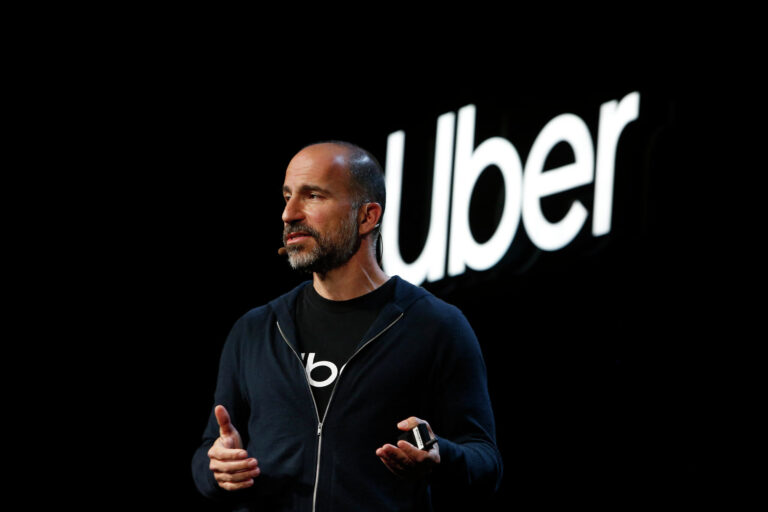
Uber is preparing to slash roughly 3,300 positions, marking a significant shift in its corporate strategy and the largest wave of layoffs the company has seen since the height of the pandemic. This reduction represents about 10 percent of its global staff, a move that CEO Dara Khosrowshahi says is necessary to strip away unnecessary layers of management and simplify an organization that became overly complex during years of explosive growth. By streamlining its internal structure, the ride hailing giant aims to redirect capital toward innovation and high stakes investments in autonomous vehicle technology.

Alongside these job cuts, Uber is tightening its grip on where and how its remaining employees work. In a clear pivot away from flexible arrangements, the company intends to concentrate its global teams within major hubs like San Francisco and New York. Most current remote workers will be asked to relocate near an office, with only about one percent of the total workforce permitted to remain fully remote. For everyone else, the existing hybrid model remains in place, requiring staff to be physically present in the office at least three days a week.

The restructuring involves more than just headcount reductions; it includes a complete overhaul of several departments. Uber plans to merge its core services engineering and science teams while unifying its various delivery arms across restaurant and retail sectors under one roof. These changes are intended to resolve what Khosrowshahi described as fragmented ownership and excessive coordination hurdles that have slowed down the company’s agility as it tries to scale further.

This aggressive lean towards efficiency comes at a critical time as Uber battles increasing pressure from robotaxi competitors like Waymo and Tesla. With plans to pour over 10 billion dollars into autonomous vehicle partnerships in the coming years, Uber appears determined to secure its future in a driverless market even if it means sacrificing thousands of traditional corporate roles today. While these cuts hit salaried employees hard, they do not affect the millions of drivers and couriers who operate as independent contractors on the platform.

In a significant victory for the tech giant, a US court has ruled that Google will not be forced to sell off its advertising exchange despite losing an antitrust case. This decision marks the end of a tumultuous period of legal battles for the company, leaving it largely intact even after facing multiple challenges to its business model. While some legal debates may continue regarding specific advertising remedies, the threat of a forced breakup has effectively vanished.

This ruling follows two other major antitrust setbacks that could have been far more damaging. Last year, Google avoided having to divest the Chrome browser following a Department of Justice case centered on search dominance. Although the company was ordered to share certain search data with rivals and cease forcing partners to bundle Google apps on mobile devices, avoiding the loss of Chrome is being viewed as a strategic win given the browser’s massive global footprint.

Google also faced a costly fight with Epic Games over its control of the Android ecosystem and the Play Store. While that case resulted in mandated changes such as lowering store fees and allowing third party payment platforms, those adjustments are limited to the United States and do not strip Google of its overall oversight of app vetting. Of all three recent legal hurdles, the Epic Games dispute likely caused the most immediate disruption to how Google operates day to day.

Ultimately, after years of exhaustive hearings and appeals, Google emerges with its core market power almost entirely preserved. By surviving these attempts to dismantle its infrastructure, the company is now positioned to pivot its focus toward establishing similar dominance in the field of artificial intelligence without the looming shadow of corporate dissolution hanging over its head.

Broadcom shares tumbled five percent in extended trading on Wednesday, proving that even a strong financial performance can be overshadowed by a cautious outlook. Despite beating analyst expectations for both revenue and earnings per share, investors reacted sharply to the company’s guidance for the coming quarter. While the firm reported an impressive quarterly revenue of nearly thirty billion dollars, its forecast of thirty four point eight billion dollars fell just short of the figures Wall Street was anticipating.

The numbers themselves told a story of explosive growth over the past year. Broadcom saw its revenue jump eighty six percent compared to the previous year, while net income more than tripled to reach thirteen billion dollars. This surge has largely been driven by the ongoing artificial intelligence gold rush, with Broadcom positioning itself as a critical partner for tech giants like Google, Meta, and OpenAI through the design of custom chips. These partnerships helped propel the company’s market capitalization to approximately one point eight trillion dollars following a massive rally that began late in 2022.

Despite these long term gains, Broadcom has struggled to keep pace with broader market trends throughout 2026. While the S&P 500 climbed twelve percent this year, Broadcom shares managed only a modest six percent increase prior to Wednesday’s dip. Recent highlights included progress on its specialized Jalapeno chip created for OpenAI and expanded spending commitments from Apple regarding domestic chip production, yet these wins weren’t enough to offset concerns about future momentum.

A closer look at the segments reveals a mixed bag of results within the business. Semiconductor revenue soared well beyond estimates, reaching sixteen point seven billion dollars, but infrastructure software slightly underperformed relative to what analysts had predicted. Investors now look toward upcoming executive calls for further clarity on whether this slight miss in guidance represents a temporary plateau or a shift in the trajectory of AI hardware demand.

Tim Cook may have officially stepped down as the chief executive officer of Apple, but he isn’t exactly stepping away from the company’s deep pockets. After fifteen years at the helm, Cook has transitioned into the role of executive chair, handing the daily operations over to John Ternus. While his base salary is dipping slightly from three million dollars to two million, the bulk of his wealth continues to flow through massive equity awards. According to recent regulatory filings, Cook is eyeing a target equity value of forty five million dollars for fiscal 2027, ensuring that his transition out of the top spot remains a highly lucrative one.

The arrangement mirrors a strategy famously employed by Warren Buffett at Berkshire Hathaway, where retirees maintain significant influence and compensation as advisors to their successors. For Apple, paying Cook a CEO sized paycheck reflects both his legacy and his ongoing utility. During his tenure, Cook transformed Apple into a global powerhouse by optimizing supply chains and expanding aggressively into China. Shareholders have reaped enormous rewards, with the split adjusted stock price skyrocketing from roughly thirteen dollars to over three hundred dollars by the time he vacated the office. Even Buffett noted that Cook’s management of Apple provided far more value to Berkshire than many of Buffett’s own investments combined.

Beyond the balance sheets, Cook brings a level of diplomatic experience that cannot be easily replaced. Throughout his career, he navigated complex geopolitical tensions and maintained critical relationships with both the Chinese government and U.S political leaders like Donald Trump. These high stakes connections provide a safety net for John Ternus as he takes over a company facing modern headwinds. With Apple currently struggling to refine its artificial intelligence strategy and combat a drain of top talent, keeping Cook closely integrated into the leadership structure seems like a prudent insurance policy for the board.

Meanwhile, newcomer John Ternus enters the role with a competitive pay package of his own, featuring a three million dollar salary and fifty five million dollars in targeted restricted stock units. Most of Ternus’s incentives are tied directly to how Apple performs compared to other S&P 500 companies, putting immediate pressure on him to maintain the momentum established by his predecessor. By splitting these roles between an experienced strategist and a fresh operator, Apple is betting that it can evolve without losing the stability that defined its most profitable era.