
Archive

September 2026

Browsing

Salesforce shares surged more than 22 percent in a single week ending August 28, leaving the broader S&P 500 and other enterprise software peers in the dust. Usually, a rally of this magnitude suggests a dramatic shift in financial forecasts, but a closer look at the numbers reveals something different. While management did nudge the fiscal 2027 revenue guidance upward by roughly 300 million dollars, two thirds of that increase depends on acquisitions that haven’t even closed yet. The actual organic growth remains modest, suggesting that the sudden spike in stock price wasn’t driven by new money, but by a change in investor psychology.

For months, a cloud of anxiety hung over the company as critics wondered if generative AI would eventually render traditional CRM software obsolete. The recent rally indicates that investors have largely abandoned that fear. Instead of seeing AI as a threat, the market is now viewing it as a potential goldmine. Much of this optimism centers on Agentforce, which has already seen a massive surge in customer adoption and generated 1.5 billion dollars in annual recurring revenue. With thousands of new paying customers entering production and high profile contracts expanding into millions of monthly conversations, Salesforce is proving it can integrate AI into its existing ecosystem rather than be replaced by it.

The real catalyst for future growth lies in how these AI tools translate into higher bills for clients. A new product developed with Anthropic is set for wide release in September, requiring users to upgrade to premium editions at a significant price markup. Currently, only about five percent of eligible knowledge workers have made this leap. Wall Street has essentially repriced the stock because it sees a massive installed base standing before a toll gate they have barely begun to walk through. If that conversion rate climbs after the official launch, the company could see genuine organic growth that doesn’t rely on buying other firms to pad its numbers.

Despite the excitement, there are reminders that volatility often follows such rapid recoveries. Free cash flow jumped significantly year over year to 1.1 billion dollars, and the company continues to aggressively buy back shares using debt issuance to fuel the process. However, since the stock is now trading near its 52 week high again, the easy gains from removing fear are likely gone. For Salesforce to maintain this momentum and achieve a true business re rating, it must prove that its AI strategy can drive sustainable revenue increases independently of corporate acquisitions_

International investment in mainland Chinese stocks saw a dramatic spike during the second quarter of the year, with global fund managers significantly increasing their footprint in yuan traded equities. Data from Wind Information reveals that these investors held roughly 10.1 billion shares by the end of June, a notable climb from the 7.5 billion recorded at the close of the first quarter. When accounting for rising stock prices, the total value of these holdings jumped by eighty seven percent to reach approximately 272.8 billion yuan, or about forty billion dollars.

This particular surge was tracked specifically through the Qualified Foreign Institutional Investor program, which operates under a system of regulatory licenses and quotas. This pathway remains distinct from the more flexible Stock Connect bridge that allows traders to enter onshore markets via Hong Kong without needing direct government approval. Because QFII positions require formal reporting, they have become an essential barometer for those trying to gauge international sentiment toward Chinese assets.

For domestic retail investors in China, these movements are viewed as much more than just numbers on a spreadsheet. Local traders frequently treat foreign institutional capital as smart money, closely monitoring disclosed positions to inform their own trading strategies. In recent years, following the decision by the Shanghai and Shenzhen exchanges to stop disclosing specific flow data for Stock Connect, tracking QFII activity has become one of the few remaining ways for local market participants to see how global funds are recalibrating their portfolios within China.

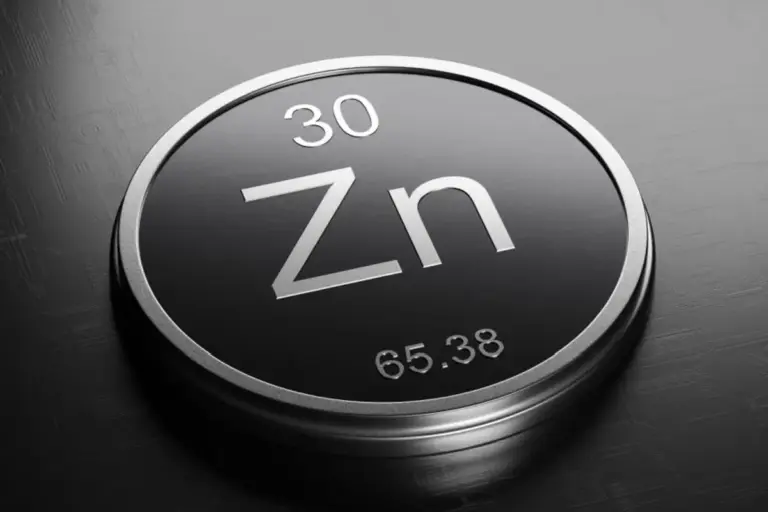
Zinc prices have surged to their highest level in four years, closing at 4,107 dollars per ton on the London Metal Exchange. This dramatic climb represents a 55 percent rally from the troughs seen in mid 2025, driven largely by a severe collapse in Western stockpiles. Inventories in LME warehouses have plummeted by more than 60 percent since late 2024, creating a physical squeeze that has left available metal at levels not seen since early 2023. While supplies remain healthier in China, the disparity between East and West has pushed import premiums to heights not witnessed since 2022.

The shortage is being compounded by declining output from industry giants such as Glencore and Teck Resources, who are grappling with aging assets and lower ore grades. These supply constraints have created a structural deficit that defied earlier predictions of a global surplus. Smelters in the West are feeling the pinch even further as scarce concentrates drive treatment charges to historic lows, adding pressure to facilities already burdened by soaring energy costs. Experts suggest that meaningful relief may only arrive once major new projects, such as Ivanhoe Mines’ Kipushi operation in the Democratic Republic of Congo, begin delivering significant volumes.

Interestingly, while the physical market struggles with scarcity, mining companies are finding themselves more profitable than ever for reasons beyond the price of zinc itself. Most zinc deposits are polymetallic, meaning they contain other valuable minerals like silver and lead. As prices for these by products skyrocket, they provide substantial credits that offset the cost of extracting zinc. In some cases, these credits are so lucrative that they effectively erase the operational expenses of the mine entirely.

This shift toward credit driven economics means that overall sustaining costs for primary mines are projected to drop significantly through 2026. Rather than improvements in mining efficiency or technology driving this trend, it is simply the windfall from precious metals making these operations highly competitive regardless of base metal volatility. Consequently, major producers exposed to this pricing environment have seen significant equity gains throughout the start of 2026 as investors bet on this unique combination of tight supply and bolstered margins.

The Securities and Exchange Commission is shifting its strategy toward the cryptocurrency market, moving away from a reliance on lawsuits and toward a structured compliance model. This new formal rule proposal arrives at a critical moment, effectively filling a regulatory void left by the stalling of the Clarity Act in Congress. For many blockchain startups, this represents a significant pivot that provides a clear legal pathway to raise capital under specific disclosure requirements, allowing them to grow until they reach a state of true decentralization where central management no longer drives the project’s value.

By establishing these guidelines, the SEC is offering entrepreneurs a way to build their businesses without the constant threat of immediate and expensive enforcement actions. While some technical hurdles regarding open ledger mechanics and asset custody have yet to be fully resolved, the framework creates a predictable environment for fundraising. It essentially trades the freedom of operating in total anonymity for the security of legal legitimacy, requiring more transparency from founders in exchange for reduced litigation risk.

Industry analysts like Ashley Ebersole suggest that the commission likely held back on these rules while waiting for Congress to pass comprehensive legislation first. Because laws are far more durable than agency regulations—which can be overturned relatively easily by a subsequent administration—the SEC preferred legislative certainty over administrative rulemaking. However, as it became clear that political momentum for the Clarity Act was fading throughout the year, the regulator decided it could no longer afford to wait.

The current situation leaves the industry at a crossroads between two different types of oversight. If Congress fails to act soon, these SEC rules will transition from being a temporary stopgap to becoming the primary roadmap for how digital assets are regulated in the United States. Whether this administrative approach will provide enough long term stability remains to be seen, but for now, crypto projects have a tangible set of rules to follow instead of guessing where the boundaries lie.

Global energy markets were thrown into turmoil on Monday morning as crude oil prices surged past the 90 dollar mark following a direct military clash between the United States and Iran. Brent crude futures climbed over two percent to reach 90.49 dollars a barrel, while West Texas Intermediate followed suit with a jump to 85.46 dollars. The price spike comes after a tense weekend in the Strait of Hormuz, where US forces carried out targeted strikes against the Islamic Revolutionary Guard Corps on Larak Island. While CENTCOM described the mission as a limited action intended to neutralize an immediate threat to shipping lanes, the move sparked an immediate and aggressive response from Tehran.

Iran retaliated by launching ballistic missiles and drones toward US military facilities in Jordan, leading the Jordanian Armed Forces to report several interceptions within their airspace. As tensions flared, political rhetoric intensified further when President Donald Trump shared an AI generated video suggesting attacks on Kharg Island, though Iranian officials have since denied such claims and insisted that oil production continues uninterrupted. This cycle of escalation has sent shockwaves through the industry, threatening a delicate recovery in Gulf energy exports that had recently begun to climb back toward previous levels.

The volatility is most evident in the actual movement of tankers through one of the world’s most critical maritime chokepoints. Vessel traffic through the strait plummeted to just five ships per day over the weekend, compounded by reports from UK Maritime Trade Operations regarding a projectile striking a passing tanker. Simultaneously, the US military has tightened its grip on Iranian ports, reporting that dozens of commercial vessels have been redirected or boarded as part of an ongoing blockade designed to pressure Iran back to the negotiating table.

Facing these disruptions and a Strategic Petroleum Reserve that has hit its lowest level in forty years, Washington is pivoting toward alternative sources of energy. To stabilize domestic supplies and hedge against future shocks in the Middle East, the US government is aggressively pursuing Venezuelan crude through a new bilateral agreement. Under this deal, a new entity controlled largely by the United States will secure century long rights to extract oil from untapped Venezuelan fields, marking a significant strategic shift in how America intends to safeguard its energy security amid growing geopolitical instability.

India is moving closer to securing a significant long term uranium supply deal with Uzbekistan, marking a pivotal step in New Delhi’s broader ambition to expand its nuclear energy footprint. During a recent state visit to Tashkent, Prime Minister Narendra Modi and President Shavkat Mirziyoyev elevated their bilateral ties to a Comprehensive Strategic Partnership. This diplomatic upgrade sets the stage for a new agreement that would extend a previous 2019 contract, ensuring a steady flow of natural uranium concentrate to fuel India’s civilian nuclear reactors.

The push for stable fuel sources is driven by India’s aggressive goal to scale its total nuclear generating capacity to 100 gigawatts by 2047. While current parliamentary records indicate that India has already received 600 metric tons of uranium under existing arrangements, the new negotiations aim to provide longer term certainty. These efforts are part of a wider global procurement strategy that includes recently finalized deals with Canada and Australia, reflecting India’s urgency to diversify its supply chain and avoid reliance on any single source for critical energy materials.

Beyond the realm of atomic energy, the two nations are looking to drastically increase their economic interdependence. They have set an ambitious trade target of 5 billion dollars by 2030, representing a massive jump from last year’s turnover of 1.3 billion dollars. To achieve this growth, both governments intend to establish a dedicated working group focused on removing non tariff barriers and exploring the possibility of a preferential trade agreement.

The partnership extends into several other strategic sectors including defense manufacturing and multimodal transport routes designed to better connect South Asia with Central Asia. By signing memorandums on mining and geological resources, India is also positioning itself to secure other critical minerals essential for modern technology. According to Prime Minister Modi, this strengthened bond serves as more than just an economic arrangement, acting instead as a catalyst for peace and prosperity across the region.

Copper prices are flirting with historic highs as global inventories plummet and geopolitical tensions create a perfect storm for the red metal. Recent data from the London Metal Exchange shows a dramatic drawdown in warehouse stocks, which crashed to around 107,050 metric tons by late August from over 166,000 just a week prior. A similar trend has emerged in China, where Shanghai Futures Exchange stocks dropped nearly 20 percent. Interestingly, the United States is seeing the exact opposite trend, with inventories hitting record levels as traders scramble to import refined copper before a looming 15 percent tariff takes effect on January 1, 2027.

This frantic stockpiling in the U.S. comes amid broader instability across the global supply chain. Major mining operations are struggling to return to full capacity following a series of disasters. In Chile, Codelco has paused expansions at its El Teniente operation due to seismic risks following a fatal mine collapse last year. Meanwhile, heavyweights like Freeport McMoRan’s Grasberg mine and Ivanhoe Mines’ Kamoa Kakula project are still recovering from previous incidents and may not hit full output until 2027. Further complicating matters is a recent furnace failure at the Gresik smelter, which has knocked more available copper off the market for several weeks.

Adding fuel to the fire is the escalating conflict between the U.S. and Iran, now entering its seventh month. The closure of the Strait of Hormuz has constrained supplies of sulfuric acid essential for production while sending oil prices volatilely upward. Because copper production is energy intensive, analysts note that every jump in oil prices directly inflates operational costs for miners. With Brent crude climbing past 91 dollars a barrel recently, there is growing concern that these overhead costs will push copper contracts toward new all time highs on both the Comex and LME exchanges.

Democratic Senate nominee Abdul El-Sayed is facing a wave of online blowback after dodging questions about his ties to far-left streamer Hasan Piker, a frequent presence on the campaign trail in Michigan.

When asked about Piker’s influence on his campaign, El-Sayed told reporters the race is about Michigan and that he is “not interested in a conversation about a social media person in California.”

“But I don’t want to have a conversation about a Twitch streamer in California,” El-Sayed said. “This is not a serious conversation.”

Fox News Digital then pressed El-Sayed on why he brought Piker to Michigan if that was the case, which he waved off before doubling down and calling Piker “a single streamer from California” when another reporter asked if he would condemn him.

ABDUL EL-SAYED PLAYS DOWN HASAN PIKER TIES AFTER STREAMER’S VIRAL ANTISEMITISM FIRESTORM

The clip exploded across social media and drew widespread ridicule as El-Sayed scrambles to distance himself from the streamer, who has roughly 10 million social media followers.

In a post on X, writer and political commentator Stephen L. Miller wrote, “Amazing. They are so terrified of him that she literally jumps in one question deep.”

“Who is the candidate here?” Miller wrote in another post.

“This keeps getting worse,” Republican political strategist Kyle Martinsen posted on X.

“I’m interested in it so there’s a problem here,” Townhall senior columnist Kurt Schlichter posted on X.

In another post on X, “The Charlie Kirk Show” executive producer Andrew Kolvet wrote, “It’s very clear Abul El Sayed is panicking. He went from doing a half dozen campaign stops with Hasan Piker and taking glamor shots with him, to refusing to say his name. Now he’s just ‘some media person in California.’ What a pal.”

HASAN PIKER INSISTS ABDUL EL-SAYED ASKED HIM TO ‘STUMP’ FOR MICHIGAN CAMPAIGN AMID BACKLASH

“He might be worse than Kamala…,” Fox News contributor Joe Concha posted on X.

Pro-Israel activist and philanthropist Adam Milstein also wrote in a post on X, “El Sayed again refuses to condemn Hasan Piker — who himself recently confirmed it was El Sayed that asked him to campaign for him, not the reverse.”

Piker has emerged as a growing flashpoint within the Democratic Party over his past controversial remarks, including his claim that “America deserved 9/11.”

Last week, El-Sayed responded to outrage over his association with Piker after the streamer’s comments on a viral audio clip involving Jewish Michigan state Sen. Jeremy Moss, the Democratic nominee in the state’s 11th Congressional District, sparked outrage.

“I want to be crystal clear, nobody speaks for this campaign besides me and my campaign spokespeople,” El-Sayed said in a statement.

EL-SAYED PALS AROUND WITH FAR-LEFT STREAMER HASAN PIKER THE DAY BEFORE CRUCIAL MICHIGAN SENATE ELECTION
 

Despite El-Sayed’s attempts to distance himself from Piker, the streamer has spoken openly about his invitation to join the campaign, saying at an April rally with El-Sayed, “The reason why, when Abdul asked for me to come on this journey with him, I said yes, absolutely.”

In a Friday interview with Semafor columnist David Weigel, Piker said El-Sayed also asked him to “stump” for his campaign.

El-Sayed will face Republican Senate nominee Mike Rogers for retiring Democratic Sen. Gary Peters’ seat in a race that could determine control of the Senate.

Fox News Digital reached out to El-Sayed’s campaign for comment.

President Donald Trump took aim Monday at the growing backlash against data centers, warning that communities that shut the door on the facilities risk missing out on the jobs and economic gains of America’s AI boom.

“The only reason that communities throughout the U.S.A. should not want Data Centers is if they want to end up being backwards and poor,” Trump wrote in a post on Truth Social. “If they want to be successful and rich, with far lower taxes and jobs all over the place, let Data Reign,” he added.

Trump has made energy dominance and U.S. leadership in artificial intelligence central pillars of his second term, placing data centers at the center of his push to maintain America’s edge over China.

“China could not be happier with this anti Data Center movement,” Trump wrote, arguing that resistance to new facilities risks undercutting America’s edge in the global AI race.

ELECTION WHISTLEBLOWER WARNS FOREIGN ACTORS ARE SPENDING BILLIONS TO TURN AMERICANS AGAINST AI

The data center boom has also emerged as a midterm flashpoint, as concerns over rising electricity costs, water use and rapid development collide with promises of jobs, investment and U.S. dominance in artificial intelligence.

That tension is already playing out across the country.

Trump has specifically criticized Texas Gov. Greg Abbott’s approach, calling the Lone Star State’s stance toward data centers a “mistake” and pointing to the economic investment the projects can bring to communities willing to host them.

Texas has cemented its status as a heavyweight in the industry, with Dallas ranking as the world’s No. 1 primary data center market in Cushman & Wakefield’s 2026 Global Data Center Market Comparison. But billions of dollars in new investment have also brought enormous electricity demands and questions over who should pay for the infrastructure needed to support the boom.

Abbott has moved to address those concerns, directing regulators to ensure data centers cover the infrastructure costs needed to serve them and calling on developers to add their own power generation rather than shift costs onto Texas residents.

A SOUTHERN STATE JUST TOOK THE TOP SPOT IN ONE OF THE WORLD’S FASTEST-GROWING INDUSTRIES

Meanwhile, in Pennsylvania, Gov. Josh Shapiro recently imposed new requirements on large data center developments.

Other governors have taken a more restrictive stance. Democratic New York Gov. Kathy Hochul imposed a one-year moratorium on new hyper-scale data centers as states grapple with concerns over electricity costs, grid reliability and the pace of development.

Data centers house the servers and computing equipment that power artificial intelligence and cloud services, requiring vast amounts of electricity to operate and cool. Most Americans may never see the inside of one, but they rely on data centers constantly, often without realizing it.

The growing patchwork of state restrictions and requirements could complicate Trump’s push for rapid data center expansion as communities weigh America’s AI ambitions against concerns over electricity costs, water use and development.

The Clinton Foundation is hiring for positions in the personal offices of former President Bill Clinton and former Secretary of State Hillary Clinton — a paid “special projects associate” for his office and an unpaid intern for hers — and conservatives are having a field day with the titles.

“Love how it’s the same job but for Bill Clinton they couldn’t call it an ‘internship,’” wrote James Laverty, rapid response director for Sen. Ted Cruz, R-Texas.

The jobs appear to have some overlapping administrative duties but are not the same. Hillary Clinton’s unpaid internship includes research, scheduling, briefing memos and event support, while Bill Clinton’s paid associate role requires a bachelor’s degree and includes executive support, communications and managing special projects.

HILLARY CLINTON’S WHITE HOUSE UFC JAB BACKFIRES AFTER CRITICS POINT OUT WHAT HER HUSBAND DID IN ‘OUR HOUSE’

“Why, was there some sort of controversy involving Bill Clinton and an intern or something,” joked Michael Knowles.

“If Bill Clinton asks you to do a special project, say no,” said conservative commentator Steve Guest. He added “my gosh” in another X post reacting to the listing. 

Both listings also use the word “discretion.” Bill Clinton’s position calls for “using discretion in scheduling,” while Hillary Clinton’s internship requires a “high level of professionalism and discretion.”

MONICA LEWINSKY HAS ONE REQUEST FOR CRITICS NEARLY 30 YEARS AFTER WHITE HOUSE SCANDAL

“Where is Sgt. Hans Schultz when you need him? Hillary Clinton is seeking an intern ‘with a high level’ of ‘discretion’ to work for free. Applicants might want to Google this one,” wrote Jonathan Turley referencing the show “Hogan’s Heroes.”

Several of the posts referenced the scandal that erupted publicly in 1998 over Clinton’s sexual relationship with Lewinsky, who was a 22-year-old White House intern when the relationship began in 1995.

MONICA LEWINSKY’S LINDSEY GRAHAM TRIBUTE DRAWS CRITICISM AND PRAISE FOR PLACING PEOPLE OVER PARTY: EXPERT

Lewinsky later turned over a navy blue dress she said she wore during a 1997 sexual encounter with Clinton to Starr’s Office of Independent Counsel. FBI testing concluded Clinton was the source of DNA obtained from a semen stain on the dress.

“Bold of HilDawg to be in Monica Blue,” wrote Charles Correll III, speech writer for Senate Majority Whip Sen. John Barrasso, R-Wyo., referencing the color of Hillary’s shirt in the photo.

Fox News Digital reached out to the Clinton Foundation and Monica Lewinsky for comment.