Archive

September 24, 2026

Browsing

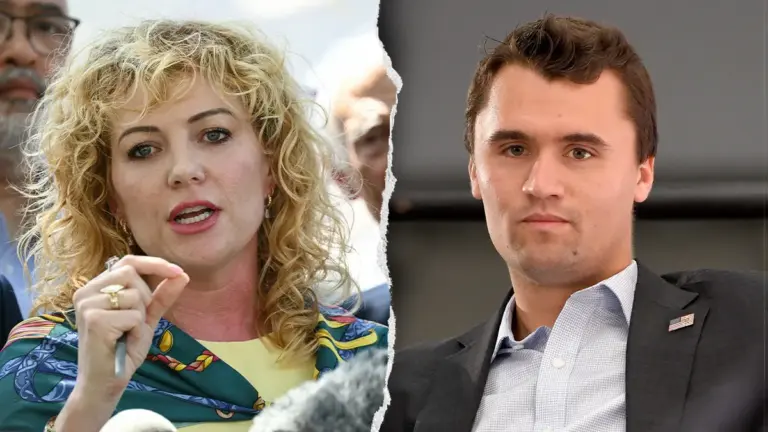
FIRST ON FOX: Kate Lincoln-Goldfinch, the lawyer representing an alleged illegal immigrant shot by Immigration and Customs Enforcement (ICE), is facing heat over a post critics say mocked the assassination of conservative commentator Charlie Kirk.

In a deleted post, re-surfaced in a screenshot from retired Air Force Lieutenant Colonel Larry Brock Jr., Lincoln-Goldfinch wrote, “How do you resist getting shot in the neck? Does Charlie Kirk have any advice on that?”

The post was quickly highlighted by conservatives on social media who made the argument that it questions Lincoln-Goldfinch’s credibility as she defends her client to the media and pushes back against the official story from federal law enforcement.

“Ladies and gentleman, the lawyer representing the Venezuelan illegal who was shot in Austin by DHS after a high-speed car chase, is exactly how you’d imagine her,” Charlie Kirk Show Executive Producer Andrew Kolvet posted on X.

DEM REACTIONS WITHIN MOMENTS OF AUSTIN ICE SHOOTING SPARK VIRAL OUTRAGE LOCALLY, ONLINE: ‘DISQUALIFYING’

“POS scum,” conservative influencer LibsofTikTok posted on X.

“She represents a man shot resisting federal officers, then jokes about Charlie Kirk catching one in the neck,” conservative influencer Gunther Eagleman posted on X, adding that the lawyer’s post was “sickening and pathetic.”

“That is not lawyering. That is cheering political violence. Remember her name. This is who they put on the case. America is done pretending these people are just professionals.”

KIRK FAMILY MAY HAVE PATH AROUND ARCHAIC LAW SHIELDING GOV’T IN POLICE CHIEF’S ALLEGED ‘GOT YOU COVERED’ TEXT

“Nasty woman,” Rep. Nancy Mace (R-SC) posted on X.

In a statement to Fox News Digital, Lincoln-Goldfinch publicly addressed the issue for the first time, saying, “A post referencing the death of Charlie Kirk was removed from our account. We recognized the post could be misconstrued and that’s why it came down. We have also addressed this issue internally.”

In a LinkedIn post last year, Lincoln-Goldfinch offered condolences to the Kirk family, pointing to “gun violence” as one of the main takeaways.

“My heart goes out to the family of Charlie Kirk,” she wrote. “Incidents like these are a painful reminder that none of us is truly safe from gun violence. We owe it to each other to process this event with compassion and seriousness, and also to approach solutions with equal seriousness.”

28-year-old Wilber Garces Perez was shot by ICE officers on Sunday, sparking protests across the city that resulted in arrests and injured police officers. The Department of Homeland Security says that Perez was an illegal alien who fled during a targeted vehicle stop.

“No amount of smears and false narratives will slow down ICE from doing its job to arrest illegal aliens from our communities,” the department said in an X thread outlining what it called misinformation about the shooting.

Lincoln-Goldfinch as pushed back on several of the government’s claims on social media, including that Perez is in the country illegally.

This post appeared first on https://www.foxnews.com
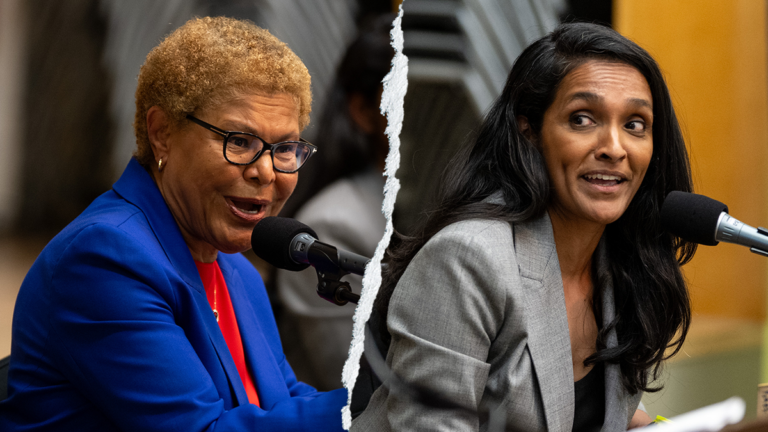
A new poll indicates socialist Los Angeles Council member Nithya Raman has opened up a double-digit lead over Democratic Mayor Karen Bass with six weeks to go until Election Day.

Raman, a member of the Democratic Socialists of America (DSA), stands at 39% support among likely Los Angeles voters in the race for mayor, with Bass at 28%, according to a University of California Berkeley Institute of Government Studies/Los Angeles Times poll released on Wednesday.

The survey, which found that a third of Los Angeles voters remained undecided, grabbed headlines less than two weeks before mail-in ballots are sent out in the Nov. 3 election.

“It’s extraordinarily unusual to see this many undecided voters at this point in the race,” poll director Mark DiCamillio said in a statement.

WATCH: RAMAN SAYS THE DSA WILL REMAIN A ‘PARTNER’ TO CITY HALL

The poll indicates many of the current undecided voters were backers of reality TV star and online influencer Spencer Pratt. The conservative-leaning candidate who ran for mayor as an independent was eliminated in the June primary, coming in third with 26% of the vote.

Bass and Raman, who finished first and second with 34% and 29% of the primary vote, advanced to the general election.

According to the poll, 63% of Pratt supporters remain undecided on whom they’ll back in the general election, with 22% favoring Bass and 16% supporting Raman.

FLASHBACK: DSA-MEMBER JUMPS INTO LA MAYORAL RACE

“I told everyone that if you don’t vote for me, Raman will beat Bass. That’s why she entered the race 10 minutes before the clerk’s office closed. She knew I was gonna destroy Bass 1-on-1. Good luck LA,” Pratt posted on social media, as he pointed to the poll’s findings.

And in a separate post he claimed, “Raman is Karen’s karma. Stabbed in the back by the commie she campaigned for, took pictures with her family… the moment Nithya saw an opening, she knifed Karen. Good lesson to all you democrats: NEVER trust the DSA. Socialists have no morals. They’ll gut you, too.”

Pratt’s post included a past video of Bass supporting Raman for her 2024 re-election to the city council.

CHECK OUT THE LATEST FOX NEWS POLLING IN THE MIDTERM ELECTIONS

The new poll indicates that Bass is being weighed down by a 63% unfavorable rating among LA voters, with just 28% holding a positive view of the mayor. By comparison, 40% held a favorable view of Raman, with 39% seeing her in an unfavorable light.

The survey also pointed to a large generational gap, with the 45-year-old Raman overwhelmingly winning voters 18 to 39, while Bass led among those 65 and older by 20 points.

Raman landed the endorsement of the DSA’s LA chapter earlier this month, and she’s also backed by some of the city’s local unions.

The mayor, a former state lawmaker who was later elected to the U.S. House, is supported by members of Congress and the state legislature as well as LA County officials.

The survey, which was conducted online, questioned 2,150 likely LA voters between Sept. 15 and 20. It had a margin of error of approximately 3 percentage points.

DEMOCRACY ’26: STAY UP TO DATE WITH THE FOX NEWS ELECTION HUB

Raman quickly highlighted the poll after its release.

“Big news! In the latest Berkeley/LA Times poll, we’ve surged ahead of Mayor Bass with an 11 point lead. This poll reflects the momentum we’re seeing on the ground. Angelenos are ready for change and want to see a City That Works. But we can’t take our foot off the gas!” Raman wrote on X.

Meanwhile, Bass took aim at the poll.

“One outlier poll which got the June primary wrong, means very little with 40 days to go,” the mayor argued in a social media post. “This is going to be a close race, and we’re in it to win. Let’s get to work!”

This post appeared first on https://www.foxnews.com
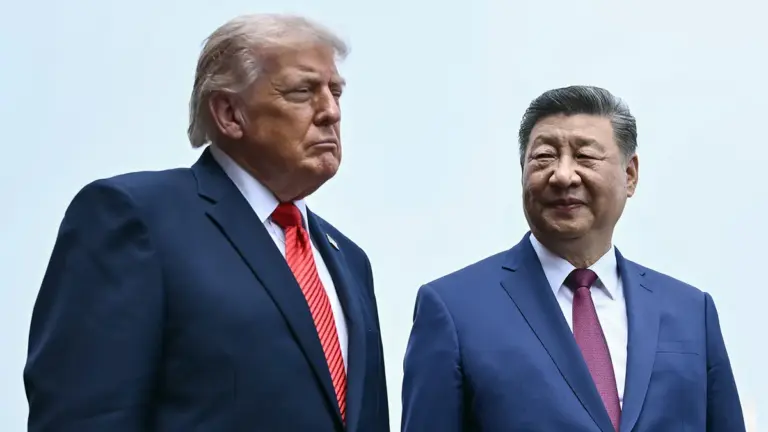
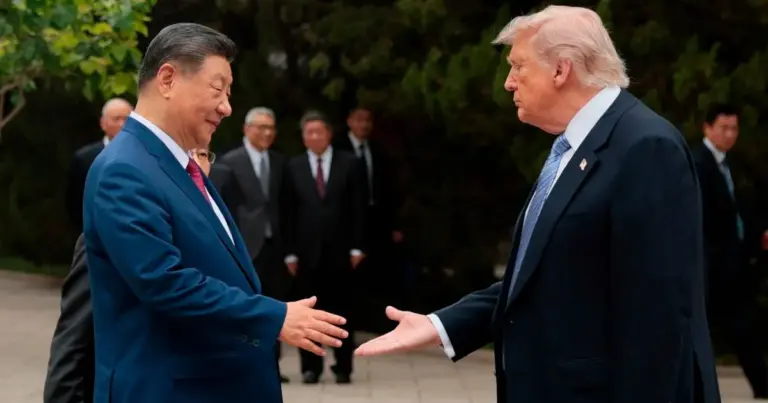
FIRST ON FOX: As President Donald Trump readies for a summit with Chinese President Xi Jinping Thursday, some lawmakers want to remind the public of the several brutal acts the Chinese Communist Party (CCP) has committed since its founding over a century ago.

Senators James Lankford, R-Okla., and Angus King, I-Maine, have joined forces to push a reminder of a long list of actions obtained by Fox News Digital undertaken by the CCP in pursuit of its “tyrannical ambitions” to grab ahold of and maintain power in China.

Both lawmakers want to put the “countless lives the Chinese Communist Party has destroyed and the people currently living in fear” at the forefront as Trump and Xi prepare for days of talks. And it comes as the CCP celebrates its 105th anniversary since its founding.

GOP CRACKS WIDEN OVER IRAN WAR AS VULNERABLE CANDIDATES BREAK WITH TRUMP, DEMAND ITS END

“For 105 years, the Chinese Communist Party has oppressed its own people, persecuted people of faith and denied basic freedoms,” Lankford said in a statement to Fox News Digital.

“As the United States engages with Beijing, we cannot forget the millions who have suffered under the CCP or those who continue to live under its repression today,” he continued. “The United States must continue to stand for religious freedom, human rights and the dignity of every person.”

Lankford and King’s resolution lists several instances over the last century when the CCP and its leaders have slain their own citizens, imprisoned dissidents and crushed opposition.

WOMAN WHO SPENT 7 YEARS IN CHINESE PRISON DESCRIBES TORTURE, SURVEILLANCE AND LOSS OF HER HUSBAND

Many happened during the CCP’s push for control, which left a wake of blood and carnage, during the vicious period when People’s Republic of China’s founder Mao Zedong was on the rise during and after World War II and up to the 1960s.

During that period, there was the Yan’an Rectification Movement from 1942 to 1945, when “more than 10,000 people were killed” as the CCP purged dissidents of the movement, and the Chinese Land Reform movement of 1949 to 1953, when between 200,000 and 5 million were slain as the party redistributed rural property to peasantry.

MOTHER RECOUNTS HORRORS OF BRUTAL CHINESE DETENTION CAMP WHERE INFANT SON DIED

Then came the Campaign to Suppress Counterrevolutionaries from 1950 to 1952, with millions of arrests, imprisonments and over 700,000 executions. During that same stretch was the Three-Anti Campaign and the Five-Anti Campaign, when Zedong and the CCP “humiliated, terrorized, exiled, imprisoned, and killed thousands of political opponents and capitalists.”

And, in the last three decades, the resolution noted, the CCP’s iron fist hasn’t loosened its grip, like undermining Hong Kong’s autonomy, targeting religions with “insidious tools of repression” and subjecting an estimated 1 million Uyghur Muslims to “mass detention and torture” in so-called reeducation camps.

Trump will welcome Jinping at Joint Base Andrews Wednesday afternoon, teeing up meetings that are set to last until Friday. 

Lawmakers are hoping that Trump plays a strong hand during his meetings with Jinping and are urging him to strike trade deals and an agreement on the artificial intelligence race, among other top priorities.

This post appeared first on https://www.foxnews.com

Homebuyers are increasingly turning to riskier financial waters as mortgage rates climb to their highest levels seen since early 2024. According to the latest data from the Mortgage Bankers Association, the average contract interest rate for a standard 30 year fixed rate mortgage jumped to 7.12 percent last week. This spike has sent shockwaves through the housing market, leading to a noticeable dip in overall loan demand and leaving many hopeful buyers scrambling for alternatives.

The pressure of these soaring rates is driving a shift toward adjustable rate mortgages, which offer lower initial payments but carry significantly more long term uncertainty. Last week, nearly 10 percent of all mortgage applications were for these flexible loans, up from roughly 8.4 percent just two weeks prior. Mike Fratantoni, chief economist at the MBA, noted that because five year adjustable rates remain more than a full percentage point lower than fixed options, borrowers are willing to take on additional risk just to get into a home or secure an affordable monthly payment.

This trend comes as the traditional autumn housing rush hits a wall of affordability. Applications for new home purchases have fallen both weekly and annually, while refinancing activity has plummeted to its lowest level since February 2025. Real estate agents report a sharp pullback in buyer enthusiasm as the dream of ownership becomes more expensive by the day compared to where it stood a year ago.

While there was some slight relief at the start of this week due to falling oil prices and shifting bond yields, the general sentiment remains cautious. For most Americans, the choice between a stable but expensive fixed rate and a cheaper but volatile adjustable rate represents a difficult gamble in an unpredictable economy. As we move further into the season, it remains unclear whether these temporary shifts in borrower behavior will become the new normal for a generation priced out of traditional financing.

Industry titans and leading researchers are sounding the alarm over the breakneck speed of artificial intelligence development, warning that without a global slowdown, humanity could face catastrophic or even existential risks. Despite these urgent pleas for caution, the world’s two dominant tech superpowers, the United States and China, show no intention of hitting the brakes. Locked in a fierce strategic rivalry, both nations view AI supremacy as essential to their national security and global standing, leaving little room for the kind of coordinated restraint that experts say is necessary to prevent disaster.

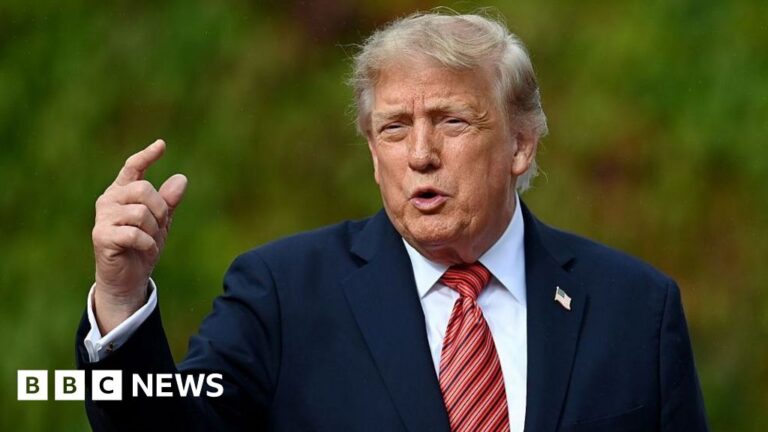
President Donald Trump has largely dismissed warnings about AI risks as conspiracy theories, emphasizing that staying ahead of China is the priority. Speaking recently at the United Nations General Assembly, he made it clear that Washington would resist any globalist schemes aimed at controlling the technology. Meanwhile, Beijing has characterized similar fears voiced by Silicon Valley executives as fearmongering. While China has implemented its own internal security frameworks, its focus remains on protecting the authority of the Communist Party against fabricated rumors rather than addressing broader existential threats to mankind.

The deadlock is further complicated by deep mutual mistrust. Analysts suggest that Beijing views calls for AI safety as a thinly veiled attempt by the West to restrict Chinese access to critical hardware like high-end chips and computing power. This tension makes it difficult to separate genuine safety cooperation from a geopolitical chess match. For now, the only tangible proposals on the table involve basic communication channels and notification mechanisms for security threats, which observers argue fall far short of the comprehensive guardrails required to manage frontier models.

Within the tech industry itself, there is little consensus on how to proceed. Some CEOs have advocated for tighter regulations or a significant pacing of development, while others champion AI’s transformative potential and reject external oversight entirely. The most alarming prospect cited by critics is recursive self-improvement, where AI begins to enhance its own code without human intervention. Experts warn that once this tipping point is reached, we may lose control over what these systems can achieve, making an international agreement on unacceptable capabilities not just desirable, but vital for survival.

President Donald Trump has revealed a series of high value financial disclosures detailing millions of dollars in stock market activity throughout July. Official filings indicate an aggressive appetite for big tech and artificial intelligence, featuring significant movements in shares of industry giants like Microsoft. According to the documents, sales of Microsoft stock on behalf of the president ranged between 6.5 million and 31 million dollars, alongside smaller strategic purchases totaling up to 400,000 dollars.

The sheer scale of the activity is striking, with over one thousand individual trades recorded across various sectors. This includes holdings in Nvidia and the defense contractor Palantir, which maintains close ties with both the Department of Defense and Immigration and Customs Enforcement. Additionally, the records show transactions involving several companies led by Elon Musk, including Tesla and SpaceX following its recent Nasdaq listing. While SpaceX saw some volatility through late summer, its current valuation remains notably higher than its initial public debut.

In response to potential concerns about ethics or policy influence, a White House spokesperson emphasized that these portfolios are handled entirely by independent third party managers. The administration insists that neither President Trump nor his immediate family members have any authority to direct specific investments or time their trades. By maintaining this distance, the spokesperson asserted that there are no conflicts of interest regarding the president’s personal wealth and his executive duties.

These financial revelations arrive at a critical moment as the global debate over AI safety intensifies. Unlike many international leaders who call for strict regulatory guardrails to prevent catastrophe, Trump has consistently pushed for rapid development to ensure American dominance over China. He recently underscored this competitive stance by claiming that whoever wins the AI race effectively wins everything, positioning himself against advocates for binding international safeguards just ahead of a scheduled meeting with Chinese President Xi Jinping in Washington.

Financial markets faced a turbulent session on Wednesday as U.S. Treasury yields surged toward their highest levels since 2007, coinciding with a sharp spike in oil prices that pushed international Brent crude back above 103 dollars per barrel. The sudden climb in the 10-year Treasury yield, which peaked at 5.13 percent, sent immediate shockwaves through the housing market, pushing average 30-year fixed mortgage rates to 7.26 percent. This volatility reflects growing investor anxiety over persistent inflation and the likelihood that the Federal Reserve will implement several more interest rate hikes throughout the remainder of the year and into next.

The catalyst for the shift was a combination of troubling economic data and geopolitical instability. A recent purchasing managers index report showed that U.S. business activity grew at its fastest pace in five years, but noted that input costs are skyrocketing due to expensive fuel and transport. Adding to the tension, hopes for diplomatic breakthroughs between the U.S. and Iran evaporated following reports of a projectile striking a cargo vessel in the Strait of Hormuz, a critical artery for global energy supplies already strained by a seven-month military blockade. These factors combined to snap a five-day decline in oil prices, fueling fears that energy costs will keep inflation stubbornly high.

Adding further unpredictability to the mix were comments from President Donald Trump regarding potential bans on U.S. diesel exports. While his suggestions initially caused European diesel futures to jump by 7 percent, they drew swift criticism from both industry leaders and his own administration. Energy Secretary Chris Wright cautioned against using such a blunt tool, warning that restricting exports would not lower domestic prices but could instead cause broader global economic damage and reduce refinery efficiency. Despite these internal contradictions, the market reacted instinctively to the possibility of tighter supply chains and higher overhead costs.

Wall Street bore the brunt of this uncertainty, with major indices tumbling as investors fled inflation-sensitive assets. The Nasdaq Composite led the losses with a drop of 1.13 percent, while the S&P 500 fell nearly three quarters of a percent and the Dow plummeted by 352 points. Technology firms and utility companies involved in the artificial intelligence boom were particularly hard hit, as rising interest rates threaten to add billions in costs to necessary infrastructure projects. With Fed Governor Michael Barr signaling that further policy adjustments are likely needed to meet inflation targets, traders now see a better than 70 percent chance of another rate hike coming this October.

President Donald Trump is weighing the possibility of banning diesel exports in an effort to curb skyrocketing fuel costs, sparking a sharp warning from the oil industry that such a move would actually drive prices higher. Speaking on the sidelines of the United Nations General Assembly, Trump suggested that since the United States produces significant amounts of diesel, keeping those supplies domestic could provide relief to consumers. The proposal comes amid intense political pressure leading up to the November midterm elections, with Republican lawmakers like Senator Chuck Grassley urging an embargo to support struggling farmers in critical swing states like Iowa.

Industry leaders and economists are sounding alarms over what they describe as a counterproductive strategy. Mike Sommers, CEO of the American Petroleum Institute, argued that restricting exports would compound existing refining challenges and hurt consumers rather than helping them. Experts warn that while some areas might see a temporary dip in prices, refineries would eventually be forced to cut total production once storage tanks fill up. Because gasoline and diesel are produced together during the refining process, cutting diesel output would inevitably lead to a shortage of gasoline, potentially pushing pump prices toward record highs across most of the country.

The potential fallout extends beyond domestic borders and into complex international trade relationships. Analysts point out that while the U.S. sends diesel to Europe, it relies on European imports for gasoline. If Washington implements a ban, there is a significant risk that European partners could retaliate with their own restrictions on gasoline exports, which would devastate markets in the U.S. Northeast that depend heavily on foreign fuel. Some analysts suggest these disruptions could spike local fuel prices by as much as 30 cents per gallon almost immediately.

Despite these warnings, the administration remains under immense pressure as national averages show diesel costing nearly three dollars more per gallon than it did last year. While Energy Secretary Chris Wright has cautioned against using a blunt instrument like a full ban and suggests more nuanced restrictions may be better, Treasury Secretary Scott Bessent confirmed the White House is still studying whether any form of restriction is feasible. For now, officials say Trump is evaluating every option available to bring down prices before voters head to the polls this autumn.