Archive

September 25, 2026

Browsing

The Department of Homeland Security called out dozens of Democrats and members of the media for “spreading lies” about a recent ICE officer-involved shooting in Austin, while a former agency director suggested the political response may be by design.

Wilber Rafael Garces Perez, a 28-year-old Venezuelan national whom DHS says is an illegal immigrant in the U.S., was shot by an ICE agent during a chase Sunday. Perez was arrested and taken to a nearby hospital, where he was treated and listed in stable condition. The shooting has prompted protests in Austin and criticism from Democrats.

On Tuesday, more than 100 Democratic members of Congress signed a letter demanding Perez’s release and saying he “is not receiving the care he needs in detention” and “still has the bullet lodged in his body.”

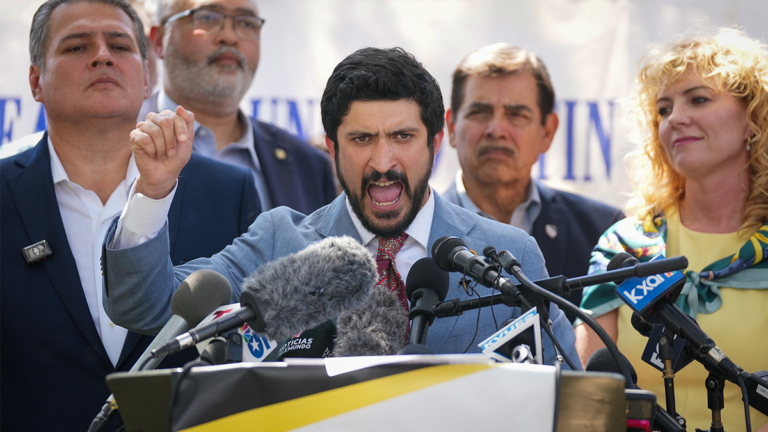
In a separate statement, Rep. Joaquin Castro, D-Texas, said “despite losing movement on his left side and having a bullet lodged next to his spine, ICE has forced Wilber Rafael Garcés Pérez out of the hospital and back to the South Texas ICE Processing Center.” Rep. Greg Casar, D-Texas, called ICE “liars with masks” and demanded the agency leave Austin.

DEM REACTIONS WITHIN MOMENTS OF AUSTIN ICE SHOOTING SPARK VIRAL OUTRAGE LOCALLY, ONLINE: ‘DISQUALIFYING’

In response, DHS posted on X that “sanctuary politicians and the media wasted no time in spreading lies” and that “no amount of smears and false narratives will slow down ICE from doing its job to arrest illegal aliens from our communities.”

DHS called the claim that ICE refused to remove the bullet from Perez’s body “false.” The agency said ICE “does not and would not advise, nor be the authority on, a medical procedure for an illegal alien at a hospital.” Addressing reports that Perez was denied pain medication and made to sleep on the floor, DHS said Perez is “receiving medical care around the clock, including pain medication,” and that after being released from the hospital, he slept on a bed a few hours after arriving at ICE’s detention facility.

The agency also disputed statements from Perez’s lawyer that Perez entered the country legally and has a work permit. DHS said he “entered the country illegally under the Biden Administration” and “had no valid work permit, had no protective status, and had a final order of removal from a Department of Justice (DOJ) Immigration Judge.”

FEDERAL JUDGE TEMPORARILY BLOCKS DEPORTATION OF ILLEGAL IMMIGRANT SHOT BY ICE OFFICER IN AUSTIN, ATTORNEY SAYS

DHS said ICE “will not be slowing down nor leaving Austin.”

“DHS is tasked with enforcing the laws passed by Congress. We do not pick and choose which laws to enforce or where to enforce them. We will continue to enforce our nation’s laws,” the agency said.

Former acting ICE Director Jonathan Fahey, who served toward the end of President Donald Trump’s first term, suggested some of the political pushback was by design.

“The irony of it all is, with these ICE incidents, it’s not just coincidental that the Democrats are against ICE performing their function of enforcing immigration laws… they don’t want them actually doing their jobs,” Fahey said in an interview with Fox News Digital.

“They try to build these situations up to try to get negative attention toward ICE and more political pressure on them and advance their political agenda.”

Fahey suggested the Democratic Party’s “whole goal” is an open Mexican border and mass amnesty. He argued that Democrats’ response to the Austin incident shows they do not want what he considers responsible enforcement, but no enforcement.

“They seem to have doubled down on [the ‘mass amnesty’ agenda] after the 2024 election, which in some respects is surprising,” he said. “My opinion is their motive is… for the people here open the border because they think that will help them electorally currently and in the future – and all the other stuff is just noise to help achieve that.”

BRANDON GILL UNLOADS ON DEMOCRATS OVER ILLEGAL IMMIGRANT CHARGED WITH RAPING TEEN: ‘COLLATERAL DAMAGE’

Asked about Casar’s demands that DHS Secretary Markwayne Mullin “preserve every piece of evidence,” suspend the agent in question and brief Congress, Fahey said it would be irresponsible for DHS to brief Congress before the investigation is complete.

SIGN UP TO GET THE POLITICS NEWSLETTER

“That’s mostly going to be a distraction,” he said. “Congress wants to exercise oversight over this particular instance. I think the more appropriate thing would be after DHS has concluded their investigation [for] all of that [to be] done. I don’t think the secretary would have any issue preserving evidence. I think they’ll be doing that anyway.”

“I don’t think that’s a concern. But turning stuff over for hearing this early seems premature at the least,” he said.
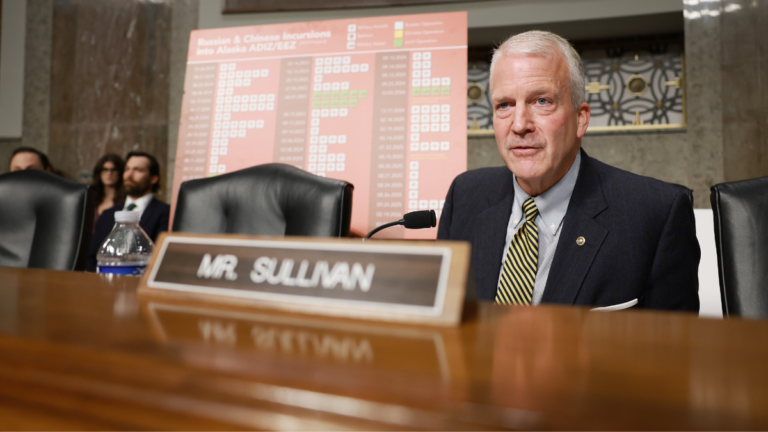
Republican Sen. Dan S. Sullivan is in the middle of a competitive race as he seeks re-election this year in red-leaning Alaska in a midterm showdown that’s one of roughly a dozen that will determine if the GOP keeps control of the Senate.

Working against Sullivan as he runs for a third six-year term in the Senate is not only a rough political climate facing Republicans but also Alaska’s unique electoral system, which includes four candidates from an open primary advancing to the general election and ranked-choice voting.

Alaska is the only state in the nation to have a “top four” primary system in which candidates advance regardless of party affiliation. And it’s one of only two states, along with Maine, to use ranked choice voting for statewide and federal races.

Defenders of the system say it gives independent voters more choices, weakens party control and encourages candidates to appeal beyond their base.

SEEING DOUBLE: THE SECOND DAN SULLIVAN ADVANCES IN ALASKA’S CRUCIAL SENATE SHOWDOWN

Alaska GOP Chair Carmela Warfield has repeatedly referred to the state’s electoral system as a “MESS” in social media posts.

“It’s hurting the Republican Party,” veteran GOP strategist Mary Marslender told Fox News Digital.

Sullivan is battling former Democratic Rep. Mary Peltola. The two candidates combined received over 90% of the primary vote.

But Daniel J. Sullivan, a retired schoolteacher and registered Republican whom Marslender and supporters of the senator call “Decoy Dan” is also on the general election ballot.

A conservative nonprofit group, Americans for Public Trust, claimed that the other Sullivan, who is not related to the senator, was working with Democrats to confuse voters. The Peltola campaign and Daniel J. Sullivan both denied the allegation. 

The Alaska Division of Elections disqualified him from the ballot, but the decision was overturned first by an Alaska Superior Court judge and later by the state Supreme Court.

SIX FORCES THAT COULD HELP REPUBLICANS DEFY HISTORY IN THE MIDTERM ELECTIONS

There is also a third Republican on the Senate ballot: Gerald Heikes. He advanced to the general election when the fourth-place primary finisher, Democrat David Leslie, withdrew from the race.

Marslender claimed that the current system has “become an easy way for the Democrats to game the system.”

Pointing to Daniel J. Sullivan’s inclusion on the general election ballot, she said, “That never would have been allowed in the previous old system. … But because there’s an open primary, he was allowed to be on the ballot.

“Republican primary voters under the old system wouldn’t have voted for him, and he wouldn’t have been in there.”

With ranked-choice voting, voters rank candidates by preference, and if nobody receives a majority of first-choice votes, additional counting rounds occur until someone reaches a majority. 

Marslender said there’s a perception that Republicans would unite around the incumbent senator in the general election.

DEMOCRACY ’26: STAY UP TO DATE WITH THE FOX NEWS ELECTION HUB

But, she said, in Alaska, which is the nation’s largest and most remote state, “It’s really hard to get a statewide message out” due to “the geographical challenges.”

Alaskans for Better Elections, which supports the system, has been holding events to help voters better understand how it works.

“Alaska’s election system celebrates our independence, giving us the freedom to vote for the person who is best for the job,” the group highlights on its website.

The Senate race wasn’t the only contest impacted by the current system. There were also eleventh-hour withdrawals that rocked the races for governor and the U.S. House, which also cast a shadow on the state’s unique voting process.

Alaska voters get to weigh in when they cast general election ballots to either keep or scrap the current system.

Matt Schultz, a Democrat who suspended his congressional bid before the primary, supports keeping the system. But he told the AP, “We need to make things much more transparent and predictable and understandable by the general public so that we can truly have trust in our democracy again.”

Republican Lesil McGuire and Democrat Tom Begich, former state lawmakers who were both eliminated in the primary for governor, defended the system.

“Let’s be clear: We would have faced challenges and might not have advanced in a traditional closed or semi-closed primary. Our election system was not designed to guarantee anyone a win. It was designed to solve a problem: elections in which a narrow, more partisan slice of voters decided the November ballot, resulting in hyperpartisanship that limited progress,” they wrote in an opinion piece in The Anchorage Daily News.

“We don’t support our current system because it was good for us as candidates; we support it because it’s good for us as Alaskans.”

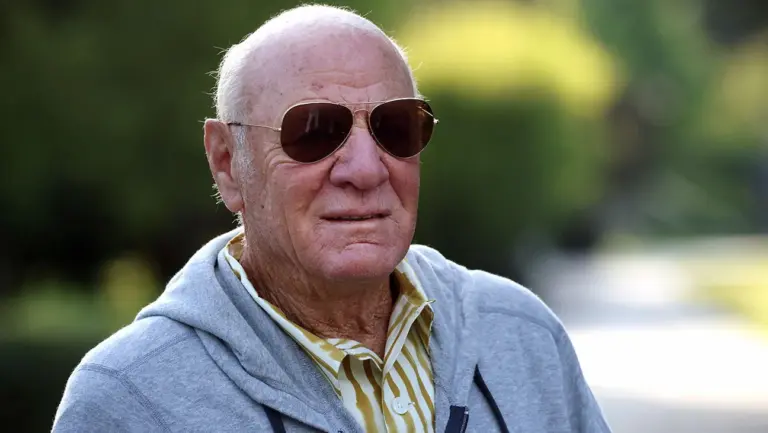
Barry Diller’s ambitious attempt to become a titan of the Las Vegas Strip has come to an abrupt end. His media conglomerate, People Inc, officially scrapped its 18 billion dollar plan to take MGM Resorts International private, walking away from a deal that would have given him control over some of the most iconic landmarks in Nevada, including the Bellagio and the MGM Grand. Speaking candidly on Wednesday, Diller admitted that while there are many moving parts in a takeover of this scale, the necessary elements simply failed to align in the way he had envisioned.

Despite pulling the plug on the acquisition, Diller insisted that his faith in the hospitality giant remains intact. He noted that People Inc will maintain its substantial stake of roughly 27 percent in MGM Resorts, signaling that he still views the company as a strong investment even if he won’t be running the show. For Diller, the appeal lay in what he called AI proof assets. In an era where artificial intelligence is disrupting traditional media and entertainment, he believed that physical luxury resorts and live experiences offered a tangible value that technology cannot replicate.

On the other side of the table, MGM Resorts seems relieved to keep its independence. The company’s board expressed excitement about continuing as a standalone entity under current leadership, pointing toward their aggressive expansion into online sports betting via BetMGM and upcoming opportunities in Osaka and China. Chairman Paul Salem emphasized that their dominant position in Las Vegas and growing digital footprint provide a clear path forward without needing to merge with a media empire.

The failed bid marks a curious intersection between two very different worlds: high stakes gaming and legacy publishing. While People Inc has expanded its reach through titles like InStyle and Travel + Leisure, this pivot toward casino ownership was meant to hedge against a volatile digital landscape. Now, instead of owning the hotels where tourists sleep and gamble, Diller will remain one of those guests who happens to own nearly a third of the building.

A coalition of the most powerful business organizations in the United States has issued a stark warning to President Trump, urging him to abandon plans for a potential diesel export ban. In a joint letter delivered Wednesday, groups including the U.S. Chamber of Commerce and the American Petroleum Institute argued that restricting exports would be entirely counterproductive. Rather than lowering costs at the pump, these leaders claim such a move would actually trigger tighter supplies and drive up fuel prices for the very people the administration aims to help, specifically targeting the financial strain on American families, farmers, and truckers.

The tension comes as Donald Trump faces mounting political heat from Republican lawmakers in key agricultural states like Iowa, where soaring fuel costs have become a primary concern heading into the midterm elections. With diesel averaging around 6.51 dollars per gallon—nearly three dollars more than this time last year—the president suggested during the U.N. General Assembly that keeping more diesel onshore could be a viable solution. His comments caught much of the energy sector off guard, sparking immediate volatility in oil futures and causing shares of domestic refiners to dip amid reports of a possible ninety day restriction.

Inside the administration, however, there appears to be significant debate over how to handle the crisis. While Treasury Secretary Scott Bessent noted that the White House is studying whether such a ban is feasible given current refining capacities, Energy Secretary Chris Wright offered a different perspective. An industry veteran himself, Wright dismissed the idea of a total blanket ban and emphasized instead finding ways to increase domestic availability without disrupting the flow of gasoline and jet fuel. He cautioned that shutting off exports could inadvertently push gasoline prices even higher across the country.

Industry analysts echo these concerns, suggesting that while an export ban might cause a temporary price drop in certain regions, it would eventually backfire as refiners slash production due to limited market access. This delicate balance is further complicated by global instability; with Russian refineries under attack and tensions high in the Middle East near the Strait of Hormuz, any sudden removal of U.S. supply from the global market could create systemic shocks throughout the international energy trade.

The bond market is currently shouting at the Federal Reserve, but the noise is coming from conflicting directions, leaving Chairman Kevin Warsh and his colleagues facing a precarious balancing act. Treasury yields have continued a steady climb as investors grapple with inflation that remains stubbornly above the two percent target, fueled by rising energy costs and a massive wave of corporate debt tied to the global artificial intelligence arms race. While previous policymakers often ignored temporary price spikes caused by external shocks, there is a growing sense within the Fed that these inflationary pressures are becoming structural rather than fleeting.

This shift in perspective has created a volatile environment for traders who are now scrambling to predict the central bank’s next move. In a departure from recent history, the Fed has stopped providing clear telegraphs regarding its future path, leading some analysts to believe more aggressive action is required. Joseph Brusuelas of RSM suggests that current projections may be far too optimistic, arguing that several more rate hikes could be necessary to restore price stability. His models warn that if long term yields continue to surge independently, the economy could face slowing growth and rising unemployment without actually bringing inflation down to target levels.

Not everyone on Wall Street believes such drastic measures are warranted. Some economists argue that the rise in yields simply reflects investor expectations of higher policy rates and overall economic strength rather than a failure of Fed leadership. Meanwhile, internal voices at the Federal Reserve remain divided. New York Fed President John Williams and Philadelphia Fed President Anna Paulson have both suggested that while further tightening is likely, it should be handled with modesty and patience rather than following a rigid script of predetermined increases.

At the heart of this tension is Kevin Warsh’s specific approach to leadership. Unlike his predecessors who relied heavily on formal forward guidance to steer investor expectations, Warsh has placed an unusual emphasis on using market signals as a primary input for policy decisions. This pivot makes the current volatility especially dangerous; if the Fed tightens too aggressively, it risks choking off economic expansion, but if it hesitates too long, it risks losing its credibility entirely. By leaning into market narratives over strict economic measurements, Warsh has entered a high stakes game where any single decision could trigger an unpredictable and outsized reaction across global financial markets.

Shares of MGM Resorts International took a sharp dive on Thursday, tumbling roughly 11 percent after Barry Diller’s People Inc. officially withdrew its proposal to acquire the gaming giant. The sudden reversal comes nearly four months after Diller first offered to take the company private at a price of 48.30 dollars per share. While People Inc., formerly known as IAC, already holds a substantial 26.1 percent stake in MGM, the bid for full ownership has fallen through.

In a press release accompanying the announcement, Diller described the decision as a result of the complex variables involved in such a massive transaction. He noted that there are many ingredients required to bring a proposal like this to completion and admitted that the specific mix simply wasn’t coming together as his team had envisioned. Industry analysts suggest that the financial burden played a major role, with reports indicating that Diller grew concerned over the significant amount of debt the acquisition would have saddled upon the company.

Despite pulling back from the current offer, Diller left the door open for potential future collaborations. He stated that People Inc. remains interested in exploring various strategic transactions with MGM Resorts and looks forward to evaluating other alternatives moving forward. This suggests that while a total buyout is off the table for now, the relationship between the two entities remains cordial and strategically aligned.

The volatility comes during a period of high activity within the gambling industry. Just earlier this week, shareholders of Caesars Entertainment gave their approval for billionaire Tilman Fertitta to acquire that company in a deal valued at 17.6 billion dollars, which will see Caesars shareholders receive 31 dollars per share in cash. As competitors consolidate, investors are keeping a close eye on whether MGM will seek another suitor or pivot its strategy following this setback.

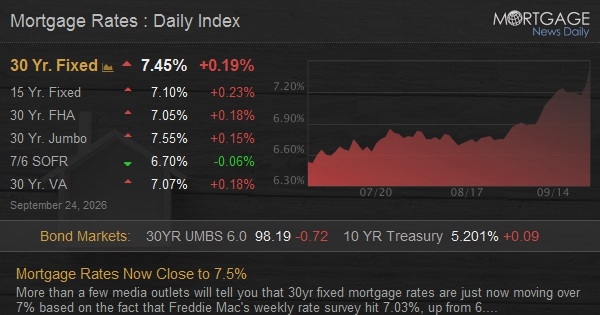
Homebuyers looking at current listings may find themselves facing a harsher reality than some headlines suggest. While several media outlets are reporting that 30 year fixed mortgage rates have only recently crossed the 7 percent threshold, those numbers often rely on delayed surveys that don’t reflect the immediate market. For instance, recent figures from Freddie Mac show a slight uptick to about 7.03 percent, but because that data is an average taken over a five day period, it fails to capture the rapid climb happening in real time.

The truth is that the 7 percent mark was actually breached weeks ago, and since then, rates have continued to surge. Daily tracking indices now place the actual cost of borrowing closer to 7.45 percent. While some lenders might still quote rates in the high six percent range to attract customers, these offers typically require significant upfront costs or points to buy down the rate. When comparing these quotes on an apples to apples basis without those hidden fees, the trend line is clearly pointing upward toward 7.5 percent.

This sudden spike is being driven by a perfect storm of economic pressures including rising oil prices and unexpectedly strong economic data. These factors have fueled fears that the Federal Reserve will need to accelerate its path of interest rate hikes to combat inflation. With more economic reports due next week, borrowers remain anxious that further volatility could push monthly payments even higher, making an already tight housing market feel increasingly out of reach for many families.