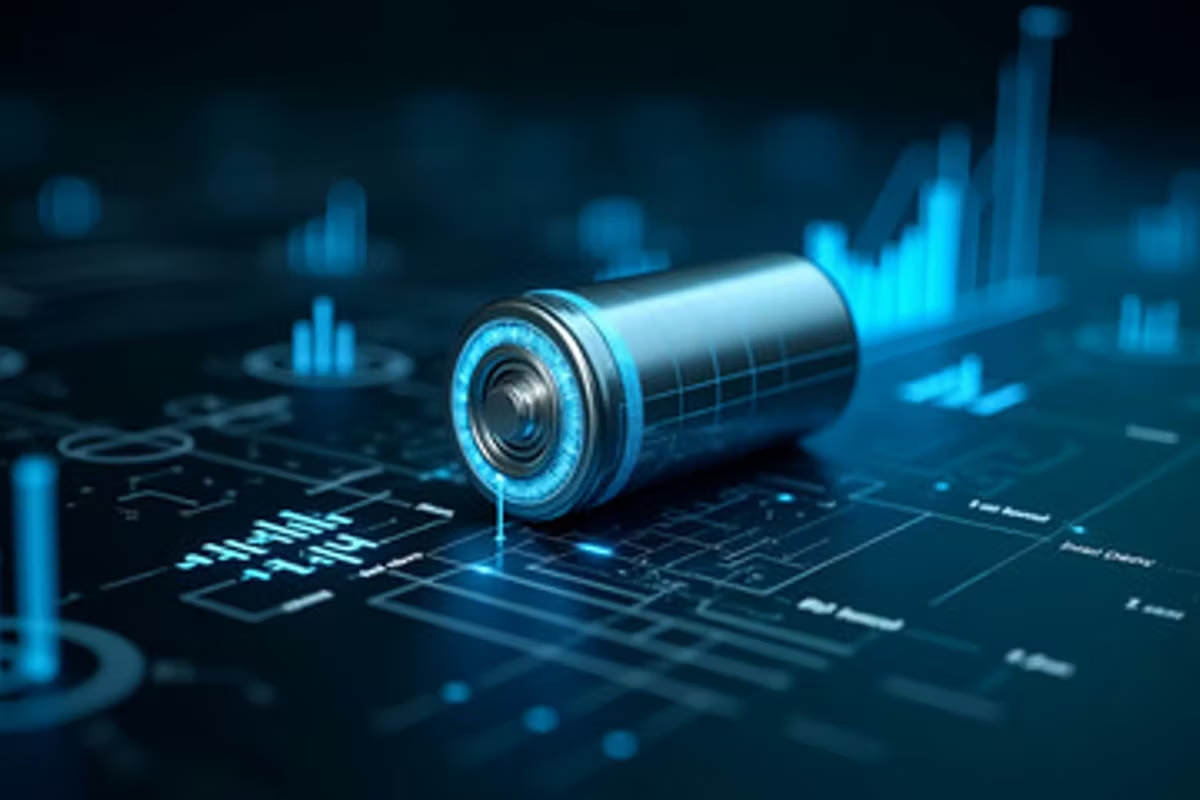
The worlds largest battery maker, Contemporary Amperex Technology Co., known as CATL, has been forced to suspend operations at its Jianxiawo lithium mine after Chinese regulators revoked the sites environmental approval. This move effectively stalls what was intended to be Chinas most productive lithium operation by capacity. While the company had briefly attempted to resume activities following a safety permit issued in late June, reports indicate that an unresolved conflict involving a tailings pond led to more than 70 formal complaints, ultimately triggering the government intervention in early August.
The fallout from the shutdown has already impacted industry expectations. Benchmark Mineral Intelligence reacted to the news by slashing its 2026 output forecast for the project by nearly half, dropping projections from 62,500 tons of lithium carbonate equivalent down to 32,000 tons. Although long term forecasts for 2027 remain steady for now, analysts warn that the required environmental review process could drag on well into next year. The facility has struggled with permitting issues since mid 2025, coinciding with Beijings introduction of much stricter classification standards for lithium bearing clay deposits.
This regulatory setback comes at a precarious time as global demand for lithium begins to surge once again. After a significant crash in prices following a peak in 2022, companies like Albemarle have reported skyrocketing demand specifically within the stationary battery storage sector. This shift has caused volatility in the markets, leading the Guangzhou Futures Exchange to implement caps on new positions and raise trading fees to stabilize sharp price swings fueled by investor anticipation.
Beyond CATL, there are concerns that this crackdown signals a broader trend across Jiangxi province. Local authorities are currently auditing mining licenses throughout the region, leaving other operators vulnerable if they share similar waste management deficiencies. To hedge against these domestic risks, CATL is diversifying its supply chain through international investments, including a recent strategic stake in New Zealands CarbonScape to develop sustainable alternatives for battery anodes.
Comments are closed.