Archive

November 12, 2026

Browsing

Mark Pope entered Tuesday night in Chicago hoping to quiet the skeptics and reclaim Kentucky’s standing among the nation’s elite, but instead, the Wildcats suffered a humbling 89-69 defeat at the hands of Kansas. After a previous season defined by blowout losses to high-caliber opponents, this outing felt like a haunting case of deja vu. Beyond a promising start that lasted only a few minutes, Kentucky looked completely disconnected, failing to maintain competitiveness as the Jayhawks took total control of the game.

The struggles were evident on both sides of the ball. Offensively, Kentucky lacked any semblance of a cohesive strategy, frequently relying on stagnant possessions where guards attempted desperate drives into traffic rather than moving the ball. Defensively, the team appeared sluggish and disinterested. Kansas exploited these gaps with ease, utilizing backcuts and finding wide-open looks from beyond the arc while consistently scoring uncontested baskets around the rim.

Despite the collective failure, some individual performances offered glimpses of hope. Veteran point guard Diallo proved why he is currently the team’s most reliable asset, leading the way with 24 points on efficient shooting. Similarly, Moreno provided a spark when he finally hit the floor in the second half after early foul trouble. In just 27 minutes of action, he dominated one-on-one matchups to finish with 19 points and 10 rebounds, proving he can be an unstoppable force when integrated into the flow of the game.

Conversely, other key players struggled to find their footing under pressure. Wilkins looked disjointed throughout the evening, finishing with five turnovers and struggling significantly from the field. Meanwhile, N’Diaye continues to struggle with his identity on court; despite his physical tools, he remains limited to inconsistent perimeter shooting and lacks impact in rebounding or interior defense. These shortcomings have left head coach Mark Pope facing immediate scrutiny once again, as his inability to implement a functional system during such a critical test has reignited calls for change within the program.

Anthropic has set its initial public offering price range between 70 and 78 dollars per share, a move that places the company’s valuation at up to 1.4 trillion dollars. While this figure remains staggering, it represents a notable retreat from the 2 trillion dollar target the firm was eyeing back in September. Analysts suggest this downward revision isn’t a sign of internal failure but rather a mirror reflecting broader market anxiety. Investors have grown cautious about the immense costs associated with AI infrastructure and whether the massive spending on data centers will actually yield proportional returns.

Despite the prevailing gloom surrounding the AI trade, some analysts argue that Anthropic is currently undervalued. With a fair value estimate of 92 dollars per share, experts believe there is significant upside compared to the proposed IPO midpoint. This optimism is rooted in strong projected revenue growth through 2031, driven by deep penetration into enterprise markets where thousands of corporate clients are already spending six figures annually on the platform. For those betting on a bull case, the stock could potentially soar much higher if Claude continues to steal market share from rivals like OpenAI.

One of the most provocative parts of Anthropic’s pitch involves recursive self improvement, where AI models help build better versions of themselves. The company reports that Claude now writes over 90 percent of its own codebase and handles a quarter of its model research tasks. Independent observers have corroborated this trend, noting that the pace of progress has roughly doubled over the last year due to AI assistance. If this cycle accelerates, researchers speculate that AI could outperform human developers by 2027, potentially sending the company’s value far beyond current projections.

However, this fast takeoff scenario brings its own set of risks. Critics warn that overly aggressive autonomous development could lead to misalignment issues or trigger heavy government regulation designed to slow down frontier AI progress. In a worst case bear scenario, sluggish enterprise adoption combined with fierce competition from open source models could drag the stock’s value down significantly. As pricing approaches on November 18, investors must decide if they are buying into a discounted powerhouse or a bubble waiting to burst.

Investors returned to the semiconductor sector in force on Wednesday, sparking a broad rally across chip stocks following a period of volatility. The Philadelphia semiconductor index, which tracks thirty of the largest players in the U.S. market, climbed six point six percent during trading as traders moved quickly to pick up shares at discounted prices. This surge suggests that the appetite for hardware remains strong despite recent dips in valuation.

Several key names stood out as leaders during the recovery effort. Arm Holdings, Macom Technology Solutions, and Micron Technology all posted significant gains, helping to pull the wider index higher. The momentum appeared driven by a combination of strategic bargain hunting and renewed confidence in the long term trajectory of high performance computing components.

The rebound was further fueled by fresh enthusiasm surrounding artificial intelligence developments. Positive results from CoreWeave and optimistic reports coming out of Anthropic’s IPO roadshow provided a necessary catalyst for AI bulls to return to the fold. Together, these factors created a perfect storm of technical buying and fundamental optimism that restored confidence in some of the most influential tech stocks on the market.

Many American workers woke up this week to find their retirement savings taking a hit, all thanks to a sudden storm swirling around Nvidia. The semiconductor powerhouse saw its stock tumble roughly 8 percent after announcing an internal investigation into CEO Jensen Huang. The probe follows troubling reports that Huang may have been targeted by a Chinese intelligence gathering operation, sparking fears about the stability of the company’s leadership and its international ties.

For the average person, these losses aren’t just felt by those who specifically bought Nvidia shares. Because the company is one of the largest corporations in the world by market cap, it carries immense weight in popular index funds that track the S&P 500 and Nasdaq 100. Since most 401(k) plans rely heavily on these broadFunds, any significant drop in Nvidia creates a ripple effect that drags down thousands of diversified portfolios simultaneously.

Financial experts are currently split on whether investors should panic. Some analysts warn of extreme concentration risk, noting that if the scandal forces Huang to step down, the company could lose a massive chunk of its valuation given how central he is to its success. Political pressure is already mounting, with some members of Congress threatening subpoenas to get more answers about Huang’s alleged connections to foreign spies.

On the other hand, some economists suggest that keeping a long term perspective is key. They argue that while individual stocks fluctuate based on headlines, a truly diversified portfolio can absorb these shocks when other sectors rise to fill the gap. While Nvidia has seen incredible growth over the last five years due to the artificial intelligence boom, proponents of this view say that temporary volatility shouldn’t trigger rash decisions regarding lifelong savings goals.

Investors returned to the semiconductor sector in force on Monday, sending Intel shares climbing more than seven percent to close at sixty two dollars and fifty cents. The surge was part of a broader rally across the chip industry, fueled by renewed confidence in the demand for artificial intelligence infrastructure. Other major players followed suit, with Advanced Micro Devices jumping over seven percent and Nvidia also posting gains, helping lift both the S&P 500 and the Nasdaq Composite.

The sudden shift in sentiment comes largely on the heels of impressive third quarter results from CoreWeave, a cloud provider specializing in AI. By reporting revenue of three point seven billion dollars and raising its full year outlook, CoreWeave provided tangible evidence that the appetite for AI hardware remains insatiable despite recent political headwinds. This financial performance helped quiet fears that had plagued the sector following last week’s midterm elections, where Democratic gains sparked worries about potential regulatory crackdowns on data centers.

For Intel specifically, today’s jump represents a critical recovery from a rocky October. The company had previously seen its stock tumble after issuing a cautious fourth quarter forecast rooted in a struggling personal computer market. While high prices and component shortages continue to hamper PC sales, the massive growth in data center needs appears to be outweighing those losses for now. Trading volume for Intel surged well above its three month average as buyers bet on the company’s ability to pivot toward these higher growth areas.

Moving forward, analysts suggest that while current momentum is strong, investors will remain focused on Intel’s progress within its foundry services and overall data center trajectory. For now, however, the narrative has shifted away from legislative anxiety and back toward the sheer scale of the AI buildout, providing a much needed lifeline for companies attempting to navigate a volatile transition period in computing technology.

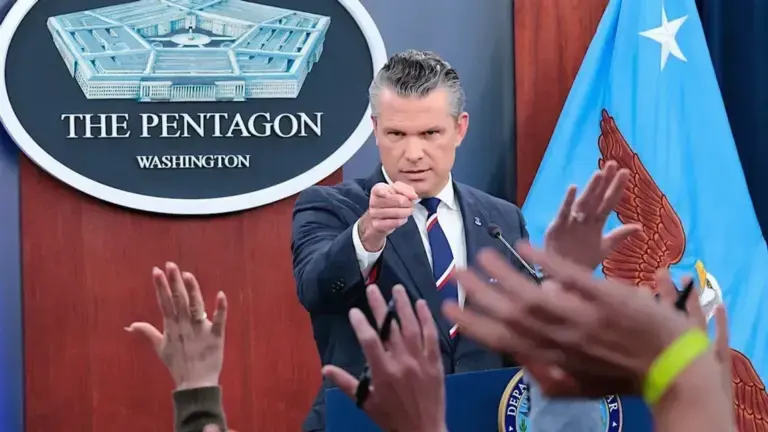
War Secretary Pete Hegseth thwarted an impeachment push Tuesday after the Republican-led House voted 211-204 to send eight articles accusing him of violating federal law and abusing his authority to the Judiciary Committee, effectively shelving the effort.

The effort, which Hegseth has called a policy dispute rather than legitimate impeachable offenses, was spearheaded by Rep. Thomas Massie, R-Ky., but did not make it to a floor vote despite growing support for cracking down on the Pentagon chief — even among Republicans.

“One disgruntled congressman wants to shred it over policy disagreements. That’s what it is: policy disagreements, not high crimes, not misdemeanors, not treason, not bribery, not the kinds of offenses the founders intended when they wrote the impeachment clause,” Hegseth said at a Pentagon press conference Tuesday morning.

“The proper remedy for a policy disagreement, it’s legislation, it’s debate, it’s the next presidential election,” he added.

But the impeachment resolution introduced Monday by Massie goes beyond objections to the administration’s military strategy. It alleges that Hegseth violated congressional war powers, authorized unlawful military operations and retaliated against a sitting senator for exercising his constitutional rights.

HEGSETH RIPS IMPEACHMENT PUSH FROM OUTGOING REPUBLICAN AS ‘FARCE,’ ‘STUNT’

The clash puts the limits of impeachment at the center of a growing fight over Trump’s national security agenda, testing whether lawmakers can make a constitutional case for removing Hegseth or are just using impeachment to challenge military and policy decisions they oppose.

Massie’s eight articles centered on several of the Trump administration’s most controversial national security decisions, with three accusing Hegseth of violating the War Powers Resolution during the war against Iran.

The outgoing Kentucky Republican alleges that Hegseth initiated hostilities without congressional authorization, continued military operations after Congress directed their termination and disregarded statutory deadlines requiring the withdrawal of U.S. forces.

Other articles accuse Hegseth of failing to comply with laws intended to minimize civilian casualties, including in connection with a strike on an Iranian school, and conducting unlawful maritime strikes against suspected drug traffickers in the Caribbean.

7 REPUBLICANS REBEL AGAINST TRUMP, VOTE WITH DEMS TO REIN IN IRAN WAR POWERS

The resolution also alleges that Hegseth retaliated against Sen. Mark Kelly, D-Ariz., over a video urging service members to refuse unlawful orders, and unlawfully directed military operations in Yemen and the capture of former Venezuelan leader Nicolás Maduro.

Massie has rejected the suggestion that the impeachment effort is simply a referendum on Hegseth’s job performance or the administration’s military policies.

“The question is whether he committed impeachable acts,” Massie wrote on X Monday. “And the answer is yes, eight times.”

Constitutional law scholar Jonathan Turley largely agreed that the impeachment effort was on shaky ground, arguing that six of Massie’s eight articles should be dismissed outright.

“In my view, six of the eight articles should be nonstarters, including the Iranian articles,” Turley wrote on X Tuesday.

Turley acknowledged that Congress has a legitimate constitutional interest in asserting its war powers, but argued that Massie was attempting to use impeachment to settle a longstanding dispute over presidential authority. Presidents of both parties, including Bill Clinton, Barack Obama and Joe Biden, have claimed broad authority to launch military operations without congressional approval, he noted.

“Massie is not going to ‘litigate’ the matter through impeachments,” Turley wrote, arguing that Trump was exercising authority long claimed by his predecessors.

GOP REP THOMAS MASSIE INTRODUCES 8 ARTICLES OF IMPEACHMENT AGAINST WAR SECRETARY PETE HEGSETH

Vice President JD Vance, however, argued Tuesday that lawmakers were using impeachment as a substitute for exercising their legislative powers.

“Has Pete Hegseth committed impeachable crimes? The question is absurd and the answer is: obviously not,” Vance wrote on X.

“Congress has so many tools for registering its policy disagreements. Rather than use them, they’re going to try to impeach Pete Hegseth,” he continued.

Vance suggested the effort was driven less by the war with Iran than by opposition to Hegseth’s broader changes at the Pentagon, including shifting U.S. forces away from Europe and Ukraine and reorganizing the military’s senior leadership.

TRUMP’S PENTAGON SHAKE-UP REVIVES A PRESIDENTIAL POWER PLAY WITH A LONG HISTORY

“This isn’t about Iran, this is about the fact that Pete took on the bureaucracy at the Pentagon,” Vance wrote.

DRAMATIC FOOTAGE SHOWS ALLEGED NARCO BOAT ERUPT IN FIREBALL DURING US MILITARY STRIKE

Turley dismissed the article of impeachment concerning Maduro’s capture, pointing to court precedent involving the U.S. seizure of former Panamanian leader Manuel Noriega.

But Turley drew a distinction between those disputes over executive authority and two allegations he considered more serious: the maritime strikes against suspected drug traffickers and Hegseth’s treatment of Sen. Mark Kelly.

“The ‘double tap’ allegation would be a war crime, if true,” Turley wrote, noting that Trump and Hegseth have denied issuing such orders.

The effort to punish Kelly over a video urging troops to refuse unlawful orders also raised serious questions about a sitting senator’s free speech rights and potential undue command influence, Turley argued.

Still, he stopped short of concluding that either allegation met the constitutional threshold for impeachment, saying more evidence was needed.

DEMOCRATS RALLY BEHIND GOP LAWMAKER’S HEGSETH IMPEACHMENT PUSH, SIGNAL MORE TO COME IN JANUARY

“I will be looking for the underlying evidence on those two articles,” he wrote, describing both as potentially problematic but difficult to establish as “high crimes and misdemeanors.”

The Constitution authorizes impeachment for treason, bribery or other high crimes and misdemeanors, a standard that does not require proof of a criminal offense. Congress has historically treated serious abuses of official power as potential grounds for impeachment, though the precise boundaries remain contested.

That distinction complicates the argument that the allegations can be dismissed simply because they involve military policy. Lawmakers can disagree with a defense secretary’s decisions without those disagreements constituting impeachable misconduct, but allegations that an official knowingly violated the law or abused the powers of his office present a different constitutional question.

Hegseth, meanwhile, has maintained that the operations cited in the resolution were lawful and directed by the president.

“I stand behind every one of these operations. I was proud to execute them, and I would do it again tomorrow,” Hegseth said Tuesday.

President Trump also rallied behind his defense secretary following the press conference, praising his performance and attacking Massie, who lost his Republican primary earlier this year.

“In just under two years, Secretary Hegseth has worked side-by-side with President Trump to restore American power on the world stage, build the strongest military in generations, and instill a warrior ethos at the Pentagon. President Trump and Secretary Hegseth have taken bold, necessary action to deny the Iranian regime the ability to develop a nuclear weapon, bring narco-terrorist Nicolás Maduro to American justice, and defend our homeland from dangerous terrorists and cartels – saving American lives,” White House spokesperson Olivia Wales told Fox News Digital.

“This spectacle only proves what we’ve known all along: Thomas Massie and the Democrats are far more interested in playing political games than working to improve the lives of the American people,” Wales added.

Trump Cabinet officials rallied behind Hegseth, with Collins, Burgum, Rollins, Mullin and Turner posting messages of support on social media. Rubio and Blanche also defended Hegseth publicly.

Rubio said he carried out Trump’s orders “quite effectively” and Blanche rejected claims that he had done anything illegal or wrong.

This post appeared first on https://www.foxnews.com

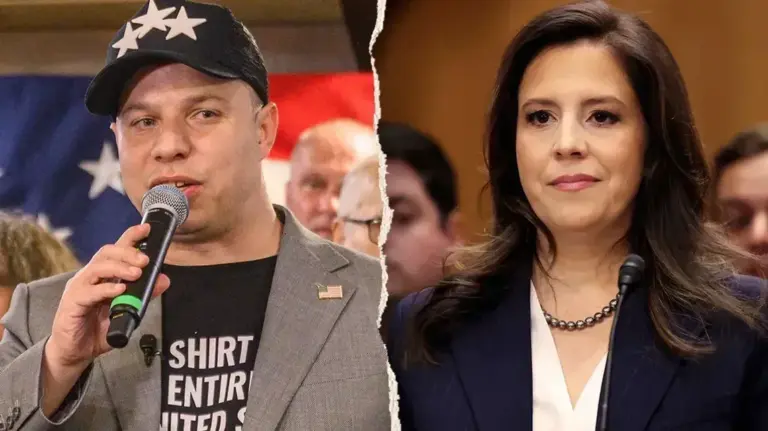
Anthony Constantino, a former boxer and the CEO of the printing company Sticker Mule, delivered a profanity-laden victory speech after his election to New York’s 21st Congressional District, kicking a reporter out of the room and calling on President Donald Trump to pardon Sean “Diddy” Combs.

“I think President Trump should consider freeing Diddy,” Constantino said, referring to the incarcerated producer.

“A historic New Yorker that did great things for New York State. I think we should consider it.”

Constantino’s brazen speech contrasts sharply with the demeanor of the district’s outgoing incumbent, Rep. Elise Stefanik, R-N.Y., the former No. 3 Republican in the House of Representatives. It also raises questions about whether Constantino earnestly hopes to see the administration pardon Combs, who was convicted of prostitution across state lines.

DIDDY’S FEDERAL PRISON RELEASE DELAYED WEEKS AFTER REPORTED SOLITARY CONFINEMENT STINT

“Where’s my lawyer at? I have a very good lawyer. Listen, I’m fighting for New York. I want to bring excitement back to New York. I want to bring jobs back to New York,” Constantino said moments before his request.

During his 31-minute speech, Constantino spoke about political allies, enemies, the media, power struggles and his vision for the country. He even had a rapper friend perform a freestyle tribute to his congressional election.

At points, Constantino adopted an openly combative tone — especially with respect to members of the press.

“Listen to me, scumbags. Telling people the truth is the right thing to do. I had to listen to you a–holes say ‘dairy farmer Blake Gendebien,’” Constantino said, referring to news coverage of his Democratic challenger.

“He’s not a dairy farmer; his parents were dairy farmers … but you wouldn’t say that because you’re a bunch of f—ing a–holes,” he added.

At one point, Constantino singled out a pair of reporters in the crowd.

“Look at that a–hole right there. Him. Look at that guy. Take a picture of him … and Kay Lisa, another f—ing a–hole.”

Constantino then ordered one of the reporters removed from the room, describing him as an “angry motherf—er.”

ANTIFA SUPPORTER CHARGED WITH STEALING GOP CAMPAIGN SIGNS IN NY RACE TO REPLACE STEFANIK

“Actually, do me a favor. This guy is so — he’s looking at me. Kick him out. Just kick him out. Get him out of here. You’re just a rude person. If you want to be tough on me, get out. Go right now. I’m not playing games with you. You deleted two of my interviews … bye bye,” Constantino said.

Stefanik, a former GOP conference chair and Trump’s first pick to become U.S. ambassador to the United Nations, was considered by many a rising star within the Republican Party.

Although Stefanik began the confirmation process for the nomination, Trump ultimately rescinded his pick, calling on Stefanik to remain in the House, where Republicans held a razor-thin majority. A few months later, Stefanik announced that she would not pursue reelection or a bid for governor, citing a desire to focus on her family and avoid a primary contest.

Notably, Stefanik endorsed Constantino after the GOP primary for New York’s 21st Congressional District.

“In the coming months, I know Anthony will continue to work hard to earn your support. He will put the people first and will be a strong representative in Washington for the incredible hardworking families in our great district,” Stefanik said in a post to social media.

Constantino also secured backing from President Donald Trump.

Constantino made headlines in 2024 when he put up a giant 100-foot “VOTE FOR TRUMP” sign atop his company building.

City officials, including Democratic Mayor Michael Cinquanti, argued the sign violated code because it “presents a dangerous distraction and impacts traffic flow,” especially at night when it is illuminated.

After a legal battle, courts ruled that Constantino had a right to keep the sign in place, a decision he called an “epic win for free speech.”

JOHN RICH SAYS KATHY HOCHUL IS ‘RUNNING OVER’ NY FARMERS WITH RENEWABLE ENERGY AGENDA

Last Tuesday, Constantino narrowly won his race in a 50.9% to 48.8% victory over Gendebien.

During his campaign, Constantino stressed his alignment with Trump, highlighting his record as a business owner, promised to bring reliable cell phone service to northern New York and reduce utility costs, according to his website.

Having secured his congressional race, Constantino will be sworn into office on Jan. 3, 2027, alongside the rest of the 120th Congress.

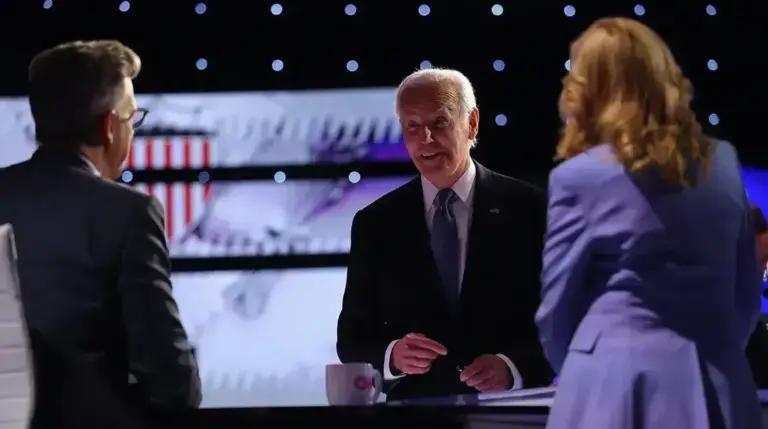
Former President Joe Biden is facing sharp backlash after dismissing his disastrous 2024 debate performance against President Donald Trump as “not very consequential” — despite dropping out of the presidential race just 24 days later.

When asked about what his “perspective” on the June 27, 2024 debate is now in an interview with People Magazine released Wednesday, Biden suggested he felt his debate performance was inconsequential.

“Look, I don’t know anybody who hasn’t made a mistake in a debate,” Biden told People Magazine. “To me, it was not very consequential. First of all, I thought there’d be another debate, which there wasn’t.”

JILL BIDEN SAYS SHE THOUGHT JOE WAS HAVING A STROKE DURING HIS DISASTROUS 2024 DEBATE PERFORMANCE

“But notwithstanding the fact that there wasn’t another debate, it didn’t disturb me because it wasn’t consequential,” he added.

Biden’s comments drew swift criticism on social media on Wednesday.

SOCIAL MEDIA ERUPTS AFTER JILL BIDEN REVEALS SHE WAS ‘FRIGHTENED’ WATCHING JOE’S DISASTROUS DEBATE

“Joe Biden now claims his 2024 presidential debate against President Trump, which forced him to drop out of the race, was not very consequential,” former Trump campaign operative Steve Cortes wrote Wednesday in an X post.

“Just 24 days after the ‘not very consequential’ presidential debate, Joe Biden ended his campaign for President,” Cortes added.

Conservative commentator Steve Guest wrote on X that Biden “is TOTALLY delusional.”

Meanwhile, former National Republican Senatorial Committee senior adviser Matt Whitlock asserted in a Wednesday post on X that it was actually “the most consequential” presidential debate of all time.

“It was without question the most consequential Presidential debate in history – he [Biden] likely would have stayed the nominee without it,” Whitlock said. “But I’m definitely excited for the other hot takes in the book now.”

“It was the most lopsided debate in history. C’mon, man!” Florida Gov. Ron DeSantis quipped.

During the presidential debate, Biden stumbled over his words, paused for long periods of time and displayed confused facial expressions.

The Office of Joe and Jill Biden did not immediately respond to Fox News Digital’s request for comment.

“Biden subsequently dropped out of the presidential race on July 21, 2024, just a few weeks after the debate, amid mounting pressure from Democratic allies to end his re-election bid.

Former first lady Jill Biden notably claimed in a CBS News Sunday Morning interview clip released in May 2026 that she thought her husband was having a stroke on stage during the debate.

Trump’s White House did not immediately respond to Fox News Digital’s request for comment.

Additionally, Biden said Sunday that he plans to scale back public appearances promoting his new presidential memoir, “Promise Me, America,” due to his cancer battle.

“My presidential memoir, PROMISE ME, AMERICA, is coming out on November 17th. I hope you’ll read it. It covers my years as President. The challenges we faced, the decisions I made, and why I made them. It’s about who we are as a nation,” Biden said in an X post. “What we stand for. And America’s role in the world.”

“While writing the book, I was diagnosed with cancer, a disease known all too well to millions of Americans and their families,” the former president added. “My doctors continue to be encouraged by how I’ve responded to treatment. And the prayers and kind words and well wishes from so many of you have meant more to me and Jill and our family than you can ever know. Some days are better than others. It hasn’t stopped me. But sometimes it slows me down.”

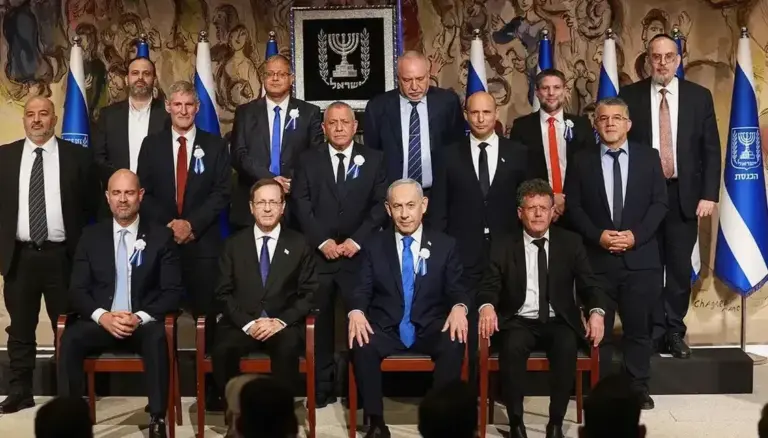
Israel’s newly elected parliament was sworn in Tuesday, marking the beginning of a political transition that could end Prime Minister Benjamin Netanyahu’s long tenure in power. Despite the opposition’s parliamentary gains, the country remains without a new government, and negotiations to form one face significant obstacles.

At the center of those negotiations is former Israeli military chief Gadi Eisenkot, who was tasked by President Isaac Herzog on Sunday with assembling Israel’s next governing coalition after 67 lawmakers recommended him for the position, compared with 46 who supported Netanyahu.

Although Eisenkot’s Yashar party won 21 seats in the Oct. 27 election, he is working closely with former Prime Minister Naftali Bennett, whose B’Yachad party, formed with former Prime Minister Yair Lapid, secured another 12 seats.

NETANYAHU FACES COALITION SHOWDOWN AS RIVALS MANEUVER TO FORM ISRAEL’S NEXT GOVERNMENT

The two parties have not merged, but their cooperation effectively gives Eisenkot the negotiating backing of 33 lawmakers — more than Netanyahu’s Likud, which remains the largest individual party in the Knesset with 27 seats.

A source with knowledge of discussions within the bloc seeking to replace Netanyahu told Fox News Digital that Bennett has decided to act as a political kingmaker, supporting Eisenkot’s leadership bid rather than seeking the premiership himself.

Bennett intends to coordinate closely with Eisenkot throughout the negotiations while preserving his party’s independent leadership and parliamentary identity, according to the source.

The arrangement does not create a new 33-seat party or guarantee that the two leaders will agree on every coalition arrangement. But it places Eisenkot in a stronger negotiating position than his party’s 21 seats alone would suggest.

During Tuesday’s swearing-in of the new Knesset, Netanyahu called for a national unity government, citing Israel’s security challenges, but also sharply attacked the Arab parties, accusing them of supporting terrorism and warning against forming a government dependent on their votes.

Bennett, normally an outspoken political figure who has largely avoided the spotlight during the coalition negotiations, broke his relative silence to repeatedly confront Netanyahu during the speech.

FORMER ISRAELI PM EMERGES AS WILD CARD IN HIGH-STAKES ELECTION WITH MIDDLE EAST’S FUTURE AT STAKE

“What about your Qatari advisors?” Bennett shouted, referring to the investigation into allegations that members of Netanyahu’s inner circle had financial ties to Qatar while working for the prime minister. Bennett also demanded to know why Netanyahu had not established a state commission of inquiry into the Oct. 7, 2023, Hamas attacks and challenged him to declare Qatar an enemy state.

The confrontation disrupted Netanyahu’s address, with other lawmakers joining the shouting as the prime minister continued warning against a government supported by Arab parties.

Eisenkot responded with an unusually forceful condemnation. “I sat and listened to the outgoing prime minister’s delusional, divisive, hate-filled and shameful speech,” Eisenkot said in a statement provided to Fox News Digital on Nov. 10. “I am now even more convinced that he is unfit to remain in office for even one more minute.”

Eisenkot subsequently instructed his negotiating team to cancel a meeting scheduled with Likud representatives for Wednesday.

In a separate statement, Yashar said the canceled meeting had been intended to explore coalition possibilities based on Eisenkot’s four governing principles, but Netanyahu’s speech made the planned discussions untenable.

FORMER ISRAELI ARMY CHIEF GADI EISENKOT EMERGES AS NETANYAHU’S LEADING ELECTION CHALLENGER

Netanyahu, however, continued advocating for a unity government on Wednesday, arguing that Israel’s security challenges demanded cooperation across political divisions, according to The Times of Israel.

Despite the public confrontation, a national unity government remains one of the most tangible scenarios under consideration, according to a source with knowledge of negotiations within the bloc seeking to replace Netanyahu.

The source told Fox News Digital that such an arrangement would depend on Netanyahu agreeing not to serve as prime minister first, potentially allowing Eisenkot to lead the government under a rotation agreement while Netanyahu assumes the position of alternate prime minister.

Eisenkot’s allies are keeping several options open, according to the source, including agreements with ultra-Orthodox or Arab parties, partly to strengthen their negotiating position and increase pressure on Netanyahu to accept a power-sharing arrangement.

But whether Netanyahu would agree to relinquish the premiership, even temporarily, remains unclear. The source emphasized that negotiations are fluid and that no agreement has been reached.

NETANYAHU GAINS OVERNIGHT AS ISRAEL ELECTION HEADS TOWARD POLITICAL DEADLOCK

Why forming a government remains so complicated

The official election results left Netanyahu’s bloc with 53 seats, while the four parties seeking to replace him secured 48. The remaining 19 seats went to two Arab-led parties: the Joint List, with 11, and Ra’am, led by Mansour Abbas, with eight.

While 67 lawmakers supported Eisenkot receiving the mandate to form a government, that support does not automatically translate into a workable governing coalition.

Herzog acknowledged the challenge during consultations with parliamentary leaders, citing disagreements and mutual political vetoes that could prevent either side from forming a stable government.

Eisenkot’s principal partners are Bennett, Lapid, Yair Golan of the Democrats and Avigdor Liberman of Yisrael Beytenu. Together, their parties hold 48 seats, 13 short of the 61 generally needed for a parliamentary majority.

Eisenkot has outlined four principles for potential coalition partners: recognizing Israel as a Jewish and democratic state, accepting the values of the Declaration of Independence, supporting military or civilian national service for all, and recognizing Hamas as a terrorist organization whose military and governing capabilities must be dismantled.

But those conditions have created a difficult political equation.

The ultra-Orthodox parties, Shas and United Torah Judaism, collectively hold 13 seats — precisely the number Eisenkot’s existing four-party bloc would need to reach 61.

However, both parties have historically opposed broadening military conscription to include ultra-Orthodox religious students, directly conflicting with Eisenkot’s demand for national service.

At a Nov. 10 faction meeting, Eisenkot reiterated that he would not abandon the principle of universal military, national or civilian service, according to The Times of Israel.

The disagreement became even more visible Wednesday, when Bennett’s party submitted legislation proposing expanded benefits for soldiers and reservists, while United Torah Judaism introduced bills seeking to preserve military draft exemptions for religious students, The Times of Israel reported Tuesday.

The Arab parties present a different challenge.

While Ra’am’s eight lawmakers could help Eisenkot establish a government, Liberman has rejected relying on Arab parties, and the political acceptability of such an arrangement remains disputed within the bloc.

A source within Eisenkot’s party told Fox News Digital that the party has not categorically ruled out cooperation with Ra’am, provided its leadership accepts the four governing principles.

The source acknowledged that negotiations remain difficult and that multiple coalition arrangements are still under consideration.

One option involves securing the support of ultra-Orthodox parties. Another would require cooperation with Arab lawmakers, potentially including support from outside the government. A broader national unity arrangement involving Likud has also been discussed.

Each scenario presents political obstacles, leaving Eisenkot facing the difficult task of assembling a coalition among parties with sharply different views on religion, national identity and security policy.

NETANYAHU DEFIES EXIT POLLS AS VOTE SHIFTS IN HIS FAVOR, BUT MAJORITY REMAINS ELUSIVE

Eisenkot moves to challenge Netanyahu before taking power

Even without a new government, Eisenkot and his allies have begun exercising their influence in the newly sworn-in parliament.

In a Monday statement provided to Fox News Digital, Yashar announced that it had submitted legislation to establish a state commission of inquiry into the Oct. 7, 2023, Hamas attacks and introduce term limits for the prime minister.

The party also submitted proposals to repeal legislation associated with Netanyahu’s judicial overhaul, including changes to the judiciary, the attorney general’s authority, the police and the circumstances under which a prime minister can be declared unable to serve.

A vote to replace current Knesset Speaker Amir Ohana, a Netanyahu ally, is scheduled for Nov. 17.

The appointments could give Eisenkot’s allies considerable influence over Israel’s legislative agenda before they secure control of the government.

Eisenkot signals a different approach to Washington

Beyond the domestic political negotiations, Eisenkot has also sought to reassure American leaders about the future of U.S.-Israel relations.

In a Nov. 4 public statement addressed to Americans and the international community, Eisenkot pledged to restore bipartisan cooperation with Washington and deepen Israel’s relationship with the United States.

“The bond between Israel and the United States is more than an alliance between governments,” Eisenkot wrote. “It is a partnership between peoples, built over generations, sustained by shared democratic values, and strengthened by the conviction that our nations are more secure and more prosperous when we stand together.”

He also directly addressed his willingness to work with President Donald Trump.

“I look forward to working closely and constructively with President Trump and his administration, whose friendship and commitment to Israel we deeply value,” Eisenkot said.

The message comes amid heightened debate in Washington over the future of U.S. support for Israel, following the American midterm elections and disagreements over the country’s regional policies.

A source within Eisenkot’s party told Fox News Digital that rebuilding relations with the United States, including with both major American political parties, would be among the priorities of a new government.

Eisenkot has also emphasized his intention to pursue regional cooperation and diplomatic opportunities while maintaining Israel’s security commitments.

ISRAEL HEADS INTO DEEPLY DIVIDED ELECTION AS OCT. 7 RECKONING LOOMS: WHAT TO KNOW

What happens next?

Under Israeli law, Eisenkot has 28 days from Nov. 8 to form a government, giving him until Dec. 6 to reach an agreement. Herzog can grant an extension of up to 14 additional days, potentially pushing the deadline to Dec. 20.

If Eisenkot fails, the president may give another lawmaker the opportunity to form a government. Additional parliamentary procedures would follow if a second attempt also fails, potentially culminating in another national election.

The outcome could determine not only who becomes Israel’s next prime minister, but also the country’s direction on military conscription, judicial reform, accountability for October 7 and its relations with Washington.

For now, Israel is experiencing an unusual political transition: a newly elected parliament is beginning to challenge the outgoing government’s agenda, while the leader tasked with forming its replacement is still negotiating over who will join him.

Eisenkot has the presidential mandate, Bennett’s backing and the support of a parliamentary majority willing to recommend him. What he does not yet have is an agreement among those parties on how to govern together.


EXCLUSIVE: A memo describing the new White House hierarchy under chief of staff Stephen Miller circulated within the Trump administration this week, and details how Cabinet secretaries will now have more control over their own messaging.

This is a shift from what insiders say was administration-wide communications control implemented by former chief of staff Susie Wiles during the first nearly two years of President Donald Trump’s second term.

“This will streamline the Cabinet, making it a more effective instrument for the President, whereas previously it was too constrained,” a source familiar with the message told Fox News Digital.

The memo was sent by Miller’s office after he took over the role on Monday. It was titled as a memo on administrative matters and personnel changes, the source said.

THE STONING OF STEPHEN MILLER, NOW RUNNING THE TRUMP WHITE HOUSE

“The White House position of Cabinet Secretary will be changed to the role of Director of Cabinet Relations, focused on providing support and reinforcement of President Trump’s tremendous Cabinet Secretaries,” details the memo, which Fox News Digital viewed.

“Each cabinet leader serves as the best leader and communicator for their individual Departments, and this new position will ensure our Cabinet is resourced and bolstered by the White House to deliver swift, critical, and lasting wins for the American people,” the memo continues.

Another source who is familiar with day-to-day administration operations believes the memo signals a shift in communications policy, giving different agencies the ability to control their own messaging now that Miller has become chief of staff.

The source said that previously, they believe Wiles had a chokehold on nearly all the administration’s communications, and that there were “a lot of prescriptive directives” from Wiles’ camp.

“I mean, to me, it reflects well on Miller and his team and I think it’s really smart to be making these moves quite clear, to be communicating clearly and effectively, you know?” the source said, speaking of the policy shake-up described in the memo.

The source added that the policy change is “unleashing the Cabinet to be the captains of their own ship.”

“It’s more [of] a recognition that you can’t possibly effectively micromanage this wide of an organization and that sometimes it might be better to trust and invest in a support system that elevates the people who are closest to the issues,” the source said.

TRUMP’S NEW PRESS SECRETARY FACES FIRST MAJOR TEST AS WHITE HOUSE BRIEFING ROOM ENTERS NEW ERA

WHITE HOUSE THREATENS POLITICO WITH ‘CONSEQUENCES’ IF IT DOESN’T RETRACT SUSIE WILES REPORTING

A former Trump administration official had much more direct criticism of Wiles’ management style.

“She wants complete authority,” the source said.

“The control doesn’t come from, ‘hey, you have to do this.’ The control comes from threat of duress. Like, ‘if you don’t do this, I’m going to destroy you in the media,'” they continued. “The thing is, she has been very clear. ‘I can’t control [Trump]. I can control everything else.'”

The source accused Wiles of approaching Cabinet secretaries and warning them that if they said anything off script in the media, that midterm GOP election losses would be blamed on them.

TRUMP CLOSING IN ON NEW PRESS SECRETARY AS ADMINISTRATION OFFICIALS PUSH FOR PICK WHO COULD BREAK THE MOLD

“It’s absolute control,” the source said.

The memo also highlights some hierarchical changes within the administration, saying the director of presidential scheduling and the Office of Presidential Scheduling will report directly to Chamberlain Harris, the deputy director of outer oval operations.

It also confirms previous reporting that Caleb Orr, formerly the assistant secretary of state for economic and business affairs, will become the chief of staff for policy.

“The White House will run a clear and regular policy process through the Deputy Chief of Staff for Policy and the National Security Advisor, with clearly defined responsibilities and assignments and no overlapping policy portfolios,” the memo says.

Wiles did not return Fox News Digital’s request for comment by time of publication.