Archive

November 3, 2026

Browsing

Marvell Technology is making a high stakes gamble on the future of artificial intelligence with its announcement to acquire optical components specialist Lumentum in an all stock merger. By fusing semiconductor prowess with advanced optical technology, Marvell aims to solve one of the biggest bottlenecks in the current AI boom: how to move massive amounts of data between chips fast enough to keep pace with evolving large language models. Chief Executive Matt Murphy described the move as the creation of an entirely new category of company, emphasizing that seamless integration between electronics and optics is essential for scaling next generation AI infrastructure.

The financial structure of the deal relies on a fixed ratio where Lumentum shareholders will receive four and a half Marvell shares for every single share they hold. While the transaction carries an implied enterprise value of 115 billion dollars for Lumentum, investors reacted with immediate skepticism on Monday. Marvell saw its shares dip six percent while Lumentum tumbled eleven percent, suggesting a degree of market nervousness regarding the valuation or perhaps broader fatigue surrounding sustainable infrastructure spending. Despite these fluctuations, the deal represents a continuation of Marvell’s aggressive expansion strategy, following its earlier multi billion dollar acquisition of Celestial AI.

Addressing critics who worry about the incestuous nature of AI investment circles, particularly concerning Nvidia’s role as both an investor and partner, Murphy remained steadfast. He framed the acquisition as a strategic doubling down on the existing ecosystem led by Nvidia rather than a risky dependency. By consolidating two critical supply chain pieces into one entity, Marvell believes it can offer stickier products that better serve the booming demand for data centers. If everything goes according to plan, this industrial marriage is expected to finalize during the first half of 2028, potentially reshaping how the world builds the nervous system for artificial intelligence.

The Philadelphia semiconductor index remained largely stagnant on Monday as a tug-of-war played out between different sectors of the chip market. While the broader SOX index, which tracks the thirty largest semiconductor firms in the United States, dipped slightly during afternoon trading, the decline was kept in check by a surprising surge in analog chip stocks. These gains acted as a vital cushion, effectively offsetting losses seen across companies specializing in memory and PC components.

Much of the positive momentum centered on Analog Devices, which has been making waves through its strategic collaboration with Nvidia. The two giants are working together to expand what industry insiders call physical AI, blending digital intelligence with real-world sensory hardware. This partnership has pushed ADI stock toward a new buy zone, fueled by robust growth projections as AI moves beyond data centers and into tangible machinery.

This internal balancing act highlights a shifting dynamic within the semiconductor landscape. While the initial frenzy surrounding generative AI focused heavily on high-end GPUs and massive memory banks, investors are now recognizing the essential role of analog technology. By bridging the gap between software and physical reality, these specialized chips are becoming an indispensable part of the infrastructure required to make artificial intelligence functional in the physical world.

Investors are bracing for a turbulent stretch as a confluence of corporate earnings, political upheaval, and economic data threatens to shake the foundations of the current market narrative. Coming off a bruising sell-off in artificial intelligence stocks that left the Nasdaq 100 teetering on the edge of an official correction, traders are searching for signs of stability. The atmosphere remains tense, with market participants hypersensitive to any hint of slowing AI demand or excessive capital spending among the tech elite.

The primary focus falls on Apple, which reports its third-quarter results this Monday. As one of the world’s most valuable companies, Apple’s performance is expected to set the tone for the broader tech sector. Beyond the raw revenue and earnings figures, Wall Street is eager to hear from new CEO John Ternus regarding the company’s AI strategy. While Apple does not spend on infrastructure at the same astronomical scale as Microsoft or Meta, its approach to integrating AI into its ecosystem will be a critical barometer for investor sentiment in a post-hype environment.

Beyond the boardroom, geopolitical tensions and domestic politics are adding layers of uncertainty. Oil prices have already seen sharp swings based on shifting expectations of diplomacy or conflict between the U.S., Israel, and Iran. Meanwhile, the arrival of the midterm elections introduces a historical paradox: while markets often struggle in the immediate lead-up to voting day, they typically rally afterward. Analysts note that Washington gridlock often favors Wall Street, leading many to view potential short-term dips as buying opportunities ahead of a projected year-end climb.

As the week unfolds, the market will be juggling these diverse catalysts alongside critical employment data. With JPMorgan and other major institutions eyeing significant upside for the S&P 500 despite near-term volatility, the overarching question remains whether the AI trade can find its footing again or if the combination of political shifts and earnings disappointments will trigger a deeper retreat. For now, investors are simply buckling up for what promises to be another wild ride.

The stock market entered November under a cloud of uncertainty following a volatile stretch for technology giants. According to Dave Sekera, chief US market strategist at Morningstar, investors are shifting their focus away from the mere construction of artificial intelligence infrastructure toward actual profitability. This transition has triggered a wave of selling across several high profile names as the honeymoon period for massive capital expenditures begins to fade.

Recent earnings reports from industry titans like Alphabet and Amazon sparked anxiety when they missed consensus expectations on both revenue and profit. These disappointments suggested that the return on investment for expensive AI builds may arrive more slowly than bulls previously hoped. Even companies that managed to beat immediate expectations, such as Intel, saw their share prices tumble due to weak future guidance, which dragged down semiconductor heavyweights like Nvidia and AMD in a sympathetic selloff.

Amidst this instability, experts are urging investors to refine their portfolios by distinguishing between speculative growth and sustainable core holdings. While some commodity oriented tech stocks appear overvalued in light of slowing momentum, others present buying opportunities for those looking toward long term stability. As Apple, Palantir, and Arm Holdings prepare to report their own results, the market remains hypersensitive to any sign that AI promises are failing to translate into cold hard cash.

Looking ahead to the rest of the month, strategists suggest a disciplined approach to managing positions during this transitional phase. With anticipation building around potential new listings like Anthropic and continued scrutiny of federal interest rate policies, the prevailing advice centers on quality over hype. Investors are encouraged to prioritize companies demonstrating clear paths to monetization while trimming exposure to sectors where valuations have decoupled from financial reality.

As college football enters its final month of regular season play, the race for the Heisman Trophy has shifted dramatically toward South Florida. Two stars from the University of Miami, wide receiver Malachi Toney and quarterback Darian Mensah, have emerged as the clear frontrunners following a dominant October. While there is an inevitable concern that teammates will split the voting in December, their individual statistics are becoming impossible to ignore. Toney has already eclipsed 1,000 yards and is on pace to hit nearly 20 receiving touchdowns by Thanksgiving, while Mensah currently leads the nation in passing scores with a staggering completion rate over 80 percent.

Meanwhile, the road to New York has become significantly steeper for Ohio State’s Jeremiah Smith. Once considered a lock for serious contention, Smith’s candidacy took a hit during a stagnant offensive performance against USC. With freshman Luke Fahey stepping in at quarterback due to Julian Sayin’s injury, the Buckeyes struggled to find rhythm. Although Smith still managed double digit receptions, much of his production came via underneath routes during garbage time rather than game breaking plays. It remains to be seen if he can regain his momentum or if the instability at quarterback will keep him off the podium.

Outside of the primary battle between Miami and Columbus, several other players are fighting for visibility in November. LSU’s Sam Leavitt has quietly climbed back into the conversation after erasing turnovers from his game, setting up high profile clashes against Alabama and Texas that could serve as catalysts for his campaign. Similarly, Duke running back Nate Sheppard continues to carry his team’s offense single handedly, leading the country in total touchdowns despite playing for a less heralded program.

The coming weekend provides a critical crossroads for these hopefuls when Notre Dame travels to face Miami. The Irish quarterback C.J. Carr possesses one of the most efficient records in the league but lacks the eye popping numbers typically required for a trophy win; facing Toney and Mensah represents his best opportunity to prove he belongs in the elite tier. As these storylines converge under the Saturday lights, it appears more likely than ever that the award will head home with one half of Miami’s lethal offensive connection.

Oil prices took a sharp dive on Monday as signs of diplomatic progress between Iran and international mediators eased fears of further supply disruptions. Brent crude plummeted over four percent to settle around 108 dollars per barrel, while West Texas Intermediate slipped below the psychological threshold of 100 dollars. This sudden shift comes just ahead of the US midterm elections, following reports that Iranian negotiators left Qatari-led talks with a concrete proposal on the table. Despite these hopeful signals, tensions remain high, with both sides maintaining readiness for potential escalation should diplomacy fail.

At the same time, major oil producing nations are attempting to stabilize a volatile landscape. Seven key OPEC plus members recently agreed to maintain current production targets through December, though many Gulf states continue to pump below those limits due to ongoing regional conflicts. Market analysts warn that long term volatility persists; some projections suggest Brent could soar toward 140 dollars by 2027 if output remains significantly suppressed compared to historical averages.

Beyond petroleum, the energy sector is feeling the massive gravitational pull of the artificial intelligence boom. A surge in data center construction is driving an unprecedented appetite for power, pushing US natural gas production toward record highs to fill gaps left by missing Qatari shipments. Industry giants like EQT Corporation are already consolidating through multi billion dollar deals to pivot from traditional production models toward this aggressive demand pull from the tech sector.

Nuclear energy is seeing similar attention as companies prepare for a future where AI requires constant, carbon free baseload power. Uranium producer Cameco noted in its latest quarterly results that while the growth of data centers provides significant upside for nuclear fuel, the industry is diversifying its drivers amid general geopolitical uncertainty. Even as maintenance shutdowns impacted short term margins, the underlying trend suggests that the hunger for electricity created by generative AI is fundamentally reshaping how energy providers plan for the next decade.

Myriad Uranium has officially finalized its acquisition of the Los Altares uranium project in Argentina, marking a significant expansion of its international portfolio. By completing a cash and share agreement with Green Shift Commodities, the company now maintains full ownership of Buenavida Metales S.A., the entity holding mineral claims across a massive 55,000 hectare area in the Chubut province. The financial terms of the deal involved a payment of 300,000 US dollars in cash alongside nearly 1.6 million shares valued at roughly 700,000 US dollars, though these shares remain subject to a hold period until early 2027.

The newly acquired assets are strategically located within the Cerro Solo uranium district, flanking one of Argentina’s most prominent deposits and sitting near the historic Los Adobes mine. According to CEO Thomas Lamb, this move aligns with Myriad’s broader goal of securing high-potential projects in established districts without incurring excessive upfront costs. The site is particularly attractive due to its existing infrastructure of approved environmental impact assessments and its geological profile, which suggests strong potential for in situ recovery methods.

Beyond just gaining access to raw minerals, this transaction provides Myriad with an essential foothold in the South American market. This latest addition complements the company’s current North American holdings, including the Copper Mountain project in Wyoming and operations in Arizona. As part of the arrangement, Green Shift was granted a small net smelter return royalty on the project, although Myriad retains an option to buy back half of that interest for 1 million US dollars as they begin exploring the region’s prospects further.

Graphite One has cleared a major regulatory hurdle in its quest to build a domestic supply chain for electric vehicle batteries. The Ohio Environmental Protection Agency recently granted the company its final air permit for a planned 80 million dollar battery anode plant in Conneaut. This facility, designed to handle blending and coating for synthetic anode materials, is intended to reduce the United States’ heavy reliance on China, which currently dominates the global processing of graphite and has tightened export controls on the critical mineral.

The approval sets a tight clock for the company, as construction must begin within eighteen months to keep the permit active. President and CEO Anthony Huston noted that this milestone brings the firm closer to generating its first revenue and achieving the goal of becoming the first American company to commercially produce synthetic graphite anode material. While standard local building permits are still required, Graphite One is moving into an expedited phase of engineering and procurement to get the project off the ground.

Financing for the ambitious project appears robust, with the Export-Import Bank of the US issuing non-binding letters of interest totaling over two billion dollars. These funds would support a phased expansion of the facility’s capacity from an initial ten thousand metric tons per year up to one hundred thousand metric tons. This Ohio plant serves as the final link in a larger strategic chain that begins at the Graphite Creek deposit near Nome, Alaska, which is considered by the US Geological Survey to be the largest graphite deposit in the country.

The push for domestic autonomy is not limited to Graphite One alone. In a similar move toward national security and energy independence, Titan Mining is working with the US Army to establish a graphite processing facility at the Anniston Army Depot in Alabama. By leveraging deposits in upstate New York and utilizing federal land through long-term leases, these companies are racing to ensure that the future of American energy storage is built on home soil rather than imported materials.

The landscape for cryptocurrency investing in Canada has evolved rapidly since the first Bitcoin and Ether ETFs debuted in 2021. By providing a way to hold digital assets within tax sheltered accounts like RRSPs and TFSAs, these funds bridged the gap between traditional finance and the volatile world of blockchain. The appeal lies primarily in liquidity and ease of access, allowing investors to avoid the complexities of managing private digital wallets while still gaining exposure to the price swings of the digital gold rush.

Recent years have seen a significant expansion in the variety of assets available to Canadian traders. Following the initial success of Bitcoin and Ether products, 2025 marked a turning point with the introduction of North America’s first spot ETFs for Solana and XRP. This diversification was supported by increasing regulatory clarity surrounding XRP in the United States, giving institutional players more confidence to enter the space. This wave of innovation coincided with a massive bull run where Bitcoin surged past 120,000 US dollars toward the end of 2025.

However, entering late 2026, the frenetic energy of previous years has begun to cool. While Bitcoin staged a partial recovery in August, it remains well below its October 2025 peak, leading some investors to adopt a more cautious approach. Despite this pullback, several heavy hitters continue to dominate the market in terms of assets under management. The Fidelity Advantage Bitcoin ETF leads the pack with roughly 1.81 billion Canadian dollars, closely followed by offerings from Purpose Investments and CI Galaxy.

Competition among these providers has sparked a race to lower costs for consumers. Several funds have slashed their management fees recently, with some dropping as low as 0.32 percent to attract long term holders during this period of stabilization. From established giants like iShares moving into Cboe Canada to specialized partnerships involving Galaxy Digital, Canada’s infrastructure for crypto ETFs now stands as one of the most mature globally, offering a sophisticated toolkit for those betting on the future of decentralized finance.

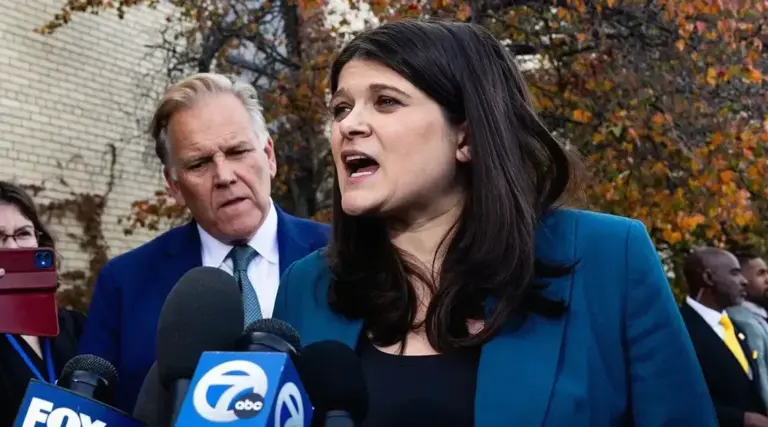
Michigan Republican U.S. Senate candidate Mike Rogers praised Democratic Rep. Haley Stevens for putting America ahead of her party Monday while accusing Democrats of viciously attacking the congresswoman after she stunned her party by endorsing him over Democratic candidate Abdul El-Sayed.

Rogers told Brian Kilmeade on the “Brian Kilmeade Show” that Stevens’ endorsement “flipped this thing upside down,” saying the congresswoman called him Sunday morning while he was on his way to church before ultimately deciding to publicly back his campaign following her bruising primary loss to El-Sayed.

“This is a congresswoman who just stood up and said, ‘America is more important than my party right now,'” Rogers said. “And we cannot elect somebody who is so anti-Jewish, who is divisive, who’s angry, who was mean about his politics. It’s just the wrong thing to do.”

EL SAYED’S LEFT-WING ALLIES ATTACK ‘EVIL’ STEVENS AFTER BOMBSHELL ROGERS ENDORSEMENT

Rogers’ comments came as Fox News reported Monday that Stevens’ endorsement triggered backlash from top Democrats, including Senate Minority Leader Chuck Schumer, D-N.Y., and former House Speaker Nancy Pelosi, D-Calif.

Schumer called the move a “despicable betrayal,” while Pelosi accused Stevens of “dangerously” betraying Michigan families by backing Rogers.

The endorsement marked a dramatic break for Stevens, who had stopped short of explicitly endorsing El-Sayed in the weeks after losing the Democratic primary but continued to publicly align herself with the party. During an October CNN interview, Stevens was repeatedly pressed on whether she supported El-Sayed and declined to explicitly say she endorsed him, instead stressing that she was “still on the team” and planned to support Democrats on the ballot.

The tensions between the former primary rivals had been building in the closing stretch of the race. Stevens pressed El-Sayed to condemn an outside group’s ad linking U.S. support for Israel to higher grocery prices, which she called antisemitic, before El-Sayed’s campaign asked her to stay away from its remaining campaign events. El-Sayed said his campaign did not produce the ad and that he disagreed with its contents.

MICHIGAN DEMOCRAT HALEY STEVENS BACKS EL-SAYED AFTER NARROW PRIMARY DEFEAT, CALLS SOCIALISM ‘DANGEROUS’

Meanwhile, days before she publicly endorsed Rogers, Stevens’ fiancé, Jason Turkish, had already broken with the Democratic nominee. Turkish, a Jewish Michigan attorney and registered Democrat, told reporters at a Rogers campaign event that he planned to vote for the Republican, arguing that El-Sayed’s rhetoric on Israel had made the Jewish community “less safe.” Turkish described his decision as “putting country before party.”

Still, even hours before the endorsement, Stevens appeared to be denying that she planned to back Rogers. Fox News Digital reported Monday that Rep. Debbie Dingell, D-Mich., said she spoke with Stevens around midnight Saturday and was told reports of an impending Rogers endorsement were a “rumor” and “not true.”

However, hours later, Stevens was standing alongside Rogers at a Detroit church service, where she ultimately announced she would cross party lines and endorse him over El-Sayed.

“We didn’t know what was going to happen. We were driving to the church yesterday morning when the call came in,” Rogers said. “I just invited her to come in. She decided between when she got in the car and she got to the church, she was going to not only withdraw the endorsement, but endorse me.”

DEMOCRATS WHO ‘NEVER VOTED REPUBLICAN’ BACK ROGERS OVER EL-SAYED IN RAZOR-CLOSE RACE

Rogers, who said the pair had a “great conversation” on the phone, also pushed back on suggestions that Stevens had received anything in exchange for the endorsement, saying his campaign had no advance knowledge that she planned to back him.

“Absolutely not. Matter of fact, we didn’t know what was going to happen,” Rogers said when asked whether he had offered Stevens anything. “She said, ‘I’ve not asked anyone to go with me, I’m just telling you what I’m doing.'”

Rogers then took aim at Democrats who have attacked Stevens since her announcement.

“They want to attack Haley Stevens for saying, ‘I’m a Democrat, I’m voting Democrat up and down the ticket, except for one race, Abdul El-Sayed. I am voting for Mike Rogers,’” Rogers said.

ROGERS ARGUES EL-SAYED IS VULNERABLE WITH 2 TRADITIONALLY DEMOCRATIC BLOCS AS OBAMA HEADS TO MICHIGAN

“Their whole plan now is to come out and attack her with viciousness,” he continued. “She’s the only one in the Democrat Party today that has enough common sense to know you elect somebody that hates a group of people this much, it’s gonna be a disaster for Democrats and America.”

During his appearance on Kilmeade’s radio show, Rogers was pressed on a New York Times/Siena poll released Sunday that showed El-Sayed leading him 53% to 42% among likely Michigan voters, a significantly wider margin than other surveys of the race.

Rogers rejected the findings, pointing to his campaign’s internal polling and modeling, which he said showed the race within one or two points.

“We have it as a one- or two-point race,” Rogers said. “Our polling, our modeling and polling shows this is tied or we’re up by two. So we think that’s closer to the truth.”

Rogers also argued that the poll underestimated his support among Black voters in Detroit, saying his campaign had made “great inroads” in the community.

SIGN UP TO GET THE POLITICS NEWSLETTER

His comments come after Stevens publicly questioned El-Sayed’s outreach to Black voters. During the October CNN interview, when she would not explicitly back El-Sayed, Stevens said she had urged El-Sayed and his campaign to deliver a speech to the Black community.

“But yeah, I mean, that didn’t happen,” Stevens said at the time. “That speech hasn’t happened.”

This post appeared first on https://www.foxnews.com