Archive

November 20, 2026

Browsing

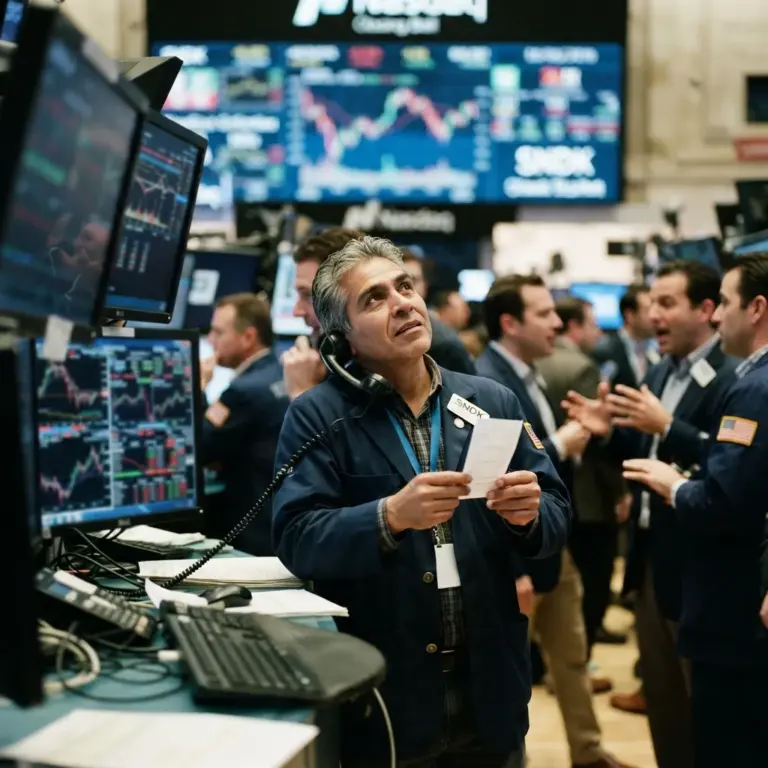
Wall Street is bracing for another high profile equity event as Sandisk prepares to execute its first ever forward stock split following the close of trading today. The move comes at a time of staggering growth for the memory and storage solutions titan, which has seen its valuation skyrocket nearly 2,400 percent since debuting in February 2025. By implementing an 8 for 1 split, the company aims to make its shares more accessible to retail investors, effectively lowering the nominal price per share while expanding the number of outstanding shares available on the market.

The catalyst behind this meteoric rise is the global obsession with artificial intelligence. As corporations pour billions into building out AI data centers, demand for Sandisk’s NAND flash memory and solid state drives has surged. This environment has granted the company immense pricing power, allowing it to push gross margins to an unprecedented 85 percent during its most recent fiscal first quarter. With roughly 94 billion dollars in signed contracts stretching through 2030, leadership believes the current momentum is sustainable.

However, some analysts warn that historical patterns could pose a risk to new investors entering at these levels. The semiconductor industry is notoriously cyclical, characterized by periods of extreme overheating followed by sharp corrections. While current profits are record breaking, critics point to a low forward price earnings ratio as a potential warning sign that the sector may be reaching a peak. For now, though, Sandisk remains a primary beneficiary of the AI gold rush, turning critical infrastructure needs into massive shareholder gains.

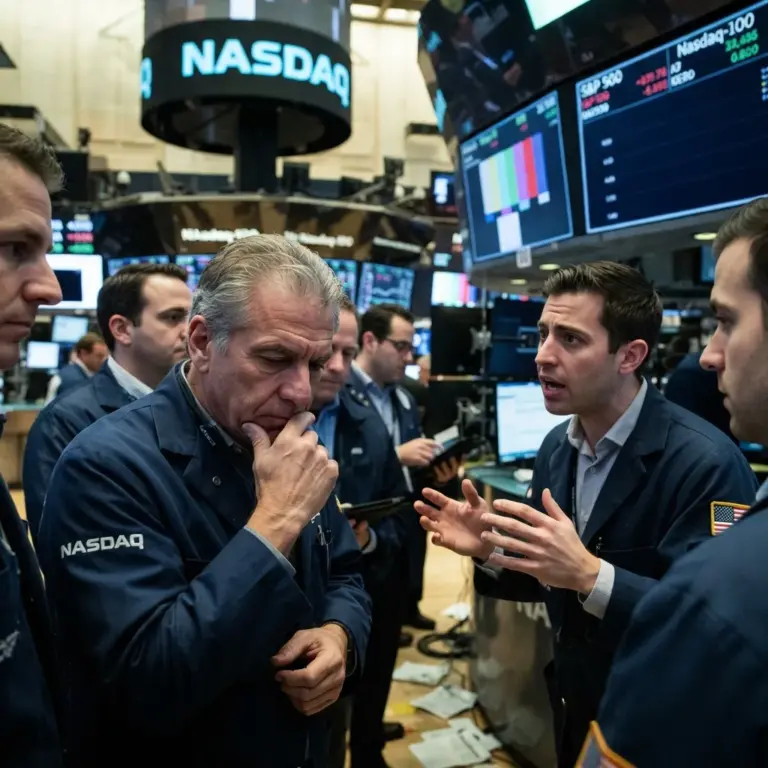
Shares of Advanced Micro Devices took a sharp dive on Thursday, plunging as much as 11 percent after a critical report from short seller Hunterbrook suggested the company has deep, problematic ties to sanctioned entities in China. The firm claimed that AMD may have maintained business relationships with IEIT Systems, a Chinese IT firm placed on a U.S. government blacklist back in March 2025. To support these allegations, Hunterbrook stated they discovered AMD startup firmware within a software update posted by IEIT in late 2026, implying that updated code was provided well after the official blacklisting occurred.

This volatility comes at a precarious time for the semiconductor industry, which has already seen significant turmoil surrounding Nvidia. Recent scandals involving former Nvidia leadership and alleged connections to Chinese intelligence have put the entire sector under intense scrutiny. By flagging AMD’s potential links to both IEIT and another entity called Aivres, Hunterbrook is signaling that the regulatory risks once thought to be concentrated around Nvidia are actually systemic across the major U.S. chip makers.

The timing of the report is particularly damaging given the looming threat of stricter export controls expected to take effect in January. Analysts note that AMD has staked its future growth on aggressive expansions in data center AI revenue, aiming for annual growth rates exceeding 80 percent over several years. If the company is indeed heavily exposed to restricted Chinese markets or found to be bypassing sanctions, those ambitious projections could be fundamentally undermined.

Despite the mounting pressure and the specific evidence presented regarding server firmware updates, AMD has remained silent on the matter. The company did not respond to requests for comment regarding its current operations in China or its relationship with blacklisted firms, leaving investors to grapple with uncertainty as regulators tighten their grip on high tech exports.

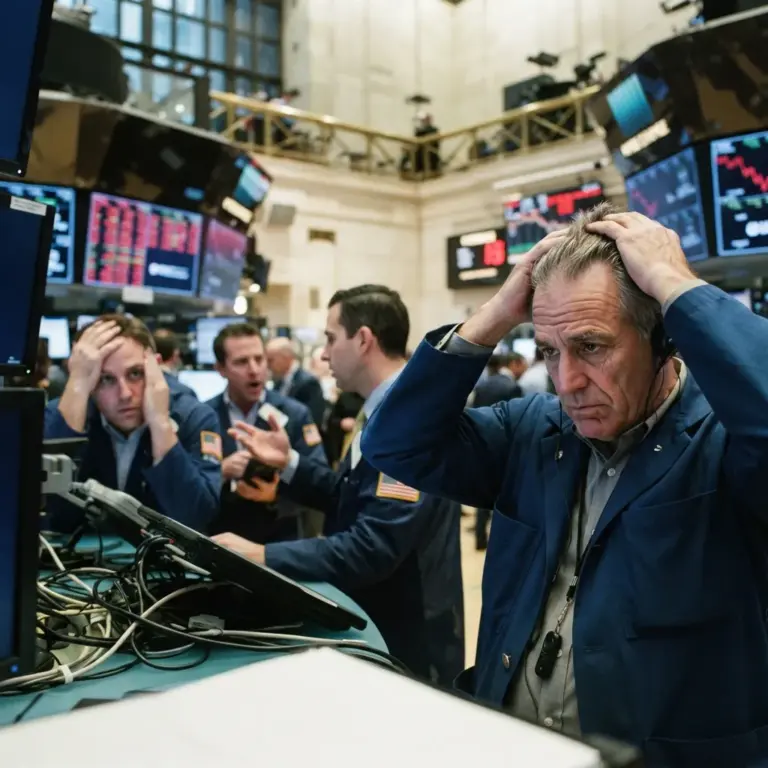
A perfect storm of instability is currently brewing in the financial markets, leaving many investors feeling uneasy. Between rising interest rates and sudden turmoil within the artificial intelligence sector, indices like the S&P 500 and the tech-heavy Nasdaq-100 have already begun to slide from their peaks. Much of this anxiety stems from a leadership crisis at Nvidia, where the departure of founder Jensen Huang has created a vacuum of uncertainty. Because Nvidia serves as the backbone for much of the AI ecosystem, any shift toward a more conservative management style could starve smaller startups of necessary funding just as borrowing costs are climbing.

Adding to this pressure is a stubborn battle against inflation. With consumer prices continuing to rise, the Federal Reserve has been forced to implement interest rate hikes that squeeze both household budgets and corporate expansion plans. History shows that such environments often lead to sharp corrections, reminiscent of previous bear markets where stocks plummeted as borrowing became too expensive. For those watching their portfolios dip, it may feel like a crash is inevitable, creating an atmosphere of fear across Wall Street.

However, seasoned investors can find solace in the timeless philosophy of Warren Buffett. Throughout his tenure at Berkshire Hathaway, Buffett championed a counterintuitive strategy: being fearful when others are greedy and greedy when others are fearful. Rather than panicking during a sell-off, Buffett views market dips as opportunities to acquire quality assets at a discount. He reminds us that shares are pieces of actual businesses with tangible fundamentals; unless the core health of a company fails, a dropping share price is simply a sale on something valuable.

Ultimately, the key to surviving a volatile market is maintaining a long-term perspective and keeping liquidity on hand. By avoiding emotional reactions to short-term swings and focusing on intrinsic value rather than ticker symbols, investors can turn potential disasters into wealth-building events. Following Buffett’s lead means ignoring the noise of the crowd and preparing to deploy capital precisely when everyone else is rushing for the exits.

Nvidia has found itself in a whirlwind of instability following the sudden departure of co-founder and CEO Jensen Huang. The exit came amid troubling reports regarding personal misconduct and allegations involving foreign espionage, leaving the tech giant under the temporary guidance of CFO Colette Kress. While the shock sent shares tumbling more than ten percent and wiped out significant gains seen in early October, the company’s underlying financial health remains remarkably robust despite the drama at the top.

Recent earnings figures suggest that while investors are spooked by the leadership vacuum, the appetite for artificial intelligence hardware hasn’t wavered. Revenue surged by an impressive 103 percent in the most recent quarter, reaching 115.8 billion dollars, driven largely by a massive spike in data center demand. Management has even signaled further optimism, raising their growth forecasts for fiscal 2028. To stabilize things further, Nvidia is aggressively returning capital to shareholders through dividends and buybacks, utilizing a massive authorization fund to support the stock during this dip.

Wall Street analysts are beginning to wonder if the panic has created a rare buying opportunity. Wedbush recently hiked its price target for Nvidia to 293 dollars, suggesting the stock could potentially soar nearly ninety percent from its current levels. Their reasoning is straightforward: the fundamental demand for AI chips exists independently of who sits in the CEO chair. From their perspective, the stock is currently trading at a valuation that assumes a worst-case scenario, ignoring the fact that sales have essentially doubled.

However, caution remains necessary as several wildcards linger over the company’s future. The board has made it clear that Huang will not return and refuses to rush a permanent replacement, meaning uncertainty could continue to fuel volatility for months. Additionally, tightening U_S export controls and slight dips in gross margins present legitimate business hurdles. For those looking to enter now, experts suggest a gradual approach to building a position rather than diving in all at once while waitng for a permanent leader to emerge from the shadows.

Wall Street endured a bruising session on Thursday, sending the Dow Jones Industrial Average sliding below the psychological 50,000 mark for the first time since June. Despite an optimistic start to the morning where indices climbed on anticipation of Anthropic’s public market debut, the mood shifted violently once trading began. Instead of fueling a fresh rally in artificial intelligence stocks, the high profile IPO seemed to trigger a mass exodus, leaving major averages more than 2 percent lower by the closing bell.

The fallout extends beyond a single day of trading, marking one of the most difficult weeks for investors in over a year. The Dow has plummeted over 6 percent since Monday, while both the S&P 500 and Nasdaq have shed roughly 5 percent of their value. This downward trend is continuing into overnight trading, with futures ticking lower as Asia Pacific markets prepare to follow suit. Analysts suggest that a combination of political uncertainty following recent midterms and leadership scandals at industry giants like Nvidia have created a perfect storm of volatility.

Adding to the pressure on the tech sector, Nvidia faces new legal scrutiny after California Attorney General Rob Bonta issued a subpoena to investigate whether the company bypassed regulations to send advanced chips to China. While some strategists argue that growth remains fundamentally strong and that the market has become oversold due to these sudden catalysts, others warn that systemic headwinds could lead to a prolonged correction in AI valuations. Investors now turn their attention toward upcoming consumer sentiment reports and retail earnings for any signs of stability.

The Canadian graphite sector has weathered a tumultuous few years, caught in the crossfire of shifting electric vehicle demand and a geopolitical tug-of-war between Washington and Beijing. After China imposed strict export permits on graphite in late 2023, the industry braced for further instability when the United States proposed aggressive tariffs on battery-grade imports in 2025. Although some of these duties were eventually scrapped by the Commerce Department in early 2026, the lingering threat of tariffs and a broader shift toward synthetic alternatives left many natural graphite miners struggling to maintain their valuations through much of the decade.

Despite these headwinds, several standout performers have emerged on the Toronto and Canadian Securities Exchanges this year. Leading the charge is First Canadian Graphite, which has capitalized on promising discoveries at its Lac Gueret South project in Quebec. Following successful airborne surveys and high-grade finds at Zone 13, where some samples topped forty percent graphitic carbon, the company has secured government authorization for extensive drilling. This momentum helped fuel two significant financing rounds in November, pushing shares toward yearly highs as investors bet on upcoming results slated for early next year.

While mining remains a cornerstone of the industry, technological innovation is providing another path to growth via synthetic options. HydroGraph Clean Power has seen a dramatic surge in value this year as it transitioned from research and development to full scale commercialization. By securing crucial EPA clearances and establishing a new operational base in Texas, the company is positioning itself to meet western demand for graphene without relying on overseas shipments. With a massive new manufacturing facility planned for Bellville and expanding contracts with both industrial customers and US defense interests, HydroGraph represents a strategic pivot toward domestic supply chain security.

Economists and financial titans are locked in a heated debate over whether the United States is drifting toward a formal recession. Recent proposals to overhaul global trade via aggressive tariffs have reignited anxieties, as analysts worry that increased business costs and disrupted supply chains could stifle spending. This atmosphere of uncertainty has led firms like Goldman Sachs to fluctuate on their predictions, raising the probability of a downturn to twenty five percent as geopolitical tensions and trade policies cloud the horizon.

Adding to the tension, BlackRock CEO Larry Fink has pointed toward volatile energy markets and potential stalls in artificial intelligence infrastructure as hidden triggers for inflation. He warns that if data center construction slows, it could create unexpected economic pressures. On the other side of the aisle, leaders such as Bank of America CEO Brian Moynihan argue that these fears are overstated, citing a resilient American consumer who continues to spend despite high interest rates and stubborn inflation.

Defining a recession remains a complex task since experts rarely agree on which metrics matter most. While some focus strictly on two consecutive quarters of negative gross domestic product, others prioritize rising unemployment or an inverted bond yield curve as more reliable warnings. Historically, shocks ranging from asset bubbles to runaway debt have sparked crashes, but today’s primary concern centers on whether government policy will act as a catalyst for contraction or if existing economic strength can absorb the blow.

For those navigating this instability, the prevailing sentiment echoes a famous mantra from former GE chief Jack Welch regarding the opportunities found within downturns. Rather than panicking, savvy investors are studying historical patterns and diversifying into safe havens like gold to protect their wealth. Whether the U.S. manages to dodge a slump depends largely on how trade wars evolve and whether consumer confidence holds steady heading into 2027.

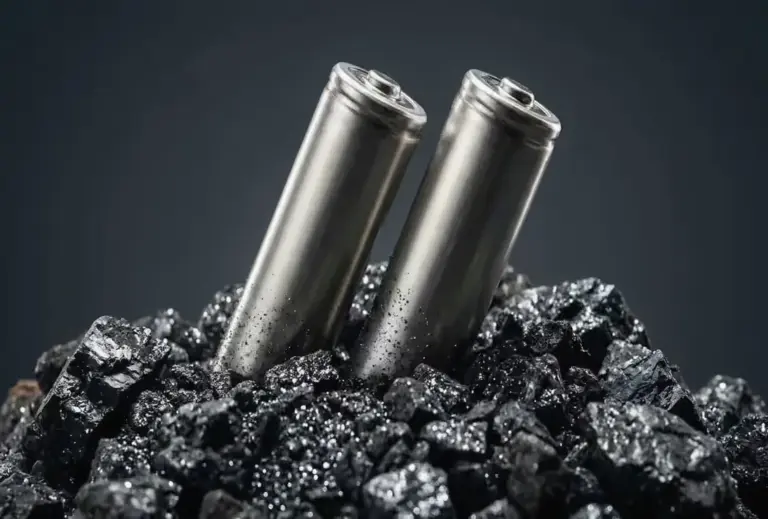
Molten Industries has officially launched a groundbreaking demonstration plant in Oakland, California, marking a significant step toward reducing American reliance on foreign battery materials. The facility represents the first of its kind globally, utilizing a specialized process to convert natural gas directly into battery grade graphite. According to the company, a single modular reactor can produce 300 metric tons of anode material annually, which is enough to power roughly 4,300 electric vehicles.

The strategic goal for the startup is to break the dominance of Chinese suppliers who currently control nearly all synthetic graphite production. Co founder and CTO Caleb Boyd noted that while current output reaches cost parity with Chinese supplies when U.S. tariffs are factored in, future facilities aim to match those prices even without government protections. This ambition comes as the United States struggles with a total dependence on overseas sources for these critical components.

To achieve this efficiency, Molten employs a method developed by Stanford materials scientists that splits methane into carbon and hydrogen using electrical resistive heating. By avoiding traditional combustion and eliminating the need for expensive graphitization furnaces, the company claims its process uses significantly less electricity and cheaper feedstock than conventional methods while generating zero process emissions. What began as an effort to create clean hydrogen eventually pivoted toward graphite when the team discovered how to manage carbon buildup within the reactor.

Despite the technological breakthrough, Molten enters a volatile market where long term demand remains uncertain. Some industry analysts warn that alternative materials like silicon or lithium could displace graphite as the preferred anode choice over the next decade. For now, however, Molten is focused on scaling its Oakland design and providing samples to undisclosed customers who are currently testing the domestic material in their battery cells.

South Korea’s POSCO Group has solidified its role in the green energy transition by signing a comprehensive long term supply deal with Contemporary Amperex Technology, better known as CATL. This agreement ensures that the world’s largest electric vehicle battery manufacturer will have a steady stream of lithium from 2026 through 2028, though some shipments have already begun moving between the two firms. While specific details regarding pricing and exact volumes remain confidential, the partnership represents a significant win for POSCO as it leverages its industrial expertise to move beyond traditional steelmaking.

By aligning itself with CATL, which currently controls roughly forty percent of the global battery market, POSCO is strategically positioning itself within China’s massive automotive ecosystem. The company has spent years utilizing its experience in raw material sourcing to secure high quality lithium assets early on. According to leadership at POSCO Holdings, this move fits into a broader corporate vision spearheaded by CEO Chang In Hwa to build durable relationships with top tier global clients while locking in essential resource chains before competitors can react.

This latest arrangement comes amid an aggressive expansion streak for CATL, which has recently inked several other strategic deals across various sectors. From collaborating with Seres Group on large scale factory projects to developing specialized aviation batteries for Blue Vector and exploring electrified logistics with Kuehne plus Nagel, the battery giant is rapidly diversifying its footprint. For POSCO, however, this particular alliance serves as a critical anchor in Asia, reinforcing its status as a primary supplier in an increasingly competitive race to power the next generation of electric vehicles.

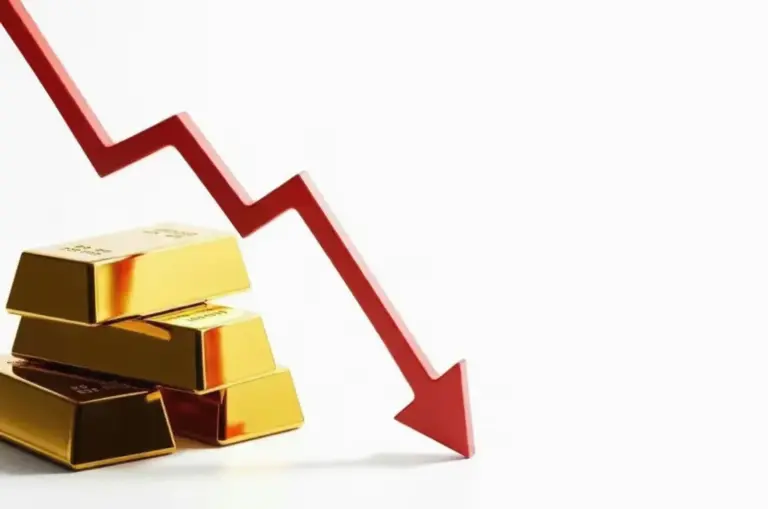
Gold prices tumbled to a fourteen month low on Thursday, leaving traders questioning if the metal’s recent bull run has finally lost its steam. Spot gold dipped toward 3,668 dollars per ounce as the market reacted to a surging US dollar and mounting fears that the Federal Reserve may implement another interest rate hike before the year concludes. This downward trend has extended to silver as well, which plummeted through several key thresholds to trade below 45 dollars per ounce.

The current slump represents a significant correction from the peak seen in late January when gold hit a record high of over 5,500 dollars. Much of this volatility stems from the Federal Reserve’s commitment to bringing inflation back down to two percent, with recent meeting minutes suggesting that most policymakers favor further tightening. Because gold is priced in dollars, the currency’s climb to its highest level since early 2025 has made the asset more expensive for international buyers, effectively dampening global demand.

Market strategists remain divided on where the floor currently sits. Some analysts warn that if gold breaks below certain support levels, prices could slide as far as 3,500 dollars. However, others view such a dip as an ideal entry point for long term investors, citing massive ongoing purchases by central banks in China and Poland as a stabilizing force. There is also hope among some experts that soaring government debt and expanding money supplies will eventually push prices back toward record highs by next year.

Despite the immediate pessimism fueled by rate hike expectations, observers are keeping a close eye on geopolitical risks and legislative developments within the US Congress. While short term turbulence seems inevitable given the Fed’s hawkish stance on inflation, many believe that systemic economic weaknesses and institutional buying patterns will provide a safety net for precious metals moving into 2027.