Archive

November 20, 2026

Browsing

The Trump administration scored another win in court Thursday over a House progressive who was accused of assaulting federal immigration agents at a facility in New Jersey in 2025.

Rep. LaMonica McIver, D-N.J., was denied her request that the U.S. Court of Appeals for the 3rd Circuit reconsider its August 2026 decision that would have her face at least two of the three charges related to a confrontation between Democrats and Immigration and Customs Enforcement (ICE) at Delaney Hall in Newark, New Jersey.

McIver previously tried to invoke the Constitution’s Speech or Debate Clause in order to evade the charges, but the federal court’s three-judge panel denied that motion in a 2-1 decision earlier this year. Thursday’s order upholds that decision.

EXCLUSIVE: DHS SECRETARY MULLIN SLAMS SANCTUARY POLITICIANS AS ATTACKS ON ICE OFFICERS SKYROCKET

“Donald Trump continues to send warning shots to Democrats in Congress and in all levels of power — but their case against me right now, in broad daylight, goes well beyond a warning. Because of a weaponized Department of Justice and because I dared to do my job and conduct oversight of ICE, I am facing 17 years in prison,” McIver said in a statement. “Now, due to the disappointing decision by the Third Circuit, we are all one step closer to a world in which the President of the United States can try to imprison people simply because he does not like what they stand for.”

McIver called the result “disappointing” and said she and her lawyers “are looking at every possible option for what comes next.”

WATCH: AMERICA’S FIRST ‘FORMERLY UNDOCUMENTED’ CONGRESSMAN DELIVERS ULTIMATUM AT BESIEGED ICE FACILITY

An unannounced visit to the Delaney Hall detention center by a group of Democratic officials devolved into chaos in May 2025 that culminated in a physical standoff between federal lawmakers and ICE agents and the arrest of Newark Mayor Ras Baraka. McIver was charged with three counts, including assaulting and impeding federal officers.

McIver initially argued that her actions fell under her constitutionally protected duties as a member of Congress and, therefore, she could not be prosecuted.

But a 2-1 decision issued in August 2026 by Biden-appointed Judge Cindy Chung and Trump-appointed Judge Stephanos Bibas stated that McIver’s argument of legislative immunity would not stand for two of the three counts, while the third count was sent back to a lower court for further review.

Court documents say McIver allegedly “slammed her forearm” into a federal officer trying to arrest Baraka. On that count, the federal appellate court agreed with a lower court decision that her “alleged intervention into the Mayor’s questionable arrest had no cognizable connection to any legislative function” protected by the Constitution.

NEW JERSEY AGITATORS BITE, KICK AND PUNCH ICE AGENTS AS DELANEY HALL CLASHES CONTINUE; 9 MORE ARRESTED: DHS

The second count alleged that McIver used both of her forearms to “strike [an officer] as she returned inside of the secured area of Delaney Hall.”

The two judges wrote, “Like the acts charged in Count One, the acts of pushing past and forcibly striking someone are unambiguously non-legislative: they are not integral to the legislative process.”

Judge Thomas Ambro wrote in dissent, “When an Executive Branch official prevents a Member from entering a DHS facility, she is denied effective access to an oversight inspection.”

The case could make it all the way to the Supreme Court if McIver continues fighting against the charges.

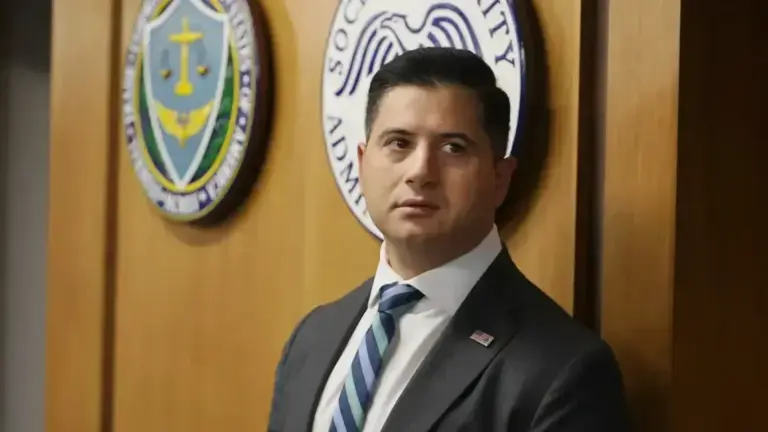
FIRST ON FOX — Rep. Pat Harrigan, R-N.C., wants to close a glaring national-security loophole that allows Chinese entities to cohabitate the same data centers where critical American services also run.

The North Carolina lawmaker is proposing the Digital Infrastructure Act of 2026 to address the potential risk with a $1 million-per-day fine for violators. Meanwhile, the U.S. has experienced a series of outages and incidents this week that have put a microscope on the potential for foreign cyber threats and have prompted skepticism regarding U.S. readiness to defend against digital weaknesses.

“Look, the federal government already determined that companies like China Telecom and China Unicom posed a threat to our national security and revoked their licenses to operate here,” Harrigan said in an interview with Fox News Digital.

“But those companies were still able to maintain connections inside of American data centers. So, if we think about that, we determined that they were too dangerous to operate here, but we left them with a foothold in the very infrastructure that carries Americans’ information.”

CHINA IS BUILDING AN AI WAR MACHINE. WASHINGTON MUST WAKE UP BEFORE IT’S TOO LATE

Despite the cascade of outages — including in U.S. air traffic control systems, Microsoft and banking services —Harrigan did not directly draw a line between Chinese companies and the disrupted services. There is also no proof that any of the incidents were the result of cyberattacks.

Harrigan, instead, argued that preventing cyber vulnerabilities in the future requires lawmakers to eliminate what they know to be weaknesses now.

“What we’re talking about is the infrastructure that supports our banks, our hospitals, our businesses and our communication systems,” Harrigan said.

He declined to elaborate on whether the existing loophole has already led to cyberattacks or stolen data but noted that he was made aware of the liability when American businesses approached him with concerns.

His bill would prohibit high-risk carriers from owning or operating a data center in the U.S. or offering cloud services to Americans. The measure would be enforced by a $1 million fine for every day of a continuing violation — a penalty that would extend to affiliates and even American venture partners doing business with Chinese entities.

The bill also includes a time-limited exception for companies approved by American communications officials.

CHINA’S GREAT AI CHIP LOOPHOLE: HOW AMERICAN ESPIONAGE STOPPED CHINA — THIS TIME

“We talked to a lot of companies, frontier labs and data center owners, as well as operators that are concerned about this,” Harrigan said. “And it’s also part of folks from our national security apparatus within government.”

As part of its mission, the Federal Communications Commission (FCC) reviews foreign communication companies and green-lights their operation in the U.S. When identifying a security risk, the FCC issues a denial of application, a power granted to it under Section 214 of the Communications Act of 1934.

In China’s case, companies like China Telecom Corporation, China Unicom Operations Limited and Pacific Networks Corp. have all failed to secure FCC authorization for security reasons.

“The Commission finds that due to several factors related to China Mobile USA’s ownership and control by the Chinese government, grant of the application would raise substantial and serious national security and law enforcement risks,” the FCC wrote in its evaluation of China Mobile USA, a Delaware-based company.

Even so, the FCC order does not address what the company needs to do with its hardware.

“A Section 214 order is a license to sell regulated telecom service, not a physical eviction order,” Harrigan’s office noted.

Asked if he believes Republicans will be able to address the legislation before the end of the 119th Congress, Harrigan said he believes the issue will likely have to be left to the next session, which begins in January.

FOREIGN ADVERSARIES RUNNING ‘PSYOP’ TO FUEL ANTI-AI AND ANTI-DATA CENTER MOVEMENT, WAR OFFICIAL SAYS

He voiced optimism that the incoming Democratic majorities in the House of Representatives and the Senate might recognize his bill as part of a larger interest in AI security.

“This is a bipartisan problem. And there’s a lot of work that I have done with my Democratic colleagues over this last year on artificial intelligence and the next generation of technology in our market economy and how that intertwines with our nation’s defense,” Harrigan said.

“They are very willing to lend a hand because they know it’s a structural problem for our country,” he added.

A California federal prosecutor embroiled in a legal battle over his own authority is heading to Florida to investigate the FBI’s 2022 raid on President Donald Trump’s Mar-a-Lago estate.

Two sources familiar with the investigation confirmed to Fox News Digital that First Assistant U.S. Attorney Bill Essayli will serve as a special assistant tasked with investigating whether Biden Justice Department officials broke federal law when executing their search warrant on Mar-a-Lago. Essayli will continue to hold his position as first assistant U.S. attorney, splitting his time between Florida and Los Angeles, a source familiar said.

Essayli’s inquiry into the Mar-a-Lago search, which initiated former special counsel Jack Smith’s classified documents case, is a part of a broader Justice Department probe. 

Attorney General Pam Bondi initially launched the “grand conspiracy” investigation in August 2025 to target Obama-era officials, but its scope has since expanded to examine allegations that Biden officials also conspired to unlawfully prosecute Trump.

Essayli is the latest prosecutor tapped to oversee the investigation after the resignations of two other attorneys in the past few months. Just a few weeks ago, Jason Reding Quiñones, the U.S. attorney for the Southern District of Florida, resigned abruptly. His departure came two months after he took over from Joe diGenova, a lawyer selected by Attorney General Todd Blanche to supervise the investigation who resigned in September.

PROSECUTOR JOSEPH DIGENOVA RESIGNS FROM DOJ ROLE INVESTIGATING TRUMP-RUSSIA PROBES

DiGenova’s resignation in September came just five months after he was tapped to oversee the investigation amid growing frustration within the White House and Justice Department over the lack of criminal charges. Fox News Digital previously reported that diGenova had effectively been sidelined before his departure, while sources told the New York Post he had lost the confidence of administration officials over concerns he was “slow-rolling” indictments and pursuing dead-end leads.

Essayli’s involvement in the inquiry adds another layer of controversy to the investigation for two reasons.

TRUMP-FIRED US ATTORNEY LAUNCHES UNPRECEDENTED COURT FIGHT AFTER JUST 54 MINUTES ON THE JOB

For one, Essayli’s authority to lead the U.S. Attorney’s Office in Los Angeles is already under judicial scrutiny. In October, U.S. District Judge J. Michael Seabright ruled that Essayli was unlawfully serving as a “de facto” U.S. attorney, finding that the Justice Department had effectively circumvented restrictions on temporary appointments by allowing him to continue exercising the powers of the office without Senate confirmation.

Essayli was initially appointed interim U.S. attorney in April 2025, a position generally limited to 120 days. When that period expired, the Justice Department appointed him to other positions, including first assistant U.S. attorney, while allowing him to continue overseeing the office. 

Seabright concluded that changing Essayli’s title did not resolve the underlying legal problem and disqualified him from supervising two criminal prosecutions. On Monday, the judge rejected the Justice Department’s request to suspend that ruling while the government pursued an appeal.

Although that decision does not automatically invalidate Essayli’s separate assignment in Florida, it raises questions about his continuing authority in Los Angeles as he takes on another politically sensitive investigation.

SIGN UP TO GET THE POLITICS NEWSLETTER

Essayli’s close ties to Trump have also drawn scrutiny from Democrats and defense attorneys over whether he can remain impartial in an investigation involving the president’s political adversaries.

A former Republican California state lawmaker and vocal Trump supporter, Essayli has pledged to work “tirelessly” to carry out the administration’s priorities at the Justice Department, prompting House Democrats led by Rep. Dave Min, D-Calif., to demand an ethics probe over alleged “politically-motivated investigations.” 

Meanwhile, H. Dean Steward, a veteran Newport Beach federal defense attorney and former directing attorney of the Orange County Federal Public Defender Office who successfully challenged Essayli’s authority in California, has accused the Trump administration of violating federal law “in an effort to install minions as chief federal prosecutors.”

Fox News Digital reached out to the U.S. Attorney’s Office for the Central District of California for comment but did not immediately receive a response.

Fox News’ Jake Gibson and David Spunt contributed to this report. 

FIRST ON FOX: A bipartisan group of lawmakers is eyeing adding a tax to internet usage throughout the country to help subsidize telecommunications services in rural areas.

Sens. Deb Fischer, R-Neb., and Ben Ray Luján, D-N.M., have quietly been working on draft legislation that would add up to $100 extra on Americans’ internet bills to bolster the Universal Service Fund (USF), a decades-old program meant to subsidize broadband access, a source shared with Fox News Digital.

Fischer and Luján formed a bipartisan and bicameral working group for USF reform last year with Reps. Doris Matsui, D-Calif., and Richard Hudson, R-N.C. to find fixes for the program, which was first launched in 1996.

FCC LAUNCHES SWEEPING REVIEW OF $3B SCHOOL INTERNET SUBSIDY PROGRAM OVER SCREEN TIME CONCERNS

The draft legislation, which has yet to be officially filed in the Senate and is still subject to change, included proposals to create a USF tax on households and businesses with broadband connections. The draft legislation, which was reviewed by Fox News Digital, would also increase the current USF tax on cell phone lines and impose no cap on USF spending — meaning there’s wiggle room to raise the tax down the line.

“I’m not commenting on gossip intended to undermine USF reform, particularly when a bill hasn’t even been filed,” Fischer said in a statement to Fox News Digital.

Another source familiar with the negotiations around the yet-to-be revealed legislation told Fox News Digital that they had “no reason to believe” that the fee had been removed from the draft bill. 

“My understanding is it just adds a tax on broadband,” they said. 

Luján’s office told Fox News Digital that discussions were still ongoing, that the “bipartisan working group continues to evaluate options to modernize the Universal Service Fund, ensure its long-term sustainability, and keep internet and communications services affordable for all Americans.” 

“No proposal has been finalized, and any claims otherwise are premature,” they said. 

Congress does not directly fund the program, which instead relies on user fees from telecommunications and broadband companies to stay afloat in order to subsidize broadband services in rural areas.

FCC CHAIRMAN CARR SAYS SPECTRUM AUCTION WILL MAKE WIRELESS FASTER, CHEAPER WHILE RAISING BILLIONS FOR TREASURY

Last year, according to data from the Congressional Research Service, the USF doled out over $8 billion in subsidies.

Part of the problem with the program is that the stream of funding that props USF up is shrinking, according to a report from the Computer & Communications Industry Association.

The report found that “the current contribution base for USF fell 41% between the first quarter of 2018 and the first quarter of 2026, from $12.9 billion to $7.6 billion.” That is spurred by shifts in the industry and contribution base, like more communications happening over the internet through WhatsApp, FaceTime and Zoom instead of phone calls, for example.

And tacking on a new tax to bolster the program is a touchy subject, particularly for outside groups.

TOP SENATE DEM’S NEW TAX IDEA GETS TORCHED AS CRITICS WARN NEARLY EVERY AMERICAN COULD PAY

Over two dozen outside groups led by Grover Norquist’s Americans for Tax Reform demanded in a letter to Congress sent in August that lawmakers “oppose any attempts to impose new taxes on broadband service, including by assessing broadband for contributions” to the USF.

“Rather than impose new taxes on broadband providers, raising costs yet further for consumers, Congress should reform eligibility for the program and retire the broadband subsidies, if not the entire program,” they wrote. “USF is outdated and ill-suited for its purpose. Passing off its ballooning costs is not a solution.”

Congress did enact a new infrastructure-expansion focused internet program under former President Joe Biden in 2021 as part of his Infrastructure Investment and Jobs Act.

That program, called the Broadband Equity, Access, and Deployment (BEAD), included a one-time pot of just over $42 billion to spread internet access across the country.

The Trump administration overhauled the program, removing hurdles and adding new guidelines for states and territories to gain access to the funding.

This post appeared first on https://www.foxnews.com

An imam who was scheduled to deliver the invocation at a city commission meeting Monday evening in a southwest Florida town was interrupted by Christian protesters — who had a prayer of their own to share.

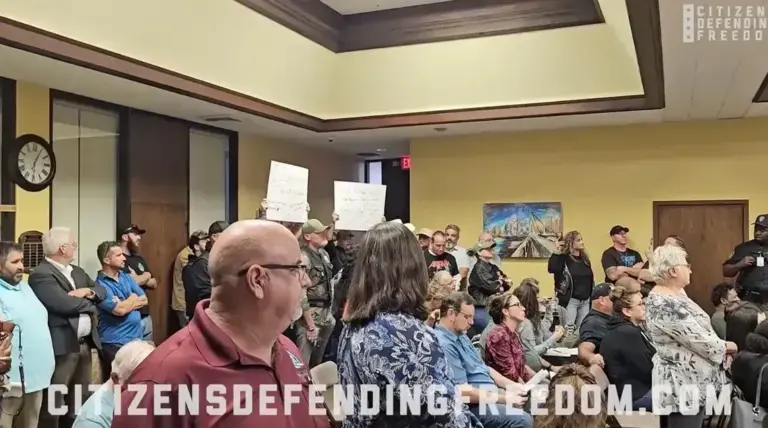
Footage from inside the meeting obtained by Fox News Digital shows dozens of Christian activists crowded into the back of a Bartow, Florida city commission meeting room. As Imam Sajid Bhuiya of the town’s Masjid Al-Nur Mosque stepped up to the lectern to give the invocation, they began reciting the Lord’s Prayer in unison. Some chants of “USA!” broke out, as well.

According to Robert Goodman, the southeast regional director of the conservative activist group Citizens Defending Freedom, news of Bhuiya’s scheduled appearance began making the rounds on social media last weekend. He was among those who shared the news on social media. Goodman said about 100 people from different groups ended up attending the meeting.

IOWA CITY COUNCIL MEETING ERUPTS AFTER FORMER MEMBER OPENS WITH SATANIC PRAYER AND ‘HAIL SATAN’

“Citizens Defending Freedom believes Christian voices deserve to be heard on matters affecting our communities, families, and freedoms, which is why we joined many other concerned citizens and organizations Monday night,” Goodman told Fox News Digital.

He said the Quran teaches forced submission and permits men to strike their wives, while viewing the opinions of women as lesser than the opinions of men.

“We have every right to challenge teachings we believe conflict with human dignity, equality, religious liberty and America’s founding principles, because we must be intolerant of intolerance while respecting every person’s right to believe differently,” he said.

Video from the city’s official livestream of the event quickly went viral online.

PASTOR UNLEASHES ON DEARBORN AS RELIGIOUS TENSIONS ERUPT AT CITY COUNCIL MEETING: ‘ENOUGH IS ENOUGH’

Some protesters made off-color comments, including telling Bhuiya to go back to his own country, which Goodman clarified that neither he nor his organization support.

“The disrespectful remarks made by two or three individuals Monday night do not represent me or Citizens Defending Freedom, because as Christians, we are called to speak truth with conviction and respect, not insults,” Goodman said.

Goodman said Bhuiya was invited to deliver the invocation by a city official. Members of the commission mostly sat quietly, observing the commotion while police handled the crowd.

Police eventually escorted the Christian protesters out of the building, though no arrests were made.

Bhuiya then spoke, quoting passages from the Quran that he said are meant to unify people. “This is a reminder that our differences in background, culture and faiths should not prevent us from treating one another with dignity,” he said.

Fox News Digital reached out to the Masjid Al-Nur Mosque for comment on the disruption of Bhuiya’s invocation.

SWING STATE MAYOR SUED AS CITY’S MUSLIM HOLIDAY DISPLAYS IGNITE RELIGIOUS-FAVORITISM FIGHT

The city of Bartow released a statement explaining the Imam’s appearance at the meeting.

The statement said that residents, “joined by individuals from other cities, attempted to prevent the imam from speaking and the Mayor from proceeding to conduct the business at hand.”

“For years, it has been tradition to open Bartow City Commission meetings with a prayer offered by either a faith-based leader or one of the City’s elected officials,” it said. “While historically the opening invocation/prayer is one based on Christian traditions, the opportunity is open to all faiths. This is consistent with the United States Constitution.”

In the statement, city officials called for residents, “including religious leaders of all faiths, to come together to ensure that Bartow continues to be a welcoming place for all who live, work and play in Polk County’s capital city.”

Gold and silver mining stocks fell sharply Wednesday as a round of hawkish comments from Federal Reserve officials lifted the U.S. dollar and rattled investors across the metals complex. The selloff hit major producers hard, with Newmont, Agnico Eagle Mines, Barrick Mining, Wheaton Precious Metals and Franco-Nevada all dropping between 4% and 7%.

Spot gold slid in a dramatic reversal, while silver, copper and platinum also came under pressure as traders reassessed the outlook for interest rates. A firmer dollar tends to make dollar-priced commodities more expensive for overseas buyers, and that dynamic quickly turned a cautious session into a broad retreat.

The move served as a reminder of how sensitive metals markets are to the Fed’s tone. Even with demand stories and supply concerns still in the background, a sudden shift in rate expectations can overwhelm those factors and force investors to unwind positions in a hurry.

For mining equities, the damage was amplified because the stocks often rise and fall with the underlying metals. With the dollar surging and prices sinking, shareholders were left looking for a reason to stay in names that have recently been among the market’s more volatile corners.

Walmart is seeing an unexpected surge in popularity among high income earners, driving a significant boost in overall sales and leading the company to raise its financial projections for the year. The retail behemoth reported a five percent increase in global third quarter revenue, reaching nearly one hundred eighty nine billion dollars. This growth suggests that inflation and economic pressures are pushing Americans from all walks of life toward discount retailers in search of better value.

Company leadership attributes much of this success to a seamless integration of physical stores and digital services. E commerce sales in the United States climbed twenty three percent during the last quarter, continuing a long streak of aggressive digital expansion. A major part of this momentum comes from store fulfilled delivery, which saw a massive forty percent jump as more customers opted for rapid shipping options that often arrive within three hours.

The shift is also visible at Sam’s Club, where younger generations are becoming a dominant force. Millennials and Gen Z shoppers now make up more than half of new memberships, with many choosing the premium Plus tier despite its higher cost. To keep these members loyal heading into the holiday season, Walmart has introduced a bundled subscription combining Walmart plus and Sam’s Club Plus at a steep discount.

Chief Executive John Furner noted that while many consumers are feeling the pinch from rising energy costs and other expenses, the company’s focus on convenience and affordability remains their strongest asset. By capturing market share across diverse income brackets through competitive pricing and faster logistics, Walmart enters the final stretch of the year with increased confidence in its profit margins and total net sales.

The landscape of global finance shifted on Thursday as Anthropic made its debut on the Nasdaq, instantly catapulting into the elite tier of the world’s most valuable corporations. With a market capitalization soaring past 2 trillion dollars, the AI laboratory has joined the ranks of tech giants like Apple and Microsoft. Trading activity was frenetic from the opening bell, with volumes quickly eclipsing those seen during SpaceX’s high profile launch in June. By midday, more than 640 million shares had changed hands, cementing Anthropic as the most actively traded stock on the exchange.

The windfall extends far beyond the company founders, sparking celebrations across Silicon Valley and Hollywood. Actor and investor Ashton Kutcher took to social media to congratulate CEO Dario Amodei and his team, marking a massive win for Kutcher’s Sound Ventures. Meanwhile, Menlo Ventures described the event as one of the greatest returns in the history of venture capital, reporting an aggregate position worth approximately 25 billion dollars. Wall Street heavyweights also walked away with significant gains, as Goldman Sachs and Morgan Stanley raked in 550 million dollars in fees for steering the offering.

While investors cheer current valuations, analysts are already looking toward what they call Act Two for the company: cybersecurity. Experts at Wolfe Research suggest that Anthropic could potentially disrupt a 500 billion dollar annual market by replacing manual security teams with autonomous AI agents capable of responding to threats at machine speed. This pivot follows the lab’s strategic efforts to protect critical infrastructure via initiatives like Project Glasswing, though some wonder if this expansion will eventually put them at odds with their existing corporate partners.

Despite its staggering valuation, Anthropic remains a bit of an outlier in terms of how it is run. Operating as a public benefit corporation, it is legally mandated to balance profit with a commitment to developing AI for the long term benefit of humanity. Power remains tightly concentrated among its seven co founders through a special holding company that controls over half of the voting rights. Additionally, an independent Long Term Benefit Trust maintains the authority to appoint or remove board members, ensuring that safety and ethics remain central even as the company scales into a global powerhouse.

Hopeful homebuyers faced another setback this week as mortgage rates climbed for the first time in over a month. According to data from Freddie Mac, the average 30-year fixed mortgage rate jumped to 7.28 percent, rising from 7.11 percent just seven days prior. This represents the sharpest weekly increase since early October and marks a significant climb from the 6.26 percent average seen during the same period last year.

The uptick is largely tied to recent economic signals, specifically a hotter-than-expected inflation report that pushed the 10-year Treasury yield higher. These figures suggest that the Federal Reserve may be forced to raise its benchmark interest rate during its upcoming December policy meeting to keep prices in check. Consequently, borrowing costs have remained stubbornly above 7 percent since late September, reaching heights not seen since 2000 with only one brief exception last year.

This financial pressure is taking a visible toll on an already sluggish real estate market. The National Association of Realtors reported that pending home sales plummeted to a record low in October, dropping nearly 17 percent compared to the previous year. With fewer buyers able to afford monthly payments, transaction volumes have cratered, leaving many potential homeowners sidelined while waiting for rates to cool down.

Lawrence Yun, chief economist for the association, noted that it is perplexing to see sales drop to levels reminiscent of thirty years ago despite massive population growth across the country. He suggested that this trend indicates either a huge amount of suppressed demand currently building up behind the scenes or a grim reality where owning a home is simply becoming unattainable for too many American families.

The House Foreign Affairs Committee has uncovered a staggering volume of approved artificial intelligence chip sales to China, sparking a heated debate over national security and the effectiveness of current export controls. Documents released Thursday reveal that the Commerce Department’s Bureau of Industry and Security authorized the sale of more than 879,000 high end chips to various Chinese entities, including tech giants like Alibaba and Tencent. Lawmakers expressed alarm that some of these approvals went to companies specifically flagged by the Department of Defense as military organizations, suggesting a significant lapse in enforcement.

Representative Brian Mast and other committee members highlighted particularly troubling entries in the records, pointing to firms such as Maginfra and New Matrix. According to reports, these entities may be mere smuggling fronts with empty offices used to bypass sanctions and funnel sensitive technology into the hands of adversaries. This revelation comes amidst a broader surge in demand, with millions of shipment requests filed by industry leaders like Nvidia and AMD between December and May, leaving critics wondering if the administration is prioritizing corporate profits over technological dominance.

The political fallout coincides with a swirling scandal involving former Nvidia CEO Jensen Huang, whose recent resignation followed allegations of an affair with a suspected Chinese spy. Investigators are currently probing whether this relationship facilitated the diversion of restricted hardware through foreign intermediaries like Megaspeed in Singapore. As part of the ongoing investigation, both Huang and Commerce Secretary Howard Lutnick are expected to testify soon to explain why certain loopholes remained open while thousands of powerful processors flowed across borders.

In response to the mounting pressure, the Commerce Department recently issued an emergency rule intended to stop Chinese firms from leasing computing power via third party data centers. However, many on Capitol Hill argue that reactive measures are insufficient. Both Republicans and Democrats are now pushing for sweeping new legislation that would tighten restrictions on advanced semiconductors, aiming to ensure that American innovation does not inadvertently fuel the military capabilities of global competitors.