Archive

November 10, 2026

Browsing

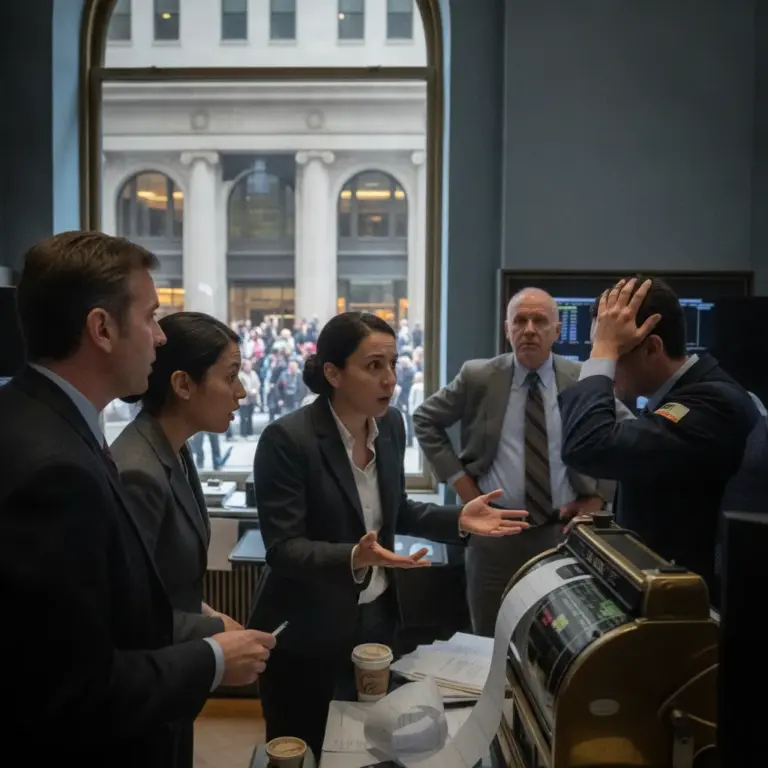
Shares of Advanced Micro Devices climbed higher today following a wave of positive momentum driven by a strategic partnership with Google Cloud and a fresh endorsement from analysts on Wall Street. Investors reacted enthusiastically to the news that AMD will integrate its high performance computing capabilities into Google’s infrastructure, signaling a significant step forward in the company’s bid to capture a larger slice of the artificial intelligence market.

The rally was further bolstered by a notable upgrade from financial experts who now see more room for growth in AMD’s valuation. Analysts pointed toward the company’s strengthening product roadmap and its ability to challenge dominant competitors in the data center space. This shift in sentiment suggests that institutional investors are becoming increasingly confident in AMD’s long term strategy to diversify its hardware offerings beyond traditional processors.

Industry observers note that these developments come at a critical time as cloud providers seek alternatives to current chip monopolies to manage costs and increase efficiency. By securing deeper ties with a giant like Google, AMD positions itself as a primary beneficiary of the ongoing surge in generative AI demand. The stock’s upward trajectory reflects broader optimism that the firm can translate technical milestones into sustained revenue growth throughout the coming year.

A recent shift in the U.S. equity market has left several high profile companies trading well above their estimated intrinsic worth. According to the latest analysis from Morningstar, thirty stocks officially entered overvalued territory during the week ending November 6, moving into the one or two star rating categories. While the broader U.S. market actually remains undervalued overall due to a slight dip in the total market index, specific sectors and heavy hitters have seen prices climb faster than their fundamental values can justify.

Among the most notable shifts were some of the biggest names in American business. Warren Buffett’s Berkshire Hathaway slipped into a two star rating after gaining about five percent last week, now trading at roughly a twelve percent premium to its fair value estimate. Other major players like Bank of New York Mellon and Royal Caribbean Cruises also saw their ratings drop as their stock prices pushed beyond reasonable limits according to analyst models. These movements suggest that even established giants with strong economic moats aren’t immune to becoming overpriced when investor enthusiasm peaks.

Even more concerning for cautious investors are the stocks that plummeted to a one star rating, signaling they are significantly overvalued. Retail giant Costco is among them, currently trading at a staggering thirty seven percent premium over its fair value estimate of seven hundred seventy dollars per share. Insurance provider Allstate and diagnostics firm Idexx Laboratories followed suit, joining a small group of highly priced assets that may be vulnerable to corrections if market sentiment shifts.

Despite these individual warnings, the wider landscape offers a mixed bag for traders. Roughly forty percent of Morningstar tracked stocks remain undervalued and another forty one percent are considered fairly priced. With only eighteen percent of total coverage falling into the overvalued category, analysts suggest there is still plenty of room for growth in the general market even as certain blue chip favorites become too expensive for comfort.

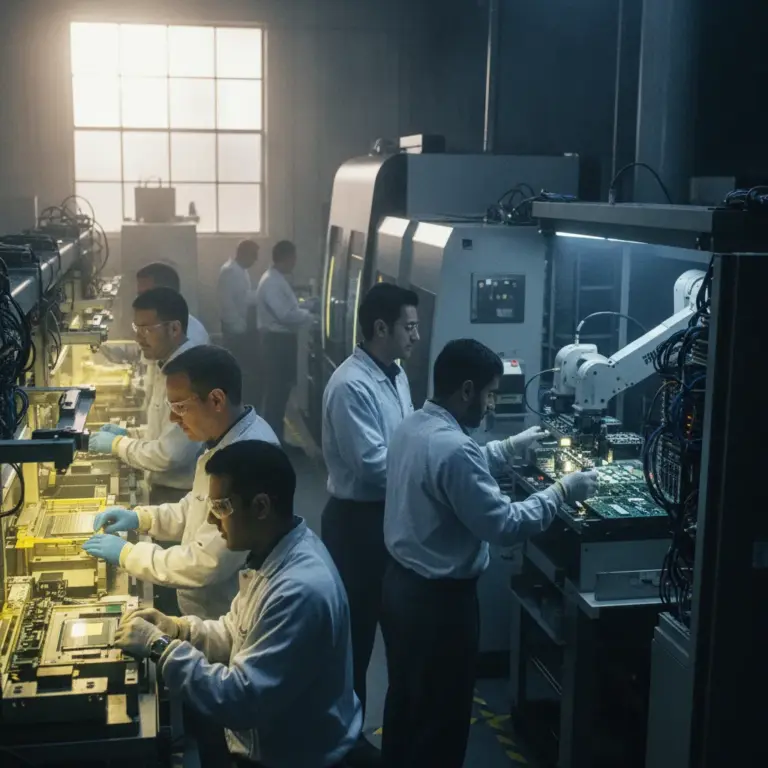
The semiconductor market opened the trading week with an aggressive burst of energy, signaling a strong recovery for investors who had recently weathered a period of volatility. By mid morning, the industry’s primary benchmarks showed significant growth, with both the Philadelphia Semiconductor Index and the iShares Semiconductor ETF jumping six percent. This sudden upward swing provides some much needed relief following a sharp downturn that left many wondering if the sector’s rapid ascent had finally hit a ceiling.

Interestingly, this latest rally is characterized by a broadening base of support rather than reliance on a single powerhouse. While Nvidia has long been the undisputed engine driving the artificial intelligence trade, today’s gains are being distributed across a wider array of hardware providers and toolmakers. It suggests that traders are now looking beyond the most obvious winner to find value in other companies providing the essential infrastructure required for the generative AI revolution.

Market analysts suggest this shift indicates a growing confidence in the entire ecosystem of silicon production. Rather than betting solely on GPUs, capital is flowing into various stages of the supply chain, from fabrication equipment to specialized networking chips. As these diverse players climb together, it creates a more stable foundation for the tech sector at large, proving that the appetite for AI integration remains voracious even when its biggest star takes a breather.

The recent volatility in the technology sector has left many investors questioning whether the artificial intelligence gold rush has finally hit a wall. According to David Sekera, chief US market strategist at Morningstar, the latest market turmoil is less about a failure of technology and more about a sudden shift in political winds and investor sentiment. Following a decisive Democratic sweep in the midterm elections, concerns have mounted that new regulations could stifle data center expansion, triggering a sharp rotation where traders dumped high flying growth stocks in favor of steadier value plays.

This transition was exacerbated by a wave of forced liquidations and panic selling that swept through margin accounts late last week. Despite the chaos, analysts suggest that the underlying long term thesis for AI remains intact for the true innovators of the space. While commodity oriented hardware companies that benefited from temporary supply shortages may still be overpriced and prone to further declines, those leading the charge in actual technological breakthroughs continue to offer significant potential.

For patient investors, this period of instability creates a window to acquire quality assets at a discount. During a recent discussion on The Morning Filter podcast, Sekera highlighted several opportunities emerging from the wreckage, identifying four specific growth stocks currently trading below their fair value estimates. By focusing on these undervalued entries rather than chasing short term momentum, investors can position themselves to benefit when the market eventually stabilizes and recognizes the enduring value of AI leadership.

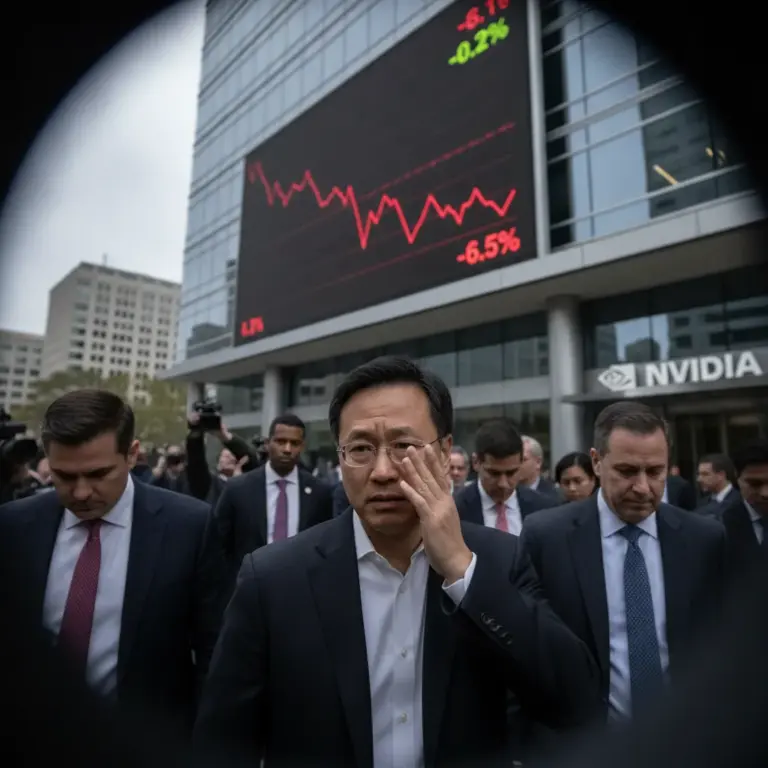
Shares of Nvidia took a sharp dive today following revelations that the company has launched an internal investigation into its chief executive, Jensen Huang. The sudden volatility comes after reports emerged linking the leadership of the world’s most prominent AI chipmaker to serious allegations involving national security and personal misconduct. Investors reacted swiftly to the uncertainty, sending shockwaves through the tech sector as market confidence wavered.

The turmoil centers on two distinct but equally damaging fronts. According to recent updates, Huang has admitted to having an affair, while simultaneously facing scrutiny over alleged connections to foreign espionage. While Nvidia remains the dominant force in providing the hardware necessary for the artificial intelligence boom, these claims have raised urgent questions about corporate governance and whether any sensitive technology was compromised during these episodes.

Industry analysts suggest that the timing could not be worse for Nvidia, which has seen its valuation skyrocket due to the global rush toward generative AI. The intersection of private scandal and potential state-level spying creates a precarious situation for a board tasked with maintaining trust among government contractors and international partners. For now, shareholders are left waiting to see if this crisis will result in a change at the top or if Huang can navigate his way out of the storm.

The worlds largest gold producers saw their free cash flow dip in the third quarter as a combination of heavy capital investments and climbing operating costs ate into profits. While the price of gold generally trended upward during the period, ending the quarter up slightly more than two percent, volatile market swings created a challenging environment for miners. Prices were heavily influenced by shifting expectations surrounding U.S. interest rates and geopolitical tensions in the Middle East, which kept investors on edge throughout the summer.

Industry giant Newmont felt these pressures clearly, reporting a thirteen percent drop in free cash flow compared to the previous quarter. Much of this decline was driven by increased capital spending and significant working capital requirements. Despite this, Newmont achieved a record third-quarter adjusted net income of 2.3 billion dollars, bolstered by stronger production at sites like Cadia and Brucejack. However, the company is preparing for a major financial commitment in the coming months, with nearly two billion dollars earmarked for a payment to Barrick Mining following an agreement regarding their Nevada joint venture.

Other major players faced their own set of operational hurdles. Agnico Eagle Mines reported a notable slide in free cash flow from its record highs in the second quarter, partly due to a precautionary suspension of operations at its Canadian Malartic site following a rock mass movement. This incident has forced the company to revise its future production expectations toward the lower end of its projected range. Meanwhile, Kinross Gold lowered its output forecasts for 2026 and 2027, citing extreme winter weather in Chile and recovery issues at its Nevada operations.

Despite these headwinds, there are signs of underlying strength across the sector. Central banks continued to stockpile gold aggressively during the third quarter, adding over three hundred metric tons to their reserves, while ETF holdings reached record levels. For many majors, average gold prices remained high enough to maintain healthy profit margins overall, allowing some firms like Kinross to actually increase the amount of cash they plan to return to shareholders even as production targets tightened.

Gold prices managed a quick recovery early Monday morning after a volatile finish to last week saw the metal slide under the weight of robust economic data. On Friday, the market faced significant pressure following a U.S. jobs report revealing that employers added 165,000 positions in October and the unemployment rate dipped slightly to 4.1 percent. This strength sparked a rally in the U.S. dollar and pushed Treasury yields higher, making gold more expensive for international buyers and less appealing compared to interest bearing assets.

The dip served as a brief correction after an impressive run fueled by political shifts in Washington. Earlier in the week, gold surged following Democratic gains in both houses of Congress, hitting a peak of 4,146.63 dollars per ounce on Thursday. While the subsequent selloff brought spot prices down toward the 4,063 dollar mark by late Friday afternoon, bulls quickly returned to the fray on Monday morning, pushing prices back up toward 4,119 dollars in pre trading hours.

Industry experts suggest that these short term fluctuations are merely noise within a larger upward trend. Jeff Clark, founder of The Gold Advisor, notes that current price action shares a striking correlation with the massive bull market seen between 1976 and 1980. While he stops short of guaranteeing a move toward 10,000 dollars per ounce, he argues that history shows gold often advances even during periods of monetary tightening and rising interest rates, contrary to popular belief among some traders.

Beyond the immediate volatility of spot prices, analysts are encouraging investors to keep an eye on the fundamental health of mining operations. Senior analyst Jeff Valks suggests focusing on exploration results and drilling progress among junior miners rather than reacting to every Federal Reserve announcement or election result. With gold finding strong support around the 4,000 dollar threshold and global demand for mining necessities remaining high, many believe the long term trajectory for precious metals remains firmly pointed upward.

A gathering of seasoned financiers at the New Orleans Investment Conference recently sounded a loud alarm over the current state of artificial intelligence investing, suggesting that the sector is exhibiting all the classic symptoms of a market bubble. During a panel titled Booms, Busts and Bubbles, experts including mining financier Frank Giustra and analyst Jim Iuorio observed that skyrocketing valuations and speculative capital flows have pushed the market into dangerous territory. With some stocks surging hundreds of percent in mere weeks, there is a growing fear that investor enthusiasm has completely detached from economic reality.

The numbers backing these concerns are stark. Moderator Albert Lu highlighted that AI infrastructure now consumes nearly ninety percent of corporate capital expenditures and drives eighty percent of S&P 500 earnings growth. To put this in perspective, Frank Giustra pointed to the Buffett Indicator, which measures total market value against GDP. Currently sitting at around 240 percent, this figure dwarfs the levels seen during the peak of the dot-com crash, signaling that prices may be unsustainable regardless of how transformative AI actually is for society.

One of the most pressing warnings from the group was not just that a crash is coming, but that investors are psychologically unprepared for it. Grant Williams compared the situation to an approaching hurricane, noting that while people prepare for physical storms, they rarely plan an exit strategy for financial ones. Many traders operate under the illusion that they can spot the exact moment a bubble bursts and sell their shares seconds before the plunge, ignoring history where even winners like Amazon saw massive temporary losses during previous tech corrections.

Navigating this volatility requires different strategies depending on an investor’s goals. While some suggest staying in the market with caution, others like Giustra advocate for moving to the sidelines entirely to preserve wealth rather than chasing risky returns. The consensus among these veterans remains clear: while AI might change the world, owning a piece of that revolution doesn’t guarantee profit if you buy in at an irrational price. The real challenge now isn’t identifying the bubble, but having the discipline to leave before it pops.

The House of Representatives is barreling toward a vote on impeaching Secretary of War Pete Hegseth this week, and several GOP lawmakers think it could very well pass.

Rep. Thomas Massie, R-Ky., is triggering a vote on impeaching Hegseth by introducing a privileged resolution on Monday, a mechanism for forcing consideration of bills that House majority leaders otherwise would have ignored. A privileged resolution must be considered within two legislative days, putting the vote on Wednesday at the latest.

Massie read his resolution on the House floor on Monday, as is custom, which took over an hour.

It comes as fallout from the war in Iran, including high gas prices, is blamed as a key factor in Republicans’ significant losses in Tuesday’s midterm elections.

HEGSETH FACES BIPARTISAN IMPEACHMENT THREAT AFTER IRAN WAR GETS BLAME FOR GOP MIDTERM SLAUGHTER

Massie told Fox News Digital last week that he would trigger the vote when Congress returned after the midterms if Hegseth did not first resign.

Hegseth, for his part, called the impeachment effort against him a “shame” that “won’t work” in a video posted to X on Friday.

HEGSETH DEMANDS $350B FOR MILITARY, FIRES BACK AT DEM IMPEACHMENT PUSH

But several House Republicans told Fox News Digital on Thursday that they believed Hegseth could very well be impeached. Sources said a combination of absences of Republican members who lost their elections and negative sentiment toward Hegseth’s conduct could be enough to tip it over the edge.

The majority of Republicans are still expected to oppose the move, however.

Rep. Warren Davidson, R-Ohio, a critic of the war, said he was not in favor of impeaching Hegseth.

“I think it’s an effort to scapegoat Pete Hegseth for Congress shirking their own duty and, frankly, the president taking action that, in my view, is unconstitutional — but it’s also not unprecedented,” Davidson told Fox News Digital.

“What would be unprecedented is to hold the Secretary of Defense accountable for a decision the president makes. Or frankly, it would have been unprecedented for the Secretary of Defense to kind of break ranks on something that is clearly not unprecedented in terms of what has become the standard operating procedure for administrations going back to the Korean War.”

Massie’s impeachment resolution includes eight articles having to do with the war in Iran, striking suspected drug boats in the Caribbean, U.S. strikes against Yemen, and the extradition of now-former Venezuelan President Nicolás Maduro.

GOP REP THOMAS MASSIE INTRODUCES 8 ARTICLES OF IMPEACHMENT AGAINST WAR SECRETARY PETE HEGSETH

Notably, another impeachment article accuses Hegseth of suppressing free speech by retaliating against Sen. Mark Kelly, D-Ariz., over a video in which Kelly urged troops to resist “unlawful orders.”

A privileged resolution notably carries two steps. Before a vote on the measure itself, leaders can call up a vote to “table” the bill or refer it to the relevant committee, which in both instances effectively kills it.

The last Cabinet secretary to be impeached was Biden administration Homeland Security Secretary Alejandro Mayorkas, whom Republicans accused of a dereliction of duty at the U.S.-Mexico border. It was quickly scuttled without a trial in the last Democrat-controlled Senate.

It’s not immediately clear how House GOP leaders plan to deal with Massie’s resolution.

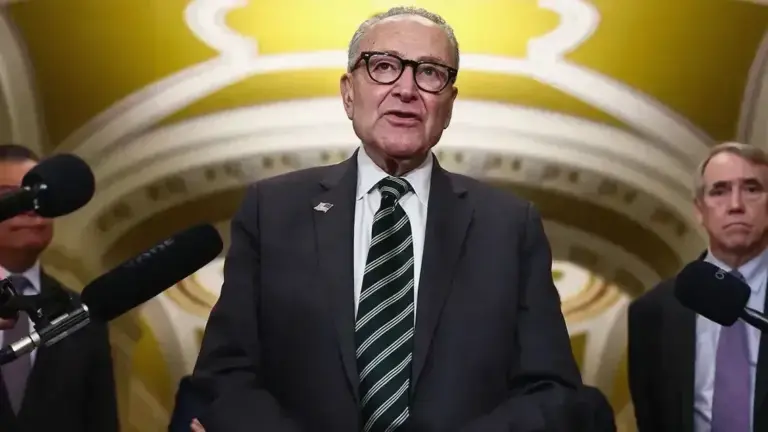
Senate Minority Leader Chuck Schumer, D-N.Y., is riding high after flipping the Senate, but a growing rebellion among longtime and fresh-faced Senate Democrats may throw a wrench in his plan to seek another term as the top dog in the upper chamber.

The top Democrat, who has led the Senate Democratic caucus for nearly a decade, has made clear he intends to run for another term as leader and take on the role of majority leader once more.

Schumer only needs a majority of Senate Democrats to vote for him to keep the job, but some want to take stock before jumping in to back him.

CHUCK SCHUMER AFTER SWEEPING DEMOCRATIC MIDTERM VICTORIES: ‘I’LL BE RE-ELECTED AS MAJORITY LEADER’

“We need a conversation about leadership going forward, because we need new energy and ideas,” Sen. Richard Blumenthal, D-Conn., told reporters on Tuesday when asked whether he supported Schumer.

But he quickly followed up by noting that he expected that Schumer would be “re-elected as leader, because no one has come forth willing to take the position. But we need a conversation about leadership.”

Schumer, during an appearance on the New York Times’ “The Daily” podcast, was asked if he expected a challenge in running for another term as leader.

“No,” he said.

THE HITCHHIKER’S GUIDE TO WHAT HAPPENS NEXT ON CAPITOL HILL

When pressed, Schumer argued that the Senate Democratic caucus is “focused on moving forward.”

“Everyone’s very happy with what we all did. But this is just the beginning,” Schumer said. “As I said before, and I’ll say it again and again to my caucus, to the country, to everybody: If we don’t deliver, all this will go away. This is just the first step. But I think we’re united together to do that.”

Fox News Digital reached out to Schumer’s office for comment on unrest among Democrats over his plan to seek another term.

Many of the newcomers to the Senate, which spans the ideological gamut from moderate to progressive, have made clear they won’t support Schumer, including the likes of Sen.-elect Adam Hamilton and Troy Jackson.

JOE MANCHIN WARNS DEMOCRATIC SOCIALISTS ARE GAINING GROUND AS DEMOCRATS REMAIN SILENT

And the sentiment that the immediate future of Democratic leadership needs to be litigated is percolating among some Senate Democrats, including Sen. Chris Van Hollen, D-Md., who is favored by progressives in the upper chamber to run for the job.

“I’ve said very clearly that we need to have a discussion in the Democratic caucus,” Van Hollen said during an appearance at Crooked Con over the weekend.

“We need to understand what the Democrats are going to do with this new responsibility and these new powers,” he continued. “And that nobody should get a blank check without a full understanding from the caucus as to where we’re going to go.”

And Van Hollen, who has previously said his focus was more on “kicking the tires” on a run for higher office in 2028, is reportedly mulling a bid for Schumer’s job, according to Politico.

Fox News Digital reached out for comment from Van Hollen’s office to confirm if he was considering a leadership bid.

This post appeared first on https://www.foxnews.com