
Archive

November 25, 2026

Browsing

While names like Apple and Microsoft often dominate the conversation when discussing safe havens for investment, some analysts argue that Alphabet is actually the strongest play among the Magnificent Seven for a ten year horizon. Despite early fears that generative AI would dismantle the traditional search model, Google has managed to turn a perceived threat into a competitive edge. By integrating its Gemini AI assistant directly into search, the company hasn’t just defended its ninety one percent market share but has reinforced its position as a profit engine, bringing in over sixty three billion dollars in search revenue alone during the third quarter.

Beyond the familiarity of search ads, Google Cloud is evolving into a genuine powerhouse. Recent figures show cloud revenue doubling year over year, supported by a staggering five hundred sixty one billion dollar backlog of future business. What sets Alphabet apart from many competitors is its vertical integration; by designing its own Tensor Processing Units, the company provides cost efficient alternatives to high end chips from Nvidia and AMD. This internal hardware capability allows them to scale AI workloads more effectively while maintaining healthy margins.

Adding further fuel to the fire is Alphabet’s strategic partnership with Anthropic. Following Anthropic’s recent transition to a public company, it became clear that Google holds a significant thirteen point seven percent stake in the firm. More importantly for shareholders, this isn’t just a passive investment. Anthropic has committed to spending over one hundred twenty billion dollars on Google Cloud services through 2033, ensuring a guaranteed stream of revenue for nearly a decade. With diversified wins across advertising, infrastructure, and equity stakes, Alphabet looks increasingly resilient heading into the late twenties.

The Detroit Lions continued their mastery over the Tampa Bay Buccaneers this past Sunday, extending their record to 4-1 against Todd Bowles’ squad since 2023. Despite skipping a bye week after their international trip to Germany, Dan Campbell’s roster appeared fresh and meticulously prepared, dismantling a rested Buccaneers team with clinical efficiency. The victory served as a catalyst for several key players who are now stacking high-quality outings during what has become a six-game winning streak.

Quarterback Jared Goff may not have put up astronomical numbers for the MVP trophy hunters, but his poise under pressure suggested this was one of his finest games of the year. Facing a fierce defensive front, Goff operated with surgical precision, posting a massive 126.9 passer rating and showing remarkable comfort in the pocket. His ability to navigate heat while delivering deep strikes and executing critical short-yardage sneaks proved that when Goff is this dialled in, the Detroit offense becomes nearly impossible to contain.

The dominance extended to the trenches where left tackle Penei Sewell continues to validate every lofty comparison to Hall of Fame legends. Sewell provided an impenetrable wall on Goff’s blind side, allowing zero pressures across sixteen pass protection reps while simultaneously carving out huge lanes for Jahmyr Gibbs in the run game. On the other side of the ball, safety Chuck Clark emerged as a cornerstone of the defense. Now serving as a defensive captain and communicator, Clark displayed veteran instincts and raw physicality, recording an unblocked sack and shutting down runs from the third level.

While most of the team saw their value rise, there were occasional lapses in execution. Linebacker Derrick Barnes struggled to find his rhythm throughout much of the afternoon, appearing disconnected compared to his peers in a linebacker corps that is still searching for total cohesion. Nevertheless, with eighteen players trending upward and only eight falling behind against Tampa Bay, the Lions look like a juggernaut moving toward the postseason with significant momentum.

Anthropic shares took another hit on Tuesday, sliding eight percent and slipping below the eighty three dollar IPO price. This latest drop follows a steady decline since the company first opened on the Nasdaq last Thursday at one hundred eleven dollars and fifty cents. Despite raising over eighty one billion dollars in what stands as the largest offering of all time, the AI lab has struggled to maintain its momentum amidst a wider market jittery about the massive costs associated with building out AI infrastructure.

The downturn comes at a chaotic moment for the sector, where chip giants like Nvidia, AMD, and Intel all saw losses during intraday trading. Much of this volatility is tied to internal drama at Nvidia, which recently saw Jensen Huang reinstated as CEO following a brief and dramatic removal from the post. While some investors hoped Anthropic would act as a catalyst to revitalize the AI trade, those who missed out on the oversubscribed initial offering haven’t yet rushed back in to save the sagging stock price.

Despite the red numbers on the ticker, top analysts remain remarkably bullish on Anthropic’s future. Experts at Canaccord Genuity described the firm as one of the most vital enterprise technology franchises of its era, setting a price target of one hundred thirty five dollars despite acknowledging significant risks regarding infrastructure and competition. Similarly, Wedbush maintained an outperform rating with a one hundred twenty dollar target, arguing that while the market remains tumultuous, there is no doubt that the AI ecosystem will eventually solidify.

Oppenheimer echoed these sentiments by setting an even higher target of one hundred fifty dollars. Their optimism centers on Anthropic’s ability to capture corporate spending through improved compute efficiency and a strategic approach to hardware that avoids heavy reliance on consumer subsidies. For these observers, current price fluctuations are merely noise compared to a substantial runway for growth and a dominant position in a transforming global economy.

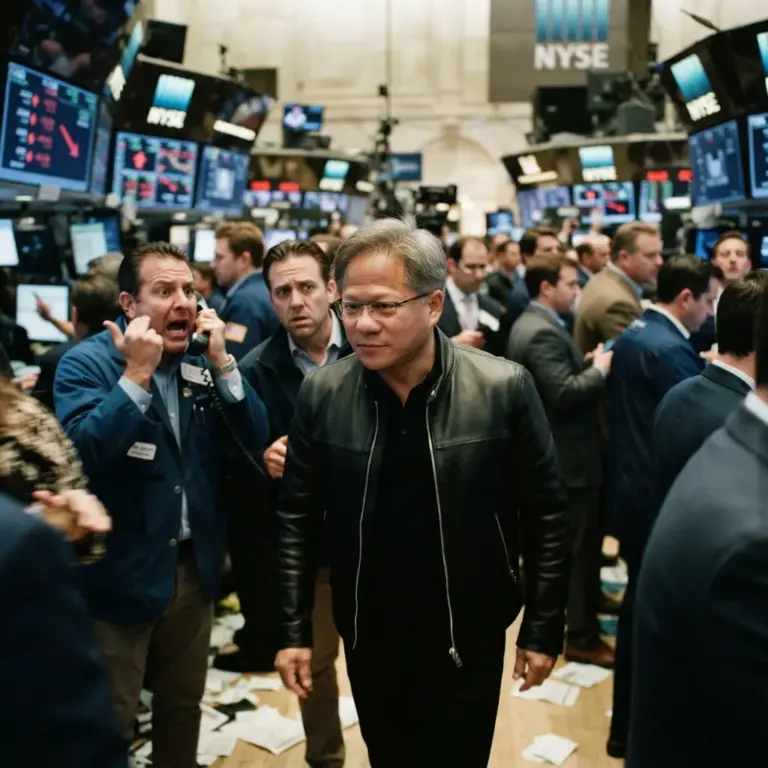
Wall Street experienced a whirlwind session on Monday as Nvidia shares surged more than 30 percent at the open, marking one of the company’s most explosive single day gains in decades. The sudden spike followed the bombshell announcement that Jensen Huang would be reinstated as CEO, sparking immediate cheers across trading floors. While many analysts rushed to hike their price targets toward the 200 dollar mark, some traders warn that this reflexive rally may be driven more by emotion than fundamentals.

Despite the excitement surrounding Huang’s homecoming, seasoned investors are urging caution. Many point out that the core problems leading to his initial departure remain unresolved, specifically regarding ongoing investigations into alleged Chinese espionage and failures in complying with U.S. export controls. Senator Elizabeth Warren and other Democratic leaders have already blasted the decision to bring Huang back, insisting that both the executive and the Trump administration owe Congress detailed explanations about national security lapses.

Beyond the legal drama, a shifting political landscape poses a structural threat to the artificial intelligence boom. With Democrats taking control of Congress and several key governorships in January, there is growing concern over potential moratoriums on data center construction. Experts like Dan Niles suggest that while the broader market may continue to climb, companies heavily dependent on massive infrastructure builds could see their momentum stall as regulatory scrutiny intensifies.

Even prominent skeptics are watching closely but remaining wary. Famed short seller Michael Burry noted that while thin holiday trading volumes could push Nvidia back into the high 100s in the short term, he isn’t convinced of a permanent recovery without further clarity. For now, shareholders find themselves caught between the charisma of a returning leader and a looming storm of congressional hearings and geopolitical tensions that could dictate whether this surge is a true reversal or merely a temporary bounce.

Wall Street experienced a sharp reversal today as technology shares slid following the surprising announcement that Jensen Huang has returned to lead Nvidia once again. While the return of such a visionary leader would typically be greeted with cheers from investors, the move seems to have triggered an immediate wave of uncertainty across the broader semiconductor sector. The sudden shift in leadership came amidst an already volatile climate, contributing to a wider tech sell off that pushed several major indices toward correction territory.

The dip reflects a complex mix of investor anxiety regarding future strategy and general instability within the artificial intelligence bubble. Analysts suggest that while Huang is credited with building Nvidia into a powerhouse, his reentry coincides with heightened fears about whether AI growth can sustain its current trajectory. This skepticism was further amplified by reports of systemic volatility and political uncertainty, leaving traders hesitant to bet on old guards even when they possess proven track records.

This market turbulence did not happen in isolation, as it coincided with other seismic shifts in the industry, including Anthropic’s massive two trillion dollar Nasdaq debut. As capital rotates between established giants and newcomers, the resulting friction has wiped billions in paper wealth off the boards in a matter of hours. Financial strategists note that we are seeing a moment of profound recalibration where even positive personnel news can be interpreted through a lens of risk rather than opportunity.

The mining world is currently experiencing a strange paradox where the ground is being drilled at record speeds, yet the money needed to turn those finds into actual mines is drying up. According to recent data from S&P Global, the third quarter of 2026 saw an explosion in exploration activity, with reported drill holes hitting an all-time high. Companies are eager to find new deposits, but once they strike gold or copper, they are hitting a financial brick wall. This gap between discovery and development suggests that while the appetite for finding minerals is strong, the willingness to fund the expensive transition to production has plummeted.

This funding squeeze is largely driven by a shifting economic landscape where borrowing has become prohibitively expensive. With the U.S. Federal Reserve raising interest rates, many junior and intermediate miners find themselves unable to service debt without steady cash flow from active operations. As a result, there has been a dramatic pivot toward equity financing. While selling shares allows these companies to avoid monthly interest payments, it dilutes ownership and often fails to provide the massive sums required for full scale project development. Debt financing took a nose dive recently, falling over fifty percent as lenders grew wary of high risk ventures.

Investors have not completely left the sector, but they have become far more disciplined and selective about where their money goes. Rather than gambling on early stage exploration dreams, capital is flowing toward established assets with proven track records and predictable returns. A prime example of this trend was seen in Alcoa’s multi billion dollar move to acquire interests from South32, signaling that big money prefers buying existing infrastructure over building something from scratch in the wilderness.

Geographically, this tension is playing out most prominently in Australia, Canada, and the United States, which together host two thirds of all current drilling projects. These regions remain the global hubs for mineral discovery, but analysts warn that unless financing conditions improve or investor risk tolerance returns, many promising discoveries may simply sit idle in the ground. The industry now faces a critical bottleneck where record breaking geological success is meeting a cold shoulder from the financial markets.

The global appetite for rare earth metals has surged to unprecedented levels, with worldwide production hitting 390,000 metric tons in 2025. This represents a staggering three-fold increase over a decade ago, driven largely by the rapid expansion of electric vehicles, renewable energy projects, and advanced military hardware. As artificial intelligence becomes more integrated into modern infrastructure, the demand for specific elements like neodymium and dysprosium has turned these minerals into the bedrock of the high-tech economy.

Despite this global growth, China continues to hold a commanding lead in the industry, producing 270,000 metric tons last year. By controlling the vast majority of production through state-owned enterprises and massive complexes like Bayan Obo in Inner Mongolia, Beijing has effectively used its market dominance as geopolitical leverage. To manage environmental concerns and combat illegal mining, China has implemented strict quota systems and traceability requirements, though it still relies on significant imports to supplement its own output while maintaining tight control over what leaves its borders via export licenses.

The United States finds itself in a precarious position as the world’s second-largest producer, yielding 51,000 metric tons in 2025. While production at California’s Mountain Pass mine is climbing and receiving substantial backing from the Department of Defense, Washington remains heavily dependent on foreign sources; roughly 71 percent of its rare earth imports still originate from China. This vulnerability has sparked an aggressive push to diversify supply chains through new tariffs on Chinese magnets and strategic diplomatic agreements reaching as far as Ukraine and Greenland.

Dothan, Alabama is set to become the center of a major shift in industrial manufacturing as Niron Magnetics prepares to break ground on a massive 1.8 billion dollar production facility. Announced alongside Governor Kay Ivey, the project will establish a sprawling 1.6 million square foot campus at the Westgate Super Site dedicated to producing permanent magnets that completely bypass the need for rare earth elements. This move represents a significant leap in scale for the Minneapolis-based firm, moving far beyond their upcoming smaller operation in Sartell, Minnesota.

While many modern technologies rely on neodymium-based magnets often sourced from volatile overseas markets, Niron utilizes iron nitride technology based on abundant domestic materials. The company claims that roughly 90 percent of global rare earth magnet production happens outside the United States, making this high volume facility a strategic win for American supply chain security. These innovative magnets are already finding their way into critical sectors including artificial intelligence infrastructure, defense systems, and consumer electronics.

CEO Jonathan Rowntree noted that Alabama emerged as the top choice after an exhaustive search across 22 different states. To prepare for the arrival of such a heavy industry giant, local partners utilized state funding through various economic development programs to secure and develop the 446 acre plot of land. With integrated access to CSX rail lines, the site is perfectly positioned to handle the logistics of a plant capable of churning out 10,000 tons of product annually.

The timing of the expansion coincides with growing interest from the automotive world, highlighted by a recent investment from Honda Motor via its Xcelerator Ventures program. Industry leaders emphasize that traditional electric propulsion motors are currently too dependent on resource-constrained metals prone to market swings. By scaling up in Alabama, Niron aims to provide a cost competitive and stable alternative that could reshape how everything from electric vehicles to industrial machinery is built globally.

The Democratic Republic of Congo is once again leveraging its massive mineral wealth to steer global markets, announcing a total suspension of cobalt exports starting November 30. This decision comes from the Authority for the Regulation and Control of Strategic Mineral Substances’ Markets, which stated that the blanket ban is necessary to combat a persistent price slump and an oversupplied international market. Regulators pointed toward a combination of slowing global consumption, bloated inventories, and erratic speculative trading as the primary drivers behind the recent decline in value.

As the source of roughly 75 percent of the worlds cobalt, the DRC holds significant leverage over the electronics and electric vehicle industries. However, this dominance is complicated by the fact that China handles nearly three quarters of the refining process and remains the dominant exporter from Congolese soil. This latest move follows a volatile period where previous attempts to stabilize prices through quotas and temporary bans saw mixed results, leaving the government determined to take more aggressive action to protect its national revenue.

Industry giants like Glencore are feeling the pressure as these restrictive policies bite into production levels. The instability has already prompted some firms to reconsider their footprint in the region, with Glencore currently exploring a multi billion dollar deal to sell a minority stake in its local operations to a US backed consortium. These shifts highlight a growing tension between private mining interests and a state looking to maximize its sovereign control over critical resources.

Beyond simple price stabilization, this ban reflects a broader trend sweeping across African nations seeking to break away from being mere exporters of raw materials. By restricting shipments of unprocessed ores, Kinshasa joins countries like Guinea and Zimbabwe in pushing for domestic processing and industrialization. While analysts note that previous quota systems were flexible, this return to a hard ban suggests that the DRC is willing to risk short term trade disruptions to force a long term structural rebalancing of how its minerals are valued globally.

Amid a push to bolster transparency, the Department of Health and Human Services (HHS) launched a searchable trove of public records, including previously unreleased memos from the Biden administration and Secretary Robert F. Kennedy Jr.’s calendars.

While the website will be updated over time, the initial drop includes a Biden-era memo detailing how the National Institutes of Health (NIH) considered no longer having a presence on Twitter after billionaire Elon Musk acquired the platform in October 2022, renamed it X and promised to scale back moderation amid free expression concerns.

Also included within the department’s so-called Radical Transparency dashboard are Kennedy’s calendars, which reporters have previously requested and have not been publicly disclosed before now.

HHS BUREAUCRATS ACCUSED OF ‘SABOTAGING’ RFK JR’S EFFORTS TO EXPOSE FAUCI RECORDS

“When President Trump asked me to lead HHS, I promised to bring transparency back to the American health agencies,” Kennedy said in a video announcing the launch of the website. “If the government makes decisions that affect your health, you deserve to see the evidence behind them. Not simply to be told, ‘trust the science.’”

Kennedy claims that HHS’ previous method of presenting public records was disorganized and confusing to use. He said public accountability would be aided by consolidating the documents in one simplified dashboard.

The Cabinet secretary noted that his department plans to upload more documents to the website during his tenure and the first drop includes previously available documents that are now easier to search and locate.

TRUMP ORDERS FEDERAL CONTRACTORS TO ALERT WHITE HOUSE ON CONGRESSIONAL RECORD REQUESTS

Though many on the political right are likely to hail the move as HHS’ increasing transparency efforts, Democrats have criticized the agency for lacking transparency under Kennedy’s leadership.

Congressional Democrats, for instance, have repeatedly said Kennedy stonewalls their oversight inquiries and claim that HHS, under his leadership, has provided incomplete responses to their questions. A letter sent by 18 Democratic lawmakers on Nov. 19, 2026, called out “an alarming lack of public transparency” following a delay to the disbursement of rural healthcare grants.

In early 2025, HHS reduced staff working on Freedom of Information Act (FOIA) requests and public records at the Centers for Disease Control and Prevention (CDC) and Food and Drug Administration (FDA) — another move Democrats claim stifles or at least slows transparency.

Previous releases of public records by the Trump administration have enabled journalists to uncover millions of dollars in welfare fraud.

President Donald Trump has charged Vice President JD Vance, seen by some as his heir apparent, with leading the White House charge against fraud, signaling the high importance of the issue to the administration.

WHITE HOUSE LAUNCHES INTERACTIVE MAP TRACKING BILLIONS IN SUSPECTED FRAUD

In addition to public records releases, HHS has also pushed regulations requiring that healthcare companies make more information public about their pricing practices.

While the administration focuses on fraud, concerns about corruption within its ranks have taken root with voters amid press reports regarding conflicts of interest and alleged self-dealing. A Fox News survey found that 60% of Americans were concerned about government corruption ahead of the recent midterm elections.

HHS did not respond to a request for comment when reached by Fox News Digital on Tuesday.