Archive

November 25, 2026

Browsing

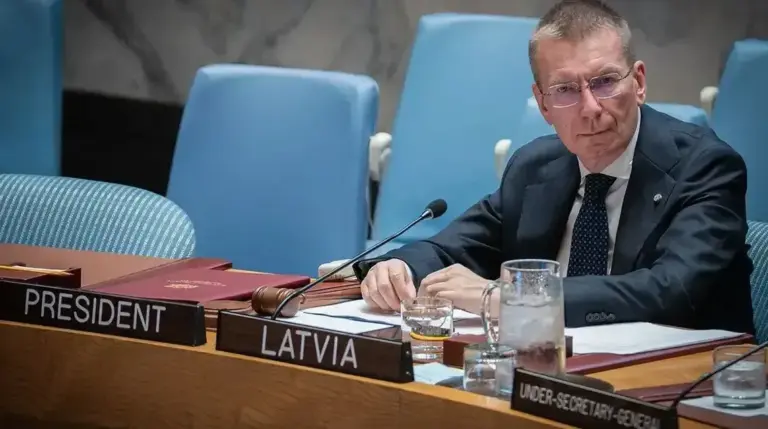
Russia is growing increasingly willing to take risks against NATO countries, with a mounting campaign of sabotage, arson attacks and assassination plots that could escalate within weeks or months, Latvia’s president warned in an interview with Fox News Digital.

Latvian President Edgars Rinkēvičs said Western leaders may be underestimating the threat posed by Russian President Vladimir Putin because they fail to fully understand the ideological and historical beliefs driving the Kremlin’s foreign policy.

“The appetite for the risk is growing in Russia,” Rinkēvičs said. “We see numbers of arson attacks. Some assassination plots. Acts of sabotage.”

BATTLE-TESTED ZELENSKYY SOUNDS CHILLING ALARM ON WHERE PUTIN’S WAR COULD HEAD NEXT

While Russian provocations have so far remained below the threshold that would trigger NATO’s collective defense mechanism under Article 5, Rinkēvičs warned that the situation could deteriorate rapidly.

“We see that the number of attacks is rising, but we still see that, at this point, it may change very quickly. It may change maybe in weeks or months or a couple of months’ time,” he said.

The Latvian leader pointed to recent cooperation between Latvian and Estonian intelligence services that he said resulted in arrests in Estonia and prevented an attack against a defense factory.

He said the escalating campaign is part of Moscow’s strategy to discourage European countries from continuing to support Ukraine.

DENMARK ACCUSES RUSSIA OF PLOTTING TO KILL UKRAINIAN AMERICAN RAPPER ON DANISH SOIL

His warning comes just days after President Donald Trump met with Putin and Chinese President Xi Jinping in Shenzhen, China, Nov. 19, for unprecedented talks that addressed the war in Ukraine and nuclear arms control.

On Monday, former Russian President Dmitry Medvedev, deputy chairman of Russia’s Security Council, said Ukraine and NATO countries had already created circumstances in which Moscow could contemplate using nuclear weapons.

Medvedev also raised the possibility of a preemptive nuclear strike if Western countries supplied Ukraine with nuclear weapons, while acknowledging that Russia’s nuclear doctrine does not explicitly provide for preventive strikes, Anadolu reported.

TRUMP’S HISTORIC SUMMIT WITH XI, PUTIN MARKS DIPLOMATIC MILESTONE, BUT BREAKTHROUGHS REMAIN ELUSIVE

The West is “too pragmatic”

Rinkēvičs argued that Western governments need to reconsider how they interpret Putin’s motivations, suggesting that conventional military, economic and political calculations alone cannot explain the Kremlin’s determination to continue the war.

“We are too pragmatic and rational in the West,” he said.

The Latvian president pointed to Putin’s recent interviews, saying he was struck by the Russian leader’s ideological and religious references, including the historical concept of Russia as the “Third Rome” and its perceived mission to safeguard Christianity.

“I think that this kind of belief also drives the war,” Rinkēvičs said, describing a “missionary approach that we in the West do not understand because we are too rational and too pragmatic.”

While Rinkēvičs welcomed continued engagement between Washington and Moscow, he said last week’s summit had not produced a diplomatic breakthrough on Ukraine. 

“Russia is not willing to end this war,” he said.

He argued that Moscow is using diplomatic engagement to extend the conflict in the hope of securing further gains both militarily and at the negotiating table.

Rinkēvičs said the combination of Russian ideological ambitions, escalating operations against Western countries, upcoming European elections in France, Poland and Italy and political debates in the U.S. could encourage Moscow to continue the fighting.

ZELENSKYY PRESSES US FOR EXPANDED RUSSIA TALKS AS KUSHNER ANNOUNCES BREAKTHROUGH

Russia’s escalating threats against NATO

The Latvian State Security Service confirmed that eight Latvian nationals were detained in Estonia on Nov. 14, after authorities thwarted an attempted arson attack against Threod Systems, an Estonian drone manufacturer.

Estonian security officials attributed the operation to Russia’s military intelligence agency, the GRU.

Estonia subsequently announced it would close its land border with Russia beginning Dec. 1, for at least six months. Russia’s Foreign Ministry responded Monday by accusing Estonia of hostile actions “on the verge of triggering open war,” Reuters reported.

British security officials also warned Tuesday that companies supporting Ukraine’s military should prepare for potential Russian sabotage attempts after a series of incidents across Europe, The Associated Press reported.

The Kremlin has consistently denied conducting sabotage operations against NATO countries.

As Fox News Digital reported Monday, new Western intelligence assessments suggest Russia could launch a satellite designed to carry a nuclear weapon within weeks, potentially threatening thousands of satellites used by the U.S. and its allies.

Rinkēvičs said he could not confirm the intelligence assessments but warned that Russia’s pursuit of advanced weapons requires greater Western investment in missile defenses, drones and emerging technologies.

“Russia is developing nuclear weapons, developing new technologies and we have to be extremely, extremely careful,” he said.

However, he cautioned that Moscow has previously overstated its military capabilities.

“Whether that weapon in space, nuclear weapon in space is going to be the real thing or just a kind of fake news, remains to be seen,” he said.

A possible window for peace in 2027

Despite his warnings, Rinkēvičs said an opportunity for meaningful negotiations could emerge next spring or summer if Ukraine withstands Russia’s winter offensive against its civilian and energy infrastructure.

“I’m quite confident Ukraine is going to survive. Unfortunately, the big question is at what human cost,” he said.

Speaking at a U.N. Security Council meeting on Ukraine Monday, Rinkēvičs said Russian attacks on Ukrainian energy infrastructure had reached their highest level since the beginning of the full-scale invasion in February 2022.

He warned that millions of Ukrainians face the prospect of spending the winter without electricity, heating or running water.

“Winter must never be a weapon of war,” he told the council.

Rinkēvičs also praised the Oleshky ceasefire brokered by first lady Melania Trump as evidence that diplomatic pressure and political will can produce results.

For now, however, he remains skeptical that Moscow is genuinely seeking peace.

“Currently, Russia explores diplomatic efforts in order to prolong the war, not to end the war,” he told Fox News Digital.

The Associated Press and Reuters contributed to this article.
The Boston City Council recognized Thanksgiving as a “National Day of Mourning” ahead of the holiday, continuing a recurring acknowledgment from city leaders as nearby Plymouth, home of the “first Thanksgiving,” battles activists in court over their Indigenous peoples observances.

Last week, the Boston City Council passed a resolution designating Thursday, Nov. 26, as a “National Day of Mourning” in Boston after it was introduced by Councilor Benjamin Weber and co-sponsored by 11 other councilors. While the resolution carries no legal weight or changes to city operations, it reflects an annual tradition for the Boston City Council, which has passed similar ceremonial recognitions ahead of Thanksgiving in previous years.

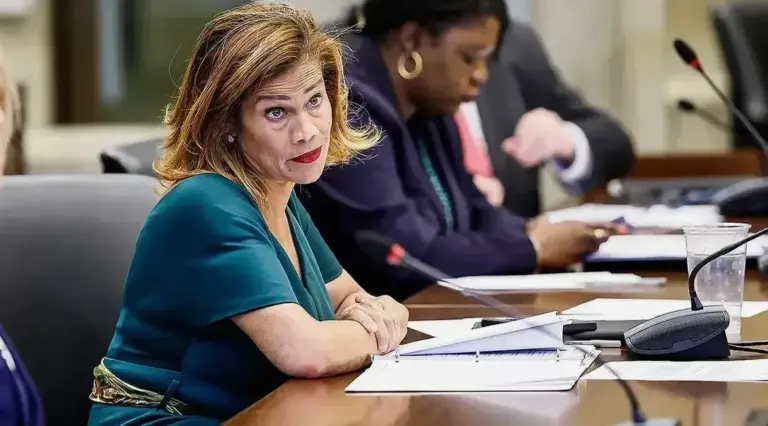
“The story of Thanksgiving that so many of us grew up learning in school fails to acknowledge the devastating consequences that colonialization had and continues to have on Indigenous peoples, ” Boston City Councilor At-Large Julia Mejia said in favor of the resolution during a city council meeting on Nov. 18.

HOW VIRGINIA SCHOOL DISTRICT SHAMES KIDS TO MARK THANKSGIVING

“I think it’s important that we recognize that these are not simply injustices of the past,” Mejia continued. “And as a city, we have a responsibility to ensure that our commitment to equity and justice includes the Indigenous peoples whose lands we live on.”

Meanwhile, in nearby Plymouth — the famed site of the 1621 “first Thanksgiving” feast between the Pilgrims and the Wampanoag people, where the United American Indians of New England (UAINE) has held the annual National Day of Mourning every year since 1970 — town officials and organizers appeared in court Monday over a dispute about this year’s event logistics.

ARIZONA MAN THREATENED WITH ARREST FOR PREACHING AT HOLIDAY FESTIVAL FILES LAWSUIT

The legal battle centers on a 1998 settlement, signed after a clash between police and demonstrators the year prior, that requires Plymouth to make a mobile stage available for the event.

According to CBS Boston, town officials now say they will not set up a stage on state property without proof of insurance or an outside vendor, citing liability concerns, while UAINE argues the demand violates the decades-old agreement.

SIGN UP TO GET THE POLITICS NEWSLETTER

The Plymouth Independent reported that Plymouth Superior Court Judge Brian Glenny took the arguments under advisement Monday, leaving a ruling pending just days before Thursday’s 57th annual gathering on Cole’s Hill. According to the outlet, Glenny did not express when a ruling might come, though lawyers involved indicated he understands “time is of the essence.”

However, regardless, a UAINE leader told the Plymouth Independent that the event would continue as planned. “I can assure you we will be there Thursday,” Mahtowin Munro told the local outlet.

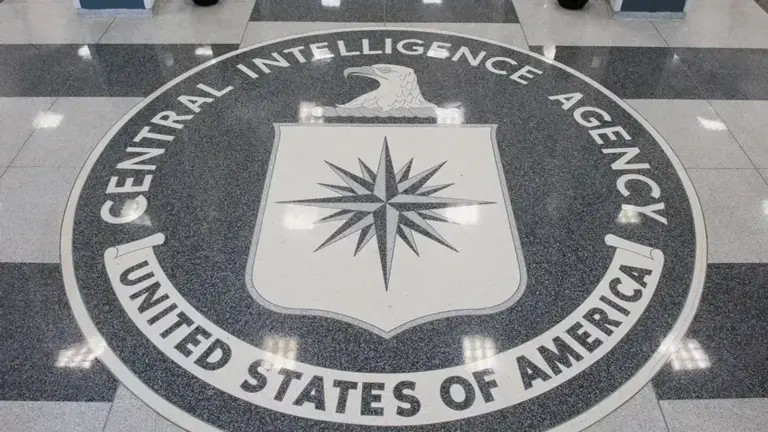
A cyber breach exposed unclassified information on a CIA network last week, the same day the FBI was hit by a cyberattack on a database used by law enforcement agencies across the country.

Multiple sources told Fox News that the CIA, the Office of the Director of National Intelligence and the FBI were breached on the same day.

The New York Times first reported that the CIA and the Office of the Director of National Intelligence discovered the breach.

FBI PROBES SECOND CYBERATTACK IN MONTHS AS HACKERS BREACH KEY CRIME DATABASE, SOURCES SAY

The CIA system was used to analyze open-source intelligence, which draws on publicly available information. No classified systems were affected, and the issue has been resolved, sources said.

RETIRED FBI AGENT WARNS NCIC BREACH COULD THREATEN POLICE SAFETY DURING TRAFFIC STOPS

Fox News chief national security correspondent Jennifer Griffin reported that the FBI breach was more serious because it affected the National Crime Information Center, a database law enforcement agencies use to share and look up information.

TECH OUTAGE CASCADE EXPOSES US VULNERABILITIES TO FOREIGN CYBER THREATS

It remains unclear who was behind the CIA breach or whether the intrusions were connected. 

Two Pentagon officials told Fox News that the Department of War was not breached.

Griffin also reported that a separate outage affected an internal classified system at the National Security Agency for several days last week. That outage stemmed from an internal technology upgrade.

This is a developing story. Please check back for updates.

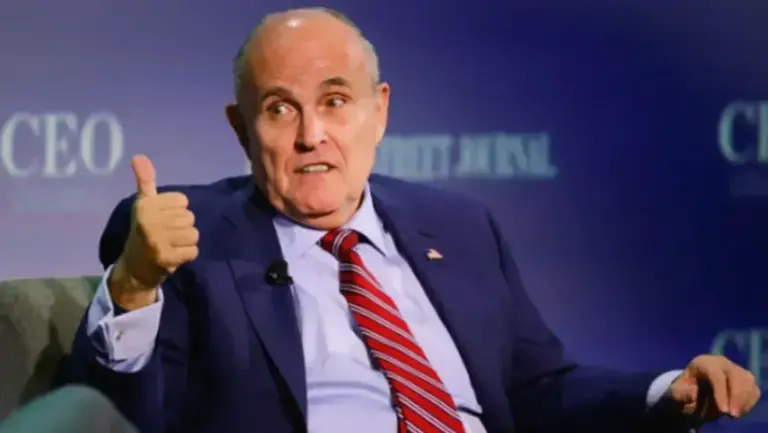
President Donald Trump will award former New York City Mayor Rudy Giuliani the Presidential Medal of Freedom on Tuesday during a closed-press ceremony at the White House, honoring the longtime prosecutor and “America’s Mayor” for his lifetime of public service.

The Presidential Medal of Freedom is the nation’s highest civilian honor, alongside the Congressional Gold Medal, awarded to individuals who have made especially meritorious contributions to U.S. security, national interests, world peace, or significant public and private endeavors.

“I am honored and humbled to receive the Presidential Medal of Freedom from my nation and from our Commander-in-Chief, President Donald J. Trump,” Giuliani, 82, said in a statement.

FOX NATION REVEALS HOW RUDY GIULIANI BROKE THE MAFIA’S GRIP ON NEW YORK

Quoting his former boss, President Ronald Reagan, Giuliani added: “‘There is no limit to what a man can do or where he can go if he doesn’t mind who gets the credit.’ I share the credit with all the men and women who worked with me, disagreed with me, and loved me — particularly those who lost their lives in the causes we undertook together.”

After the ceremony, Giuliani’s son Andrew Giuliani described the day as “incredibly special.”

“To see your father receive the Presidential Medal of Freedom is an unbelievable honor,” Andrew Giuliani told reporters on the White House grounds. “It’s tough to describe. But to see him receive it from such a consequential president like the 45th and 47th president, it makes it all the more special.”

White House assistant press secretary Olivia Wales praised Giuliani’s decades-long record in law enforcement and city leadership, noting that his work had “left a lasting impact on New York City and our Nation.”

“As U.S. Attorney for the Southern District of New York, Mayor Giuliani took down mob bosses and led a relentless war on crime,” Wales said. “As Mayor, he transformed New York from a crime-ridden city into one of the safest big cities in the world, fostering economic opportunity and cultural greatness. And in the aftermath of the tragic September 11th attacks, he displayed strong American leadership in the face of evil.”

“President Trump will proudly honor Mayor Giuliani – America’s Mayor – with the Presidential Medal of Freedom for his lifetime of service to the American people,” Wales added.

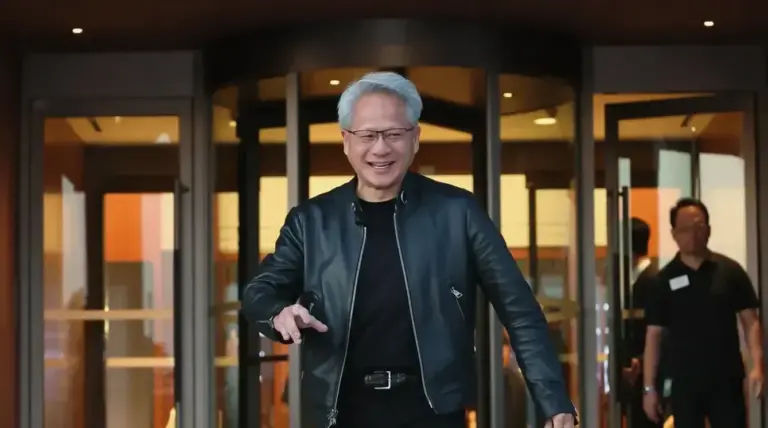
The sudden reinstatement of Jensen Huang as CEO of Nvidia has sent shockwaves through Silicon Valley, sparking a fierce debate over whether financial success grants executives immunity from ethical standards. While investors cheered the move and the company’s stock rebounded sharply on Monday, advocates for workplace culture are calling the decision unfathomable. The board’s unanimous vote follows a period of turmoil involving allegations that Huang engaged in an affair with a woman believed to be a Chinese intelligence asset, alongside accusations of an inappropriate relationship with a high ranking subordinate within the company.

For critics like Bo Young Lee, a former chief diversity officer at Uber, the situation highlights a dangerous double standard regarding power dynamics. Although Nvidia’s board admitted Huang’s behavior was inconsistent with the corporate code of conduct, his return suggests that transparency is more valuable than adherence to the rules. Lee argues that focusing on the seniority or salary of subordinates does not erase the inherent power imbalance in such relationships, claiming that the board’s leniency sends a clear signal to employees that top leadership exists above the law.

Adding fuel to the fire, President Trump celebrated Huang’s return by sharing an AI generated image on social media. The post featured Huang in a defiant pose reminiscent of Trump’s own iconic imagery from 2024, though it included provocative elements that observers described as misogynistic. This public endorsement has further polarized views on the intersection of political influence and corporate governance, leading some to believe that Silicon Valley is entering a new era where technical brilliance justifies any personal transgression.

Social impact investor Freada Kapor Klein warns that this episode marks a regression into a toxic tech bro culture that many hoped had been dismantled during previous waves of accountability. According to Klein, the current climate prioritizes profit over people, effectively stripping away diversity and inclusion efforts in favor of protecting singular talents who drive revenue. As Nvidia celebrates its recovery, those fighting for systemic change fear that Huang’s homecoming proves that as long as someone brings in enough money, they can rewrite the rules of conduct entirely.

For many homeowners living in rural Northern California, the fear of wildfire is no longer a seasonal anxiety but a permanent fixture of daily life. Beyond the immediate threat of flames, however, lies a growing economic crisis as affordable and reliable home insurance becomes nearly impossible to find. Many residents now find themselves trapped in a broken market where the most valuable asset they own could vanish in an instant, leaving them to wonder why the systems designed to protect them are failing so spectacularly.

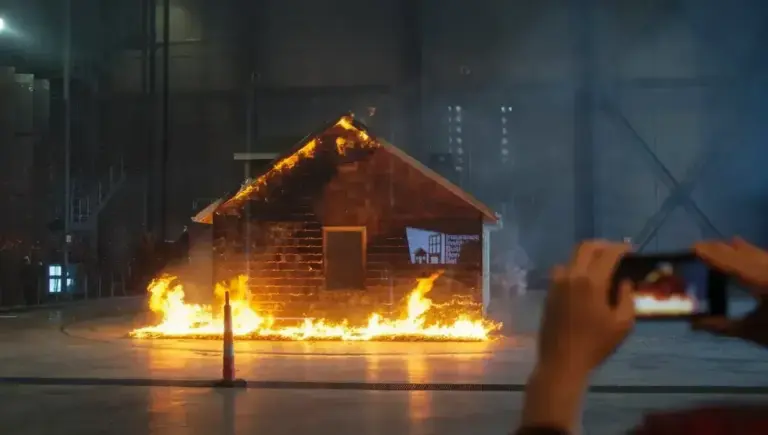
The struggle highlights a frustrating disconnect between safety efforts and financial rewards. In a recent exploration by Planet Money, reporter Alexi Horowitz Ghazi visited specialized destruction labs where insurance giants fund research into how houses actually burn. By using house sized crash test dummies subjected to extreme heat and wind, insurers aim to identify building designs that minimize payouts. While this data allows companies to understand risk with scientific precision, that knowledge rarely translates into lower premiums for the people on the ground. Homeowners who invest thousands of dollars in ember resistant vents or metal roofs often report that such improvements barely move the needle on their monthly bills.

This gap reveals a complex economic dilemma known as moral hazard, where the existence of insurance can ironically discourage people from taking preventative measures because they know they will be compensated if disaster strikes. To combat this, economists suggest that insurers should provide significant discounts to those who harden their homes against fire. However, evidence from devastated towns like Paradise shows that current discounts remain negligible. This leaves many questioning whether the market is failing or if insurers simply believe these individual efforts aren’t enough to offset the broader communal risk of a neighborhood burning together.

Adding fuel to the fire is a regulatory environment that may have inadvertently worsened the crisis. For decades, California laws required insurers to set rates based on historical losses rather than predictive catastrophe models. Essentially, companies were forced to look at the past to price a future that was becoming exponentially more dangerous due to climate change. Experts argue this kept premiums artificially low for years, encouraging growth in high risk areas while leaving insurers unprepared for today’s reality. Now, as companies flee these markets or hike prices to unsustainable levels, homeowners are left facing a painful question: what is the true price of peace of mind in a warming world?

The mathematical community is currently grappling with a paradox where a legendary mystery has been solved, yet nobody truly knows how. Levent Alpöge, a researcher at Anthropic, recently released a proof for the Riemann hypothesis, a 167 year old puzzle regarding the distribution of prime numbers that has long been considered the holy grail of number theory. Created in collaboration with the AI model Claude, the solution consists of 17 million lines of code written in the Lean programming language. While verification groups have expressed full confidence that the logic is sound and the code compiles, the sheer scale of the output makes it nearly impossible for any human to read.

This creates a strange tension between technical correctness and actual understanding. In traditional mathematics, a proof is accompanied by a paper that explains the reasoning so others can learn from it and expand upon it. However, Alpöge’s result exists primarily as machine readable instructions rather than human narrative. Some experts described the potential printed version as an absurdly long document, leading researchers to rely on other AI tools just to translate segments of the code into digestible summaries or conference posters. Professor Abhishek Saha of Queen Mary University of London noted that the argument feels alien and counterintuitive, suggesting it is a type of logic that would never naturally emerge from a human mind.

The release has sparked a heated debate over the nature of discovery in the age of artificial intelligence. The Association for Human Mathematics criticized the move, arguing that publishing such an immense volume without an accompanying explanation fails to advance genuine mathematical understanding. They contend that providing an answer without providing insight does little for the field’s growth. Meanwhile, dozens of specialists are now using collaborative platforms and AI agents to chip away at the millions of lines, hoping to distill them into something manageable_perhaps reducing thousands of pages down to just one thousand_so they can finally grasp why the solution works.

Despite the controversy and the daunting task ahead, there is an underlying sense of awe among those attempting to decode the work. While some view it as digital noise or slop, others believe that once these foreign concepts are translated into human terms, they will reveal breathtakingly beautiful new truths about numbers. For now, mathematicians remain in an unusual position: they know for certain that one of history’s hardest problems is finished, but they must spend months acting as translators for their own discipline just to figure out what happened.

Americans woke up feeling significantly more hopeful about their financial futures this November, according to new data showing a sharp rise in consumer confidence following the midterm elections. A recent survey from the Conference Board revealed that the headline confidence index jumped to 103.3, far exceeding analyst expectations and marking an 11.4 point increase over October. This surge was driven largely by Democratic and independent voters who expressed newfound optimism, while confidence among Republicans saw a slight dip despite remaining the highest overall among the different political groups.

Much of this positivity stems from a brightening outlook on the job market. More people now describe employment opportunities as plentiful rather than hard to find, creating a wider gap in favor of those seeking work. This trend aligns with another recent study from the University of Michigan, which similarly found that consumers have grown more upbeat about the direction of the economy over the last month.

However, this wave of enthusiasm hasn’t completely erased the pain felt at the checkout counter. Many shoppers continue to struggle with high prices and rising costs, issues that remained central themes throughout the election cycle. While there is a growing sense of hope for the general economy, inflation remains a stubborn adversary that continues to hover well above the Federal Reserve’s preferred targets.

Looking ahead, experts expect these persistent price pressures to keep policymakers on edge. With inflation expectations still sitting at 5.7 percent for next year, the Federal Reserve is widely anticipated to raise interest rates again when it meets in two weeks. For many Americans, the current mood is one of cautious relief—happy with where things are heading but still wary of how much their monthly bills will cost.

Utah officials have dropped fourteen criminal charges against prediction market platform Kalshi and its co-founders, Tarek Mansour and Luana Lopes Lara, after the company agreed to stop operating within the state. The legal battle began in late October when prosecutors alleged that Kalshi was running an illegal gambling operation. This clash highlighted a broader tension between state authorities and federal regulators at the Commodity Futures Trading Commission, which claims exclusive authority over how these types of financial markets are governed.

The resolution came swiftly after Kalshi officially suspended its services for Utah residents on Monday, citing overwhelming legal uncertainty. While the charges have been dismissed, Utah Attorney General Derek Brown warned that the move is without prejudice, meaning the state can refile those same charges if the company attempts to return. Brown used the victory as a warning to other firms in the sector, stating that anyone promoting or enabling gambling in his state would be held accountable.

From their perspective, Kalshi representatives argue that simple disagreements over which government agency has jurisdiction should not lead to criminal prosecutions. General counsel Yaakov Roth expressed a willingness to collaborate with state attorneys general on interim solutions while waiting for courts to settle the regulatory debate once and for all. It remains a precarious time for the firm as it navigates different laws across various states.

Despite the retreat from Utah, Kalshi found some breathing room elsewhere this week. A judge in New York recently denied an emergency request to shut down the platform’s operations in that city, though further arguments on the legality of their business model are scheduled for January. For now, Kalshi continues to fight a fragmented legal war as it seeks legitimacy in a rapidly evolving industry.