Archive

November 18, 2026

Browsing

Warren Buffett’s conglomerate is signaling a clear shift in strategy according to the latest regulatory filings. In its most recent 13F report, Berkshire Hathaway revealed that sales outweighed purchases throughout the third quarter, suggesting a cautious approach toward adding new positions while aggressively cleaning house. The move marks a distinct transition period for the investment giant as it streamlines its American equity holdings.

Much of the selling activity appears linked to a broader organizational pivot under the leadership of Greg Abel. Analysts noted that the firm is moving faster than anticipated to wind down various smaller bets previously managed by investment managers Todd Combs and Ted Weschler. By shedding these diverse holdings, Berkshire seems to be returning to its roots of focusing on a few high conviction concentrated plays rather than maintaining a sprawling list of minor investments.

One of the most notable tactical moves involves a strategic rotation out of the financial sector and into residential construction. Specifically, Berkshire reduced its significant stake in Bank of America to make room for an increased position in homebuilder Lennar. This swap suggests that the firm may see more immediate upside in the housing market than in traditional banking assets given current economic headwinds.

Ultimately, these adjustments reflect a tightening of the ship at Omaha’s most famous investment vehicle. While many investors watch every trade for clues about where Buffett sees value, this particular quarter feels less like a search for new gems and more like a disciplined effort to consolidate power and simplify the balance sheet for the next generation of leadership.

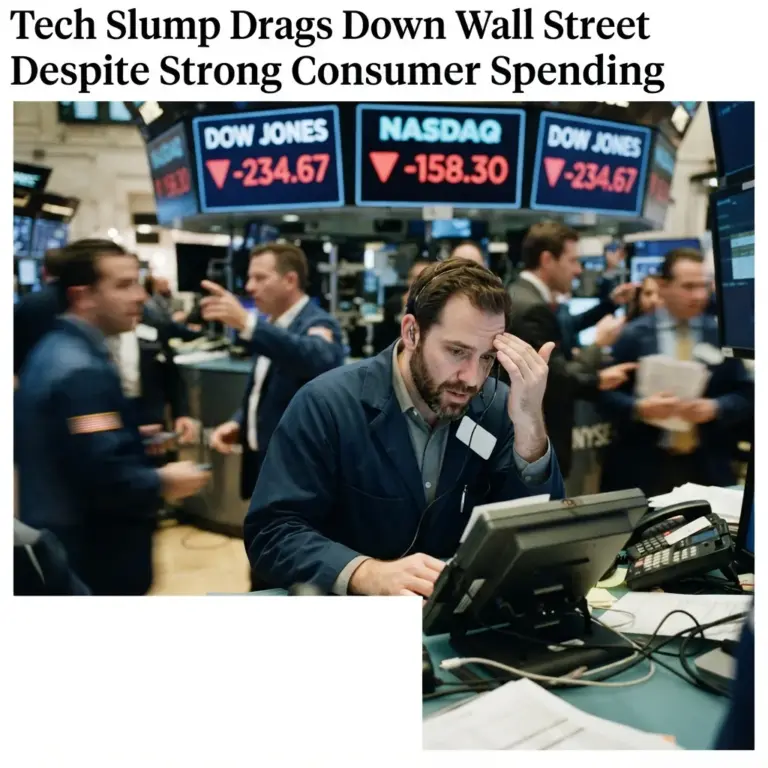
Wall Street saw a bit of a tug-of-war on Tuesday as the Dow Jones Industrial Average and other primary indexes slipped lower. In a surprising turn, investors largely ignored positive economic signals from October, where retail sales figures actually beat expectations. While consumers seem to be spending at a healthy clip, that optimism wasn’t enough to save the broader market from a cooling trend in high growth sectors.

The day was defined by a sharp divide between industries. Energy and mining companies found some momentum, providing a bright spot for those holding oil plays. However, these gains were completely offset by heavy losses in software stocks, which faced significant selling pressure throughout the session. This divergence suggests that traders are shifting their focus away from digital services and toward hard commodities.

Adding to the drama was the volatility surrounding Nvidia, which spent much of the day fighting against an initial downward slide. Much of the attention centered on former CEO Jensen Huang ahead of his scheduled congressional testimony. Adding fuel to the fire, Huang sparked fresh conversation across trading floors after suggesting he might be open to reclaiming his position as chief executive of the chipmaking giant.

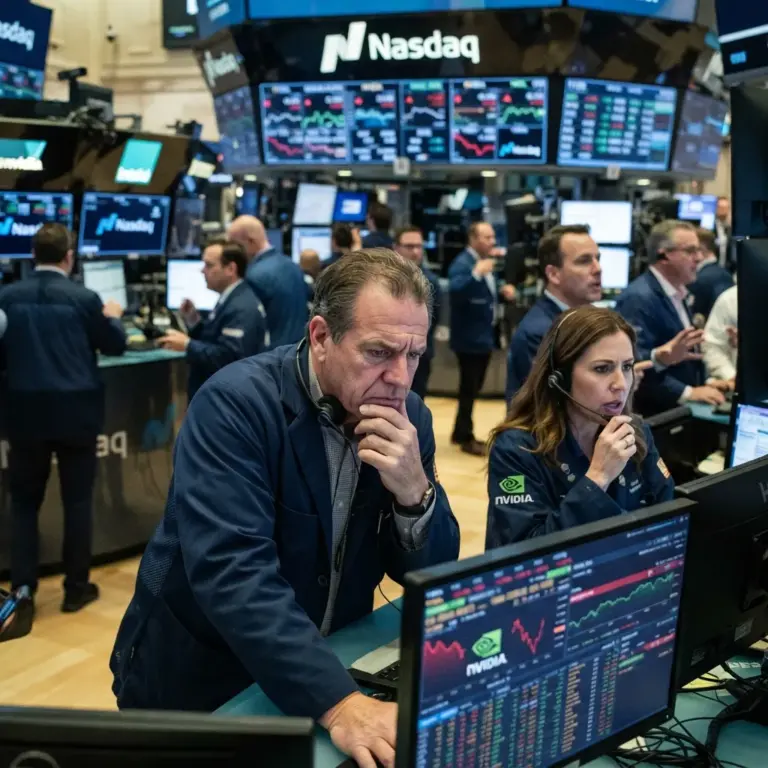
Nvidia shares took a noticeable dip today as the market entered a period of high tension ahead of the company’s upcoming earnings report. While the semiconductor giant has spent months driving the global artificial intelligence boom, investors appear to be growing cautious about whether the current pace of growth can be sustained. This pre-earnings slide suggests that traders are pricing in a higher level of risk, fearing that even strong results might fail to meet the sky-high expectations set by Wall Street.

Adding to the uncertainty is a brewing narrative surrounding leadership stability and the potential return of executive focus. There are mounting doubts among analysts regarding how certain strategic pivots will be handled at the top, specifically concerning the CEO’s trajectory and long term commitment to existing roadmaps. These whispers have created a layer of instability, making shareholders wonder if internal shifts could distract from the firm’s aggressive expansion into next generation hardware.

The volatility comes at a critical juncture for the broader tech sector, where Nvidia often serves as a bellwether for health across the entire AI ecosystem. If the upcoming financial disclosures reveal any cracks in demand or guidance, it could trigger a wider correction. For now, the street remains in a holding pattern, watching closely to see if Jensen Huang can quiet the skeptics and prove that the appetite for AI chips is far from peaking.

Despite a strong performance from the S&P 500 this year, a cloud of uncertainty continues to hang over the financial landscape. From stubborn inflation and looming interest rate hikes by the Federal Reserve to geopolitical tensions in Iran and skepticism surrounding the actual payoff of AI investments, investors are increasingly anxious. While no one can predict with certainty if these pressures will trigger a full scale market crash, many are beginning to wonder how to protect themselves and where the opportunities might lie if things turn south.

For those looking for guidance, the philosophy of Warren Buffett offers a timeless strategy centered on preparation rather than prediction. Rather than panic selling or trying to time the exact bottom of a crash, Buffett suggests treating widespread fear as a strategic advantage. According to his shareholder letters, market downturns often force investors to dump high quality assets alongside poor ones, creating deep discounts on fundamentally sound businesses. The key is to build a comprehensive shopping list of desired companies now, ensuring that when prices plummet, you have already done the homework necessary to act decisively.

To curate such a list, Buffett emphasizes identifying companies with immense pricing power—those capable of raising costs without alienating their customer base—and rock solid balance sheets. In an environment of rising rates and tightening credit, heavily indebted firms become liabilities, whereas companies with low debt and ample cash reserves are positioned to thrive. Investors should look for businesses that provide essential products people continue to buy regardless of the economic climate, allowing them to gain market share while weaker competitors struggle.

Ultimately, being ready for a crash does not mean exiting the market entirely or sitting on the sidelines until disaster strikes. Instead, it involves maintaining current investments while steadily accumulating cash reserves and establishing clear price targets for your watchlist. By removing emotion from the equation through proactive research, you transform a potential crisis into a calculated opportunity. As seen with Berkshire Hathaway’s massive cash piles under leadership including Greg Abel, staying liquid and patient allows an investor to strike quickly when value finally appears.

When a banking crisis hits, the Federal Reserve acts as the lender of last resort, providing essential lifelines to keep financial institutions afloat. However, for many banks, taking that help comes with a psychological price known as stigma. There is a long standing fear that borrowing from the central bank serves as a public admission of weakness, signaling to the stock market that a bank is in deeper trouble than it lets on. This creates a dangerous paradox where banks might avoid necessary funding to protect their stock price, potentially worsening a systemic collapse.

A recent study by Natalia Fischl Lanzoni, Martin Hiti, and Asani Sarkar suggests that not all Fed loans are created equal in the eyes of investors. By analyzing the chaos of the 2023 bank runs, researchers found a stark difference between how the market reacted to two different lending tools. When banks turned to the traditional Discount Window for short term loans, investors quickly became more sensitive to that bank’s vulnerabilities, specifically regarding their capital strength and reliance on uninsured deposits. Essentially, using the Discount Window acted as a red flag that alerted shareholders to look closer at a bank’s flaws.

Interestingly, this negative reaction disappeared when banks utilized the newer Bank Term Funding Program introduced during the height of the 2023 turmoil. Unlike the old system, borrowing through this specific program did not seem to trigger an increase in investor anxiety or heighten suspicions about a bank’s stability. While both programs offer anonymity for two years, the nature of the BTFP seemed to neutralize the usual social cost associated with seeking emergency aid.

These findings suggest that while stigma still haunts traditional Fed facilities, carefully designed policy interventions can bypass these market biases. For regulators and policymakers, this implies that creating specialized windows for liquidity can encourage struggling banks to seek help without fearing a sudden crash in their share price. By removing the perceived shame of borrowing, the Federal Reserve can more effectively stabilize the economy during times of panic without inadvertently triggering further sell offs by nervous investors.

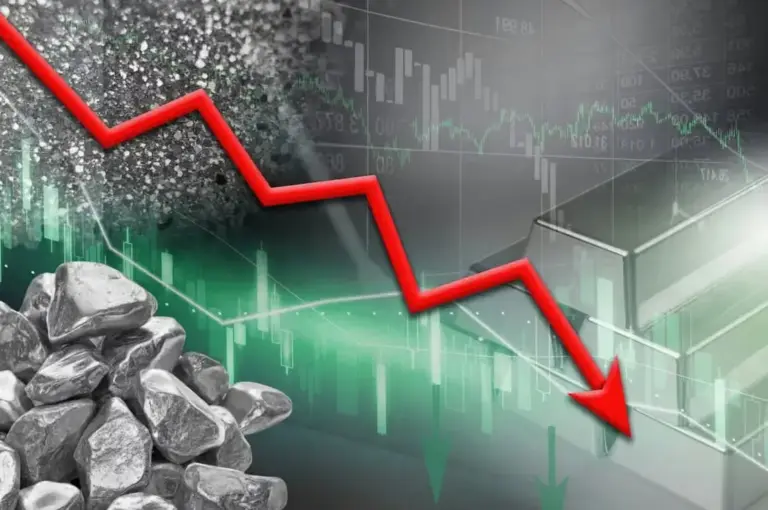
Silver prices faced a challenging start to the week, sliding beneath the critical fifty dollar mark as a strengthening US dollar and anticipation of higher interest rates squeezed the market. Spot silver dipped to roughly forty six dollars and fifty five cents per ounce on Monday afternoon, continuing a downward trend fueled by stubborn inflation data and signals from Federal Reserve officials that more rate hikes could be on the horizon. This macroeconomic environment typically makes non yielding assets like precious metals less attractive, leaving both silver and gold struggling to maintain their footing.

Despite the immediate dip, several prominent analysts suggest that this downturn might actually create a buying opportunity for long term investors. Lobo Tiggre, CEO of IndependentSpeculator.com, indicated that while silver could drift even lower in tandem with gold, he expects a sharp eventual recovery where silver potentially outperforms its larger counterpart. Similarly, Pamela Aden of The Aden Forecast views the current pullback as a standard correction within an overarching bull market, noting that silver frequently spends years in a dormant state before experiencing explosive growth.

Other experts believe the fundamental drivers behind precious metals remain intact regardless of short term volatility. Peter Schiff argues that persistent inflation and mounting government debt will eventually erode confidence in the US dollar, forcing investors back into hard assets. Meanwhile, Tavi Costa of Azuria Capital pointed toward silver miners as a hidden gem in the sector, citing strong cash flows and low investor positioning as catalysts for a future revaluation of mining stocks.

However, some headwinds persist beyond monetary policy. Research from Metals Focus indicates a projected five percent decline in global silver demand by twenty twenty six, driven largely by a slump in jewelry sales and efforts by solar panel manufacturers to find cheaper substitutes for the expensive metal. Even with those concerns, silver held slightly higher in early Tuesday trading around forty seven dollars and twenty four cents, reflecting a tug of war between immediate economic pressures and optimistic forecasts for a rebound.

Purepoint Uranium and IsoEnergy are gearing up for an ambitious expansion at their shared Dorado project in Saskatchewan. The two companies have greenlit a massive 7,700 metre drilling campaign slated for 2027, aiming to unlock the full potential of two promising uranium zones in the eastern Athabasca Basin. This strategic push comes as part of a fifty-fifty partnership designed to capitalize on recent discoveries that suggest significant mineral wealth beneath the surface.

The operation will kick off early in the year with a concentrated effort at the Q24 target. Between January and March, teams plan to sink nine diamond drill holes totaling nearly five thousand metres. Interest in this specific area spiked following previous results that showed elevated radioactivity levels, sparking hope that they have found a substantial system spanning the unconformity. By drilling both northwest and southeast of the initial discovery, the partners hope to map out exactly how far this mineralization stretches.

Later in the summer, the focus will shift toward the Nova discovery via helicopter-supported drilling. Five additional holes will be drilled throughout July and August to test new targets identified through advanced airborne geophysical surveys. The stakes are high at Nova, where past efforts yielded impressive high grade readings, reinforcing the belief that the region could become a cornerstone of their production portfolio.

Beyond the immediate drilling goals, Purepoint and IsoEnergy are casting a wider net across their Aurora and Celeste properties using magnetotelluric surveys to find more conductive structures. Speaking recently at an investment conference in New Orleans, Purepoint CEO Chris Frostad emphasized that these efforts build on a highly active prior year of exploration. With over one hundred thousand hectares under their joint control, the pair is betting heavily on the geological similarities between Dorado and other high grade deposits nearby.

The National Security Agency’s internal classified communications network is experiencing an “intermittent outage,” but critical communications remain intact, a person familiar with the matter told Fox News Digital on Tuesday.

The disruption affects a highly classified network known as NSA Net, which agency personnel use to communicate classified information internally.

The latest impact at one of the nation’s most sensitive intelligence agencies also comes amid a string of technology outages affecting major U.S. institutions, from the Federal Aviation Administration (FAA) to Microsoft and major banks, raising fresh concerns about the reliability of critical communications infrastructure.

DHS CHIEF TELLS AMERICANS TO ‘BREATHE’ AMID TECH OUTAGES, INSISTS HOMELAND IS ‘SECURE’

CNN first reported the outage Tuesday, citing five people familiar with the matter.

The agency has implemented staggered arrival times for personnel at NSA to prevent tens of thousands of employees from attempting to log into their computers simultaneously as officials work to address the disruption, the person familiar with the matter said.

The issue appears to be technical in nature, according to the source, though the precise cause has not been established.

Despite the disruption, the agency has not lost critical communications capabilities and has numerous backup facilities available to maintain operations, the source said.

DUFFY: INVESTIGATORS EXAMINING 2 ROUTERS AFTER NATIONWIDE FAA GROUND STOP, NO SIGNS OF FOREIGN CYBERATTACK

The NSA, which is responsible for collecting and analyzing foreign signals intelligence, plays a central role in supporting U.S. intelligence and military operations.

It remains unclear when the outage began or how long it will take to fully restore the affected network.

Fox News Digital reached out to the NSA for comment. 

The disruption comes amid a string of high-profile technology outages over the last week affecting government systems and major businesses.

On Friday, the FAA ordered a nationwide ground stop after a telecommunications failure disrupted aircraft communications and radar feeds. The agency said instability spread to 17 of its 22 air route traffic control centers before flights resumed later that evening.

The disruption was attributed by the FAA to excessive data flooding its aging telecommunications network, potentially originating from two facilities in Texas and Arkansas. Officials said they had found no indication of a cyberattack.

Federal authorities are separately warning of increasingly sophisticated cyber threats. In a Nov. 13 advisory, the FBI warned that hackers are exploiting an artificial intelligence-powered penetration testing framework known as ARTEX to automate attacks against organizations worldwide.

The FBI said the technology has allowed some attackers to move from initial targeting to privileged access in less than three hours. Microsoft previously linked the framework to a China-aligned hacking group’s exploitation of a ConnectWise supply-chain compromise, which involved attempts to access more than 2,250 downstream Microsoft 365 customer environments.

There is no evidence linking the NSA disruption to the ARTEX activity or the other recent outages.

FIRST ON FOX — Fraud schemes drained veterans’ disability benefits and left a promised cancer treatment center unfinished before it was demolished, according to the Justice Department.

In launching a nationwide crackdown on abuse of veterans’ programs, the DOJ is levying charges against 15 defendants in schemes involving more than $3.4 million in intended losses, announcement materials obtained first by Fox News Digital detail.

Prosecutors also secured guilty pleas, trial verdicts and sentencings in cases involving more than $19 million in intended losses during the operation, which began Sept. 1, 2026.

DOJ’S ‘OPERATION GHOSTBUSTERS’ TARGETS MASSIVE STUDENT-AID FRAUD SCHEME BUILT ON FAKE ENROLLEES

The operation marks the Justice Department’s National Fraud Enforcement Division’s first coordinated nationwide surge focused on VA benefits, bringing together federal prosecutors, the Department of Veterans Affairs and its inspector general.

“For veterans, benefits are not simply government payments,” Assistant Attorney General Colin M. McDonald said in a statement. “They are earned benefits — earned through service, sacrifice, deployments, injuries, time away from loved ones, and a willingness to serve something larger than themselves.”

TEXAS CLINIC OWNER CONVICTED IN $26M MILITARY HEALTH FRAUD TIED TO GOLD-PLATED CYBERTRUCK

Asked during Tuesday’s press conference whether uncovering $19 million in fraud represented a meaningful success given the scale of fraud nationwide, McDonald pointed to the veterans whose benefits and care were affected.

“I would ask the question of the veterans who didn’t get the care whether the $19 million that was stolen from them, whether it matters to them,” McDonald said. “Whether the cancer center that was not built, did it matter to them that they did not have the cancer center that the taxpayer funded to be able to serve our warfighters and to seek to help them in their moment of need?”

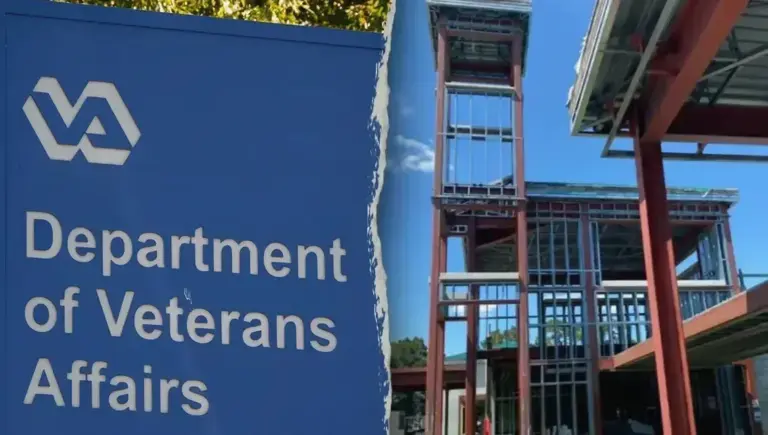
In Florida, the government paid approximately $4.8 million toward a veterans’ cancer treatment center that was never completed — and ultimately was demolished without being rebuilt, according to DOJ.

The VA awarded the $8.9 million construction contract for the Cancer Infusion Therapy Center at Bay Pines VA Medical Center through a program reserved for businesses owned by service-disabled veterans.

Evidence at trial showed that Matthew West, Kevin Kutina and their co-conspirators secured the contract while concealing arrangements under which ineligible companies would perform most of the work and receive most of the payments.

West and Kutina were convicted of conspiracy to commit wire fraud, wire fraud and major fraud against the United States. Two co-defendants pleaded guilty to conspiracy to commit wire fraud.

Construction failures plagued the project, leaving the partially completed facility to be torn down, according to the DOJ.

Other cases involved alleged theft directly from veterans’ benefit payments.

In Texas, prosecutors allege that VA National Call Center employee Heidi Brady used her access to veterans’ personal information and knowledge of payment procedures to change their direct deposit details shortly before monthly disability payments were issued.

The money allegedly went to an account she controlled.

Her neighbor, Raymond Audie Davis, is accused of helping by impersonating veterans during calls to the VA and using their identifying information to redirect payments, according to the indictment.

In Ohio, Darlene Toman allegedly stole from disabled veterans whose finances she was entrusted to manage — including a Marine severely wounded in Iraq who received the Purple Heart and Combat Action Ribbon.

Prosecutors say the victims included people with traumatic brain injuries, schizophrenia, amputations and other serious conditions. Some required around-the-clock care.

Rather than safeguard their benefits, Toman allegedly used fraudulent checks and diverted payments intended to cover veterans’ living expenses and care for her own use.

The allegations against Brady, Davis and Toman have not been proven in court. Defendants are presumed innocent unless and until convicted.

Alongside the VA enforcement announcement, DOJ is establishing a Texas Federal Fraud Task Force comprising all four U.S. attorney’s offices in the state, with support from federal, state and local law enforcement.

Fox News Digital’s Stephen Sorace contributed to this report.

This post appeared first on https://www.foxnews.com

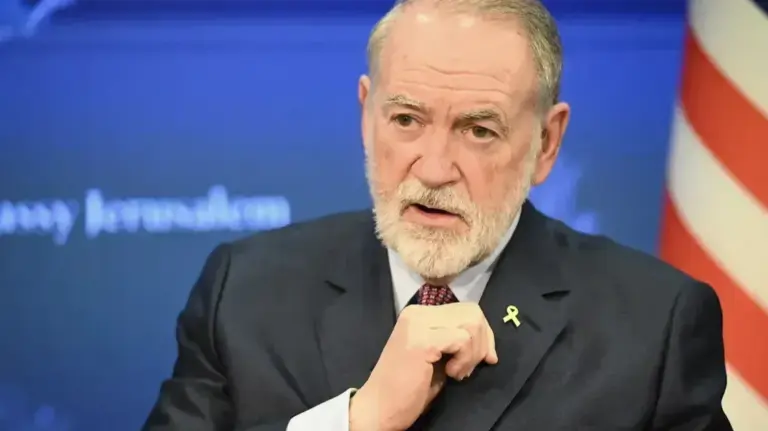
U.S. Ambassador to Israel Mike Huckabee is pushing back against Vice President JD Vance’s suggestion that America’s relationship with Israel contributed to Republicans’ crushing midterm election losses, offering a sharply different explanation from within the Trump administration.

In an exclusive interview with The Press Service of Israel (TPS-IL) published Tuesday, Huckabee rejected the argument that Israel was responsible for the GOP’s electoral defeat, instead pointing to economic concerns, voter apathy and a failure to energize the Republican base.

“Israel was not the reason the elections went wrong for Republicans last week,” Huckabee told TPS-IL.

TRUMP ADMITS IRAN WAR CONTRIBUTED TO GOP MIDTERM LOSSES, INSISTS IT WAS NECESSARY

The remarks come nearly two weeks after Vance blamed Republican losses on the war with Iran and dissatisfaction with Washington’s relationship with Israel.

In a Nov. 4 post on X, Vance argued, according to polling, that voters who supported the Trump-Vance ticket in 2024 had turned against Republicans over four key issues: ending the Iran war, addressing inflation and the cost of living, putting America first and changing the U.S. relationship with Israel.

“The reason we lost is the war,” Vance wrote, arguing that the party needed to acknowledge the political consequences of the conflict.

But Huckabee, a former Arkansas governor and longtime Evangelical leader, offered a competing assessment, arguing that Republicans had failed to give their own supporters sufficient motivation to vote.

“To say that Israel was on the minds of most people is, I think, ludicrous,” Huckabee told TPS-IL.

Asked about Huckabee’s comments disputing the suggestion that the relationship with the State of Israel contributed to Republican losses in the midterms, a spokesperson for Vance told Fox News Digital: “The Vice President did not blame Jews for the Republican Party’s losses in the midterms. The Vice President has forcefully condemned antisemitism on countless occasions, and he will continue to do so.”

He acknowledged that the war may have influenced voters’ perceptions, particularly as families struggled with higher fuel and food costs. “There’s no doubt that the war may have had some impact, not because it was the war itself, but there was such a media coverage that said that the war is what was creating the economic challenges,” he said.

REPUBLICANS SUFFER HISTORIC SENATE UPSET AS DEM FLIPS DEEP-RED STATE FOR FIRST TIME IN NEARLY A CENTURY

“But it was the economic issues,” Huckabee continued, adding that the war in Iran “may have contributed to prices, but it wasn’t the only thing. There were a lot of factors involved.”

“If you look at the real numbers, the exit polls showed that only 17% of Evangelicals went and voted last week,” Huckabee told TPS-IL. “There is no bloc of voters that is more critical to a Republican victory than Evangelical voters in the United States. They represent 80 million people. If they go vote in mass numbers, Republicans win, if they stay home, Republicans lose.”

The ambassador’s remarks referred to exit polling showing that white evangelical Christians accounted for 17% of voters in the 2026 midterms, compared with 23% in 2024. That figure reflects their share of the electorate, rather than the percentage of evangelicals who voted.

“The real reason was that Republicans did not give even Republicans a good reason to go vote for them. They had the White House, they had the Senate, and they had the House. And if you ask the average American, what have they gotten done in the last two years? 
They could not provide for you very many, if anything, that the Congress had passed, accomplished, that they had expected them to get done.”

“So it’s, it’s unfortunate that Israel would factor in as a major reason for the vote in America,” he added, “Because it just does not appear that that is as credible a reason as is that you had low turnout from the base of the Republican Party.”

TRUMP DRAWS RED LINE AGAINST NEWLY EMPOWERED DEMOCRATS, VOWING IMMEDIATE VETOES

“The Democrats were excited. They went and voted in mass numbers, and they voted with enthusiasm. Enthusiasm wins elections; apathy does not.”

Beyond the dispute over the midterm elections, Huckabee warned that additional U.S. military action against Iran remains a possibility if Tehran refuses to abandon its nuclear ambitions, while expressing hope that a diplomatic solution could still be reached.

“It’s very possible that we will end up there, because if the Iranians do not understand what the president has made very clear, at least for the U.S. position, and that is they can’t have a nuclear weapon,” Huckabee told TPS-IL.

“Is it possible to bring this to a resolution by diplomatic means or economic pressure? Hey, I would hope so. That would be wonderful. But if it can’t be done, then the U.S, has made it clear, certainly the president, Secretary Rubio, have both said, just this week that the military option is every bit on the table.”

Huckabee said that Trump’s position on Iran has remained consistent for decades, dating back to his years as a New York businessman in the early 1980s. He also pointed to the president’s response to criticism that the war had contributed to Republican losses in the midterms. “He acknowledged, he said, it may have been a factor,” Huckabee said. “And then he said, ‘But I would do it all over again.’”

The ambassador defended that position, arguing that Trump’s decision to confront Iran was driven by threats to American national security rather than political calculations.

“It was because, for all these years, he’s recognized the threat that they pose to America, not just to Israel,” Huckabee said.

PENCE DELIVERS SCATHING REBUKE OF VANCE’S IRAN WAR ASSESSMENT, BLAMES TRUMP POLICIES FOR GOP LOSSES

He cited Americans killed by Iran and Iranian-backed groups over the past several decades, including U.S. casualties in Iraq and Afghanistan, and referred to the Americans killed and taken hostage during the Oct. 7 Hamas terror attacks.

Huckabee praised Trump’s willingness to accept potential political consequences, saying that even if the Iran issue had cost Republicans the election, the president would have made the same decision.

“His job is not just to win in the election, [it] is to protect Americans,” Huckabee said. “That’s first and foremost, and I’m happy to have a president who knows that and who practices that.”

The ambassador also addressed Israel’s political future, saying Washington would work with whichever Israeli government emerges following the country’s elections, regardless of Trump’s close relationship with Prime Minister Benjamin Netanyahu. “The U.S. does not pick the government for Israel; the people do. However, it shakes up. We are committed to working with the government,” he told TPS-IL.

He also expressed hope for expanding the Abraham Accords, pointing to the United Arab Emirates as an example of the diplomatic and economic benefits of normalization.