
Archive

November 16, 2026

Browsing

Inside the halls of Meta, a specific calendar date is becoming a point of obsession for many staff members. Employees have dubbed February 15, 2027, as The Rapture, marking the moment when a massive wave of company share payouts finally concludes. These particular grants were handed out back in 2023 during a period when the company’s stock was struggling, but a subsequent market explosion has turned those once modest awards into absolute fortunes.

Since the start of 2023, Meta’s stock price has surged by over 400 percent, transforming standard equity packages into life-changing windfalls. Andre Nader, a former employee and author of the FAANG FIRE newsletter, suggests that senior engineers might face a staggering drop in their total annual compensation, potentially plunging by more than 40 percent once these high-value payouts dry up. For most people, such a significant pay cut would be a cause for alarm or a reason to seek employment elsewhere.

However, for a select group of lucky veterans, this financial cliff presents an entirely different opportunity. Because the rebound was so aggressive, some employees are reportedly sitting on gains exceeding two million dollars from these grants alone. While corporate benefits often act as golden handcuffs to keep talent locked in place, those shackles lose their grip when an employee reaches true financial independence.

As the deadline approaches, the prevailing sentiment among some of the company’s wealthiest workers isn’t about finding a new role or negotiating a raise. Instead, they are eyeing the exit door entirely. Rather than facing a diminished paycheck in late 2027, many expect The Rapture will simply serve as their official invitation to enter early retirement.

Florida Attorney General James Uthmeier announced Friday that his office will stop defending the state’s ban on bump stocks, signaling the effective end of a law that has been a point of contention since its inception. In a statement shared via social media, Uthmeier argued that the 2018 legislation is unconstitutional and overly broad. He noted that the current wording of the law could unfairly penalize firearm owners using trigger enhancements for lawful purposes, potentially exposing them to five years in prison.

The shift follows a detailed legal opinion from the attorney general’s office, which posits that semiautomatic weapons equipped with such modifications remain protected under the plain text of the Second Amendment. Bump stocks, which accelerate the rate of fire in semiautomatic guns, were first targeted by policymakers after the devastating 2017 mass shooting in Las Vegas. While Florida implemented its own restrictions, the federal government’s attempt to ban the devices was recently struck down by a United States Supreme Court ruling. The high court determined that because these devices still require a trigger to be released and reengaged for every shot, they do not technically turn a weapon into an illegal automatic firearm.

Florida originally codified its ban as part of a comprehensive legislative package passed in 2018 following the tragedy at Marjory Stoneman Douglas High School in Parkland. That sweeping bill combined school safety funding and red flag laws with several gun control measures, including raising the minimum purchase age for rifles to 21. At the time, former Governor Rick Scott championed the measure as an essential step toward preventing future massacres, though it created deep divisions among legislators across both political parties.

This latest move by Uthmeier aligns with long standing criticisms from various conservative figures who viewed the restriction as an infringement on constitutional rights. By refusing to pursue further appeals against convictions related to the ban, the attorney general is essentially clearing a path for these accessory bans to be dismantled within state borders, bringing Florida’s legal landscape closer to the precedent set by recent federal judicial decisions.

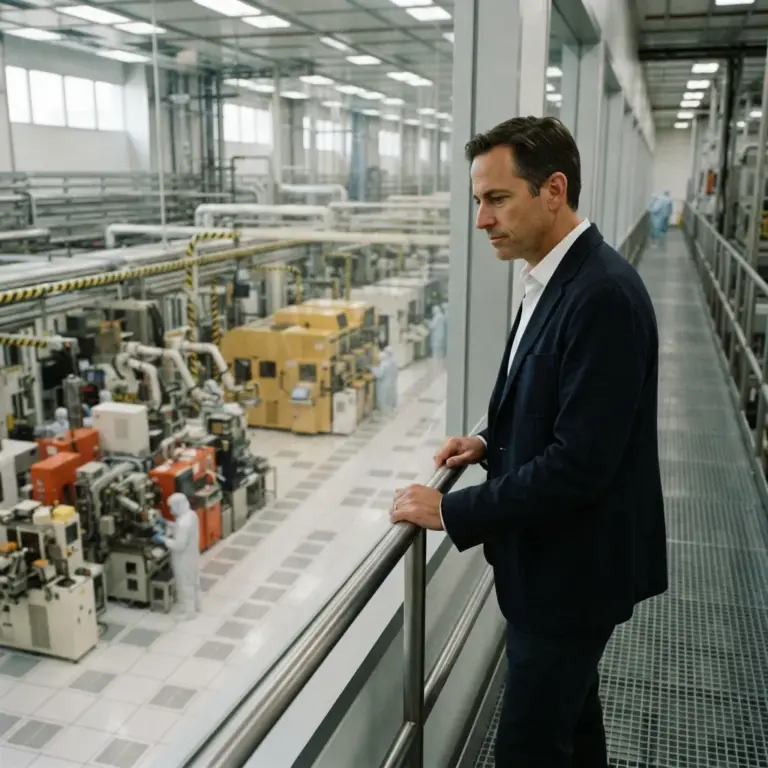
In the high stakes race to dethrone Nvidia, most industry players focus on who will design the fastest chip. However, Walter Goodwin, the CEO of chip startup Fractile, believes the smartest bet isn’t on the architects but on the builder. Speaking on the 20VC podcast, Goodwin expressed immense confidence in Taiwan Semiconductor Manufacturing Company, stating he would buy TSMC stock every day of the week because it currently looks cheap relative to its value.

Goodwin’s perspective stems from a practical reality facing almost every challenger in the artificial intelligence space. Whether it is a giant like AMD or a specialized project from OpenAI, these companies all rely on the same narrow pipeline of manufacturing capacity and high bandwidth memory provided by TSMC. For Goodwin and other startups, getting access to these fabrication plants is often a larger hurdle than the actual engineering of the chip itself. This creates a unique hedge for investors; regardless of which company eventually captures market share from Nvidia, they will likely still have to pay TSMC to actually produce their hardware.

Financial indicators seem to support this bullish outlook. Despite record breaking revenues and gross margins that far exceed management targets, TSMC has recently traded at a forward price to earnings ratio below its five year average. While some analysts worry about a potential cooldown in overall AI spending across the sector, others point out that analyst consensus for revenue continues to climb steeply through 2028.

Ultimately, while leadership changes at Nvidia or competitive breakthroughs by rivals may cause volatility among individual designers, TSMC remains the essential infrastructure for the entire industry. As long as there is a demand for advanced silicon wafers, the factory becomes more important than any single client. Until there is a systemic collapse in AI investment, TSMC occupies an enviable position as the sole provider of the tools everyone else needs to survive.

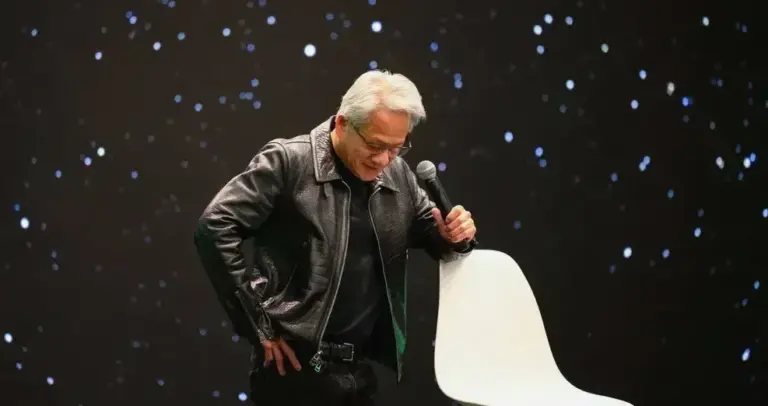
The tech world is buzzing with speculation following reports that Jensen Huang may be weighing a return to Nvidia. This comes just days after the company’s board forced his resignation as chief executive officer amidst a swirling scandal involving allegations of an improper relationship with a suspected Chinese agent. While Huang stepped down last Thursday after admitting to the affair, sources suggest he is now exploring paths back into the leadership fold of the firm he helped build into a global powerhouse.

Market analysts believe that any move toward reinstating Huang could trigger a significant rally across the semiconductor sector. Because of his singular influence on the industry, news of his potential comeback is expected to bolster not only Nvidia shares but also those of key competitors like Broadcom and Advanced Micro Devices. Investors have long viewed Huang as the primary catalyst behind the current artificial intelligence gold rush, making his status at the helm critical for broader AI investments.

Despite this hopeful development, the timing remains precarious for the chip giant. Wall Street has been volatile recently, with indices fluctuating wildly even as anticipation builds around upcoming earnings calls and high profile debuts like the Anthropic IPO. As Nvidia navigates this period of instability, shareholders are watching closely to see if the board will prioritize stability and corporate governance or embrace the visionary leader who steered them to unprecedented heights.

Wall Street is bracing for a high stakes week as stock futures edged higher on Sunday night, signaling cautious optimism following a period of intense volatility. Investors are keeping a close eye on the tech sector, where anticipation is building for both an earnings report from Nvidia and a massive public market debut by AI powerhouse Anthropic. Early indicators show modest gains across the board, with Nasdaq 100 futures climbing zero point six percent and the S&P 500 advancing slightly, suggesting that markets are attempting to stabilize after a whirlwind stretch of trading.

Much of the current tension centers on Nvidia, which prepares to release its financial results on Tuesday afternoon. While analysts anticipate explosive year over year growth in both revenue and earnings, the conversation has shifted away from balance sheets toward leadership stability. The company is reeling from the sudden resignation of longtime CEO Jensen Huang amid personal scandals involving allegations of extramarital affairs and ties to foreign espionage. This turmoil triggered a thirteen percent plunge in share price last week, leaving interim CEO Colette Kress with the daunting task of restoring investor confidence during Tuesday’s conference call.

Adding to the excitement is Anthropic’s looming initial public offering, which could rewrite the record books for AI valuations. The company is targeting a staggering one point four trillion dollar valuation, with shares expected to price between seventy and seventy eight dollars. Despite the drama surrounding Nvidia, broader markets ended last week on a strong note, with major indices posting some of their largest weekly gains since August, led largely by surges in energy and industrial sectors.

Meanwhile, global eyes are turning toward Asia as Japan and China prepare to release critical economic data today. Traders are awaiting Japanese GDP figures, which are expected to show a significant slowdown in growth compared to previous quarters. In Hong Kong and Tokyo, futures suggest a positive start to the session even as Australia’s benchmark index dipped slightly in early movements, highlighting a complex global landscape where macroeconomic data competes with corporate drama for attention.

The carefully constructed image of Jensen Huang as the unflappable visionary behind Nvidia has shattered following revelations of systemic dishonesty and compromising personal ties. What began as a series of pointed inquiries from The New York Times regarding his connection to Alice Huang, the leader of Singaporean data center firm Megaspeed, eventually spiraled into a scandal that threatened the very foundation of the chip giant. For over a year, Huang and his inner circle fought a desperate battle to frame the relationship as purely professional, employing high priced crisis consultants and leveraging family connections to stifle any suggestion of impropriety.

The stakes grew exponentially higher when United States intelligence agencies reportedly linked Alice Huang to China’s premier spy network. Despite these alarming security implications, Jensen Huang maintained his denial for thirteen months, stubbornly insisting there was nothing more than business between them. It was only under the weight of insurmountable evidence that he finally admitted to Nvidia’s general counsel that he had been engaged in a clandestine affair with the executive, turning a corporate liability into a personal catastrophe.

As if one betrayal were not enough, further investigations have uncovered yet another layer of deception within the company walls. Reports now indicate that Huang carried out a separate extramarital affair with an executive who worked directly under him, raising serious questions about workplace ethics and conflicts of interest at the highest level of leadership. These overlapping secrets have transformed a narrative of technological triumph into one of moral failure, leaving shareholders and employees wondering how much other truth was sacrificed for the sake of appearances.

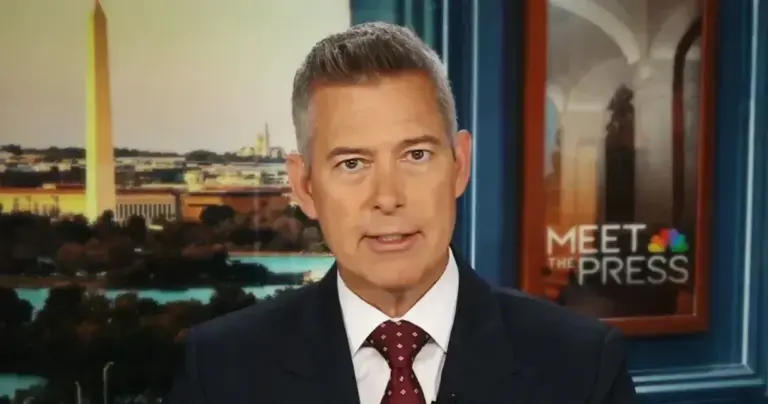
Transportation Secretary Sean Duffy is refusing to apologize for the massive nationwide ground stop that left hundreds of thousands of passengers stranded over the weekend. Speaking on Meet the Press, Duffy acknowledged that the chaos occurred under his leadership but insisted that the failure was the result of decades of neglect by previous presidential administrations and both political parties. He described the current state of the air traffic control system as a broken inheritance, claiming thirty years of underinvestment created a fragile environment prone to exactly this kind of collapse.

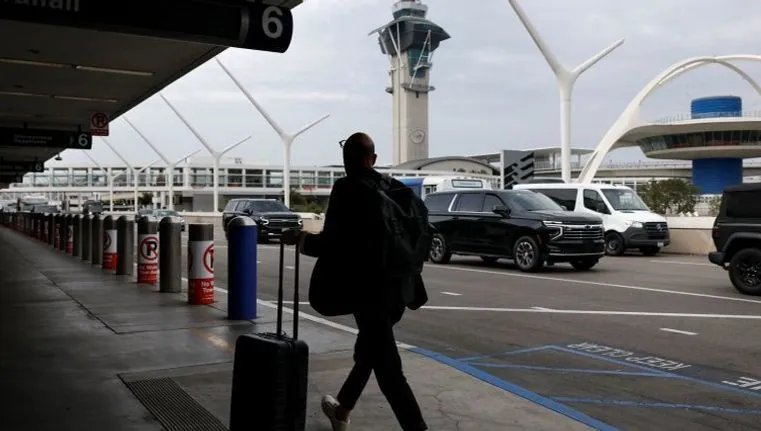
The disruptions began Friday when a routine effort by contractor L3Harris to replace a copper line with fiber optics triggered a router failure that overwhelmed the FAA’s telecommunications network. The resulting shutdown caused thousands of cancellations and forced many travelers to spend their Saturday nights sleeping in airport terminals. While Duffy expressed confidence that flights would return to normal by Monday morning as crews and planes were repositioned, he stopped short of guaranteeing that another systemic failure wouldn’t happen again until a full investigation into the root cause is completed.

Throughout his interview, Duffy framed the crisis as an urgent wake up call for Congress to provide more flexible funding. Although billions have already been allocated for radar and radio upgrades, he argued that those funds are too strictly earmarked and leave him without the resources needed for essential software updates and new telecom architecture. Along with OMB Director Russell Vought, Duffy has requested an additional 30.1 billion dollars to overhaul aging airports and create a more resilient digital backbone for the national airspace.

Calling on lawmakers to set aside partisanship, Duffy urged Congress to simply do it, arguing that providing these resources is the only way to prevent future disasters. The White House backed its transportation chief in a statement on Sunday, asserting that President Trump had installed the right leadership to manage the crisis and prioritize public safety. As investigators look into whether the outage was caused by faulty equipment or poor installation, the administration continues to push for a total modernization project intended to integrate traditional air traffic with emerging space industry demands.

A catastrophic nationwide flight grounding on Friday has ignited a fierce political battle over the future of American aviation infrastructure. Transportation Secretary Sean Duffy is urgently pressing Congress for upwards of 50 billion dollars to overhaul the Federal Aviation Administration’s aging systems, claiming that current technology dating back to the 1990s is no longer viable. This plea comes after a technical failure in El Dorado, Arkansas, involving a transition from copper wire to fiber optics brought the country’s airspace to a standstill.

Democrats, however, are questioning why such a massive sum is suddenly necessary when the agency is still sitting on billions in previously authorized funds. They point to a Republican-led spending bill from last year that provided 12.5 billion dollars, including nearly five billion specifically earmarked for telecommunications upgrades. Critics like Senator Tammy Duckworth and Representative Rosa DeLauro have suggested the administration mismanaged its priorities, arguing that money spent on vanity projects and immigration enforcement should have been diverted toward aviation safety long ago.

Secretary Duffy defended his request during a recent appearance on CNN, explaining that specialized air traffic control equipment cannot simply be bought off the shelf and that existing budgets are merely keeping them on track through 2028. He argues that an immediate infusion of cash is required to accelerate these critical updates and prevent another systemic collapse. While most Democrats remain skeptical of the figure, some moderate voices like Senator Chris Van Hollen have expressed a willingness to provide funding if the administration can formally justify the expense before Congress.

As the clock ticks toward a December funding deadline, Republicans appear determined to push through additional investments regardless of the opposition. Outgoing House Speaker Mike Johnson indicated that FAA funding will be included in an upcoming legislative package, while Senator Eric Schmitt continues to champion his Modern Skies Act as a solution. With Democrats poised to take the majority in January, both parties are racing against time to decide how much taxpayers should pay to modernize skies that many now realize are running on borrowed time.

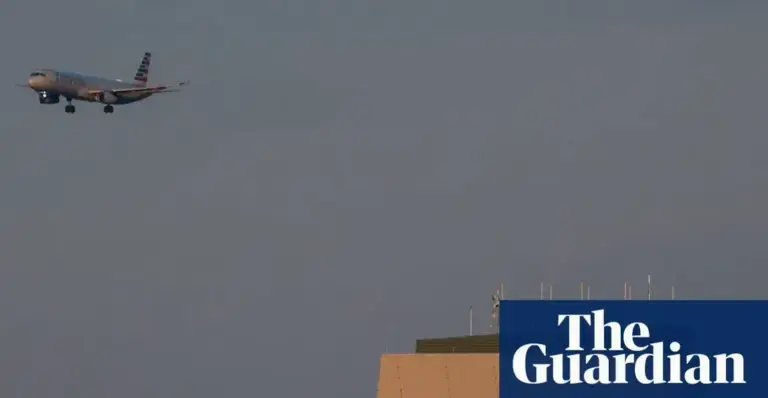
Miami International Airport became the site of a frightening encounter Saturday night when a Copa Airlines Boeing 737 clipped the nose of a UPS Boeing 767 while both aircraft were navigating the taxiways. The accident occurred around 9 p.m., resulting in minor injuries to two individuals who required medical attention. According to early reports from the Federal Aviation Administration, air traffic controllers had specifically instructed the UPS crew to yield to the Copa flight, which was heading toward its gate, while the cargo plane was preparing for a departure to Bogota.

Passengers aboard the Copa flight described a scene of sudden confusion and panic. One traveler, Cesar Ferreira, recalled hearing his fellow passengers begin to scream just moments before he felt the aircraft jerk violently sideways upon impact. Despite the initial shock inside the cabin, Ferreira noted that the crew acted swiftly to keep everyone calm and seated until the situation was secured. Both airlines released statements emphasizing their commitment to safety and their full cooperation with federal investigators looking into how the breach occurred.

The timing of the collision added fuel to an already tense weekend for American aviation. Just twenty four hours earlier, a massive failure in communication systems forced the FAA to implement an hours long nationwide ground stop, leading to thousands of cancellations and delays across the country. Officials attributed that systemic collapse to botched maintenance during an attempt to transition old copper wiring over to fiber optic cables within air traffic control centers.

The string of failures has sparked a political clash over crumbling infrastructure. Transportation Secretary Sean Duffy pointed toward a lack of congressional funding as the primary reason for these technical vulnerabilities. However, critics argue that the current administration has failed to properly utilize existing funds earmarked for upgrading the aging technology that keeps U.S. airspace safe. While airport officials stated that Saturday’s crash did not disrupt overall operations, it serves as a grim punctuation mark to a period of significant instability in national air travel management.

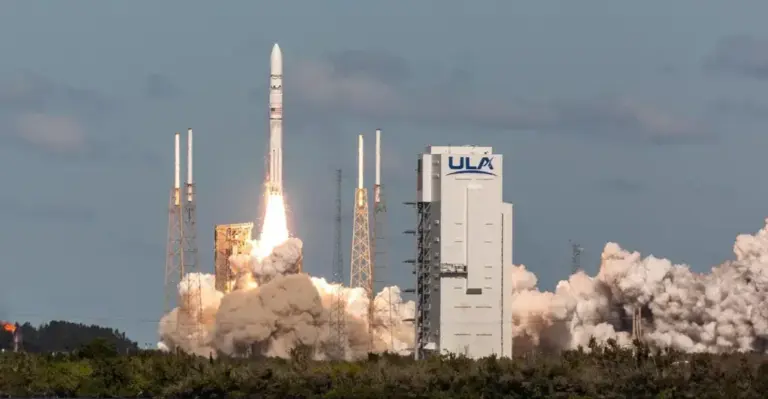
United Launch Alliance experienced a stunning blow to its perfect track record this week when its Vulcan rocket failed during a critical mission for Amazon. The incident marks the first reported failure in the company’s twenty year history, ending in disaster just ten minutes into the flight. A sudden anomaly prevented the vehicle from reaching its intended destination, resulting in the total loss of forty satellites destined for Project Kuiper.

This setback comes at a precarious time for Amazon as it attempts to build out its own low earth orbit network to compete with Elon Musk’s Starlink. While SpaceX has already established a dominant presence in satellite internet, Amazon has struggled to gain momentum, having deployed only a fraction of the hardware needed to mount a serious challenge. This specific flight was meant to kick off an ambitious series of thirty eight launches contracted between the two companies.

Despite the wreckage, both organizations are maintaining a front of stability and cooperation. In a public statement via social media, ULA acknowledged the malfunction and promised full transparency while investigators work to determine exactly what went wrong aboard the Vulcan vehicle. They noted that data confirmed the failure shortly after liftoff from Space Launch Complex 41, though they have yet to pinpoint the root cause.

Amazon echoed this sentiment of resilience, reminding observers that high stakes and inherent risks accompany every space venture, particularly regarding inaugural missions like LV-01. By framing the crash as a learning opportunity rather than a dealbreaker, Amazon signaled that it still trusts ULA to execute its long term vision for global connectivity once the technical glitches are resolved.