The 2028 Republican White House race may be getting its first battle lines, as Vice President JD Vance, Sen. Ted Cruz and Florida Gov. Ron DeSantis quickly offered competing assessments of the GOP’s devastating midterm election losses, potentially previewing their visions for the party’s future.
The three high-profile Republicans, all viewed as potential contenders for the party’s presidential nomination, used their postmortems to weigh what went wrong and what Republicans must do differently — a debate that could help define the GOP’s direction heading into 2028.
“I think everybody’s trying to figure out where to position themselves in the aftermath. Where were you on the day after,” longtime Republican strategist and presidential campaign veteran David Kochel told Fox News Digital. “I think these are all moves designed to look towards 2028.”
Oil drilling CEO and prominent Republican donor and bundler Dan Eberhart told Fox News Digital that “the early moves have started” in the 2028 Republican presidential nomination race. “These guys are going to go a couple of rounds before Christmas.”
HEAD HERE FOR FOX NEWS LIVE UPDATES ON THE MIDTERM ELECTIONS
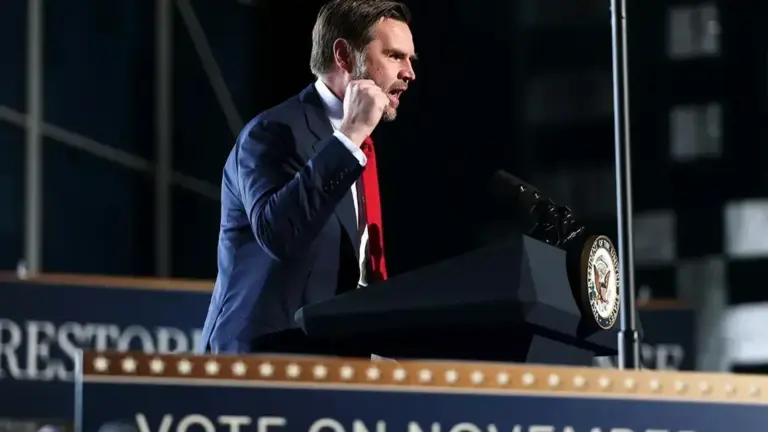
Vance kicked off the debate Wednesday morning with a roughly 600-word postmortem on X, blaming President Donald Trump’s war with Iran for Republicans’ worst ballot-box drubbing in decades as they lost control of Congress, along with a slew of governorships and state legislatures.
Fueled by anger over high costs and the war with Iran, voters delivered a repudiation of Trump and his agenda, boosting Democrats to large majorities in the House and Senate.
“The reason we lost is the war,” Vance wrote as he appeared to put daylight between himself and his boss on foreign policy and America’s relationship with Israel. “Any honest conversation about where we go from here must start there.”
Vance, in what some pundits viewed as an early pitch to eventually claim the MAGA and America First mantle, argued that defections from the party’s successful 2024 coalition of voters, rather than a lack of GOP turnout, fueled the Republican collapse in the midterms.
Kochel called Vance’s assessment “the most striking because it appears to say ‘hey, we made a mistake with the war in Iran,’ and that’s about as far as I’ve seen a vice president go, not as a criticism of Trump but as a criticism in the policy.”
Asked about Vance’s post, Trump told reporters, “I know how he feels about it. I think it was fine. I thought it was good.”
The president acknowledged that the war and the high gas and diesel prices it spurred hurt his party at the ballot box but insisted it was worth the cost.
“If I had to do it again, I’d have to do it again,” he said. “As far as that war is concerned, I would have done nothing different.”
Donald Trump Jr., the president’s eldest son and a prominent figure in the MAGA movement, quickly gave Vance’s postmortem a thumbs-up, writing on X, “Every word of this is ? ? ?.”
Hours after Vance posted his assessment, Cruz posted his own scathing take on the midterms.
POLLSTERS MISSED THE MARK, BUT THIS TIME IT WASN’T REPUBLICANS THEY UNDERCOUNTED
The conservative firebrand senator from Texas, who was runner-up to Trump in the bruising 2016 Republican presidential primaries and has made no secret that he may run for the White House again, described the midterms as a “blue tsunami” and warned that his party had lost touch with voters, particularly in the Lone Star State.
“2026 was not simply a blue wave; it was a blue tsunami. It was an a– kicking,” Cruz wrote. “It was not simply a bad 2006 midterm election. It was a Watergate-level repudiation.”
“Nowhere are the consequences of this election greater than Texas,” Cruz wrote. “In the Lone Star State, we lost every single statewide election…Texas is blue. That is a hard sentence to utter.”
FLORIDA’S DESANTIS DESCRIBES GOP MIDTERMS WIPEOUT AS ‘CLOSE TO AN EXTINCTION-LEVEL EVENT’ FOR REPUBLICANS
Cruz blamed the losses on the high cost of living and pointed to Trump’s tariffs and the war in Iran.
“Food is too high, gas is too high, diesel is too high, insurance is too high, life is too high,” he wrote. “Understandably, people were pissed off, and elected Republicans didn’t do enough to address their very real pain.”
DeSantis, the term-limited conservative governor who ran for the 2024 Republican presidential nomination before being decisively defeated by Trump, held a news conference Wednesday morning where he called the midterm election results “close to an extinction-level event for Republicans across the country.”
President Donald Trump has thrown the federal government’s weight behind massive data center build-outs needed to power the country’s artificial intelligence (AI) boom. But a historic Democratic sweep in Texas has put one of the nation’s biggest AI infrastructure hubs under new political leadership, raising questions about the future of billions of dollars in planned investments.
The victories marked a historic midterm night for Texas Democrats, who captured the governor’s mansion for the first time in more than three decades and won a U.S. Senate seat for the first time since 1988.
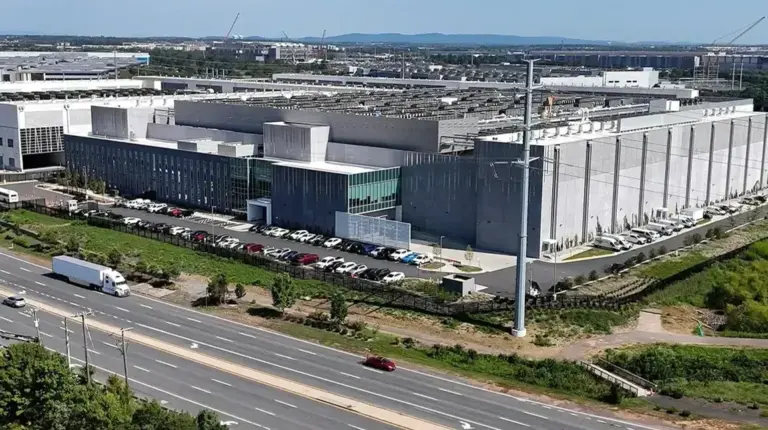
Texas is poised to overtake Virginia as the nation’s largest data center market and is projected to account for roughly a quarter of new U.S. data center power capacity through 2030. With at least 248 projects planned across the state, investment bank Jefferies estimates that 13.3 gigawatts of announced developments could be at risk under a moratorium backed by Gov.-elect Gina Hinojosa.
ONE STATE IS GROUND ZERO AS TRUMP’S MULTIBILLION-DOLLAR TECH AMBITIONS FACE A MIDTERM TEST
Texas was hardly alone in facing growing opposition to data center development. In Ohio, voters weighed 21 data center-related ballot questions across 18 communities in the midterm elections, more than any other state, highlighting the mounting resistance to America’s rapidly expanding AI infrastructure.
The results this week are now forcing some developers to reconsider where to invest billions of dollars in future projects as political power shifts.
“It makes us and our investors pause and think if we should be investing somewhere else,” Brittany Kaiser, CEO of Alpha Compute, told Fox News Digital following the Republican bloodbath in Tuesday’s election.
Kaiser warned that political shifts in traditionally Republican states could push billions of dollars in planned investments elsewhere, including overseas, as companies weigh growing opposition to data center development — especially within the Democratic Party.
“There’s new decision making that needs to come into play and a lot more to think about than there was before the election,” she said.
IT TOOK 3 MONTHS TO GET INSIDE THIS MASSIVE TEXAS DATA CENTER — HERE’S WHAT WE SAW
But relocating projects already underway is far more complicated, particularly when developers have secured land, negotiated power agreements and committed substantial capital.
“It’s not very easy to pivot after you’ve already made contractual and financial commitments to these types of builds,” Kaiser said.
For projects still in the pipeline, however, companies have more flexibility. Kaiser said Alpha Compute has already invested in data centers in Canada, Europe and Mexico, where regulatory approvals are more straightforward.
The backlash highlights growing tensions between Washington’s push to accelerate AI development and voters’ concerns about electricity costs and the impact of data centers on their communities.
Kaiser urged incoming lawmakers to strike a balance between addressing community concerns and preserving what she called “the biggest economic opportunity of our generation.”
“It’s really important, yes, to make sure that data center companies are good actors and are doing things the right way,” she said, calling for “common sense legislation and regulation” that allows developers to work with lawmakers and local communities.
“If we can abide by those rules, then bans and moratoriums should not be the answer,” Kaiser said. “It’s just let’s sensibly regulate and move forward in a way that is positively impactful for communities.”
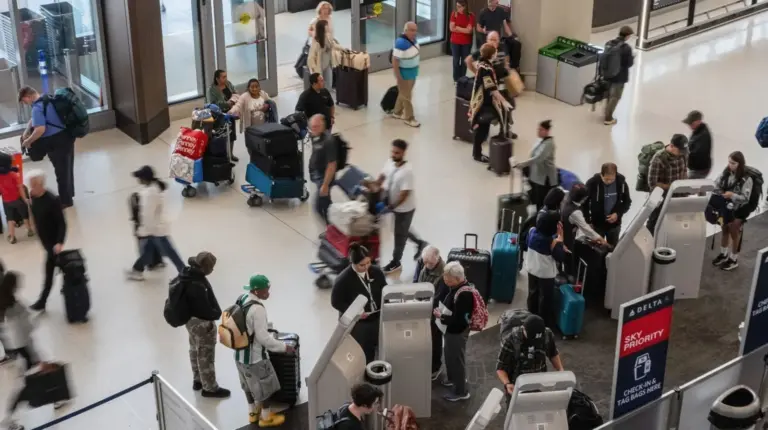
If you were planning to lean on your stash of frequent flyer miles to get home for Thanksgiving, be prepared for some sticker shock. Recent data from the redemption search site Seats.aero reveals that award flights between major U.S. hubs are averaging a thirty two percent increase in cost compared to last year. This surge comes at a time when cash fares are already climbing, leaving travelers with fewer options to find a genuine bargain during the busiest travel window of autumn.
The primary culprit behind these skyrocketing costs is the industry wide shift toward dynamic pricing. For years, travelers relied on static redemption charts that listed fixed mile amounts for specific regions, but those days are largely gone. Now, airlines adjust reward costs in real time based on demand and route popularity, effectively turning loyalty points into a volatile currency that fluctuates just like traditional ticket prices.
Long haul journeys remain the most expensive burdens on a traveler’s account, particularly flights departing from Hawaii. However, distance isn’t the only factor driving prices up; even high traffic corridors like New York to Houston have seen significant spikes in mileage requirements. Global instability and rising jet fuel costs following geopolitical tensions earlier this year have squeezed profit margins, prompting carriers to push more expenses onto their customers through both cash and point valuations.
Even shorter hops provide little relief this season. Routes such as the quick trip from Tulsa to Dallas Fort Worth are seeing higher award costs than they did during previous holiday cycles. Despite these steep increases, airline executives remain unbothered by the price hikes, noting that consumer demand for holiday travel remains stubbornly strong regardless of whether passengers pay with dollars or miles.
Allison and Stephen Ellsworth are returning to the beverage arena with a fresh ambition. After successfully shaking up the soda world with Poppi, the couple is launching Jetty, a new hydration brand designed to challenge the dominance of giants like PepsiCo and its flagship sports drink, Gatorade. Starting this week, Jetty will hit shelves at Whole Foods and become available via Target and Amazon, offering both bottled drinks and ready-to-mix electrolyte packets in five distinct flavors.
The inspiration for Jetty was deeply personal for Allison Ellsworth. Following the massive sale of Poppi to PepsiCo for nearly two billion dollars, she began using GLP-1 weight loss medications. These drugs can often suppress thirst, leading to dehydration despite a person’s best efforts to stay healthy. Finding plain water unappealing and traditional sports drinks too heavy on sugar and salt for someone who hasn’t just run a marathon, she saw a gap in the market for what she calls everyday hydration for normal people.
Jetty aims to capture a younger demographic that feels disconnected from legacy brands like Gatorade and Powerade. By focusing on Millennial parents and Gen Z consumers, the brand hopes to replicate the colorful marketing success of Poppi while offering a lighter nutritional profile. Unlike standard sports drinks that prioritize high sodium levels for elite athletes, Jetty provides a balanced mix of electrolytes alongside B vitamins and fiber, all while keeping sugars low and avoiding artificial dyes.
Entering the hydration space comes at a volatile time for the industry. While overall interest in electrolytes is surging, traditional ready-to-drink sports beverages have seen declining unit sales as consumers pivot toward powder mixes like Liquid I.V. Despite this shift and fierce competition from major players like Kraft Heinz and Coca-Cola, the Ellsworths remain confident. Having already scaled one beverage empire from scratch, they believe their expertise in branding and distribution gives them the edge needed to win over today’s health conscious shopper.