
Archive

November 27, 2026

Browsing

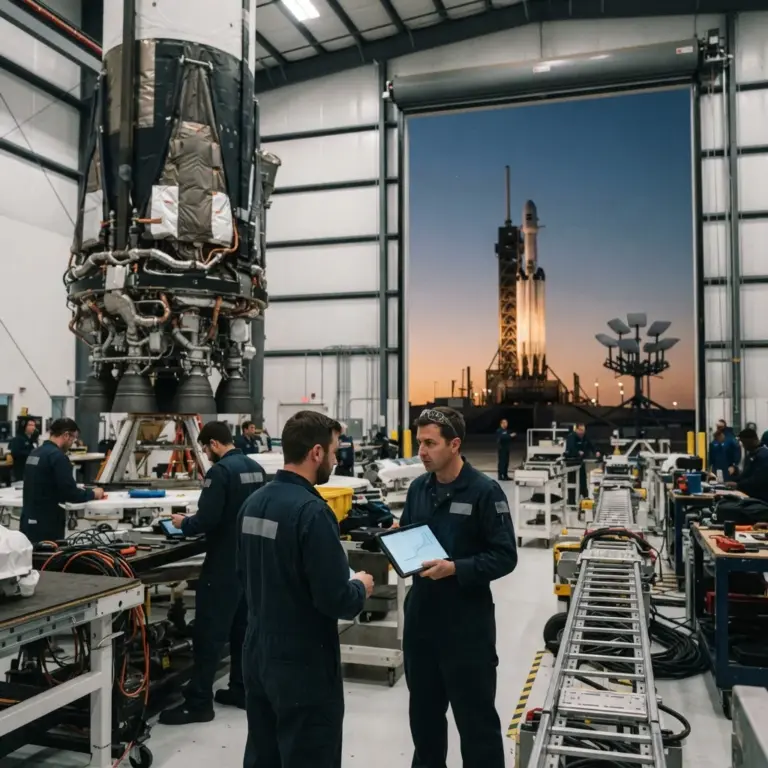
SpaceX is attempting a feat as ambitious as its Mars missions, transitioning from a private powerhouse to a public entity while juggling three distinct, high-growth businesses. The company has already signaled its strength by posting a net profit in its first quarter as a public firm, driven largely by its dominance in rocket launches and the rapid expansion of Starlink. With Elon Musk envisioning thousands of annual flights from a massive new Louisiana base by 2029 and the successful implementation of reusable spacecraft, the operational side of the business looks poised for unprecedented scale.

While rockets capture the headlines, Starlink and the newly integrated Superintelligence AI segment are providing the financial fuel. Starlink has expanded its footprint to 174 countries and secured partnerships with major airlines, reporting a staggering sixty nine percent jump in quarterly revenue. Meanwhile, the AI division is scaling aggressively through massive data center clusters like Colossus I and II. Musk believes these efforts could push annual recurring revenue toward figures between five hundred billion and one trillion dollars next year, though such projections remain breathtakingly optimistic even by Silicon Valley standards.

Despite this momentum, investors face a complex calculation regarding the actual value of the stock over the next few years. Currently trading at fifty five times trailing twelve month sales, SpaceX carries an expensive valuation that may be difficult to sustain long term. There is also the looming risk of regulatory shifts that could stifle AI development or space exploration timelines. If the company manages a steady eighty percent compound annual growth rate over three years, some analysts suggest it could reach a market cap of nearly five trillion dollars, representing a significant leap from current prices. Whether it hits those heights depends on if reality can keep pace with Musk’s vision.

Elon Musk and his aerospace firm, SpaceX, are making a massive bet on the financial future of American youth by donating company stock to active Trump Accounts. In a move designed to broaden ownership of the infrastructure needed to make life multiplanetary, SpaceX announced it will grant one share of Class A common stock to every single active account within the program. To further amplify the impact, Musk has committed to personally matching the company’s donation, ensuring that participants receive an even larger stake in the venture.

The initiative aligns with a broader vision shared by Musk and SpaceX leadership, who argue that the next generation should hold a tangible piece of the technology shaping tomorrow. Adding to the momentum, SpaceX President and COO Gwynne Shotwell also stepped forward with her own significant contribution, pledging over two million shares of her own stock toward the cause. These moves come shortly after Musk previously promised on social media that he would find a way to get SpaceX shares into the hands of every child in America by 2027.

This sudden influx of corporate wealth arrives at a pivotal moment for Trump Accounts, which recently hit several major milestones. According to recent Treasury Department data, contributions from families and friends have already surged past one billion dollars. When including federal seed money and other philanthropic efforts, total deposits across the platform have exceeded nine billion dollars. With roughly seventy million accounts established for children under eighteen, the program is rapidly becoming a cornerstone of tax advantaged investing for young Americans.

As the holiday season nears, these high profile donations provide an extra incentive for parents and guardians to activate their children’s accounts. While newborns through 2028 remain eligible for initial thousand dollar federal grants, these private injections from one of the world’s most valuable companies add a speculative upside that few other savings programs offer. For now, those managing these accounts are looking at immediate gains as SpaceX shares continue to trade strongly around the hundred twenty seven dollar mark.

The stock market has felt like a rollercoaster lately, leaving many investors feeling uneasy as recent rallies turned out to be little more than temporary distractions. Between the drama surrounding Nvidia and growing anxiety over whether artificial intelligence is actually delivering on its promises, the mood on Wall Street has trended toward the pessimistic. However, as the Thanksgiving holiday arrives, there are several reasons to believe that the underlying foundations of the market are stronger than the surface level volatility suggests.

One of the most encouraging shifts is that investors are finally becoming more selective about their AI bets. Instead of blindly throwing money at any company mentioning machine learning, traders are now prioritizing quality firms with clean balance sheets and sustainable growth models. This shift acts as a natural corrective measure against a potential bubble, ensuring that only the strongest players survive while speculative exuberance cools down. Adding to this diversification is Anthropic’s decision to push forward with its IPO despite a choppy environment, providing investors with a crucial pure play alternative in an industry long dominated by just a few giants.

Beyond the tech sector, there is plenty of reason to appreciate the enduring strength of the American shopper. While high prices have made households more cautious and sentimental data remains low, retail figures show that consumers are still showing up. From steady gains at Walmart to a successful turnaround at Target, people are finding ways to keep the economy humming without triggering an inflationary spike. It is a delicate balancing act, but for now, the resilience of consumer spending provides a necessary safety net for broader economic stability.

Even amidst the financial stress, there has been a lighter side to the chaos through the lens of social media culture. The surge of AI generated memes during recent corporate scandals serves as a reminder of how technology is being integrated into our daily coping mechanisms in humorous ways. Whether it involves satirical videos of tech CEOs or absurd digital art, these moments provide a brief respite from the tension of ticker symbols and earnings reports, proving that regardless of market swings, there is always something entertaining happening on the internet.

The recent price turbulence surrounding Nvidia has served as a stark reminder of just how precarious single stock exchange traded funds can be for the average investor. In a whirlwind sequence of events triggered by leadership shifts, the market saw dramatic polar opposites play out in real time. While the GraniteShares 2x Long NVDA ETF surged nearly 62 percent in a single session, those betting against the chip giant were devastated, with the corresponding inverse fund plummeting 63 percent on Monday alone.

Industry experts suggest that such extreme swings are rarely seen in stable markets and typically signal an environment more akin to a recession or a bear market. Mike Akins, founding partner at ETF Action, noted that while the broader economy remains resilient, the specific trade around artificial intelligence has entered a period of high instability. He cautioned that while some retail traders might enjoy using these instruments for speculative fun, attempting to time the market with leveraged products is an incredibly difficult feat that often ends poorly.

Despite these warnings, firms specializing in these niche products believe demand will remain strong as long as public fascination with AI persists. Will Rhind, CEO of GraniteShares, observed that even major product launches, such as new funds tied to Anthropic, have been overshadowed by the sheer spectacle of Nvidia’s movements. According to Rhind, investors are drawn to leverage regardless of whether they are betting on a rise or a fall because of their deep interest in the underlying company.

However, seasoned financial advisors view this trend with significant alarm. Critics argue that incorporating leveraged single stock ETFs into a diversified portfolio is essentially gambling rather than investing. Karen Finerman of Metropolitan Capital Advisors pointed out that leverage is frequently the primary cause of total capital loss for traders, suggesting that while many setbacks can be recovered from, excessive leverage is often fatal to a portfolio. As Nvidia continues its erratic dance through the indices, these funds remain high risk vehicles where fortunes can vanish almost overnight.

Global equity markets climbed higher this week, seemingly ignoring a series of grim forecasts from some of the world’s most prominent financial analysts. While American traders took a breather for the Thanksgiving holiday, investors across Asia and Europe pushed indices upward. In Europe, the Stoxx 600 surged by two percent and the FTSE 100 rose nearly two percent, while Asian markets including Japan and South Korea also saw broad gains. Even with New York offline, S&P 500 and Nasdaq 100 futures ticked upward, suggesting that the appetite for risk remains surprisingly resilient.

This bullish momentum stands in stark contrast to a shocking declaration from Joachim Klement of Panmure Liberum. In a candid video address, Klement revealed that he has sold every single equity in his personal portfolio, citing a fear that markets are spiraling toward a major bear market with potential drawdowns exceeding thirty percent. Pointing to technical indicators and the fact that the S&P 500 is trading below its 200-day moving average, Klement issued a daring projection that the index could plummet to 5,000 by 2027, a figure that currently feels distant to optimistic traders.

The pessimism among these experts is fueled by a cocktail of stubborn inflation and aggressive monetary policy. Recent data shows personal consumption expenditures rising unexpectedly, leading many to believe the Federal Reserve will be forced to hike interest rates again in December. Analysts argue that because the U.S. economy remains robust with low unemployment and strong GDP growth, the Fed has ample room to tighten the screws on inflation regardless of how it affects stock prices. Combined with anxieties over artificial intelligence investments and new tariff policies, several strategists warned that the traditional end-of-year Santa Claus rally might be dead on arrival.

Despite these alarms, there are signs that the current volatility is concentrated primarily within the tech sector rather than reflecting a systemic collapse. Some observers noted that outside of high-flying technology stocks, much of the broader market is actually performing quite well. With hundreds of individual companies in the S&P 500 continuing to climb and international markets showing strength, it appears that global investors are betting against the doomsayers for now, choosing growth over caution even as warnings of a crash grow louder.

The global zinc market is navigating a complex tug of war between dwindling supplies and sluggish demand throughout 2026. While the industry continues to struggle with a downturn in the Chinese housing sector, which has stifled the need for galvanized steel in construction, supply chain disruptions have pushed prices upward. Major operational hurdles have squeezed stockpiles at London Metal Exchange warehouses, sending costs soaring past 4,000 US dollars per metric ton this September. Despite these volatility markers, analysts expect a brief contraction in supply before a projected rebound toward growth in 2027.

Leading the charge among Canadian firms is Teck Resources, a powerhouse currently finalizing a massive merger with Anglo American. This combination aims to create Anglo Teck, which would stand as the largest company in British Columbia’s history. With significant output from its Red Dog mine in Alaska and operations at the Trail refinery in B.C., Teck remains a dominant force despite declining grades at some sites. The company recently expressed confidence that its annual production figures will hit the higher end of its estimated guidance ranges as it integrates into this new corporate entity.

Other major players like Hudbay Minerals and Eldorado Gold are diversifying their portfolios to maintain stability. Hudbay has focused on extending the lifespan of its Snow Lake operations in Manitoba, successfully pushing reserve mine life out to 2043 by integrating new deposits. Meanwhile, Eldorado Gold significantly expanded its footprint earlier this year through the multi billion dollar acquisition of Foran Mining. This move granted them access to the McIlvenna Bay project in Saskatchewan, allowing them to produce fresh zinc concentrates and strengthen their position across North America and Europe.

Jim Thorne, the chief market strategist at Wellington-Altus, is advising investors to move away from cash and lean heavily into tangible assets as he looks toward the horizon of the U.S. economy. According to Thorne, the current landscape suggests a strong setup for gold stocks, urging those looking for long term growth to position their portfolios now rather than waiting for the peak.

The strategy focuses on a broader shift toward real assets, which Thorne believes will be the most critical place for capital to reside by the early to middle part of 2027. While precious metals like gold and silver are central to this thesis, his outlook extends beyond traditional mining, including industrial staples such as copper in his vision for stability and growth.

Interestingly, Thorne does not limit his definition of hard assets to physical commodities alone. He suggests that cryptocurrency should be thrown into that same basket of protective investments, viewing digital assets as a complementary piece of a diversified portfolio designed to weather economic shifts over the next few years.

As gold and silver prices undergo a period of correction, many mining stocks have followed suit, sliding into territory that some investors view as a prime buying opportunity. While the dip may look attractive on paper, the volatility makes it difficult for newcomers and seasoned traders alike to distinguish between high potential projects and those destined for failure. To address this challenge, industry experts recently gathered at the Gold Advisor Network Summit to provide a roadmap for navigating the current downturn.

Jeff Clark led a panel featuring ten junior mining executives who broke down the essential criteria for picking winners in a crowded field. Rather than focusing solely on raw data, the group emphasized the importance of looking at the people behind the operation. According to the speakers, an investor’s success often depends on evaluating the management team’s track record, their overarching vision for the company, and whether their timeline aligns with realistic production goals.

Among those contributing their insights were leaders from various firms including Newcore Gold, Auro Metals, and Bullfrog Gold. Other perspectives came from representatives at Cascadia Minerals, Dryden Gold, American Pacific Mining, Skyharbour Resources, Scorpio Gold, Visionary Metals, and Pacifica Silver. Together they argued that while geological reports are vital, the ability of a leadership team to execute its plan during lean times is what ultimately separates successful miners from the rest of the pack.

By shifting focus toward operational competence and strategic timing rather than just market hype, investors can better identify which discounted stocks are truly on sale and which are simply reflecting poor fundamentals. As precious metals fluctuate, these executive takeaways serve as a reminder that due diligence remains the most effective tool for mitigating risk in the unpredictable world of resource exploration.

Nvidia has put a temporary freeze on orders for its high end artificial intelligence chips across four key Southeast Asian markets, according to reports. Sales to data center operators in Malaysia, Singapore, Thailand, and Indonesia are currently on hold following a move by the United States government to prevent Chinese firms from bypassing trade restrictions by renting computing power abroad. This sudden pause serves as a stopgap measure while industry players wait for clearer guidance from the Trump administration regarding necessary licensing requirements.

The disruption stems from a recent interim rule issued by the U.S. Commerce Department, which identifies these specific nations as carrying a heightened risk of hardware diversion. Under the new regulations, licenses are now required for shipments to these regions and for any global data centers providing significant processing power to entities based in China or other embargoed territories. While U.S owned operators may be exempt, the freeze extends to server manufacturers who bundle Nvidia chips into their products, potentially stalling infrastructure projects throughout the region.

Malaysia appears poised to feel the brunt of these restrictions given its recent surge in multi billion dollar data center investments. Much of this growth was driven by emerging neocloud providers that leased capacity to international clients who were otherwise barred from purchasing American silicon directly. These rules represent Washington’s ongoing effort to plug loopholes in export controls originally established years ago to maintain a technological edge over Beijing.

This regulatory turmoil coincides with internal instability at Nvidia involving founder and CEO Jensen Huang. After briefly resigning amid personal scandals and allegations surrounding connections to foreign interests via a Singaporean firm, Huang was reinstated following intervention from President Donald Trump. Although Nvidia shares surged after his return, scrutiny remains high due to revelations about trading activity within the president’s own investment portfolios during earlier months of the year.

Core Lithium has officially returned to the export market, announcing the sale of its first spodumene concentrate cargo following the restart of its Finniss operations in Australia’s Northern Territory. Approximately 10,000 wet metric tons of material began loading at Darwin Port this week, marking a critical operational win for the company. While specific pricing details were kept private, the shipment was sold to an international chemical producer through a long term marketing partnership with Glencore.

The successful delivery aligns with targets established back in May when mining resumed at the Grants open pit. This milestone follows several months of preparation, including the commissioning of an upgraded dense media separation plant that produced its initial concentrate in September. According to managing director Paul Brown, the current priority is refining plant performance and maintaining strict discipline over costs while preparing subsequent shipments for market.

Looking ahead, Core Lithium views these early successes as a bridge toward more ambitious goals. The Grants pit is projected to provide steady output until late 2026, generating necessary cash flow to fund the development of the BP33 underground deposit. This deeper resource is intended to be the backbone of the operation, eventually providing nearly ninety percent of the site’s ore feed over the coming decade.

To secure this future growth, the company recently entered into a substantial multi million dollar contract for underground mining services. By scaling up these efforts, Core aims to reach a full annual production capacity of 214,000 metric tons by mid 2028, cementing its position within the global lithium supply chain as it transitions from surface mining to large scale underground extraction.