

Archive

November 27, 2026

Browsing

Kroger, the largest traditional grocery chain in the nation, is facing strong blowback on social media over its plan to slash 3,000 jobs in the United States while advertising new positions overseas in India.

The controversy comes as the Cincinnati-based grocer begins executing a three-year plan it has previously announced to cut $5 billion in costs as part of a restructuring that will eliminate roughly 37% of its U.S. corporate workforce by 2029.

While Kroger maintains the reductions are aimed at lowering shelf prices through technology and leaner operations, simultaneous recruiting for a new hub in Bangalore has fueled online accusations that the company is offshoring American jobs while asking shoppers to bear high food prices.

“‘They’re doing the jobs Americans don’t want to do,’” Theo Wold, a former White House deputy assistant for domestic policy during President Donald Trump’s first term, posted on X. “No. They are taking jobs from Americans because it’s cheaper for corporations to hire foreigners.”

KEY AMERICAN INDUSTRY SEEING BLUE-COLLAR JOBS BOOM AS TRUMP’S RE-SHORING POLICIES PAY OFF

In an interview with Fox News Digital, Wold said situations like this need to “start to be an honest conversation about penalizing businesses that take jobs and send them overseas.”

Rep. Nancy Mace (R-SC) responded on X by saying, “Hire American.”

“This insanity has to stop,” retired Lt. Col. Buzz Patterson posted on X. “Reshore ALL US companies. We’re rapidly becoming India, and I didn’t serve 20 years defending that!”

FOOD DELIVERY FAVORITE FORCED TO FORK OVER MILLIONS AFTER DOJ ALLEGED DISCRIMINATION AGAINST AMERICAN WORKERS

“Kroger says these cuts are to ‘lower prices,’” workforce intelligence researcher Amanda Goodall wrote on X. “Classic. Do you think we will see lower prices at the grocery stores? I’m not holding my breath. I’m not a boycott person… but… damn. “

In a statement, a Kroger spokesperson said the notifications “are part of the corporate headcount reduction the company announced in early October to lower prices and improve the shopping experience by simplifying operations and better use of technology.” Kroger declined to answer questions regarding how many U.S. roles are being shifted to its new Bangalore capability center, the projected headcount in India or which departments were most affected.

The first wave of layoff notices went out to corporate employees last week, marking the initial phase of an overhaul announced in October by CEO Greg Foran that will pare Kroger’s white-collar workforce from roughly 8,200 to 5,200. Frontline store and warehouse employees are not targeted by the cuts.

SIGN UP TO GET THE POLITICS NEWSLETTER

In an October internal memo announcing the 3,000-role reduction, Foran pointed to expanding artificial intelligence and workflow automation as a central driver for trimming corporate overhead.

At the same time, job boards have listed nearly 30 corporate openings for Kroger’s new Global Capability Center in Bangalore across finance, supply chain, real estate and data analytics. Chief Financial Officer David Kennerley previously told investors the overseas capability center would deliver modest savings in 2026 before generating more substantial cost reductions in 2027 and 2028.
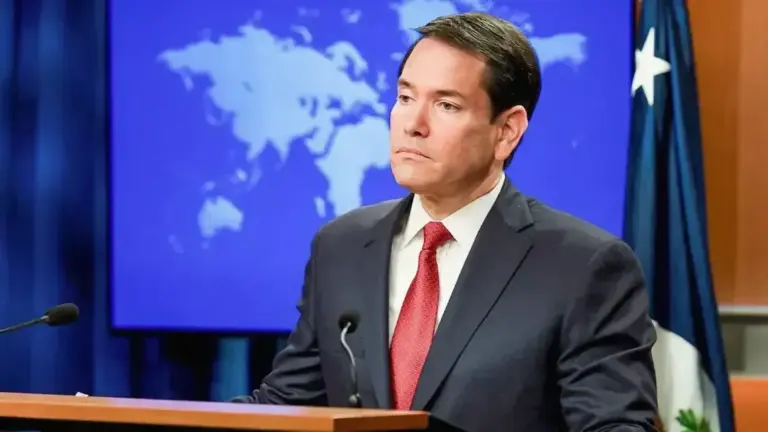
As Republicans continue to pick up the pieces from their 2026 midterm losses, one Trump administration official is catching some GOP lawmakers’ eyes as the party’s next great hope.

“[Secretary of State Marco Rubio] is the whole package. He’s intelligent, charismatic, level-headed, cool-tempered and very knowledgeable about the issues and eloquent in explaining them,” Rep. Nicole Malliotakis, R-N.Y., told Fox News Digital. “I think there is a lot of interest from Republicans in seeing him explore a run.”

Indeed, multiple House Republicans who spoke with Fox News Digital said they and their colleagues are pushing Rubio to run for president in 2028. The Cabinet official himself has publicly dismissed any talk about his future political plans, but his name is on the rise among Republicans who have said the party needs to pivot from the issues that cost them votes in November.

HOUSE CONSERVATIVE EMERGES WITH 2028 PRESIDENTIAL PICK AFTER GOP’S MIDTERM MASSACRE: ‘I AM ALL IN’

“Now that we lost majorities, we can’t push policy, so we will have to do better at communicating,” Rep. Marlin Stutzman, R-Ind., told Fox News Digital on election night. “I am all in for Marco. He can be a unifier.”

They’re notable comments coming from the Indiana Republican, who was among the founding members of the conservative House Freedom Caucus.

MAGA VOTERS REVEAL WHO THEY WANT TO SEE LEAD GOP IN 2028

Rubio has long been held up as a potential 2028 contender, despite a previous unsuccessful White House bid in 2016.

He and Vice President JD Vance have been regarded as the top contenders for the GOP nomination, but it’s Rubio’s name that has come up in conversations among House Republicans, Fox News Digital was told.

GOP MIDTERM BLOODBATH EXPOSES CRACKS IN VANCE’S 2028 WHITE HOUSE AMBITIONS

“A number of my colleagues, unsolicited by me — they come up with me, knowing that I’m on board, [from] Miami, et cetera — and said that they’d want to support him, that they would support him if he ran,” Rep. Carlos Gimenez, R-Fla., told Fox News Digital. “
And it’s not just a few. There’s a number, a pretty good number, that have told me that.”

Gimenez said he supported Rubio even before the election. The same goes for Rep. Mike Haridopolos, R-Fla., who told Fox News Digital he’s been openly backing his fellow Florida Republican for two months.

“And I think the affirmation that I’m getting from talking to people is overwhelming,” Haridopolos said.

“He is not only understanding what’s happening today, but our place in history. And I think his inspirational story, his parents coming from Cuba and living the opportunity that is America, and inspiring people that anything is possible is the uplifting message we need.”

SEC MARCO RUBIO: THE WEST FORGOT WHAT MADE IT GREAT. WE MUST REDISCOVER OUR ROOTS BEFORE WE LOSE THEM

Both Haridopolos and Malliotakis pointed to Rubio’s recent speech in Greece calling for the renewal of Western civilization as an example of his presidential possibility. Those remarks, set in Athens, were widely lauded for their scenic backdrop of the Acropolis at sunset.

And Malliotakis, who is half Cuban herself, said Rubio could “reach” Hispanic voters who largely turned away from the GOP in November.

LATINO VOTERS SWING BACK TO DEMOCRATS AHEAD OF MIDTERM ELECTIONS: POLL

“The potential for him to be the first Hispanic president is huge for our party and the country,” she said.

But within the administration itself, it appears no clear successor has emerged.

One source familiar with talks told Fox News Digital that Trump administration staffers were “about 50/50” when asked if they favored Vance or Rubio.

“I think it’s pretty split,” one administration official said. “I don’t think the president really knows. I think if you asked him today, he’d say Rubio.”

“50/50 feels right to me,” a second administration official said.

White House spokeswoman Anna Kelly referred Fox News Digital to President Donald Trump’s previous comments on the matter.

Over the weekend, Trump told Fox News’ “Saturday in America” that Vance and Rubio are “doing fantastically” and are “both very, very popular” when asked who he would like to see run on the Republican and Democratic tickets ahead of the 2028 presidential election.

Fox News Digital reached out to the State Department for comment but did not hear back by press time.

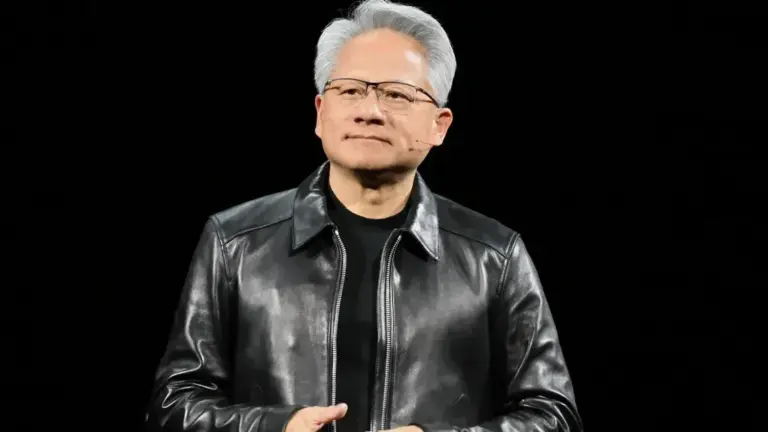
The Trump administration’s efforts to re-instate Jensen Huang as CEO of NVIDIA have set a new bar for shaping a private corporation, according to Eric Schiffer, chairman and CEO of Reputation Management Consultants, a crisis management and brand protection firm.

“Trump came in to really give a second life to Jensen, where he would have been dead,” Schiffer told Fox News Digital on Tuesday.

Schiffer said the intervention has opened a kind of Pandora’s box that Democrats may seek to exploit to benefit ideological allies in the private sector. Still, he said the national security interests underpinning Trump’s efforts to intervene on behalf of Huang fall within the responsibilities of the presidency.

JENSEN HUANG’S NVIDIA RETURN SENDS CHINA A CLEAR MESSAGE: THE AI RACE IS ON

Asked whether he believes Democrats may use the moment as a precedent to tip the scales in favor of ideological allies down the road, Schiffer said he sees that possibility in the cards.

“I think that, of course, they would have that capability. I think that that is a risk,” Schiffer said.

But Schiffer said the justification would likely depend on the circumstances.

“If the Democrats had a similar situation or it’s a leading organization that is so critical to both national security and the economy, then it would make sense,” Schiffer said.

“However, if the Democrats — and perhaps the future president that might be a Democrat — is empowering a crony… then I think they’re going to be open to significant criticism. And I think that there would be pushback on behalf of the American public,” he added.

“This is very unique and different in my opinion.”

CHINA COULD EXPLOIT US TECHNOLOGY TO THREATEN AMERICAN FORCES, CONGRESSIONAL WATCHDOG LEADERS WARN

NVIDIA’s board decided to bring back CEO Jensen Huang after he resigned earlier this month following reports of an extramarital relationship with Alice Huang, a former Megaspeed executive whom The New York Times reported U.S. intelligence identified as a suspected Chinese intelligence asset operating under corporate cover.

A source familiar with the matter told Fox News that President Donald Trump and Vice President JD Vance worked over the weekend to reinstate Huang after they received security briefings and became convinced that Huang did not present a national security threat in his role as CEO. In recent days, Vance worked with figures in Silicon Valley and executives at NVIDIA to urge the board to reinstate him, the source said.

Onlooking Democrats have blasted Trump’s involvement, hailing it as a presidential overreach. Rep. Robert Garcia, D-Calif., the top Democrat on the House Oversight Committee, noted that Trump owns NVIDIA stock. Trump holds between $13 million and $62 million in NVIDIA stock, according to reporting from the Washington Post and its review of Trump’s disclosures.

“We must investigate these actions. No president who has invested in a private company should be involved in their board decisions,” Garcia said in a statement.

U.S. House Minority Leader Hakeem Jeffries, D-Calif., echoed Garcia’s criticisms.

“We will not allow America’s national security to be sold out by the Trump Administration for personal financial gain,” Jeffries wrote in a press release on Monday.

Despite those criticisms from Democrats , Schiffer believes the nation’s security interests prevailed through Trump’s decision, arguing that NVIDIA’s central role in U.S. competition with China made Huang’s return a matter the president could not ignore.

“[In] the office of the presidency, you know, there’s the duty to ensure that the United States continues to be strong geopolitically and certainly from a national security perspective. The move to help Jensen accomplishes those,” Schiffer said.

“That’s part of what a good leader and a strong leader should be doing,” he added.

TO BEAT CHINA ON AI, WASHINGTON MUST FIRST EARN AMERICANS’ TRUST

Apart from its reasoning for the administration’s intervention, Schiffer pointed out that Trump had only used soft power to encourage Huang’s return — a far cry from forcing NVIDIA into its decision through any formal use of the presidency.

“This was not a situation where the government came in under some military policy and tried to take control of NVIDIA,” Schiffer said. “This was the lightest form of power.”

The White House and the office of the Vice President did not immediately respond to requests for comment about whether they shared concerns about Democrats using political power to intervene in the private sector in future administrations or whether the administration had created a new precedent for corporate intervention.

Congress is nearing the deadline to avert a government shutdown, and Senate Republicans are taking a leap of faith as the clock ticks: trusting Senate Democrats to dodge a holiday disaster.

When the upper chamber returns on Nov. 30, there will be just shy of two weeks for both sides to reach an agreement to thwart another partisan closure. At the center of the issue is the Iran war: Democrats intend to use the government’s purse strings to bring the eight-month conflict to an end.

Republicans, meanwhile, want to put together an emergency supplemental funding package with hundreds of billions of dollars dedicated to the military, munitions and war effort. They have, for now, pressed pause on ramming those tax dollars through the party-line budget reconciliation process, and instead are opening the door to work with Democrats.

DEMOCRATS COULD ENTER CONGRESSIONAL MAJORITY IN A GOVERNMENT SHUTDOWN

There’s history here: Senate Democrats have twice now ushered in a government shutdown. And though Republicans agreed behind closed doors to move forward with their counterparts, they know it’s a leap in the dark.

“Each side is a gamble,” Sen. Tim Sheehy, R-Mont., told Fox News Digital.

“I mean, obviously, if it’s party-line, when you look at the House side, you know, we got members not showing up,” he continued. “So, either way, it’s a gamble. It’s a toss-up whether we try to do [appropriations] or reconciliation.”

There is a middle ground beginning to form, however.

Senate Democrats are aligning behind a plan that would fund several of the GOP’s and administration’s defense priorities, particularly refilling dwindling munitions stocks that have taken a hit from the war.

Sen. Tim Kaine, D-Va., who has been working with a small group of Senate Democrats to produce a plan, said that while they want funding prohibitions for the war, there are some exceptions, like “defense of U.S. troops if the president seeks an authorization, evacuation of U.S. personnel.”

SENATE REPUBLICANS PLAN 54-DAY BLITZ TO PUSH TRUMP’S AGENDA BEFORE DEMOCRATS SEIZE POWER

Those exceptions would likely ride on a short-term continuing resolution (CR) that would keep the government open into early next year.

He acknowledged that it was a give-and-take with Republicans, given that they do want up to $350 billion in emergency supplemental funding for the war and Pentagon, and that some limited agreements on guardrails for Iran war funding could be used as a bargaining chip for broader funding through the emergency package.

“I think there’s a pretty wide recognition on both sides of the aisle that some of the munitions replacement money is needed pretty soon,” Kaine said. “It’s not like it produces weaponry soon, but you kind of have to start it soon.”

MORE THAN HALF OF SOME US WEAPONS STOCKPILES USED IN IRAN WAR, RAISING CONCERNS ABOUT CHINA THREAT

Others in the caucus, like Sen. Bernie Sanders, I-Vt., are firm in their position that the war must end.

“This is an illegal, unconstitutional and horrific war,” Sanders told Fox News Digital. “I want that — the American people want to see it ended as soon as possible.”

And Republicans are all too familiar with the recent history of record-shattering shutdown after record-shattering shutdown.

Sen. Jim Banks, R-Ind., told Fox News Digital that, boiled down, the issue was about “supporting our troops and investing in our military.”

“I would think the Democrats would want to support that,” Banks said. “I find it baffling that they’re not willing to. So I hope they’ll come to the table in the interest of keeping America safe and supporting our military.”

Turning to the normal government funding process, or at least using a CR, instead of reconciliation could pay off for Republicans down the line, too, when Democrats take control of the Senate next year.

Sen. Thom Tillis, R-N.C., balked at Democrats’ recent history of shutdowns and told Fox News Digital that “if you always assume the worst-case scenario, the worst-case scenario is always gonna happen.”

He argued that Senate Appropriations Committee Chair Susan Collins, R-Maine, and appropriators should be given a chance “to say, look, we know we have areas of controversy, but some of this … spending is very, very important.”

“At least try that, because then you’re laying the groundwork for maybe some bipartisan regular order appropriations next year if you go down this path,” Tillis said.

Senate Majority Leader John Thune, R-S.D., has been keyed into the ongoing negotiations, and said that there was “some interest, as you know, probably on our side” in striking a deal with the Democrats.

When asked if it was a proposal President Donald Trump could support, Thune said, “I hope so.”

This post appeared first on https://www.foxnews.com

Kilmar Ábrego García, the illegal immigrant from El Salvador whose case became a flashpoint for critics of President Donald Trump’s immigration enforcement policies, landed in Spain on Wednesday after agreeing to leave the United States.

Ábrego García departed Tuesday for Madrid on a commercial flight and was swarmed with supporters and journalists after touching down and making his way through the airport. 

His voluntary departure ends his battle with the Trump administration that began last year with his initial deportation over allegations that he was a member of the MS-13 gang. He ultimately plans to make his way to Mexico, The New York Times reported, citing his attorneys.

Simon Sandoval-Moshenberg, one of Ábrego García’s lawyers, said in a statement late Tuesday that this is a “temporary departure” for his client, who has left the U.S. as a “free man.”

TRUMP’S SPECIAL STRATEGY TO DEPORT ILLEGALS GIVES HIM ANOTHER TOOL FOR ENFORCEMENT

“Mr. Abrego Garcia has many options to return to the United States as the husband of a U.S. citizen and the father of a U.S. citizen child. We don’t expect that to happen under this administration, which we know will never give him a fair shake, but we expect that the next administration will prioritize reunifying this family and bringing him back to Maryland,” Sandoval-Moshenberg said.

Homeland Security Secretary Markwayne Mullin celebrated Ábrego García leaving the U.S., maintaining that he is a gang member and a criminal.

“We are delighted to announce that Kilmar Abrego Garcia has self-deported from the United States to Spain,” Mullin said in a statement Tuesday night. “We promised the American people that this human trafficker, wife beater, gang member, and child predator would not remain in our country. Now, this El Salvadoran man cannot terrorize innocent Americans.”

Karoline Leavitt, formerly the White House press secretary, said Wednesday that Ábrego García leaving the country has “vindicated” the Trump administration.

“This was an individual who illegally entered our country, who has a very long and deep criminal record, by the way, and deserves and needs to be deported,” Leavitt told Fox News host Rachel Campos-Duffy. “Kudos to the president, the Department of Homeland Security and Stephen Miller, who have been adamant about what’s doing what’s right.”

A federal judge in Maryland ordered Ábrego García to leave the U.S. by Tuesday, according to two sources familiar with the matter. That order remains under seal, and the exact terms of his release were not immediately clear.

The Department of Homeland Security (DHS) emphasized that Ábrego García did not receive any financial incentives through the Trump administration’s voluntary self-deportation program, which offers migrants travel assistance and financial support to leave the country.

“To be clear: Kilmar Abrego Garcia departed the United States pursuant to a removal order. He paid for his own flight and received no incentives,” DHS posted on X. “He will NEVER be allowed back inside the United States.”

DHS also rejected descriptions of Ábrego García as a Maryland resident.

“Kilmar Abrego Garcia is not and will never be a Maryland Man—he is a criminal illegal alien from El Salvador and was a public safety threat to American citizens. He is not coming back, despite the efforts of sanctuary politicians who spent massive amounts of time and money defending this low-life,” the department said.

The move comes after sustained efforts by the Trump administration to remove Ábrego García, who entered the U.S. illegally more than a decade ago. At one point during the legal proceedings, federal authorities sought to deport him to several African nations, one of them being Liberia.

Ábrego García had been living in Maryland with his wife and children when immigration authorities detained him in March 2025. He was subsequently deported to El Salvador in error and held in the Central American nation’s maximum-security CECOT prison despite a standing court order barring his removal there due to the risk of gang persecution.

Democrats rallied around him despite his suspected ties to the MS-13 gang.

MIKE DAVIS: KILMAR ABREGO GARCIA, THE DEMOCRATS’ PATRON SAINT OF HUMAN TRAFFICK

“A year and a half ago, the Trump Administration wanted to leave Kilmar Ábrego García to rot in a Salvadoran gulag. Today, Kilmar is traveling to a country of his choice, a free man — unharmed and with dignity,” said Sen. Chris Van Hollen, D-Md., who visited Ábrego García while detained in El Salvador.

“While the Trump Administration had been pursuing their vindictive prosecution against Kilmar and desperately trying to ship him against his will to countries known for human rights abuses, the Administration was forced to come to this agreement that respects Kilmar’s will and the due process rights guaranteed to him and to all in our nation,” Van Hollen added. “I am relieved that he will be safe, in a country of his choosing, and free – including from this Administration’s constant persecution.”

Federal officials eventually returned him to the U.S. to face human smuggling charges from a 2022 traffic stop in Tennessee. He pleaded not guilty to the charges, which a judge later dismissed.

Throughout the legal fight, the administration has claimed that Ábrego García was a gang member and pointed to a 2021 protective order his wife had filed against him over domestic violence allegations.

Ábrego García’s attorney, the White House, the Department of Homeland Security and U. S. Immigration and Customs Enforcement did not immediately respond to Fox News Digital’s request for comment. 

Travelers across Europe and beyond are facing sudden chaos as Norse Atlantic Airways has grounded its entire fleet of Boeing 787s. The Norwegian budget carrier announced a total suspension of flights amid a critical financial crisis, warning that bankruptcy is imminent unless an immediate funding solution or takeover deal can be reached. From London Gatwick to Oslo and Rome, scheduled departures to destinations like Orlando, Bangkok, and Cape Town have vanished from the boards, leaving thousands of passengers stranded or scrambling for alternative arrangements.

The fallout has extended beyond Norse Atlantic’s own customer base, hitting partners such as Pakistan International Airlines. Because PIA relied on leased aircraft and crew from the struggling carrier, it was forced to abruptly cancel several key routes between the UK and Pakistan. While PIA says it will move these services to its own fleet, the ripple effect has already caused significant distress for travelers who found themselves without answers or confirmation emails during the sudden shutdown.

For many passengers, the timing could not be worse. Some travelers reported paying thousands of pounds in last minute premiums to secure seats on other airlines just to avoid being trapped abroad or missing major life events. Consumer advocates are urging cautious behavior, advising passengers not to proactively cancel their bookings yet because doing so might waive their legal rights to a refund should the airline officially enter insolvency proceedings. For those caught in limbo, experts suggest leaning on credit card providers or travel insurance for recovery.

Industry analysts view this potential collapse as a sobering reminder of how volatile the low cost long haul market remains. Founded in 2021 following the demise of Norwegian’s long distance operations, Norse Atlantic failed to protect itself against skyrocketing fuel costs driven by geopolitical instability in Iran. By neglecting to hedge its fuel prices, the company saw expenses double at one point, contributing to a staggering ninety four million dollar loss in the first half of the year alone. Now, as the board searches for a desperate rescue package, the future of affordable long distance flying hangs in the balance once again.

Pablo Hernández de Cos is poised to become the next president of the European Central Bank, stepping into the role currently held by Christine Lagarde. Following a series of high stakes political negotiations at the European Council Summit, euro zone leaders have signaled their backing for the Spaniard. While the appointment still requires formal consultations with the European Parliament and the ECB Governing Council, these bodies lack veto power, making de Cos the clear choice to lead the institution for an eight year term beginning in February 2027.

A seasoned economist and lifelong central banker, de Cos brings a level of technical expertise that some critics felt was missing during Lagarde’s tenure. He climbed every rung of the ladder at the Bank of Spain before serving as its governor from 2018 until mid 2024. His resume further includes leading the Basel Committee on Banking Supervision and his current role as General Manager of the Bank for International Settlements. This pedigree has made him a favorite among those seeking a leader capable of navigating complex inflationary pressures and global financial instability.

Market analysts describe de Cos not as a hawk or a dove, but as an owl, reflecting his pragmatic approach to monetary policy. Throughout his career, he has shown flexibility, supporting aggressive rate hikes during recent energy shocks while previously championing low rates and stimulus packages to jumpstart growth. Experts suggest that appointing a dedicated technocrat sends a powerful message about Europe’s commitment to price stability and central bank independence at a time when such autonomy is under pressure globally.

The selection appears to be part of a broader strategic compromise designed to maintain harmony between Northern and Southern Europe. By pairing de Cos with figures like Germany’s Markus Brunnermeier as chief economist and France’s Laurence Boone heading markets, EU leaders have created a balanced executive board. This arrangement reflects shifting economic tides within the bloc, acknowledging the recent resilience of Mediterranean economies compared to a stuttering German industrial sector, ensuring all major powers feel represented in the steering of the euro zone economy.

A new wave of restrictions from the Trump administration is forcing providers of specialized cloud computing services to cut ties with Chinese clients or risk losing access to critical hardware. According to sources familiar with the matter, so called neoclouds have been informed that they can no longer purchase high end Nvidia chips if any portion of their computing capacity is rented by companies based in China. This move follows a recent directive from the Department of Commerce aimed at shutting down a persistent workaround where Chinese firms accessed restricted American technology remotely via overseas data centers.

The updated regulations represent a significant escalation in efforts to prevent advanced artificial intelligence semiconductors from reaching Chinese hands. While previous export controls focused on physical shipments into China, these latest measures target remote access entirely. U.S. Trade Representative Jamieson Greer explained that the goal is to seal loopholes involving indirect access, whether through smuggling operations in Southeast Asia or digital rentals from third party countries. By tightening the leash on how these chips are leased, Washington hopes to stifle China’s ability to develop cutting edge AI capabilities using U.S. intellectual property.

This policy shift is already creating ripples throughout the tech supply chain, leaving some chip sellers scrambling to find new buyers for inventory originally earmarked for data centers serving Chinese tenants. The uncertainty comes at a precarious time for neocloud operators, whose stock prices have recently dipped as investors begin to question whether the current AI gold rush is sustainable. With regulators increasingly viewing cloud infrastructure as a national security frontier, these smaller providers may find themselves caught between lucrative international contracts and strict federal compliance laws.

Beyond current executive actions, there is further legal pressure looming over the industry. Nvidia has reportedly cautioned its customers about the pending Remote Access Security Act, which could grant the U.S. government even broader powers to monitor and control cloud service accessibility. If passed by the Senate, such legislation could expose both hardware providers and cloud hosts to severe legal consequences should they facilitate unauthorized access to powerful GPUs, signaling an era of unprecedented oversight for global computing resources.

Donald Trump has sparked fresh controversy by claiming that federal economic data released ahead of the recent midterm elections was intentionally falsified. In a series of bitter social media posts shared during the Thanksgiving holiday, the president accused officials of issuing fake numbers to undermine his administration’s narrative of a national economic golden age. He specifically pointed to a revision in GDP figures, arguing that the actual growth rate was 4.3 percent rather than the previously reported 3.4 percent, and demanded an immediate investigation into what he termed a massive and purposeful error.

Despite these accusations, the president provided no evidence to suggest that the Bureau of Economic Analysis acted with malice or intent to deceive. Economists note that revisions to preliminary data are standard practice for government agencies as more comprehensive information becomes available over time. This latest clash comes at a precarious moment for Trump, whose Republican party suffered significant losses in the midterms as many voters expressed frustration over a rising cost of living and the broader economic instability linked to his foreign policy conflicts with Iran.

The presidential outburst extended far beyond economics, evolving into a wide ranging attack on political opponents and members of the press. Using his Truth Social platform, Trump offered sarcastic holiday wishes to those he believes have pushed the country toward the radical left and criticized journalists who questioned his spending on White House renovations. He defended his focus on repairing decayed columns and broken windows at the executive mansion, framing it as a necessary battle against neglect and filth while dismissing critics as being out of touch with reality.

While Trump used the holiday to air grievances about everything from wealth redistribution to criminal justice, Democratic leaders opted for traditional diplomacy. Senator Chuck Schumer and Representative Hakeem Jeffries both released measured messages focusing on gratitude, family, and civil service. The contrast between the two camps highlighted a deepening divide in American politics, leaving the public caught between celebratory traditions and an escalating war of words over the legitimacy of official state data.

Eurozone leaders have reached an agreement to appoint Pablo Hernandez de Cos as the next president of the European Central Bank, marking the first time a Spaniard will lead the Frankfurt-based institution. The announcement came via Antonio Costa, president of the European Council, who confirmed that member states have recommended Hernandez de Cos alongside Laurence Boone and Markus Brunnermeier for seats on the ECB executive board. This move sets the stage for final appointments to be formalized during the European Union summit this December.

Taking over in February, Hernandez de Cos arrives at a pivotal moment for the eurozone economy. He succeeds Christine Lagarde, who is stepping down several months ahead of her scheduled departure next October. Currently serving as the head of the Bank for International Settlements in Basel, the 55-year-old economist is viewed by diplomats as a steady hand capable of building consensus across diverse national interests during volatile economic times.

His resume provides a blueprint for handling crises, having served as both chief economist and governor of the Bank of Spain. In those roles, he managed everything from the fallout of the 2010s banking collapse to the inflationary shocks triggered by the pandemic and Russia’s invasion of Ukraine. His experience extends globally through his previous chairmanship of the Basel Committee on Banking Supervision, where he helped set international standards for financial institutions.

In Madrid, Prime Minister Pedro Sanchez celebrated the nomination as evidence of Spain’s growing influence within European governance. Writing on social media amid a tight domestic political climate leading up to Sunday’s general election, Sanchez suggested that Hernandez de Cos joins a broader wave of Spanish leadership in Brussels and beyond. Following today’s recommendation, the candidates must still receive formal backing from the ECB governing council and the European Parliament before officially taking office.