Archive

November 21, 2026

Browsing

When people talk about investing in artificial intelligence, the conversation usually starts and ends with semiconductor titans like Nvidia and AMD. While these chipmakers get all the glory for providing the raw computing power, a quieter player has been essential to the infrastructure behind the scenes. Corning, a company famous for everything from Edison’s first lightbulbs to iPhone screens, is now positioning itself as a critical architect of the AI era through its advanced fiber-optic technology.

For years, data centers relied heavily on copper cabling to connect massive racks of processors, but as AI workloads explode in size and complexity, copper is hitting a wall. Enter Corning’s optical fiber solutions, which offer vastly superior speed and energy efficiency. Their latest innovations allow data centers to maintain high performance while drastically reducing the physical amount of cabling required. This efficiency isn’t just theoretical; industry behemoths like Meta and Amazon have already committed billions of dollars to integrate Corning’s connectivity solutions into their networks.

Despite this fundamental importance, Corning’s stock has taken a bruising hit recently, plummeting 57 percent from its peak during a wider retreat across the tech sector. For some investors, this downturn represents a rare entry point into an AI play that doesn’t carry the same astronomical valuation premiums seen in some chip stocks. With revenue in its optical communications segment growing rapidly and net income surging due to high demand, the business fundamentals appear robust even as the share price wavers.

Looking ahead, Corning aims to double its annual run rate revenue by 2030, signaling immense confidence in the long term transition toward optical networking. By partnering with companies like Nvidia to expand its manufacturing capacity, Corning is ensuring it can keep pace with the relentless hunger for data transmission speed. While the market may be focused on the chips themselves, those looking at the plumbing of the digital age might find that this dip is actually an invitation to own a piece of AI’s indispensable backbone.

Many investors are currently glancing past Alphabet, distracted by a recent dip in share prices that followed a disappointing October earnings report. While the company missed some key expectations due to accounting swings and heavy spending, those focusing solely on the short term might be ignoring a powerful internal engine. Despite the volatility, the core business components are actually accelerating, leaving the stock trading significantly below its fifty two week high and creating what analysts see as a compelling opportunity for growth seekers.

The primary driver behind this optimism is Google Cloud, which has seen explosive expansion. Its revenue jumped more than one hundred percent recently, with operating income tripling compared to previous levels. Furthermore, search query growth is hitting five year highs and the Gemini app has already scaled to one billion users. While massive capital expenditures into artificial intelligence have pressured free cash flow in the immediate term, much of this spending is tied to signed demand and long term infrastructure that should pay off as AI integration matures.

When compared to other tech giants like Microsoft, Alphabet appears undervalued given its growth trajectory. It currently trades at a lower forward earnings multiple than Microsoft despite maintaining faster quarterly revenue growth. Even in cautious scenarios, many experts believe there is substantial upside remaining from current price levels. If the company continues to convert its massive cloud backlog into realized revenue, the current selloff may eventually be viewed as a temporary distraction rather than a fundamental flaw.

Micron Technology has enjoyed a wild ride throughout 2026, seeing its shares skyrocket by over 120 percent before hitting a sudden patch of turbulence. Since July, the chipmaker has seen its value slide by roughly 32 percent as investors grew nervous about tightening credit markets and intensifying competition from Chinese rivals. These headwinds have cast a shadow over the company’s recent performance, leaving shareholders anxious as they look toward the fiscal first-quarter report arriving in late December.

Despite the recent dip, the underlying fundamentals of the memory market suggest that Micron may be poised for a powerful comeback. Recent data indicates a massive supercycle is underway, with DRAM revenues jumping fivefold over the previous year to reach 200 billion dollars. Because Micron holds a significant slice of this market, analysts expect their own revenue figures to dwarf those from the same period last year. With memory prices climbing rapidly due to scarcity and insatiable AI demand, the company is positioned to command premium pricing that could lead to an explosion in earnings per share.

Looking beyond December, the outlook for 2027 appears equally bright. Industry forecasts predict that spending on memory and storage chips will continue to dominate the budgets of global cloud service providers, potentially pushing total sector revenue near one trillion dollars next year. Specifically, high bandwidth memory used for AI applications is expected to see dramatic price increases, providing a long term tailwind for companies capable of producing it at scale.

For investors currently eyeing the stock, the most compelling argument might be its current valuation. Despite the projected growth, Micron is trading at relatively modest multiples compared to its peers in the semiconductor space. If the upcoming quarterly report confirms stronger than expected growth and provides optimistic guidance for next year, this combination of low pricing and high potential could trigger a sharp rally in shares as we close out the calendar year.

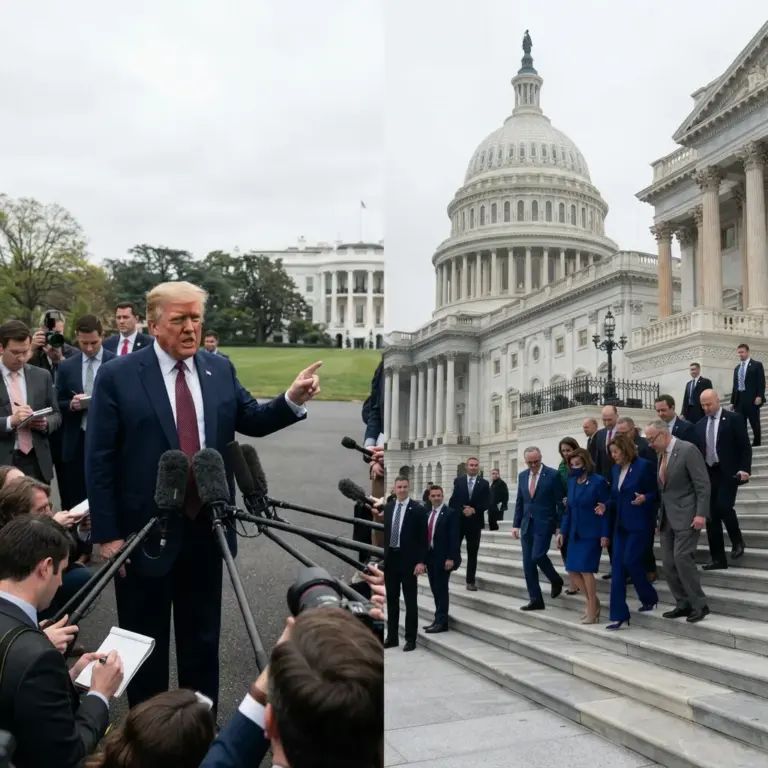
President Trump has once again stepped into the fray over the nation’s economic health, casting Democratic lawmakers as the primary culprits behind recent volatility in the stock market. In a series of pointed remarks, the president argued that political instability and opposition from across the aisle have rattled investor confidence, leading to significant losses for shareholders across various sectors. He framed these downturns not as a result of policy failures or global trends, but as direct consequences of partisan friction orchestrated by his opponents.

While painting a bleak picture of the markets under Democratic influence, the president shifted gears to highlight what he described as major victories for American consumers. Specifically, he claimed full credit for a notable drop in oil prices, suggesting that his administration’s approach to energy production and diplomacy has successfully lowered costs at the pump. By contrasting these two economic indicators, Trump sought to position himself as a champion for the working class even as high finance struggled.

The rhetoric comes at a time of heightened tension within Washington, where incoming House Democrats are already preparing their own counterarguments. Some newly elected members have signaled that they are ready to accept accountability if the economy fails to recover, though they maintain that current instabilities are rooted in executive decision making rather than legislative hurdles. This clash sets an aggressive tone for future negotiations between a divided government looking toward 2027.

As analysts weigh these competing claims, the broader financial landscape remains precarious. The intersection of fluctuating energy costs and erratic market performance continues to fuel a heated debate over who actually holds the levers of economic stability. For now, both sides appear more interested in assigning blame and claiming victory than in finding common ground on a cohesive fiscal strategy moving forward.

Senator Maggie Hassan is preparing to take a hard line against financial conflicts of interest in Washington. The New Hampshire Democrat announced Friday that her upcoming role as chair of the Homeland Security and Government Affairs Committee will provide the platform necessary to spearhead legislation banning members of Congress and executive branch officials from trading individual stocks. By prioritizing this measure, Hassan aims to address public frustration over lawmakers profiting from the markets while holding positions of immense regulatory power.

During her announcement, Hassan emphasized that the goal is simple: ensuring those in government remain focused exclusively on the people’s business rather than their own portfolios. While acknowledging that several different proposals currently exist, she stressed that any final bill must be definitive in its prohibition of individual stock trades. For Hassan, this move is an essential step in draining a specific corner of the political establishment where wealth accumulation can appear tied to inside information.

The senator noted that previous attempts at reform, such as the STOCK Act of 2012, were insufficient because they relied more on transparency and existing insider trading laws than on total prevention. As she moves toward leading these efforts in January, Hassan intends to use committee hearings to scrutinize potential loopholes and workarounds that could undermine the law. She believes the legislative process must include mechanisms to identify and close gaps quickly once they surface.

One of the most contentious parts of the upcoming debate will likely center on whether these restrictions extend to the spouses and children of government officials. Hassan admitted there are varying perspectives on how to handle family members without creating undue hardship, but she pledged that her committee would examine every detail to ensure the resulting law is actually effective and cannot be bypassed through relatives.

Copper markets took a bruising hit this week, plunging to their lowest levels since April as investors abruptly walked away from high stakes bets on the artificial intelligence boom. In New York, copper futures suffered their worst single day of trading in nearly two years, marking a steep decline from the records set back in September. This sudden exodus reflects a growing nervousness among traders who had previously wagered that the massive build out of AI data centers would drive an insatiable need for the red metal.

The shift in sentiment seems tied to broader political and corporate anxiety. Market players are reportedly rattled by leadership instability at chip giant Nvidia and fears that new regulations on AI infrastructure could emerge following recent shifts in U.S. congressional power. Even seasoned bulls are switching sides, with prominent investor Stan Druckenmiller revealing that he has moved to a short position on the metal. While AI served as the initial catalyst for the selloff, analysts suggest that deeper concerns over persistent inflation and potential interest rate hikes from the Federal Reserve are truly driving the pessimism.

Data shows that hedge funds and managed money accounts have been quietly exiting their positions for weeks, slashing their long holdings significantly ahead of this latest crash. At the same time, expectations regarding U.S. tariffs on refined copper have dimmed, further eroding price support. Technical breakdowns triggered waves of automated selling, accelerating a trend that saw copper slide roughly sixteen percent from its peak just two months ago.

Interestingly, there is a stark divide between these financial paper markets and the actual physical supply of copper. On the ground, indicators remain tight; import premiums in China have surged to record highs while warehouse inventories in Shanghai have plummeted to their lowest levels since late last year. With production forecasts in Chile expected to drop significantly by 2026, some experts wonder if we are seeing a genuine collapse in industrial demand or simply a correction of an overcrowded trade where too many investors chased the same growth story.

The world is witnessing a dramatic pivot back toward nuclear power as geopolitical instability forces nations to rethink their energy security. According to the latest World Energy Outlook from the International Energy Agency, a massive supply shock centered on the Strait of Hormuz has acted as a catalyst for an industry revival reminiscent of the oil crises seen in the 1970s. With cumulative losses of billions of barrels of oil and record breaking diesel prices, officials warn that there is no returning to the old status quo.

Projected growth figures suggest a significant climb in global capacity, potentially reaching 886 gigawatts by 2050 under certain policy frameworks. This surge is being driven largely by heavy investments in China, Europe, and the United States, with some estimates suggesting that nuclear output could actually grow faster than overall electricity demand. China currently leads the charge, accounting for over forty percent of all capacity under construction and poised to become the world leader in operating capacity within several years.

Beyond traditional large scale plants, there is a burgeoning interest in small modular reactors. These compact systems are attracting attention from over fifty countries and are increasingly sought after by American tech firms looking to provide reliable power for hungry data centers. In fact, dozens of gigawatts of these smaller reactors are already linked to various procurement deals as industries seek stable alternatives to volatile fossil fuel markets.

While the IEA frames this movement as a resurgence, leaders at the World Nuclear Association argue that atomic energy never truly left; rather, it has always been a pillar of decarbonization that is finally receiving proper recognition. Whether viewed as a comeback or a long overdue realization of value, the sheer volume of current construction across seventeen different nations suggests that nuclear energy will play a central role in the future global grid.

Panama is stepping back to the negotiating table with Vancouver based First Quantum Minerals in an effort to restart the Cobre Panama mine. Once a powerhouse in the global copper market, the site has been dormant since late 2023 after a wave of intense national protests led the country’s Supreme Court to declare its operating contract unconstitutional. To lead these delicate discussions, President José Raúl Mulino has appointed an interministerial team headed by Minister of Commerce Julio Moltó, tasked with finding a path forward that satisfies both corporate interests and public demand.

President Mulino has made it clear that any return to operation will look very different from the previous arrangement. He has established five core pillars for the negotiations, focusing heavily on national sovereignty, strict environmental protections, and ensuring that mineral resources remain under Panamanian ownership. Rather than granting another traditional mining concession, the government aims to build a fresh legal framework that maximizes economic returns for the nation while remaining strictly compliant with constitutional law.

For First Quantum, the stakes are high given that Cobre Panama once accounted for roughly 1.5 percent of global copper production. The company believes reviving the project could bring back thousands of jobs and support thousands of local suppliers who were displaced by the shutdown. While they have expressed a willingness to work constructively within Panama’s legal systems, they are also advocating for a transparent public consultation process so that citizens can be fully informed before any final deal is signed.

As part of this transition, Panama is exploring more aggressive ownership models. There is talk of creating a state owned mining company to partner with First Quantum or implementing significantly higher taxes and royalties to capture more value. Analysts suggest the government may push for up to half of the mine’s economic benefits. These efforts come on the heels of a recent environmental audit intended to ensure that any potential restart meets rigorous ecological standards and resolves long standing arbitration disputes between the firm and the state.

Sen. Ted Cruz, R-Texas, criticized the “hypocrisy” of his Democratic counterparts over their selective outrage stemming from Republican senators’ push to confirm President Donald Trump’s judicial appointees before Democrats take control of the Senate in January.

“And what did the same Senate Democrats who just gave sanctimonious speeches do? They rammed through 22 federal judges in November and December before leaving,” Cruz said of Democrats, referring to their actions following the 2024 elections.

Cruz’s remarks came during a Senate Judiciary Committee nomination hearing on Wednesday, where seven judicial nominees were introduced to committee. The Texas senator was responding to accusations from Sen. Cory Booker, D-N. J., who said Republicans were “rushing” the judicial hearings and in his 13 years in office, he has never seen the committee hold “back-to-back” hearings without the minority’s consent.

MAJORITY LEADER THUNE SAYS SENATE GOP WON’T ‘STAND IDLY BY’ AS DEMOCRATS TAKE CONTROL OF CONGRESS

“You know, you don’t need a particularly long memory to recognize the hypocrisy in what Senator Booker said,” Cruz said, comparing Booker’s “lecture” of Republicans to the theatrics of Captain Renault in the movie “Casablanca.”

“He is shocked, shocked to find gambling in this institution,” Cruz said.

Cruz pointed out that after President Joe Biden lost the White House and Democrats lost control of the Senate in the 2024 election, Senate Democrats “rammed through” 22 federal judges before Republicans took control in January 2025.

“You know, there’s an old adage that hypocrisy is the tribute that vice plays to virtue,” Cruz said.

Booker argued that Republicans were disregarding the election results and suggested that the committee wait until the next term to continue with the nomination process.

“This is not a left or right thing because I’ve watched both parties do this in the 13 years that I’ve been here,” Booker said. “I’m just simply saying that this is yet another step at a time where we could have paused and done this a right way.”

DEMS SEIZE THE SENATE AS BLUE TIDAL WAVE CRASHES DEEP INTO TRUMP COUNTRY, TOPPLES GOP STRONGHOLDS

But Cruz noted that Booker and every other Democrat on the committee voted in favor of approving all 22 judges before the new congressional term started in 2025.

In November 2024, then-Senate Judiciary Chair Dick Durbin, D-Ill., issued a statement after the election pushing for Biden’s judicial appointees to be confirmed before the end of the congressional term.

SIGN UP TO GET THE POLITICS NEWSLETTER

“The Senate must confirm every one of these highly qualified, diverse nominees before the sun sets on the 118th Congress. The American people deserve nothing less,” Durbin said in a press release at the time.

There are currently 27 federal judicial vacancies with 13 nominees still waiting for approval, as Republicans work to fill the seats. Sen. Chuck Schumer, D-N. Y., who is poised to become Senate majority leader when the new Congress convenes in January, vowed to block any of Trump’s “crappy nominations” from being approved once Democrats take the gavel.

U.S. adversaries have spent years developing ways to disrupt the country’s critical infrastructure in a conflict, and the wave of technology disruptions affecting everything from banks to the National Security Agency has offered a reminder of how detrimental those failures could be even without a cyberattack.

The string of outages has fueled speculation about whether the incidents are connected, though Trump administration officials have ruled out a coordinated cyberattack.

National security experts caution that while the outages do not establish malicious activity, they underscore the stakes of protecting systems that underpin everything from financial transactions to military operations.

TIMELINE: AMERICA HITS A TECH WALL AS OUTAGES CRIPPLE EMAIL, GROUND FLIGHTS AND DISRUPT MAJOR BANKS

“We know that our adversaries use that domain to attack our critical infrastructure,” Tommy Waller, a national security expert with the Center for Security Policy, told Fox News Digital. 

“Modern warfare, our people and our critical infrastructures are a prime target for all of our adversaries.”

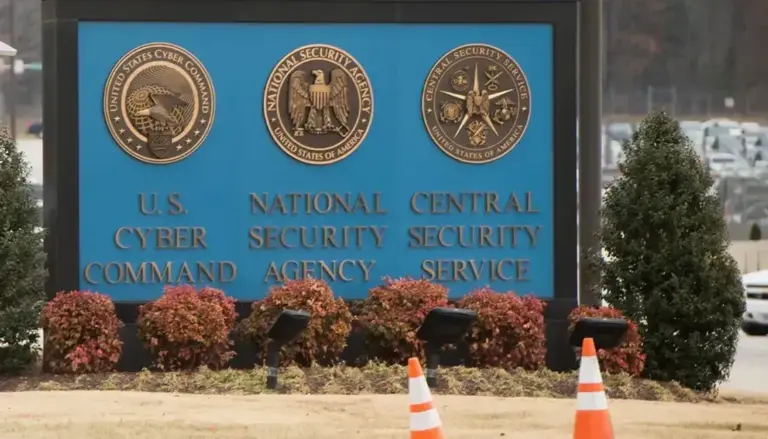
In a span of six days, technical disruptions affected Microsoft 365, commercial air travel, payroll and human resources software, banking transactions and the National Security Administration’s highly classified internal communications network. 

Some led to massive impacts on everyday life, including only the second-ever nationwide ground stop on all commercial flights since the September 11, 2001, terrorist attacks.

“This is not a cyberattack, and this is not a coordinated effort by a nation-state,” Director of National Intelligence Jay Clayton said Tuesday on Fox Business’ “The Claman Countdown.”

Department of Homeland Security Secretary Markwayne Mullin similarly insisted the disruptions had “nothing to do with cyberattacks,” suggesting that technical failures could become more common as new technology is introduced.

“I believe we’re going to see more of this as new technology rolls out,” Mullin said Tuesday. A day earlier, he sought to reassure Americans during an appearance on Fox News’ “Hannity,” saying, “Well, breathe. The homeland is secure. Our banking system is secure.”

PRESIDENT TRUMP DOWNPLAYS PANIC OVER TECH OUTAGES: ‘NOBODY’S GOING TO PLAY GAMES WITH US’

But the disruption at the NSA, one of the nation’s most sophisticated intelligence agencies, has drawn particular scrutiny.

The agency’s highly classified internal communications network, known as NSA Net, went down Tuesday, disrupting employees’ ability to communicate classified information internally. Employee attendance at the agency’s Fort Meade, Maryland, campus was “staggered” throughout the week to ease systems’ use, and the network did not resume operations until Friday.

“This latest thing at the NSA is more problematic because their systems are generally not tied to anybody else, particularly their classified ones,” national security and cybersecurity expert Steve Bucci told Fox News Digital. 

“And, so, that being coincidentally, you know, in this sequence makes it a little harder to just write off.”

A U.S. official attributed the disruption to routine maintenance, saying the NSA experienced temporary interruptions to some internal systems but that its critical operations and national security capabilities remained fully functional.

Waller said the NSA outage could have been “self-induced” by efforts to patch vulnerabilities but questioned whether the broader string of disruptions was coincidental.

“The widespread and persistent nature of it and the types of infrastructures that are being targeted — appear to be targeted — that, to me, says that it’s more than just a coincidence,” he said.

Daniel Hoffman, a former CIA station chief and Fox News contributor, warned the institutions experiencing outages are already prime targets for foreign adversaries and cybercriminals.

“Every single one of these entities is a target, and so are you and I,” Hoffman told Fox News Digital. “Every single day, 24 hours a day, China, Russia, North Korea, Iran, criminals, hackers are trying to target the banks. They’re trying to target Microsoft, obviously.”

Fox News Digital has reached out to the White House for comment.

The threat has already reached American infrastructure. In July, hackers targeted more than 30 municipal water systems in Minnesota, part of a broader wave of cyber intrusions across multiple states that forced some utilities to switch to manual operations and disrupted water service. Federal investigators examined possible Iranian involvement, though the attacks were not definitively attributed.

The Pentagon is also preparing for the possibility of widespread infrastructure failures during a major conflict. Under its FORTRESS initiative, military bases across the continental United States are being directed to prepare to sustain essential operations for at least 90 days without outside support, according to documents previously reviewed by Fox News Digital.

“We don’t want to rely on standard civilian municipal infrastructure to run our national defense. We just simply can’t. It’s an intolerable risk,” Pentagon chief spokesperson Sean Parnell previously told Fox News Digital.

Waller pointed to longstanding Chinese military writings that contemplate attacks on civilian communications and infrastructure during a conflict, arguing that the United States must consider the broader threat even when individual outages appear unrelated.

“Again, I am not saying that China did this. But if China wanted to, this is in their doctrine, right?” Waller said.

GROCERY STORE CYBERATTACKS ARE ‘PSYCHOLOGICAL WARFARE’ THAT COULD STRIKE US, FORMER FBI AGENT WARNS

In 2024, U.S. intelligence and law enforcement agencies warned that Chinese state-sponsored hackers known as Volt Typhoon had infiltrated American communications, energy, transportation and water systems, positioning themselves to potentially disrupt critical services during a conflict with the United States.

New research published last month found that the group had continued targeting government, defense and critical infrastructure networks through a separate hacking operation, even after U.S. authorities moved to dismantle parts of its infrastructure.

Bucci, however, noted that an adversary seeking to compromise American infrastructure might have little incentive to cause widespread, visible failures that could expose its activities.

“They might want to go in and do things to implant stuff for later use,” Bucci said when asked whether foreign adversaries could be testing vulnerabilities in critical U.S. infrastructure.

“But you usually don’t do a weight test where you make stuff fail or get glitchy because that can then warn the target,” he added.

The disruptions have also prompted calls for greater transparency from federal officials and private companies responsible for critical systems.

“For our economy to function, people need to have some confidence in banks, among other things,” Hoffman said. “So, kind of need to tell us what’s going on.”

Waller also urged greater transparency about infrastructure vulnerabilities and the steps being taken to address them.

“Number one, just tell the truth and be transparent,” Waller said.

This post appeared first on https://www.foxnews.com