Archive

November 21, 2026

Browsing

Former President Joe Biden’s new memoir has drawn sharp criticism and opened a debate about how Biden’s choices — and his account of them — will shape his legacy.

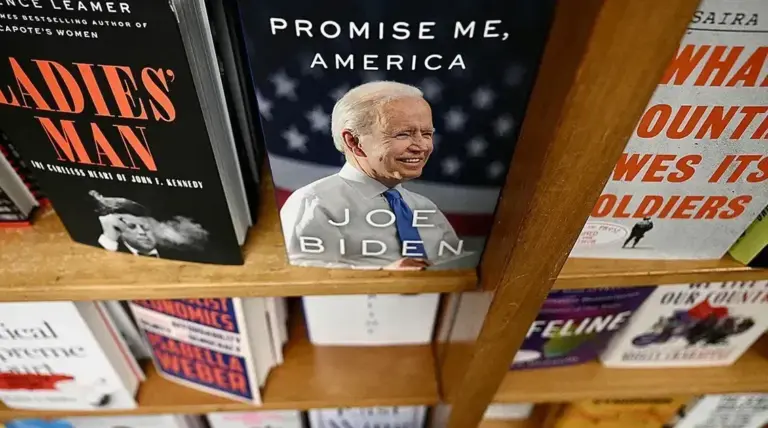
Released Nov. 17, “Promise Me, America” defends Biden’s presidency and his decision to seek re-election in 2024. The memoir drew a sharp verdict from The New Yorker writer Amy Davidson Sorkin, who said Biden remains “stubbornly in denial,” while other critics scrutinized the book’s account of Gaza and what it left out about racial equity. Sorkin’s criticism centers on Biden’s response to questions about his age and his continued insistence that he could have won.

“The true test of a book like this is whether its author will own his losses, too. Biden, for his part, does not,” added New York Times nonfiction critic Jennifer Szalai. “He is so preoccupied with burnishing his legacy that he gets awkward and defensive when addressing the two issues many readers will be most curious about: his handling of the war in Gaza, and his decision to run for a second term.”

“The news of the memoir, in short, is that there is no real news: Biden is as stubbornly in denial as ever, ” Sorkin wrote.

BIDEN ADDRESSES INFAMOUS ‘WE BEAT MEDICARE’ DEBATE MOMENT IN NEW MEMOIR

The dispute around Biden’s recollection of his tenure centers on two consequential decisions — his choice to seek another term and his administration’s policy toward Israel during the Gaza war.

In its review of the memoir, the Associated Press reported that Biden says he believed he was the best person to defeat President Donald Trump and that the Democratic primaries gave him no warning he was in trouble. Meanwhile, Sorkin and Szalai argued in their reviews that Biden gives too little weight to concerns about his age and fitness when recounting that period, despite acknowledging that his debate performance was poor.

“Biden’s voice gets passive; he portrays himself as the helpless victim of events,” Szalai wrote. “He gets similarly defensive when recounting the war in Gaza,” she added.

BIDEN ACCUSES PELOSI OF WORKING ‘FURIOUSLY’ BEHIND SCENES TO DERAIL HIS 2024 CAMPAIGN

Self-described socialist website Jacobin and other reviewers, including Sorkin and Szalai, criticized Biden’s accounting of his relationship with Israel and Israeli Prime Minister Benjamin Netanyahu, arguing he described it in the book as if it were much more adversarial than in actuality.

Szalai wrote that Biden gets “awkward and defensive” when addressing both Gaza and his decision to seek another term, and faulted him for how he described Israeli victims and suffering versus Palestinian victims and suffering. She specifically noted that Biden used names to identify Israeli victims but “no names” for Palestinian victims, while calling his language about Palestinian suffering “passive.”

“The only consistent position is inconsistency,” Israeli journalist and political commentator Amit Segal said of Biden’s account of Israel policy, calling it “devoid of doctrine or strategy. “

Separately, Semafor politics reporter David Weigel noted that Biden recounts signing 17 executive orders on his first day but does not mention his order establishing a government-wide approach to racial equity that mandated every executive agency to develop a DEI action plan. Weigel wrote that the word “equity” does not appear in the memoir once.

SIGN UP TO GET THE POLITICS NEWSLETTER

“Biden argues instead that ‘every one of my legislative accomplishments had justice baked in,’ including ‘equal access to vaccines,'” Weigel wrote.

“Gender gets the same treatment,” he continued. “Biden, who had called anti-transgender discrimination ‘the civil rights issue of our time,’ never uses the word ‘transgender’ in his memoir. He doesn’t mention his Day 1 executive order that banned discrimination on the basis of gender identity.”
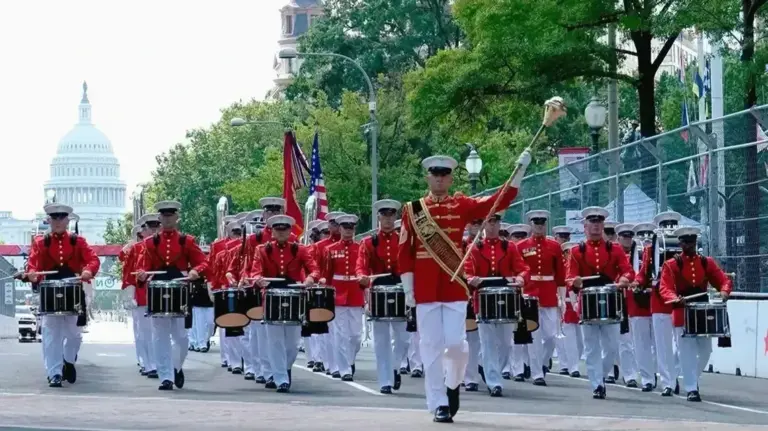
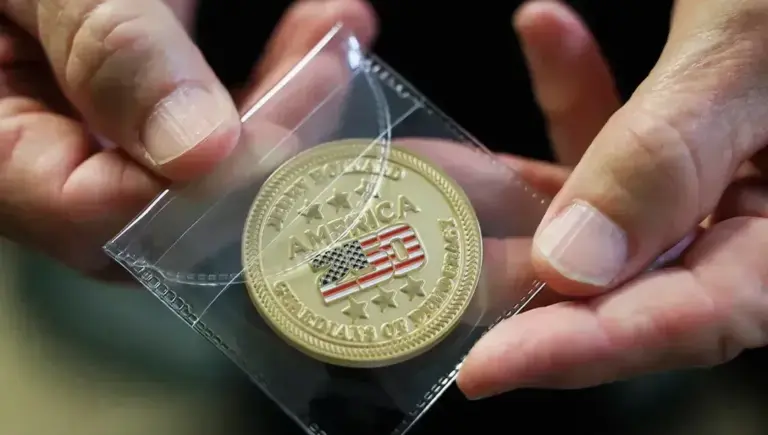
FIRST ON FOX: President Donald Trump and UFC President and CEO Dana White will announce six-figure personal contributions to one of America’s oldest musical institutions.

The President’s Own United States Marine Band played a key role in America’s 250th birthday celebrations and official state business this year — and a White House official tells Fox News Digital that the pair want to “express their appreciation for the band’s exceptional talent, professionalism and commitment to excellence.”

Trump and White are scheduled to announce Friday afternoon that they will each donate $100,000 of their own money, which will give each member of the band approximately $1,000. No taxpayer dollars will be used for the $200,000 gift.

The announcement will be made during the first-ever event on the new White House helipad on the South Lawn.

All 135 members of the band will attend alongside senior military leaders, including Secretary of War Pete Hegseth, Acting Navy Secretary Hung Cao and Commandant of the Marine Corps General Eric Smith.

TRUMP TAPS ‘TRUE WARRIOR’ HUNG CAO AS NAVY SECRETARY AFTER 4 MONTHS AS ACTING LEADER

“‘The President’s Own’ United States Marine Band proudly embodies American excellence and tradition – and their melodies have accompanied defining moments in our nation’s history,” White House spokeswoman Olivia Wales told Fox News Digital.

“President Trump will partner with Dana White to generously celebrate their elite musical talent and unwavering dedication, conveying his gratitude to some of our Nation’s finest musicians.”

The band performed at UFC 250 on the South Lawn of the White House in June, learning each fighter’s song in a first-of-its-kind event featuring seven fights.

It also performed at the White House in September when Chinese President Xi Jinping came to Washington for bilateral talks with Trump.

DANA WHITE SAYS ‘I DON’T GIVE A S—‘ IF TRUMP FRIENDSHIP COSTS HIM BUSINESS, 250TH EVENT WAS TRUMP’S IDEA

Band members serve as musical ambassadors for the Marine Corps at national and international venues.

The Marine Band is the oldest continuously active professional musical organization in the United States. It was founded by an act of Congress in 1798 and has served every U.S. president except for George Washington.

Thomas Jefferson gave the band its nickname, “The President’s Own.” It traveled with Abraham Lincoln to his 1863 Gettysburg address.

For the first time ever, the Marine Band has been nominated for a 2027 Grammy Award. Specifically, the nomination is for Best Orchestral Performance.

There are 10 active Marine Corps Fleet Bands. Members of those bands attend Marine Corps Recruit Training and earn the title United States Marine, and are held to the same standards of discipline, physical fitness and professionalism.

Jennifer Lagner won the election for Atlantic Beach city commissioner in Florida via a coin toss after successive recounts left her tied with her opponent, according to the New York Post.

Lagner and Lisa Herrold each sat at 3,162 votes after Duval County’s Supervisor of Elections Jerry Holland initiated both a manual and a machine recount.

The deadlock initiated the unique tiebreaker last week in which each candidate would have the chance to win two of three coin flips.

THREE HIGH SCHOOL FOOTBALL TEAMS HAVE THEIR PLAYOFF FATES DECIDED BY A MIDNIGHT PARKING LOT COIN TOSS

Under the city’s election rules, each candidate had a chance to call the coin’s landing. Herrold went first, calling heads, but the coin landed tails, giving Lagner a 1-0 lead.

Lagner went next, accurately predicting heads to win the contest, securing her election victory to become city commissioner.

“This shows how great and free our country is,” Lagner told a local news outlet.

“I am honored to have the opportunity to serve as your next City Commissioner for Seat 4,” she wrote on Facebook. “A coin toss was certainly an unexpected and unforgettable way to bring an election to a close! Thank you to Jerry Holland and his entire team for their work throughout this election process.”

“Jen and I have been a part of this community for years … It was meant to be … We’re going to look back at this and realize how unbelievable this was,” Herrold told the local outlet.

SOUTH DAKOTA MAYORAL CANDIDATES SEPARATED BY JUST TWO VOTES IN SHOCKINGLY CLOSE RACE, RECOUNT EXPECTED

Supervisor Holland added, “It’s remarkable, really … the meaning of that is every vote matters, you know, and one vote can make a difference.” 

Last Friday’s coin flip wasn’t the first time in Duval County history that an election tie was broken in an unconventional manner.

FLORIDA POLLING PLACES IN 7 COUNTIES ARE MOVING LOCATIONS DUE TO FLOODING

In the 2014 Neptune Beach City Council race, Rory Diamond and Richard Arthur broke their tie by choosing from a series of numbered ping pong balls. Arthur, who selected the ping pong ball with a higher number, won.

Lagner, Herrold and the Duval County’s Supervisor of Elections did not immediately respond to Fox News Digital’s request for further comment.

Reuters contributed to this report.

Anthropic has cemented its place in financial history after underwriters fully exercised their greenshoe overallotment, pushing the total funds raised in its initial public offering to a staggering 93.5 billion dollars. This final tally surpasses the previous record set by SpaceX earlier this year, marking one of the most ambitious entries into the public market ever seen. The company initially brought in 81.3 billion dollars on Wednesday before adding another 12.2 billion through the exercise of these additional share options.

The fundraising frenzy didn’t stop with the public float. In a concurrent move, Anthropic secured an additional 26 billion dollars through a private placement involving some of the biggest names in technology, including Nvidia, Google, Microsoft, and AMD. When combining the IPO and the private investment, the company’s total gross proceeds reached nearly 120 billion dollars, providing a massive war chest for the creators of the Claude AI models to continue their expansion against rivals like OpenAI.

Despite the sheer scale of the capital raise, the stock’s debut on the Nasdaq was characterized by significant volatility. While shares opened strong at 111.50 dollars, they dipped toward 97 dollars by Thursday’s close and faced further pressure on Friday amid a wider sell-off across the tech sector. Investors appeared jittery not only due to broader economic concerns regarding interest rates but also following leadership turmoil at Nvidia and political headwinds stemming from recent midterm elections.

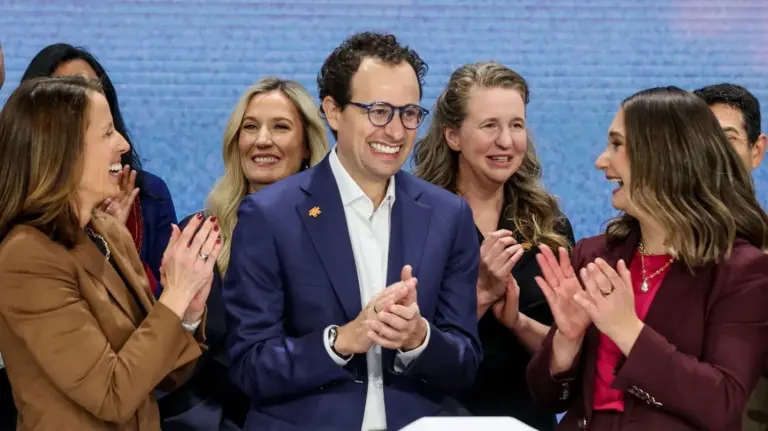
For founders Dario and Daniela Amodei, who left OpenAI years ago to start their own venture, the milestone is viewed as a means to an end rather than a victory lap. Celebrating alongside Nasdaq CEO Adena Friedman in New York City, Daniela Amodei told reporters that while the IPO is an incredible moment for their mission, it represents just one stop on a much longer journey toward advancing artificial intelligence safely and effectively.

The U.S. government is preparing to reveal the exact trigger of a massive technical failure that paralyzed American skies last month, bringing thousands of flights to a standstill. FAA Administrator Bryan Bedford indicated that investigators are nearly finished pinpointing the root cause of the router outage that led to only the third nationwide ground stop in history. Transportation Secretary Sean Duffy is expected to present these findings in a formal press conference as early as this Friday.

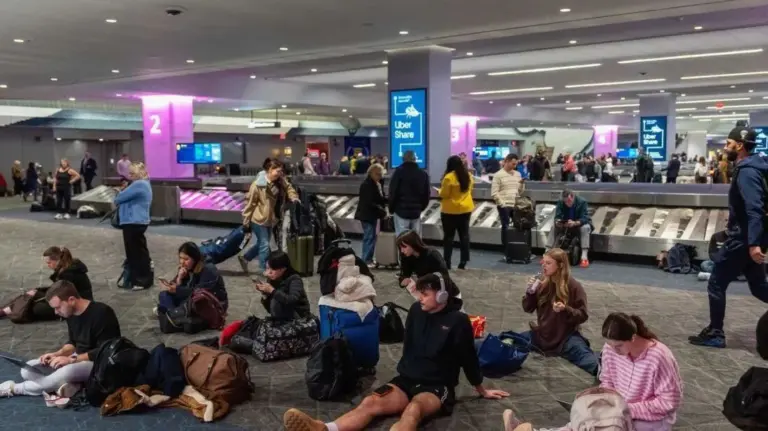
The chaos began on November 13 when a sudden flood of data overwhelmed the FAA’s telecommunications infrastructure, sending roughly one thousand connection attempts through the system every few seconds. This surge created critical instability for radar feeds and communication lines at 17 of the 22 primary air route traffic control centers across the country. The resulting gridlock lasted over four hours but left a lasting wake of disruption, canceling more than twelve thousand flights on Friday alone and leaving upwards of one million passengers stranded throughout the weekend.

Preliminary evidence suggests the malfunction originated from sites in Texas and Arkansas, specifically linked to a hardware upgrade performed by private contractor L3Harris. While attempting to replace twenty five year old Cisco routers with newer Juniper Networks models, the process apparently triggered the systemic collapse. Following the event, the FAA paused all further installations and reverted several sites back to their legacy equipment to ensure stability while they investigate how a localized update could have such a catastrophic global effect.

Beyond the technical glitch, the incident has ignited a fierce debate regarding agency oversight and risk management. Representatives from the Professional Aviation Safety Specialists union claim that FAA technicians were largely excluded from these upgrades, alleging that contractors operated without direct supervision. Former agency insiders suggest that performing such high stakes work during peak operational hours was a fundamental lapse in judgment, noting that any task with such a massive potential blast radius should have been handled overnight under strict mitigation protocols to protect millions of travelers.

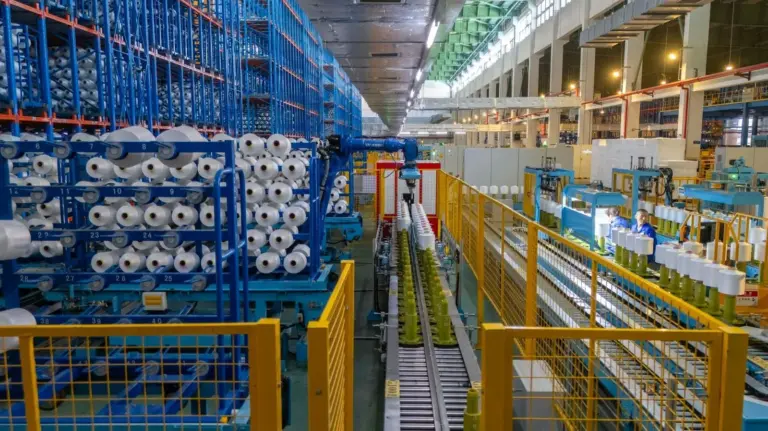
For years, the fashion world operated on a cycle of speed and affordability, driven by the rise of fast fashion giants and later ultra-fast retailers. This era saw a dramatic shift in how our clothes are made, with natural cotton being steadily replaced by synthetic blends like polyester and nylon. While these plastics kept prices low and styles rotating weekly, a tipping point has arrived. Shoppers are no longer willing to accept flimsy fabrics, especially as the cost of living climbs and clothing prices hit record highs following the pandemic.

Recent data reveals a growing frustration among consumers who feel they are paying premium prices for subpar materials. A survey by consulting firm AlixPartners suggests that people are scrutinizing garment labels more than ever, viewing synthetic fabrics as a sign of poor quality rather than convenience. For younger generations like Gen Z, mentioning polyester has almost become an insult, synonymous with something fake or disposable. Beyond the tactile experience, there is a rising tide of concern regarding environmental impact and the leaching of microplastics into the water supply every time a synthetic shirt enters the wash.

This push for quality comes at a complicated time for manufacturers. Global instability, including tariffs and conflicts affecting oil prices—the base ingredient for synthetics—has squeezed profit margins. Many brands attempted to offset these costs by shifting production from high-skill hubs in China to lower-cost regions like Bangladesh and Cambodia. However, this transition often resulted in a noticeable dip in craftsmanship. Experts suggest that brands may now find themselves in a precarious position where cutting corners on fabric leads to unsold inventory and heavy discounts.

Ultimately, the pendulum is swinging back toward value defined by longevity rather than quantity. While athletic wear continues to rely on performance synthetics for moisture-wicking properties, everyday apparel is seeing a resurgence of interest in natural fibers. As buyers tighten their budgets across food and housing, they are choosing to invest in fewer pieces that actually last. Retailers are discovering that investing in genuine quality might be the only way to maintain loyalty from a consumer base that is tired of spending more for less.

The Nasdaq Composite has officially slipped into correction territory for the third time in 2026, leaving many investors feeling uneasy as the tech heavy index closes more than ten percent below its October peak. Even more concerning is the Nasdaq 100, which has plummeted roughly fifteen percent from its recent highs. While seeing three separate dips of this magnitude in a single calendar year feels abnormal, history suggests that these moments of volatility are often mere speed bumps rather than signs of a collapsing bull market.

A look back at the current year reveals a recurring pattern of sharp drops followed by rapid recoveries. In March, geopolitical tensions and surging oil prices triggered a thirteen percent slide, yet the index surged thirty one percent by June to reach new heights. A similar sequence happened in July when a chip stock selloff wiped out ten percent of gains, only for the market to bounce back to another record high by early October. In both instances, those who panicked and sold their positions simply locked in losses and missed out on the subsequent rebounds.

This latest downturn is fueled by shifting concerns over artificial intelligence spending and uncertainty surrounding leadership transitions at major tech firms, compounded by expectations that the Federal Reserve will hike interest rates in December. Although there is no guarantee that this dip will mirror previous ones, the overarching lesson remains that volatility is essentially the cost of admission for investing in growth stocks. Long term success usually belongs to those who plan for these swings before they happen rather than reacting emotionally once they arrive.

Ultimately, navigating such turbulence requires a disciplined approach focused on diversification and liquidity. Experts suggest keeping funds needed for near term expenses outside of the equity market and maintaining steady contributions regardless of daily headlines. By viewing these corrections as tests of patience instead of signals of an impending crash, investors can avoid the common mistake of selling at the bottom and position themselves to benefit when the next rally begins.

The euphoric climb of artificial intelligence stocks has hit a turbulent patch, leaving many investors wondering if the sector has finally reached its limit. A wave of anxiety swept through the Nasdaq recently as several tech giants faced intense scrutiny over whether the massive capital expenditures required to fuel AI growth are actually sustainable. This skepticism weighed heavily on industry leaders like Alphabet, Meta, Amazon, and Microsoft, whose recent earnings reports failed to fully quiet fears about the long term return on investment for these expensive technologies.

Adding to the volatility is a growing sense of political and social friction surrounding the physical infrastructure of the AI revolution. Recent midterm indicators suggest an uptick in public opposition toward the construction of sprawling data centers, which often strain local power grids and water supplies. These grassroots concerns have translated into market nerves, suggesting that regulatory hurdles could slow down the rapid deployment of hardware necessary to keep the momentum going.

The situation grew even more chaotic with sudden turmoil surrounding Nvidia, the primary provider of the chips that power most modern AI systems. As leadership disputes and geopolitical tensions created fresh uncertainty around the company’s trajectory, shareholders reacted sharply, dragging down broader indices. While some government officials have stepped in to offer support for key commerce figures amidst the fallout, the immediate effect was a bruising session for those betting heavily on a seamless transition into an AI driven economy.