Archive

November 11, 2026

Browsing

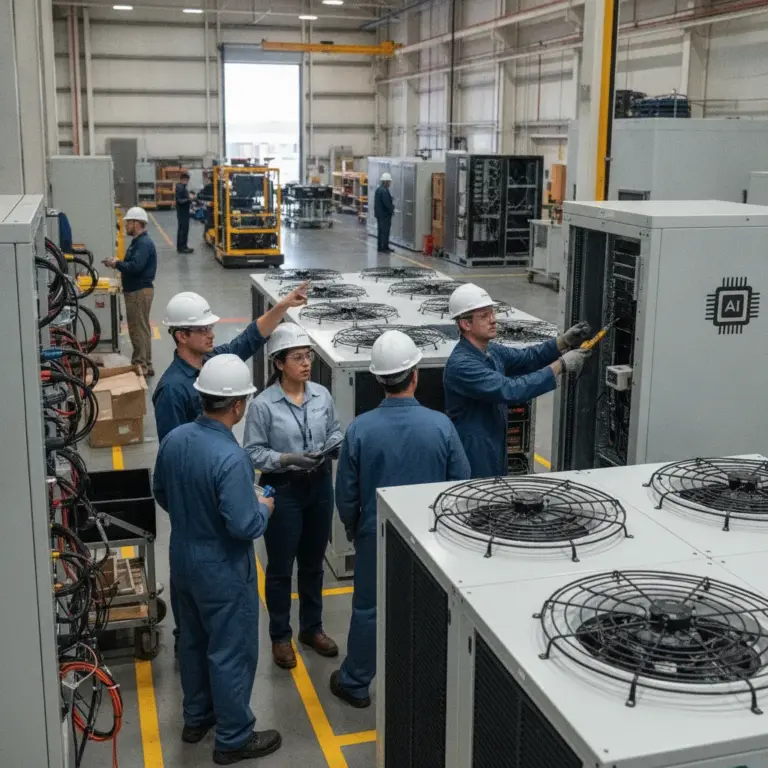
Shares of AAON surged on Tuesday following a powerhouse financial report that exceeded analyst expectations across the board. The Tulsa based company delivered a massive earnings beat and raised its future guidance, marking its second consecutive quarter of triple digit profit growth. Investors reacted enthusiastically to the news, sending the stock higher as the firm continues to capitalize on the rapidly expanding digital landscape.

The primary driver behind this explosive growth is the companys BASX segment, which focuses on specialized thermal management systems tailored for artificial intelligence data centers. As AI workloads increase, the need for advanced cooling solutions has skyrocketed, leading to an 84.1 percent surge in sales for this critical division. This performance underscores a broader industry trend where hardware supporting AI processing is seeing unprecedented demand.

Market analysts note that while the stock has already rallied roughly 70 percent since the start of the year, current momentum suggests there may still be room for expansion. With strong outlooks for the third quarter and a proven ability to scale its infrastructure offerings, AAON has positioned itself as a key player in the physical backbone of the AI revolution.

Investors planning their moves for the upcoming holiday should keep in mind that the U.S. stock market will stay open on Wednesday, November 11, despite the observance of Veterans Day. While many people expect a full shutdown during federal holidays, equity traders will find the markets operating on their normal schedule. This stands in contrast to other essential services like post offices and banks, which will be shuttered for the day.

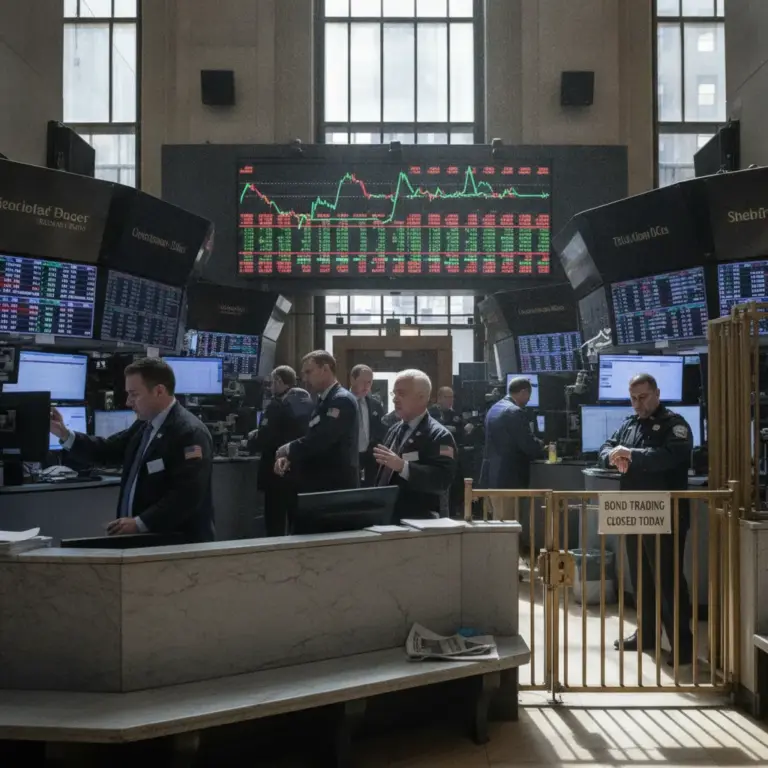
However, those dealing in fixed income should take note that the U.S. bond market will be closed. According to the Securities Industry and Financial Markets Association, bond trading will pause for the holiday and resume regular business hours on Thursday, November 12. For most consumers, daily life will continue as usual since grocery stores and major retailers typically remain open, with many restaurant chains providing special discounts or free meals to honor veterans and active duty service members.

Veterans Day serves as a solemn reminder of the end of World War I, marking the anniversary of the 1918 armistice that ceased hostilities between Germany and the Allied nations. Originally known as Armistice Day when it became a federal holiday in 1938, it was renamed Veterans Day by Congress in 1954 under President Dwight D. Eisenhower. The day remains dedicated to honoring the patriotism and sacrifice of all who have served in the United States armed forces.

Looking ahead at the remainder of the year, investors have two more scheduled closures to track before 2027 begins. The stock market will close once more for Thanksgiving on Thursday, November 26, and again for Christmas on Friday, December 25.

Microsoft shares took a hit on Tuesday as investors reacted to a bold move from Anthropic, which just released a series of AI tools designed to take on the dominance of Microsoft Office. The challenger introduced Claude Sheets, Claude Whiteboards, and Claude Data, effectively expanding its capabilities beyond simple document creation into the realms of spreadsheets and interactive dashboards. By offering these integrated productivity features, Anthropic is positioning itself as a direct alternative to the core software ecosystem that millions of businesses rely on daily.

This development strikes at one of Microsoft’s most profitable nerves. According to the company’s latest investor communications, the Microsoft 365 segment remains a massive driver of growth, seeing a sixteen percent increase in revenue over the last fiscal year through its blend of commercial products and cloud services. For shareholders, any credible threat to this cash cow creates immediate anxiety, especially as generative AI continues to rewrite the rules of how office work gets done.

The timing could not be worse for Microsoft’s valuation. The dip comes amid a period of general instability across the artificial intelligence sector, where tech stocks have already been reeling from post-election political uncertainty regarding data center expansion. Investors are also grappling with stubborn inflation data and leadership distractions at Nvidia, creating a volatile environment where even small shifts in competitive advantage can trigger significant market swings.

While established giants feel the heat, Anthropic seems emboldened by the chaos. The company is moving forward with plans for an initial public offering and began its roadshow this week, aiming for a pricing date of November 18. This push toward the public market suggests that while traditional software companies fear being disrupted by AI, newcomers like Anthropic see the current turmoil as an opportunity to capture market share from legacy incumbents.

Microsoft shares took a noticeable hit today as investors reacted to growing competition in the generative artificial intelligence space. The dip comes amid rising concerns that Anthropic, a primary competitor in the LLM arena, is beginning to carve out a serious challenge to the ubiquitous Office software suite. While Microsoft has spent billions integrating OpenAI technology into Word and Excel, market analysts suggest that users are increasingly open to alternative ecosystems that might offer more specialized or efficient workflows.

The shift reflects a broader anxiety among shareholders who fear that the early lead held by Microsoft Copilot may be narrowing. Anthropic has been aggressively positioning its tools as sophisticated alternatives capable of handling complex enterprise tasks with high precision. This perceived threat suggests that the moat surrounding the productivity giant is not as impenetrable as once thought, leading some traders to trim their positions in anticipation of a more fragmented software market.

Despite the current volatility, many industry experts argue that this is simply part of a healthy correction within a hyper growth sector. They point out that Microsoft still possesses an unmatched distribution network through its existing corporate contracts globally. However, the immediate reaction from Wall Street indicates that even a slight tremor in confidence regarding long term dominance can trigger significant price swings when stakes involve the future of office computing.

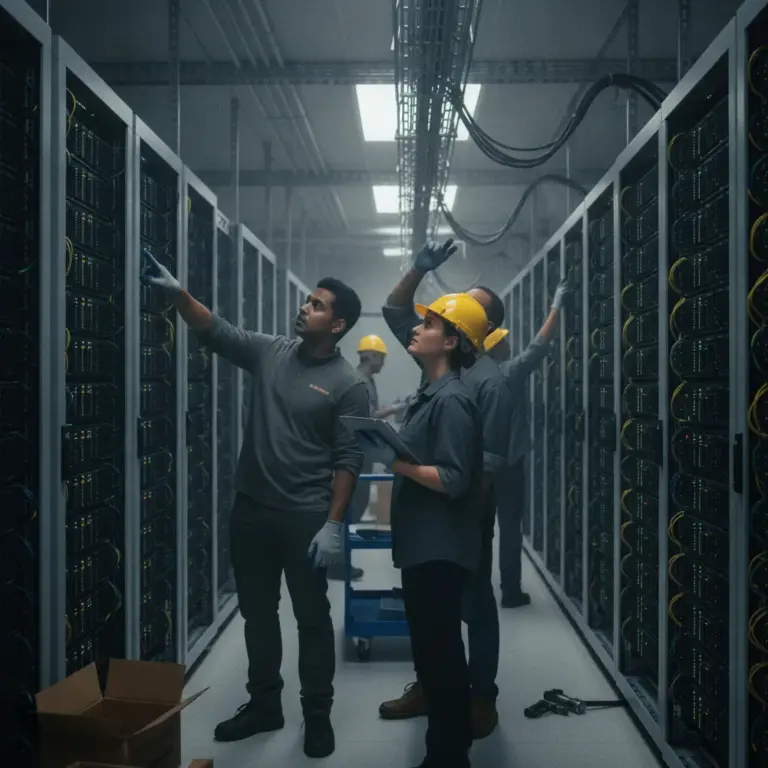
CoreWeave has emerged as a standout performer in the competitive landscape of artificial intelligence infrastructure, posting earnings and revenue figures that comfortably exceeded analyst expectations. The specialized cloud provider continues to capitalize on the surging demand for high performance computing power, proving that its strategic focus on GPU acceleration is paying off as enterprises scramble to build out their generative AI capabilities.

Beyond the top line growth, investors are finding reason for optimism in the company’s operational efficiency. Recent financial disclosures reveal that CoreWeave’s cash burn was significantly lower than previously anticipated, suggesting a more sustainable path toward long term profitability than critics had predicted. This disciplined approach to spending comes at a critical time when many venture backed firms are struggling to balance aggressive expansion with fiscal restraint.

The combination of robust revenue streams and tighter cost management positions CoreWeave favorably within the broader tech ecosystem. As the race for computational dominance intensifies among global software giants, CoreWeave’s ability to scale its operations while maintaining better than expected margins makes it a key player to watch in the evolving AI economy.

Major silver producers have managed to secure strong third quarter profits despite a volatile market that saw the metal lose nearly half its value since a peak in January. While the price drop has created a sense of uncertainty, many miners are still benefiting from a significant pricing cushion, selling their silver for 60 to 80 percent more than they did last year. This windfall allowed several companies to double or even triple their net earnings, though analysts warn that this financial buffer is beginning to erode as macroeconomic pressures mount.

The industry is facing a challenging cocktail of headwinds, ranging from central bank policy to shifting industrial demands. A recent interest rate hike by the US Federal Reserve has put broad pressure on precious metals, while the solar energy sector is starting to pivot away from expensive materials. Leading Chinese solar panel manufacturers have begun replacing silver with copper, a trend that could lead to a nearly 20 percent drop in silver usage for solar power this year according to the Silver Institute.

Operational struggles are adding further complexity for the world’s top miners. Pan American Silver saw its net earnings jump to 357 million dollars thanks to efficient silver mine management, but it was forced to slash gold forecasts due to seismic issues and ventilation failures at its Jacobina mine in Brazil. Similarly, Fresnillo reported an 11.6 percent dip in attributable silver output as declining ore grades made extraction more difficult at key sites like Saucito and Juanicipio.

Despite these hurdles, some firms found bright spots in their portfolios. Hecla Mining Company recorded record free cash flow of 151 million dollars, largely driven by exceptional performance at its Greens Creek operation in Alaska. However, Hecla must now scale back activities at its Keno Hill mine until permitting issues regarding waste and water treatment are resolved toward the end of the decade. As global mine output remains flat and deficits loom into 2026, the industry finds itself balancing current profitability against a tightening supply chain and unstable demand.

The Canadian government is doubling down on its commitment to the mining sector with a series of strategic tax extensions aimed at fueling early stage discovery. Under the latest proposals in Budget 2026, the federal government intends to keep both the general mineral exploration tax credit and the specialized critical mineral version active through March 2032. This move is expected to inject nearly one billion dollars into the industry over five years, while also adding antimony to the list of prioritized critical minerals to attract further investment.

While these measures provide a necessary lifeline for junior explorers who rely heavily on flow through shares to secure seed money, some industry leaders argue that the support stops too soon. The Prospectors and Developers Association of Canada welcomed the extension but noted they had pushed for a much longer own term commitment to provide true stability. Meanwhile, critics like Todd Stone of the Association for Mineral Exploration warn that without expanding existing expense credits to cover feasibility and engineering studies, many promising finds will never actually become working mines.

To bridge this gap between discovery and production, Ottawa is pairing tax breaks with hundreds of millions in direct spending. The updated Canadian Critical Minerals Strategy will receive significant funding beginning in late 2027, focusing on processing technology and geoscience research, alongside renewed support for mapping efforts in Northern Canada via the GeoNorth program. There is also a clear push toward sustainability, with clean energy credits being extended well into 2040 to help mining operations reduce their carbon footprints.

Despite these incentives, there are notable omissions that may frustrate some investors. Specifically, mining firms have been left out of a new capital gains exemption designed to spur growth in other Canadian businesses. Nevertheless, the government remains optimistic about the sector’s trajectory, pointing to over forty four billion dollars in critical minerals projects currently under construction or awaiting final assessment as evidence that Canada is poised to strengthen its role in the global supply chain.

At this year’s New Orleans Investment Conference, the conversation surrounding gold and silver shifted from celebrating wins to questioning the timing of the current market cycle. After a period of early peaks followed by an eight month slide, investors are left wondering if they are witnessing a temporary pause in a larger bull market or if the best opportunities have already passed. With silver retreating significantly and junior mining shares under pressure from year end tax loss selling, the atmosphere among traders has become cautious yet curious.

A panel of industry experts moderated by Jefferson Financial CEO Brien Lundin sought to quantify this uncertainty using a baseball analogy, asking exactly what inning the resource sector is currently in. While opinions varied on the specific number, there was a general consensus that the game is far from over. Some analysts suggested they are only in the second or third inning, viewing the recent dip as a healthy correction before another leg up. Others took a broader perspective, suggesting we are actually in the middle of a ten year supercycle driven by geopolitical instability and chronic supply shortages.

Despite the optimism regarding long term fundamentals like mineral sovereignty and hard asset demand, several panelists warned of potential rain delays. Concerns range from macroeconomic volatility and stubborn interest rates to environmental disruptions like Super El Nino, which could hinder production in key regions like Peru and Chile. There is also a lingering fear that a sudden collapse in the artificial intelligence bubble could trigger a wider market panic, dragging down commodities along with everything else in a general flight to liquidity.

Ultimately, the group viewed these risks as hurdles rather than dead ends. Even those who believe an AI crash is inevitable suggest such an event might clear the air and pave the way for a stronger rebound supported by Federal Reserve intervention. While some participants remain skeptical about an immediate reversal, most agree that compared to previous historical cycles, resources are still positioned for significant growth once the current clouds lift.

A ambitious attempt to bring Wall Street into the era of twenty four hour digital trading has hit a massive wall of corporate resistance. More than sixty major US listed companies have formally opted out of being featured on OKXICE, a new tokenized stock platform created through a partnership between crypto exchange OKX and Intercontinental Exchange, the parent company of the New York Stock Exchange. While the venture promised traders constant access to digital tokens tracking some of the world’s most valuable stocks, nearly every single one of the Magnificent Seven tech giants along with banking titans like JPMorgan and Goldman Sachs have slammed the door shut.

The mass exodus was made possible by a recent SEC rule known as the Innovation Exemption, which permits tokenized stocks to trade on non traditional venues provided they notify the affected companies. This gave corporations a thirty day window to object, and they did so in droves. As of early November, 67 firms have signed opt out notices, leaving only a handful of crypto linked entities like Coinbase and MicroStrategy willing to participate. Even Nasdaq chose to exclude its own shares from the platform, signaling a deep distrust among industry leaders regarding this specific implementation of blockchain technology.

At the heart of the conflict is a legal distinction between true ownership and synthetic replicas. Experts note that while these tokens may mirror a stock’s price movements on a screen, they often act as wrappers rather than actual shares. Unlike official equity, these tokens typically strip away essential shareholder rights such as voting power and guaranteed dividends, creating a layer of legal uncertainty that institutional investors generally find intolerable. Because these assets are managed by third party platforms rather than the companies themselves, any technical failure or hack could leave investors stranded without any direct recourse against the corporation whose stock they thought they owned.

Industry observers suggest this backlash isn’t necessarily a war on blockchain technology itself, but rather a reaction to a lack of corporate control. Many executives argue that thirty days is simply not enough time to vet the risks associated with custody and pricing in an unregulated environment. For many boards, the reputational risk of being tied to a failed digital experiment outweighs any potential benefit of increased liquidity. Until tokenized shares can function identically to traditional shares in terms of legality and governance, it appears corporate America prefers the safety of traditional exchanges over the promise of perpetual trading.

House Judiciary Committee Chairman Jim Jordan, R-Ohio, will be President Donald Trump’s top defender in Congress next year after winning a closed-door election for minority leader on Tuesday, sources told Fox News Digital.

Jordan defeated Majority Leader Steve Scalise, R-La., currently the House of Representatives’ No. 2 leader, in what’s believed to be a narrow race. Jordan received 106 votes to Scalise’s 73, sources in the room told Fox News Digital. 

Fox News Digital heard loud, sustained applause from outside in the hallway when Jordan’s win became official.

House Majority Whip Tom Emmer, R-Minn., also handily defeated Republican Study Committee Chairman August Pfluger, R-Texas, for the No. 2 leadership job of minority whip. The final vote count was 103 to 76, per sources.

Sources said House GOP Conference Chairwoman Lisa McClain, R-Mich., meanwhile, also survived a challenge and kept her job.

JORDAN EMERGES AS POTENTIAL NEXT GOP LEADER IF DEMS SEIZE HOUSE

Republicans huddled for a candidate forum on Tuesday morning where all GOP lawmakers running for leadership positions were peppered with questions by their colleagues.

Sources inside the room for their Tuesday morning leadership forum said Scalise and Jordan both pitched themselves as the best person to unify the conference, but also signaled they would give a wide berth for lawmakers to “vote their districts,” as one person put it.

The question-and-answer session for House Republicans before electing their leader was largely cordial, Fox News Digital was told. Several people inquired about how both prospective leaders would unify the conference after their midterm losses and how they would handle leaks to journalists, Fox News Digital was told.

Jordan himself told Fox News Digital he believed the forum went well but declined to go further, stating he does not divulge details of closed-door meetings.

The voting body consisted of incumbent House Republicans and GOP members-elect who are projected to win their races from last week’s midterms. Votes were cast via secret ballot, meaning none of those in the room had to reveal who they chose.

AMERICA SAW THE BLUE WAVE COMING — BUT DRASTICALLY UNDERESTIMATED THE EXTENT OF THE DEM TSUNAMI

And the results on Tuesday show the House GOP was hungry for change. Jordan’s victory comes fresh off the back of a historic loss for Republicans across both state and federal races.

The magnitude of the losses forced Speaker Mike Johnson, R-La., to announce he was stepping aside and not seeking another leadership position for the next two years.

“I personally like Steve, but he’s been in leadership since before I was in Congress. And Jim Jordan, while he’s a leader in Congress, he hasn’t been part of the leadership team. He basically rose through the ranks because he was super effective,” Rep. Warren Davidson, R-Ohio, told Fox News Digital.

Rep. Scott Fitzgerald, R-Wis., another Jordan ally, told Fox News Digital the Ohio Republican “understands what we’re up against,” adding, “His ability to communicate is really kind of unrivaled by anybody else in the House right now.”

Jordan has long been among the House GOP’s brightest stars, rapidly gaining influence over the last decade as one of Trump’s most vocal supporters in Washington.

He will now be the go-to defender as Democrats ready a barrage of investigations targeting Trump’s Cabinet, family and business interests.