Archive

November 29, 2026

Browsing

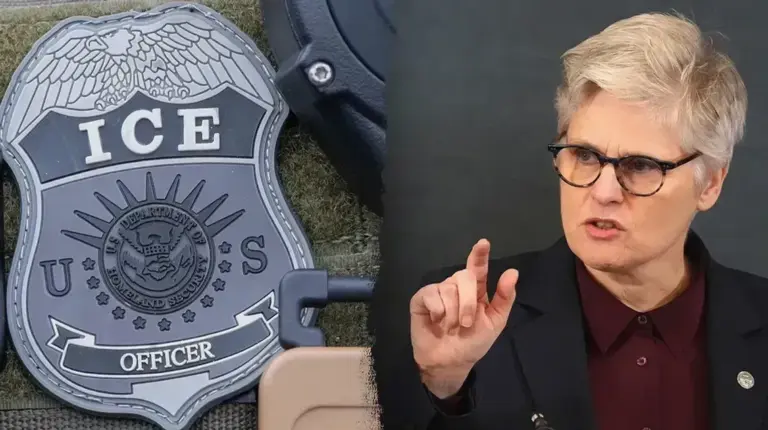
An Immigration and Customs Enforcement (ICE) agent faces up to six years in prison on an assault charge following a Minnesota highway encounter in which no one was injured.

Gregory Morgan’s attorneys warn the case could have far-reaching consequences, potentially emboldening state and local prosecutors nationwide to bring criminal charges against federal officers carrying out President Donald Trump’s immigration crackdown.

At stake in Morgan’s legal fight is the extent to which federal protections shield officers from state and local criminal prosecution for actions taken in their official capacity.

“We are the tip of the spear,” Rachel Paulose, a former U.S. attorney and managing attorney at the Upper Midwest Law Center, which is helping Morgan fight to keep his case in federal court, told Fox News Digital. “And so what happens here is going to impact what woke, politically motivated district attorneys around the country are doing to persecute law enforcement agents who are simply doing their job and carrying out the orders of an administration with which they disagree.”

Morgan was charged on April 16 with two counts of second-degree assault with a dangerous weapon stemming from a Feb. 5 highway encounter during Operation Metro Surge.

15 ANTIFA RADICALS INDICTED, 12 ARRESTED IN SWEEPING FEDERAL PROBE INTO MINNEAPOLIS ANTI-ICE OPERATIONS

Morgan’s attorneys contend he was returning to base under direct orders after withdrawing from a hostile neighborhood where a protester had threatened to kill him.

Unfamiliar with Minnesota roads, Morgan mistakenly drove along the highway shoulder, according to Paulose. The driver of a Cadillac then allegedly swerved into his path twice, braking sharply the second time and bringing Morgan within inches of a collision, according to defense court filings.

Fearing for his safety and that of his fellow ICE agent, Morgan yelled, “Police, back off,” and displayed his firearm in what his attorneys described as a “low-ready” position.

Prosecutors, however, alleged Morgan deliberately drove along the shoulder to bypass rush-hour traffic and pointed his firearm at the Cadillac’s occupants after the driver attempted to slow him down.

“The defendant attempts to transform his moment of road rage—committed on a state highway against Minnesotan victims—into a federal enforcement action,” prosecutors wrote in a June filing.

In a Nov. 19 filing, Morgan’s attorneys accused Hennepin County prosecutors of relying on an outdated legal standard in their push to return the case to state court, arguing that the conduct underlying the charges need to just be related to his federal duties, not be explicitly required by them.

DOJ ESCALATES BLUE-STATE ICE STANDOFF AFTER STATES REFUSE KEY FEDERAL REQUEST

Morgan’s defense rests in part on a federal law with roots dating back to the War of 1812, which allows federal officers facing state criminal charges to move their cases into federal court if the alleged conduct is sufficiently connected to their official duties and they have a plausible federal defense.

Paulose said the law was intended “to insulate federal officers from vindictive prosecutions by local and state officials who simply disagree with federal policy.”

Prosecutors maintained Morgan was no longer actively enforcing immigration law during the encounter, but his attorneys argue his authority to protect himself and his fellow agent did not end when he left an enforcement site.

Morgan’s attorneys argued prosecutors are relying on a more restrictive legal standard that Congress abandoned in 2011 when it expanded the scope of the law.

“Nothing in the State’s briefs explains why the federal authority to protect federal officers disappears when the officer is on a highway rather than at a target address,” Morgan’s attorneys wrote.

Both occupants of the Cadillac invoked their Fifth Amendment rights and did not testify during an evidentiary hearing, according to Morgan’s latest filing. Morgan, meanwhile, testified and was subjected to cross-examination.

The defense also challenged prosecutors’ assertion that the Cadillac driver was unaware Morgan was an ICE agent, citing the driver’s statement to investigators that he “got the ICE vibe from him at first.”

The driver also reportedly acknowledged making the “not so bright decision to try to stop” Morgan’s vehicle.

While prosecutors maintained any threat had subsided before Morgan displayed his gun, his attorneys argued Morgan had no way of knowing whether the driver would strike again.

Ryan Pacyga, Morgan’s defense attorney, also faulted ICE for deploying agents in ordinary rental vehicles without emergency lights or sirens, arguing Morgan had limited means of identifying himself as a law enforcement officer.

“He didn’t want this guy hurt. He didn’t want to get hurt. He had his partner in the car with him,” Pacyga told Fox News Digital.

Morgan’s attorneys have seized on Hennepin County Attorney Mary Moriarty’s own rhetoric, pointing to her characterization of Operation Metro Surge as an “occupation,” to bolster their argument that his case belongs in federal court

“A prosecutor’s hostility is the most direct form that prejudice can take, because the prosecutor decides whom to charge,” Morgan’s attorneys wrote.

Paulose also took aim at prosecutors’ decision to issue a nationwide arrest warrant for Morgan despite his willingness to surrender peacefully.

“I think it underscores that the purpose of this prosecution is not about justice, it’s about political grandstanding,” Paulose said.

Pacyga characterized the nationwide warrant as a “stunt,” questioning why prosecutors waited 10 weeks to charge Morgan despite subsequently arguing he posed a danger warranting $100,000 bail.

“If that’s the argument, you wouldn’t sit on it for two months before you charge it, right?” Pacyga said.

Keeping the case in federal court would not strip Moriarty of her authority to prosecute Morgan but would put his fate in the hands of a federal judge, who could dismiss the charges on constitutional immunity grounds.

Should U.S. District Judge Nancy Brasel keep the prosecution in federal court, Morgan’s attorneys intend to seek dismissal under the Constitution’s Supremacy Clause, which can shield federal officers from state criminal liability for actions authorized by federal law and reasonably necessary to carry out their duties.

Paulose also pointed to the independence of federal judges, who receive lifetime appointments, while Pacyga argued that drawing jurors from a larger swath of Minnesota would help insulate Morgan from local hostility toward ICE.

Pacyga said a federal trial would draw prospective jurors from rural and suburban communities across the southern two-thirds of Minnesota, where he believes attitudes toward immigration enforcement are more balanced.

“I’m a lifelong resident of the Twin Cities, and I will tell you that the majority of people in Hennepin County are anti-ICE,” Pacyga said.

But if the case is handed off to state court, Morgan’s attorneys are prepared to take the fight to the Eighth Circuit.

Pacyga said the legal battle is already attracting attention beyond Minnesota.

DOJ SENDS GRAND JURY SUBPOENAS TO PHILADELPHIA DA KRASNER AFTER JUDGE’S REFERRAL, SOURCES SAY

“There are a lot of different cases around the nation that are watching this case,” Pacyga said. “This literally is at the tip of the spear.”

For Paulose, the case raises the question about whether law enforcement officers should bear the consequences of political opposition to the administration they serve.

“Unpopular initiatives can be defeated at the ballot box, unpopular politicians can be voted out by the people, but law enforcement officers who are simply doing their job should not and cannot be targeted, persecuted, and prosecuted under our Constitution,” Paulose said.

Even before standing trial, Morgan is feeling the financial repercussions of his prosecution.

The agent, a father who shares custody of his daughter, has already lost tens of thousands of dollars in income after being reassigned to duties that prevent him from working overtime, according to Pacyga.

A felony conviction could cost Morgan his law enforcement career, while consecutive three-year sentences could put him behind bars for six years, Pacyga said.

“He is caught in the middle of a huge political battle that he has nothing to do with. And it’s really disheartening,” Pacyga said.

First lady Melania Trump urged 22 Democratic governors on Saturday to back her plan to open savings accounts for children in foster care, saying every Republican governor and just two Democrats had pledged support.

“Millions of Americans live in states that have not committed to opening Fostering the Future Accounts,” she wrote in a post on X. “All Republican Governors have pledged their support. Only Democratic Governors Josh Green of Hawaii and Jared Polis of Colorado have joined in the ‘Blue’ States.”

“A foster child’s financial future should never depend on geography or politics,” she continued. “America’s foster children deserve the support of all 50 Governors.”

‘HE’S SO THIRSTY’: NEWSOM’S ‘ENTHUSIASTIC’ PRAISE FOR TRUMP POLICY TURNS HEADS

MELANIA TRUMP CHALLENGES CONGRESS TO MAKE HER FOSTER CARE EXECUTIVE ORDER PERMANENT LAW: ‘THEIR BIRTHRIGHT’

Melania initially launched her Fostering the Future initiative as a scholarship program under the umbrella of her Be Best campaign in 2021.

She expanded the effort into a federal and global initiative in 2025, announcing in September of that year a global coalition focused on integrating childhood education with emerging technologies like AI and robotics.

In November 2025, President Donald Trump signed the Fostering the Future for American Children and Families executive order to modernize the childhood welfare system and establish cross-agency partnerships to further cooperation in favor of the first lady’s initiative.

In June, Melania Trump announced the launch of Fostering the Future Accounts.

The move allows states to establish for children in foster care federally backed, tax-advantaged custodial accounts that convert into traditional IRAs when the child turns 18.

WHO WANTS THEIR CHILD TO BE A MILLIONAIRE? TRUMP HAS GIVEN YOU THAT CHANCE

“Fostering the Future Accounts give foster children the same chance for asset ownership and long-term wealth building as every other American child. By investing in our foster youth now, we help strengthen America’s workforce, communities, and economic future,” the first lady said during the announcement.

With 26 states led by GOP governors, there are still 22 states that haven’t indicated they will move to utilize the first lady-led program.

In her Saturday statement she urged the remaining holdouts to put “AMERICAN CHILDREN ABOVE POLITICS.”

Fox News Digital contacted the first lady’s office for further comment.

Texas Attorney General-elect Nathan Johnson said this week he won’t defend a law requiring public schools across the state to display the Ten Commandments as the U.S. Supreme Court weighs whether to review the case.

In an interview with The Dallas Morning News, Johnson, the first Democrat to be elected Texas attorney general in nearly three decades, called the law “unconstitutional,” marking a distinct split with outgoing Republican Attorney General Ken Paxton, who championed the bill.

“My jurisprudential opinion is that the law is unconstitutional,” Johnson said.

“The court will have the ultimate say as to what’s constitutional and what is not, but I’m the one who says what the state’s position is, and it will not be the position the state has previously taken.”

TEXAS DEM JAMES TALARICO RIPS ‘UN-CHRISTIAN’ COURT DECISION ON WHAT’S ALLOWED IN CLASSROOMS

Under state law, Senate Bill 10 requires that a “conspicuous” copy of the Ten Commandments be displayed in every classroom in every public school and open-enrollment charter school across Texas.

In April, the 5th U.S. Circuit Court of Appeals ruled the law did not violate the Constitution, a major victory for proponents of the legislation, including religious freedom advocates, who have long argued the biblical text is a crucial component of America’s legal, moral and historical heritage.

However, the law may still face legal scrutiny if the Supreme Court opts to review the case.

AMERICA SAW THE BLUE WAVE COMING — BUT DRASTICALLY UNDERESTIMATED THE EXTENT OF THE DEM TSUNAMI

Johnson’s opposition to the law has already become part of Paxton’s legal strategy, according to The Dallas Morning News. In a filing with the high court earlier this month, attorneys from Paxton’s office cited Johnson’s reluctance to back the law as a reason the justices should decline to hear a challenge to it.

In the filing, Paxton argued that Johnson’s office might not adequately defend the law, depriving the justices of “an adversary presentation” if they agree to hear the case, the newspaper reported.

The federal appeals court ruling upholding the Ten Commandments law would remain in place if the Supreme Court declines to hear the case, preserving a legal victory for Paxton before he leaves office in January.

Johnson’s victory in Texas was part of a series of Democratic electoral victories across the Lone Star State, including wins in the U.S. Senate and gubernatorial races.

His refusal to defend the Ten Commandments law, which was passed by Texas’ Republican-led Legislature, sets up a potential political clash early in his tenure.

Fox News Digital’s Louis Casiano contributed to this report.

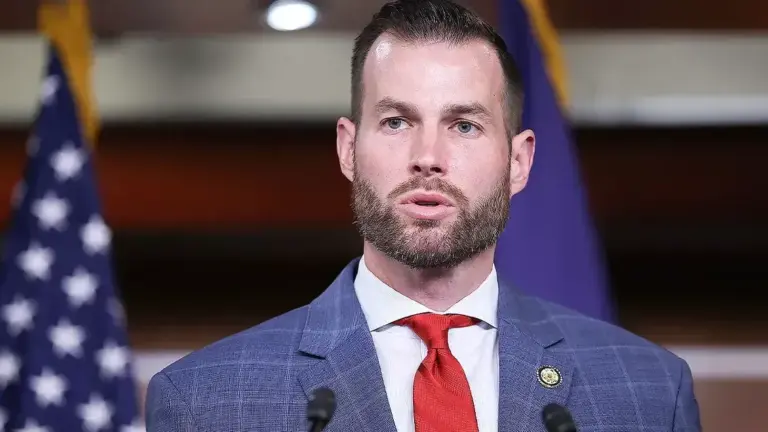
Rep. Clay Fuller, R-Ga., said he knows how to get young voters back into the GOP fold.

“Since Charlie Kirk’s assassination, I think our side has kind of completely lost the ability to talk to younger Americans,” Fuller, who took over for Rep. Marjorie Taylor Greene, R-Ga., told Fox News Digital.

“I think when we talk to younger Americans, I want to talk directly to that young man or young woman who only has the ability to live in their parents’ home because they can’t afford a house. Do you know what the average age of a first-time homebuyer in the United States is? It’s 39. And that shouldn’t be where we are as a country.”

At 45 years old, Fuller skews on the younger end of Congress. He’s also one of the relatively few bright spots Republicans have seen since November — Fuller won his first full term on Nov. 3 by nearly 20 points, while the House GOP overall suffered significant losses.

BILLIONS SPENT BY KEY FEDERAL AGENCY HASN’T MADE AMERICAN DREAM OF HOMEOWNERSHIP ANY EASIER: REPORT

Fuller first came to Congress in mid-2026 via a special election when Greene abruptly resigned amid a public falling out with President Donald Trump.

FLORIDA CONGRESSMAN DIAGNOSES GOP’S BLUE TSUNAMI LOSSES: ‘WE FAILED TO MAKE THEM THINK WE CARED ABOUT THEM’

And unlike his predecessor toward the end, Fuller has not created divisions between himself and his fellow Republicans. But he’s calling on them to do more for America’s youth.

He lamented the “brain drain” plaguing both his northwest Georgia district and other parts of the U.S. far outside major cities. Young people leave after college to seek out urban centers with more opportunity, creating a seemingly neverending cycle that sees economic downturns drain the life out of small American communities.

I’M GEN Z: IF THE GOP WANTS MY VOTE, STOP THE SPEECHES AND FIX THE HOUSING CRISIS

“That’s the number one thing that I’m focused on every day, is making sure that we’re bringing that American dream back to being a reality,” Fuller said. “I want that to be true for young Americans, too. When they look at the town that they grew up in and their ancestors have been buried in, they know that they can stay there and have a career.”

Fuller himself built a career in his home state, serving in the military after graduating from college before working as a district attorney in northwest Georgia.

He said Republicans could have the high ground with young Americans if they doubled down on their economic policies, as well as the “larger philosophical outlook about who we are as a country and individual rights.”

“I want to talk to those young Americans to say, ‘Look, I know this isn’t your first choice of where you want to be. And you’re doing everything you can to achieve that American dream. That white picket fence should be a reality to you, and every policy that we should put in place, from immigration to economic policy to national security, should be focused on making sure that dream is more accessible to you than it was a couple of weeks ago,'” Fuller said.

“We just have to double down on supporting those policies and putting them in place and keeping that promise to the American voter, and they’ll turn back, especially once they see how crazy some of the people that got elected to the House and Senate are going to be.”

Young voters were among the key groups who turned away from the GOP en masse during the last election. Fox News’ Power Rankings cited disenchantment with the Iran war and Trump’s tariffs as key reasons for many Americans’ rejection of the right.

JUSTIN HASKINS: 3 HUGE REASONS REPUBLICANS LOST. HERE’S WHAT THEY NEED TO WIN IN 2028

Fuller argued that the next two years, however, will demonstrate that Democrats’ policies are not conducive to bringing the American dream back to reality.

“They know what was available to their great-grandparents and their grandparents. That’s all they want to see,” Fuller said. “I think we can put those economic policies in place, and those young Americans that felt like a house is too far out of reach … we can put the economic policies in place that makes that a reality. And I think at that point, yeah, people will support us because they know that socialism and communism, it doesn’t work.”

During his lengthy sitdown with Fox News Digital, Fuller maintained a focus on economic and health issues for his district — citing “forever chemical” like PFAS multiple times and his push to combat the high rates of cancer among his constituents — even when asked about his predecessor’s penchant for throwing verbal bombs at both Democrats and fellow Republicans.

He said he had no ill will toward Greene and even lauded her dedicated staff.

“I certainly had talked to her. There were people in our office who had been long-term staff members of hers and appreciated her opinion on both the district and the staff that we had, especially in our district office,” Fuller said when asked if Greene helped him with the transition. “She talked glowingly about everybody that worked there, and we have an incredible in-district team. But otherwise, again, I always know any position that I’m going to add to, I’ve got my own priorities, I’ve got my own focus. And from day one, that’s what I’ve been focused on.”

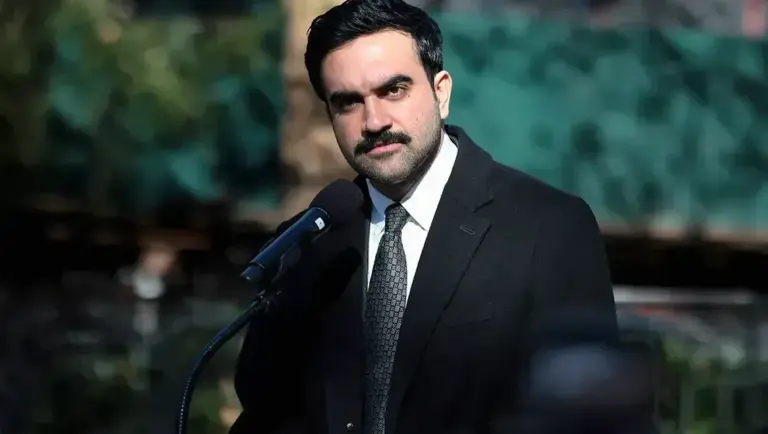
New York City Mayor Zohran Mamdani, a socialist, has begun delivering on several of his signature campaign promises in his first year leading the largest city in the U.S.

But the limited scope of those efforts raises questions about how much of his far-left agenda he can realistically implement.

Fox News Digital breaks down some of Mamdani’s most controversial campaign promises and those he’s made a priority in the first of his four years in office.

NYC MAYOR TOUTS ‘SOCIALIST’ WINS IN FIRST 100 DAYS ALONGSIDE BERNIE SANDERS

Rent freezes

On the campaign trail, Mamdani pitched freezing monthly rent costs as a key strategy to lower the cost of housing for New Yorkers. Roughly 67.7% of those who live in the five boroughs of the city are renters, according to the most recent government data released in 2024.

“As mayor, I will freeze the rent every year that I’m in office. That’s a guarantee,” Mamdani said in a campaign video posted near the beginning of his campaign in 2024.

True to his word, the New York City Rent Guidelines Board announced Mamdani’s promised freeze in June, detailing a 0% increase in one-year leases beginning between October 2026 and October 2027 and a 0% increase for two-year leases beginning in the same window.

Mamdani hailed the announcement as a significant victory for the city, highlighting the longer-lease lock.

“This is a historic victory for New York City tenants. After reviewing the data and hearing from New Yorkers across the city, the independent RGB has delivered a freeze on one-year leases, and the first-ever freeze on two-year leases in our city’s history,” Mamdani’s office said in a press release in June.

“This is the relief that working people across our city deserve.”

Notably, the freeze does not apply to all rental apartments in New York City, instead covering about 1 million rent-stabilized units. According to the Community Service Society, a nonprofit poverty advocacy group, rent-stabilized apartments make up 41% of the city’s rental units.

City-run grocery stores

Although Mamdani’s city-run grocery stores haven’t yet launched in earnest, a pilot test of what they could look like has raised questions about whether the idea will meaningfully address the food scarcity issues Mamdani highlighted on the campaign trail.

“This month we got polling that showed that two-thirds of New Yorkers support city-owned grocery stores, a policy we’ve championed for months and would guarantee cheaper groceries,” Mamdani said last year.

Even so, the first version of the city-run grocery store was met with complaints of long lines, shortages and disorganization when it launched in February.

MAMDANI’S AFFORDABILITY REVOLUTION STUMBLED AS RENT COSTS SOAR TO RECORD HIGHS

In a recent interview, Mamdani said he still has plans to build on the idea.

“What we’re going to do is — in a city of more than a thousand supermarkets — we’re going to create five. … They’re cheaper supermarkets, supermarkets with a discount,” the mayor said during a recent interview with The New York Times.

Mamdani has said he hopes to sell products at 30% below the market price.

The proposal has sparked skepticism from economists and commentators over how the city could deliver such steep discounts in an industry known for razor-thin profit margins. With grocery prices up about 33% nationwide since 2019, critics say the plan must explain how prices could undercut private retailers by 30% without significant public subsidies.

“This is completely insane. Also, not possible unless taxpayers are subsidizing all the groceries. Grocery store profits are tiny, a few percentage points a year, at best,” Outkick founder Clay Travis wrote.

Universal childcare

Like his grocery store initiative, Mamdani’s plan to implement free universal childcare has struggled to keep pace with demand, falling short of the full promise.

“Since the beginning of this campaign, I’ve championed universal childcare, making a commitment to deliver it to New Yorkers as young as six weeks to five years of age,” Mamdani said in a campaign video in 2025.

Mamdani argued that, without expanded childcare, the city would experience billions in lost productivity from workers who couldn’t enter the workforce.

“My administration will address this crisis by providing no-cost childcare to families with children as young as six weeks up until they’re five years of age.”

STEVE FORBES: MAMDANI’S SOCIALIST RENT-CONTROL PUTS NEW YORK ON THE ROAD TO HOUSING RUIN

To facilitate the plan, Mamdani said he believed using government spaces, co-locating with the Department of Education, subsidizing commercial rent and relaxing regulatory requirements would help bring down costs.

Mamdani launched his plans back in January, announcing a preliminary version of the plan. The rollout was limited to select areas in Manhattan, the Bronx, Brooklyn and Queens and only applied to 2-year-old children.

In an August press release, Mamdani said the program had a 2,000-seat capacity and over 5,700 applicants, leaving roughly 3,700 children on waitlists.

In the same release, Mamdani said he expected the city’s capacity to grow sixfold, going from 2,000 to 12,000.

The New York City Independent Budget Office, a government watchdog, confirmed the program’s $73 million cost and estimated that the expanded version would cost roughly $425 million in 2028.

According to the United States Census, there are approximately 489,000 children in New York City under the age of 5.

Fare-free buses

Mamdani’s free bus plans have put him at odds with New York Gov. Kathy Hochul over whether the state should shoulder more of the burden for the mayor’s designs, leaving his campaign promises only partially fulfilled amid costs that would exceed his initial estimations.

Early on in his administration, Mamdani was asked when New Yorkers could expect the promise of free fares. Mamdani left the answer open-ended but pledged to fulfill his commitment by the end of his term.

“I have said when we ran this campaign … I’m making buses fast and free. I have said that by the time I am done being mayor, those will have been delivered,” Mamdani said in January.

So far, Mamdani has taken steps toward increasing busing efficiency in NYC by developing 50 priority corridors for speed improvements. But discussions about making the buses free have stalled at the state level.

New York’s bus system is run through the Metropolitan Transportation Authority (MTA), a state-created public authority. The body is controlled by the governor, who appoints the MTA chair and its board.

The group makes controlling decisions about its fares.

Although she expressed sympathy toward Mamdani’s design, Hochul said she could not remove the sources of revenue from New York City’s public transportation.

“I cannot set forth a plan right now that takes money out of a system that relies on the fares of the buses and the subways. But can we find a path to make it more affordable for people who need help? Of course we can,” Hochul said at a political retreat earlier this year.

Mamdani’s campaign originally estimated the plan would come with a $700 million price tag. However, the New York City Independent Budget Office released an estimate in June, finding that fully eliminating fares would cost New York State roughly $1.1 billion.

Even so, Mamdani said he believes the designs will ultimately be fulfilled.

“I continue to be excited at the work of making the slowest buses in America fast and free. And I appreciate the governor’s continued partnership in delivering on that agenda of affordability,” Mamdani said at a news conference earlier this month.

Mamdani is approaching the end of his first year as mayor. He was elected in November 2025 and was sworn in on Jan. 1, 2026. His term runs through Jan. 1, 2030.

Fox News Digital’s Amanda Macias contributed to this report.

The Federal Reserve is facing a challenging balancing act as the latest government data shows inflation climbing once again. According to the Personal Consumption Expenditures price index released Wednesday, annual inflation rose to 3.8 percent in October, up from 3.6 percent in September. This marks the highest reading in five months and leaves inflation nearly two percentage points above the central bank’s long term goal of 2 percent. While the numbers aligned with what economists expected, they add another layer of complexity for policymakers who are currently debating whether to raise interest rates early next month.

Much of the upward pressure has been driven by fuel costs following global oil supply shortages triggered by conflict in Iran earlier this year. Although motorists have seen some relief at the pump recently, with AAA reporting a significant drop in gas prices since the midterms, those savings weren’t reflected in this specific report because it focuses on October figures. The timing of this data is particularly sensitive as officials try to curb rising prices without accidentally stifling job growth or triggering an economic slowdown.

Despite these concerns, there are signs that the economy can handle more tightening. A robust jobs report from earlier this month suggests the labor market remains strong, while recent GDP data indicates that overall economic growth has stayed surprisingly resilient. These factors may give federal officials more confidence to move forward with a rate hike despite the inherent risks to employment. If they decide to pull the trigger in December, it would be their second increase in just four months after a lengthy period of stability.

Market participants seem convinced that action is imminent, with betting tools showing a near certainty that a quarter point hike is coming. Fed Chair Kevin Warsh has remained firm on his commitment to bringing prices under control, emphasizing that cooling off inflation is a primary responsibility of the board. Meanwhile, Wall Street continues to ride a wave of volatility, reacting not only to these macroeconomic signals but also to high profile leadership changes within major artificial intelligence firms like Nvidia and Anthropic.

The Bank of Korea closed out the year with a decisive move on Thursday, pushing benchmark lending rates to 3.25 percent. This latest increase of 25 basis points brings borrowing costs to their highest level in two years, a step taken as policymakers grapple with persistent inflation that refuses to dip toward the government’s two percent target. With October inflation sitting at 2.8 percent, officials warned that price pressures stemming from both supply costs and growing consumer demand are likely to linger for some time.

This aggressive tightening comes amid an unexpected surge in economic momentum. The central bank significantly revised its long term outlook upward, now projecting growth of 3.9 percent for 2026 and 4.1 percent for 2027. Much of this optimism is rooted in the explosive success of the IT sector, particularly semiconductors, which have become the primary engine driving the national economy. Governor Shin Hyun song noted that operating profits in the chip industry alone could hit 700 trillion won, providing the fiscal cushion necessary to weather higher interest rates.

Despite the hike, market reaction remained positive as the Kospi index climbed nearly two percent following the announcement. While Governor Shin suggested that further increases remain possible until inflation stabilizes, some analysts believe the peak may be near. Experts point to a strengthening won and robust growth as factors that could eventually cool price spikes without needing further rate jumps. There is a sense among economists that rather than continuing to raise rates indefinitely, the bank may turn toward targeted regulatory tools to manage risks like skyrocketing property prices.

A high stakes gamble to seize control of Russian energy infrastructure has sparked a firestorm on Capitol Hill after billionaire Todd Boehly and his firm Eldridge Industries announced a plan to acquire the global subsidiaries of Lukoil. The proposed deal involves a complex consortium that includes the U.S. International Development Finance Corporation along with partners from the UAE and Xtellus Partners. At the center of the acquisition is Lukoil International GmbH, the Austrian based arm of Russia’s largest private oil producer, which has been under intense pressure since Western allies imposed sanctions following the invasion of Ukraine.

To navigate strict legal barriers, the group plans to execute a share swap rather than sending liquid capital into Moscow. Under the terms disclosed by Eldridge, Lukoil would trade its total equity in the international subsidiary for restricted shares in various Russian firms. To ensure no immediate funds benefit the Kremlin, any sale considerations would be locked in a restricted custodial account for five years or until current sanctions are officially lifted, effectively severing the parent company from its overseas operations once the deal closes.

Despite these safeguards, the announcement has drawn sharp condemnation from political figures who view the move as an implicit lifeline to Russia. Representative Gregory Meeks expressed outrage over a federal agency taking an ownership stake in such a portfolio while conflict persists in Ukraine, suggesting that the administration is undermining its own strategic goals. This sentiment was echoed across social media by strategists like Jessica Tarlov, highlighting a growing divide over whether such acquisitions represent tactical brilliance or moral failure.

The future of the transaction now rests entirely with regulators at the U.S. Treasury Department’s Office of Foreign Assets Control. While proponents likely argue that removing these assets from Russian influence strengthens Western security, critics maintain that any association with Lukoil during wartime is unacceptable. As OFAC reviews the proposal, the debate reflects a broader tension between corporate opportunism and the geopolitical necessity of maintaining economic isolation against Moscow.

Travelers heading home for the Thanksgiving holiday faced unexpected delays Wednesday night after a FedEx cargo plane slid off the runway at Miami International Airport. The aircraft, a McDonnell Douglas MD-11 arriving from Memphis, veered into the grass around 8:40 p.m. amid heavy rain and gusty winds. While the incident caused significant disruption to air traffic, officials confirmed that neither of the two crew members on board suffered any injuries, and emergency responders found no evidence of fire or smoke at the scene.

The mishap triggered an immediate ground stop for flights bound for Miami, forcing many passengers to wait on tarmacs across the country while airport authorities managed the crisis. With most runways shuttered except for one, the timing proved particularly stressful given the massive volume of holiday travelers moving through South Florida. Some stranded passengers expressed frustration over how a single delivery aircraft could paralyze such a major hub during one of the busiest travel windows of the year.

Witnesses at the airport described a harrowing scene where the pilots seemingly struggled to gain traction on the slick pavement. One employee who saw the aftermath suggested that despite the crew’s best efforts to brake, the combination of poor visibility and wet conditions pushed the plane past its stopping point. This particular overrun occurred on one of the facility’s shorter runways, reigniting local conversations regarding safety standards following a fatal Amazon cargo crash earlier this September.

FedEx released a brief statement expressing gratitude that their crew remained safe and noting that they are working closely with investigators to determine what went wrong. The Federal Aviation Administration has officially opened an investigation into Flight 910, focusing on whether the thirteen mile per hour tailwinds and rainy weather played a primary role in the excursion. Operations eventually returned to normal late Wednesday night once officials cleared the area surrounding Runway 26R.

Travelers heading to South Florida faced an unexpected hurdle on the eve of Thanksgiving when a FedEx cargo plane overshot its runway at Miami International Airport on Wednesday evening. The incident occurred shortly after 8 p.m., forcing the Federal Aviation Administration to implement a temporary ground stop for incoming flights. With nearly every runway shuttered during the chaos, the disruption hit at one of the most stressful moments of the yearly travel calendar.

The aircraft had arrived from Memphis, and while the overshoot caused significant operational delays, officials confirmed that there were no injuries reported among those on board. For roughly ninety minutes, arrivals were frozen and departures stalled, leading to average delays of about an hour for frustrated passengers navigating one of the nation’s busiest holiday hubs. By late Wednesday night, however, the FAA announced that operations were returning to normal.

Adding to the tension was a backdrop of inclement weather, as the Miami Dade area remained under a flood watch with heavy rains sweeping through the region. This logistical nightmare comes on the heels of a massive nationwide system failure earlier this month that paralyzed U.S. airspace for hours. While airport spokesperson Greg Chin thanked travelers for their patience, many spent their pre holiday evening checking airline apps and waiting out the storm in terminals.