Archive

November 22, 2026

Browsing

Nvidia is sending a clear signal to the rest of the semiconductor industry that it is no longer content with dominating GPUs alone. During its recent financial disclosures, the chip giant revealed an aggressive expansion into the server central processing unit market, specifically highlighting the explosive demand for its Vera CPUs. By pivoting toward standalone products rather than bundling them into larger system packages, Nvidia has successfully attracted major heavyweights like Meta, OpenAI, and Oracle.

The scale of this ambition is staggering, with interim CEO Colette Kress announcing that total CPU revenue is expected to more than double in fiscal year 2028. If previous estimates hold true, Nvidia could see revenues from its Vera line climb to roughly 40 billion dollars next year. This rapid ascent represents a direct challenge to the established order of data centers, where Intel and AMD have long held the crown as the primary suppliers of server processors.

For investors in AMD and Intel, these projections serve as a significant warning. While both competitors have reported their own growth—with Intel seeing record demand for Xeon chips and AMD predicting a massive overall market expansion by 2030—Nvidia appears to be capturing a disproportionate slice of that new growth. Because Nvidia is scaling at such a high velocity so shortly after entering the standalone market, there are concerns that it will eat into the projected gains of its rivals.

Despite some recent volatility on Wall Street, analysts suggest that Nvidia remains in a position of strength due to its diversified portfolio and sheer momentum in artificial intelligence infrastructure. As agentic AI and inference applications become standard across the tech landscape, Nvidia’s ability to provide both the brain and the brawn of the server rack makes it a formidable opponent for legacy CPU manufacturers who are now fighting to defend their home turf.

Investors are reacting with uncertainty following the sudden resignation of Jensen Huang, sending Nvidia shares sliding toward the 150 dollar mark. The departure of the long-time leader has created a vacuum at the top, though longtime CFO Colette Kress has stepped in as interim CEO while the board seeks a permanent successor. Despite Huang expressed interest in returning, the board has made it clear that they are moving forward in a different direction, leaving the market to wonder if the visionary spark behind the company’s rise has vanished along with its founder.

However, looking beneath the surface of the executive drama reveals a business that remains fundamentally powerhouse. In its third quarter, Nvidia reported staggering revenue of 116 billion dollars, representing a jump of over 100 percent year over year. This level of expansion is almost unheard of for a trillion-dollar entity, yet Nvidia continues to sit comfortably at the epicenter of the global artificial intelligence boom. Rather than slowing down, the company actually raised its growth guidance for next year from 70 percent to 75 percent, suggesting that demand for its GPUs is practically decoupled from who sits in the CEO chair.

From a valuation standpoint, many analysts argue that this dip represents a once-in-a-generation buying opportunity. Because of the current panic surrounding leadership changes, Nvidia is trading at roughly 19 times trailing earnings, which is notably lower than the broader S&P 500 average. When factoring in projected growth and next year’s expected earnings, some experts suggest the stock is essentially sitting in Wall Street’s bargain bin. With cloud customers locking in multi-year supplies and an AI infrastructure build-out likely extending through 2030, those betting on fundamentals see a path where the stock could potentially triple if it returns to standard big-tech valuations.

Nvidia has found itself in the crosshairs of investor anxiety recently, seeing its stock price plummet by more than 35 percent from its peak. The turmoil stems largely from the sudden departure of co-founder and longtime CEO Jensen Huang, whose visionary leadership was widely credited with propelling the company to the forefront of the artificial intelligence revolution. Compounding this uncertainty are lingering allegations that the chipmaker may have bypassed export restrictions to funnel hardware into China via third party nations in Southeast Asia. Together, these factors have wiped trillions off the company’s market capitalization as shareholders fret over who will steer the ship and whether regulatory penalties are looming.

Despite the dramatic sell-off, many analysts argue that the panic is an overreaction. While Huang was undoubtedly a driving force, Nvidia possesses a massive infrastructure of talented engineers and operational experts who continue to execute a long term product roadmap already set in motion. The primary concern isn’t necessarily current stability, but rather whether a successor can maintain that same level of innovation once the existing pipeline matures. Until a new leader is named and clears those legal hurdles, the market appears content to keep the valuation suppressed, creating what some see as a rare entry point for long term believers in AI.

Looking toward 2028, the fundamental numbers suggest a staggering recovery remains possible. Nvidia has signaled aggressive revenue growth targets reaching roughly 742 billion dollars by early 2028, fueled by an unrelenting global demand for AI computing power. If profit margins hold steady at their current levels, calculations show that even a conservative valuation could double today’s share prices. For an investor putting 5,000 dollars into the stock now, history and projected earnings suggests that investment could easily grow to 10,000 dollars or significantly more if the market restores its previous confidence in the company’s premium status among big tech giants.

Nvidia is currently navigating one of the most volatile chapters in its corporate history, leaving investors wondering if the recent slide in share prices is a bargain or a warning sign. The turmoil centers on the sudden departure of founder and CEO Jensen Huang, who resigned following reports of an alleged espionage plot involving a major client in Singapore and accusations of internal misconduct. With shares dropping nearly thirty percent since early November, the market is reacting not just to the scandal itself, but to the terrifying prospect of losing the visionary leader who transformed the company into a global powerhouse.

The fallout extends far beyond a simple change in management. Federal regulators may now take a closer look at how Nvidia handled its business dealings in Asia, specifically whether advanced chips were routed through third parties to bypass United States sanctions on China. Industry analysts warn that without Huang’s specific tenacity and foresight, the company could shed significant value regardless of its current product dominance. The cloud of legal uncertainty and potential congressional testimony creates a risky environment for anyone looking to jump into the stock during this dip.

Despite the boardroom drama, Nvidia’s balance sheet remains remarkably strong. Recent quarterly earnings showed revenue skyrocketing over one hundred percent to reach nearly one hundred fifteen billion dollars, fueled by an insatiable hunger for AI infrastructure among data center clients. While trillions of dollars in projected spending suggest that demand for high end chips will persist, there is a growing concern that Nvidia has become too dependent on a single sector, with data centers now accounting for ninety three percent of its total revenue.

Ultimately, the combination of leadership instability and the possibility of an AI market bubble makes this a precarious moment for shareholders. Between rising interest rates making hardware purchases more expensive and looming regulatory crackdowns on data center expansion, the headwinds are mounting. While the financial numbers look impressive on paper, most experts suggest staying on the sidelines until it becomes clear who will steer the ship and whether NVIDIA can survive its first true identity crisis without its founder.

The financial world is reeling after a punishing slide in stock prices this week, leaving many investors wondering if the crash was an avoidable disaster. For several years, technology stocks enjoyed an almost uninterrupted climb, fueled by optimism and aggressive investment. However, that streak finally hit a wall as market participants began to question whether those valuations had drifted too far from reality.

In a recent discussion between NPR’s Rob Schmitz and Katie Martin of the Financial Times, the conversation centered on how these tremors are moving beyond Wall Street. Because tech giants hold such massive weight in global indices, their decline creates a domino effect that touches portfolios across every continent. This shift suggests a broader pivot where investors are trading blind faith in growth for a more cautious approach toward stability.

As the dust settles, the primary concern remains what happens during the recovery phase. While some see this plunge as a necessary correction to purge overpriced assets from the system, others worry it signals a deeper economic cooling period. The transition away from high octane tech speculation may be painful in the short term, but analysts suggest it could eventually lead to a more sustainable foundation for global markets.

Navigating the vast landscape of clean technology can be a daunting task for the average investor. From wind and solar farms to cutting edge carbon capture and green hydrogen, the sheer variety of subsectors makes picking individual winning stocks feel like a gamble. This complexity is why exchange traded funds have surged in popularity across North America, offering a streamlined way to gain broad exposure to the green economy while mitigating the volatile swings often associated with single company investments.

Leading the pack in terms of scale is the iShares Global Clean Energy ETF, which remains a heavyweight in the industry with 1.85 billion dollars in assets under management. By holding over a hundred different domestic and international stocks, including names like First Solar and Iberdrola, it provides a comprehensive snapshot of global utilities and renewables. Following closely behind is the First Trust NASDAQ Clean Edge Green Energy Index Fund, which takes a slightly different approach by incorporating high profile tech players like Tesla alongside specialized biofuel and battery firms.

Other notable options cater to specific niches within the sustainable transition. The Invesco WilderHill Clean Energy ETF distinguishes itself by investing not just in energy production but also in the mining companies that provide critical metals essential for green hardware. Meanwhile, the recently rebranded State Street SPDR S&P Kensho Grid Innovation ETF shifts its focus toward the infrastructure side of things, targeting companies that modernize the electrical grid through hydroelectric and geothermal advancements. Finally, the VanEck Low Carbon Energy ETF rounds out the top five, tracking a global index that balances low carbon initiatives with electric vehicle growth.

While these diversified funds offer a safer entry point than individual stock picking, financial experts remind investors that they are not entirely immune to risk. Sector specific funds still face significant pressures from broader economic headwinds and regulatory changes affecting the entire cleantech industry. However, for those looking to bet on a lower carbon future without risking their entire portfolio on one startup, these established ETFs provide a structured path forward into 2026 and beyond.

A leading pro-life group said it opposed advancing Heidi Overton’s nomination to lead the Food and Drug Administration without commitments from the Trump administration on abortion drug policy. The White House withdrew her nomination this week amid questions about her support in the Senate.

In an interview with Fox News Digital, Erik Baptist, senior vice president of legal strategy at Susan B. Anthony Pro-Life America, said his group asked the Senate to hold up Overton’s confirmation until it received “firm commitments” from the administration on two fronts regarding abortion drug policy.

Baptist said the group wants the next FDA nominee to commit to ending mail-order access to abortion drugs authorized under the Biden administration and changing how the agency studies the safety of those pills.

“Right now, we’re seeing more abortions in this country than before the Supreme Court’s decision overturning Roe v. Wade,” Baptist said. “That’s precisely because of what the Biden FDA did to authorize mail-order abortion drugs. We’re seeing upwards of 15,000 abortion drugs and abortions occurring in pro-life states. Those states can’t meaningfully enforce their laws while this nationwide policy is in place.”

WHITE HOUSE PULLS TRUMP’S FDA PICK HEIDI OVERTON ON EVE OF SENATE PANEL VOTE

“Under the Biden-era policy, anybody can obtain these drugs online and receive them through the mail,” he continued. “When I say anybody, we’ve seen news story after news story every week about men and other predators obtaining these drugs to coerce or poison women into taking them against their will. Until that policy changes, no pregnant woman is safe from these drugs. My question to this administration is: How many more women have to be poisoned or coerced with abortion drugs before you take action on this drug?”

Under the Biden administration, the FDA eliminated the in-person dispensing requirement for mifepristone, allowing it to be prescribed without an in-person visit by certified prescribers and dispensed by certified pharmacies through the mail.

On the group’s second point of concern, Baptist said the FDA needs to conduct a new study to show the safety — or lack thereof — of mifepristone.

“The problem is that the study is significantly flawed,” he said. “It’s almost designed to fail and not lead to future changes to the drug regimen. We have asked for more robust data because significant information is currently lacking, including transparency into the agency’s methodology and an invitation for outside experts who have studied this drug over the last few decades.”

“This is something that should be bipartisan. Everybody should support better data, more transparency and outside experts who can inform an agency that has never conducted such a study before,” he added.

Several pro-life groups and Republican lawmakers have urged the Trump administration to complete the FDA’s safety review of mifepristone and consider reinstating safeguards, while some have called for removing the drug from the market.

The FDA said the review is ongoing, with study results expected in December 2026 and a final report expected by March 2027.

The White House pulled Overton’s nomination to lead the FDA earlier this week, one day before a Senate committee vote. President Donald Trump picked Overton, a physician and White House advisor, in August to succeed Marty Makary, who resigned from the position in May.

Kyle Diamantas has led the agency in an acting capacity since Makary’s departure.

WOMAN WHO SAYS ABORTION PILLS NEARLY KILLED HER URGES RFK JR TO ACT AS GROUP DEMANDS MAIL-ORDER CRACKDOWN

Overton also previously served as vice chair and chief policy officer at the America First Policy Institute, a conservative think tank, where she criticized expanded access to abortion pills in a 2023 policy brief.

The White House said Overton lacked the votes on Capitol Hill and pulled her nomination, although Sen. Bill Cassidy, chair of the Senate health committee, contended that he believed she could have been confirmed.

“The White House abandoned a viable confirmation path for Dr. Overton. The WH said that this was because she did not have the votes to pass. This was odd as I was having productive conversations with members,” Cassidy, R-La., wrote on X. “I believe she would have had the votes to pass out of committee and pass the full Senate.”

Baptist said he did not know whether the White House was concerned about pro-life votes or other constituencies but thinks Cassidy “was making progress with the administration to secure the commitments we were seeking and asking the Senate to hold the administration accountable for.”

Cassidy had criticized Overton for supporting Trump’s decision to recommend changes to the childhood vaccine schedule, but the senator said he had been convinced she was right for the job after she committed to “follow the science.” She had appeared alongside Trump in the Oval Office as the president signed an executive order calling for changes to childhood vaccine recommendations, including a recommendation to administer measles, mumps and rubella vaccines separately once individual shots become available domestically.

Cassidy said at a September hearing that there was no scientific evidence for Trump’s suggestion that the combined shot could be “quite lethal” and warned the remark could discourage vaccination.

“Yes, senator, the MMR vaccine is safe and effective,” Overton told Cassidy.

Pressed on what she would do if Trump asked her to disregard the FDA’s safety standards, Overton said she would give the president her best advice and follow the legal requirements for reviewing individual products.

Sen. Maggie Hassan, D-N.H., asked Overton directly whether Trump was wrong. Overton reiterated that the vaccine was safe and effective and called it the best tool available during the measles outbreak. Sen. Ed Markey, D-Mass., questioned why she had not corrected Trump in the Oval Office.

“Why should we expect you to stand up to the president as FDA commissioner?” Markey asked.

Baptist said he wants the next FDA commissioner to be somebody who “understands science” and has experience managing an agency.

“The FDA is a very large bureaucracy with multiple constituencies, so understanding how science is conducted and how drugs are approved will be essential to any successful candidate or nominee for the position,” he said.

But, Baptist said, the administration does not have to wait for an FDA nominee to take the position before it can take the action on abortion pill policy that his group desires.

“The good news is that it doesn’t have to be the nominee who makes these commitments. The administration can do it because it has admitted that it can take these actions immediately using its own authority,” he argued. “That power is within the administration’s possession. It’s a matter of political will, not legal ability.”

“With regard to fixing the study, I think they can make those changes now,” Baptist continued. “They don’t need to wait for a confirmation, especially when they’re saying they’re going to finish the study in December of this year. We might not have an FDA commissioner at that point, or even a nominee. So they need to fix it immediately and course-correct the study before it’s fatally flawed and completed next year.”

Fox News’ Stepheny Price contributed to this report.

A Biden-appointed judge in California issued a preliminary injunction barring Agriculture Secretary Brooke Rollins from using her official email or authority to send unwelcome religious messages to employees, finding two of Rollins’ previous holiday messages promoting Christianity “go too far” and amounted to “coercive” pressure on nonbelieving employees .

The Thursday ruling from U.S. District Judge Trina Thompson comes as President Donald Trump’s administration has sought in his second term to expand religious expression protections for federal workers, including through 2025 Office of Personnel Management guidance allowing employees to display religious items and discuss their faith at work and the creation of a White House Faith Office.

However, Thompson found that two emails Rollins sent to all U.S. Department of Agriculture employees — which referred to Jesus Christ as “our Savior” and “our risen Lord” during the 2025 Christmas and 2026 Easter seasons — likely violated the First Amendment’s Establishment Clause .

FEDERAL EMPLOYEES ACCUSE USDA SECRETARY OF ‘CHRISTIAN PROSELYTIZING’ IN HOLIDAY EMAILS TO STAFF

“The wisdom of the Founders was in recognizing that independence requires freedom of conscience,” Thompson ruled. “The command of the Establishment Clause, thus, is to prohibit the government from using its authority to try to sway an individual’s decision about whether and how to practice their faith.”

The ruling stems from a lawsuit brought in May by the National Federation of Federal Employees and six multi-faith and nonreligious employees, who accused Rollins of excluding other religious groups by not acknowledging their holiday traditions in emails, creating a captive audience that couldn’t opt out and violating the USDA’s own policies on religious expression in the workplace .

“‘If there is any fixed star in our constitutional constellation, it is that no official, high or petty, can prescribe what shall be orthodox in politics, nationalism, religion, or other matters of opinion.’ Yet during her approximately fifteen months at the helm of USDA, Secretary Rollins has done just that,” the plaintiffs said in the lawsuit.

Thompson agreed with the plaintiffs’ concerns that Rollins’ language — in a Dec. 23, 2025, Christmas email sharing a video about the birth of Jesus and an April 5, 2026, Easter email recounting Jesus’ resurrection — treated those beliefs as if they spoke for everyone in the federal agency.

CHRISTIAN NURSE SAYS OREGON HOSPITAL TRIED TO FORCE EMPLOYEE GROUP TO GO ‘INTERFAITH’

“The Secretary’s use of ‘we,’ ‘us,’ and ‘our,’ along with her failure to recognize other religious holidays or acknowledge that other employees may have different beliefs, expresses a culture and environment within the USDA which ostensibly universally conforms with the Secretary’s beliefs,” Thompson wrote.

“Given the inclusion of first-person plural pronouns, there is no way of reading the challenged messages other than ascribing the Secretary’s particular religious view among all its recipients (that is, all USDA staff),” Thompson continued.

The order noted that one employee uncomfortable with the messaging asked to opt out, but was told it was “not possible” and that continuing to raise concerns would “create trouble” for her.

The order also noted previous public comments in which Rollins said she had been sued before for talking about Jesus too much, adding, “I’ll never stop talking about Jesus.”

National Federation of Federal Employees President Randy Erwin celebrated Thompson’s ruling.

“Federal employees are public servants, not an audience for their bosses’ personal religious beliefs,” Erwin said in a statement. ” NFFE is proud to stand with the workers who brought this challenge and will continue to defend our members’ constitutional rights and their ability to serve the American people free from religious coercion.”

BISHOP ROBERT BARRON: MY YEAR WITH DOJ’S RELIGIOUS LIBERTY COMMISSION: WHY I SAID YES

Meanwhile, a spokesperson for the U. S. Department of Agriculture said it is considering its options, including an appeal.

“This is a completely unprecedented attempt to muzzle a Cabinet Secretary,” a spokesperson said in a statement to Fox News Digital.

SIGN UP TO GET THE POLITICS NEWSLETTER

A month after taking office, Trump established the White House Faith Office, which operates under the Domestic Policy Council, to coordinate with faith-based organizations and the attorney general’s office to identify gaps in enforcing federal religious liberty protections.

“Well, we want to bring religion back stronger, bigger, better than ever before — very important — and this is a good start,” Trump said during the February 2025 National Prayer Breakfast. “This is really good. We have to have religion, and it suffered greatly over the last few years, but it’s coming back. It’s coming back strong.”

TONOPAH, Nev. — An Obama-era solar power plant once hailed as a “clean energy marvel” and backed by more than $1 billion in federal support has gone bankrupt for a second time and sold for just $7 million — with the estimated taxpayer tab potentially reaching $507.6 million.

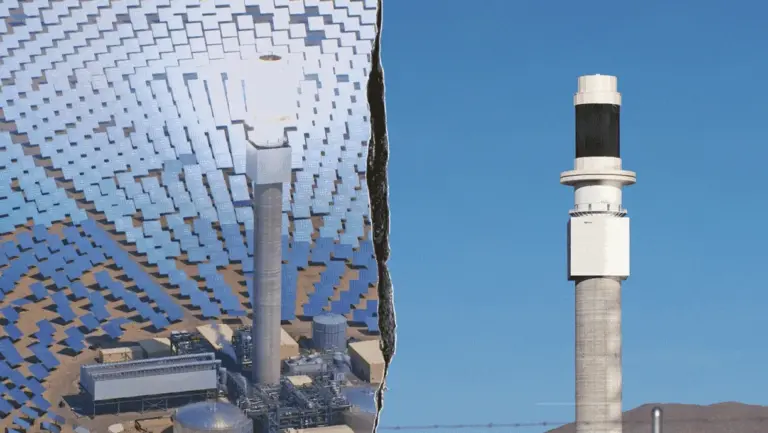
Rising from the barren Nevada desert, the Crescent Dunes Solar Energy Project looks like a futuristic fortress in a vast, dusty wasteland, with more than 10,000 mirrors surrounding a giant central tower. The plant was designed to generate solar electricity even after sunset, using an emerging technology that promised to revolutionize green energy in America.

The Obama administration bet big on the project, backing it with a $737 million federal loan guarantee and around $275 million in Treasury grant awards as part of its broader $90 billion push to combat climate change and stimulate the economy following the 2008 financial crisis.

OBAMA-ERA ‘CLEAN ENERGY’ SOLAR POWER PLANT STILL USES FOSSIL FUELS – AND KILLS THOUSANDS OF BIRDS ANNUALLY

But the promise never matched the performance.

After operations began in late 2015, leaks and equipment failures repeatedly knocked the plant offline, production fell short and cheaper solar alternatives undercut its economics — driving the project into financial ruin and leaving taxpayers shouldering the cost.

The financial collapse comes 15 years after Solyndra, another Obama-backed solar company, went bankrupt and left taxpayers in the red for $528 million — a sum Crescent Dunes’ estimated taxpayer tab could nearly match.

“The Crescent Dunes solar project is a microcosm of what is wrong with Democrat governance: the Green New Scam, hundreds of millions in taxpayer dollars wasted, fraud, and a cover-up,” Rep. Lance Gooden, R-Texas, told Fox News Digital.

OBAMA-BACKED $2.2B GREEN ENERGY ‘BOONDOGGLE’ LEAVES TAXPAYERS ON THE HOOK

The billion-dollar bet

Crescent Dunes sits about 13 miles northwest of the old mining town of Tonopah, roughly halfway between Las Vegas and Reno.

The isolated facility, which Fox News Digital toured, is surrounded by miles of barren desert, scrubland and distant mountain ranges.

Across the 2,250-acre federal site, more than 10,000 giant mirrors surround a 640-foot tower — the centerpiece of a system designed to overcome one of solar power’s biggest limitations: darkness.

Unlike ordinary solar panels, which convert sunlight directly into electricity, Crescent Dunes focuses the sun’s rays onto a receiver atop the tower, heating molten salt to roughly 1,050 degrees Fahrenheit. The salt stores that heat in a massive insulated tank, allowing it to produce steam that drives an electricity-generating turbine long after sunset.

That combination made it the first commercial-scale U.S. solar tower to use molten salt to both collect and store the sun’s heat. DOE projected it would generate 482,000 megawatt-hours annually, with a maximum output of 110 megawatts — enough to supply more than 75,000 Nevada homes during peak periods.

American developer SolarReserve developed the project, while Spanish contractor Cobra, a subsidiary of construction giant ACS Group, built it.

Both held ownership stakes in the company that owned the plant, Tonopah Solar Energy.

Spanish banking giant Banco Santander also held an ownership stake in Tonopah Solar Energy.

Then-Senate Minority Leader Harry Reid, D-Nev., championed the project. In 2016, he called it an “engineering and clean energy marvel” and predicted that “Nevada will benefit for decades.”

The project reflected the Obama administration’s push to expand clean energy by using taxpayer-backed financing to help bring promising but commercially risky technologies to market.

But Crescent Dunes showed how expensive those gambles could become when they failed.

The promise unravels

Crescent Dunes’ problems emerged almost immediately.

A major leak in its molten-salt storage tank occurred in October 2016 — less than a year after commercial operations began.

During that shutdown, Treasury approved a cash-grant payment in March 2017 under the Obama-era stimulus program — funding that later became the subject of serious fraud allegations.

It went back online in July 2017, but restarting the plant did not resolve its performance problems.

Even in 2018, its best full year through 2025, Crescent Dunes generated just 41% of the annual electricity output projected by DOE, according to federal energy records.

Then another tank failure halted generation in March 2019.

Seven months later, the repeated breakdowns and poor performance eventually cost Crescent Dunes its sole electricity customer when NV Energy terminated its 25-year agreement.

Without its long-term power contract, Crescent Dunes spiraled into financial trouble, culminating in its first bankruptcy in July 2020.

The 2020 restructuring handed ownership to ACS through its affiliate, Crescent Dunes Investment, with Cobra running the plant. The turnaround plan counted on extensive repairs restoring production to 400,000 megawatt-hours a year — more than twice its best annual output.

But the revival faltered.

The plant restarted in July 2021, only for further molten-salt-tank leaks in 2022 and 2023 to force additional shutdowns.

Although the plant resumed selling electricity under shorter-term agreements, it continued to lose money and relied on financial support from affiliated companies, court records show.

REGULATORS ALLOW OBAMA-ERA SOLAR PLANT TO KILL THOUSANDS OF BIRDS ANNUALLY, INVESTIGATION FINDS

By January 2026, it was back in bankruptcy court. This time, the billion-dollar plant went on the auction block.

Mississippi-based Sons of Liberty Construction, a company owned by three brothers, bought it for $7 million in July and are attempting to revive it.

The plant was generating electricity during Fox News Digital’s visit, although they said it remained well below its initial intended output. Their efforts to restore the troubled facility are examined in Part 3 of this series.

What went wrong?

Behind that history of breakdowns and bankruptcies lies a dispute over what failed: the solar technology, the construction behind it, or a combination of both.

Bill Gould, SolarReserve’s co-founder and former chief technology officer, blamed the project’s Spanish construction contractor, ACS Cobra.

“It was a tragedy of mismanagement,” Gould told Bloomberg in 2020, accusing the contractor of delaying necessary work and designing a defective molten-salt tank.

An unnamed engineer who said he had worked at Crescent Dunes since its early development offered a similar account, blaming the tank failures on design and welding problems. He told SolarPACES in 2023 that the plant’s solar collection technology had experienced comparatively few problems.

“It’s just the old tech that’s having these troubles,” the engineer said, referring to the conventional thermal-power equipment.

The sheer size of the storage system posed a significant challenge, according to Oliver Hemmers, a physicist and energy researcher who formerly led the Harry Reid Center for Environmental Studies at the University of Nevada, Las Vegas.

“Ultimately, the larger you make those tanks that hold the molten salt, the harder the material science challenges become,” Hemmers told Fox News Digital.

Hemmers said temperature swings of hundreds of degrees can cause the metal to repeatedly expand and contract, eventually creating cracks and leaks. He had not reviewed the plant’s engineering plans but questioned whether the developers had sufficiently tested the tank design.

“You need to have alloys that can withstand that heat variation without moving much. Otherwise, when the walls move, the vessel breaks, cracks and leaks. So I’m not sure how much research they really put into the vessel design,” he said.

Hemmers noted that Crescent Dunes relied on a massive molten-salt storage tank, while other solar thermal facilities have used multiple smaller tanks to reduce the stresses caused by repeated heating and cooling.

Court records show how efforts to prevent further failures came at a cost.

When the plant resumed operations in July 2023, operators lowered the hot-salt tank’s temperature from its original design level of about 1,050 degrees Fahrenheit to about 850 degrees. They later raised it to as high as 900 degrees, but the lower temperatures still reduced electricity production and revenue.

As Crescent Dunes struggled to meet its production targets, competing solar technology was getting cheaper.

Falling prices for conventional solar panels, known as photovoltaic panels, including those manufactured in China, undercut the project.

Photovoltaic panels convert sunlight directly into electricity, offering a simpler and increasingly cheaper way to generate solar power.

Crescent Dunes, by contrast, uses more than 10,000 computer-controlled mirrors, called heliostats, to focus sunlight onto a receiver atop its central tower. The heat warms molten salt, which is then used to produce steam that drives turbines to generate electricity.

Crescent Dunes, however, has one key advantage: Its molten-salt storage system allows it to generate electricity even after sunset, something conventional solar panels cannot do without additional storage.

Those same economic pressures have battered California’s Ivanpah solar plant, another Obama-era project Fox News Digital reported on that uses thousands of heliostats to concentrate sunlight. Unlike Crescent Dunes, Ivanpah cannot store the sun’s heat to generate electricity after dark.

Fox News Digital contacted ACS Group and its attorneys but received no response.

Who pays for failure?

The project was backed by more than $1 billion in federal loan guarantees and grants.

That included a $737 million Department of Energy loan guarantee. DOE said it resolved its financial interests in the project through the plant’s first bankruptcy settlement in 2020 in an effort to maximize taxpayer recovery and estimated its loss on the loan at $232 million — a figure the department confirmed to Fox News Digital on background.

The Trump administration’s Department of Energy blasted the handling of taxpayer money behind the project.

“It is unfortunate that previous administrations irresponsibly managed taxpayer dollars in their support of the Green New Scam. Since 2020, DOE has had no ownership, operational, or financial interest in the Obama-era project,” DOE assistant press secretary Caroline Murzin told Fox News Digital in a written statement.

The project also received a $275.6 million Treasury grant award, which, unlike the loan, was not intended to be repaid provided the project met the program’s requirements.

Combined, the Treasury grant awards and DOE’s estimated loan loss would put the total federal cost at approximately $507.6 million, although Treasury has not confirmed the full grant was disbursed and DOE has not provided a final accounting of its loan losses.

Fox News Digital has filed Freedom of Information Act requests with both the Energy and Treasury departments seeking a full accounting of the federal loans, grant payments and taxpayer losses associated with Crescent Dunes.

The Treasury grant also became the focus of a private investor-backed lawsuit alleging that companies involved in construction fraudulently secured the money. A judge dismissed the case at DOJ’s request and the investors are appealing.

The allegations and the fight over the dismissal are examined in Part 2.

The taxpayer gamble

Reid, who died in 2021, had championed Crescent Dunes as a showcase for government and private industry working together to build “the next generation of clean energy technology.”

Its financial collapse has sharpened the question behind that partnership: Should taxpayers bankroll commercially risky energy projects that private lenders are unwilling to fully finance?

“The government shouldn’t be picking winners and losers,” Véronique de Rugy, an economist at George Mason University’s Mercatus Center, told Fox News Digital.

“This is not the role of the government. The government is not good at actually picking projects that somehow the private sector is leaving on the sidewalk,” she said.

De Rugy argued that politicians take credit for publicly financed projects without facing the same consequences when they collapse. Unlike private investors, she said, politicians don’t personally bear the financial losses when their bets go wrong.

“So then they can go and do a ribbon cutting ceremony when the plant opens, and then they’re usually nowhere to be seen when the company goes under,” she said.

She also argued that many companies receiving government assistance would have succeeded without it, questioning why taxpayers should shoulder the risks of commercial investments.

“These subsidies go to projects that end up failing, right, then taxpayers have to shoulder the bill,” she said.

WATCH: Economist blasts Obama-era solar failure, says government shouldn’t subsidize private companies

Nick Loris, president of the Conservative Coalition for Climate Solutions (C3 Solutions), a conservative energy and environmental policy think tank, offered a different perspective, arguing that government financing can sometimes justify the risks of developing new technologies.

“I wouldn’t call it a mistake. I think it took a risky bet on a potentially promising technology that aimed to solve one of the challenges with solar in its intermittency,” Loris told Fox News Digital.

He argued that federal financing can help promising technologies reach the market when private investors are reluctant to take the risk, and that failures such as Crescent Dunes should be weighed against successful projects and interest earnings across DOE’s broader loan portfolio.

One example is California’s Desert Sunlight, a 550-megawatt solar farm that uses panels instead of mirrors and molten salt. In a 2024 assessment, DOE said the project helped prove the viability of large-scale solar and was meeting its loan obligations.

Across the broader program, DOE reported in its fiscal 2027 budget justification that borrowers had paid nearly $5 billion in interest, compared with nearly $1 billion in default losses, through Sept. 30, 2025.

But Hemmers questioned whether Crescent Dunes ever made economic sense, arguing that the billion-dollar investment was a risky gamble from the outset.

“Right, we kind of say, okay, that was a boondoggle. It didn’t work. And so now we move on, right, do something else,” Hemmers said.

Asked whether Crescent Dunes deserved that label, he doubled down.

“I think so, yeah. I think from the get-go, it started off too expensive, and I think it was unfortunate, let’s say for the developer, that they run into all these technical issues on top of it,” he said.

“And as we can see from that project, it completely failed in the end.”

This post appeared first on https://www.foxnews.com

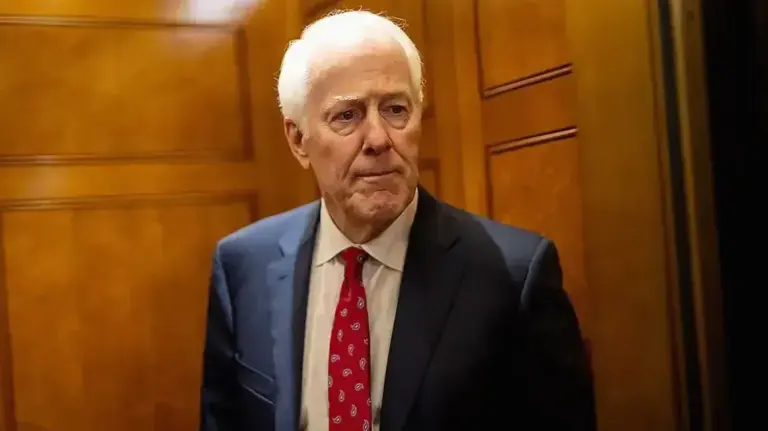
President Donald Trump told Fox News’ “Saturday in America” that outgoing Texas Sen. John Cornyn is doing a “tremendous disservice” by blocking his pick to fill a judicial seat in Dallas.

The president said, “We’re going to have a radical left lunatic get in there and we don’t want that.”

Trump’s comments come after Cornyn told The Associated Press he has no intention of returning the “blue slip” for T. Elliot Gaiser, a Department of Justice senior lawyer who was nominated by the president to the U.S. District Court for the Northern District of Texas.

The blue slip tradition allows for home state senators to weigh in on judicial nominees, giving them a say on who does and doesn’t move forward. Returning a blue slip is the equivalent of giving a thumbs up to the nominees moving forward, while keeping the slip effectively blocks the process.

“Everybody tells me he’s outstanding and he’s being held up by John Cornyn because John Cornyn’s feelings were hurt,” said Trump, who endorsed Cornyn’s challenger Ken Paxton in the Texas Republican Senate primary.

TRUMP TAKES AIM AT SENATE ‘BLUE SLIP’ TRADITION AS GOP RESISTS CHANGE

“And by the way, John Cornyn would have lost. It was just a point in time. John Cornyn would have lost by a lot. You know, one of those things. But he was beaten in the primary. And he’s – he feels badly about it,” the president continued.

“He’s a nice guy, John Cornyn, but he’s doing a tremendous disservice because Gaiser is fantastic,” Trump added.

Cornyn wrote on X later Saturday, “If President Trump wanted to fill a judicial vacancy in Dallas, why did he wait until after the midterms to nominate someone?

“The seat has been vacant since 2025. Then, without any consultation, he nominates a non-Texan with little connection to the Lone Star State, with no trial court experience, and who has not been appropriately vetted for a lifetime job. The Senate has a constitutional responsibility to provide ‘advise and consent,’ which is impossible without consultation,” Cornyn added.

“Still, I would like to work with the President to fill the seat while we still have a Senate majority. I have forwarded an outstanding candidate who was highly rated by Senator Cruz’s and my bipartisan Federal Judicial Evaluation Committee, and who has now been interviewed by White House Counsel. All that is needed is an FBI background check with they stand ready to do on a timely basis,” Cornyn also said. “Back to you, Mr. President. Time is of the essence.”

CORNYN MEETS WITH SEN-ELECT TALARICO, DESCRIBES HIM AS ‘BASICALLY … A GOOD PERSON’

Sen. Ted Cruz, R-Texas, called Cornyn’s move “really frustrating,” describing to Fox News’ “Saturday in America” a tense encounter he had with Cornyn this week in Washington.

“I came to him on the Senate floor, and I asked him to please let this judge go. And I tried to make the case on the merits that he’d make a fantastic judge. And I asked him, ‘Will you just meet with him?’ Because Cornyn refused even to meet with him,” Cruz said.

“He wouldn’t talk to him. He just said, ‘no, no, no.’ And I was asking him, I said, ‘Look, you’re going to give this seat to the Democrats. Why would you want to do that?’ And unfortunately, he got very angry. He began screaming. He began cursing at me,” Cruz added.

Cruz said, following the Republican losses in the midterm elections, “all the Republicans agreed, let’s do everything humanly possible to confirm every judge we can before the end of the year, because we know the Democrats are going to come in January, and I expect they’re going to block all judicial confirmations.”

TRUMP’S SUPREME COURT MAJORITY FACES LOOMING THREAT AFTER DEM SENATE TAKEOVER: ‘STUCK’

“We had two vacancies in Texas, one in Austin that we’re moving forward with. And we’ll have that judge confirmed by the end of the year. We had a second vacancy in Dallas, and the problem was that we did not have time to have a brand new nominee go through the paperwork, the FBI background check,” Cruz told Fox News. “That takes weeks and weeks and weeks, and we simply didn’t have time between now and the end of the year to get that done. And so the White House proposed a different idea, which is to go with a senior lawyer at the Department of Justice, a man named Eliot Gaiser, an incredibly qualified judicial nominee.

“This is someone who was a law clerk at the U.S. Supreme Court for Justice Sam Alito. He was a state solicitor general arguing cases before the United States Supreme Court,” Cruz said. “And he’s right now the head of the Office of Legal Counsel, which is the senior constitutional advisor to the president and the senior constitutional advisor to the attorney general.”

Cruz also told Fox News he interviewed Gaiser and called him “incredibly principled, smart, capable, ready.”