Archive

November 22, 2026

Browsing

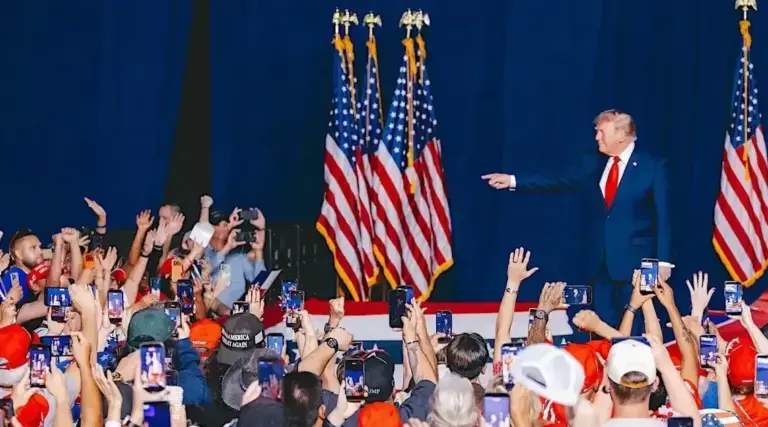
Former Kansas Republican Sen. Sam Brownback, who served as an ambassador during Donald Trump’s first term, blamed the president’s personal leadership style for Republicans’ midterm losses.

He claims the outcome of the 2026 elections — where Democrats’ sweeping victories in traditional red strongholds helped them reclaim majorities in the House and Senate — was a sign of voters rejecting Trump more than rebuking his policies.

“I think the thing we’re missing is that it was really targeted at President Trump. I don’t think it was targeted at the policies so much,” Brownback told Fox News Digital in an interview. “Pride comes before a fall and a haughty spirit before a stumble.”

REPUBLICANS TURN ON TRUMP AFTER DEVASTATING MIDTERM LOSSES HAND DEMOCRATS CONTROL OF CONGRESS

The former Kansas governor argued that Republicans should not write off the midterm results as the typical losses suffered by a president’s party through history during their second term.

Brownback, who represented Kansas in the U.S. Senate from 1996 to 2011 before serving as governor from 2011 to 2018, said economic concerns, including inflation and gas prices, played a role in the election results.

He suggested voters’ frustrations extended beyond the economy to Trump’s approach to governing.

The Fox News Voter Poll found that 89% of voters considered the cost of living a crucial or major factor in their congressional vote, compared with 74% who said the same about the war in Iran. The findings suggest broader economic frustrations were also a major concern among voters, although the two issues may overlap and the polling does not establish which ultimately drove Republican defections.

DEMS SEIZE ON MIDTERM ROUT TO DEMAND ICE REFORM, BUT POLLS REVEAL A TWIST IN WHO PRIORITIZED IMMIGRATION

“People just saying I’m ready to move on past President Trump,” Brownback said, adding that voters still appreciated the administration’s efforts to secure the border but viewed interior immigration enforcement as too aggressive.

The former ambassador-at-large for international religious freedom also urged Republicans to reconsider how they communicate with voters, emphasizing the importance of humility and kindness.

“You just can’t be proud. You’ve got to come forward humbly,” Brownback said. “And I think you have to do that with the American public.”

Brownback called for a more measured response to voters’ concerns ahead of 2028. “We hear you, American public. We’re adjusting to the message that we heard,” he said.

REPUBLICANS NEED HISTORY LESSON ABOUT THEIR PARTY IF THEY WANT TO MOVE ON FROM DEFEAT

“America is great because it’s good. If it ever loses its goodness, it will lose its greatness,” he added. “There has to be, as I keep doubling back to, a humility and a kindness about it as well.”

Both Vice President JD Vance and Secretary of State Marco Rubio have been floated as potential contenders for the 2028 Republican presidential nomination, with Vance saying he plans to decide whether to launch a White House bid in the spring.
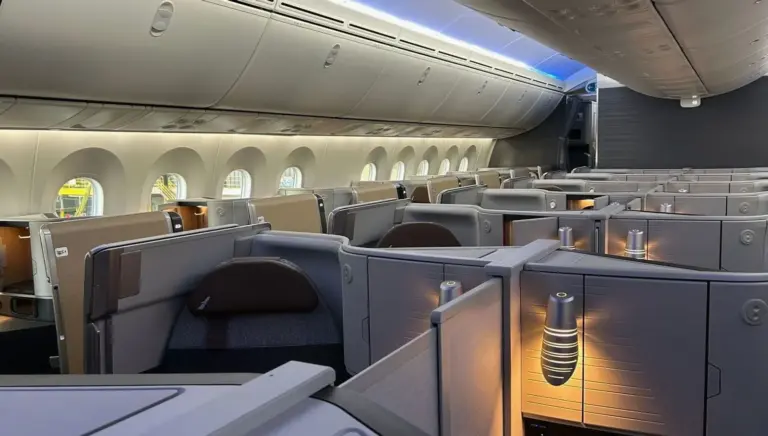
The golden age of the ultra exclusive international first class cabin has officially touched down for the final time in the United States. With American Airlines retiring its remaining eight suite sections on long haul flights, the industry has completed a sweeping transition toward a new model of travel. Instead of a tiny handful of elite berths, carriers are betting on massive, souped up business class cabins that accommodate dozens more passengers while maintaining a high level of comfort.

This shift represents a strategic move toward mass luxury, where airlines provide nearly identical perks to what once defined first class. Modern business suites now frequently feature sliding privacy doors, lie flat beds, integrated charging pads, and oversized screens. For many travelers, these enhancements have made the distinction between the two tiers almost invisible. While first class once meant seat side carvings of chateaubriand and fine bone china, today’s luxury experience is more about productivity and sleep than theatrical dining.

Industry experts suggest that this evolution is driven by both consumer behavior and corporate policy. Many companies permit employees to book business class but forbid the higher expense of first class, making a robust business cabin far more profitable for the airline. Furthermore, as fuel and landing fees climb, filling seventy business suites proves more lucrative than maintaining a small enclave of extreme opulence. When the bed already flattens to 180 degrees and the bedding is plush, adding a bowl of soup or a specific type of pillow does little to justify a massive price premium for most flyers.

As traditional first class fades into history, airlines are now looking at ways to further segment their remaining premium offerings. Much like how economy was split into basic and extra legroom options years ago, carriers like Delta and United are beginning to introduce tiered pricing within their top cabins. This means some high paying passengers may find themselves with fewer perks, such as restricted seat selection or limited lounge access, proving that even in the world of luxury aviation, efficiency and yield always win out over extravagance.

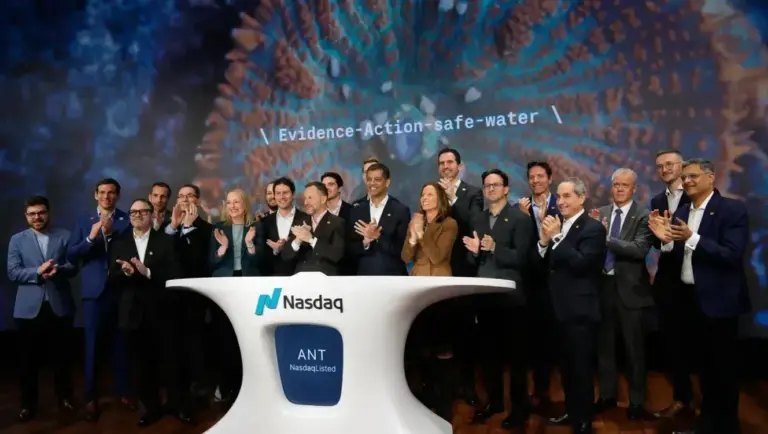
Levent Alpöge, a technical staff member at the AI powerhouse Anthropic, believes he has finally cracked the Riemann Hypothesis, a mathematical puzzle that has stumped the world’s greatest minds since 1859. In a detailed post shared on his personal website, Alpöge credited the company’s own AI tool, Claude, with helping him cross the finish line. Describing their collaboration as a partnership where the AI eventually outpaced him in speed and creativity, Alpöge claimed the breakthrough occurred late on a Sunday night, just as Anthropic was preparing for its historic entrance into the public stock market.

The Riemann Hypothesis focuses on the complex distribution of prime numbers as they stretch toward infinity and remains one of the most prestigious challenges in science. Rather than submitting a traditional academic paper, Alpöge provided his proof via seventeen million lines of Lean code, a specialized programming language used to verify mathematical theorems. While computers are famously rigid and unforgiving with logic errors, experts like Rutgers University professor Alex Kontorovich note that verifying such a massive amount of data still requires significant human effort to truly understand why the solution works.

Despite the excitement surrounding the announcement, official bodies remain cautious. The Clay Mathematics Institute, which offers a one million dollar prize for solving any of its Millennium Prize Problems, still lists the hypothesis as unsolved. Martin Bridson, president of the institute, acknowledged that while an announcement of this magnitude could transform our understanding of mathematics, moving from a digital claim to universal acceptance is a long and rigorous process. This follows a similar trend in the industry; just last month, OpenAI reported using its technology to solve another legendary physics problem involving fluid dynamics known as Navier Stokes.

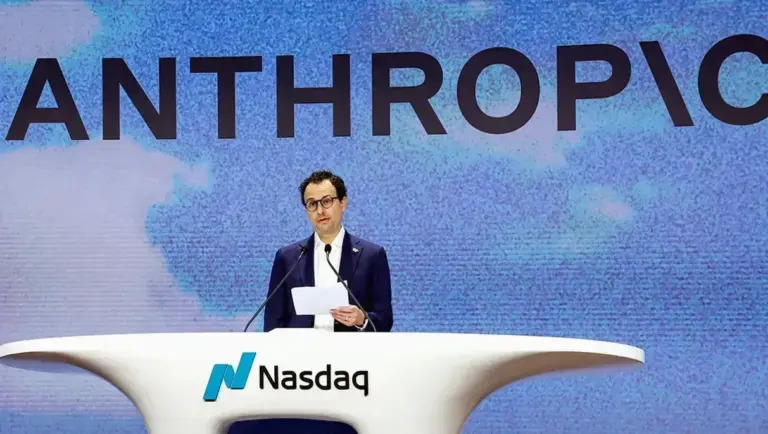
The timing of this revelation coincides with one of the largest corporate milestones in tech history. Anthropic recently completed an initial public offering that valued the company at 1.5 trillion dollars and raised eighty one billion dollars from investors. As CEO Dario Amodei steers the firm through its new life as a public entity, he continues to champion a future where artificial intelligence serves as an engine for scientific discovery while urging caution regarding its broader societal risks. For now, mathematicians worldwide are left to sift through millions of lines of code to see if humans have finally conquered primes with a bit of silicon help.

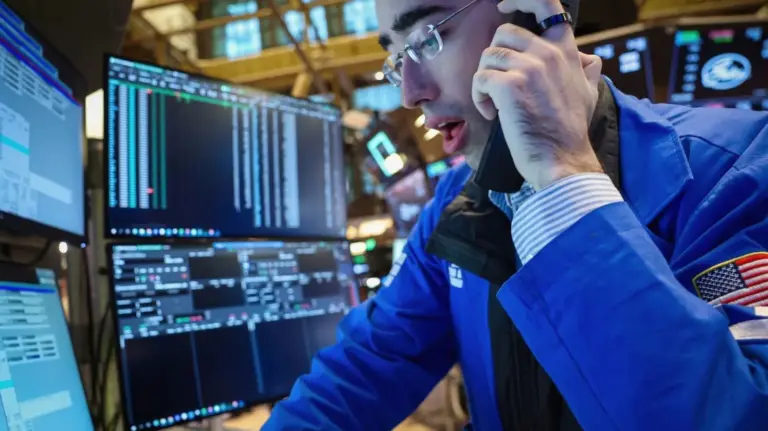
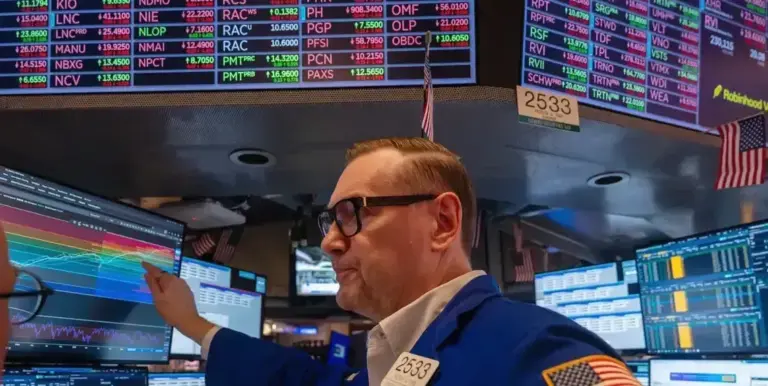
Wall Street experienced a bruising week as the S&P 500 and Dow Jones Industrial Average both slid into correction territory, dropping more than ten percent from their recent peaks. For months, investors seemed to ignore growing warning signs, but according to Wharton professor Jeremy Siegel, the market finally reached a breaking point where small pressures acted like straws that broke the camel’s back. The damage was most acute in tech heavy indices, with the Nasdaq Composite wiping out its yearly gains and the Nasdaq 100 dipping into bear market territory during intraday trading.

Much of the carnage can be traced back to a sudden cooling of the artificial intelligence boom. The massive IPO of AI leader Anthropic appeared to trigger a collective cash out for early investors, leaving retail traders feeling abandoned as shares tumbled shortly after debuting. This sentiment was compounded by a disastrous period for Nvidia, which saw its stock plummet amid reports of an SEC probe into its accounting practices. Adding to the chaos, former CEO Jensen Huang resigned following allegations involving a foreign spy and potential violations of chip export bans to China, stripping away much of the confidence that had previously buoyed the semiconductor sector.

Beyond the turmoil in AI, broader economic headwinds are pushing investors toward the exits. Persistent inflation fueled by geopolitical tensions in Iran has kept oil prices elevated and forced Federal Reserve officials to signal more aggressive interest rate hikes. With treasury yields spiking and Governor Christopher Waller suggesting a possible half percentage point increase next month, Wall Street is bracing for a central bank determined to curb rising costs at any cost. Meanwhile, technical indicators shifted negatively as the S&P 500 broke through its two hundred day moving average, triggering automated selling from institutional trend followers who accelerated the downward spiral.

Adding fuel to the fire is evidence that corporate earnings growth is losing steam. Once explosive revenue jumps for AI firms are beginning to decelerate, raising questions about whether valuations were fundamentally detached from reality. Fears regarding tighter regulations on data center construction following shifts in political control have further dampened enthusiasm for infrastructure plays like CoreWeave and Caterpillar. What began as a cautious dip has evolved into a systemic retreat as investors realize that neither technological optimism nor historical trends can shield them from current macroeconomic realities.

Wall Street endured a brutal stretch this week as the artificial intelligence trade, once seen as an unstoppable force, suffered a series of jarring setbacks. Major indexes reached grim milestones by Friday, with the S&P 500 and the Dow sliding into correction territory while the Nasdaq posted losses for the year. Even the highly anticipated IPO from AI lab Anthropic failed to spark a recovery, instead leading the charge downward after an initial surge. For many observers, the carnage suggests that the gold rush era of AI investing may have finally hit a critical turning point.

The instability was exacerbated by personal scandal at the highest levels of industry leadership. Ed Yardeni, founder of Yardeni Research, suggested that the turmoil surrounding Nvidia CEO Jensen Huang effectively burst the company’s bubble, allowing air to leak out of the broader AI sector slowly rather than in one catastrophic crash. This view is shared by skeptics like Michael Burry, whose foresight during the 2008 crisis earned him fame in The Big Short. Burry took to social media to remind investors that he had long warned against the circular financing and fragile webs connecting chipmakers and cloud providers, arguing that those attributing the slide solely to politics or scandals are missing a deeper systemic failure.

Other analysts see more mechanical reasons for the rout. Gordon Johnson of GLJ Research pointed toward a surging dollar forcing investors who traded on margin to liquidate their positions regardless of quality. Meanwhile, Michael Arouet questioned the basic logic behind trillion dollar valuations that seemed predicated on impossible growth rates. Technical strategists like Adam Turnquist note that while damage is mounting and key averages have been breached, it is not yet certain if we have entered a full bear market or simply a period of necessary stabilization.

Despite the bleeding, some voices remain defiantly optimistic. Dan Ives continues to champion a massive four trillion dollar buildout through 2027, viewing this dark chapter as a temporary dip rather than a structural collapse. Similarly, Gene Munster argues that current prices represent a buying opportunity and believes clarity will return once fourth quarter earnings reports provide concrete data on whether AI investments are actually paying off. Whether this is a healthy reset or the beginning of a prolonged winter depends entirely on which expert you trust.

The financial world is reeling from the sheer scale of Anthropic’s recent initial public offering, but while investors are focused on the staggering 1.5 trillion dollar valuation, some industry leaders see a much larger story unfolding for the average worker. Michael Rangel, the founder of small business technology platform Novo, believes this milestone marks the start of a digital gold rush specifically tailored for entrepreneurs and solopreneurs. In a conversation with Fox News Digital, Rangel suggested that those operating without employees are poised for explosive growth as AI levels the playing field, allowing individuals to handle workloads that previously required entire teams.

This shift is already visible in the data provided by Novo. Just last year, only one in every thirty four of the company’s quarter million small business clients were utilizing AI tools. Fast forward to today, and that figure has climbed to one in eight. While this indicates a rapid surge in productivity hunting and time management, Rangel notes that it also highlights a massive untapped market. With seven out of eight businesses still operating without AI assistance, there remains an enormous window of opportunity for both software giants like Anthropic and the small firms brave enough to adopt these technologies early.

Interestingly, some of the most surprising gains are happening in traditional, analog sectors where high tech once seemed out of place. Trucking has emerged as one of the fastest growing segments for AI adoption, doubling its penetration since 2025. While robots aren’t driving the rigs just yet, operators are using AI to completely overhaul their back offices by automating invoicing, scheduling, and complex accounting tasks. Similar trends are appearing in restaurants and healthcare providers who are leveraging automation to clear away mountains of clerical work and payroll headaches.

Despite his optimism, Rangel warns that we shouldn’t expect an overnight transformation across all industries. He acknowledges that changing deep seated habits and legacy systems takes significant time and effort for many small business owners. There will likely be a long tail of analog companies struggling to find the bandwidth to invest in these updates. However, for those willing to make the leap, Rangel believes AI represents a generational chance to elevate their operations to an entirely new level of efficiency.