Archive

November 3, 2026

Browsing

Ever since the 2016 presidential election that first got President Donald Trump elected and the ensuing Russiagate scandal, there has been increased scrutiny on foreign meddling in U.S. elections and threats to the American voting system.

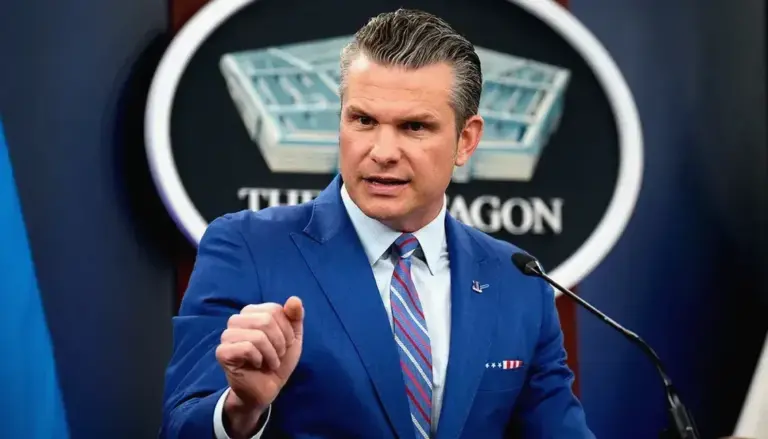
Now, 10 years later, Secretary of War Pete Hegseth is directing his entire intelligence and spy forces to ensure foreign adversaries do not interfere in Tuesday’s midterms.

The Pentagon chief has ordered America’s military intelligence and cyber agencies to mobilize against foreign threats to the 2026 elections by directing his department’s sprawling intelligence apparatus to make election security a priority in what he calls a “no-fail mission.”

The September directive reaches beyond U.S. Cyber Command and the National Security Agency, instructing the entire Defense Intelligence Enterprise — including agencies responsible for military and geospatial intelligence — to “mobilize every authorized asset, capability, and partnership” against foreign election threats.

HOW TO WATCH CRITICAL 2026 MIDTERM ELECTION RACES IN TX, OH, MI, WI, GA, IA, NV, ME AND FL

The order puts some of the military’s most sophisticated intelligence capabilities behind a mission that has grown considerably since Russia’s interference in the 2016 presidential election. But with Americans preparing to vote, the extent to which Hegseth’s directive has changed the Pentagon’s existing election-security operations remains unclear.

The Department of War declined to provide Fox News Digital with additional details about how the order is being implemented. Cyber Command separately declined an interview request about its election-security efforts.

In practice, the directive can mean military intelligence agencies are tasked with identifying foreign hackers or influence operations overseas, warning civilian agencies about threats headed toward U.S. targets and, when authorized, Cyber Command taking action against the foreign actors or infrastructure behind them.

The military’s role largely stops at the U.S. border: state and local officials run elections, while agencies such as the FBI and Department of Homeland Security handle the domestic side.

The Pentagon’s election security mission is not new. Cyber Command and NSA have spent years tracking and disrupting foreign threats around American elections, including operations targeting Russian actors during previous election cycles.

The effort began taking its current shape ahead of the 2018 midterms, when the agencies formed a “Russia Small Group” focused on foreign interference. It later evolved into a joint Election Security Group, combining NSA’s intelligence-gathering capabilities with Cyber Command’s ability to conduct operations against foreign cyber threats.

By 2022, then-Cyber Command and NSA chief Gen. Paul Nakasone was describing election security as an “enduring, no-fail mission” — language echoed by Hegseth four years later.

“Rest assured, we were doing operations well before the midterms began, and we were doing operations likely on the day of the midterms,” Nakasone said after the 2022 election, describing the military’s role as “understanding your foreign adversaries and operating outside the United States.”

The agencies again established an Election Security Group for the 2024 presidential election, but whether that structure was recreated for this year’s midterms has been less clear.

Gen. Joshua Rudd, the current head of Cyber Command and NSA, told lawmakers in April that foreign interference was “reasonable to expect based on what we’ve seen in the past” and said his command was “postured and ready to support as required or tasked.” He said at the time that he was unsure whether the Election Security Group had been reconvened.

CHINA-LINKED HACKERS INFILTRATED US GOVERNMENT NETWORKS BEFORE FBI TAKEDOWN

Five months later, Hegseth issued his department-wide directive, addressed not only to Cyber Command and NSA but also to the directors of the Defense Intelligence Agency and National Geospatial-Intelligence Agency.

The order instructs military intelligence agencies to collect and analyze intelligence on foreign election threats while directing Cyber Command to use its existing authorities and capabilities to counter potential foreign cyber activity in coordination with the Department of Homeland Security.

It does not publicly grant new authorities or establish a new election-security organization, instead reinforcing a mission the military has increasingly treated as an enduring responsibility.

U.S. intelligence officials, meanwhile, say they have seen no evidence that a foreign adversary has attempted to interfere with voting machines, physical election infrastructure or the counting of votes ahead of Tuesday’s midterms.

Rep. Jim Himes, D-Conn., the ranking member of the House Intelligence Committee, said last week that intelligence officials continue to see nothing contradicting that assessment, but urged Americans to remain “on high alert” for foreign disinformation, particularly as artificial intelligence makes such campaigns easier to spread.

But officials continue to track foreign influence efforts from Russia, China and Iran, with Russia remaining the most active foreign influence threat, CNN reported Sunday.

U.S. elections are attractive targets for foreign adversaries because the stakes extend far beyond who wins office: influencing American voters or undermining confidence in the process can shape U.S. policy, weaken public support for policies they oppose and deepen divisions without ever touching a voting machine.

Lawmakers briefed on classified intelligence last month said Russia was using disinformation to target candidates and undermine confidence in the election, while China’s influence efforts were more narrowly focused on candidates viewed as hostile to Beijing.

The Pentagon’s role focuses on threats originating overseas, while state and local officials administer elections and civilian federal agencies lead domestic election-security efforts.

Hegseth’s directive makes that overseas mission a priority across the broader military intelligence enterprise, though the Pentagon has not disclosed whether it has resulted in additional personnel, resources or organizational changes ahead of Election Day.
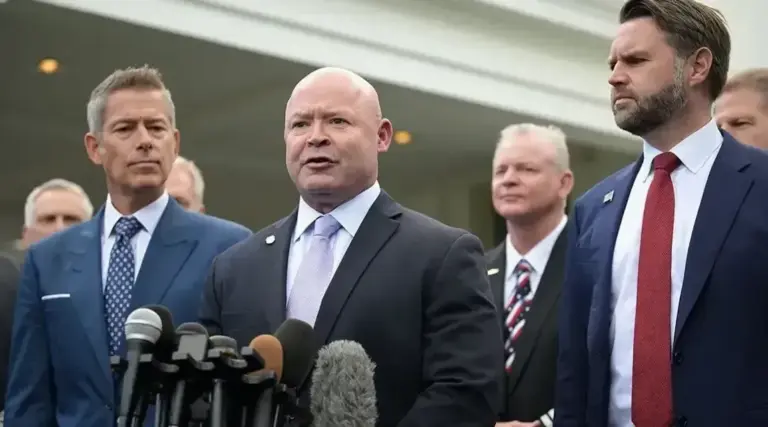
The leader of one of the nation’s oldest and largest unions stunned political observers by issuing a surprise endorsement for a Senate Republican stalwart over the weekend.

Teamsters General President Sean O’Brien, who famously nearly came to blows with now-Secretary of Homeland Security Markwayne Mullin during a Senate hearing before ultimately becoming acquaintances, issued a ringing endorsement of Sen. Ashley Moody, R-Fla., signaling a major break from national union sentiment that has tended to favor Democrats.

“Just voted in the State of Florida for the first time, and very proud to have cast a ballot for Sen. Ashley Moody,” O’Brien, whose 123-year-old union is about 1.3 million-strong, announced Sunday.

5 TAKEAWAYS FROM FLORIDA SENATE PRIMARY: GOP SEN ASHLEY MOODY WILL FACE DSA’S NIXON

“Sen. Moody has been extremely helpful working with the Teamsters to protect workers’ pensions, defend good-paying jobs, and support well-funded union apprenticeship programs.”

“The Teamsters look forward to working with Sen. Moody in her role on the Senate HELP Committee to pass the Faster Labor Contracts Act and get this critical legislation signed into law to protect American workers,” he added.

FRUSTRATED BLUE-COLLAR UNION BOSSES RIP SOCIALIST POLITICIANS, WARN OF LABOR EXODUS FROM DEM PARTY

O’Brien, a self-described “lifelong Democrat,” previously spoke at the 2024 Republican National Convention, but emphasized at the time that the Democratic Party had snubbed his request to speak at its convention.

“If the far-left want to criticize me and attack me, that’s OK. If the far-right wants to do the same, that’s great. I represent 1.3 million hardworking men and women,” O’Brien said at the time.

Fox News Digital reached out to the Teamsters as well as Moody’s campaign for comment.

Moody, a former state attorney general, said in a statement that she was proud to have O’Brien’s endorsement:

“I’ll always fight to protect hardworking Americans, strengthen good-paying jobs, and ensure resources are available to train our next generation. It’s been great to deliver for Florida’s working families,” she said.

After O’Brien endorsed Moody, the lawmaker’s Democratic opponent responded by posting a photo she once took with O’Brien and writing that “Ashley Moody never walked the line with you.”

AOC BACKS FLORIDA DEM ANGIE NIXON FOR US SENATE: ‘I’M PROUD TO ENDORSE HER’

“But ok brother. Shout out to all the rank and file Teamsters that are voting for me. I will always stand with you,” Democratic nominee Angie Nixon, a state lawmaker from Jacksonville whose platform is considered DSA-aligned, wrote on X.

O’Brien also caught heat for voting in Florida, which appeared to signal a move from his hometown of Boston.

SIGN UP TO GET THE POLITICS NEWSLETTER

“Be union leader — move to a famously anti-union state — vote for a famously anti-union candidate — Brag about it — really cool stuff man,” a top commenter on O’Brien’s post said. Other critics characterized O’Brien as a “scab”, union jargon for someone who crosses a strike picket line to return to work for the company with which they are at odds.

The Teamsters leader’s announcement marked a noteworthy development with polls set to open nationwide in a matter of hours.

This post appeared first on https://www.foxnews.com

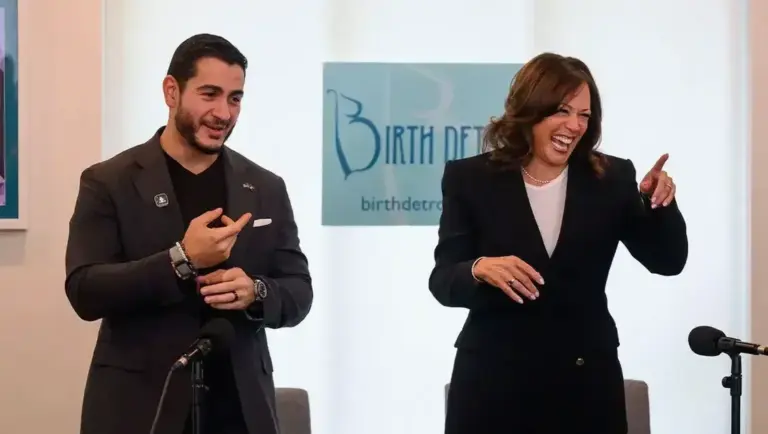
Michigan Democratic Senate candidate Abdul El-Sayed is facing renewed scrutiny from Republican critics over his mother’s questioning by federal investigators more than two decades ago as part of an investigation into an Islamic charity where she worked.

El-Sayed’s Republican opponent, former Rep. Mike Rogers, R-Mich., accused the Democratic candidate of misleading Michigan voters about his views on the Muslim Brotherhood, pointing to reported associations involving members of El-Sayed’s family.

El-Sayed previously told Fox News that he has “never been” and will “never be” a member of the Muslim Brotherhood. Fox News Digital is not aware of any direct ties between El-Sayed and the organization.

El-Sayed’s campaign did not respond to Fox News Digital’s request for comment.

CONTROVERSY OVER ABDUL EL-SAYED’S FAMILY TIES TO MUSLIM BROTHERHOOD IGNORED, DOWNPLAYED BY LIBERAL MEDIA

“Michiganders cannot trust Abdul El-Sayed. He lies about his physician credentials, his family life, and about how much his disastrous policies will cost Michigan’s families,” a spokesperson for Rogers told Fox News Digital. “Tell the truth, Abdul.”

El-Sayed has not publicly addressed the details of his mother’s questioning by federal investigators or the raid on the offices of the Islamic charity where she worked since the Washington Free Beacon resurfaced the reports last month.

Federal authorities raided the Missouri office of the Islamic American Relief Agency (IARA), where El-Sayed’s mother, Fatten Elkomy, worked in 2004, according to the Columbia Daily Tribune. The newspaper reported that federal agents questioned Elkomy for approximately three hours during the investigation.

In 2008, IARA was shut down by the federal government in connection with alleged violations of federal sanctions and terrorism-related financing restrictions, including allegations involving funding for Islamic militants in Afghanistan and terrorist groups such as the Taliban and al Qaeda.

Elkomy was not charged in connection with the investigation, according to multiple reports. Fox News Digital has found no evidence that she facilitated transfers of funds to terrorist organizations.

The U.S. Treasury Department did not respond to Fox News Digital’s request for comment about the government’s findings concerning IARA’s alleged connections to the Muslim Brotherhood or why Elkomy was questioned by federal investigators.

TRUMP LINKS MICHIGAN SENATE CANDIDATE ABDUL EL-SAYED TO MUSLIM BROTHERHOOD: ‘HE’S A CON MAN’

During his Senate campaign, El-Sayed has sought to distance himself from his mother’s reported political associations, emphasizing that she did not raise him.

El-Sayed was raised in Michigan by his father and stepmother after his parents divorced when he was 3.

“I have no ties. We have no ties,” El-Sayed told NBC’s Tom Llamas in October. “I have never had these conversations with my mother, I wasn’t raised by my mother.”

The scrutiny of El-Sayed extended to the candidate’s fundraisers and campaign events with Islamic leaders, some of whom have reported ties to the Muslim Brotherhood or have been accused of making antisemitic or hateful remarks. The controversy has also included El-Sayed’s campaign appearances with left-wing streamer Hasan Piker.

His former Democratic primary opponent, Rep. Haley Stevens, D-Mich., endorsed Rogers on Sunday, citing concerns about El-Sayed’s approach to the safety of Michigan’s Jewish community and his repeated campaign appearances with Piker, who previously said, “America deserved 9/11.”

“I don’t like a democratic nominee for U.S. senate campaigning and standing with someone who’s saying that America deserved 9/11,” Stevens said during a CNN interview Sunday night. 

El-Sayed declined to comment on Piker’s remarks during an April interview with POLITICO but later disavowed them during an August appearance on NBC’s “Meet the Press.”

EL-SAYED ERUPTS AT GOP RIVAL OVER MUSLIM BROTHERHOOD ACCUSATIONS IN FIERY SENATE DEBATE

Amy Mek, founder of the RAIR Foundation, a nonprofit organization focused on investigating groups it identifies as connected to terrorism, echoed Rogers’ concerns about national security and El-Sayed’s silence in a statement to Fox News Digital.

Mek, who previously testified before Congress about terrorism-related threats in the United States, told Fox News Digital that she believes El-Sayed’s silence on his mother’s questioning reflects political considerations. 

She also pointed to social media posts by El-Sayed’s half-sister, Eman Abdelhadi, who wrote on X in 2012 that members of their family have “long been” members of the Muslim Brotherhood.

In a separate 2013 post that remains publicly available on her account, Abdelhadi said she was “praying for all my family that supports the #MB.”

Abdelhadi later recalled her family’s fear of FBI surveillance in a 2016 article titled, “Queer, Muslim, and Unwelcome at the ‘New Stonewall.'”

El-Sayed has not publicly addressed his half-sister’s statements in detail but called the tweets “not serious” during his NBC interview, accusing Llamas of “using hearsay evidence from a tweet” to question him about his family’s reported connections to the Muslim Brotherhood.

This post appeared first on https://www.foxnews.com

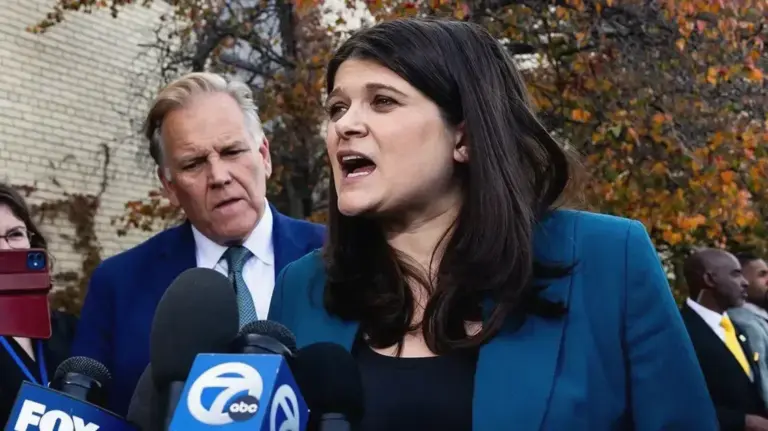
House Democratic leaders are holding off on deciding whether to punish Rep. Haley Stevens, D-Mich., after she endorsed a Republican in Michigan’s Senate race, drawing calls from fellow Democrats for her removal from the party’s House caucus.

Stevens endorsed former Rep. Mike Rogers, R-Mich., over Democratic Senate nominee Abdul El-Sayed, a former public health official, on Nov. 1 — just two days before Tuesday’s midterm elections.

The decision prompted sharp criticism from Democrats, including lawmakers who want Stevens expelled from the House Democratic Caucus, but party leaders are waiting until after the elections to address her future.

HALEY STEVENS RIPPED BY FELLOW DEMS FOR REFUSING TO EXPLICITLY BACK EL-SAYED: ‘STAY THE F— OFF TELEVISION’

A senior Democratic aide told Fox News Digital that House Democratic Caucus Chairman Pete Aguilar, D-Calif., would likely support House Minority Leader Hakeem Jeffries, D-N.Y., in his response to Stevens’ endorsement.

HALEY STEVENS’ FIANCE HAMMERS EL-SAYED, SAYS HE’LL VOTE FOR ROGERS

“Haley Stevens made a terrible decision, blindsided everyone and isolated herself from the House Democratic caucus. We will have a discussion about appropriate next steps upon our return,” Jeffries told POLITICO.

Spokespeople for Jeffries and Aguilar did not respond to Fox News Digital’s requests for comment.

Stevens, a four-term lawmaker, is leaving Congress at the end of the year after narrowly losing Michigan’s Democratic Senate primary to El-Sayed.

Since her loss, Stevens has taken a lukewarm approach to supporting El-Sayed’s campaign while also criticizing his approach to Israel and Jewish and Black voters.

BLACK VOTERS, JEWISH DEMOCRATS IN MICHIGAN WARY OF VOTING FOR EL-SAYED, SAY ‘HE’S TAKING ADVANTAGE’

That fragile peace ruptured over the weekend when El-Sayed’s campaign publicly asked Stevens to abstain from appearing at any of his events even after she said she would attend church with him and Rep. Jim Clyburn, D-S.C., in a bid to mobilize Black voters.

Stevens apparently blindsided fellow Democrats when she then appeared at another church alongside Rogers and his wife and subsequently endorsed the Republican ahead of Election Day.

EL-SAYED’S PAST MUSLIM BROTHERHOOD COMMENTS RAISE RED FLAGS AS HE EYES POWERFUL ROLE

Rep. Debbie Dingell, D-Mich., said during a Sunday appearance on CNN that Stevens had reassured her “multiple times” over the weekend that she would not endorse Rogers.

“I don’t know what changed between late Saturday and Sunday morning,” Dingell said during another CNN appearance Monday.

And the endorsement also spurred her ouster from the Michigan state Democratic Party.

Michigan Democratic Party Chairman Curtis Hertel wrote on X that Stevens “is not a current member of the Michigan Democratic Party, nor will she be in the future” after she backed Rogers.

In the House, Democratic officials, such as Rep. Delia Ramirez, D-Ill., have already called for Stevens’ removal.

“Deplorable and embarrassing. Capitulating to fascism, Islamophobia, racism and the policies hurting everyday Americans makes you unfit to serve with the Democratic caucus,” Ramirez wrote on X. “Shame on Haley Stevens. She must be removed from the caucus.”

HALEY STEVENS CONDEMNS HASAN PIKER BUT RALLIES BEHIND EL-SAYED AFTER NARROW PRIMARY LOSS

Ramirez did not respond to Fox News Digital’s request for comment.

Rep. Pramila Jayapal, D-Wash., echoed Ramirez’s claim and added that Stevens “has no place in our party,” according to POLITICO.

Vocal organizations aligned with the Democratic Party, such as the IfNotNow movement, have also formally called on the congresswoman to be removed from the caucus, calling her endorsement a betrayal to the party.

“As national organizations representing Jewish, Muslim, and Democratic voters opposed to Donald Trump’s war on Iran, which is responsible for the rising costs of gas and groceries and an affordability crisis that is taking a heavy toll on working families at a time when the future of our democracy is at stake,” the organization said in a statement shared with Fox News Digital. “We call on House Democratic Leader Hakeem Jeffries to expel Congresswoman Stevens from the Democratic Caucus and strip her of her committee assignments.”

If Stevens was removed from the caucus, she would no longer be able to attend its weekly meetings in the U.S. Capitol. Democrats could also pursue action against her committee assignments, though the process and authority for doing so would need to be determined under the applicable caucus and House rules.

And it appears Stevens’ staff has also shunned her over the endorsement. When Fox News Digital reached out to her office for comment on the backlash from House Democrats, an automated response from her communications director said he is “no longer with the Office of Congresswoman Haley Stevens” as of Nov. 1, the day she backed Rogers.

Global oil markets took a sharp dive on Monday morning following reports that a draft proposal aimed at ending the protracted conflict between the United States and Iran has begun circulating among key diplomats. The sudden shift in geopolitical sentiment triggered an immediate sell off, as traders bet that a resolution would stabilize energy corridors and potentially bring sanctioned Iranian crude back into the global supply chain.

The volatility was felt instantly across major exchanges, reflecting a broader relief rally among investors who have spent months bracing for escalation in the region. Analysts suggest that while the document remains a preliminary framework rather than a signed treaty, its mere existence suggests both powers are seeking an exit strategy from years of hostility. This prospect of stability effectively stripped away the risk premium that had been propping up prices throughout the quarter.

Energy giants like Exxon Mobil saw their valuations dip slightly amidst the chaos as market participants recalibrated for a world with more predictable flow through the Strait of Hormuz. Industry experts note that any formal agreement could lead to a significant surplus in available barrels, fundamentally altering the pricing landscape for months to come. For now, all eyes remain on official government channels to see if these diplomatic whispers will translate into a lasting peace.

Elon Musk is eyeing a significant expansion of his telecommunications empire as SpaceX explores a potential acquisition or partnership with Boost Mobile. According to reports from The Washington Post, discussions have already taken place between Musk and EchoStar chairman Charlie Ergen regarding how the aerospace company might leverage the budget carrier to transform Starlink into a major player in the mobile phone market. While the exact nature of the arrangement remains unclear, the strategy likely involves either buying Boost Mobile outright or securing deep access to its existing infrastructure.

This move represents a strategic shift for SpaceX as it attempts to bridge the gap between space and ground communications. By combining Starlink’s satellite-to-mobile capabilities with a traditional terrestrial network, Musk hopes to eliminate dead zones across the country. However, integrating these systems won’t be seamless, as Boost Mobile currently relies on networks operated by T-Mobile and AT&T. Any formal agreement would likely require navigation through complex permissions and regulatory hurdles involving those larger industry giants.

The push toward becoming a full-scale cellular provider is already well underway behind the scenes. Over the past year, SpaceX has aggressively collected wireless spectrum licenses from EchoStar and invested in low-band frequencies designed to help signals penetrate walls and buildings more effectively. Reports also suggest that the company is negotiating access to roughly 80,000 cell sites throughout the United States, signaling that Starlink intends to compete directly with established carriers rather than remaining a niche backup service for remote areas.

The world’s largest cryptocurrency exchange is grappling with a massive exodus of capital after security experts identified what they believe to be the biggest digital coin theft in history. In the wake of the breach, Binance users withdrew more than 4.6 billion dollars from the platform. While some confidence returned on Sunday as transactions resumed for major assets like Bitcoin and Ethereum, leading to about 1 billion dollars in new deposits, the exchange still faced a staggering net outflow of 3.64 billion dollars.

The chaos follows a devastating heist in which cybercriminals stole roughly 6.3 billion dollars in digital currency. The FBI has linked the attack to a North Korean hacker group known as TraderTraitor, which previously targeted another exchange called Bybit earlier this year. To conceal their tracks, investigators say the group attempted to convert much of the loot into Ethereum. While Binance managed to freeze approximately 3 billion dollars of the stolen assets, federal authorities are urging other private firms to block any addresses associated with the laundering operation.

Despite the scale of the theft, Binance leadership is attempting to project stability to its base of over 300 million users. Cofounder Yi He emphasized that securing the environment remains the top priority before full operations can resume. The company noted that the withdrawn funds represent only 2.1 percent of its total assets, which sit at 171 billion dollars. To prevent a total collapse of user trust, Binance has pledged to cover all losses using its own corporate funds and reported that nearly 95 percent of the impacted amount had been covered by Sunday morning.

Apple entered a new era this week as CEO John Ternus oversaw his first quarterly earnings report, delivering total revenue that surpassed Wall Street expectations despite a complicated landscape of supply chain hurdles. The tech giant reported revenue of 114.48 billion dollars, marking a 12 percent increase from the previous year. While the results provided a strong opening act for Ternus, who succeeded Tim Cook on September 1, the figures showed some volatility across different product lines, with robust iPhone and Mac sales offsetting misses in iPad and accessory revenue.

The cornerstone of the quarter remained the iPhone, which continued to drive over half of the company’s total sales. Demand stayed high even as Apple reluctantly raised prices by 100 dollars to combat rising costs for memory and critical computer components. Interestingly, these numbers only captured eight days of sales for the new iPhone 18 Pro, while the highly anticipated iPhone Duo had not yet reached consumers. This suggests significant momentum heading into the next reporting period, especially as Ternus noted that market share gains have persisted globally.

Beyond hardware, investors are closely watching how Ternus intends to monetize artificial intelligence following the release of an updated Siri AI. During conversations with reporters, the CEO hinted that AI would serve as a powerful catalyst for hardware upgrades rather than relying solely on subscription fees. He expressed confidence that the best is yet to come for Apple, pointing toward strategic expansions like HomeView and strong recovery efforts in Greater China, where business grew by 21 percent thanks to surging demand for Macs and iPhones.

Despite the overall win, there were signs of cooling in some areas. The lucrative services division experienced its slowest growth rate since 2022, expanding by less than 10 percent. Additionally, wearables and home accessories lagged behind analyst estimates as the company pivots its strategy for domestic technology. Meanwhile, Apple continues to maintain a conservative approach to infrastructure spending compared to its rivals, keeping capital expenditures significantly lower than those of other AI focused giants.

Squarespace is trimming nearly a fifth of its global staff as the company attempts to streamline its operations and pivot toward a more agile future. According to Jeff Seedman, a spokesperson for the firm, the restructuring involves cutting roughly 300 positions. The move is designed to simplify internal processes and sharpen corporate priorities as the web hosting giant prepares for what leadership describes as its next phase of growth.

This downsizing comes at a volatile time for the website construction industry, which has been fundamentally altered by the rise of generative artificial intelligence. A new wave of vibe coding tools now allows users to generate fully functional front end designs using simple text prompts, drastically reducing the manual effort once required to launch a site. Competitors have moved aggressively to capture this market, with Wix acquiring Base44 and newcomers like Lovable securing massive valuations from investors eager to capitalize on automated design.

In response to these pressures, Squarespace has doubled down on its own technical evolution. The company recently introduced an AI tool known as Blueprint and is currently building anticipation for Forma, an upcoming AI native platform that already has a growing waitlist of interested users. By integrating these capabilities, Squarespace hopes to remain competitive against both legacy rivals and nimble startups backed by venture capital.

The financial trajectory of the company has seen similar turbulence since it first entered the public eye. After going public in 2021 with a ten billion dollar valuation, Squarespace found it difficult to maintain momentum on the open market. This struggle eventually led to a decision to return to private ownership via a seven billion dollar private equity deal earlier this year, setting the stage for current structural changes meant to stabilize the business long term.