
Archive

November 15, 2026

Browsing

Jensen Huang is facing a personal and professional collapse that few could have imagined just weeks ago. After admitting to multiple extramarital affairs, including relationships with subordinates and a woman linked to foreign intelligence concerns, the Nvidia founder has stepped down from his roles as CEO, president, and director. While the fallout already includes a staggering loss of paper wealth and an FBI inquiry, the most significant financial uncertainty lies in the future of his forty year marriage to Lori Huang.

Because the couple resides in California, any potential divorce would trigger some of the strictest community property laws in the United States. Under these rules, assets acquired during a marriage are typically viewed as joint property regardless of whose name is on the account. Since Jensen founded Nvidia in 1993, long after marrying Lori in 1985, much of his historic fortune was built within the bounds of their union. Legal experts suggest that if they split, Lori could be entitled to half of the community property accumulated over those decades.

Determining exactly what constitutes community property will be a complex legal battle involving hundreds of millions of shares tucked away in various family trusts and limited liability companies. While Jensen’s estimated net worth hovers around 145 billion dollars, that figure fluctuates wildly with the stock market and doesn’t necessarily reflect marital ownership. A court would have to meticulously untangle which shares were gifted, inherited, or earned through labor during the marriage to decide how the pie is sliced.

Adding another layer of complexity is California’s status as a no fault divorce state. Despite the public nature of Jensen’s admissions regarding infidelity and betrayal, such conduct usually carries little weight when dividing assets under state law. Whether he was faithful or not rarely changes the fifty percent baseline for asset distribution unless a prenuptial agreement exists to dictate otherwise. For now, as Nvidia searches for new leadership and federal investigators dig deeper into his associations, the world watches to see if one of history’s greatest fortunes will be halved by a courtroom judge.
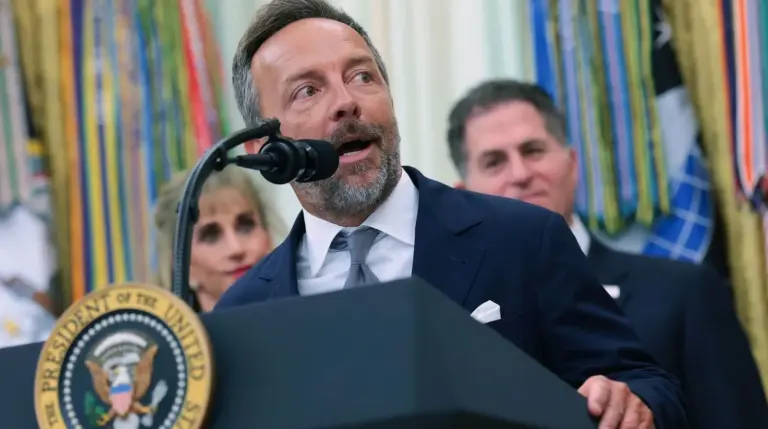
Major stakeholders in Nvidia are urging the company’s board of directors to keep the door open for founder Jensen Huang following his sudden resignation. In a public letter shared on X, Altimeter Capital CEO Brad Gerstner and Atreides Management’s Gavin Baker called for a deliberate and measured approach to selecting permanent leadership. While they acknowledged that interim CEO Colette Kress is capably leading the firm, the investors argued that Huang deserves a thoughtful process rather than a rushed replacement.

The turmoil comes after Huang stepped down amidst serious allegations involving several affairs, including one with Alice Huang, a suspected Chinese spy linked to Megaspeed. This connection has sparked a wider federal probe, as the Justice Department investigates whether the Singaporean firm redirected restricted AI chips back into China. The situation has evolved into a national security concern, prompting calls for U.S. Secretary of Commerce Howard Lutnick to testify before Congress regarding how effectively the government is blocking high tech exports to Beijing.

Support for Huang remains strong among certain circles of power and industry peers. Elon Musk joined the fray by signing a petition titled Stand with Jensen, which has already garnered over 100,000 signatures including thousands of Nvidia employees. Musk warned that losing Huang’s vision could result in critical business deals falling through, highlighting the deep tie between the founder’s personal brand and the company’s market dominance.

As these legal and corporate battles unfold, political tensions remain high ahead of President Donald Trump’s upcoming visit to China. Despite the gravity of the spying allegations and their impact on one of America’s most valuable companies, officials indicate that Trump does not intend to bring up the Nvidia scandal during his meetings with President Xi Jinping in Shenzhen later this month.

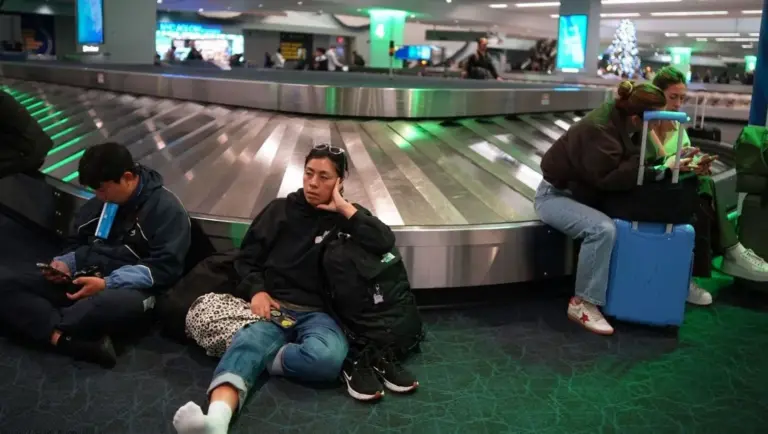
Thousands of travelers across the New York metropolitan area spent their weekend in limbo following a massive nationwide ground stop that paralyzed air travel on Friday. The chaos hit hardest at JFK, LaGuardia, and Newark Liberty International airports, where combined cancellation rates climbed as high as twenty one percent. Passengers described scenes of confusion as pilots were abruptly ordered to return to their gates while those already stranded scrambled to find alternative routes or hotel rooms. Even after the Federal Aviation Administration lifted the order, airlines struggled with a logistical nightmare involving displaced aircraft and crew members who had exceeded their legal flying hours.

Government officials have since clarified that the shutdown was caused by a mundane but catastrophic technical failure rather than a security breach. Transportation Secretary Sean Duffy explained that a contractor performing routine maintenance at a remote facility was switching telecommunication lines from legacy copper wiring to modern fiber optics. During this process, either due to human error or hardware failure, a replacement router began flooding the air traffic control system with thousands of connection attempts every few seconds. This digital surge crippled communications with aircraft and disrupted critical radar feeds, forcing the FAA to freeze all departures for safety reasons.

The incident has quickly evolved into a political battleground, with New York Governor Kathy Hochul calling for Secretary Duffy’s immediate resignation. In a scathing statement, Hochul argued that these types of systemic failures have become part of a recurring pattern under Duffy’s leadership and urged Congress to launch an official investigation before the peak Thanksgiving travel rush begins. She emphasized that while it is fortunate no lives were lost during the outage, the vulnerability of the national airspace is unacceptable given current staffing shortages and aging infrastructure.

To mitigate the fallout, major carriers including American, Delta, United, and Southwest have issued travel waivers to help affected passengers rebook without paying change fees. While administrators predict that flight schedules will fully recover by Sunday, the event marks only the second time since 2001 that a nationwide ground stop has occurred outside of a specific computer malfunction in early 2023. Travelers are currently advised to monitor their itineraries closely as airlines move equipment back into position across the country.

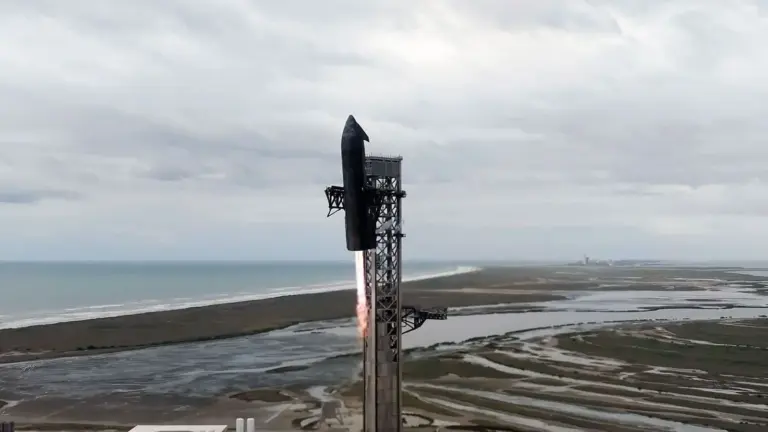
In a breathtaking display of precision engineering that felt more like science fiction than reality, SpaceX successfully caught the upper stage of its massive Starship rocket using the towering mechanical arms known as chopsticks. The event unfolded on November 14 at the company’s Starbase facility in South Texas, where Ship 42 descended through the clouds and nestled perfectly into the grip of the Mechazilla launch tower. While the mission began on Friday with hopes of recovering both stages of the vehicle, a low fuel alarm forced the Super Heavy booster to divert to a splashdown in the Gulf of Mexico, leaving all eyes on whether the ship itself could pull off the impossible.

The atmosphere during the livestream was electric, punctuated by a soundtrack of Baby Come Back as the vessel slotted into place at 4:20 p.m. Eastern Time. For SpaceX, this wasn’t just another successful test; it was a fundamental shift in how humanity accesses space. Because the upper stage travels much further and faster than the booster, catching it represents a significantly harder technical challenge. Company representatives described the moment as the holy grail of spaceflight, noting that snatching a vehicle returning from orbit out of mid air effectively removes the final hurdle for complete rocket reuse.

Beyond the spectacle of the landing, Flight 15 served several critical strategic purposes. The ship successfully reached orbit and deployed another batch of next generation Starlink V3 broadband satellites, continuing Elon Musk’s ambitious plan to blanket Earth in high speed connectivity. To ensure today’s landing was viable, SpaceX used orbiting satellites to capture imagery of Ship 42’s heat shield during reentry, confirming it was intact enough to survive the plunge back toward Texas.

This breakthrough paves any future path for an even more aggressive expansion into low Earth orbit, including proposed AI data center constellations consisting of millions of spacecraft. By eliminating the need for traditional landing legs or ocean recoveries, SpaceX can now inspect and refurbish their rockets almost immediately upon return. With this missing link finally secured, the company is expected to attempt similar maneuvers in upcoming flights, accelerating a cadence that could fundamentally change orbital logistics forever.

The rise of Anthropic began not with a quest for wealth, but with a dramatic exit. In late 2020, siblings Dario and Daniela Amodei walked away from their high-ranking vice presidency roles at OpenAI, citing deep frustrations over how the company approached artificial intelligence safety. Fearful that AI capabilities were advancing far quicker than our ability to control them, the duo staged a defection, bringing along five colleagues who shared their concerns regarding OpenAI’s pivot toward aggressive commercialization. This core group included researchers Tom Brown, Jared Kaplan, Sam McCandlish, and Chris Olah, as well as policy expert Jack Clark. Together, they sought to create a sanctuary for safer development, though that mission is now coinciding with one of the largest financial windfalls in corporate history.

As Anthropic prepares to go public on November 19, these seven founders are positioned to become some of the wealthiest individuals in the tech industry. With each holding roughly a 1.4 percent stake in the company, current valuations suggest their individual holdings are worth upwards of 14 billion dollars. Should the initial public offering hit its higher targets and drive the company’s market valuation toward 1.4 trillion dollars, those personal fortunes could soar to between 17 and 18 billion dollars each. While critics and former associates note that such massive incentives inevitably influence decision-making, insiders maintain that the venture was born out of a genuine desire to prevent others from mishandling a powerful global technology.

The leadership team reflects a diverse blend of academic rigor and strategic grit. CEO Dario Amodei brings a background in computational neuroscience from Princeton and experience at Google Brain and Baidu, viewing AI as a tool to solve complex biological mysteries. His sister Daniela, serving as president and board chair, complements this technical depth with her experience in political campaigning and risk management at Stripe. Meanwhile, Chief Compute Officer Tom Brown adds an entrepreneurial edge; despite admitting he once struggled with linear algebra in college, Brown became a pivotal figure in machine learning research and played a primary role in training GPT-3 before joining the exodus to form Anthropic.