Archive

September 29, 2026

Browsing

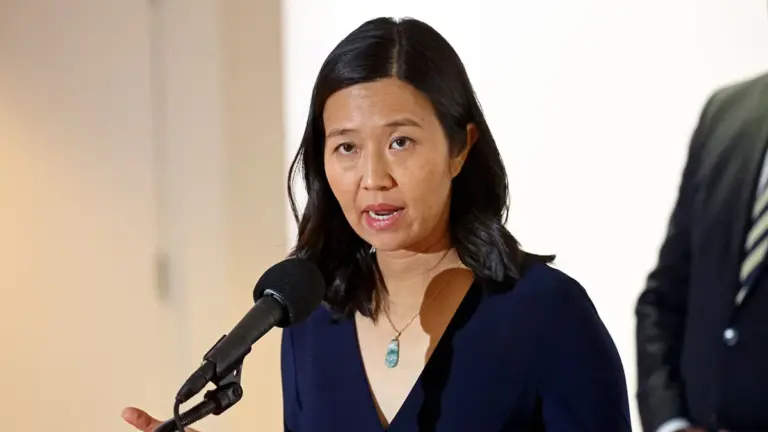
Boston Mayor Michelle Wu’s administration is offering taxpayer-funded scholarships for an activist program while limiting participation to immigrants, including non-U.S. citizens, a requirement that has drawn criticism online.

The Immigrants Lead Boston program, run by the Mayor’s Office for Immigrant Advancement, is designed for “emerging leaders” interested in advocating for Boston’s immigrant communities. Participants meet city officials and receive training aimed at helping them engage with local government and organize within their communities during the 10-week program.

Critics have seized on both the taxpayer funding and the eligibility requirements, arguing that U.S.-born residents are excluded from a city-backed leadership program whose participants can receive a $575 scholarship.

“That is not charity. That is a political pipeline built to shut citizens out of their own city,” one user wrote on X.

BOSTON TO GIVE LGBTQ+ MIGRANTS VOUCHERS FOR YOGA, MEDITATION, ‘CREATIVE HEALING’

“Paying illegal immigrants to learn political organizing to protest against the country they’re in,” one person wrote on X.

“For starters it sounds like discrimination,” posted a user.

“Michelle WU is a communist who probably wants a American version of China,” a person wrote taking shots at the Boston mayor.

TRUMP’S JUSTICE DEPARTMENT SUES NEW YORK, OTHER BLUE STATES OVER TUITION FOR ILLEGAL IMMIGRANTS

“Is this legal,” asked one user.

“Illegal aliens have broken our laws. Any assistance given them other than assistance to leave the country, simply rewards their unlawful behavior, encourages other unlawful behavior, and more illegals to follow their lead,” one person posted.

Similar taxpayer-backed benefits for immigrants have surfaced in other Democratic-led states, particularly in higher education.

NEBRASKA ENDS IN-STATE TUITION BENEFITS FOR ILLEGAL IMMIGRANTS UNDER DOJ DEAL

SIGN UP TO GET THE POLITICS NEWSLETTER

New York, Connecticut and Vermont have offered in-state tuition or other financial benefits to immigrants in the country illegally, while Oregon and Washington have provided access to benefits such as state grants or student loans. California has also allowed qualifying students in the country illegally to apply for state financial aid.

Fox News Digital reached out to Mayor Wu’s office for comment.

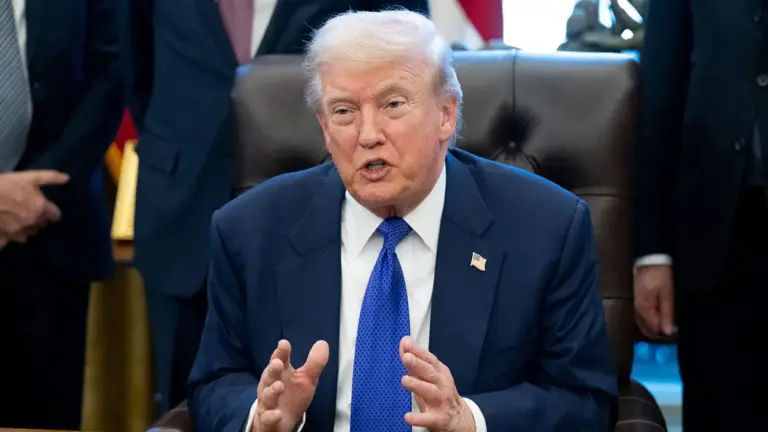
President Donald Trump is unveiling Monday plans for a massive steel plant in Iowa that the White House says will be the largest in American history and promises to bring 1,750 permanent jobs to the state.

The roughly $15 billion steel plant is touted as a major new investment and evidence that Trump’s economic agenda is bringing heavy manufacturing back to the U.S. with just over a month until the midterms. It will create between 5,000 and 6,000 construction jobs during its first phase.

Trump is expected to make the announcement from the Oval Office at 2 p.m. alongside executives from Mesabi Metallics, a White House official told Fox News Digital. The company plans to build the facility using iron ore from its newly constructed mine in Minnesota.

SEN KEVIN CRAMER: CHINA BUILDS FOR WAR WHILE AMERICA WAITS ON PERMITS

The Iowa plant is expected to produce 7.5 million tons of steel annually in its first phase before eventually reaching 10 million tons per year, according to the White House. The administration says that would make it the largest steel plant ever built in the U.S.

If completed as planned, the project would represent a significant expansion of American steel-making capacity. At its planned 10 million tons of annual production, the Iowa plant alone would have output equivalent to roughly one-tenth of what the entire U.S. steel industry produced last year.

The project would also create a fully domestic supply chain, according to the White House, using iron ore mined at Mesabi’s Minnesota operation to produce finished steel in Iowa.

But the scale of Monday’s announcement also comes with a long timeline: Mesabi does not expect the Iowa facility to produce its first steel until 2030.

Trump has frequently highlighted large investment commitments as evidence that his tariffs and other economic policies are encouraging companies to build in the United States rather than invest abroad. The administration has announced hundreds of billions of dollars in planned investments from foreign governments and corporations, many of which are designed to unfold over several years.

Mesabi’s Minnesota operation also illustrates the challenges that can accompany large industrial projects. The project traces back nearly two decades and encountered years of financing problems and missed deadlines before Essar Steel Minnesota filed for Chapter 11 bankruptcy in 2016. It later emerged from bankruptcy as Mesabi Metallics, and Essar eventually regained control.

The project has since made substantial progress. Mesabi has begun mining and commissioning work at the Minnesota operation, although commercial pellet production has not yet begun. A recent SEC filing by a company that holds a royalty interest in the project said initial DR-grade pellet production is targeted for the fourth quarter of 2026, followed by an eight- to 12-month ramp-up to commercial production.

The White House says the Minnesota operation will ultimately produce 7.5 million tons annually and create roughly 350 permanent jobs.

The administration is also emphasizing the national security implications of the Iowa project. The new plant will be capable of producing high-grade steel used to meet defense-sector requirements, according to the White House, as Washington seeks to strengthen domestic supply chains for materials used by the military and critical infrastructure.

“President Trump is delivering on his promise to rebuild American industry, reshore manufacturing, and create new jobs,” White House spokeswoman Taylor Rogers told Fox News Digital.

“Today’s announcement underscores the President’s historic efforts to revitalize the U.S. steel industry—supporting local communities, strengthening supply chains, and protecting our national security,” Rogers said. “After decades of decline, this President is restoring America’s industrial competitiveness and securing trillions of dollars in new investment.”

The announcement comes as Trump points to tariffs as a tool for encouraging companies to manufacture in the United States. Trump doubled tariffs on steel and aluminum imports to 50% last year, arguing that protecting domestic producers from cheaper foreign competition would rebuild an industry critical to the economy and national security.

TRUMP’S REINDUSTRIALIZATION AGENDA FACES ITS BIGGEST HURDLE — AMERICANS

The policy has also increased costs for companies that consume steel. S&P Global reported that federal data showed prices for iron and steel rose 10.4% between April 2025 and April 2026, while the steel mill products index climbed 13.3%, even as domestic steel production increased.

Unlike many newer U.S. steel facilities, which are smaller electric arc furnace plants, the Iowa project will be a large-scale integrated steel facility. The White House says it will be the first new “mega-steel” plant built in the United States since the 1960s.

The first phase of the steel plant and the Minnesota mine together represent nearly $18 billion in investment, according to the administration. The White House estimates the first phase will generate approximately $95 billion in economic activity during construction and the plant’s first decade of operation.

Trump is expected to be joined for Monday’s announcement by Commerce Secretary Howard Lutnick, National Energy Dominance Council Executive Director Jarrod Agen and Export-Import Bank Chairman John Jovanovic, along with Mesabi Metallics Chairman Rewant Ruia, board member Prashant Ruia and CEO Joe Broking.

Rep. Alexandria Ocasio-Cortez’s political future has remained a topic of discussion within the left wing — and there’s increasing speculation that she could be set for a collision course with Democrats’ top leader in Congress.

The progressive rock star says she’s weighing what to do next, whether it be a 2028 presidential run or a bid for the seat currently held by Senate Minority Leader Chuck Schumer, a fellow Democrat and New Yorker.

“I know there is a lot of speculation about what I will decide to do in 2028. I get asked about it nearly every interview and event,” Ocasio-Cortez wrote in a recent fundraising email to supporters.

The 36-year-old lawmaker with a massive social media footprint said in a recent New York Times interview that her decision, which could happen sometime after this year’s midterm elections, would come down to answering the question, “Where can I do the most good?”

OCASIO-CORTEZ OPENS UP ABOUT 2028

If she decides on a statewide rather than a national run, it could set up a titanic Democratic Party and generational battle between her and the soon-to-be 76-year-old Schumer, who was first elected to Congress nearly half a century ago and has served in the Senate since 1999.

Ocasio-Cortez, in her interview, made clear that her decision about 2028 would not be dictated by someone else.

“I don’t think that my decisions would come down to deference,” she said.

Meanwhile, a campaign swing the past few days throughout upstate New York by Ocasio-Cortez raised some eyebrows. While the trip was aimed at boosting fellow Democrats on the ballot in this year’s elections, it sparked speculation that it was also a move by Ocasio-Cortez to build relationships far from her base in New York City.

Schumer has left his 2028 plans open and has not announced whether he’ll run for yet another term. When asked about re-election, he’s repeatedly said his “first focus is winning in 2026, getting back the Senate in 2026.”

Fox News Digital reached out to Schumer’s office regarding his thinking on a potential 2028 re-election run, but didn’t receive a response by the time this story was published.

DEMOCRACY ’26: STAY UP TO DATE WITH THE FOX NEWS ELECTION HUB

But a potential intra-party clash between Ocasio-Cortez and Schumer may never materialize, according to speculation from plugged-in Democratic strategists familiar with the New York state political landscape, who doubt Schumer will seek re-election even if his party wins back the Senate majority in November’s midterms.

“Everyone has an expiration date,” said one strategist, who like the others asked to remain anonymous to speak more freely.

And referring to Ocasio-Cortez, the strategist told Fox News Digital, “I think she’s in a good position to win statewide.”

Another operative, pointing to Schumer, speculated, “I think Schumer wants to go out on top and with a good legacy and one way to do that is to hand the reins over to this inspiring generational leader. At the same time, New York politics are insane and there are lots of people gunning for that spot and he may feel like he can’t do that.”

SIGN UP TO GET THE POLITICS NEWSLETTER

“He’s always been pretty smart when it came to her,” the operative noted. “As other Dems were still warming to her… he was one of the first members of the New York delegation to be very welcoming and thoughtful and worked with her on legislation during COVID.”

Schumer’s approval ratings among New York voters are deep into negative territory at 36%-54%, according to a Quinnipiac University poll conducted Sept. 17-20. The senator’s favorable ratings were also underwater, at 34%-51%.

Meanwhile, 41% of Empire State voters viewed Ocasio-Cortez favorably, with 36% seeing her in an unfavorable light.

“He was the supreme retail politician. Once he became leader, he became a swamp creature from Washington and it started to chip away at his popularity back home,” a third Democratic strategist said of Schumer.

MAMDANI SIDESTEPS WHETHER AOC SHOULD CHALLENGE SCHUMER IN 2028

Schumer’s short-term goal is to win back the Senate majority in the midterms.

Asked if that prospect would make potentially challenging Schumer more difficult, Ocasio-Cortez told the New York Times, “That would honestly be the best possible problem we could have as a country.”

“We’re working hard to have that problem, and I’ll cross that bridge when I get to it,” she added.

Recent fundraising text messages sent to supporters appeared to take jabs at the Democratic establishment, of which Schumer is a part. She did not name any particular person in the notes, however.

“The establishment believes that there’s only one path to winning: Don’t upset the status quo, don’t stand up to the concentration of greed taking over our country, and instead spend most of your time fundraising from powerful donors,” it read. “But Alexandria’s campaign didn’t win in 2018 by following the establishment playbook.”

Another message said her 2018 victory “represented a threat to the typical D.C. power structure that existed back then and still exists now.”

This post appeared first on https://www.foxnews.com

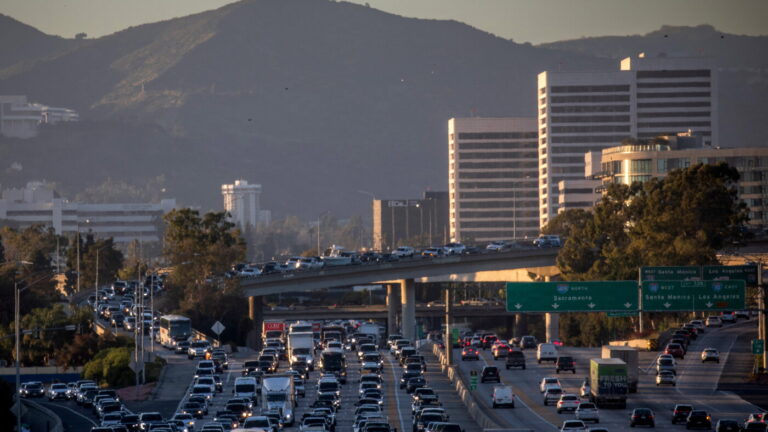
The Trump administration announced on Monday that it is scaling back fuel efficiency requirements for American carmakers, marking a significant pivot away from previous environmental mandates. Under the newly finalized Corporate Average Fuel Economy standards, manufacturers will now be required to increase fleet efficiency by only one percent annually, targeting an average of 34.9 miles per gallon by 2031. This represents a sharp decline from the Biden-era goals, which pushed for a two percent annual increase to reach an average of 50.4 miles per gallon by the same date.

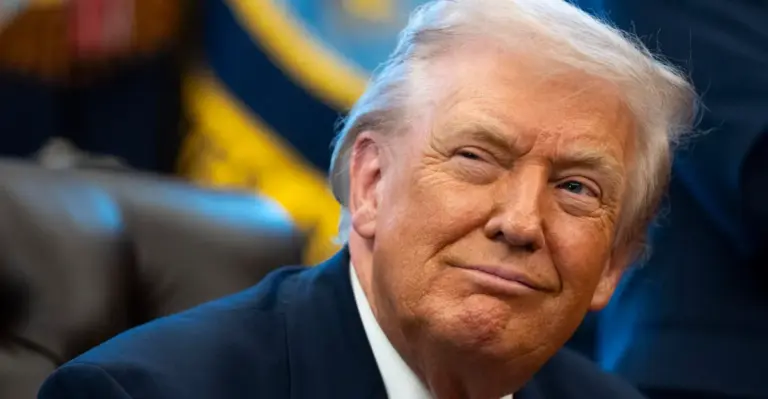
Administration officials are framing the move as a win for the American consumer and the domestic manufacturing sector. U.S. Transportation Secretary Sean Duffy stated that the change provides direct relief to families by reducing the costs associated with expensive fuel efficiency technology. The government estimates that these relaxed standards could lower the sticker price of new vehicles by roughly thirteen hundred dollars. President Trump echoed this sentiment on Truth Social, suggesting that removing wasteful regulations will result in lower prices for safe and beautiful cars.

However, climate advocates and economists warn that these cuts come at a precarious time given current energy prices. With gasoline averaging nearly four dollars and fifty cents a gallon according to AAA, critics like Dan Becker of the Center for Biological Diversity argue that lower mileage standards will actually cost consumers more at the pump and lead to increased pollution. Some experts suggest that while stickers might drop slightly, the long term impact could leave American automakers less competitive globally as other nations continue to lean into stricter emissions laws and electric vehicle innovation.

Industry analysts also question whether relaxing these rules is truly what drives car prices upward. While the National Highway Traffic Safety Administration claims that forced technology adoption makes cars unaffordable, some economists point to different culprits such as supply chain disruptions, tariffs, and a general consumer shift toward larger, luxury SUVs equipped with expensive infotainment systems. By stripping away penalties for inefficient fleets and eliminating certain credit trades between manufacturers, the administration is fundamentally reshaping how cars are built in America for the coming decade.

Investors are bracing for potential turbulence as Micron Technology prepares to release its fourth quarter earnings results this Wednesday. Despite a general climate of optimism surrounding the artificial intelligence boom, there is growing concern that the semiconductor giant could see another post earnings plunge. While analysts have forecasted strong growth for both revenue and earnings per share, the bar has been set exceptionally high, leaving little room for anything less than a stellar performance.

The current mood in the options market reveals an extremely bullish sentiment, characterized by heavy call positioning. However, seasoned observers warn that this level of expectation can often act as a trap. For shareholders to see sustained gains, the company likely needs to deliver a significant upside surprise on both its top and bottom lines rather than simply meeting existing projections. If the numbers come in merely as expected, the market may react negatively to the lack of new catalysts.

Technical indicators suggest that while implied volatility is lower than what was seen last quarter, traders are still anticipating a notable swing of around eight and a half percent following the announcement. Market watchers are keeping a particularly close eye on the 1,200 dollar price point as a critical threshold for the stock’s immediate direction. As Micron reports after the closing bell on September 30, all eyes will be on whether AI demand is enough to propel the stock forward or if expectations have finally outpaced reality.

The US Department of Transportation has officially finalized a plan to roll back fuel efficiency standards, marking what officials describe as one of the most significant deregulatory moves of the second Trump administration. This decision effectively dismantles previous targets established during the Biden era, which had aimed for a fleet average fuel economy of 50.4 miles per gallon by 2031. Under the new rules, that requirement drops sharply to 34.9 miles per gallon, a figure that barely edges past the 30.1 mile target set for 2024 models.

Administration officials argue that these changes prioritize affordability for the American shopper, claiming the move could reduce the average price of a new vehicle by about 1,300 dollars and save a total of 138 billion dollars over five years. While automakers have largely welcomed the flexibility provided by these relaxed guidelines, critics say the government’s financial projections are misleading and ignore long term costs.

Environmentalists, health organizations, and consumer advocates have reacted with outrage, warning that lower efficiency means drivers will ultimately spend more at gas pumps throughout their vehicles’ lifespans. These groups point out that the discarded Biden standards were projected to save owners over 600 dollars in gasoline per car and billions collectively across the country. Beyond the wallet, there are deepening concerns regarding public health and atmospheric damage caused by increased emissions.

Harold Wimmer, president and CEO of the American Lung Association, emphasized that fuel economy standards have historically served as a vital tool for protecting both people’s finances and their respiratory health. In a recent statement, he argued that weakening these benchmarks is unnecessary given that they are technologically achievable and provide immediate benefits to air quality. As the ruling takes effect, the tension between industrial deregulation and environmental protection remains at a boiling point.

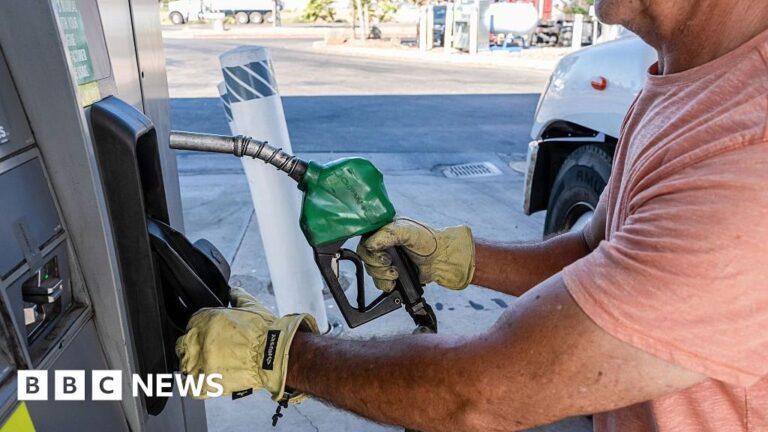
American diesel prices are currently hovering near a record average of 6.45 dollars per gallon, fueled by tight global supplies and escalating tensions between Israel and Iran. Because diesel powers the backbone of the US economy—from freight trucks and cargo trains to farm machinery—these spikes often trickle down into higher costs for groceries and construction materials. To combat this, Donald Trump has suggested that his administration is seriously considering a ban on diesel exports to ensure more fuel stays within domestic borders, potentially lowering pump prices for American workers and businesses before the upcoming midterm elections.

The United States is a powerhouse in energy production, refining roughly four to five million barrels of diesel every day. While Americans use about 3.6 million of those barrels, the surplus of 1.2 to 1.5 million is shipped overseas. A significant portion of these exports supports Latin American nations like Mexico and Brazil, while others flow toward Europe as countries seek alternatives to volatile Middle Eastern supplies. Proponents of the ban argue that prioritizing American energy for American consumers is the most effective way to shield the domestic economy from foreign geopolitical shocks.

However, many energy experts warn that such a move could create a dangerous ripple effect far beyond US shores. Analysts suggest that abruptly removing millions of barrels from the global market would spark intense bidding wars among importing nations, sending international prices skyrocketing. This surge would likely inflate global freight and industrial costs, which could eventually feed inflation back into the US economy, neutralizing any initial gains seen at the pump.

Beyond the financial risks, there is a significant diplomatic concern regarding how such a policy would be perceived globally. Critics argue that an export ban would shatter the reputation of the United States as a reliable energy partner. By cutting off vital lifelines to allies in Europe and Latin America during a time of crisis, the US might find its long term trade relationships strained and its standing in the global energy market permanently damaged for a short term political win.

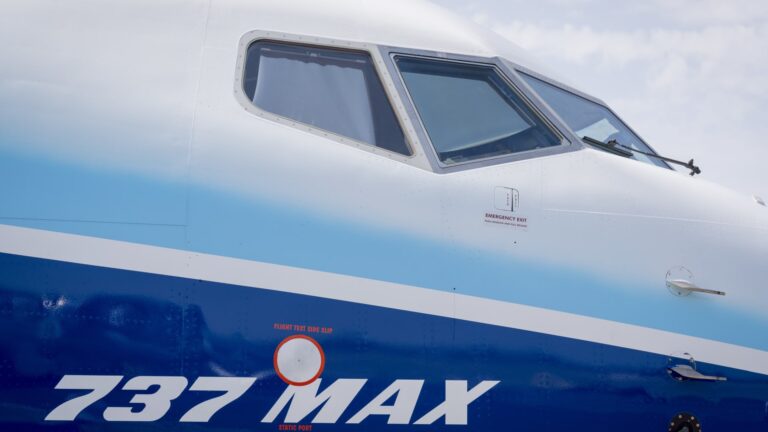
The Federal Aviation Administration has announced a delay in the certification of the Boeing 737 Max 10 following the discovery of a software glitch. This development comes as a significant blow to Boeing, which had recently signaled to investors that government approval for the largest model in its best selling aircraft family was imminent. FAA Administrator Bryan Bedford explained during a press conference in Washington, D.C., that while the agency hasn’t yet determined if the issue constitutes a primary safety risk, they will hold off on certifying the plane until they are fully satisfied with the resolution.

The technical problem reportedly involves the vertical navigation system during specific landing procedures, particularly when a pilot must perform a go around due to runway obstructions. While both Boeing and federal regulators emphasized that pilots remain in full control of the aircraft and are specifically trained for these maneuvers, officials are currently investigating whether the glitch creates an excessive workload for crews in high pressure moments. According to Bedford, it appears that while Boeing successfully patched a previous bug in the system, they unexpectedly introduced a new one in the process.

Investors reacted sharply to the news, sending Boeing shares down nearly seven percent on Monday as memories of previous setbacks linger. The Max 10 is the final piece of the puzzle for the company’s troubled fleet; it was originally slated for delivery back in 2020 before being sidelined by years of safety crises and regulatory scrutiny following two fatal crashes involving the Max 8. To distance this current situation from past tragedies, Bedford noted that this particular software issue does not strip control away from pilots, unlike the flight control systems implicated in those earlier disasters.

While U.S. airlines have stated they do not currently operate any aircraft affected by this specific glitch—largely because they can utilize older versions of software—the uncertainty clouds further deliveries. The FAA previously certified the smaller Max 7 just last month using a more updated version of the software now under review. For now, Boeing maintains that it is continuing to follow the lead of federal regulators as it works toward finally bringing its flagship narrow body jet into commercial service.