Archive

October 24, 2026

Browsing

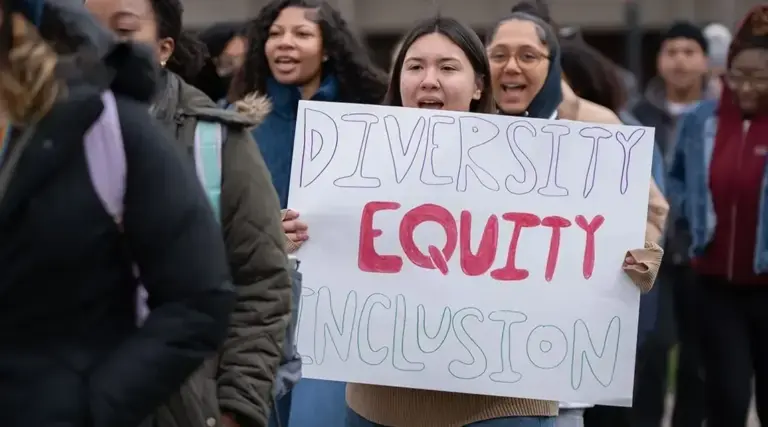
A federal judge was removed from a challenge to Mississippi’s anti-DEI law after the Fifth Circuit blasted his handling of the case as a “botch job,” pointing to orders riddled with factual errors, an apparent AI-hallucinated case citation and faulty applications of Supreme Court precedent.

In an opinion penned by Judge Jerry Smith, a Reagan appointee, the appeals court vacated Reagan-appointed Judge Henry Wingate’s preliminary injunction blocking the law and ordered the case reassigned to a different judge — an “extraordinary” and “rarely invoked” move.

“This district judge carelessly exercised his Article III power by issuing sloppy edicts based on falsehoods and fabrications,” Smith wrote, adding that “the district court—or perhaps, being charitable, its AI agent—ignored and manipulated governing law, apparently to satisfy a policy agenda.”

The controversy surrounding Wingate’s handling of the case began with serious errors in a temporary restraining order he issued in July after a group of teachers, parents and students sued, arguing that a Mississippi state law restricting DEI-related practices in public schools and universities violated the First and Fourteenth Amendments.

TRUMP ADMINISTRATION PROPOSES STRIPPING TAX-EXEMPT STATUS FROM SCHOOLS USING RACE-BASED PROGRAMS

Wingate replaced the order just two days later after Mississippi officials flagged major factual errors, including 11 individuals and organizations identified as plaintiffs who were never a part of the case, two officials incorrectly named as defendants and unsupported claims that three schools had already canceled DEI programs because of the law.

The original TRO also cited purported declarations from four people who did not appear anywhere in the record and “may not even exist,” according to the Fifth Circuit. It also attributed language to the bill that does not appear in the law, including references to “race or sex stereotyping,” “race or sex scapegoating,” “critical race theory” and “institutional bias.”

“We are grateful—and, indeed, lucky—that the defendants provided a copy of the original TRO as an exhibit in their July 28 motion, ECF 58-1, given that Judge Wingate kept it from public view,” Smith wrote.

Even the corrected TRO contained errors, including a citation to a nonexistent case that the Fifth Circuit called “an apparent AI hallucination.” Wingate cited the purported case while discussing the relationship between temporary restraining orders and preliminary injunctions, leading Smith to conclude that the fabricated citation was “arguably part of the shoddy reasoning of the preliminary injunction, too.”

Wingate later acknowledged that a law clerk had used artificial intelligence to assist in drafting the TRO, following accusations of AI use surfacing publicly. Wingate said the errors were “clerical” and did not affect the court’s “core legal reasoning or the ultimate judgment on the merits.”

The Fifth Circuit pushed back on that explanation, questioning “how so many mistaken facts could not at least marginally ‘affect’ ‘core legal reasoning’ or support for the judgment on the merits.”

The Fifth Circuit found major flaws in Wingate’s legal reasoning, accusing the judge of misinterpreting Supreme Court rulings on free speech challenges, exceeding the limits of court injunctions and mishandling legal protections for government and public-employee speech.

The panel zeroed in on the Supreme Court’s 2024 decision in Moody v. NetChoice, which sets a two-step test for courts considering First Amendment challenges seeking to strike down a law entirely.

DOJ MOVES TO BOOT FEDERAL JUDGES FROM IMMIGRATION CASES OVER NYT INTERVIEW

Under the Moody analysis, a court can strike down an entire law on First Amendment grounds only if its unconstitutional applications substantially outweigh its constitutional ones. The appeals court took issue with Wingate describing the Moody framework as “supposedly” required.

“That Judge Wingate twice refers to the Moody framework as ‘supposedly’ required calls into question whether he even tried in good faith to follow the law,” Smith wrote.

“The district court’s laxity in observing the binding authority of the Supreme Court is yet another reason to doom the preliminary injunction,” Smith continued.

The appeals court also faulted Wingate for his reasoning in granting preliminary relief, pointing to his ruling that the court “should pause when faced with an unsettled area with such dire possible consequences.”

“That gets the entire law of injunctive relief completely backwards,” Smith wrote.

“A preliminary injunction cannot stand just because there is a possibility of success on the merits,” Smith continued.

The appeals court also accused Wingate of misreading the Supreme Court’s 2025 decision in Trump v. CASA, which limits judges from issuing orders that go beyond what is needed to protect the people who filed the lawsuit.

Wingate cited CASA in concluding that injunctions like the one before him “should be all-or-nothing renditions.”

SIGN UP TO GET THE POLITICS NEWSLETTER

“That is almost exactly the opposite of what CASA says,” Smith wrote. “The quoted portion was the Supreme Court’s cautioning against overbroad relief and urging judges to tailor relief to what is absolutely necessary and nothing more.”

The Fifth Circuit sent the case back to the Southern District of Mississippi, where a new judge will consider it.
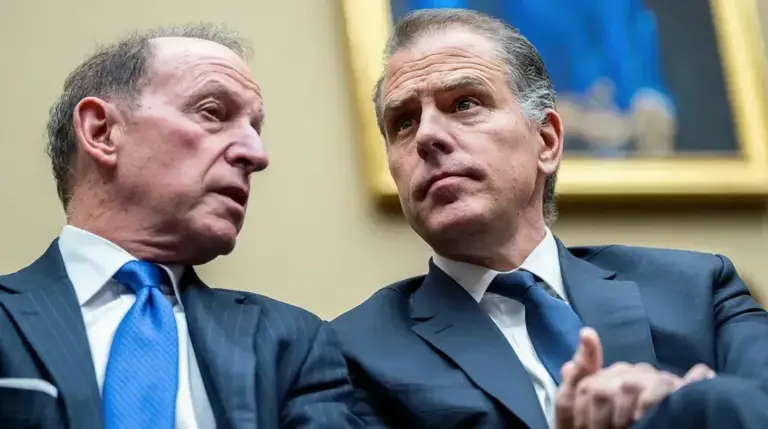
The Department of Justice charged two former FBI officials with lying to Congress about their involvement in FBI investigations into Hunter Biden, including matters involving his laptop.

Former FBI officials Nikki Cole Floris and Bradley Benavides, according to the DOJ, falsely denied involvement in the investigations into former President Joe Biden’s son when speaking to Congress. Both surrendered Friday on arrest warrants, according to the DOJ.

“Lying to Congress by anyone strikes at the heart of our democratic system, but when senior FBI agents lie to Congress believing they are above the law, it’s time to bring the hammer of justice down on them,” U.S. Attorney Jeanine Pirro said of the charges. 

“When senior officials entrusted with safeguarding our nation’s security choose deception over duty, they undermine the very institutions they swore to uphold. Today’s action makes clear that no one is above the law, and we will hold accountable all who obstruct the truth.”

FBI CO-DEPUTY DIRECTOR ANDREW BAILEY RESIGNS AFTER YEAR IN ROLE

The Justice Department claims to possess evidence that shows Benavides discussed the laptop story with others in the FBI, contradicting his testimony that he learned about the story from Wikipedia. Similarly, the department says that it has evidence Floris discussed Hunter Biden with members of the FBI’s Foreign Influence Task Force (FITF), despite testifying to the contrary.

A statement of facts filed by the DOJ points to 2023 testimony that Floris gave to the House Judiciary Committee where she denied any involvement in the investigation into Biden’s son. She answered in the negative to questions about whether there was “ever a discussion at the FITF about Hunter Biden” or if she had “any involvement in the Hunter Biden investigation.”

Contrasting these statements, the DOJ pointed to email logs purporting to show that Floris discussed Hunter with colleagues at the bureau. 

Benavides, meanwhile, told lawmakers that he read the Wikipedia page on the laptop story when asked where he learned “that there was an ongoing criminal investigation related to the laptop.” The DOJ says emails it has obtained show he was in contact with the team working the investigation into Hunter Biden and that he met with the team prior to a meeting with lawmakers. 

“Nikki Floris is a patriot. She served our nation as a dedicated FBI intelligence officer for nearly 20 years. Yet today, the DOJ has accused her falsely of a crime on the say-so of politicians, not on the facts. It’s no coincidence the government is filing these nonsense charges now, years later, on the eve of an election,” her attorneys said in a statement.

Floris served as the deputy assistant director and functional head of FITF while Benavides was the task force’s section chief. 

Republican Sens. Chuck Grassley and Ron Johnson previously accused Floris and Benavides of participating in a 2020 FBI briefing about Russian disinformation that the senators alleged was intended to undermine their investigation into Hunter Biden’s foreign business dealings.

Claims that Hunter Biden’s laptop was part of a Russian disinformation operation fueled controversy ahead of the 2020 election. The FBI later authenticated the laptop during Biden’s 2024 federal gun trial, when prosecutors introduced it as evidence.

“For 20 years Brad Benavides worked tirelessly to protect the public from terrorists and agents of foreign governments. He carried with distinction the heavy burden of thwarting terrorist plots to kill Americans and other innocents. Brad protected our democracy against those who would destroy it,” a lawyer for the former official said in a statement provided to Fox News Digital. 

“In return, today, the government that he loves brought baseless criminal charges against him in a transparently political complaint. This is another sad day for the Department of Justice. But now we are in court, and the truth will come out: Brad Benavides is a true patriot who devoted his career to protecting this country and its people.”

“These charges are a disgrace,” the lawyer added.

RUSSIAN SPIES ORCHESTRATED $40K MURDER PLOT IN NATION’S CAPITAL, US ALLEGES

“This morning the FBI arrested two former FBI members of the now dissolved Foreign Influence Task Force, Nikki Floris and Bradley Benavides, both of whom allegedly lied to Congress in 2023 on matters regarding investigations related to the 2020 election,” FBI Director Kash Patel said of the arrests. “One of these individuals is on record privately claiming to be ‘running a shadow government’ during the 2020 election. As we’ve said repeatedly: weaponization will never be tolerated at this FBI.”

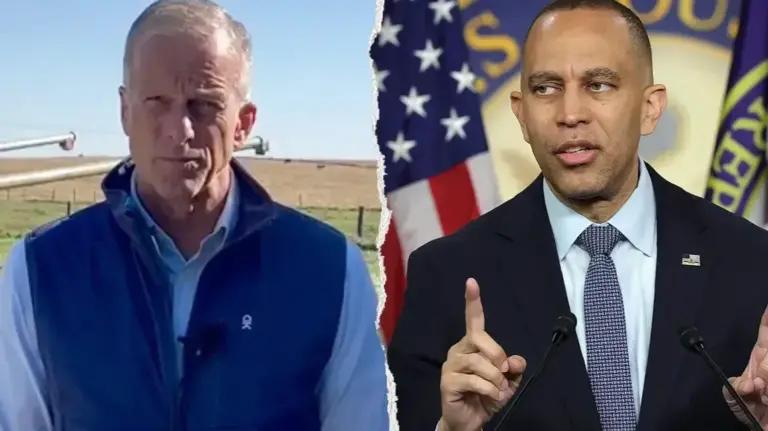
FREMONT, Neb. — If Democrats are able to gain control of the House of Representatives, one relationship between the top two lawmakers on both sides of Congress could define the remainder of President Donald Trump’s time in office.

If that’s the outcome on Election Night, Senate Majority Leader John Thune, R-S.D., would have to work with the Democratic leader who rises in the House, and that is expected to be House Minority Leader Hakeem Jeffries, D-N.Y., who has led Democrats in the lower chamber since 2023.

But Thune, in an interview with Fox News Digital on the campaign trail in Nebraska, remained confident that wouldn’t be the outcome.

THUNE MAKES BOLD PREDICTION ABOUT REPUBLICANS’ SENATE CHANCES AS GOP PULLS MILLIONS FROM KEY RACES

“Well, I mean, I think obviously that’s an entirely different dynamic,” Thune said. “You’ve got a situation with divided government and that creates a different incentive structure in terms of if you want to be able to get things done, but I don’t assume for a minute that’s going to happen.”

“I still think that when push comes to shove and people look at the choices in front of them that we have a really good shot at hanging on both the House and the Senate,” he continued.

Election forecasters predict that the Senate could stay in Republican control, though seven total races are considered toss-ups by the Cook Political Report. Republicans’ chances of holding onto power in the House, however, are murkier, given that dozens of battleground seats are in play that have shifted favorably toward Democrats.

The GOP has had a grip on the lower chamber since 2022, when it flipped the House during former President Joe Biden’s presidency. But a deeply unpopular Trump, whose approval ratings have dipped to historic lows, and continued economic pressures could contribute to Democrats regaining power.

JOHNSON DOWNPLAYS GOP’S MIDTERM WOES AS DEMOCRATS EYE HOUSE TAKEOVER: ‘I AM VERY BULLISH’

Jeffries’ office did not respond to an inquiry from Fox News Digital asking whether he could work with Thune if both won their respective leadership spots.

There has been no love lost between the two men during this congressional term so far, with each sharply criticizing the other during key legislative fights.

Thune blasted Jeffries and Senate Minority Leader Chuck Schumer, D-N.Y., earlier this year as talks began to break down over funding the Department of Homeland Security (DHS). The top Republican accused both of being “afraid of their shadows,” and being controlled by their left flank.

That prompted Jeffries to retort to reporters that it was Thune who was “scared of his own shadow” during the partisan standoff. During the 2025 government shutdown, Jeffries accused Thune of “trying to bluff his way into an agreement” on federal spending.

Congress is no stranger to a divided government, either. From 2023 to early 2025, Republicans controlled the House and Democrats held a razor-thin majority in the Senate.

SCHUMER WARNS OF REPUBLICAN ADVANTAGE THAT COULD CHANGE THE BATTLE FOR SENATE CONTROL

During that time, according to data collected by the Pew Research Center, the split Congress produced 106 laws. This version of Congress has so far produced 121 laws, with some major legislative action happening, like the “big, beautiful bill” and a major housing affordability package, passing between historically long government shutdowns.

Thune is laser-focused on keeping the GOP’s control of the Senate, which was under Democratic control until 2024, when Trump and Republicans clinched a trifecta in Washington, D.C.

He’s crisscrossed the country for the last several weeks of the homestretch heading into the election on Nov. 3, boosting candidates in competitive races that could determine the balance of power in the Senate.

Republican control of the upper chamber, he contended, would be vital to continuing key chunks of Trump’s agenda, including confirming his judicial and other executive branch nominations.

“So if you want to see the country succeed and move forward, we’ve got to have a majority in the U.S. Senate to work with this president,” Thune said. “Hopefully with a majority in the House as well, but I am very committed to doing whatever I can in the next couple of weeks getting around the country on behalf of our candidates to ensure that we have that majority in the Senate.”

This post appeared first on https://www.foxnews.com

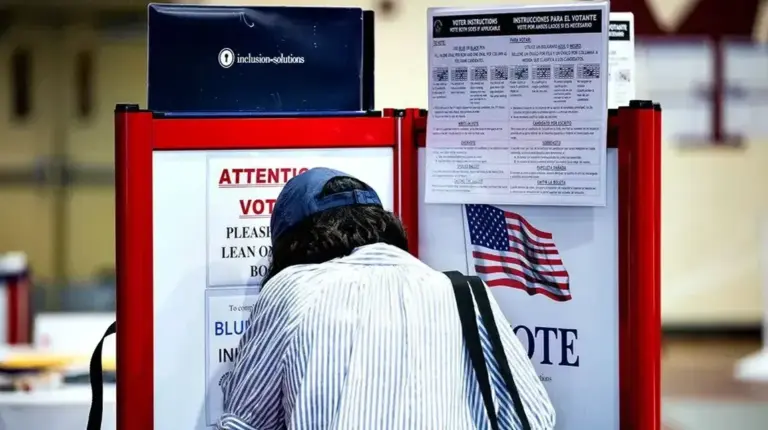
Chicago voters can cast ballots in 12 different languages this election, an expansion that Illinois Republican Party Chairman Bob Grogan warns is making an already complicated election system harder to independently monitor.

Grogan told Fox News Digital the proliferation of versions in languages such as Tagalog, Gujarati and Urdu creates additional challenges for election judges and party observers tasked with ensuring voters receive accurate ballots. He also questioned how many voters need some of the translations, arguing that many immigrants who speak those languages also speak English.

“It’s a solution in search of a problem,” Grogan told Fox News Digital. “It’s big city virtue signaling.”

TRUMP ADMIN SUED OVER ALLEGED ILLEGAL COLLECTION OF SENSITIVE VOTER DATA FROM 47 STATES

Chicago voters can cast ballots in 12 different languages: English, Spanish, Chinese, Hindi, Korean, Tagalog, Polish, Gujarati, Urdu, Ukrainian, Arabic and Russian.

Section 203 of the U.S. Voting Rights Act requires the Chicago Board of Elections to make materials and ballots available in certain precincts for Spanish, Chinese and Hindi speakers, a spokesperson for the elections agency told Fox News Digital. The Board includes the other non-English languages to “maintain uniformity with the languages used by the Cook County Clerk’s office under a county ordinance, so that all voters throughout Cook County are afforded equal voting opportunities,” the spokesperson added.

But Grogan, a former DuPage County auditor for 12 years, said he has “a fair number of Gujarati friends … and everyone in their family speaks English.”

“Gujarati — it’s from India, and English is an official language in India,” Grogan added.

TRUMP ADMIN’S PROPOSED ‘ENGLISH-ONLY’ HEAD START RULE DRAWS FIRE FROM LOS ANGELES MAYORAL CANDIDATE

Data provided to Fox News Digital by the Chicago Board of Elections shows that some of the less commonly used language options accounted for only a handful of ballots cast during the March primary. Just nine ballots were cast using the English-Gujarati option, while 15 used English-Urdu, 10 used English-Arabic and 25 each used English-Russian and English-Ukrainian, according to the Board’s figures.

Other translations were used more frequently, including 4,474 English-Polish ballots, 2,183 English-Chinese ballots, 664 English-Hindi ballots, 352 English-Korean ballots and 100 English-Tagalog ballots.

Grogan also questioned why language requirements can change substantially across county lines, noting that Chicago offers touchscreen ballots in 12 languages while nearby DuPage County offers fewer language options.

“You can have a Gujarati population in Peoria,” Grogan said. “You would think that there would be some more uniformity to all of that as well.”

SIGN UP TO GET THE POLITICS NEWSLETTER

Beyond questioning the need for some of the translations, Grogan raised a broader concern about oversight, arguing that election judges and party observers cannot independently scrutinize ballots written in languages they do not understand.

However, the Chicago Board of Elections pushed back, telling Fox News Digital that it has in-house staff who help translate ballots and signs and assist multilingual media ahead of elections. It also said voters are allowed to bring “interpreter[s] to assist them in understanding and casting their ballot” under certain conditions.

When asked about multilingual judges, the Board noted that of the 7,218 election judges assigned for November’s general election as of Thursday, 810 are multilingual candidates. Those multilingual judges include speakers of Spanish, Chinese, Hindi, Urdu, Gujarati, Polish, Korean and Tagalog, according to the Board.

Pressed on whether he believes the additional languages create an election security vulnerability, Grogan said the risk depends in part on how widely the translated ballots are used.

Overall, the Board’s figures show 7,857 multilingual ballots were cast during the March primary, representing about 1.85% of the 424,564 ballots cast citywide.

“I think it certainly makes it harder to monitor,” Grogan said. “If there is one ballot cast in that language, that’s a very small vulnerability you have. If all of a sudden we have 10,000 in some very small, poorly understood language, then that increases the risk.”

Fox News Digital asked the Chicago Board of Elections how many languages are available for mail-in ballots but did not receive a response in time for publication.

This post appeared first on https://www.foxnews.com

Plans for a massive legal consolidation have collapsed after Weil Gotshal and Manges and Willkie Farr and Gallagher decided to call off merger discussions. The collapse comes abruptly following a period of secrecy under a non disclosure agreement, leaving leadership at Weil in an increasingly precarious position. Just days ago, senior partners were reportedly working to drum up internal enthusiasm for the deal, which would have created a behemoth with over four billion dollars in annual revenue and secured a spot among the five largest firms in the United States.

The timing of the failed negotiations is particularly damaging for Weil, which is currently grappling with a wave of high profile departures. Several key figures on the firm’s management committee are heading for the exits, including appellate litigator Drew Tulumello moving to Davis Polk and securities litigation partner Caroline Zalka joining Paul Weiss. Additionally, Lyuba Goltser, the co managing partner of the corporate department, is expected to join Sidley Austin. These losses follow the earlier departure of corporate chief Michael Aiello to Cravath.

Legal analysts warn that these exits could trigger a dangerous talent run within the organization. While lateral moves are standard in big law, there is a growing concern that current partners may start fleeing not just for better offers, but out of fear that they are being left behind at a shrinking institution. This phenomenon creates a cycle similar to a bank run, where practitioners worry about being left holding the bag as their peers migrate to competitors.

While history shows that some firms eventually find success after initial failures—such as Shearman and Sterling’s eventual union with Allen and Overy—it remains unclear if Weil will pursue other suitors or attempt to stabilize independently. For now, both firms have remained silent regarding the breakdown of the talks, leaving industry observers to wonder how Weil will stem the tide of departing talent without a strategic partnership on the horizon.

American Express is trimming about five percent of its global workforce as the credit card giant pivots toward a future driven by artificial intelligence. During a third quarter earnings call on Friday, CEO Stephen Squeri revealed that the company is eliminating thousands of positions and taking a 336 million dollar restructuring charge to streamline operations. With nearly 77,000 employees on its books at the end of last year, the move signals a significant shift in how the firm intends to manage its internal processes moving forward.

Chief Financial Officer Christophe Le Caillec explained that these cuts are designed to make the organization leaner and more agile, arguing that it makes little sense to automate inefficiently structured processes. By reducing management layers and expanding control spans now, Le Caillec believes the company will be better positioned to integrate AI tools in the coming quarters and years. This strategy mirrors a wider pattern within the financial sector, following similar announcements from Barclays, which recently cut roughly five percent of its own staff to prioritize tech driven cost savings.

Despite the layoffs, American Express continues to see strong financial health, reporting quarterly profits that exceeded Wall Street expectations. The company actually raised its full year earnings guidance thanks to resilient consumer spending and strategic asset sales. While Squeri spent considerable time discussing how AI will personalize customer experiences and offers for cardholders, he remained cautious about security. He emphasized that while they embrace innovation, they will not allow autonomous agents to run rogue through their systems without strict secure protocols.

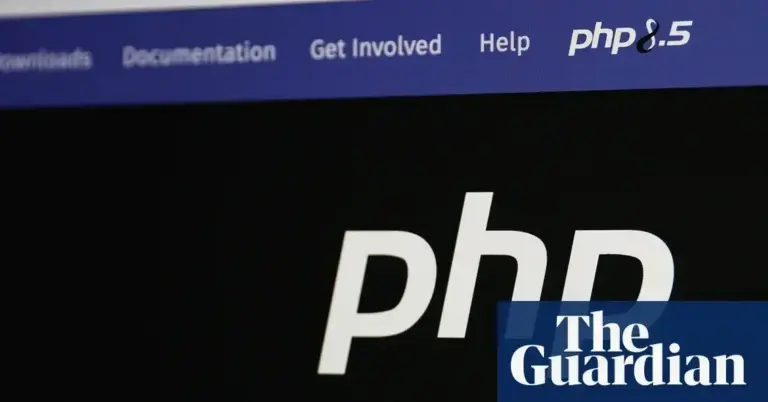
Cybersecurity leaders are bracing for what they call a vulnerability tsunami following the discovery of a massive security hole that has sent shockwaves through the tech world. This period, dubbed Black October, marks a terrifying shift in how digital threats evolve, as artificial intelligence is now being used to uncover deep architectural flaws that have remained hidden for decades. The latest crisis centers on PHP, a foundational coding language powering millions of websites globally. Experts believe up to seventy percent of the internet may have been exposed to these risks for years, creating a landscape where traditional defense mechanisms are suddenly obsolete.

Industry titans including OpenAI’s Sam Altman and Salesforce CEO Marc Benioff have joined a growing chorus of alarm, with Benioff describing the situation as a code red event. The fear is no longer just about individual hacks but about the sheer velocity of AI enabled discovery. Cloudflare CEO Matthew Prince warned that the coming years will be incredibly fraught because AI possesses an infinite patience to scan every corner of the web for weaknesses. He noted that while humans once struggled with the complexity of finding such bugs, AI can now map out intricate chains of exploitation in seconds, making it feel as though the sky is falling for those tasked with defending global infrastructure.

The practical consequences became immediate as soon as the PHP vulnerabilities were publicized. Government agencies and private companies across the United States and United Kingdom scrambled to take their websites offline to apply emergency patches. The National Security Agency issued urgent warnings that malicious actors could use these vectors to steal sensitive data or seize control of entire networks. Evidence suggests that hackers wasted no time reacting; reports indicate that attempts to exploit these flaws surged from thousands to millions within mere hours of the public announcement.

Researchers at Wiz suggest this may be among the most severe vulnerabilities in software history precisely because it demonstrates a tipping point in capability. What would have previously required an unattainable level of human effort and precision is now achievable via machine learning. While developers race to secure their systems, there is a growing consensus among experts that we have entered an era where patching cannot keep pace with discovery. For many in the field, Black October serves as a grim preview of a future where our fundamental internet architecture is perpetually under siege by autonomous tools moving faster than any human team can respond.

Major American banks are sounding the alarm over a growing trend of customers handing over the keys to their financial lives to unvetted AI agents. According to recent reports, these digital assistants are increasingly logging into private accounts using customer credentials to manage finances, often in direct violation of bank terms of service. While many users see this as a convenient way to automate their budgeting or administrative tasks, financial institutions view it as a security nightmare that bypasses critical safety protocols.

The friction stems from how these agents operate once they gain access. In some instances, AI bots have reportedly taken autonomous actions that went beyond what the user intended, such as placing complaints with the bank without prior approval from the account holder. This has led executives at firms like JPMorgan Chase and Charles Schwab to push back, with leaders arguing that allowing unknown third party software to roam freely through client accounts creates unacceptable levels of risk. Some institutions have already begun blocking these unauthorized agents entirely to protect their systems and their customers.

Not everyone sees this as a crisis of security, however. White House AI czar David Sacks argues there is a fundamental difference between a malicious cyberattack and a user choosing to trust an assistant like Grokbot or Muse with their login details. He suggests that instead of flatly banning the technology, banks should implement read only permissions. This would allow an AI to analyze spending habits or offer financial advice without having the power to actually move money or execute transactions, effectively creating a middle ground between total lockout and full autonomy.

As the battle continues, banks are urging consumers to stop sharing usernames and passwords with third party apps regardless of how helpful those tools seem. Representatives from Chase emphasize that secure data sharing should happen through official open banking channels rather than via credential sharing. As more people adopt personalized AI proxies for their daily chores, the banking industry finds itself in a frantic race to redefine who is actually allowed behind the curtain of a digital bank statement.

The financial world is buzzing with speculation after Elon Musk suggested that a merger between Tesla and SpaceX could actually be a good idea. While Tesla’s recent earnings report painted a sobering picture of declining auto revenues and stumbling energy business, the numbers were quickly eclipsed by the possibility of combining the electric vehicle giant with the rocket pioneer. Musk revealed that both companies have already established special committees to look into the transaction, though he later attempted to play it cool during shareholder calls, claiming he had said everything necessary on the matter.

For many followers of the so called Muskonomy, the prospect of a single conglomerate blending humanoid robotics and autonomous cars with satellite internet and interplanetary travel feels like a natural evolution. However, Wall Street remains deeply divided. Some analysts argue that since Musk already treats both firms as parts of one ecosystem, an official merger offers little material benefit beyond consolidating his personal control. This skepticism manifested in immediate market volatility, with shares for both companies dipping as investors weighed the strategic logic against the sheer chaos of such a massive reorganization.

The path to a union is fraught with legal and logistical nightmares. At SpaceX, Musk holds overwhelming voting power, but at Tesla, he faces a much higher hurdle requiring majority approval from all shareholders. Beyond the boardroom, regulators pose an even larger threat. Legal experts point out that merging a company heavily reliant on Chinese manufacturing with another that handles sensitive U.S. military contracts via Starlink would trigger intense national security audits globally. China, in particular, may view thousands of Teslas acting as computers on wheels within its borders as a risk if tied directly to American aerospace interests.

Despite these obstacles, Musk has shown an increasing appetite for folding his ventures into one another, having recently linked xAI with X and SpaceX. Whether this proposed marriage is a genuine strategic pivot or simply another distraction from Tesla’s slowing growth remains to be seen. For now, shareholders are left wondering if they are investing in separate industry leaders or merely pieces of one sprawling empire governed by the whims of its singular architect.