
Archive

November 1, 2026

Browsing

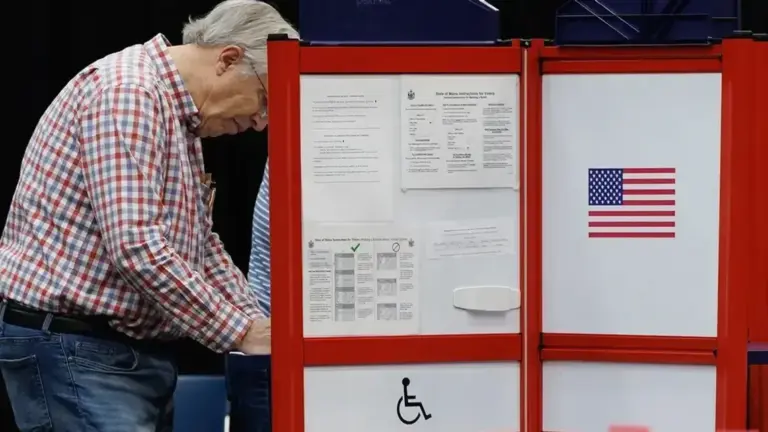
A conservative legal group filed an election complaint in Maine Tuesday, alleging that more than 3,000 potentially dead people and hundreds of duplicate registrations were discovered on the state’s voter rolls just days before the pivotal midterm elections.

The Public Interest Legal Foundation (PILF) said it identified 3,181 potentially dead voters and 693 duplicate registrations and urged the state to take action as Maine voters prepare to cast their ballots Tuesday.

“Now we know why they were hiding them because there were problems on them,” J. Christian Adams told Fox News Digital. “They have dead people, they have lots of duplicates and they have general problems. It’s something that should have been fixed a long time ago.”

The complaint, filed with Maine Secretary of State Shenna Bellows, argues election officials have not made a “reasonable effort” to remove ineligible voters from the official list.

TRUMP SCORES SUPREME COURT WIN IN ELECTION INTEGRITY FIGHT AS STATES GAIN NEW VOTER ROLL TOOL

Adams said the state, not his group, should have discovered the information.

“Why does it take a third-party group like the Public Interest Legal Foundation to find these duplicates?” Adams said.

The group is asking the state to take “additional corrective action,” warning it “may have no other recourse” but to appeal through the complaint process under the Help America Vote Act (HAVA), a 2002 election reform law, if nothing is done.

The group compared those findings with its previous investigation in 2025, which found 18,453 potentially dead voters and 1,498 duplicate or triplicate registration records in Maine. The state addressed many of the records identified that year, but PILF said some errors remain while “new problems have arisen.”

Several searches were used in the analysis to identify records that shared the same address, first and last names and birth year, as well as typos, punctuation errors, common nicknames and birth-year discrepancies.

DOJ GIVES CALIFORNIA 48 HOURS TO REVIEW LIST OF POSSIBLE NONCITIZENS ON VOTER ROLLS

The complaint requests that Maine review the group’s analysis, immediately remove ineligible voters and implement a plan to ensure the state complies with HAVA “now and in the future.”

“I hope she gets the job done and removes all these duplicates,” Adams said.

Adams said his group has been embroiled in an ongoing legal battle, and Bellows has a history of trying to “criminalize” the PILF for revealing what they found. The PILF sued Maine roughly six years ago over access to the state’s voter rolls and won a federal appeals court case in 2024 that required the state to make the records public.

“There’s a history here of Secretary Bellows not wanting the public to know what kind of job she’s doing,” Adams said.

Adams accused Bellows of focusing on “defending sort of blue theories” rather than keeping Maine’s voter lists accurate and up to date.

“Unfortunately, Secretary of State Shenna Bellows is not getting the job done,” he said.

MAP IT: DOJ ILLEGAL VOTING CRACKDOWN SWEEPS 17 STATES AS RAZOR-THIN ELECTIONS FACE SCRUTINY

One of Adams’ biggest concerns is that someone could use a dead person’s registration to illegally vote. He said progressive state officials are reluctant to immediately remove dead voters out of fear they could mistakenly remove eligible voters, potentially leaving the door open for fraud.

“The problem is that sometimes people vote for the dead people,” he said.

But Adams said he believes Maine has been trying to keep its problems out of the public eye for a long time.

“Maine has a longstanding problem trying to hide public information about whether or not they’re doing a good job,” he said.

Fox News Digital reached out to Bellows’ office for comment.

The legal filing comes just days before Mainers vote in a critical and tight U.S. Senate race between incumbent Republican Susan Collins and her Democratic challenger, Troy Jackson. The winner could determine the balance of power in the Senate.
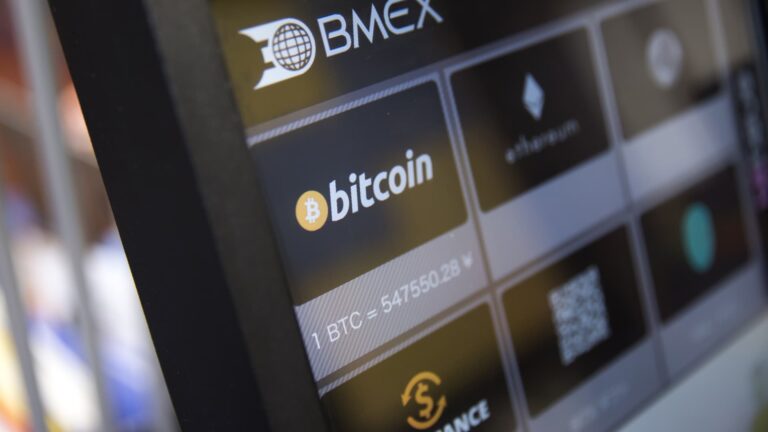

The cryptocurrency world is reeling after a massive security breach at Binance resulted in the loss of roughly 6.3 billion dollars in client assets, marking the largest theft in the history of digital currencies. This incident, coupled with a separate attack on the prediction market Polymarket that drained millions from user wallets, has ignited a fierce debate among experts over whether keeping funds on an exchange is fundamentally unsafe. While Binance and Polymarket have pledged to reimburse affected users, the scale of the heist highlights a glaring vulnerability in an industry where rapid growth often outpaces security infrastructure.

Cybersecurity specialists warn that these attacks are becoming more frequent and sophisticated, partly driven by the rise of artificial intelligence which empowers hackers to find loopholes faster than ever before. Some academics argue that leaving significant sums on any exchange is dangerously risky because crypto lacks the institutional safety nets found in traditional finance. Unlike bank accounts protected by FDIC insurance, there is no government guarantee for lost tokens, meaning users are entirely dependent on the goodwill and solvency of the private companies managing their keys.

There is a notable divide between offshore platforms and those operating under strict regulatory oversight. Officials from the Commodity Futures Trading Commission pointed out that unregulated international exchanges lack the rigorous safeguards required in U.S. financial markets. However, some critics argue that registration alone cannot prevent every disaster, noting that this particular breach may have started with something as simple as a compromised employee laptop—a human error that transcends national borders or legal frameworks.

Despite the chaos, some industry leaders suggest these crises will eventually harden the sector and lead to more resilient systems. They argue that relying on large firms with deep pockets is actually safer than self-custody wallets, where a single lost password or personal hack means funds are gone forever without hope of recovery. For now, however, analysts caution that until comprehensive insurance becomes standard across all ecosystems, traders remain in a precarious position within an increasingly volatile digital landscape.

Automakers in Detroit are shifting gears toward a future where 3D printing is no longer just a tool for prototypes but a core part of the manufacturing process. Industry giants like Ford and General Motors, along with newcomers like Rivian, are integrating additive manufacturing across their operations to slash costs and accelerate production speeds. By layering materials ranging from plastic and ceramics to metal, these companies are producing everything from intricate engine components and interior trim to the specialized tools required to keep assembly lines moving.

For Rivian, the strategy is centered on accessibility. Jared Beck, the head of additive manufacturing at the electric vehicle maker, describes his goal as democratizing the technology throughout the organization. With over five million dollars invested in machinery, Rivian has implemented on-demand printing bays that allow engineers to hold physical versions of their designs in hours rather than waiting weeks for suppliers. While the initial investment is significant, Beck notes that the efficiency gains in logistics and tooling often allow the machines to pay for themselves within a single year.

Established players like Ford are taking a similarly aggressive approach by embedding 3D labs directly into their factories. In some locations, Ford has even introduced vending machines stocked with printed parts and custom tools designed by employees on the fly. This allows team leaders to grab necessary equipment immediately without cluttering laboratories or waiting for external shipments. Whether it is creating temporary fixes to prevent costly plant shutdowns or developing bespoke jigs for the F-150 line, the ability to iterate quickly is proving invaluable.

General Motors is also leveraging high-end industrial printers for its most exclusive offerings, utilizing dozens of 3D-printed components in luxury vehicles like the Cadillac Celestiq. As these technologies become more affordable and versatile, the boundary between research and development and final production continues to blur. What started as a niche method for making models has evolved into a strategic necessity that keeps cars moving off the lot faster while reducing reliance on complex global supply chains.

The cryptocurrency world has been rocked by what experts are calling the largest bank robbery in human history after hackers infiltrated Binance, the world’s largest digital asset exchange. In a lightning fast operation that lasted only twenty minutes, cybercriminals managed to siphon off a staggering 6.3 billion dollars from investor accounts. The sheer scale and speed of the theft have sent shockwaves through the financial sector, highlighting the extreme vulnerabilities of platforms that act as both marketplaces and custodians for digital wealth.

While investigators are still piecing together exactly how the security breach occurred, evidence strongly points toward a sophisticated hacking unit within the North Korean military known as TraderTraitor. This group has already established a fearsome reputation for state sponsored cybercrime, having previously stolen 1.5 billion dollars from another exchange. Analysts warn that this was not a simple quest for profit by independent criminals but rather a strategic operation likely intended to fund weapons proliferation and other destabilizing activities for the regime.

In the immediate aftermath of the heist, Binance has worked with research firms to freeze approximately 3 billion dollars of the stolen funds, preventing some of the assets from disappearing permanently into the depths of the blockchain. The exchange has publicly pledged to reimburse affected customers, though critics note that there is currently no clear roadmap for how those payments will be executed. Unlike traditional stock brokers who are heavily regulated by agencies like the SEC and required to carry insurance, crypto exchanges operate in a far more permissive environment.

This catastrophe has reignited fierce debates over whether the crypto industry remains a financial Wild West. Consumer advocates argue that allowing exchanges to hold customer funds without strict oversight creates an irresistible target for hackers and an incentive for corporate mismanagement. By contrasting this event with the collapse of FTX, critics suggest that without a rigorous regulatory framework to protect investors, the industry will continue to be defined by spectacular failures and devastating losses.

OpenAI appears to be scaling back its ambitions for its current funding round as investor enthusiasm hits a sudden speed bump. While initial reports suggested the company was eyeing a massive thirty billion dollar windfall at valuations reaching upwards of one trillion dollars, recent updates indicate a shift toward more modest goals. According to reporting from the Financial Times, the firm has lowered its primary target to twenty billion dollars, though early closing figures may fall even shorter than that revised mark.

The current effort is being spearheaded by a consortium of investors from the United Arab Emirates, with hopes that a secondary offering aimed at high net worth individuals will eventually bridge the gap to reach the twenty billion dollar goal. However, internal progress seems slower than anticipated. The Wall Street Journal notes that while eleven billion dollars has been secured thus far, responses from several major institutional players have been described as tepid.

This cooling effect likely stems from broader market volatility rather than specific failures within OpenAI itself. Many Wall Street investors have grown nervous about the staggering costs associated with AI infrastructure, sparking a wider sell off of technology stocks across the board. This trend suggests a systemic hesitation regarding the immediate return on investment for generative AI hardware and energy needs.

The struggle to secure top tier funding highlights a potential turning point for the sector, where hype is meeting financial reality. It is not just OpenAI feeling the squeeze; other industry leaders like Anthropic are also rumored to be facing hurdles with their own public offering plans. As the honeymoon phase of AI speculation fades, these companies must now navigate an environment where capital comes with much stricter scrutiny.

Binance is nearing the end of a grueling recovery process following a staggering security breach that saw 6.3 billion dollars in cryptocurrency stripped from its user base. The company’s chief executive announced that roughly 90 percent of those lost assets have already been replenished, marking a significant step toward making victims whole after one of the largest heists in digital asset history.

While the vast majority of the funds have been restored, a final slice of the losses remains outstanding. According to leadership, the remaining 10 percent consists primarily of less liquid tokens that are more difficult to source on the open market. Despite this hurdle, the exchange has pledged to cover every cent of the financial impact, ensuring that no customer is left bearing the cost of the attack.

Attention is now shifting toward restoring normal operations for millions of traders who have been locked out of their accounts. In a recent update shared on X, Binance confirmed that it is currently working to resume withdrawal services. If everything stays on schedule, users should regain full access to move their funds starting this coming Sunday.

Throughout the crisis, the firm has emphasized its dedication to transparency and accountability. By absorbing the loss directly rather than passing it onto stakeholders or insurance providers, Binance hopes to rebuild trust with a community shaken by such a massive vulnerability. Further updates are expected once withdrawal systems officially go back online.