Archive

October 12, 2026

Browsing

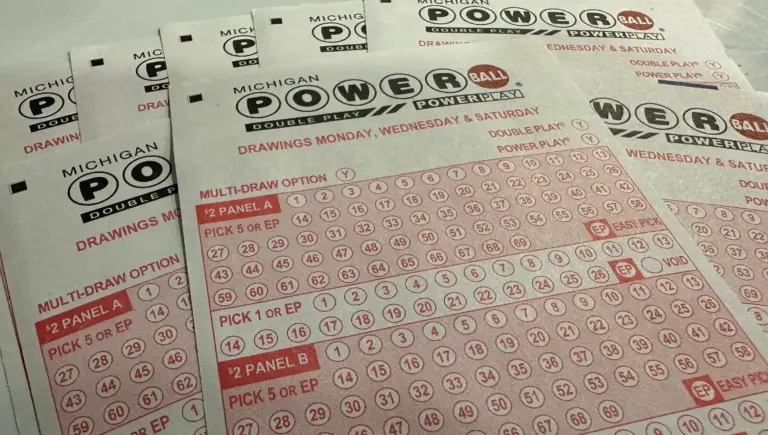
Hopeful gamblers across the country were left waiting for a miracle this weekend as the latest Powerball drawing failed to produce a grand prize winner. The jackpot had climbed to an estimated 516 million dollars, with a lump sum cash option of roughly 211.6 million dollars, but none of the tickets sold managed to match all six required numbers. Those who checked their slips on Saturday night found that the winning combination was 1, 4, 19, 33, and 51, with a Powerball of 15.

While the top prize remains unclaimed, one lucky player in California did manage to hit a significant milestone. By matching all five white balls without hitting the Powerball, that individual secured a prize of one million dollars. Other smaller prizes were distributed throughout the evening, bolstered by a Power Play multiplier of two times which increased payouts for some non jackpot winners.

With no single ticket claiming the massive hoard, the excitement now shifts toward the next opportunity to strike it rich. The lottery will hold its next drawing on Monday night at 10:59 p.m., meaning players have just enough time to grab tickets before the deadline. In states like Michigan, where previous jackpots have topped 800 million dollars, enthusiasts can purchase entries both online and in stores until shortly before ten o’clock on the night of the draw.

Investors fearing they have arrived too late to the artificial intelligence party may find that the real gains are actually still ahead of them. While the prospect of a massive bull market remains enticing, experts warn that a significant correction is likely to strike first, potentially shaking out those without a steady hand. History shows that buying the dip is often a winning strategy, but the current trajectory of the S&P 500 is an extreme statistical outlier. Having climbed for over seventeen years with gains exceeding one thousand percent, the market has far surpassed the historical average for secular bull runs, suggesting that a period of instability is overdue.

Despite these warnings, analysts argue that being late in a cycle does not necessarily mean the end of the road. Using complex wave patterns to map market psychology and price action, some firms suggest we are merely transitioning between phases of growth rather than facing a permanent collapse. Recent turbulence in international markets serves as a prime example, such as the dramatic plunge seen in South Korea’s KOSPI index. Because that index is so heavily weighted toward semiconductor giants like Samsung and SK Hynix, it became ground zero for AI volatility, yet technicians believe this drop was simply a necessary reset before another leg higher.

The focus now shifts toward specific bottlenecks within the AI infrastructure, moving beyond general chips into memory and networking solutions. Companies specializing in high bandwidth memory and energy efficiency are emerging as critical players as AI moves from initial training into the inference phase. From specialized networking hardware to innovative energy providers like Bloom Energy, certain sectors are exhibiting technical setups that could lead to years of further upside. For those willing to weather an imminent short term downturn, the structural demand for AI scaling indicates that the biggest chapter of this financial story has yet to be written.

Federal authorities have arrested Edward Dubrovsky, a Canadian cybersecurity executive known for brokering deals between victims and ransomware attackers. The fifty four year old was taken into custody in the Philadelphia area on Thursday, facing serious federal charges including conspiracy to extort money by threatening the confidentiality of private information and interfering with commerce. According to court documents, Dubrovsky is currently being held at a federal detention center while awaiting transfer to Texas for further legal proceedings.

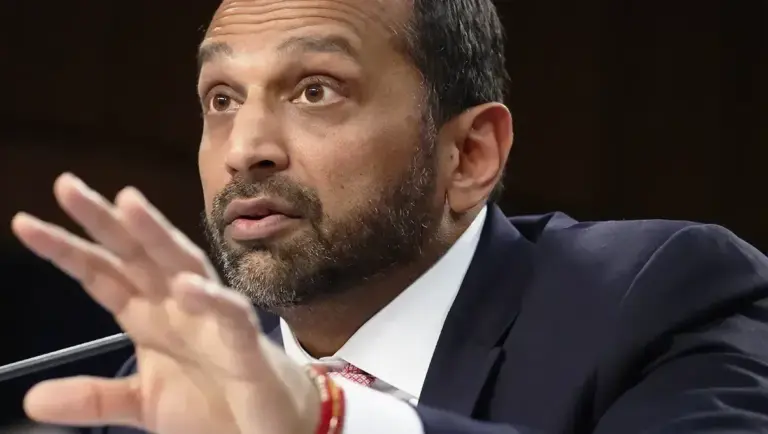
The arrest coincides with an aggressive push by the FBI to dismantle ShinyHunters, a notorious hacking collective that recently targeted the government’s employment portal and allegedly stole data belonging to nearly every employee within the bureau. While officials have not explicitly linked Dubrovsky to this specific breach, FBI Director Kash Patel took to social media on Friday to announce the capture of another suspected co conspirator associated with the group. This move is part of what Patel described as a broader effort to neutralize the network following several high profile incidents involving third party vendors.

Professionally, Dubrovsky operated in a gray area of digital security through his affiliation with CyberSteward, a firm specializing in settlement facilitation and negotiation with threat actors. Rather than focusing solely on defense, his role involved managing the delicate process of paying off hackers to ensure stolen data remained secret or was returned. Investigators now appear to be scrutinizing whether these professional intermediaries were merely facilitating payments or actively conspiring with criminals to profit from cyber extortion schemes.

Citroen is betting on nostalgia and affordability as it prepares to revive one of the most beloved symbols of French motoring. Set to make its grand entrance at the 2026 Paris Motor Show, the new 2CV concept aims to capture the spirit of the original Duck while transforming it into a practical, ultra-compact electric vehicle. Positioned between the tiny Ami and the larger C3, this reimagining focuses on simplicity and playfulness, offering a breath of fresh air in an era dominated by oversized SUVs and complex tech.

While it retains the rounded silhouette and charming proportions of its predecessor, the modern 2CV is actually slightly smaller than the original. This reduction in size is a deliberate move to ensure ease of parking in congested city centers. By keeping the vehicle lightweight, Citroen can avoid using massive, expensive batteries without sacrificing daily usability. To further lower costs, the designers have utilized broad, flat body panels and modular bumpers that can be replaced individually, ensuring that both manufacturing and future repairs remain budget friendly.

The aesthetic is a careful balance of retro charm and contemporary utility. Freestanding round LED headlights pair with a steeply raked windshield and a foldable fabric roof that mimics the breezy feeling of the vintage model. Inside, Citroen has avoided the trend of wall to wall screens in favor of a minimalist cockpit featuring a projected smart vision display and an eight inch touchscreen with comic book inspired graphics. In perhaps its most quirky touch, the car includes Radioen, a removable audio system that allows drivers to take their music with them once they leave the vehicle.

Attention to detail defines this rebirth, with countless nods to history tucked away throughout the cabin. From bakelite inspired accents and checkered upholstery to door pockets specifically designed to hold eggs, every element celebrates the eccentricities of the original brief. Even the pedals feature whimsical icons of turtles for braking and hares for accelerating. If Citroen manages to hit its targeted starting price of approximately fifteen thousand euros, this electric throwback could become one of the most accessible entry points into sustainable urban mobility today.

For decades, investors looked to crude oil as the primary barometer for energy costs and economic health, but a strange shift is occurring in the financial markets. Recent data suggests that bond yields are now tracking diesel prices more closely than crude, reflecting a new reality where refined fuels are the true engines of inflation. Because diesel is indispensable for everything from farming to shipping, its current price spike has trickled down into every sector of the economy, forcing the Federal Reserve toward a more aggressive interest rate strategy to combat rising costs.

President Donald Trump has attempted to blunt this economic edge through a series of rapid interventions, including an executive order to defer federal taxes on diesel. More surprisingly, he recently announced a deal with Vladimir Putin to import millions of tons of Russian fuel, marking a dramatic pivot from previous sanctions against Moscow. These moves appear designed to provide immediate relief to truckers and farmers ahead of crucial midterm elections, yet analysts suggest these gestures may be far too small to move the needle on actual affordability.

Industry experts argue that importing Russian diesel is essentially rearranging deck chairs on the Titanic, noting that shifting supplies from one customer to another rarely lowers global prices. Furthermore, the political payoff seems slim; polling indicates that even a significant drop in fuel costs would fail to sway the majority of undecided voters. With inflation deeply entrenched and borrowing costs climbing alongside pump prices, there is a growing sense among strategists that no amount of diplomatic maneuvering can undo the damage already done to the American consumer’s wallet.