Archive

October 13, 2026

Browsing

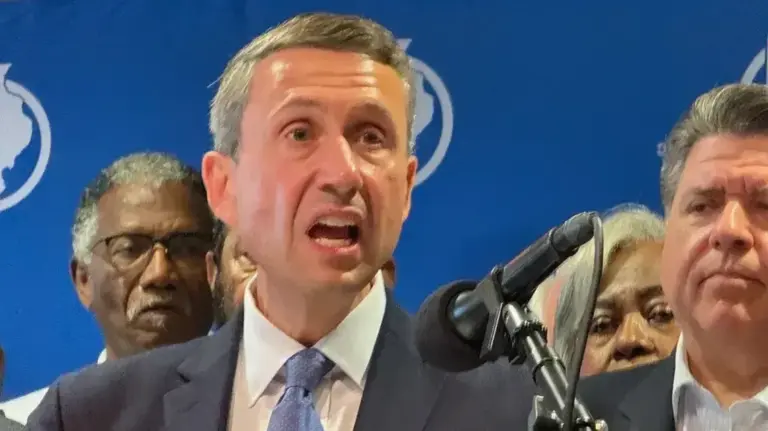
Democratic National Committee Chairman Ken Martin defended his party’s big-tent approach Monday, arguing Democrats must continue expanding their coalition even as Republicans target the party over its ties to democratic socialists.

Martin was pressed during an interview on MSNOW about whether the Democratic Socialists of America (DSA) is a liability for the party ahead of the midterm elections.

“So let me just say, I’ve always taken a big-tent approach to how you build a party,” Martin said. “That’s why I was successful for all these years in Minnesota. I believe you win through addition, not subtraction. You win by growing your coalition, not shrinking it.”

NEWSOM TELLS DEMOCRATS TO BE IN THE ‘ADDITION NOT SUBTRACTION’ BUSINESS WITH SOCIALISTS

“And sometimes, is there a middle ground, though, when Americans see that…” interjected MSNOW anchor Peter Alexander.

“No, not at all, because that’s where the vast majority of Americans are at,” Martin replied. “Maybe right in the middle, or a little center-left, or a little center-right. But it doesn’t mean we can’t bring new voices into the party, right? Of course, we have to keep growing and we have to keep expanding this tent,” Martin reiterated.

SEE IT: TOP DEM OPERATIVE DRAWS LINE AT ‘DEPLORABLE’ HASAN PIKER AFTER TOUTING PARTY’S ‘BIG TENT’

Fox News Digital has reached out to the Democratic National Committee for comment.

“Democratic Party Chair Ken Martin embraces far-Left radicals who want to abolish the police, prisons, and borders,” the Republican National Committee wrote on X.

DSA CO-CHAIR MOCKED FOR PROUDLY CONFIRMING SOCIALISTS WANT TO ABOLISH THE SENATE, NATIONAL BORDERS, PRISONS

The DSA has advocated far-left policies, including abolishing police, prisons and U.S. Immigration and Customs Enforcement (ICE), as well as eliminating immigration restrictions and expanding public ownership.

President Donald Trump and Republicans have frequently targeted the DSA ahead of the November elections. Earlier this month, Trump’s Council of Economic Advisers released a report estimating that adopting seven major DSA policies would add $49 trillion to federal deficits over 10 years, equivalent to more than $350,000 per American household.

SEN MARK KELLY WARNS FAR-LEFT POLICIES THAT ‘DON’T MAKE SENSE’ COULD COST DEMOCRATS SEATS

“Make no mistake, these are the Democrats’ policies,” a White House news release regarding the report stated. “They want to destroy our great, hard-fought nation, and plummet our economy and the very fabric of our nation into the ground.”

Meanwhile, many mainstream Democrats have tried to distance themselves from the DSA label, pointing to their support for capitalism and social democracy.

This post appeared first on https://www.foxnews.com

IonQ is doubling down on its growth strategy by announcing a massive agreement to acquire cybersecurity specialist Elisity in a deal valued at approximately 1.3 billion dollars. This move comes as part of an aggressive acquisition streak for the quantum computing leader, signaling a strategic pivot toward integrating high level security into its emerging technology stack.

The transaction is structured as an all stock deal, which sparked immediate concern among investors and sent IonQ shares sliding during Monday trading. Much of the anxiety stems from the dilution of existing equity required to fund such a large purchase, though company leadership views the long term synergy between quantum power and advanced cyber defense as essential for future scalability.

Financial details reveal that the total valuation includes potential payouts of up to 150 million dollars, contingent upon Elisity meeting specific performance benchmarks following the merger. By absorbing a dedicated security firm, IonQ aims to protect the sensitive infrastructure inherent in quantum operations while expanding its footprint in the enterprise software market.

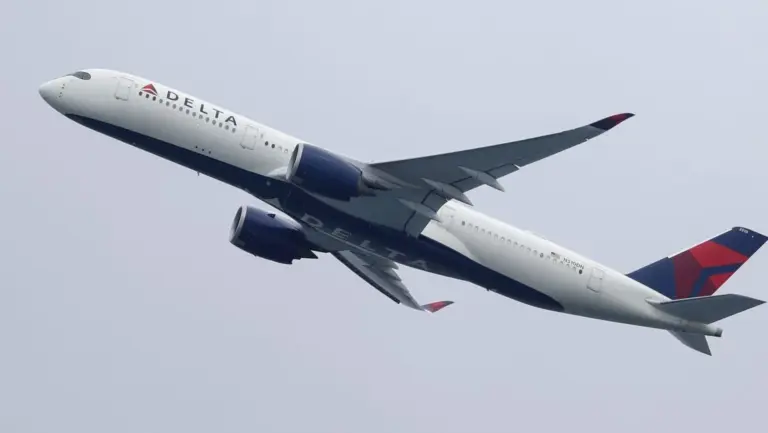
Delta Air Lines has announced it will postpone the launch of its highly anticipated nonstop service between Atlanta and Riyadh until March. Originally scheduled to begin on October 23 using an Airbus A350-900, the route was set to be a milestone in aviation as the first direct commercial link between the United States and Saudi Arabia operated by a domestic carrier. However, escalating violence at King Khalid International Airport has forced the airline to prioritize safety over its expansion timeline.

The decision follows a series of devastating attacks on the airport, which were claimed by Yemen’s Iran-backed Houthi rebels. Tensions peaked on Saturday when a projectile struck a passenger terminal, leaving at least 12 people dead and wounding more than 300 others. According to data from FlightAware, the chaos resulted in more than 2,000 flight cancellations since last Thursday, and the airport remained closed through Monday as authorities assessed the damage and security risks.

Adding to the volatility, the Federal Aviation Administration issued a stern warning to U.S. pilots advising them to exercise extreme caution throughout Saudi Arabian airspace due to military activity and potential navigation system interference. This advisory, which lasts until December 10, warns that threats could impact aircraft at all altitudes. These warnings prompted other global carriers to suspend their operations into Riyadh and led governments like Australia and the U.S. to advise their citizens against traveling to the region.

In a formal statement, Delta emphasized that they are maintaining constant communication with partners such as Saudia and Riyadh Air while monitoring the evolving landscape. While CEO Ed Bastian admitted disappointment over the disruption, he made it clear that safety would ultimately dictate when planes return to the sky. Despite these immediate setbacks, Delta maintains that Saudi Arabia is a vital long term market for the company’s growth strategy moving forward into next year.

Meta has officially entered the race for high end artificial intelligence with the debut of Muse Wonder and Muse Wonder Full. Developed by the company’s Superintelligence Lab, these represent Meta’s first true foray into frontier models, moving away from the lightweight efficiency of previous releases like Muse Spark. These newer, larger models are designed to tackle far more complex workloads, particularly in areas like advanced coding, where they boast significantly higher performance benchmarks.

Internal testing suggests that Muse Wonder can hold its own against industry giants such as GPT-6 Astra and Fable 5.1. However, this increase in capability comes with a corresponding price tag for developers using the Meta Model API, with costs set at four dollars per million input tokens and twenty dollars per million output tokens. While the standard Wonder model is widely accessible via API, the more powerful Wonder Full version remains exclusive to Muse Code subscribers.

A standout feature of this latest release is what Meta describes as active memory. By focusing on the MemoryBench benchmark, researchers have prioritized a system that allows the AI to retain and synthesize user information over extended periods rather than just within a single session. Research scientist Kavya Kopparapu noted that significant effort went into ensuring the model remembers details across days and months, pushing Meta closer to its goal of creating truly personalized superintelligence agents.

This rollout marks a pivotal shift for Meta following a restructuring of its AI division led by Alexandr Wang last August. After spending several months releasing smaller tools and agents, Meta is finally challenging OpenAI and Anthropic on their home turf with state-of-the-art scale. The heavy lifting behind these models took place at Prometheus, Meta’s massive new data center in central Ohio that became operational earlier this year.

The global rush to build artificial intelligence infrastructure may be hitting an unexpected speed bump in the South Pacific. Firmus, an Australian data center operator that boasts the largest cluster of Nvidia Blackwell Ultra chips in the Southern Hemisphere, abruptly scrapped plans for a massive initial public offering last week. The move comes as a shock given the company’s prestigious client list, which includes heavyweights like Meta and OpenAI, and its goal to raise five billion dollars to expand across Australasia. By pulling the plug due to a lack of investor appetite, Firmus has sent a worrying signal that the endless fountain of capital fueling the AI boom might finally be starting to dry up.

This sudden hesitation from investors reflects a broader anxiety regarding whether the astronomical costs of AI can actually be sustained. For years, chipmakers like Nvidia and memory supplier Micron Technology have enjoyed insatiable demand, riding a wave of spending from tech titans like Microsoft and Amazon. However, signs of fatigue are appearing among end users. To offset the soaring cost of hardware, AI labs such as OpenAI have aggressively hiked subscription prices, leading some corporate clients to push back. Major firms including Walmart and AT&T have reportedly restricted employee AI usage to avoid budget overruns, while many businesses are migrating their workloads to smaller, cheaper models that require far less computing power.

For semiconductor giants, this shift in sentiment is particularly precarious. Much of Nvidia and Micron’s current valuation relies on the assumption that hyperscale cloud providers will continue spending trillions on infrastructure through 2027. If corporations stop buying expensive AI services because of price hikes or diminishing returns, those cloud providers will naturally slow their orders for GPUs and high-bandwidth memory. Wall Street seems to be anticipating this pivot already, as evidenced by depressed price-to-earnings ratios for both companies compared to historical averages and broader market benchmarks.

As the industry waits for upcoming quarterly reports from the big cloud players, the situation in Australia serves as a cautionary tale. While the physical land mass of Australia made it an ideal hub for energy-hungry data centers, it cannot insulate the sector from global economic shifts like rising interest rates and cooling venture capital. Whether this represents a temporary correction or a fundamental peak in AI demand remains to be seen, but for now, the silence from potential investors in Melbourne is speaking volumes about the risks ahead for Silicon Valley’s hardware kings.

Starbucks is officially shutting down rumors that it intended to acquire Chipotle Mexican Grill, bringing a swift end to a wave of industry speculation. The coffee powerhouse confirmed on Monday that there are no plans to purchase the burrito chain, despite recent reports suggesting the company had been exploring such a move with financial advisers. A spokesperson stated that the organization remains entirely focused on its current internal strategy and long term growth goals rather than pursuing external acquisitions.

The chatter surrounding a potential merger gained traction last week following a report from the Financial Times, which described the hypothetical deal as an ambitious gamble. Had it happened, the union would have likely become the largest tie up in the history of the restaurant sector, creating a behemoth with approximately fifty billion dollars in annual sales. Much of the intrigue centered on Brian Niccol, who currently leads Starbucks but previously served as the chief executive of Chipotle for six years.

Market reactions were immediate and volatile throughout the saga. When news first broke that Starbucks might be eyeing Chipotle, shares for the Mexican grill surged over seven percent while Starbucks saw a slight dip. However, those gains evaporated once the denial became official, sending Chipotle shares sliding about four percent during afternoon trading while Starbucks recovered some ground.

As the dust settles on these rumors, Starbucks is shifting its attention toward its upcoming quarterly earnings report and future guidance for fiscal year twenty seven. While investors may have been intrigued by the idea of uniting two of America’s most recognizable fast casual brands under one roof, leadership has made it clear that their priority is refining their own operations rather than expanding into grilled meats and tortillas.