
Archive

November 23, 2026

Browsing

Travelers facing a chaotic Sunday can finally breathe a sigh of relief as Delta Air Lines confirmed that its automated weight and balance calculation systems are back online. The technical failure forced flight crews to perform critical safety calculations by hand throughout the day, leading to widespread delays and cancellations across the network. While the airline expressed regret for the disruption, the glitch created a ripple effect that left thousands of passengers stranded at airports.

Out of approximately 5,000 scheduled flights between Delta and Delta Connection, about 70 percent of the disruptions were tied directly to this automation crisis. The remaining chaos was attributed to poor weather conditions and air traffic control restrictions in New York City and across the Northeast. To manage the backlog, Delta collaborated closely with air traffic controllers to prevent gate congestion, particularly at its massive hub in Atlanta.

To make amends for the turmoil, Delta has launched a comprehensive recovery effort focusing on rebooking displaced passengers onto the fastest available itineraries. For those stuck overnight or waiting hours for departures, the company is providing meal vouchers and hotel accommodations. In cases where flights were canceled entirely and travelers no longer wish to fly, full refunds are being offered.

Company officials emphasized that canceling flights remained a last resort as they fought to maintain their schedule amid the digital blackout. Despite the stress caused by the ground stop and subsequent delays, leadership praised employees for maintaining professionalism while utilizing tedious manual processes to keep planes moving safely until the software could be restored.
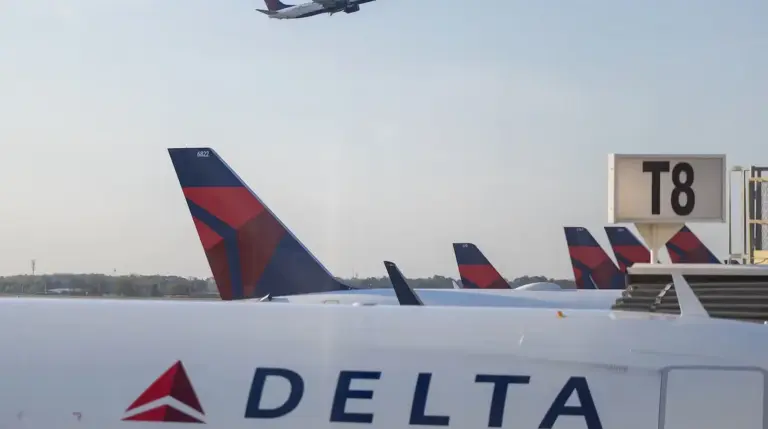

Travelers at Hartsfield-Jackson Atlanta International Airport faced a chaotic Sunday as a technical failure within Delta Air Lines’ operations triggered widespread disruptions. A malfunction in the airline’s weight and balance system, which is critical for calculating aircraft safety during takeoff, led to delays for more than 1,600 flights across the country. Nearly half of all Delta departures on Sunday were pushed back by at least fifteen minutes, leaving thousands of passengers stranded or waiting in long lines.

The timing of the outage added significant stress to an already tense travel season, coming just as millions began heading home for the Thanksgiving holiday. This incident follows closely on the heels of a separate Federal Aviation Administration ground stop caused by telecommunications issues, though officials were quick to clarify that Sunday’s turmoil was strictly internal to Delta and unrelated to broader air traffic control systems.

To keep planes moving while engineers worked on a fix, Delta crews resorted to manual calculations to ensure every flight remained safe for departure. The company eventually confirmed that the systems had returned to normal operation and explicitly ruled out any cyberattack or hacking attempt as the cause of the glitch.

In response to the disruption, Delta announced it is working to rebook affected travelers onto alternative itineraries. The airline stated it would provide meal vouchers and hotel accommodations where necessary, while offering full refunds to those whose flights were canceled and who chose not to reschedule their trips.

National Intelligence Director Jay Clayton has cautioned the public to expect further technical disruptions as the United States works to modernize its digital infrastructure for the era of artificial intelligence. Speaking on CNN’s State of the Union, Clayton suggested that recent failures affecting everything from airline schedules to email services are likely symptoms of necessary system upgrades rather than malicious activity. He noted that whenever there is a significant leap in computing power and application capabilities, some instability is inevitable during the transition.

These warnings come at a particularly sensitive time, arriving just before the Thanksgiving holiday rush when millions of travelers rely on seamless connectivity. Recent chaos included a nationwide aviation ground stop attributed to router updates and widespread issues with Microsoft Outlook caused by network capacity adjustments. While these events sparked fears of a coordinated cyberattack, government officials have largely dismissed those concerns, framing the glitches instead as side effects of essential maintenance.

The sentiment was echoed by Treasury Secretary Scott Bessent, who urged citizens not to panic about the stability of their financial institutions despite ongoing security patches designed to thwart AI threats. Comparing these software updates to a medical vaccine, Bessent argued that while users might experience temporary discomfort or minor glitches, these steps are vital for building long term resilience against future vulnerabilities. Together, the administration’s message is clear: short term headaches are the price of securing the nation’s digital future.