Archive

October 2026

Browsing

The ambitious marriage of Paramount and Warner Bros. Discovery has hit a bumpy road immediately following its arrival on the New York Stock Exchange. Shares of the newly formed Skydance plummeted roughly seven percent during their second day of trading, marking a rocky start for a company that had already seen prices dip upon its Tuesday debut. While the closure of the merger represents a significant milestone and follows a favorable legal settlement with state attorneys general, investors seem less interested in the victory lap and more concerned with the balance sheet.

Wall Street is currently staring down a daunting eighty billion dollars in debt, leaving many analysts wary of the firm’s high leverage. The leadership team, led by Chairman and CEO David Ellison and co-CEO Ynon Kreiz, insists they can simultaneously slash costs and increase content spending to build a premier streaming powerhouse combining HBO Max and Paramount+. However, critics argue that this is essentially a show me story, noting that there is still precious little clarity regarding the final pricing strategies or organizational structure of this consolidated empire.

Some experts remain optimistic, pointing to the sheer volume of intellectual property and sports rights now under one roof as a recipe for success. Analysts like Matthew Condon suggest that if the company can effectively optimize its thirty billion dollar content budget, the current low stock price might actually represent a favorable risk reward opportunity. This bullish view depends entirely on flawless execution, assuming that existing business segments maintain their current trajectories while the company chases six billion dollars in projected cost synergies over the next few years.

Other observers are far more cautious, recalling previous media mergers where legacy cable assets evaporated faster than corporate efficiencies could be realized. With limited room to issue further debt after recent bond sales, any unexpected surge in subscriber churn or a slump in box office returns could leave Skydance without a safety net. As investors await third quarter earnings reports for concrete evidence of progress, the pressure remains firmly on Ellison and Kreiz to prove that their vision for a streamlined streaming giant isn’t just an exercise in optimism.

Micron Technology has entered a financial stratosphere that seemed unimaginable just a few years ago, with its stock climbing 485 percent over the past year. Now trading above 1,000 dollars per share and boasting a market valuation of 1.2 trillion dollars, the company finds itself in a position similar to peers like Nvidia and Broadcom, who both opted for ten-for-one stock splits earlier this year. For many retail observers, the skyrocketing price tag makes a split seem inevitable as a way to make individual shares feel more affordable to the average investor.

However, a closer look at Micron’s strategy suggests that management is prioritizing substance over optics. During a recent earnings call, leadership indicated that their primary goal for handling excess cash is not splitting the stock but rather aggressive share repurchases. While a split might attract momentum traders by lowering the barrier to entry, it does nothing to increase the actual value of the business. With most modern brokerages offering fractional shares, the psychological appeal of a lower share price has become less critical than it once was for small scale investors.

The drive toward buybacks is fueled by an unprecedented explosion in wealth driven by the artificial intelligence memory boom. Data centers requiring high bandwidth memory have sent Micron’s financials soaring, with fiscal 2026 revenue hitting 133.2 billion dollars and adjusted free cash flow jumping to an astonishing 62.3 billion dollars. This massive influx of liquidity provides the company with plenty of ammunition to reduce its total share count, which creates genuine long term value for shareholders in a way that a cosmetic split cannot.

Looking ahead, investors should focus less on whether the ticker symbol drops from four digits to two and more on how Chief Financial Officer Mark Murphy executes his plan for capital returns. With billions in net cash and expectations for even higher free cash flow in early 2027, Micron appears poised to leverage its treasury to reward holders directly. In an era of AI led hypergrowth, shrinking the number of outstanding shares may prove far more lucrative than simply changing the math on how those shares are divided.

Investors holding shares in Rocket Lab find themselves at a precarious crossroads where explosive growth meets a daunting valuation. On paper, the company’s trajectory looks impressive, boasting a sixty two percent increase in quarterly sales and a massive backlog of signed contracts totaling over two billion dollars. This pipeline includes significant government work, such as a nearly four hundred million dollar deal with the Space Force, suggesting that demand for their satellite services and launches remains robust.

Despite these gains, the financial reality is more complex because the company continues to lose money. Without consistent earnings to ground its stock price, analysts have turned to the price to sales ratio, which reveals that Rocket Lab is trading at over sixty times its annual revenue. For comparison, the broader S&P 500 typically trades around three times sales. This staggering gap suggests that current shareholders are essentially paying a premium for future success that hasn’t actually happened yet.

The pivot point for the entire investment thesis rests on Neutron, the company’s next generation rocket currently under development. Management has explicitly linked their first projected adjusted profit to the successful flight of this vehicle. Until then, Rocket Lab will continue to burn through cash, recording a negative free cash flow of over one hundred ten million dollars in just one quarter as they race toward the launch pad.

Timing has now become the primary risk factor for those holding RKLB stock. While leadership originally hoped for progress by year end, the window for an orbital flight before January is closing rapidly. If Neutron doesn’t fly until 2027, the promised path to profitability slides further away. Investors must now decide if they believe in the long term vision enough to weather another period of heavy spending or if the current hype has pushed the price too far ahead of reality.

Cenovus Energy is doubling down on its footprint in the Canadian oil sands, announcing a cash-and-stock agreement to acquire Athabasca Oil for roughly 5.7 billion Canadian dollars. The move comes as a strategic gamble that the federal government will deliver on promises to expedite a new Pacific pipeline, which would allow producers to bypass traditional bottlenecks and reach international markets more efficiently. By absorbing Athabasca, Cenovus immediately bolsters its thermal operations by about 45,000 barrels of oil equivalent per day, with ambitious plans to scale that figure up significantly by 2032.

The deal also cleans up corporate housekeeping for both parties by giving Cenovus full control of Duvernay Energy. Previously a joint venture between the two firms, the consolidated ownership should streamline development in the Kaybob Duvernay region, where leadership expects output to climb toward 20,000 barrels per day. For Athabasca shareholders, the windfall was immediate; stock prices jumped over 14 percent following the news that they would receive a combination of cash and equity valued at 12 dollars per share.

Timing is everything for this acquisition, arriving shortly after Prime Minister Mark Carney signaled that Ottawa would fast-track reviews for the proposed Pacific Link pipeline. This million-barrel-per-day project is seen as a vital lifeline for Canada to diversify its exports away from the United States during a period of heightened trade tension and tariff pressure. Cenovus CEO Jon McKenzie believes this increased capacity could allow the company to accelerate projects like Athabasca’s Corner site by several years.

However, the path forward isn’t without hurdles. While the production goals are aggressive, the federal government has tied pipeline approvals to strict mandates regarding carbon capture and storage technology. Despite the urgency of the infrastructure build-out, major players including Cenovus have yet to make a final investment decision on those necessary green technologies, leaving a critical piece of the puzzle unsolved even as they expand their physical empire.

The race for artificial intelligence dominance is driving some of the world’s largest tech companies back toward atomic energy. In two significant moves, Google and Oracle have entered into major agreements to modernize and support aging American nuclear facilities. These partnerships aim to solve a growing crisis for the industry: how to find enough stable, carbon-free electricity to run massive data centers without overloading public grids or abandoning climate goals.

Google has struck a comprehensive twenty year deal with Constellation Energy to overhaul eleven nuclear units across Pennsylvania, New Jersey, and Illinois. By investing in updated turbines and digital controls, the project expects to add nearly nine hundred megawatts of capacity by 2032. This strategy allows Google to avoid the grueling permit processes required for building new plants from scratch while securing thousands of megawatts of power. As part of the arrangement, Constellation will actually use Google’s own Gemini AI platform to help manage plant efficiency and plan future upgrades.

Meanwhile, Oracle is focusing its efforts on Wisconsin through a partnership with NextEra Energy at the Point Beach nuclear plant. To facilitate its ambitious eleven billion dollar Project Lighthouse data center in Port Washington, Oracle has agreed to absorb roughly three hundred million dollars in rising energy costs. Company executives noted that this move is intended to shield local residents from price hikes that typically occur when industrial demand spikes, effectively subsidizing the cost of clean energy for over a million utility customers in the region.

These deals reflect a broader trend among hyperscale cloud providers who can no longer rely solely on wind and solar due to their intermittent nature. From Amazon extending the life of plants in Maryland to Google restarting facilities in Iowa, the tech sector is essentially becoming an underwriter for the US nuclear fleet. By guaranteeing long term revenue streams for these utilities, Big Tech is ensuring that critical baseload power remains available just as AI workloads begin to push national electrical infrastructure to its limits.

FIRST ON FOX: Texas Senate candidate James Talarico once criticized the Texas public school system for focusing too heavily on academics while arguing that social-emotional learning should receive greater attention and also declared that Texas schools were “not built” for “poor students” or “students of color.”

“I was trapped in a system that was focused purely on academics, reading, writing, arithmetic. And there wasn’t time to talk about social-emotional learning,” Talarico said in a 2020 discussion with Texas Rising — a progressive youth activist group.

“All the things that we all know on this call are more important than whether or not you memorize the quadratic equation,” he continued.

‘FAKE’ MODERATE TALARICO’S TEXAS SURGE TESTS PAXTON IN FIGHT TO HOLD CRUCIAL GOP SENATE SEAT

Talarico made the comments while serving in the Texas House of Representatives, representing the 52nd District, after working as a public school teacher for just two years. His time working in education became a central point in his work in the legislature and now in his Senate campaign.

In the unearthed discussion, Talarico said that he felt like he wasn’t able to have “the really important conversations” with his students that “would allow them to live a fulfilling life.” He said that he was, instead, forced to focus on teaching the school curriculum rather than “social-emotional” lessons.

He also used the discussion to slam the Texas public school system as “not built” for “poor students” and “students of color.”

“Our public education system, particularly here in Texas, is not built for poor students,” Talarico said. “It’s not built for students of color.”

UNEARTHED CLIP SHOWS TALARICO CALLING PARENTS ‘ABUSIVE’ FOR DENYING CHILDREN’S GENDER IDENTITY

Talarico claimed this motivated him to introduce his “Whole Student Agenda” in 2019 — a series of 24 bills which pushed for a variety of reforms including modifications for “scientifically accurate” sex education and encouraging restorative justice programs. Despite Talarico saying the system is “not built for students of color,” the package does not specifically address race-related issues.

The Texas Democrat has repeatedly been under fire for his progressive education work in the legislature, particularly his push for sexual education, DEI policies, law enforcement reforms and climate conversations.

Talarico described sex education as “maybe the most important topic” for Texas students to learn during a Texas House hearing in 2022. He also characterized bills addressing concerns about inappropriate school materials as “conspiracy theory-driven” and “kooky stuff.”

TALARICO CAMPAIGNS WITH SURGEON WHO OPERATED ON TRANSGENDER MINORS: ‘WOLF IN SHEEP’S CLOTHING’

He led a bill in the Texas House requiring most Texas school districts to hire a diversity, equity and inclusion officer, as well as for DEI to “explicitly” be taught in every classroom in the public school system.

Talarico has also faced scrutiny over his education consulting work while serving on the Texas House Public Education Committee. 

Fox News Digital previously reported that a firm employing Talarico received millions of dollars in contracts from the Texas Education Agency while he served on the committee. His campaign denied wrongdoing, calling the allegation a “lie.”

Talarico will go head-to-head with GOP Texas Senate candidate Ken Paxton in the upcoming midterm elections, a race expected to be crucial in determining which party will take control of the Senate.

Talarico’s campaign did not immediately respond to Fox News Digital’s request for comment.

This post appeared first on https://www.foxnews.com

Socialist Mayor Zohran Mamdani’s plan to combat antisemitism indirectly furthers funding to an Arab-American group critical of U.S.–Israel relations.

As part of $30 million in investments to push back persecution of the Jewish community, the strategy includes a $6.4 million grant to the Partners Against Hate (PATH). To carry out its mission to “enhance awareness and reporting of hate crimes,” PATH partners with a group of six other groups — including the Arab American Association of New York (AAANY), which was formerly led by disgraced Women’s March co-founder and notorious anti-Israel activist Linda Sarsour.

The link between New York City and AAANY comes as Mamdani struggles to overcome skepticism among Jewish communities that its first Muslim mayoral administration has done enough to adequately combat rising levels of antisemitism in the Big Apple.

MAMDANI PLEDGES MILLIONS TO COMBAT ANTISEMITISM WHILE LEAVING KEY QUESTION UNRESOLVED

Antisemitic acts make up the greatest slice of the city’s tracking for hate crimes in 2026, accounting for roughly 9% of the picture, according to NYPD reporting. In the first eight months of 2026, the city has recorded a hate crime uptick of 16% over last year’s levels.

Recorded hate crimes in the “homosexual” category, for instance, make up 29 incidents, and those against Muslims make up another 21. Hate crimes against Jews have reached 181.

One hundred thirty-one of those are felony offenses.

The surge prompted Mamdani to unveil his $30 million plan earlier this month, calling it a key step towards combatting hate towards Jewish communities.

“My administration has a responsibility to ensure New York City remains a place where Jewish New Yorkers can live their lives peacefully and safely, where they can walk down the street, enter their houses of worship and build their lives knowing that this city will stand with them,” Mamdani said in a strategy document.

Notably, the indirect partnership between New York City and AAANY, the Arab-American group, is not new.

AAANY’s link to PATH was listed in a 2021 press release from then-Mayor Bill de Blasio. In those remarks, de Blasio listed out the organizations that would partner with PATH to combat racial crimes through a $3 million grant distributed among its partners.

“The anchor organizations will work closely with the [Office for the Prevention of Hate Crimes] and other city agencies to ensure a comprehensive, community-based approach to preventing hate crime,” the press release states.

PROMINENT HOLOCAUST MUSEUM CHALLENGES MAMDANI WITH OFFER IN RESPONSE TO CLAIMS ABOUT ‘GENOCIDE’ IN GAZA

“In New York City, we do not tolerate hate, violence, or bigotry in any form. As we drive a recovery for all of us, we must lift up the community leaders standing up against America’s hate epidemic. We are taking action to make sure the hate in our beloved city is eliminated — once and for all,” de Blasio said at the time.

In the years since, however, AAANY has come under scrutiny for its advocacy against the state of Israel, a position that, in the view of some critics, goes outside the scope of its mission to combat racial prejudice. Since 2021, AAANY has reportedly given over $223,000 to the Council on American-Islamic Relations, New York (CAIR-NY). The national CAIR organization has long been the subject of controversy over its alleged ties to Hamas. In 2007, federal prosecutors named the organization an unindicted co-conspirator in the Holy Land Foundation terrorism financing case, the largest terrorism financing prosecution in U.S. history.

Alongside recognizing Israel’s war as a form of genocide, AAANY has pushed for the U.S. to distance itself from Israel.

During Mamdani’s time as a state legislator, the group rallied around his “Not On Our Dime” bill. That legislation sought to restrict New York nonprofit donations from going to Israeli settlement activity, citing what it called a “violation of the Geneva Conventions.”

The group’s executive director, Marwa Janini, has similarly pressed for the city to oppose the Israel-Hamas war in Gaza, citing humanitarian concerns.

“I visited Cairo to pack food aid for Gaza and support Palestinian refugees. Despite their resilience in the face of the unimaginable loss and hardships they are facing, it is evident that merely sending aid to Gaza is not enough. The NYC City Council must pass a ceasefire resolution to end this U.S.-funded genocide and bring hope and stability to Gaza,” Janini said in a statement.

Longstanding critics of AAANY have argued that the organization has tried to delegitimize the state of Israel.

In 2017, AAANY received backlash from groups like the Anti-Defamation League, a group that combats antisemitism, when Linda Sarsour, who was one of its executive directors, espoused a similar position.

“We profoundly reject Linda Sarsour’s positions that delegitimize Israel. We have vigorously opposed efforts like the Boycott, Divestment and Sanctions movement, which she supports, and we oppose her stance that one cannot be simultaneously a feminist and pro-Israel,” the Anti-Defamation League wrote.

Sarsour was previously pushed out of the Women’s March, alongside a couple of other co-founders, for allegations of antisemitism and their embrace of notorious antisemite Louis Farrakhan.

NETANYAHU ACCUSES MAMDANI OF ‘FOMENTING HATE,’ SAYS RHETORIC IS MAKING NEW YORK JEWS AFRAID

Sarsour is a longtime political ally of Mamdani. In 2020, she endorsed his bid for the New York Assembly, calling him her “favorite guy,” and was a major backer of his mayoral campaign.

The New York Mayor’s Office did not immediately respond to a request for comment from Fox News Digital on whether it is concerned that ties to AAANY may undermine efforts to combat antisemitism.

Fox News’ Andrew Mark Miller contributed to this report.

It’s common sense that common cents are getting less use in Americans’ daily lives. Congress has already taken action to eliminate the lowest rung — the penny — and now another coin collecting dust in people’s wallets could be on the chopping block next.

The House and Senate both passed bills earlier this year aimed at eliminating the penny once and for all. The bipartisan Common Cents Act was unanimously approved in each chamber, but has yet to get President Donald Trump’s signature to become law.

It followed the Treasury Department announcing last December that the U.S. Mint would no longer produce pennies, which at the time cost more than three times their value to make.

TRUMP’S FIRST-YEAR GOVERNMENT OVERHAUL DELIVERS CHANGE WASHINGTON HASN’T SEEN SINCE THE 1960S

Now, lawmakers want the administration to act on another portion of their bill, which would direct the Treasury to study the potential of making the nickel with cheaper materials than are currently used.

“If it costs 13 cents to make a five-cent coin, Washington should fix the problem instead of wasting more taxpayer money,” House GOP Conference Chair Lisa McClain, R-Mich., told Fox News Digital. “My bill gives Treasury a path to make nickels at a lower cost without disrupting how Americans use them. It is a simple reform that saves money and brings a little more common sense to government.”

Sen. Cynthia Lummis, R-Wyo., who led the bill in the Senate, told Fox News Digital, “More and more Americans are paying with credit cards, debit cards and stablecoins for everyday purchases that once would have been made with cash or coins.”

“The half-cent coin was retired when it was no longer needed, and the penny has now reached that same point. It’s my hope that we can find a cheaper way to produce the nickel so that it remains economically viable for years to come,” Lummis said.

Nickels are produced at a loss to taxpayers of roughly eight cents per coin, according to the latest data. They are currently made of a mixture comprised of 25% nickel and 75% copper.

The Common Cents Act “authorizes a lower-cost nickel composition if testing shows it will reduce production costs without significantly disrupting coin-operated machines,” such as vending machines, according to a release on McClain’s site.

But it’s not clear that there is much appetite for ending nickel production altogether, at least not yet.

Treasury Secretary Scott Bessent told Fox News in May 2025 that he believed the U.S. could “retool” the nickel to make it cheaper to produce.

In its December 2025 announcement, the Trump administration projected immediate cost savings of $56 million in stopping penny minting.

But the decision could be reversed by any future administration unless Trump signs the bill into law. The White House did not respond to a request for comment on whether and when the president plans to do so.

Former special counsel Jack Smith told lawmakers he had “never met” former CIA director and vocal Trump critic John Brennan when pressed about whether Brennan provided consultation or counsel during his tenure, but records just declassified by the White House reveal members of Smith’s team met with Brennan while preparing the classified-documents case against President Donald Trump.

The revelation about Brennan’s meeting with special counsel Smith’s team adds another wrinkle to Republicans’ broader scrutiny of Smith’s investigations into Trump, which has included claims of political bias, overreach and other investigative missteps.

“Jack Smith was a tool of the Biden administration to put Trump in prison,” said Harvard Law professor and former Trump impeachment counsel, Alan Dershowitz, who described Smith’s work as “a partisan weapon that broke the rules, lied to the court and engaged in bad faith throughout” in a 2025 op-ed for The Wall Street Journal. Another critic, investigative reporter John Solomon, recently described the probes as among a “10-year conspiracy to stop Donald Trump using the resources of the United States government.”

EXPLOSIVE NEW REPORT PUTS JACK SMITH BACK IN HOT SEAT AS JIM JORDAN ALLEGES HE TRIED TO ‘SWAY’ 2024 ELECTION

Two assistant special counsels working under Smith joined FBI agents for a November 2023 meeting with Brennan at CIA headquarters in McLean, Virginia, according to documents that were declassified Monday by the White House. The meeting was held “to discuss expert testimony to National Defense Information in the forthcoming trial,” indicating prosecutors were exploring the possibility of using the former CIA chief’s national security expertise as they prepared their case against Trump.

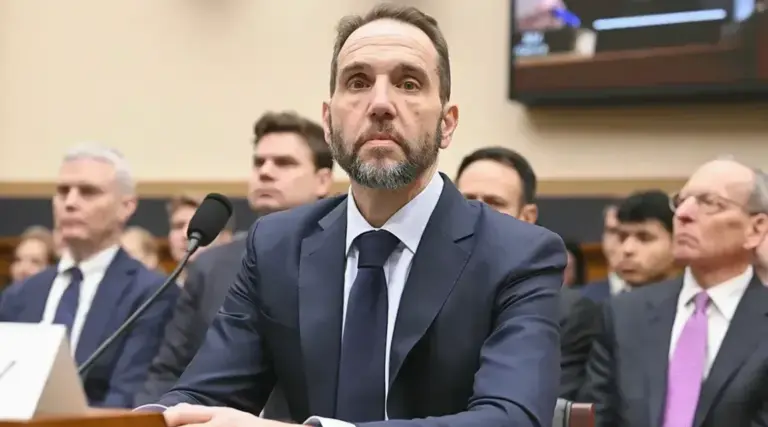
Meanwhile, Smith appeared before the Senate Judiciary Committee last week as part of the Republican-led panel’s oversight of his investigations into Trump. During the hearing, GOP lawmakers pressed Smith over allegations of political bias, investigative overreach and misconduct in both the Arctic Frost 2020 election probe and his classified-documents case known as “Plasmic Echo.”

In particular, Senate Judiciary Committee Chairman Chuck Grassley, R-Iowa, asked Smith whether he had ever received “consultation or counsel” from Brennan, including during his tenure as special counsel.

EX-CIA CHIEF ACCUSED OF ORCHESTRATING ‘RUSSIA HOAX’ SUES TRUMP ADMIN FOR ‘VINDICTIVE PROSECUTION’

“Have you ever received any consultation or counsel by John Brennan, former CIA director, whether during your time as special counsel or otherwise? If so, when and for what purpose?” Grassley asked.

“I’ve never met John Brennan,” Smith responded.

FORMER CIA DIRECTOR BRENNAN SUBPOENAED TO TESTIFY IN FEDERAL TRUMP CONSPIRACY CASE

Grassley’s question, however, was broader than whether Smith personally met Brennan, and the newly declassified records show prosecutors working directly under Smith met with the former CIA director as they prepared the government’s case against Trump.

“This meeting occurred during Jack Smith’s time as Special Counsel and constitutes ‘consultation or counsel’ from John Brennan to Smith and his team,” Grassley told Fox News Digital. “Smith’s response before the Senate Judiciary Committee was highly evasive and misleading, at minimum.”

During the hearing, Grassley later returned to the issue, asking Smith whether he had ever had a conversation with Brennan.

“I have no recollection of having a conversation with John Brennan,” Smith responded.

FBI QUESTIONING CURRENT AND FORMER CIA OFFICIALS IN DOJ PROBE INTO JOHN BRENNAN’S ROLE IN RUSSIA ASSESSMENT

In addition to the memo outlining the 2023 Brennan meeting, the declassified release also included two pages of notes bearing CIA headquarters headers where lines of text beneath Brennan’s name are blacked out by government redactions, leaving the remainder of the ruled pages blank.

Brennan was not serving as CIA director during the period covered by Smith’s classified-documents case, and the released records do not indicate he had firsthand knowledge of Trump’s alleged handling of the documents.

JACK SMITH’S TRUMP PROBE SWEPT UP FOX NEWS, OTHER MEDIA COMMUNICATIONS AS INVESTIGATION WENT BEYOND LAWMAKERS

Grassley, as well as other GOP lawmakers and critics, have accused the former special counsel of investigative overreach and political bias, including pointing to records showing his Arctic Frost investigation obtained financial information involving thousands of Trump donors and phone records of Republican lawmakers, among other investigative steps. Grassley has separately raised questions about the origins and conduct of Smith’s classified-documents prosecution.

Smith, meanwhile, has rejected allegations that his investigations were politically motivated and has maintained that his decisions were driven by the evidence and defending the work of prosecutors and investigators on his team.

Fox News Digital reached out to attorneys for Smith to obtain comment about the Brennan meeting, as well as the Justice Department, but did not receive a response.

China nearly doubled the number of military and coast guard ships it sent to a key flashpoint in the South China Sea last month, according to Manila’s military.

It comes as a series of increasingly tense encounters raises the risk of confrontation with a U.S. treaty ally located in the disputed waters. The Armed Forces of the Philippines said it tracked 101 different Chinese navy and coast guard vessels around four disputed areas over the course of September, up from 56 in August and 48 in July.

The sharp increase comes as Chinese and Philippine forces have faced off both at sea and in the air, including an encounter over the weekend in which Manila accused a Chinese fighter jet of repeatedly maneuvering dangerously close to an unarmed Philippine patrol plane.

China claims sovereignty over most of the South China Sea, including waters that fall within the Philippines’ exclusive economic zone, and uses coast guard ships, naval vessels and aircraft to assert those claims. Manila has continued patrolling the waters and resupplying Philippine positions, bringing forces from the two countries into repeated close contact.

US, CHINA STRIKE DEAL TO LOWER TARIFFS ON $30B IN GOODS AFTER TRUMP-XI WASHINGTON SUMMIT

The confrontations carry particular stakes for Washington: the Philippines is a U.S. treaty ally, and the U.S. has repeatedly said its Mutual Defense Treaty with Manila applies to armed attacks on Philippine armed forces, public vessels and aircraft — including in the South China Sea.

The latest Philippine count showed the largest number of Chinese vessels around Scarborough Shoal, where 39 different Chinese coast guard and People’s Liberation Army Navy ships were observed during September.

Another 28 were tracked around Thitu Island, known in the Philippines as Pag-asa; 23 around Second Thomas Shoal; and 11 around Sabina Shoal.

Rear Adm. Roy Vincent Trinidad, an Armed Forces of the Philippines spokesperson for the West Philippine Sea, said the figures showed China’s continued “illegal, coercive, aggressive and deceptive” activities in the region.

But Philippine officials stopped short of concluding that the jump represented a broader shift in China’s strategy. Asked why the number had nearly doubled from August, Trinidad said the military wanted to examine a longer period before drawing conclusions about the trend.

The increase comes as the two sides have repeatedly confronted each other around some of the same contested waters.

On Saturday, a Philippine C-208 maritime patrol aircraft was flying near Scarborough Shoal when it encountered two Chinese military aircraft, according to the Philippine military.

Manila said one of the aircraft, a Chinese J-16 fighter, repeatedly approached the unarmed Philippine plane and maneuvered in front of and behind it at what the military described as an unsafe distance.

“This incident is part of a recurring pattern of unsafe and coercive behavior against Philippine government vessels and aircraft conducting lawful operations,” the Philippine military said.

The Philippine aircraft completed its mission and returned safely to base.

TRUMP ENVOY WARNS CHINA’S POWER MOVE AT SEA IS THREAT ‘WE CANNOT AFFORD TO IGNORE’

Beijing offered a sharply different account, saying the Philippine aircraft had entered airspace over Huangyan Dao, China’s name for Scarborough Shoal, without permission and that Chinese forces took “necessary measures” in response.

Scarborough Shoal sits about 120 miles west of the Philippine island of Luzon and has become one of the most persistent flashpoints between Beijing and Manila. China has effectively controlled access to the shoal since a 2012 standoff, while the Philippines maintains that it falls within its exclusive economic zone.

China claims sovereignty over Scarborough and much of the South China Sea, overlapping claims by the Philippines and several other Southeast Asian nations. An international tribunal ruled in 2016 that China’s sweeping historic-rights claims in the South China Sea had no legal basis, a ruling Beijing rejects.

The encounters have continued despite a recent diplomatic thaw between Washington and Beijing, with President Donald Trump and Chinese President Xi Jinping emphasizing stability in the relationship during Xi’s state visit to Washington.

Days before the latest air encounter, Chinese coast guard and naval vessels moved to block a Philippine resupply mission to Second Thomas Shoal, another major flashpoint in the dispute.

The Philippines deliberately grounded the aging BRP Sierra Madre at Second Thomas in 1999 and keeps a small contingent of troops aboard the rusting ship to maintain its presence. Chinese vessels have repeatedly tried to block missions carrying food, water and other supplies to those troops.

The latest incidents put renewed attention on Washington’s defense commitment to Manila. The two countries have been bound by their Mutual Defense Treaty since 1951, and the U.S. has said an armed attack on Philippine armed forces, aircraft or public vessels anywhere in the South China Sea would invoke U.S. obligations under the treaty.