Archive

October 2026

Browsing

The traditional image of industrial manufacturing often conjures visions of greasy gears and heavy machinery, but today’s market leaders are proving that nuts and bolts are just the beginning. In a surprising shift that has caught the eye of analysts at Investor’s Business Daily, companies once defined by their physical hardware are successfully pivoting toward the digital frontier. By integrating artificial intelligence into their core operations, these legacy firms are transforming themselves from simple equipment providers into high tech powerhouses.

This evolution is not merely about adding software to existing products; it is a fundamental reimagining of how industry operates. These companies are leveraging AI to predict machine failure before it happens, optimize supply chains in real time, and automate complex assembly processes that previously required constant human oversight. This convergence of heavy industry and advanced computing creates a unique value proposition for investors who have traditionally viewed these sectors as slow moving or stagnant.

While the transition represents a significant leap forward, experts caution that such pivots come with inherent risks. Moving from a tangible product model to an AI driven service model requires massive capital investment and a cultural overhaul within old school corporate structures. However, those capable of bridging the gap between the factory floor and the cloud stand to gain a massive competitive advantage in an increasingly automated global economy.

As these industrial giants continue to shed their analog skins, the stock market is taking notice. The ability to maintain strong physical assets while scaling intelligent systems provides a safety net that pure play software companies lack. It suggests a future where the most valuable players aren’t necessarily those who invented the algorithm, but those who know exactly how to apply it to the physical world around us.

In a move designed to safeguard long term gains against a backdrop of market instability, fund managers have opted to liquidate software holdings ahead of schedule. While the assets showed promise, the decision to execute an early sell was driven by a commitment to overall portfolio health rather than a lack of confidence in the individual companies. By locking in profits now, the strategy prioritizes capital preservation over the gamble of waiting for peak valuations in a sector known for sudden swings.

The shift reflects a growing trend among disciplined investors who view risk management as more valuable than chasing every single point of potential growth. In the current climate, where software valuations can fluctuate wildly based on interest rates and AI hype, taking chips off the table allows for greater flexibility. This liquidity provides a safety net that protects the broader portfolio from being overly exposed to a single industry downturn.

Industry analysts suggest that this proactive approach helps avoid the psychological trap of holding onto winning positions for too long during periods of euphoria. Instead of relying on hope, these managers are leaning into systematic exits to ensure that their wins are realized and permanent. It is a calculated pivot toward stability, ensuring that one bad quarter in tech does not derail years of steady accumulation across other sectors.

Ultimately, prioritizing health over maximum possible return is about sustainability. By diversifying away from concentrated software bets at this juncture, portfolios remain resilient enough to weather unforeseen shocks while staying poised to reinvest when more attractive opportunities emerge. The goal isn’t just to win big today, but to stay in the game long enough to compound those wins over time.

As the artificial intelligence gold rush continues to reshape the tech landscape, investors find themselves weighing the merits of two heavy hitters: Advanced Micro Devices and Broadcom. Both firms have ridden a massive wave of momentum, with AMD surging 421 percent and Broadcom climbing 285 percent over the last three years. While both remain essential players in the AI ecosystem, they offer very different paths to profit, leaving shareholders to decide whether versatility or specialization holds more value leading into 2030.

AMD is positioning itself as a primary beneficiary of the shift toward agentic AI, where autonomous systems require the robust power of central processing units to function efficiently. This strategic pivot is already paying dividends, evidenced by a staggering jump in data center sales and a widening gap between AMD and its longtime rival, Intel. With an estimated trillion dollar opportunity looming for its AI accelerators and GPUs, AMD represents a high growth play backed by aggressive expansion in market share.

On the other side of the ring, Broadcom is dominating the niche of application specific integrated circuits. By creating custom chips tailored for specific workloads, Broadcom provides big tech giants like Meta and Alphabet with energy efficient alternatives to general purpose GPUs. The numbers reflect this success, with AI semiconductor revenue skyrocketing and projections suggesting these figures will nearly double again within just a few years.

When choosing between the two for a long term hold through 2030, the decision often comes down to price tags rather than product specs. Despite AMD’s rapid earnings growth, it carries a steep valuation premium compared to Broadcom. Because Broadcom trades closer to the industry average for information technology stocks while maintaining massive scale and reliable corporate contracts, it emerges as the slightly more attractive option for those wary of overpaying for future growth. Regardless of which horse one bets on, both companies appear fundamentally locked into the infrastructure that will define the next decade of computing.

Belo Sun Mining has hit another roadblock in its quest to develop the Volta Grande gold project in Brazil. The country’s Supreme Federal Court recently stepped in to temporarily suspend the project’s installation license following a request from the Federal Public Prosecutor’s Office. This move effectively pauses the momentum gained earlier this year when a lower court had reinstated the license, citing that the company had satisfied necessary requirements regarding indigenous consultations and studies.

The current stalemate will persist until the Federal Regional Court of the 1st Region can approve a formal settlement agreement between Belo Sun and Brazil’s National Foundation of Indigenous Peoples. While the pause represents a setback, Chief Executive Officer Clovis Torres expressed optimism about the situation. He noted that discussions with indigenous representatives are well advanced and that he remains confident a resolution will be reached that serves the interests of everyone involved.

Investors reacted quickly to the news, sending shares of Belo Sun tumbling on Thursday morning. Despite the dip in stock price and the order to cease all physical work at the mine site, the company continues to push forward with behind-the-scenes preparations. They have already engaged specialists to update their feasibility study and have begun recruiting and training local workers for thousands of potential construction roles once operations are cleared to resume.

The path toward production has been fraught with litigation since 2017, characterized by a cycle of suspensions and reinstatements. Although some lawsuits have been dismissed entirely, others focusing on environmental licensing and deeper community outreach keep returning to center stage. For now, Belo Sun says it will honor its existing commitments to indigenous communities while waiting for the judiciary to give them the green light to return to the field.

Russia is increasingly leaning on its precious metal stockpiles to keep its economy afloat as the financial toll of its invasion of Ukraine mounts. According to recent data from the Bank of Russia, the nation’s gold reserves fell by another 6.2 metric tons in September, bringing total holdings down to approximately 2,264 metric tons. This marks the lowest level of reserve gold seen since 2019 and caps a ten month streak of consecutive declines.

The shrinking vaults come at a time when the Kremlin is grappling with a widening budget gap driven by massive wartime expenditures and dwindling revenues from oil and gas exports. For the first eight months of 2026, Russia’s budget deficit ballooned to 5.8 trillion rubles, far exceeding original government targets. To bridge this divide, officials appear to be tapping into assets from the National Wealth Fund, effectively liquidating long term stability for immediate military needs. Defense spending is expected to climb further, with a projected twenty seven percent increase slated for 2027.

While Central Bank Governor Elvira Nabiullina characterized these reductions as routine operations tied to fiscal rules and coin production, external indicators suggest a more urgent pivot toward Asian markets. With Western sanctions limiting traditional trade routes, Russia has shifted its gold exports heavily toward China and Hong Kong. In fact, imports into Hong Kong during the first seven months of 2026 already surpassed the entirety of last year’s totals, signaling a strategic realignment of where Russian wealth is being moved and sold.

Adding to the instability is a growing dispute over how much gold Russia is actually producing. While state ministers claim annual outputs remain near five hundred metric tons, independent analysts like Metals Focus argue that actual mine production may be nearly thirty percent lower than official reports suggest. This discrepancy highlights an increasing lack of transparency within the Russian gold sector as the government struggles to maintain its image as a global mining powerhouse while simultaneously selling off its reserves to fund a costly war.

President Donald Trump took an aggressive step toward stabilizing energy markets on Thursday by invoking the Defense Production Act, designating domestic oil production and refining as vital to national defense. In a presidential memo issued just days before the upcoming midterm elections, the president authorized the Secretary of War to deploy federal financing for everything from exploration and drilling to the construction of pipelines and marine terminals. This move is designed to bypass traditional bureaucratic hurdles such as permitting delays and financing constraints that typically slow down industrial expansion.

The decision comes amid a period of extreme volatility in global energy markets, driven largely by geopolitical instability. Crude and diesel prices have spiked following military actions involving the U.S., Israel, and Iran earlier this year, while ongoing conflicts in Ukraine have further crippled Russian refining capabilities. American consumers have felt the pinch acutely, with average diesel prices surging nearly 80 percent since January, climbing from $3.55 to over six dollars per gallon. Brent crude recently touched $116 a barrel following reports of disrupted tanker traffic near the strategically sensitive Strait of Hormuz.

While the administration frames this action as a matter of national security, critics note the timing coincides closely with November 3rd voters heading to the polls. By utilizing these powers, which include previously allocated billions in funding for critical energy projects, Trump aims to rapidly increase capacity at sites like Texas refineries to lower costs for motorists and businesses alike. Meanwhile, diplomatic tensions remain high; although Saudi Arabia has increased flow through its east-west pipeline to mitigate some risk, officials suggest that regional conflicts could persist for another year unless diplomacy prevails.

For the first time since records began in 1963, the cost of a median priced new home in the United States has fallen below 100 ounces of gold. According to an analysis by MiningVisuals using data from the US Census Bureau and the World Bank, this milestone was maintained throughout several quarters between late 2025 and mid 2026. By the second quarter of 2026, a new home cost just 91 ounces of gold, marking a staggering eighty two percent decrease from the five hundred nine ounces required back in early 1963.

While it might seem like housing is becoming cheaper, the shift is actually being driven by a surge in precious metals rather than a crash in real estate. While the median price of a new home dipped slightly by about one point three percent year over year, gold prices skyrocketed. Quarterly averages for bullion jumped thirty seven percent to reach four thousand five hundred twelve dollars per ounce. Essentially, houses aren’t necessarily getting cheaper in dollar terms, but gold is becoming so valuable that it takes far fewer ounces to purchase a property.

On the ground, homebuyers are seeing some relief thanks to strategic moves by developers. Many builders have been cutting prices or offering aggressive incentives such as mortgage rate buydowns to attract buyers. There has also been a noticeable trend toward constructing smaller, more affordable homes to keep inventory moving. Recent Census Bureau reports indicate that monthly medians have slipped even further, hitting levels not seen since July 2021.

This current dip represents a significant historical pivot compared to previous decades. Back in 1970, when government pegs kept gold artificially cheap at around thirty five dollars an ounce, it took a record six hundred eighty four ounces to buy a house. Even during gold’s famous rally in 1980, the ratio only touched one hundred ounces briefly before climbing again. Today’s landscape reflects a world where commodities are gaining strength relative to traditional brick and mortar assets.

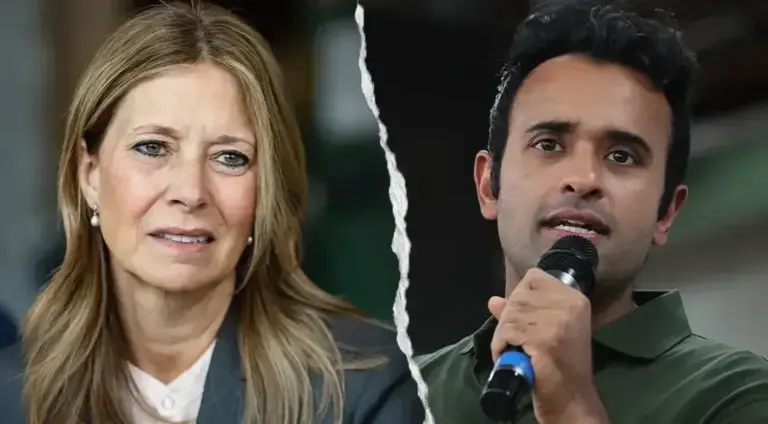
An ad earlier this week from Ohio gubernatorial candidate Vivek Ramaswamy sparked outrage from both sides of the aisle, but a political strategist in the state says that the record of his opponent, former health director Amy Acton, is what ultimately makes the difference in the race.

The ad features Acton’s estranged mother, Donna Arthur, accusing her daughter of lying about her childhood and questioning her fitness to serve as governor. Acton responded by saying she and her brother were removed from their mother’s custody after her stepfather was accused of sexually abusing her, and Ramaswamy was quickly blasted by Democrats and some Republicans over the ad, which he has defended and spent millions to run over the next couple of weeks.

The controversy over the ad went viral on social media and was even commented on by President Donald Trump, who strongly defended Ramaswamy. Ohio attorney and political strategist Mehek Cooke told Fox News Digital that Acton’s record is what should be under the microscope, not the ad.

“I think that we have to really shift from Vivek’s recent ad into the most important question for Ohioans is, who do you want governing the state of Ohio? We clearly can’t trust Amy Acton, and she has a record of that,” Cooke told Fox News Digital.

RAMASWAMY TORCHES DEM RIVAL OVER ‘OUTRAGEOUS’ COVID-19 CLAIM: ‘SPEWING LIES’

Acton’s record involves controversies both professionally and personally, many of which have been focused on by ads in the state of Ohio.

Acton served as health director under Republican Gov. Mike DeWine during the first months of COVID-19, when Ohio closed schools, shuttered bars and restaurants, restricted businesses and imposed a statewide stay-at-home order.

She also signed orders restricting nursing-home visitors, closing senior centers and adult daycare facilities, limiting mass gatherings and closing gyms and personal-service businesses before leaving the position amid pushback for the negative impact the lockdowns had.

‘GENERATION COVID’ EXPLORES THE LASTING TOLL OF PANDEMIC-ERA SCHOOL CLOSURES

“She worked as a health director for Mike DeWine and left after masking our children, shutting down our state, and yes, Mike DeWine’s name is on those orders, but at the end of the day, it was Amy Acton’s signature,” Cooke said. “And she’s the one who pushed for locking down our kids. I don’t ever want to hire somebody who quits on the state during a pandemic. I can’t imagine if she had another meltdown, whether it was managing our state budget or anything else. So people don’t trust Amy.”

Acton’s handling of nursing homes has also drawn criticism in pro-Ramaswamy advertisements on the airwaves. Ohio imposed a broad visitor ban at nursing homes and similar facilities in March 2020, separating residents from family members during the early months of the pandemic.

The Ohio Department of Health was later sued over its refusal to release facility-level COVID-19 death data. An Ohio appeals court ruled that the department violated the state’s public-records law by refusing to provide information about nursing-home deaths.

‘COVID 2.0’: LAWMAKERS PUSH BACK ON SWEEPING HEALTH ‘POLICE POWER’ IN KEY BATTLEGROUND STATE

The ruling involved the health department as an agency and did not establish that Acton personally ordered the records to be withheld. However, critics have continued to argue that the controversy raises questions about transparency during her tenure.

Acton’s closure orders also became the subject of litigation from Ohio gyms. In the Rock House Fitness case, a court described the state’s actions as “arbitrary, unreasonable, and oppressive,” though subsequent legal proceedings and changes to the state’s orders complicated the dispute.

More recently, five current and former state-government workers told the Washington Examiner that Acton was sometimes absent from pandemic strategy meetings and emotionally volatile while leading the state’s response. One source alleged that she was found curled up on the floor before an emergency meeting, while another said she was seen crying in a bathroom.

A separate 2019 police report has also become a campaign issue. Bexley police responded to Acton’s home after a reported domestic dispute involving her husband. According to reporting based on the police report, Acton’s daughter told police that Acton had been drinking, throwing things and breaking glass. The report also said Acton pulled a mirror from a wall, shattering it.

No one was injured and no charges were filed. Acton’s campaign described the episode as a normal marital argument and disputed claims that it demonstrated alcohol abuse. Acton has called broader accusations that she is an alcoholic or drug addict “lies” and “a complete fabrication.”

Cooke explained that supporting law enforcement will be a critical attribute the next governor needs and that Acton has shown she is weak in that area, pointing to an Acton comment that appeared to compare ICE agents to the KKK and tying Acton to the “defund the police” ideology popular with socialist candidates across the country.

“There are people coming out there wearing masks, with all the gear on,” Acton said earlier this year during a City Club of Cleveland forum. “We don’t even know who they are. They’re just showing up. Does this not feel like the Ku Klux Klan to anyone?”

While Ramaswamy has faced blowback for using Acton’s mother in an ad, the race had already gotten personal and tied to family, with Acton’s side running ads invoking Ramaswamy’s mother.

“They have run an attack ad on Vivek Ramaswamy’s mother and the failure of an Alzheimer’s drug, they started attacking family first and I think politics is brutal,” Cooke said. “This is a contact sport in terms of anything in your closet. It all goes, but the difference is Vivek actually comes and addresses questions. He talks to people. He explains whether it was his businesses or anything else that he has conducted for the betterment of our economy and Ohioans. Amy continues to hide.”

With 11 days until voters decide who will be the next governor of Ohio, Acton has not yet agreed to debate Ramaswamy, which Cooke says is because she can’t articulate the complicated issues.

“They’re trying this Joe Biden strategy of hide in the basement, play the victim card, and it’s not going to work,” Cooke said.

“Amy will never get on a stage because the truth is she doesn’t know what she stands for, she’s going to have policies written for her by Democratic socialists that are running her party today, and right now, the plan is, let’s hide.”

Cooke recounted a recent visit to a doctor, who politically identifies as an Independent, where Ramaswamy’s ad came up and described a response that suggests the ad is not as damaging to Ramaswamy as being portrayed in the media.

“He said, ‘I don’t care about what’s in the ad,’” Cooke explained. “‘I care about her integrity. And the problem is, what does she stand for? I know what Vivek stands for. I have no idea what she stands for.’”

Fox News polling, conducted before the ad fallout, shows a tight race with likely voters favoring Acton over Ramaswamy by 50% to 48%.

This post appeared first on https://www.foxnews.com

A federal judge was removed from a challenge to Mississippi’s anti-DEI law after the Fifth Circuit blasted his handling of the case as a “botch job,” pointing to orders riddled with factual errors, an apparent AI-hallucinated case citation and faulty applications of Supreme Court precedent.

In an opinion penned by Judge Jerry Smith, a Reagan appointee, the appeals court vacated Reagan-appointed Judge Henry Wingate’s preliminary injunction blocking the law and ordered the case reassigned to a different judge — an “extraordinary” and “rarely invoked” move.

“This district judge carelessly exercised his Article III power by issuing sloppy edicts based on falsehoods and fabrications,” Smith wrote, adding that “the district court—or perhaps, being charitable, its AI agent—ignored and manipulated governing law, apparently to satisfy a policy agenda.”

The controversy surrounding Wingate’s handling of the case began with serious errors in a temporary restraining order he issued in July after a group of teachers, parents and students sued, arguing that a Mississippi state law restricting DEI-related practices in public schools and universities violated the First and Fourteenth Amendments.

TRUMP ADMINISTRATION PROPOSES STRIPPING TAX-EXEMPT STATUS FROM SCHOOLS USING RACE-BASED PROGRAMS

Wingate replaced the order just two days later after Mississippi officials flagged major factual errors, including 11 individuals and organizations identified as plaintiffs who were never a part of the case, two officials incorrectly named as defendants and unsupported claims that three schools had already canceled DEI programs because of the law.

The original TRO also cited purported declarations from four people who did not appear anywhere in the record and “may not even exist,” according to the Fifth Circuit. It also attributed language to the bill that does not appear in the law, including references to “race or sex stereotyping,” “race or sex scapegoating,” “critical race theory” and “institutional bias.”

“We are grateful—and, indeed, lucky—that the defendants provided a copy of the original TRO as an exhibit in their July 28 motion, ECF 58-1, given that Judge Wingate kept it from public view,” Smith wrote.

Even the corrected TRO contained errors, including a citation to a nonexistent case that the Fifth Circuit called “an apparent AI hallucination.” Wingate cited the purported case while discussing the relationship between temporary restraining orders and preliminary injunctions, leading Smith to conclude that the fabricated citation was “arguably part of the shoddy reasoning of the preliminary injunction, too.”

Wingate later acknowledged that a law clerk had used artificial intelligence to assist in drafting the TRO, following accusations of AI use surfacing publicly. Wingate said the errors were “clerical” and did not affect the court’s “core legal reasoning or the ultimate judgment on the merits.”

The Fifth Circuit pushed back on that explanation, questioning “how so many mistaken facts could not at least marginally ‘affect’ ‘core legal reasoning’ or support for the judgment on the merits.”

The Fifth Circuit found major flaws in Wingate’s legal reasoning, accusing the judge of misinterpreting Supreme Court rulings on free speech challenges, exceeding the limits of court injunctions and mishandling legal protections for government and public-employee speech.

The panel zeroed in on the Supreme Court’s 2024 decision in Moody v. NetChoice, which sets a two-step test for courts considering First Amendment challenges seeking to strike down a law entirely.

DOJ MOVES TO BOOT FEDERAL JUDGES FROM IMMIGRATION CASES OVER NYT INTERVIEW

Under the Moody analysis, a court can strike down an entire law on First Amendment grounds only if its unconstitutional applications substantially outweigh its constitutional ones. The appeals court took issue with Wingate describing the Moody framework as “supposedly” required.

“That Judge Wingate twice refers to the Moody framework as ‘supposedly’ required calls into question whether he even tried in good faith to follow the law,” Smith wrote.

“The district court’s laxity in observing the binding authority of the Supreme Court is yet another reason to doom the preliminary injunction,” Smith continued.

The appeals court also faulted Wingate for his reasoning in granting preliminary relief, pointing to his ruling that the court “should pause when faced with an unsettled area with such dire possible consequences.”

“That gets the entire law of injunctive relief completely backwards,” Smith wrote.

“A preliminary injunction cannot stand just because there is a possibility of success on the merits,” Smith continued.

The appeals court also accused Wingate of misreading the Supreme Court’s 2025 decision in Trump v. CASA, which limits judges from issuing orders that go beyond what is needed to protect the people who filed the lawsuit.

Wingate cited CASA in concluding that injunctions like the one before him “should be all-or-nothing renditions.”

SIGN UP TO GET THE POLITICS NEWSLETTER

“That is almost exactly the opposite of what CASA says,” Smith wrote. “The quoted portion was the Supreme Court’s cautioning against overbroad relief and urging judges to tailor relief to what is absolutely necessary and nothing more.”

The Fifth Circuit sent the case back to the Southern District of Mississippi, where a new judge will consider it.

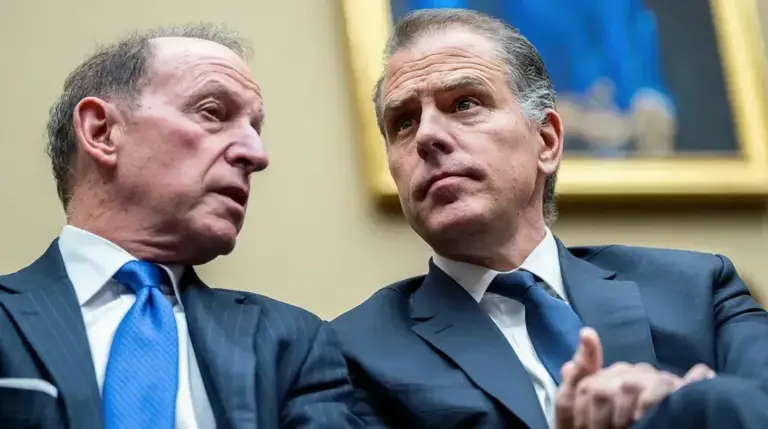
The Department of Justice charged two former FBI officials with lying to Congress about their involvement in FBI investigations into Hunter Biden, including matters involving his laptop.

Former FBI officials Nikki Cole Floris and Bradley Benavides, according to the DOJ, falsely denied involvement in the investigations into former President Joe Biden’s son when speaking to Congress. Both surrendered Friday on arrest warrants, according to the DOJ.

“Lying to Congress by anyone strikes at the heart of our democratic system, but when senior FBI agents lie to Congress believing they are above the law, it’s time to bring the hammer of justice down on them,” U.S. Attorney Jeanine Pirro said of the charges. 

“When senior officials entrusted with safeguarding our nation’s security choose deception over duty, they undermine the very institutions they swore to uphold. Today’s action makes clear that no one is above the law, and we will hold accountable all who obstruct the truth.”

FBI CO-DEPUTY DIRECTOR ANDREW BAILEY RESIGNS AFTER YEAR IN ROLE

The Justice Department claims to possess evidence that shows Benavides discussed the laptop story with others in the FBI, contradicting his testimony that he learned about the story from Wikipedia. Similarly, the department says that it has evidence Floris discussed Hunter Biden with members of the FBI’s Foreign Influence Task Force (FITF), despite testifying to the contrary.

A statement of facts filed by the DOJ points to 2023 testimony that Floris gave to the House Judiciary Committee where she denied any involvement in the investigation into Biden’s son. She answered in the negative to questions about whether there was “ever a discussion at the FITF about Hunter Biden” or if she had “any involvement in the Hunter Biden investigation.”

Contrasting these statements, the DOJ pointed to email logs purporting to show that Floris discussed Hunter with colleagues at the bureau. 

Benavides, meanwhile, told lawmakers that he read the Wikipedia page on the laptop story when asked where he learned “that there was an ongoing criminal investigation related to the laptop.” The DOJ says emails it has obtained show he was in contact with the team working the investigation into Hunter Biden and that he met with the team prior to a meeting with lawmakers. 

“Nikki Floris is a patriot. She served our nation as a dedicated FBI intelligence officer for nearly 20 years. Yet today, the DOJ has accused her falsely of a crime on the say-so of politicians, not on the facts. It’s no coincidence the government is filing these nonsense charges now, years later, on the eve of an election,” her attorneys said in a statement.

Floris served as the deputy assistant director and functional head of FITF while Benavides was the task force’s section chief. 

Republican Sens. Chuck Grassley and Ron Johnson previously accused Floris and Benavides of participating in a 2020 FBI briefing about Russian disinformation that the senators alleged was intended to undermine their investigation into Hunter Biden’s foreign business dealings.

Claims that Hunter Biden’s laptop was part of a Russian disinformation operation fueled controversy ahead of the 2020 election. The FBI later authenticated the laptop during Biden’s 2024 federal gun trial, when prosecutors introduced it as evidence.

“For 20 years Brad Benavides worked tirelessly to protect the public from terrorists and agents of foreign governments. He carried with distinction the heavy burden of thwarting terrorist plots to kill Americans and other innocents. Brad protected our democracy against those who would destroy it,” a lawyer for the former official said in a statement provided to Fox News Digital. 

“In return, today, the government that he loves brought baseless criminal charges against him in a transparently political complaint. This is another sad day for the Department of Justice. But now we are in court, and the truth will come out: Brad Benavides is a true patriot who devoted his career to protecting this country and its people.”

“These charges are a disgrace,” the lawyer added.

RUSSIAN SPIES ORCHESTRATED $40K MURDER PLOT IN NATION’S CAPITAL, US ALLEGES

“This morning the FBI arrested two former FBI members of the now dissolved Foreign Influence Task Force, Nikki Floris and Bradley Benavides, both of whom allegedly lied to Congress in 2023 on matters regarding investigations related to the 2020 election,” FBI Director Kash Patel said of the arrests. “One of these individuals is on record privately claiming to be ‘running a shadow government’ during the 2020 election. As we’ve said repeatedly: weaponization will never be tolerated at this FBI.”