Archive

October 2026

Browsing

An immigration judge ruled Wednesday that federal authorities can deport the leader of Wisconsin’s largest mosque on national security grounds.

Secretary of State Marco Rubio invoked federal immigration law in June 2025 to determine that Salah Sarsour, the president of the Islamic Society of Milwaukee, could be deported because his presence in the United States could have potentially serious adverse foreign policy consequences. Government lawyers cited Sarsour’s decades-old convictions in Israel, including for throwing rocks at Israeli military personnel and attempting to procure weapons, in arguing that he posed a national security threat.

Government lawyers also claimed he had been convicted of throwing a Molotov cocktail at IDF personnel, though Sarsour’s lawyer rebuffed that allegation by stating that, though he was accused of doing so, he was never convicted.

JUDGE ORDERS ICE TO FREE WISCONSIN MOSQUE LEADER OVER ‘SUBSTANTIAL’ FREE SPEECH CLAIM AFTER CRITICIZING ISRAEL

“If a lawful resident of the United States for over 30 years with zero arrests or convictions in this country, a family man and the father of 6 U.S. citizen kids, the elected president of his mosque, and an advocate for interfaith dialogue is a ‘public safety threat,’ as DHS claims, those words cease to have any meaning at all,” Patrick Taurel, a lawyer representing Sarsour, told Fox News Digital.

A Department of Homeland Security spokesperson told Fox News Digital that Rubio had “reasonable grounds to believe Sarsour’s presence would have adverse foreign policy consequences for the U.S., and he has engaged in terrorist activity or supported a terrorist organization.”

A 2001 FBI memorandum summarized allegations from Sarsour’s brother, Jamil, that he had been involved in fundraising for the Holy Land Foundation, an organization shuttered by the federal government for terror ties, on behalf of Hamas. Jewish Insider, meanwhile, reported that Sarsour wrote a Facebook post asking God to “give Gaza people victory,” while acknowledging in a deposition that additional language in the post could be translated as asking God to punish those who wished harm on Gaza.

ANTI-ISRAEL NONPROFIT UNDER FEDERAL INVESTIGATION OVER FINANCIAL DEALINGS: REPORT

“Under President Trump and Secretary Mullin, if you break the law, you will face the consequences. Criminal illegal aliens are not welcome in the U.S.,” the DHS spokesperson told Fox News Digital, adding that “illegal aliens receive due process.”

Sarsour, who is a lawful permanent resident according to court documents, and his lawyers claim that he is being targeted by the Trump administration for political reasons, namely his advocacy related to the Israel-Gaza conflict. He also claims that he was tortured into providing a confession by Israeli authorities.

APPEALS COURT BLOCKS TRUMP ADMIN FROM HOLDING MIGRANTS WITHOUT BOND FOR OVER 90 DAYS

Sarsour’s lawyers also point out that he has been residing in the country for 30 years, questioning why the government waited so long to seek his removal if he was a threat to national security.

Sarsour has pledged to appeal the judge’s ruling that he can be deported.

“I will continue fighting to defend the right to free speech and to stay in the country I have called home for more than three decades,” he said in a statement following the judge’s ruling.
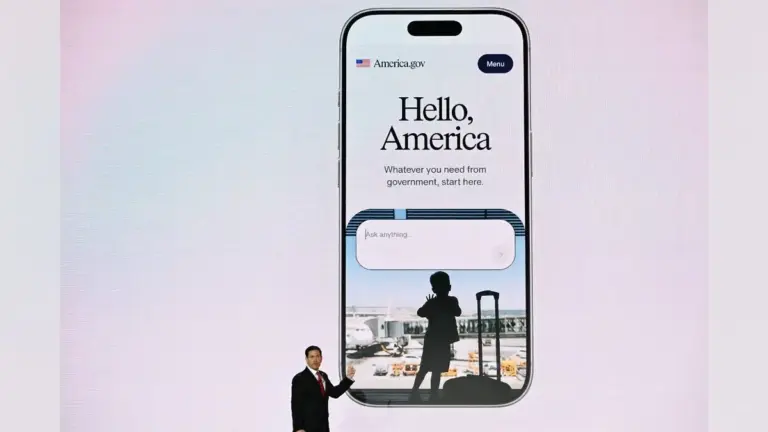

Users digging into President Donald Trump’s new AI-powered America.gov discovered a series of hidden features embedded across the federal platform, including a “Minecraft”-inspired response and a search bar that transforms into a hot dog.

The Trump administration unveiled the revamped America.gov on Tuesday, consolidating information from more than 29,000 government websites into a single AI- powered search platform.

Some of the site’s more unusual features quickly began circulating on social media, with users posting screenshots of AI responses and hidden interactive elements.

Users who entered “Play Minecraft,” for example, were met with a lengthy, surreal response appearing to be modeled by the video game’s “End Poem,” swapping its original language for references to government bureaucracy, privacy and federal programs.

TRUMP TO USHER IN ‘GOLDEN AGE’ OF AMERICAN TECH WITH DC BASH SHOWCASING POWERFUL NEW TOOL

The “End Poem” is text written by Julian Gough that shows up as rolling credits when a user completes the video game.

“This constituent dreamed of sunlight and trees. Of fire and water. It dreamed it created a small business. And it dreamed it destroyed a password. It dreamed it hunted a job, and was hunted by a recertification. It dreamed of shelter that would take a voucher,” the response read in part when tested by Fox News Digital Wednesday. “Hah, the original interface. A million years old, and it still works.

By Thursday, however, Fox News Digital could no longer trigger the response using the same prompt.

“America.gov will continue to be updated to provide Americans the most accurate and reliable federal information and resources,” a White House official told Fox News Digital Wednesday when asked about the unusual responses.

National Design Studio (NDS) developers indicated that hidden surprises, such as a hot dog, were intentionally built into America.gov.

“We put Easter eggs all over https://America.gov Enjoy finding them,” wrote NDS team member Adam Bhaloo.

STATE DEPARTMENT CONSIDERS SHARING PASSPORT RECORDS FOR VOTER CITIZENSHIP CHECKS

In another scenario, typing “hotdog” transformed the chatbot’s input bar into a frankfurter when tested by Fox News Digital Thursday.

“29,000 agencies. One glizzy,” wrote one user who tested it out.

“Apparently @POTUS loves hotdog. type hotdog in https://america.gov and you will see hotdog mode lol,” said another user.

“I went to https://america.gov and asked it ‘Is a hotdog considered a sandwich?’ and as I typed the word hotdog, the prompt turned into an actual hotdog,” wrote one person.

TRUMP ANNOUNCES NEW ‘AI FORCE,’ VOWS TO PROTECT INDUSTRY AS AI CZAR ANNOUNCEMENT NEARS

If users type in Lincoln Memorial, Washington Monument, Jefferson Memorial, Statue of Liberty or Gateway Arch, the logo on the top left changes from an American flag to the monument prompted.

Along with the logo change, the AI-powered platform sends visitation instructions.

The website is expected to eventually let users complete government forms and track their progress through America.gov, with the administration planning to integrate additional federal services into the platform.

U.S. Chief Design Officer Joe Gebbia, who helped create America.gov, said Tuesday that by 2027, citizens will be able to use the site to complete government forms and track the status of various applications.

“Very soon, all she’ll have to do is ask America.gov and it’ll fill out the forms, track the progress and send her a new Social Security card, passport and insurance card in the mail,” Trump said.

“Whether you’re a scout leader who wants to reserve a campsite at a national park, a senior citizen trying to choose a Medicare plan, or an American veteran trying to get the benefits that you’ve earned and so justly deserve, America.gov will be there to help,” Trump added.

Fox News Digital reached out to NDS and the White House for additional comment.

Global energy markets reached a significant milestone this week as crude oil flows through the Strait of Hormuz finally returned to prewar levels. Data from Goldman Sachs, JPMorgan, and Kpler indicate that exports moving through this critical maritime chokepoint have averaged about 13.5 million barrels per day over the last week, effectively hitting the previous baseline. While the restoration of these volumes suggests a return to stability in raw crude transport, the recovery has not translated into relief for consumers at the pump.

Despite the steady flow of crude, the global economy continues to struggle with severe constraints in refined product supplies. This imbalance has pushed diesel prices to record highs, creating persistent inflationary pressure across various sectors. The situation has become so acute that President Donald Trump is reportedly weighing a ban on diesel exports in an attempt to force more fuel into domestic markets and drive down costs for American drivers and businesses. In early trading Thursday, both Brent and WTI crude futures trended lower as traders balanced these logistical gains against broader economic anxieties.

The timing of this energy shift coincides with the start of the fourth quarter, which opens amidst lingering volatility in the bond market. Global equities remain sensitive to elevated Treasury yields even after a slightly softer inflation reading in the United States showed August PCE rising by 3.4 percent. Minneapolis Fed President Neel Kashkari emphasized that inflation remains stubbornly high after five years of elevation, suggesting that recent data does little to change the central bank’s cautious outlook on interest rates.

Beyond energy and economics, the technology sector continues its rapid evolution with Google unveiling Gemini 4 Argon, its most sophisticated AI model focused on cybersecurity and coding. This comes as Meta celebrates its strongest monthly performance since 2022, fueled by investor enthusiasm for its new Muse personal AI agent. Meanwhile, political scrutiny is turning toward Commerce Secretary Howard Lutnick following financial disclosures revealing he earned over 250 million dollars last year, largely through distributions from his former firm, Cantor Fitzgerald.

Prospective homebuyers are facing a steeper climb as mortgage rates hit their highest mark since late 2023. According to the latest Primary Mortgage Market Survey from Freddie Mac, the average rate for a benchmark 30 year fixed mortgage jumped to 7.28 percent this week, up from 7.03 percent just seven days prior. This represents a significant leap compared to where things stood a year ago, when the average rate sat at 6.34 percent. Shorter term options aren’t faring much better, with the average 15 year fixed mortgage climbing to 6.6 percent.

While many people associate these shifts with direct actions from the Federal Reserve, experts note that mortgage rates actually track more closely with the 10 year Treasury yield, which recently hovered around 5.23 percent. These fluctuations are often driven by a complex mix of geopolitical tensions and broader economic indicators. Despite the volatility, Freddie Mac chief economist Sam Khater suggested that overall favorable economic conditions continue to provide some baseline support for the housing market.

However, the real world impact on family budgets is becoming harder to ignore. Hannah Jones, a senior economist at Realtor.com, pointed out that because rates have risen nearly a full percentage point over the last year, monthly payments on a median priced home have increased by more than 200 dollars in principal and interest alone. This comes even as some median home prices have dipped slightly over the same period, effectively neutralizing any potential savings for new buyers.

For those still determined to enter the market, professionals suggest focusing on personal financial health rather than trying to time the peaks and valleys of national trends. Because final rates vary wildly based on credit scores and down payments, two different borrowers could see an entire percentage point of difference regardless of what the headlines say. Experts advise buyers to rate proof their budgets now to ensure they can handle future swings without compromising their financial stability.

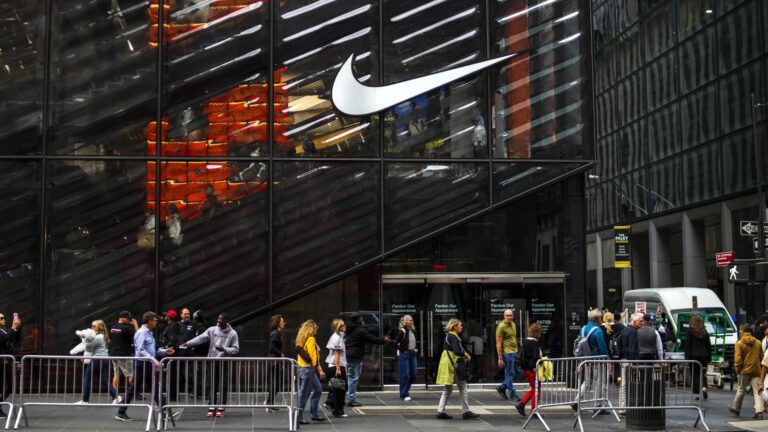
Nike shares dipped further in extended trading on Thursday after the sportswear giant missed revenue expectations and revealed a deepening crisis in one of its most critical markets. While earnings per share actually beat analyst predictions, coming in at 48 cents against an expected 43 cents, total revenue fell four percent to 11.21 billion dollars. This slight miss underscores a broader struggle for the company as it grapples with shifting consumer habits and stubborn economic headwinds.

The primary driver behind the disappointing numbers was a staggering collapse in China, where revenues plunged by 26 percent. This continued slump reflects a volatile environment characterized by geopolitical tension and decreased consumer spending power. Although performance in North America remained relatively stable, barely exceeding estimates at 5.13 billion dollars, it wasn’t enough to offset the bleeding in Asia or soothe investors who have already seen Nike’s stock plummet more than 40 percent so far this year.

In response to these challenges, CEO Elliott Hill announced a sweeping reorganization aimed at positioning the brand for long term growth. The plan involves modernizing the supply chain, expanding operations into India, and streamlining how the global workforce is organized. However, this strategic shift comes with a human cost; Hill admitted in a letter to employees that the changes would lead to layoffs starting in 2027, acknowledging the uncertainty such news brings to the staff.

Financial analysts see this restructuring as a necessary but painful step toward efficiency, with Nike projecting about 2.5 billion dollars in savings through fiscal 2031. Despite these hopes for future lean operations, the immediate outlook remains bleak. The company warned that overall revenues are expected to decline by a high single digit percentage throughout fiscal 2027 as it continues to fight for footing amidst rising inflation and intense competition globally.

Most people imagine their lives changing instantly if they stumbled upon a small fortune, but for one Texas man, finding over 128 thousand dollars atop an ATM was simply a problem that needed solving. The thirty seven year old barber was visiting a Bank of America machine in Lewisville, about thirty miles north of Dallas, when he and a companion noticed two bags resting on the equipment. One contained nineteen checks, while the other held a staggering sum of cash totaling exactly 128,514 dollars.

Rather than walking away with the windfall, the man immediately began searching for the rightful owner. After noticing information on one of the bags that seemed to link the money to a nearby Chick fil A, he drove straight to the restaurant to see if it belonged there. When a manager informed him that the money did not belong to the business, he didn’t hesitate to call 911 so that law enforcement could secure the funds and track down whoever had lost them.

An investigation later revealed that the money actually belonged to Bank of America and had been handled by its cash vendor, Brinks. Police believe a technician servicing the ATM likely forgot the bag on top of the machine after finishing their work. Officers verified the total using a digital currency counter and confirmed that every single cent was accounted for, noting there was no evidence that any of the funds were tied to criminal activity.

Local authorities say they have rarely encountered such honesty given the scale of the find. Detective Gina Miller mentioned she has dealt with returned wallets and IDs throughout her career but had never seen anyone turn in this much cash. Police Chief Brook Rollins praised the man for his decisive action, stating that he didnt even blink before trying to return the money. While keeping it could have led to felony theft charges, the man sought neither rewards nor publicity, though he has agreed to attend a private ceremony honoring his integrity.

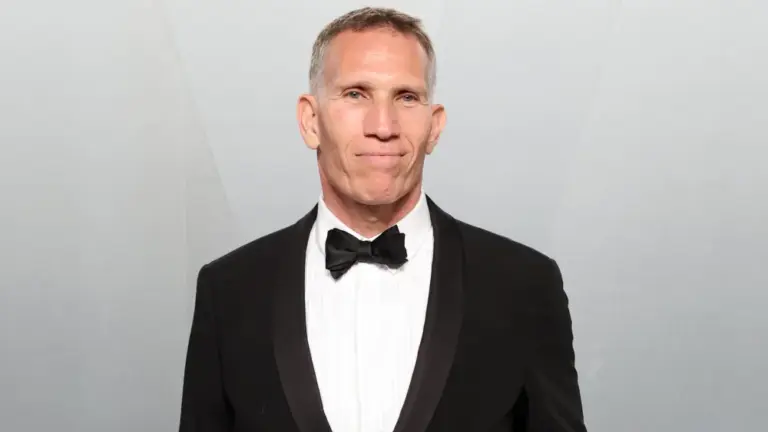
Ynon Kreiz is stepping into his new role as Co-CEO of the combined entity formed by the merger of Paramount and Warner Bros. Discovery with a paycheck that reflects the massive scale of the deal. According to a recent SEC filing, the sixty-one year old executive will see his first-year compensation soar to more than 46.5 million dollars. This represents a significant leap from his time leading Mattel, where his total compensation for 2025 was roughly 15.1 million dollars.

The bulk of this windfall comes from a substantial signing incentive consisting of restricted stock units valued at 31.5 million dollars. Beyond the initial sign-on bonus, Kreiz’s basic terms include an annual base salary of 5 million dollars and eligibility for a yearly performance bonus targeted at nearly 5 million dollars. He is also slated to receive 1.25 million shares of Class B common stock as part of a pre-closing award, further tying his financial success to the health of the newly merged media giant.

As David Ellison’s primary partner in managing the consolidated organization, Kreiz begins his tenure on October 5, just twenty four hours before the anticipated closing of the staggering 111 billion dollar merger. The company has yet to announce an official name for the joined venture, but it is already making waves with these high-level leadership investments. Following the merger’s completion, Kreiz will be eligible for additional grants totaling up to 5.1 million dollars shortly after closing, followed by another equity award of about 20 million dollars on his first anniversary.

To ensure long term stability during this transition, most of these stock awards are structured with specific strings attached. With the exception of the immediate signing reward, those equity grants will vest in equal quarterly installments over a three year window. This means Kreiz must remain employed with the firm through those dates to fully realize the gains, aligning his personal wealth with the successful integration of two entertainment titans into one singular powerhouse.

OpenAI has officially stepped into the ring with a new tool designed to challenge Muse, signaling an escalation in the race to dominate the personal AI agent market. This latest move shows that the creators of ChatGPT are eager to expand their ecosystem beyond simple chatbots and into more integrated, proactive assistants that can handle complex tasks on behalf of users. By launching a direct competitor to Muse, OpenAI is attempting to capture a larger share of the productivity space where AI doesn’t just answer questions but actively manages workflows.

Despite this aggressive push from OpenAI, industry analysts suggest that Meta currently holds a significant advantage in the battle for personal AI dominance. With its massive existing footprint across Facebook, Instagram, and WhatsApp, Meta possesses a distribution network that is nearly impossible to replicate quickly. Because billions of people already interact within Meta’s apps daily, integrating sophisticated AI agents directly into those social streams gives them a frictionless path to user adoption that rivals struggle to match.

The competition highlights a fundamental shift in how tech giants view artificial intelligence. It is no longer enough to provide a standalone destination for queries; the goal now is ubiquity. While OpenAI brings immense technical prestige and cutting edge capabilities to the table, Meta’s ability to weave these tools into the fabric of global communication makes it appear as the clear leader for now. As both companies iterate rapidly, the winner will likely be determined by who can make their AI feel like a seamless extension of the user’s digital life rather than just another app on a screen.

A Republican led attempt to restrict stock trading by members of Congress collapsed in the Senate on Wednesday after failing to secure the sixty votes necessary to move forward. In a fifty three to forty seven vote that split strictly along party lines, the Stop Insider Trading Act was defeated despite having previously cleared the House in July. While the bill sought to prevent lawmakers and their immediate families from buying public stocks and required advanced notice for sales, Democratic opponents argued the measures were insufficient and lacked teeth.

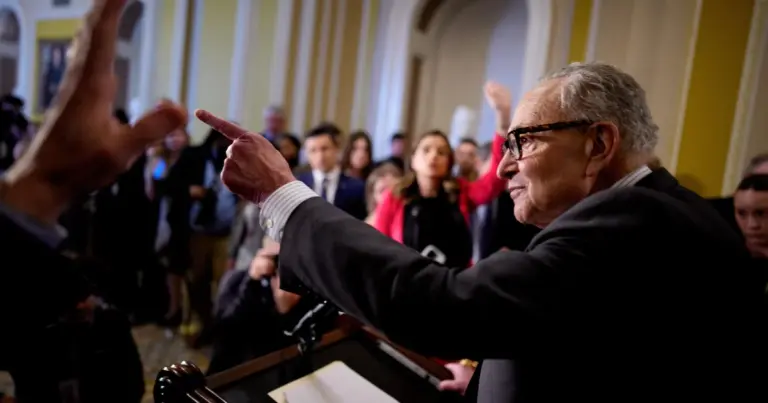
Senate Minority Leader Chuck Schumer dismissed the proposal as ineffective, comparing it to a screen door on a submarine. Schumer contended that Republicans intentionally designed the legislation to fail, specifically criticizing the fact that it excluded the president and members of the executive branch from its restrictions. He suggested that carving out the White House undermined any genuine effort to crack down on government corruption, asserting that his caucus remains open to a comprehensive ban if presented with a serious proposal.

Beyond the debate over financial ethics, Democrats pointed to a controversial voter identification provision as a primary reason for their opposition. This requirement for photo identification in federal elections was viewed by critics as a poison pill meant to force Democrats into rejecting the more popular stock trade limits. GOP leadership had included the election mandate following pressure from President Trump, who wants such laws enacted before upcoming midterm contests.

Republicans maintained that the bill represented common sense legislation intended to hold representatives to higher ethical standards. Senate Majority Leader John Thune defended both the trading limits and the voter ID requirements as simple but essential updates. However, observers noted that moving toward a predictable defeat may have been a strategic choice by Republicans to place Democrats on the record regarding these issues just as several Senate races become increasingly competitive heading into next year’s elections.

Investors in AppLovin have endured a grueling stretch over the past year, watching their holdings plummet by 54 percent while the broader S&P 500 climbed nearly 17 percent. This sharp decline has left many wondering where the bottom lies, especially as the company faces new headwinds. While some shareholders are focused on a burgeoning securities class action lawsuit alleging that the firm misled them regarding its artificial intelligence progress, analysts suggest there is a far more pressing fundamental concern lurking beneath the surface.

The primary threat to AppLovin’s future stability is the potential for stagnant growth in its advertising models. These models serve as the engine for the company’s gaming revenue, which remains its dominant income stream. Recent data shows that revenue growth has decelerated for three consecutive quarters, dropping from an impressive 68.2 percent down toward projections of around 46 to 48 percent. Management admitted that improvements to these models were slower than usual during the second quarter of 2026, leading to revenue figures that barely hit the midpoint of their internal guidance.

This reliance on constant technological breakthroughs creates a volatile environment for stockholders. Because AppLovin operates with operating margins near five-year highs, there is very little room for efficiency gains to offset any dip in top-line growth. If model performance stalls again, profits could slide quickly. Historically, AppLovin has proven to be highly sensitive to market volatility, crashing significantly harder than the general index during previous economic shocks related to inflation and tariffs.

The coming months will provide a critical test for the company’s narrative. Investors are looking toward third-quarter revenue results to determine if management’s promises of a renewed lift in model performance were accurate or merely optimistic forecasting. While the legal battle continues with deadlines looming in November, those tracking the stock know that actual financial results will tell a truer story than any courtroom drama. For now, AppLovin remains a high-stakes bet on whether AI innovation can maintain its momentum without costly interruptions.