Archive

October 2026

Browsing

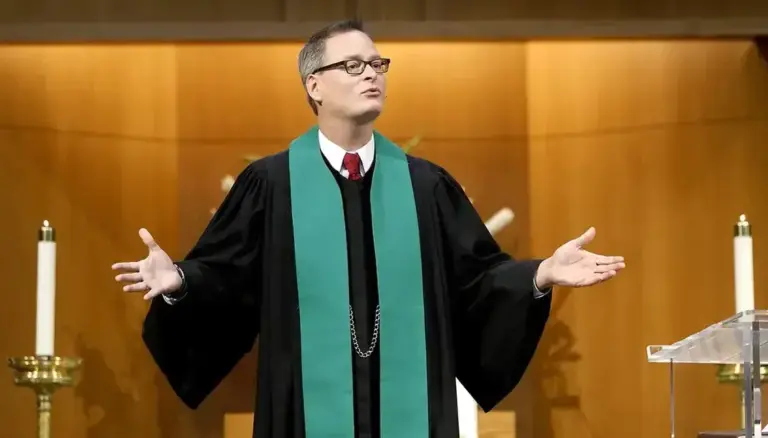
A former pastor and candidate running to make history in deep-red Kansas once suggested that people should repent for their White privilege as protests against the death of George Floyd rippled through the country.

During the tumultuous summer of 2020, just days after Floyd’s killing in Minnesota, Adam Hamilton called on his congregation at the Church of the Resurrection to recognize their White privilege and repent.

“Like part of what I know is that, is that I grew up in a way that I’m blind to certain things in our society,” Hamilton said during a sermon dubbed “Jesus, Protests and Repentance.” “I just am. And I have certain benefits by virtue of being educated, White and male, right?”

KANSAS DEMOCRAT BEGS KAMALA HARRIS NOT TO CAMPAIGN WITH HIM, ‘PLEASE DO NOT COME TO MY STATE’

“And we don’t like to hear that, especially White folks don’t like to hear that. But there are benefits that come along with that,” he continued.

Hamilton is running against Sen. Roger Marshall, R-Kan., in what has become one of the tightest races of this midterm cycle, despite Kansas’ near-century-long history of not sending a Democratic candidate to the Senate.

“Roger Marshall wants to talk about anything other than his history of suing and jailing mothers and protecting predators by voting against releasing the Epstein Files,” Tyson Brody, a spokesperson for Hamilton’s campaign, told Fox News Digital. “Once again, he’s attacking Adam for something Roger said himself. Roger’s own pastor called Adam ‘middle of the road.’ Kansans are tired of high gas and grocery prices and ready for a senator who won’t divide us by race, religion, income, or ability to pay a medical bill at 18% interest.”

Republicans acknowledge that they are facing headwinds going into November’s election, but until recently, the contest between Marshall and Hamilton wasn’t of much concern for the GOP.

SCHUMER WARNS OF REPUBLICAN ADVANTAGE THAT COULD CHANGE THE BATTLE FOR SENATE CONTROL

Now, the race has taken a turn and been rated a toss-up by the Cook Political Report as voters fume over the cost of fuel, groceries and other economic pain. In response, national Republicans are beginning to dump more resources into the contest to ensure that they maintain the seat.

Throughout the race, Marshall has largely aligned himself with President Donald Trump, only rarely breaking from the administration on certain decisions — last month he called for more advance notice and cooperation between the Department of Homeland Security (DHS) and the Kansas government after federal immigration agents descended on the southern part of the state.

Marshall has painted Hamilton as a “woke” megachurch pastor, delivering left-leaning ideals from the pulpit.

‘JESUS WAS A RADICAL’: PROGRESSIVES INVOKE CHRIST TO SELL LEFT-WING AGENDA ON CAMPAIGN TRAIL

So has an outside group based in Massachusetts, the Main Street Fund, which ran an ad in Kansas that spliced portions of two different sermons and charged that Hamilton was “way too woke for Kansas,” shortly after Hamilton won his primary, The Kansas City Star reported.

During the sermon from June 2020 amid the Black Lives Matter (BLM) protests, Hamilton pushed back against rioting and looting, and argued that while the BLM movement was the focal point at the time, all lives matters. 

“Of course all lives matter,” Hamilton said. “Everybody understands white lives matter, blue lives matter.” 

Hamilton continued in his sermon posted on the church’s YouTube page in June 2020 amid the Black Lives Matter protests, “When I’m stopped by the police, I’m never afraid that they’re gonna pull a gun on me.”

“But every African American man that I know is worried about what might happen when a police pull him over,” Hamilton said at the time. “It’s not that all the police are bad, they’re gonna do something like that, but there’s this fear underneath there. And so the hands go on the steering wheel at 10 and 2. They’ve been taught that from the time they were children. Right?”

“I wasn’t taught that, because I don’t have to be afraid of that. Right? And there’s a whole host of other things that are just a part of life. You know, I can … well, you get the idea. There are benefits and privileges to my place in life. I have to recognize that,” he continued. “To see that. And then I have to listen. I have to listen and understand, and finally be able to see the brokenness in myself, and my indifference. Before I can do anything to help anyone else, I have to have a conversion. I have to repent.”

And Marshall, who was running for his first term in the Senate at the time, struck a similar somber tone as Hamilton six years ago. 

In various posts to social media and interviews with local outlets, Marshall condemned Floyd’s slaying and pushed for reforms that would ensure what happened in Minnesota and to federal Protective Services Officer Patrick Underwood, who was killed in a drive-by shooting just days after Floyd’s death. 

“Additionally, Republicans called on Congressional Democrats to work across the aisle to make sure that what happened to George Floyd and Patrick Underwood never happens again, and significant bipartisan reform can be passed,” Marshall said on Facebook following a House Judiciary hearing on police practices and law enforcement accountability. 

This post appeared first on https://www.foxnews.com

For many modern couples, the joy of planning a wedding is often eclipsed by the sticker shock of the budget. With average costs climbing toward 36,000 dollars, newlyweds are finding themselves caught between inflationary pressures on everything from floral imports to formal wear and the desire to keep up with viral social media trends. As expenses mount, couples are forced to decide where to splurge and where to slash their spending. According to data from Zola, dessert has become a primary target for cost cutting, as many feel that a high priced specialty cake simply does not justify the expense.

Rather than abandoning the beloved tradition of slicing a cake altogether, some are turning to their local supermarkets for a more affordable alternative. In Alabama, brides have found success with Publix, which offers tiered designs that mimic luxury bakery styles at a fraction of the cost. By opting for grocery store tiers over custom creations, couples can save several dollars per slice without sacrificing the visual impact of a traditional white frosted centerpiece. For those looking for even deeper discounts, wholesalers like Costco provide massive sheet cakes that bring the cost down to mere cents per serving.

This shift toward convenience store confectionery is reflected in growing sales numbers. Retail specialists note that demand for wedding cakes at some regional grocery outlets has surged since 2020, proving that guests rarely notice the difference once the party starts. One bride recalled how her coworkers were shocked to discover her elegant cake came from Publix, especially after seeing how well it blended with her venue decor. While these options may lack the hyper customized flavor profiles or intricate artistry of a boutique pâtisserie, they fulfill the essential role of providing a crowd pleasing treat.

Ultimately, the move toward grocery store cakes highlights a broader perspective on what truly matters during a wedding celebration. For couples dealing with expensive destination venues or rising living costs, prioritizing memories over gourmet frosting makes practical sense. As one California bride noted after choosing a wholesale cake for her vineyard wedding, the specific brand of flour or sugar is irrelevant compared to the symbolism of sharing a first dessert together as spouses_

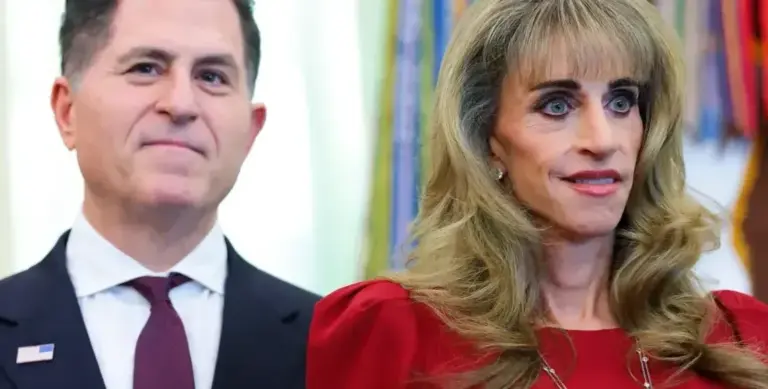
While Michael Dell often captures the headlines as one of the wealthiest individuals on earth, it is his wife, Susan, who serves as the primary architect behind their massive philanthropic engine. Together, they have distributed roughly 10 billion dollars through the Michael and Susan Dell Foundation, but Susan is widely recognized as the person calling the shots. Since co-founding the organization in 1999, she has steered its efforts toward education, health, and economic stability, managing over 800 projects annually across Texas, India, Israel, and Africa.

Susan’s dedication to these causes is rooted in her childhood. With a father who worked as a surgical oncologist, she developed an early obsession with public health that once led her to warn strangers in grocery stores about the dangers of smoking. This innate drive to improve lives defines her leadership style today. According to Janet Mountain, head of the foundation, Susan’s belief that individual people matter translates directly into a relentless pursuit of scalable systemic solutions.

One of her most ambitious recent moves involves a massive investment in American youth through Trump Accounts. By committing 6.25 billion dollars to provide small seed contributions to 25 million children in lower income zip codes, Susan aims to jumpstart generational wealth for families who otherwise lack access to such resources. It is part of a broader philosophy that providing a visible financial future for children creates tangible hope and lasting prosperity.

Closer to home in Texas, Susan has left an indelible mark on higher education and medicine. The couple recently became the first donors to give more than 1 billion dollars to the University of Texas at Austin, funding everything from AI medical centers to supercomputing facilities. From establishing the Dell Medical School to leading recovery efforts after Hurricane Harvey, her influence spans both cutting edge research and grassroots disaster relief.

Outside of her role as a philanthropist, Susan has lived a multifaceted life as an endurance athlete and a fashion entrepreneur who launched several clothing labels. Despite being inducted into the Texas Women’s Hall of Fame and receiving numerous accolades for her generosity, she remains remarkably humble about the scale of her impact. Looking back at years of global giving and billions spent on social progress, she maintains that they are really just getting started.

Elon Musk recently claimed that flying cars are finally a reality after a modified Tesla Roadster successfully took flight at a SpaceX test facility in McGregor, Texas. During the high profile demonstration, the vehicle sped up an inverted ramp, launched into the air, and executed a midair flip before landing via a series of integrated thrusters. While the spectacle produced viral footage and staggering performance claims, including an acceleration rate of zero to sixty in under a second, industry experts suggest there is a massive divide between a successful stunt and a certifiable aircraft.

The technology powering these leaps consists of compressed air thrusters known as reaction control systems, similar to those used by SpaceX and NASA to orient spacecraft in vacuum environments. However, applying this logic to a consumer vehicle introduces grueling safety requirements that go beyond simple propulsion. In the world of aerospace regulation, success is not measured by whether a machine works once, but by how it fails. For a vehicle to be certified for public use, Tesla must prove that the system possesses extreme redundancy, ensuring that a single leaking valve or computer glitch does not lead to a catastrophic loss of control while passengers are on board.

Comparing the Roadster to SpaceX’s own Dragon capsule reveals just how steep the climb remains for Tesla’s 2028 production goal. The Dragon employs layers of independent computers and separate power paths specifically designed so that no single hardware fault can end a crewed mission. Fitting that level of fail safe architecture into the cramped chassis of a sports car is an immense engineering challenge. Until Tesla releases detailed data on nozzle thrust output and failure mode analysis, critics argue that the McGregor demo was more of an exhibition in physics than a blueprint for transportation.

The United States government is facing a deepening fiscal crisis as the cost of servicing its massive national debt reaches staggering new heights. Recent Treasury Department data reveals that net interest payments have climbed to roughly 2.9 billion dollars per day, marking an eight percent jump in fiscal 2026. This surge is particularly alarming because it is outstripping the growth of federal revenue, overall spending, and even the nation’s gross domestic product, suggesting that the cost of borrowing is becoming a runaway train that the current economy cannot easily brake.

This financial pressure stems largely from a shift in interest rates following an aggressive tightening cycle by the Federal Reserve to combat inflation. With gross debt hitting 40 trillion dollars, interest payments have now surpassed defense spending and Medicaid to become the third largest line item in the federal budget. The situation is further complicated by a strategy of relying on short term debt; currently, more than 10 trillion dollars of publicly held debt must be rolled over within the next year, forcing the government to refinance old loans at today’s significantly higher market rates.

Geopolitical instability has added fuel to the fire, with conflicts involving Iran driving up bond yields beyond what nonpartisan agencies had predicted. While some officials argue that accelerating economic growth can provide a way out of this spiral, experts warn that such a theory is mathematically improbable. To truly stabilize the debt through growth alone without cutting spending or raising taxes, the U.S. would need real GDP growth rates nearly triple what it has seen in recent quarters.

Critics and budget watchdogs are sounding alarms that Washington remains paralyzed despite these warnings. Rather than implementing austerity measures or revenue hikes, current political trends suggest a continued appetite for rebates and dividends to voters. Without a significant fiscal intervention, analysts fear a vicious cycle where higher interest leads to more debt, eventually threatening the stability of the entire American financial system.

Mercedes-AMG is stepping into a new era of electrification with the reveal of the 2028 GT SUV, marking the first time in nearly six decades that the performance brand has designed a full-size utility vehicle entirely from scratch. Rather than adapting an existing frame, engineers utilized the dedicated AMG.EA architecture to blend suburban versatility with genuine sports car agility. Expected to arrive in the United States next summer, the lineup features three distinct trims, culminating in the flagship GT 63 which unleashes a staggering 1,153 horsepower via three axial flux motors. This puts it in direct competition with rivals like Porsche, potentially shifting the power dynamics of luxury EVs in cities like Stuttgart.

Underneath its muscular exterior lies some of the most advanced battery tech currently available to consumers. Drawing inspiration from Formula 1, the vehicle employs cylindrical cells and a specialized cooling system where nonconductive oil flows around each cell to maintain optimal temperatures during intense driving. For those worried about downtime, an 800-volt system allows for breathtakingly fast charging speeds up to 710kW. In practical terms, drivers can replenish their battery from ten to eighty percent in just twelve minutes or add roughly 280 miles of range in a mere ten minute stop.

Handling such immense power requires more than just raw strength, so Mercedes replaced traditional mechanical roll bars with an active hydraulic suspension system designed to kill pitch and roll during aggressive maneuvers. When paired with active rear axle steering and triple stage air springs, the result is a machine that aims to feel significantly smaller than its nearly six thousand pound curb weight. To keep things visceral despite the silent powertrain, AMG is piping in authentic recordings of V8 and six cylinder engines along with haptic seat vibrations and simulated gear shifts through paddle shifters.

The interior is equally futuristic, centered around a fourteen inch display powered by MB.OS and integrated AI assistants from Google and Microsoft. Beyond simple convenience and climate control, artificial intelligence plays a role in actual performance through a Predictive Performance Manager. By analyzing track mapping data in real time, the car can intelligently manage motor output based on terrain—saving energy on descents to ensure maximum thrust on long straights—effectively preventing overheating and ensuring consistent lap times for enthusiasts who take their family hauler to the circuit.

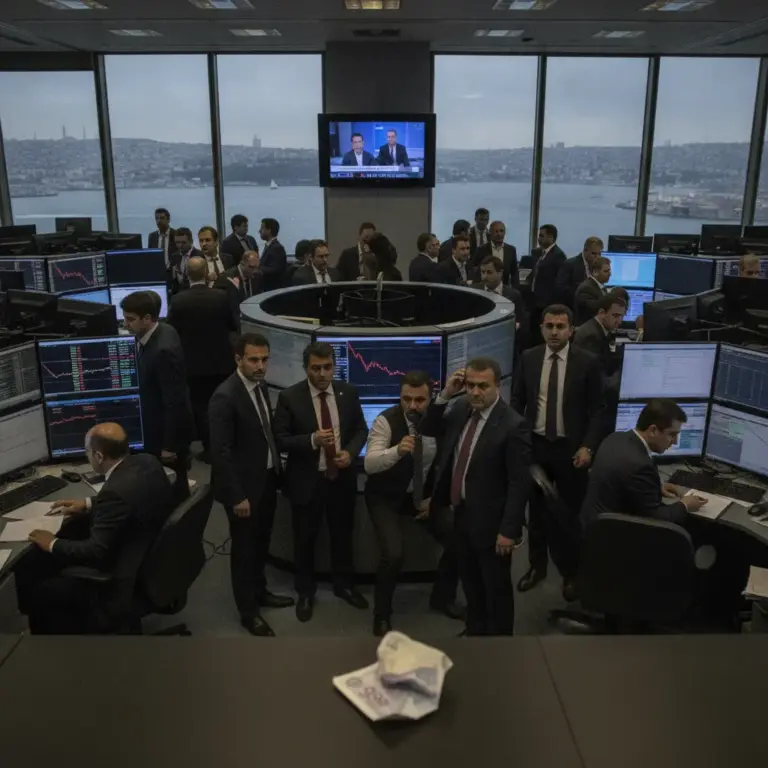
A sweeping market manipulation scandal is sending shockwaves through the Turkish financial sector, leaving the nation’s standing as an emerging market hanging in the balance. The turmoil began late last year when allegations surfaced that several investment management firms were artificially pumping up stock prices by targeting small, illiquid companies with limited public shares. Turkey’s Capital Markets Board eventually stepped in, noting that these price surges lacked any basis in economic reality or company fundamentals.

The fallout was swift and severe, leading to a wave of fund defaults starting with Pusula Portföy and Tera Portföy. This triggered a panic among investors that sent the benchmark BIST 100 index tumbling nearly seventeen percent in September alone. In a desperate bid to stabilize the system, regulators ordered the liquidation of 131 investment funds managing roughly twenty billion dollars in assets, while Borsa Istanbul purged dozens of compromised stocks from its main index.

Now, the crisis has escalated beyond domestic borders as index provider MSCI threatens to strip Turkey of its emerging market status. The firm has already implemented an immediate freeze on various index changes for Turkish equities, meaning local companies cannot be added to key benchmarks or upgraded to larger categories. Institutional investors have expressed deep concerns over coordinated trading schemes that undermine market integrity and distort how many shares are actually available for trade.

To avoid a full downgrade to frontier or standalone market status by mid 2027, Turkey must now prove it can implement rigorous surveillance and provide transparent disclosures regarding who truly owns these securities. Interestingly, Turkey is not alone in facing such scrutiny; Indonesia is also fighting a similar battle against accusations of opaque shareholding structures and dysfunctional trading patterns, highlighting a broader crackdown by global index providers on perceived instability within developing markets.

Long before he became a household name known for intense roles and blockbuster franchises, Josh Brolin found himself staring at computer monitors instead of camera lenses. During a candid conversation on Theo Von’s This Past Weekend podcast, the actor revealed that there was a significant stretch in his thirties where Hollywood simply stopped calling. Despite an early start in the classics like The Goonies, Brolin describes a grueling period of stagnation where he felt ignored by the industry, leading him to seek stability far outside the studio system.

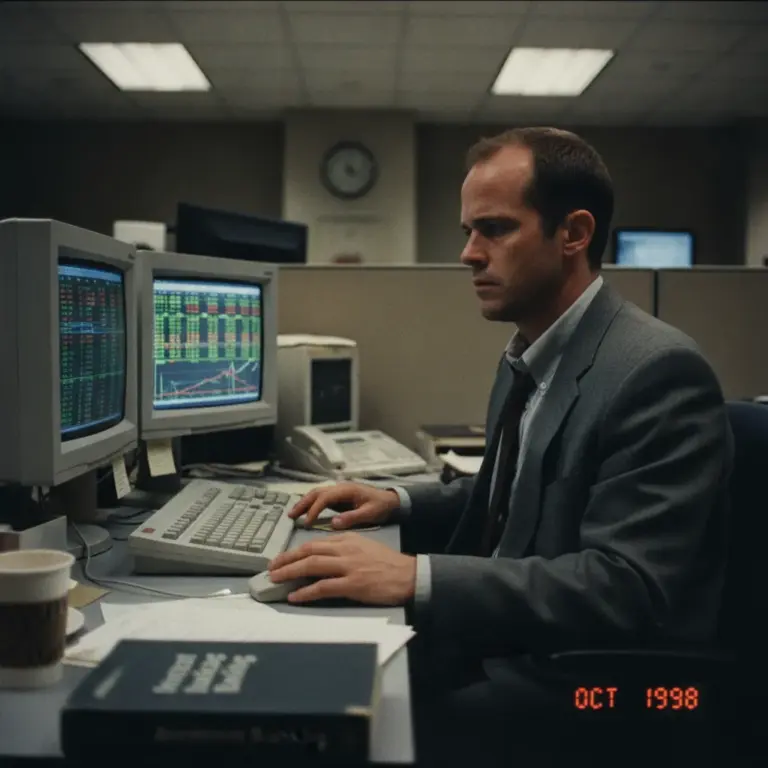
To make ends meet during these lean years, Brolin pivoted to the world of high stakes finance. He spent nearly five years working as a full time stock trader, operating from home with a sophisticated setup involving three screens and multiple tabs. According to Brolin, he discovered a genuine passion for day trading and swing trading, noting that he was actually quite skilled at it. In a surprising admission about his earnings, he claimed that those few years in the market brought in more money than two decades of struggling as an actor had provided.

The road back to relevance was long and required a level of persistence that many would find daunting. Between landscaping jobs and studying theater in New York, Brolin spent twenty two years honing his craft while remaining largely unnoticed by major casting directors. It wasn’t until 2007’s No Country for Old Men that the tide finally turned. Even then, the financial windfall wasn’t immediate; he recalled clearing only about thirty thousand dollars after taxes for his role in the Oscar winning film.

That breakthrough served as the ultimate catalyst for his current trajectory. While filming No Country for Old Men, Brolin submitted a playful audition tape featuring his teenage son mimicking Denzel Washington for American Gangster, which landed him the part and effectively ended his days of auditing for roles altogether. Now firmly established as one of cinema’s most reliable leads, Brolin continues to work steadily, including his upcoming project Whalefall, though he clearly hasn’t forgotten the discipline learned from his time navigating the volatility of the stock market.

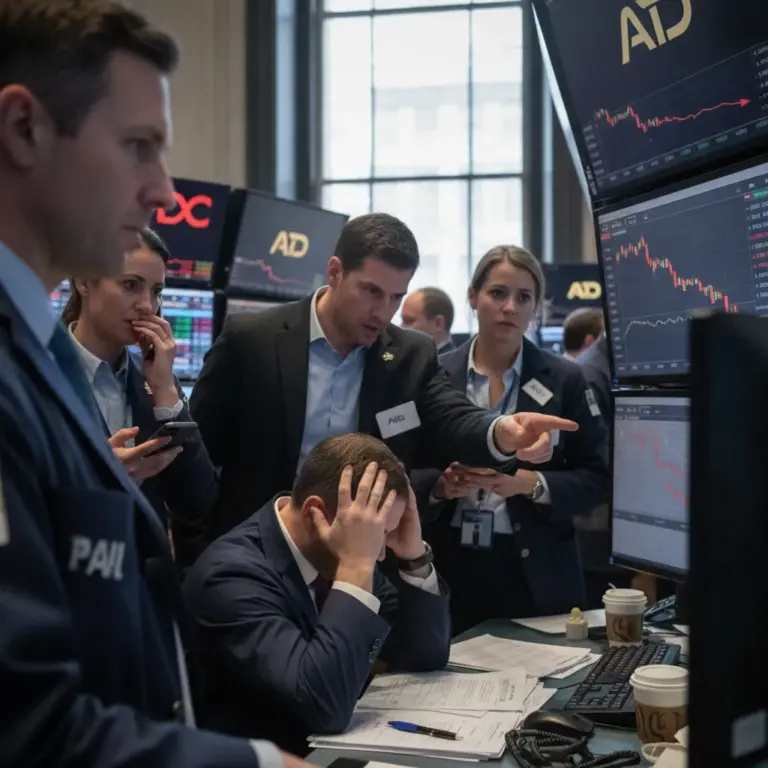
Investors are feeling a renewed sense of caution today as several high profile artificial intelligence stocks experienced another significant dip. After months of aggressive growth fueled by optimism over generative tech, these heavy hitters are seeing their valuations slide once again. Analysts suggest that the market may be entering a period of consolidation where investors are demanding concrete revenue results rather than just promising prototypes.

The cooling effect isn’t limited to the tech sector, however. One major retail player is facing a downgrade from analysts despite a stunning turnaround story that had previously captivated Wall Street. The company managed an impressive comeback through lean operations and strategic pivoting, but experts now warn that the stock has likely peaked and lacks further catalysts for short term growth.

This combination of sliding AI names and cautious outlooks for retail suggests a broader shift in investor sentiment. While the overall economy remains resilient, there is a growing tendency to lock in profits from previous winners while searching for undervalued opportunities elsewhere. For now, the euphoria surrounding both the retail recovery and the AI gold rush seems to be tempering into something far more pragmatic.

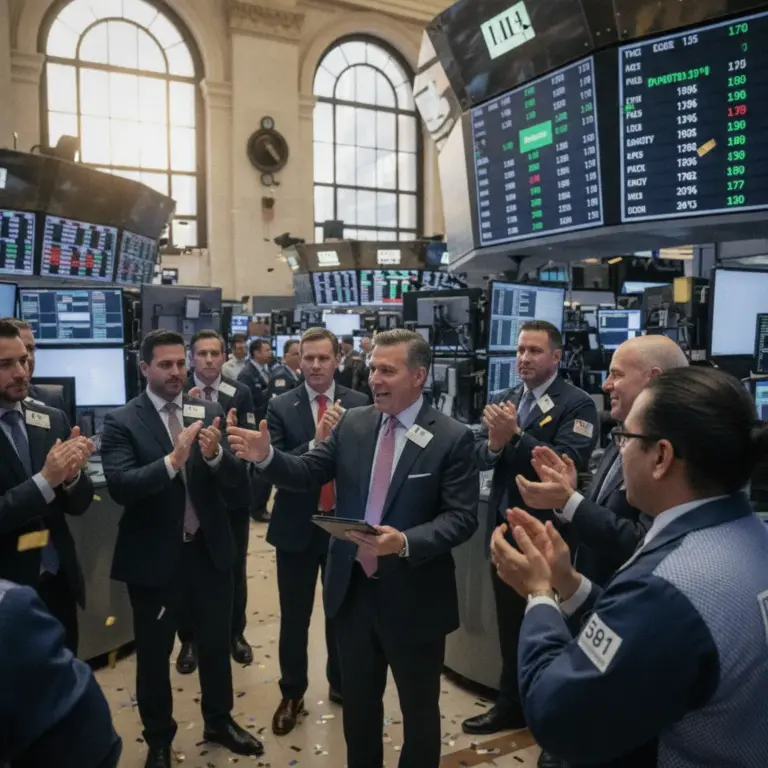
Financial commentator Charles Payne expressed strong confidence in the current trajectory of Wall Street, describing the most recent stretch of trading as very impressive. His assessment comes amid a period where investors have shown remarkable resilience and an appetite for risk, pushing major indices higher despite lingering economic uncertainties.

Payne noted that the strength seen across various sectors suggests a deeper level of stability than some skeptics had predicted earlier in the year. He pointed to the way markets have absorbed recent data, suggesting that the momentum is backed by genuine growth rather than mere speculation. For many traders, this surge represents a turning point in sentiment toward long term equity holdings.

While volatility remains a constant threat in any trading cycle, the sheer scale of this week’s gains has provided a psychological boost to retail and institutional investors alike. By highlighting these wins, Payne argues that the foundation for continued prosperity is becoming clearer as corporate earnings and macroeconomic indicators align more favorably.

Looking ahead, analysts will be watching closely to see if this rally can sustain itself through upcoming fiscal reports and government policy shifts. However, for now, the prevailing mood is one of triumph as the bulls continue to drive prices upward in what Payne views as a significant victory for those positioned correctly in the market.