
Archive

October 2026

Browsing

The global rush to build artificial intelligence infrastructure may be hitting an unexpected speed bump in the South Pacific. Firmus, an Australian data center operator that boasts the largest cluster of Nvidia Blackwell Ultra chips in the Southern Hemisphere, abruptly scrapped plans for a massive initial public offering last week. The move comes as a shock given the company’s prestigious client list, which includes heavyweights like Meta and OpenAI, and its goal to raise five billion dollars to expand across Australasia. By pulling the plug due to a lack of investor appetite, Firmus has sent a worrying signal that the endless fountain of capital fueling the AI boom might finally be starting to dry up.

This sudden hesitation from investors reflects a broader anxiety regarding whether the astronomical costs of AI can actually be sustained. For years, chipmakers like Nvidia and memory supplier Micron Technology have enjoyed insatiable demand, riding a wave of spending from tech titans like Microsoft and Amazon. However, signs of fatigue are appearing among end users. To offset the soaring cost of hardware, AI labs such as OpenAI have aggressively hiked subscription prices, leading some corporate clients to push back. Major firms including Walmart and AT&T have reportedly restricted employee AI usage to avoid budget overruns, while many businesses are migrating their workloads to smaller, cheaper models that require far less computing power.

For semiconductor giants, this shift in sentiment is particularly precarious. Much of Nvidia and Micron’s current valuation relies on the assumption that hyperscale cloud providers will continue spending trillions on infrastructure through 2027. If corporations stop buying expensive AI services because of price hikes or diminishing returns, those cloud providers will naturally slow their orders for GPUs and high-bandwidth memory. Wall Street seems to be anticipating this pivot already, as evidenced by depressed price-to-earnings ratios for both companies compared to historical averages and broader market benchmarks.

As the industry waits for upcoming quarterly reports from the big cloud players, the situation in Australia serves as a cautionary tale. While the physical land mass of Australia made it an ideal hub for energy-hungry data centers, it cannot insulate the sector from global economic shifts like rising interest rates and cooling venture capital. Whether this represents a temporary correction or a fundamental peak in AI demand remains to be seen, but for now, the silence from potential investors in Melbourne is speaking volumes about the risks ahead for Silicon Valley’s hardware kings.
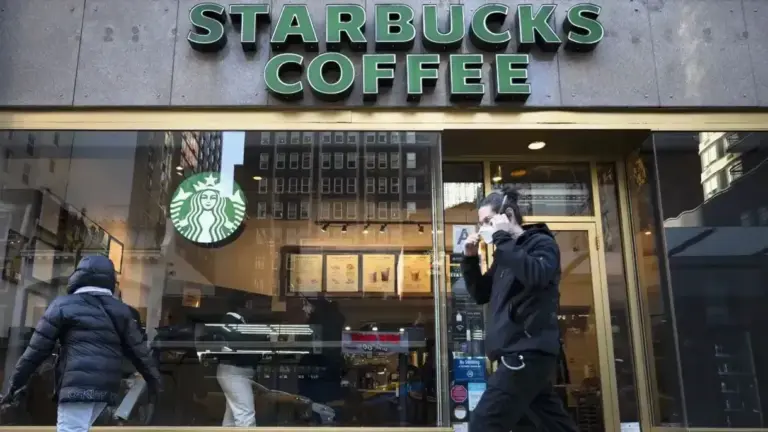
Starbucks is officially shutting down rumors that it intended to acquire Chipotle Mexican Grill, bringing a swift end to a wave of industry speculation. The coffee powerhouse confirmed on Monday that there are no plans to purchase the burrito chain, despite recent reports suggesting the company had been exploring such a move with financial advisers. A spokesperson stated that the organization remains entirely focused on its current internal strategy and long term growth goals rather than pursuing external acquisitions.

The chatter surrounding a potential merger gained traction last week following a report from the Financial Times, which described the hypothetical deal as an ambitious gamble. Had it happened, the union would have likely become the largest tie up in the history of the restaurant sector, creating a behemoth with approximately fifty billion dollars in annual sales. Much of the intrigue centered on Brian Niccol, who currently leads Starbucks but previously served as the chief executive of Chipotle for six years.

Market reactions were immediate and volatile throughout the saga. When news first broke that Starbucks might be eyeing Chipotle, shares for the Mexican grill surged over seven percent while Starbucks saw a slight dip. However, those gains evaporated once the denial became official, sending Chipotle shares sliding about four percent during afternoon trading while Starbucks recovered some ground.

As the dust settles on these rumors, Starbucks is shifting its attention toward its upcoming quarterly earnings report and future guidance for fiscal year twenty seven. While investors may have been intrigued by the idea of uniting two of America’s most recognizable fast casual brands under one roof, leadership has made it clear that their priority is refining their own operations rather than expanding into grilled meats and tortillas.

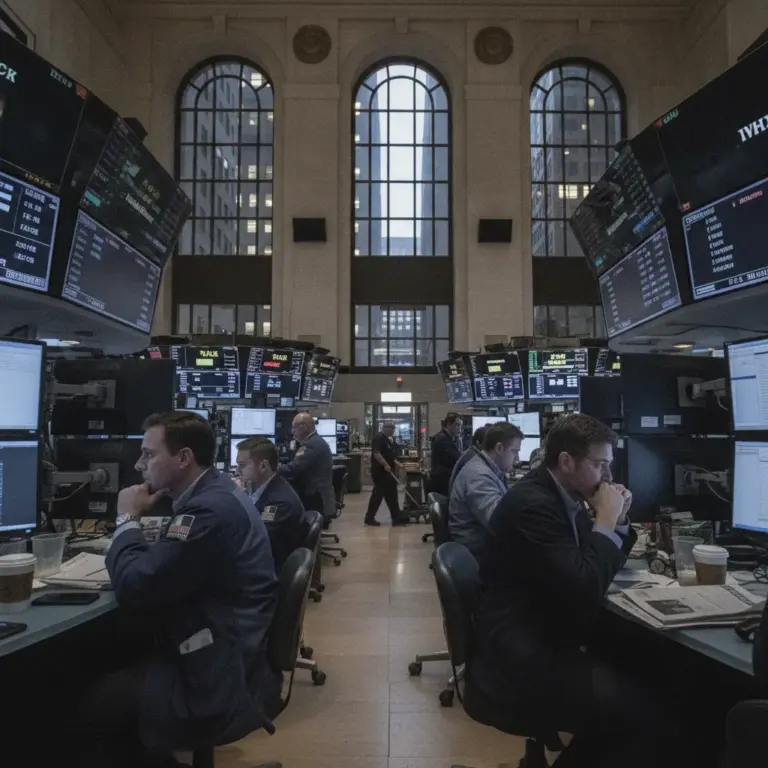
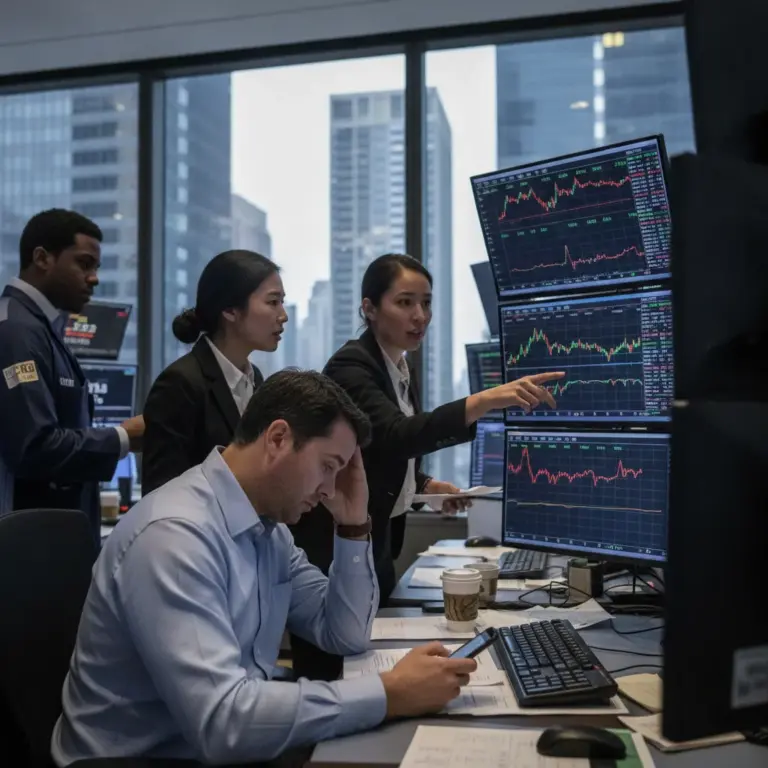
Wall Street is gearing up for a volatile stretch as traders keep a close eye on index futures ahead of a heavy slate of corporate earnings reports and critical inflation data. While the broader market enjoyed steady weekly gains recently, investors remain cautious about the sustainability of the current rally, particularly as smaller companies continue to struggle compared to their large cap counterparts.

The coming days are expected to be defined by high stakes reporting from several industry giants, which will likely dictate the short term direction of the major indexes. At the same time, upcoming government releases regarding inflation are set to provide much needed clarity on whether price pressures are easing enough for further monetary relief. This combination of fundamental company performance and macroeconomic shifts has created an environment where precision timing is everything.

Despite the uncertainty surrounding these catalysts, some opportunities are emerging within specific growth sectors. Analysts have identified six particular stocks that are currently hovering near strategic buy points, offering potential entry levels for those looking to capitalize on momentum before the next wave of volatility hits. These setups suggest that while caution is warranted across the board, selective aggression could pay off in certain pockets of the market.

Adding to the complexity is a backdrop of shifting geopolitics, including recent claims regarding energy ceasefires between Russia and Ukraine. Such developments often send ripples through oil markets and global trade patterns, adding another layer of unpredictability for fund managers already grappling with domestic economic signals. Traders will be watching closely to see if political stability can bolster investor confidence during an otherwise nerve wracking week.

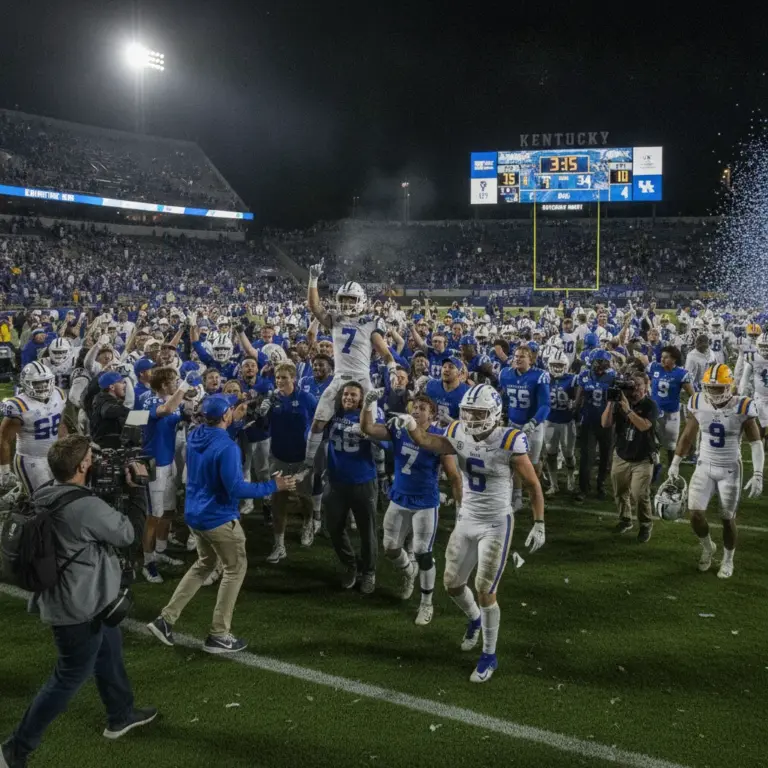
It was nearly midnight on Saturday when Kenny Minchey plunged up the middle for a two point conversion, triggering a chaotic scene as fans stormed the field to celebrate. For the second consecutive week, Kentucky relied on a dramatic overtime finish involving a two point attempt to secure a victory, this time knocking off number ten LSU. The win pushes the Wildcats to five and one on the season and cements their reputation for thriving under extreme pressure.

While the victory felt sweet, it came despite a defensive struggle to contain LSU quarterback Sam Leavitt. Leavitt consistently found gaps in the Kentucky coverage and carved through the rushing lanes, leading to several successful third down conversions that mirrored Kentucky’s own struggles on offense. However, timely individual efforts outweighed those systemic flaws, allowing the Wildcats to survive another nail biter against elite competition.

Several players emerged as heroes during the contest. Linebackers Barnes and Godfrey stepped up in a position plagued by thin depth, combining for twenty two tackles to keep the defense afloat. Special teams provided perhaps the most electric moment of the night when Coffman fielded an LSU punt and raced fifty five yards for a touchdown, showcasing both vision and raw speed. In the receiving corps, Ferguson proved his reliability with key catches along the sideline that kept drives alive during high stakes possessions.

The backfield saw mixed results throughout the evening. While Baxter exploded early with a seventy seven yard sprint and finished with over one hundred yards, teammates Jason Patterson and Jovantae Barnes struggled to find any rhythm behind the offensive line. Despite these inconsistencies, leadership from figures like Bryant remained steady in the secondary, where he recorded six tackles and his first interception of the year to help seal one of the program’s most memorable wins of 2026.

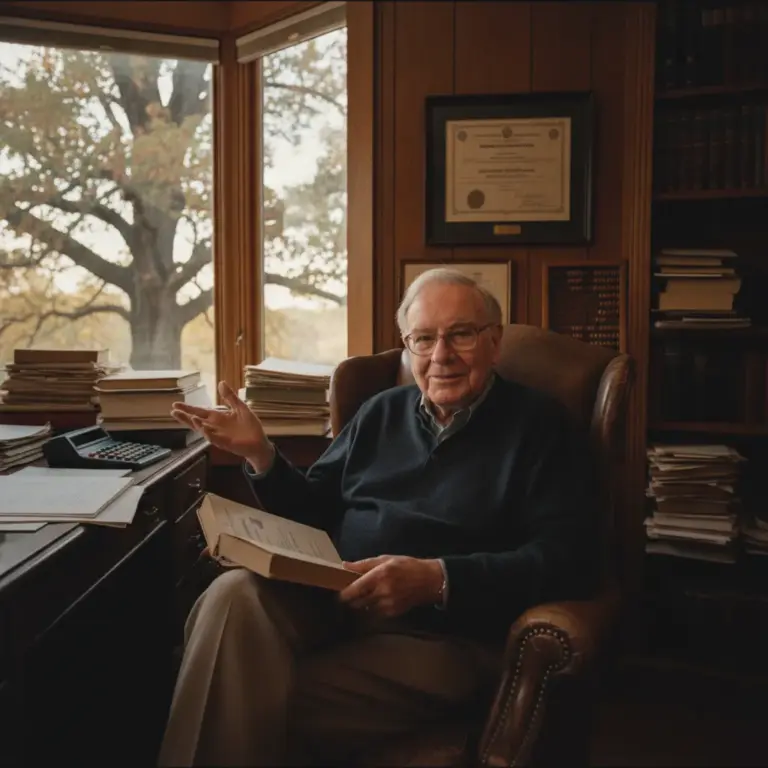
Warren Buffett has earned his reputation as the Oracle of Omaha not through flashy trades, but through a disciplined commitment to quality and time. By purchasing well-run businesses at attractive prices and refusing to panic during market downturns, he has turned Berkshire Hathaway into a financial juggernaut. While many investors chase the latest trend, Buffett’s success suggests that the real secret sauce is simply holding onto great companies for decades, allowing compound growth and steady dividends to do the heavy lifting.

The power of this long-term strategy is most evident in his oldest bets. For instance, a modest thousand dollar investment in Coca-Cola back in 1989 would have grown to about eighteen thousand dollars on its own. However, those who reinvested their dividends would see that sum balloon to forty three thousand dollars today. Similarly, an investment in American Express from 1995 would now be worth over thirty five thousand dollars without dividends, jumping to nearly fifty five thousand dollars if those payouts were rolled back into the stock. Both examples underscore how patience transforms standard gains into life changing wealth.

More recent additions to his portfolio show that while the timeline varies, the philosophy remains the same. A thousand dollars placed in Bank of America at the start of 2018 would currently be worth around twenty two hundred dollars with dividends reinvested. While this hasn’t outperformed the broader market yet, it reflects a shorter holding window compared to his legacy plays. Meanwhile, a 2021 bet on Chevron has surged quickly due to shifting energy prices and geopolitical tensions, turning a thousand dollars into over three thousand dollars when accounting for dividends.

Ultimately, Buffett’s portfolio serves as a reminder that investing is rarely about timing the peak or trough perfectly. Some wins come from sheer skill in identifying undervalued assets, while others benefit from unpredictable global events. Whether it is a beverage giant held for thirty years or an energy firm held for three, the core lesson stays consistent: buying high quality businesses and giving them room to breathe is often the most reliable path to prosperity.

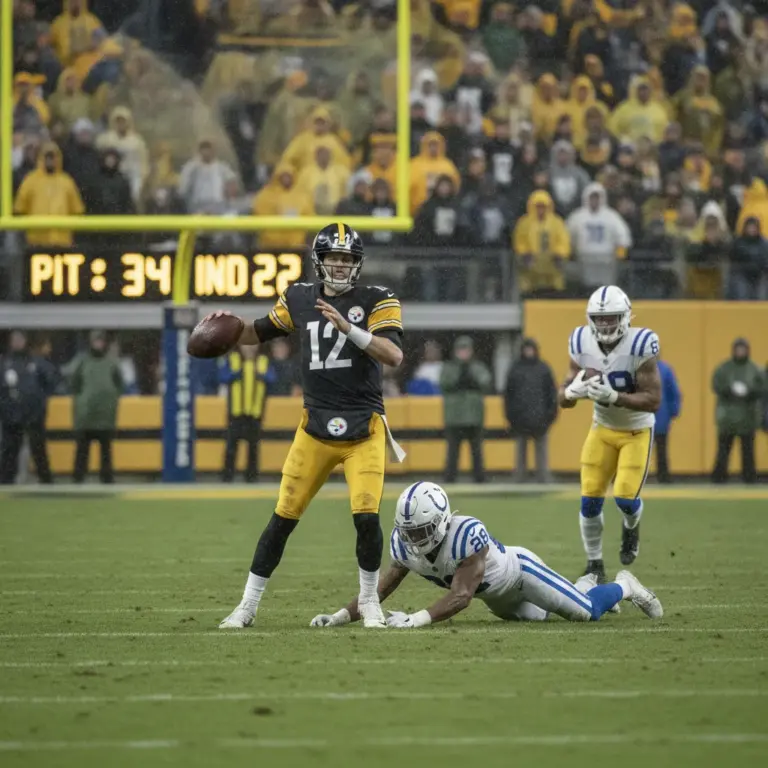
The Pittsburgh Steelers made a resounding statement at Acrisure Stadium this week, dismantling the Indianapolis Colts 34-22 to move their record to 3-2. In a performance defined by efficiency and explosiveness, the Steelers managed to tear through a Colts defense that had been stingy in recent outings. While the victory provides much needed momentum, the game served as a revealing snapshot of where the roster currently stands, highlighting several rising stars and some concerning gaps in depth.

At the center of the surge is Aaron Rodgers, who looks increasingly like the maestro of this offense. For the first time since late 2021, Rodgers has recorded three consecutive games with at least three touchdowns, starting Sunday’s contest with a perfect eleven completions. His precision paved the way for others to shine, most notably running back Jaylen Warren. Warren continues his breakout campaign, securing another hundred yard scrimmage outing highlighted by an eighty yard catch and run and a fifty yard touchdown sprint in the third quarter. Together with tight end Pat Freiermuth, who now sits tied for the league lead in receiving scores among his position with four, these playmakers are transforming how Pittsburgh attacks defenses.

However, it wasn’t entirely smooth sailing for every member of the squad. Despite leading the team in receiving yards with eighty four, rookie Germie Bernard’s emergence came amidst a worrying trend regarding wide receiver health. With Michael Pittman Jr. already sidelined and both Roman Wilson and Ben Skrownek leaving the game due to injuries during the first half, the Steelers find themselves dangerously thin on the perimeter. This lack of stability may force management to look toward external additions if they want to avoid relying solely on makeshift solutions.

While some stocks rose, others dipped under the bright lights of Sunday afternoon. Star receiver DK Metcalf remained largely invisible throughout the clash, managing only twenty three yards across three receptions following pre game tensions with opposing defenders. Meanwhile, expectations remain unmet for specialist Kaden Wetjen; despite being an early day three selection, he has yet to provide any meaningful spark on special teams returns. As Pittsburgh moves forward from this convincing win, they possess a dangerous core offensive identity but must address their fragility at receiver to maintain this trajectory.

U.S. stock futures remained largely flat on Sunday night as investors paused to catch their breath following a productive week for the major averages. While the S&P 500 and Nasdaq indices saw modest ticks upward, the general mood was one of cautious anticipation. Market participants are now shifting their focus toward a heavy slate of corporate earnings and critical inflation data scheduled for release later this week, hoping these fundamentals can sustain the current momentum.

The financial sector is taking center stage as the heavyweight banks prepare to launch the third-quarter reporting season. Heavy hitters including JPMorgan Chase, Goldman Sachs, and Bank of America are all expected to unveil their numbers, providing a litmus test for how American businesses are navigating high borrowing costs. Analysts remain optimistic, with some projections suggesting nearly thirty percent earnings growth for the S&P 500, driven largely by the ongoing surge in artificial intelligence infrastructure investments.

However, this optimism is being tempered by renewed volatility in the Middle East. Concerns over energy stability spiked after President Donald Trump indicated he is weighing whether to join Saudi Arabia in military actions against Houthi rebels following an attack on Riyadh’s international airport. With Brent crude trading above one hundred dollars a barrel and Treasury yields hitting multi decade highs, traders are wary of how geopolitical escalation might offset corporate gains.

Beyond the boardroom reports, eyes are fixed on upcoming economic indicators from the government. The publication of both consumer and producer price indexes mid week will offer fresh clues regarding the trajectory of inflation. For many fund managers, the primary question isn’t just about previous profits but whether companies possess the pricing power to maintain margins in an environment defined by expensive fuel and stubborn interest rates.

Americans can’t seem to get on the same page when it comes to what defines socialism even though new polling shows the movement’s favorability is at an all-time high.

Whether far-left factions are able to rally around the label could come down to understand its principles.

Fox News Digital took to the streets of a Maryland liberal hotspot, Takoma Park, for its annual street festival to talk with attendees about their definitions of socialism and how far they would be willing to go to embrace its ideals.

“The fact is that there’s no…one answer,” Nina Gilden Seavey said when asked to define socialism.

“Just the idea of like, you’ve been paying all these things to set up these programs and then you’re actually giving them to the people,” Jaw Blake said describing his view of the political movement. “It’s not a special group that gets to have them, it’s just available.”

LIBERAL HAVEN FESTIVAL-GOERS WEIGH GOVERNMENT SEIZURE OF THEIR HOMES: ‘I’D BE SO GAME’

Jenny Sniderman had a more direct answer, claiming that “public libraries, the police department, the fire department, all our public services, utilities,” are all part of what makes up socialism.

A September Gallup poll found that 43% of Americans have a positive image of socialism — the highest level since the polling organization began tracking the question in 2010.

But the survey asks respondents their image of socialism without providing a definition of the ideology or asking whether they would actually support adopting it in the U.S.

The same festival-goers were pressed on socialism as an economic system, questioning their favorability of collective ownership. They shared some skepticism when Fox News Digital asked whether they would personally surrender their private property to government or collective control.

“Do I want to give up my private property? Of course I don’t want to give up my private property,” Sniderman said. “Are they going to reimburse me fairly? That would be helpful in making my choice.”

“I don’t know that I would necessarily love it,” Blake said. “But I mean, if it was something that was beneficial, I’d at least consider it.”

DSA CO-CHAIR PUSHES BACK ON SOVIET UNION COMPARISONS, WANTS PRISONS TO BE ‘LESS NECESSARY’

“Nobody wants what they have to be taken away from them,” he continued. “But there is something to be said about…you can set up things so that they’re available for everybody.”

“I think the government is not the greatest steward…of assets,” Seavey said. “It’s not to say that capitalism is somehow without flaw, but the fact is that there is an idealism that can come from thinking, ‘Oh, if we had some more centrality, if…there was some kind of uber organization in charge of reallocation.'”

Documentary filmmaker and self-described historian Seavey also questioned the idea of government control over private assets, but argued that the growing democratic socialist movement in the U.S. should not be confused with traditional socialism.

“This is not socialism. This is democratic socialism. It’s different. There’s socialism, there’s communism, there are all kinds of ‘isms.’ Democratic socialism is essentially what we have a growing movement in this country,” Seavey said.

“Socialism is where there is a massive redistribution of wealth. We are not having redistribution of wealth in this country.”

But the Democratic Socialists of America, the largest socialist organization in the U.S., advocates redistributing wealth from wealthy individuals and corporations to workers and lower-income Americans. The DSA also calls for public stake in major corporations and essential industries rather than private ownership.

THE NUMBERS DON’T LIE. YOUNG AMERICANS ARE FALLING IN LOVE … WITH SOCIALISM

The differing interpretations among festival-goers reflect a broader debate over what socialism means in America — one that has taken on new political significance as socialist candidates gain ground within the Democratic Party heading into midterm elections.

In a 2018 survey asking Americans to define socialism in their own words, just 17% described it in terms of government ownership or control of businesses or the means of production. Another 23% associated it with equality, while 10% pointed to social benefits and services. Nearly a quarter could not provide an answer.

Seavey argued that political labels themselves have distorted the conversation.

“Let’s think about it differently and let’s take away these ridiculous stigmas that have to do with these crazy labels that we have allowed the right wing to foment onto the rest of America,” Seavey said.

But as socialist-aligned candidates compete for office, the growing movement raises a question that favorable polling alone cannot answer: whether voters are embracing its promises on affordability and equality, or also support its broader proposals for economic ownership and control.

A new proposal that could bring driverless rideshare vehicles to the streets of the nation’s capital is causing an uproar among union workers, drivers and religious leaders who fear the technology could eliminate jobs.

Protesters gathered outside the John Wilson Building as D.C. council members met to discuss legislation that would allow Waymo and other autonomous vehicle operators to offer commercial rides in Washington, D.C. The protesters urged the council to reject the legislation, arguing that an influx of robotaxis would displace rideshare drivers.

“We came out here today strongly because we feel that these robotaxis will put people out of work,” one protester told Fox News Digital. “And people need jobs.”

TERRIFIED PASSENGERS FILM WAYMO AUTONOMOUS VEHICLE DRIVING INTO LIVE FIREWORKS IN SAN FRANCISCO

“I’m against robotaxis because it takes away from the community, it takes away from their jobs, it takes away food from their table,” Frederick from Virginia said.

He continued, “People need jobs to be able to support their family.”

“It’s bulls – – -,” Sabrina from Washington, D.C., said. “Let’s not bring robots taking my neighbor’s jobs. My folks that drive for a living, let’s just not take their jobs.”

Another person at the protest acknowledged that autonomous vehicles could eliminate some driving jobs but argued the city should “take the offensive” by shortening the workweek without cutting pay and expanding employment elsewhere.

“We should take the offensive on job issues,” Michael from Washington, D.C., said. “We should shorten the workweek, without a loss in pay. So we’ll create more jobs in public transportation, in hospitals, in service industries. So we actually maybe will lose some jobs to taxi drivers, but we’ll create better paying jobs.”

The Autonomous Vehicle Deployment Authorization Amendment Act of 2026 — introduced by Councilmember Charles Allen in May — would create a program for commercial autonomous vehicles in D.C. that would be run by the District Department of Transportation.

TESLA ROBOTAXI MIAMI LAUNCH COMES WITH LIMITS

Waymo says its latest safety data, covering more than 270 million miles of autonomous driving, shows its vehicles were involved in 82% fewer injury-causing crashes and 95% fewer crashes involving serious injuries or worse compared with human-driver benchmarks in the same operating areas.

Supporters of robotaxis have also pointed to the potential for lower fares without a human driver, although current comparisons have found Waymo’s prices can vary widely and are not consistently cheaper than traditional rideshare services like Uber and Lyft.

Protesters claimed that while prices may be lower as the driverless vehicles roll out, the rates will eventually spike.

“That’s just something just to…get our antennas up and have us saying, ‘Yeah, ooo, we’re gonna get cheaper rides,’” Sabrina said. “It might be cheap for the trial periods, and then all of a sudden we’ll be paying $50. So no, I don’t believe that. That’s just some crap just to get people engaged with the Waymo.”

“They seem the same price to me,” Helen from Maryland said. “They’re in other cities and it seems like not much of a difference in the pricing.”

ZOOX ROBOTAXI REDESIGN BRINGS BIG RIDER UPGRADES

The proposed regulatory framework, which could bring robotaxis to the city by 2028, would initially limit operators to 200 vehicles. Companies seeking commercial permits would have to demonstrate at least 180 days and 250,000 miles of autonomous vehicle testing in the District and submit plans aimed at reducing disparities in service availability and wait times across the city’s eight wards.

There was a public hearing on the bill in July, but no vote has been scheduled. The bill would have to be approved by the entire council before self-driving cars start to hit the city’s streets.

“A worker should be at the table,” Metropolitan Washington Council, AFL-CIO President Samuel Epps told Fox News Digital at the protest. “We shouldn’t rush this.”

“I don’t think it’s good for the city,” Eddie said. “If my children gonna get in a car, I would prefer for a human to be driving.”

This post appeared first on https://www.foxnews.com

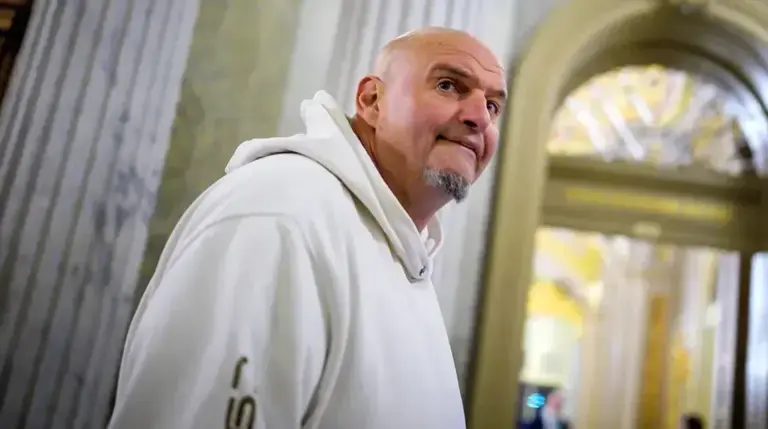
The Senate’s most recognizable rogue Democrat has increasingly broken with his party since Republicans took control of the upper chamber, but he still votes with Senate Minority Leader Chuck Schumer, D-N.Y., a majority of the time. 

Sen. John Fetterman, D-Pa., is the Senate’s biggest enigma during a time of hyper-partisanship — he bucks his party on key issues, like the war in Iran and immigration, but continues to vote with Democrats an overwhelming amount of the time.

Since joining the Senate in 2023, Fetterman has voted with Senate Democrats nearly 90% of the time, a figure that stacks up closely to some of the most staunch party liners in the caucus. Still, speculation has swirled as to whether he’ll jump the political shark and become a Republican. 

MAVERICK DEMOCRAT SURGES WITH REPUBLICANS AS HIS OWN PARTY TURNS ON HIM, STOKING TALK OF GOP SWITCH

Despite that, Fetterman has set the terms clearly this year, arguing that if Democrats continued to turn their backs on Israel, he would leave the party. But some in the GOP believe that no matter the swirl percolating in Washington, D.C., Fetterman isn’t swapping jerseys. He’s also keeping the speculation heavy about whether he will run for another term.

“John Fetterman is a staunch Democrat that votes with his party 96% of the time, anybody who seriously believes that he is going to switch to the Republican Party is thinking wishfully,” a senior Republican aide told Fox News Digital.

Fetterman’s national political career began as a politician armed with an endorsement for Sen. Bernie Sanders, I-Vt., running in a pivotal race in 2022 against Dr. Mehmet Oz.

SEN JOHN FETTERMAN PLEDGES TO BE ‘LAST MAN STANDING’ IN THE DEMOCRATIC PARTY IN SUPPORT OF ISRAEL

Sanders told the Associated Press at the time that “if there’s any candidate who was running more than anybody else, who identified with the working class, who made it clear that he was going to Washington to represent working people, it was John Fetterman.”

He flipped that seat, giving Democrats one of the slimmest majorities in history and cementing himself as a rock star in the party.

Since then, he’s run away from Sanders’ ideals and often rejected Schumer and the caucus’ marching orders.

But this year he’s leaned into that grey area, sometimes known as being a centrist, to support Republican ideals. During this session of Congress, Fetterman has broken from Democrats more than ever before, dropping to just under 81% along Democratic Party lines. 

And while that’s happening, Fetterman is reportedly using Republican fundraising platforms to soak up precious donor dollars, is close friends with one of the GOP’s own rock stars, Sen. Katie Britt, R-Ala., made a video message introducing McCormick at the RNC and even accidentally called himself a lifelong Republican during an appearance at the Texas Tribune’s Tribfest last month.

FETTERMAN TEASES WHERE HIS TRUE LOYALTY LIES AFTER SURPRISE APPEARANCE AT GOP CONVENTION

But when asked about whether he’s considering leaving the party, even after drawing a line in the sand, he recoils — it’s become such a hot topic in the hallways of the Senate that Fetterman stopped taking questions.

As to whether he would jump ship depending on the outcome of the upcoming election, Fetterman said during the event that “there are no Republicans with a 90% Democratic vote line. There are no pro-choice, there’s no pro-gay community, that does not exist in the Republican Party.”

“How many times do I have to say it? And that’s the point. So wait until after the midterms and see what happens,” Fetterman said. “And now, if we do win, and I’m 51, people can remember, ‘hey, that’s why it’s mathematically possible to retain the majority,’ because I was able to win a state like Pennsylvania.”

Fetterman’s office did not respond to a request for comment.

This post appeared first on https://www.foxnews.com