Archive

October 2026

Browsing

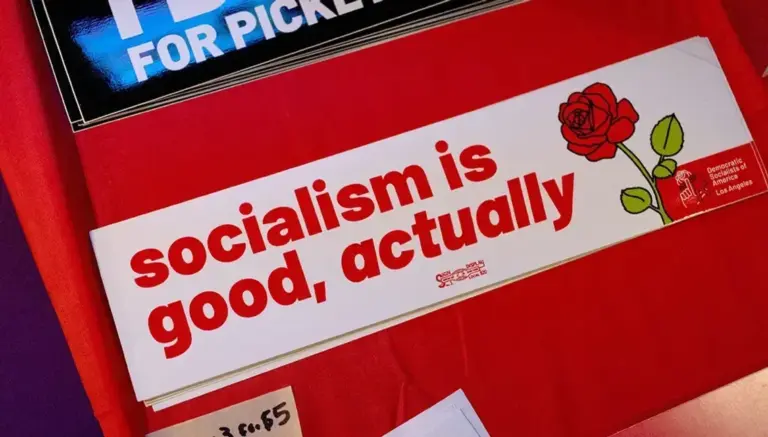
FIRST ON FOX — Dozens of individuals backed by the Democratic Socialists of America are set to appear on ballots as candidates for state legislature seats on Election Day, something Republicans say could set in motion a trend that transforms the Democratic Party.

At least 65 DSA-aligned candidates have advanced to contest state legislative seats in November’s general election. The Republican State Leadership Committee — the official GOP body responsible for ensuring state-level conservative victories — claimed that these races could very well determine the future of the Democratic Party, according to a memo obtained exclusively by Fox News Digital.

“The statehouse trend is also relevant because several prominent DSA-aligned Congressional candidates in 2026 have emerged from state and local political organizing,” the memo reads. “These victories demonstrate one potential progression: movement organizations can help develop candidates locally and at the state level, provide them with political experience and organizational networks, and eventually support campaigns for Congress.”

SOCIALISTS CHEER ‘SHOCKWAVE’ PRIMARY NIGHT AS DSA-BACKED CANDIDATES WIN, ADVANCE ACROSS THE MAP

“The scale of that presence matters not only because DSA-aligned candidates could influence the direction of their state legislatures if elected, but because state legislative offices can provide a platform, governing experience, donor networks and organizational infrastructure for future campaigns for higher office,” it continues.

The RSLC’s methodology included candidates who are DSA members, DSA endorsees or self-identified members of the organization.

DSA-affiliated candidates identified by the RSLC take positions on a number of issues that crucial swing voters and independents may find extreme, including defunding or abolishing police departments, left-wing economic policies and demanding race-based reparations.

Opposition to traditional policing has emerged as a prominent issue among some of the DSA-aligned state legislative candidates identified by Republicans.

“As a State Senator I will continue to do everything I can to end policing and incarceration in New York State,” Democratic State Sen. Jabari Brisport’s campaign website reads. Brisport also supports decriminalizing prostitution, arguing that removing criminal penalties for sex workers while maintaining protections against trafficking and exploitation would help keep communities safe.

TALARICO PUT ON DEFENSE AFTER 2020 COMMENTS ABOUT DEFUNDING POLICE RESURFACE: ‘WE MUST REPLACE’

Over in Wisconsin, Democratic State Rep. Ryan Clancy has stood by his statement that police work has “no dignity or value.”

“It means that American policing has always been bad and it always will be,” Clancy told a local outlet in 2023, alleging that American police forces have their roots in slave patrols. “It’s not like we can get back to this to the early days… American policing… [is] epically racist and classist because that’s a dead end. That is the point of American policing.”

Clancy told Fox News Digital that his comments concerned officers who abused their authority over sex workers, although his original remarks and subsequent 2023 interview criticized policing more broadly as an institution he argued was inherently racist and could not be reformed.

He concurred with the RSLC’s assertion that DSA-aligned candidates are shaping the future of the Democratic Party.

State Rep. Eleanor Chávez, running with the DSA’s backing in New Mexico, meanwhile has called Immigration and Customs Enforcement “fascist” and compared its agents to the KKK. Republicans in New Mexico have condemned such rhetoric, arguing that it could spur people to commit violence against law enforcement officers.

Despite its propensity to draw attention to its stances on social issues, the DSA bills itself as an economically motivated organization.

NEWSOM ADMITS DEMOCRATIC SOCIALIST IDEAS ‘MAINSTREAM’ IN DEMOCRAT PARTY: ‘PRETTY ALIGNED’

To this end, some of its members running for state legislatures have called for reforms some have described as radical.

New York Democratic Assemblywoman Sarahana Shrestha, who is running for re-election with the backing of the DSA, has pushed legislation that would allow the government to acquire the privately held Central Hudson Gas & Electric Corp., potentially through eminent domain if a negotiated purchase cannot be reached.Dylan Wegela, a DSA-backed state house candidate in Michigan, has similarly pushed for state acquisitions of utility companies.

Shrestha agrees with the RSLC’s assessment that DSA-aligned state lawmakers could influence the Democratic Party’s trajectory.

“The things DSA-aligned state lawmakers are fighting for are things that are extremely popular with voters, and have been for a long time,” she told Fox News Digital. “A majority of our constituents believe the energy sector should not be for profit, healthcare should be single-payer and universal, the government should play a positive role in building necessary infrastructure such as permanently affordable housing and public transit, and so on.”

The DSA-affiliated lawmaker also defended her plan to take over the Central Hudson Gas & Electric Corp., citing a feasibility study commissioned by supporters of the bill that found it would lower costs for consumers.

Sometimes, the stances of DSA clash with Democratic policy priorities.

Gabriel Acevero, a DSA-backed lawmaker in Maryland, for instance, opposed a marijuana legalization measure he argued did not go far enough to address racial inequities, declaring that “cannabis legalization without reparations for communities harmed by the intentional drug war is not progressive policy.” Scores of DSA-affiliated candidates running in states such as New York, Minnesota and Massachusetts have thrown their support behind reparations for racial minorities.

SOCIALISTS ARE HELPING GOP CAMPAIGNS HEADING INTO NOVEMBER

Republicans have a vested interest in tying the mainstream Democratic Party to the DSA. A Fox News poll from September found that 55% of registered voters had an unfavorable opinion of the DSA.

While some in the Democratic Party argue that Republican attempts to tie the Democratic Party to socialism are bad-faith campaign tricks, party leadership has recently made significant concessions to its left-wing flank.

Senate Minority Leader Chuck Schumer backed Abdul El-Sayed’s more moderate opponent in Michigan’s Democratic Senate primary, but a super PAC aligned with Schumer has since committed millions of dollars to supporting El-Sayed’s general-election campaign. El-Sayed is a progressive backed by prominent figures on the party’s left, but who has said he is not a socialist.

Due to the disorganized nature of the DSA and the varying degrees of affiliation held by candidates, estimates of the number of socialist candidates running for state legislature vary across sources. The Brookings Institution, for instance, found at least 76 had advanced to the general election, while the RSLC’s analysis identified a minimum of 65 running in a total of 24 states.

Though the DSA’s gains have received significant attention, a Brookings Institution analysis found that candidates backed by the organization represent only a tiny fraction of the nation’s state legislative seats, raising questions about how far the socialist movement’s growing influence extends.

“The RSLC has consistently said that socialism starts in the states and that is where we need to stop it,” the RSLC’s memo reads. “The DSA’s growing presence in statehouse races could have dangerous impacts for state policy in the short-term, and it reflects a clearly orchestrated long-term effort to build political power from the state-level up.”

Every state legislative candidate mentioned was reached for comment by Fox News Digital on Tuesday.

American truckers are warning that sky-high diesel prices are eating into their profits and putting pressure on trucking companies to cut routes, raising concerns that some drivers could be forced off the road and the pain could eventually reach Americans at the grocery store.

“Fuel prices is going up, the rates are not going up,” Miami-based trucker Suave Dorsett told Fox News Digital. “So it’s hurting our pockets real bad.”

The warnings come as the Iran war sends diesel prices soaring, squeezing American truckers even as President Donald Trump predicts oil prices will fall “like a stone” amid expectations that the conflict could soon end. Drivers told Fox News Digital the damage is already mounting, with routes being cut and smaller operators facing mounting financial pressure.

Dorsett is among several truckers who told Fox News Digital that soaring fuel costs are cutting into their earnings and putting pressure on an industry responsible for moving goods across the country, with one driver reporting fewer routes and others warning that smaller operators could eventually be forced to park their rigs.

THE OVERLOOKED WAY THE IRAN WAR IS MAKING GROCERIES, AMAZON PACKAGES AND NEW HOMES MORE EXPENSIVE

The national average for diesel stood at roughly $6.32 per gallon Monday, according to AAA — up from about $3.69 at the same time last year, a jump of more than 70%. The surge has also eclipsed the previous record of $5.816 per gallon, set in June 2022 under former President Joe Biden as Russia’s invasion of Ukraine sent global energy prices soaring.

For Dorsett, who has been driving for nine years, the price at the pump was even steeper. He told Fox News Digital he was seeing diesel at $7.40 per gallon while traveling through Ohio.

Dorsett said the fuel spike comes as truckers are already shouldering a long list of expenses, including diesel exhaust fluid (DEF), which helps reduce harmful emissions, parking, showers, weighing and reweighing loads, repairs and towing.

And if diesel prices remain elevated, Dorsett predicted smaller operators will be the first to buckle.

BIDEN-ERA ENVIRO RULE ACCUSED OF STRANGLING TRUCKERS, SQUEEZING AMERICANS LANDS ON TRUMP CHOPPING BLOCK

“Some of the smaller companies, like the smaller owner ops, would slowly fall off and it’s going to create a chain effect,” Dorsett said, predicting a “domino effect” that could eventually put pressure on larger carriers.

Tyler Rinaldi, a Louisiana trucker with about a decade of experience who transports hazardous materials and other freight for an LTL company, said he has already seen weekend routes scaled back at his company.

“I’ve seen a lot of routes get cut,” Rinaldi told Fox News Digital. “They’re not really running like they want to on the weekends right now.”

“I definitely see a lot change because of it at my company, slowly, but it’s starting to be more noticeable,” he added.

TRUMP TAPS VETERANS TO FIX ILLEGAL ALIEN TRUCKING PROBLEM PLAGUING US ROADWAYS

Rinaldi, who is married with two children, said fewer routes could eventually mean less money coming home.

“When they start cutting routes and trying to limit the expenses on what routes they send out,” Rinaldi said, “that takes away from the people that work in the company’s pockets.”

Avante Jackson, an 11-year trucking veteran from Charlotte, North Carolina, who transports steel and other construction materials, said rising diesel prices are forcing truckers to take a harder look at whether the money they bring in is enough to keep their businesses running.

“If I’m putting all of my profit in the tank,” Jackson said, “at the end of the day, what do I have left to keep the doors open?”

CUT THE BULL: THE REAL REASON BEEF COSTS SO MUCH — AND WHAT TRUMP IS TRYING TO DO

Jackson cautioned against “fear-mongering” about potential shortages, but said a widespread loss of drivers could ultimately reach consumers.

“It really could hit the community,” he said.

The latest diesel spike echoes a similar crunch in 2022 under former President Joe Biden, when the economic fallout from the COVID-19 pandemic and Russia’s invasion of Ukraine sent fuel prices flying. Diesel reached a then-record national average of $5.82 per gallon that June, squeezing truckers as operating expenses climbed.

According to the American Transportation Research Institute, trucking fuel costs surged 53.7% in 2022, helping drive a 21.3% jump in overall operating costs to a then-record $2.25 per mile. The latest spike threatens to revive those pressures, particularly for smaller operators with less room to absorb rising fuel bills.

As the Trump administration pushes international partners to release emergency fuel reserves in an effort to bring prices down, the truckers had their own message for the president: don’t forget about the drivers absorbing the costs on the road.

“My message to President Trump would just be to think about who’s keeping America moving,” Jackson told Fox News Digital. “Think about the little guys out here each and every day.”

TRUMP JUST BROKERED A DEAL WITH THE COUNTRY SITTING ATOP THE WORLD’S LARGEST OIL RESERVES

“We truly are the backbone of America, we keep America moving,” he added. “We just want you just to think about us and put yourself in our shoes…Let’s try to get the fuel prices down and let’s try to just make more of a change,” he said. “We know we can do better.”

Trump defended higher fuel prices Thursday as a temporary sacrifice in the fight to prevent Iran from obtaining nuclear weapons, saying on Truth Social that rising gasoline costs were “a small price to pay for Iran not having a Nuclear Weapon.”

Trump said last week that European countries had agreed to release diesel from their stockpiles after he pressed them to put more supply on the market. The G7 subsequently agreed to release 100 million barrels of oil and fuel products from previously pledged emergency reserves over four months, including a substantial diesel release during the first 20 days, in an effort to ease pressure on global fuel markets.

Trump also said his administration would not pursue a diesel export ban and expressed confidence that oil prices would eventually return to levels seen before the latest spike, though energy markets remain under pressure from global supply disruptions.

Trump predicted during a Wednesday night rally in San Antonio, Texas, that oil prices would “come down like a rock” once the war with Iran ends, insisting the conflict would be over “very soon.”

“This week, President Trump signed an executive order that will quickly cut diesel costs and put money directly back into the pockets of American truckers, saving them over $100 every time they refill at the gas pump. Last week, he negotiated a deal with our European counterparts to release 100 million barrels—mainly diesel—from their stockpiles to add supply to the market and lower costs,” White House spokesperson Taylor Rogers told Fox News Digital.

“The President wants to see prices at the pump fall and continues to take historic action to ease temporary disruptions as oil flowing through the Strait of Hormuz approaches pre-conflict levels,” Rogers added.

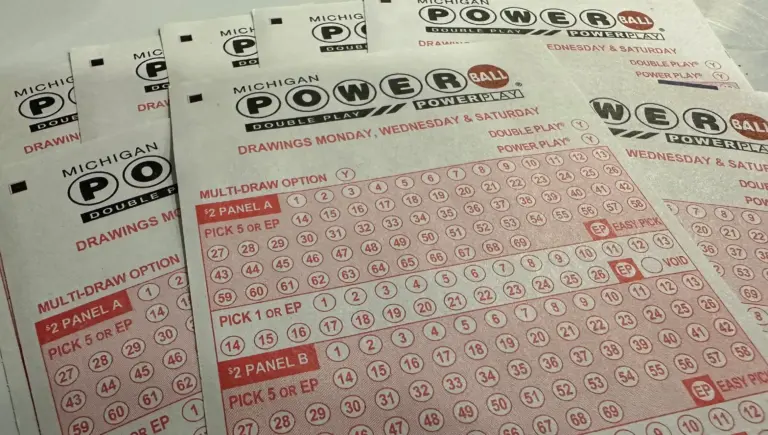
Hopeful gamblers across the country were left waiting for a miracle this weekend as the latest Powerball drawing failed to produce a grand prize winner. The jackpot had climbed to an estimated 516 million dollars, with a lump sum cash option of roughly 211.6 million dollars, but none of the tickets sold managed to match all six required numbers. Those who checked their slips on Saturday night found that the winning combination was 1, 4, 19, 33, and 51, with a Powerball of 15.

While the top prize remains unclaimed, one lucky player in California did manage to hit a significant milestone. By matching all five white balls without hitting the Powerball, that individual secured a prize of one million dollars. Other smaller prizes were distributed throughout the evening, bolstered by a Power Play multiplier of two times which increased payouts for some non jackpot winners.

With no single ticket claiming the massive hoard, the excitement now shifts toward the next opportunity to strike it rich. The lottery will hold its next drawing on Monday night at 10:59 p.m., meaning players have just enough time to grab tickets before the deadline. In states like Michigan, where previous jackpots have topped 800 million dollars, enthusiasts can purchase entries both online and in stores until shortly before ten o’clock on the night of the draw.

Investors fearing they have arrived too late to the artificial intelligence party may find that the real gains are actually still ahead of them. While the prospect of a massive bull market remains enticing, experts warn that a significant correction is likely to strike first, potentially shaking out those without a steady hand. History shows that buying the dip is often a winning strategy, but the current trajectory of the S&P 500 is an extreme statistical outlier. Having climbed for over seventeen years with gains exceeding one thousand percent, the market has far surpassed the historical average for secular bull runs, suggesting that a period of instability is overdue.

Despite these warnings, analysts argue that being late in a cycle does not necessarily mean the end of the road. Using complex wave patterns to map market psychology and price action, some firms suggest we are merely transitioning between phases of growth rather than facing a permanent collapse. Recent turbulence in international markets serves as a prime example, such as the dramatic plunge seen in South Korea’s KOSPI index. Because that index is so heavily weighted toward semiconductor giants like Samsung and SK Hynix, it became ground zero for AI volatility, yet technicians believe this drop was simply a necessary reset before another leg higher.

The focus now shifts toward specific bottlenecks within the AI infrastructure, moving beyond general chips into memory and networking solutions. Companies specializing in high bandwidth memory and energy efficiency are emerging as critical players as AI moves from initial training into the inference phase. From specialized networking hardware to innovative energy providers like Bloom Energy, certain sectors are exhibiting technical setups that could lead to years of further upside. For those willing to weather an imminent short term downturn, the structural demand for AI scaling indicates that the biggest chapter of this financial story has yet to be written.

Federal authorities have arrested Edward Dubrovsky, a Canadian cybersecurity executive known for brokering deals between victims and ransomware attackers. The fifty four year old was taken into custody in the Philadelphia area on Thursday, facing serious federal charges including conspiracy to extort money by threatening the confidentiality of private information and interfering with commerce. According to court documents, Dubrovsky is currently being held at a federal detention center while awaiting transfer to Texas for further legal proceedings.

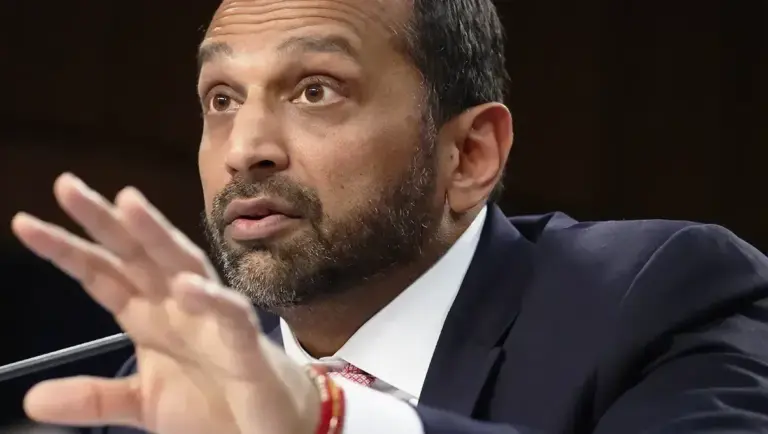
The arrest coincides with an aggressive push by the FBI to dismantle ShinyHunters, a notorious hacking collective that recently targeted the government’s employment portal and allegedly stole data belonging to nearly every employee within the bureau. While officials have not explicitly linked Dubrovsky to this specific breach, FBI Director Kash Patel took to social media on Friday to announce the capture of another suspected co conspirator associated with the group. This move is part of what Patel described as a broader effort to neutralize the network following several high profile incidents involving third party vendors.

Professionally, Dubrovsky operated in a gray area of digital security through his affiliation with CyberSteward, a firm specializing in settlement facilitation and negotiation with threat actors. Rather than focusing solely on defense, his role involved managing the delicate process of paying off hackers to ensure stolen data remained secret or was returned. Investigators now appear to be scrutinizing whether these professional intermediaries were merely facilitating payments or actively conspiring with criminals to profit from cyber extortion schemes.

Citroen is betting on nostalgia and affordability as it prepares to revive one of the most beloved symbols of French motoring. Set to make its grand entrance at the 2026 Paris Motor Show, the new 2CV concept aims to capture the spirit of the original Duck while transforming it into a practical, ultra-compact electric vehicle. Positioned between the tiny Ami and the larger C3, this reimagining focuses on simplicity and playfulness, offering a breath of fresh air in an era dominated by oversized SUVs and complex tech.

While it retains the rounded silhouette and charming proportions of its predecessor, the modern 2CV is actually slightly smaller than the original. This reduction in size is a deliberate move to ensure ease of parking in congested city centers. By keeping the vehicle lightweight, Citroen can avoid using massive, expensive batteries without sacrificing daily usability. To further lower costs, the designers have utilized broad, flat body panels and modular bumpers that can be replaced individually, ensuring that both manufacturing and future repairs remain budget friendly.

The aesthetic is a careful balance of retro charm and contemporary utility. Freestanding round LED headlights pair with a steeply raked windshield and a foldable fabric roof that mimics the breezy feeling of the vintage model. Inside, Citroen has avoided the trend of wall to wall screens in favor of a minimalist cockpit featuring a projected smart vision display and an eight inch touchscreen with comic book inspired graphics. In perhaps its most quirky touch, the car includes Radioen, a removable audio system that allows drivers to take their music with them once they leave the vehicle.

Attention to detail defines this rebirth, with countless nods to history tucked away throughout the cabin. From bakelite inspired accents and checkered upholstery to door pockets specifically designed to hold eggs, every element celebrates the eccentricities of the original brief. Even the pedals feature whimsical icons of turtles for braking and hares for accelerating. If Citroen manages to hit its targeted starting price of approximately fifteen thousand euros, this electric throwback could become one of the most accessible entry points into sustainable urban mobility today.

For decades, investors looked to crude oil as the primary barometer for energy costs and economic health, but a strange shift is occurring in the financial markets. Recent data suggests that bond yields are now tracking diesel prices more closely than crude, reflecting a new reality where refined fuels are the true engines of inflation. Because diesel is indispensable for everything from farming to shipping, its current price spike has trickled down into every sector of the economy, forcing the Federal Reserve toward a more aggressive interest rate strategy to combat rising costs.

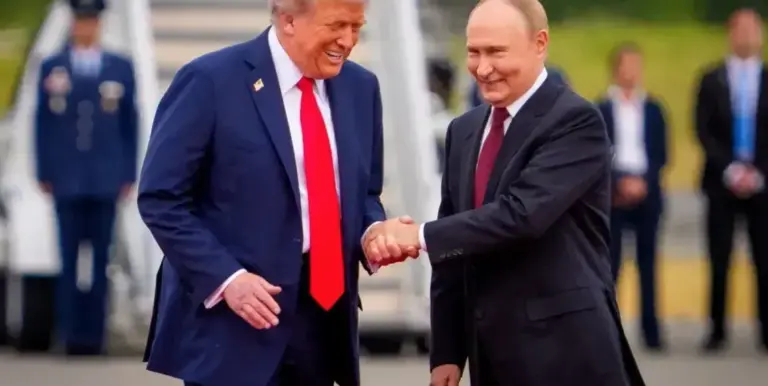
President Donald Trump has attempted to blunt this economic edge through a series of rapid interventions, including an executive order to defer federal taxes on diesel. More surprisingly, he recently announced a deal with Vladimir Putin to import millions of tons of Russian fuel, marking a dramatic pivot from previous sanctions against Moscow. These moves appear designed to provide immediate relief to truckers and farmers ahead of crucial midterm elections, yet analysts suggest these gestures may be far too small to move the needle on actual affordability.

Industry experts argue that importing Russian diesel is essentially rearranging deck chairs on the Titanic, noting that shifting supplies from one customer to another rarely lowers global prices. Furthermore, the political payoff seems slim; polling indicates that even a significant drop in fuel costs would fail to sway the majority of undecided voters. With inflation deeply entrenched and borrowing costs climbing alongside pump prices, there is a growing sense among strategists that no amount of diplomatic maneuvering can undo the damage already done to the American consumer’s wallet.

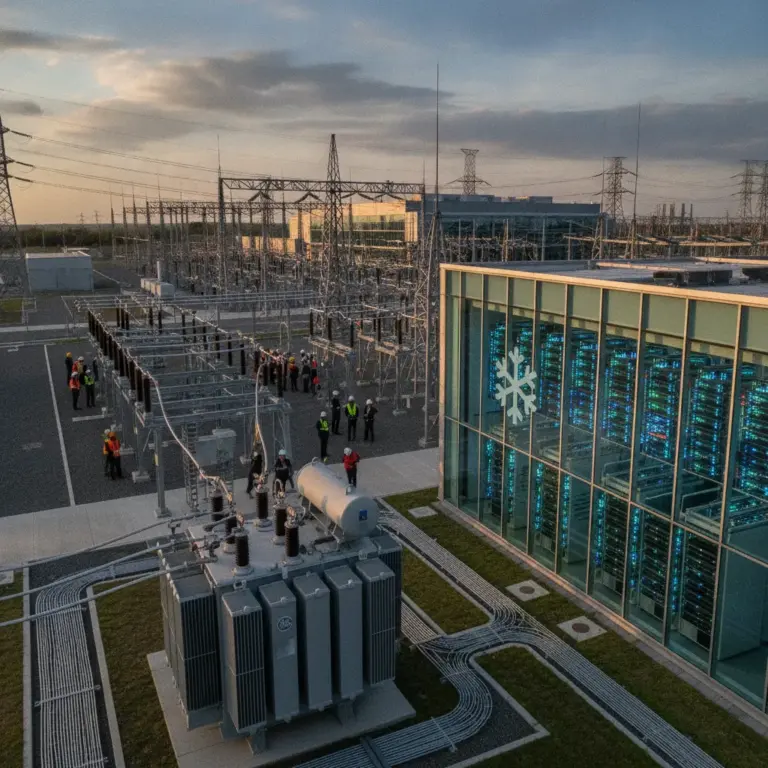
The current surge in artificial intelligence is moving beyond simple software applications and into the heavy lifting of physical and digital infrastructure. Leading this charge are companies like GE Vernova and Snowflake, which have emerged as top picks for investors looking to capitalize on the accelerating demand for AI enabled capabilities. While much of the early excitement centered on chips, the market is now shifting its focus toward the energy systems and data frameworks required to keep those processors running.

GE Vernova is positioning itself as a critical player by providing the gas turbines and nuclear reactors necessary to meet an unprecedented spike in electricity needs. At the same time, Snowflake is leveraging its role in data infrastructure to help enterprises manage the massive amounts of information fueling modern AI models. Both companies are seeing a notable acceleration in revenue growth, signaling that the appetite for industrial scale support is growing just as fast as the algorithms themselves.

This trend extends further into specialized hardware, where firms like ASE Technology are finding success through advanced semiconductor packaging. By streamlining how chips are assembled and integrated, these companies are removing bottlenecks that could otherwise slow down AI deployment. Together, this group of stocks represents a broader shift in investor strategy, prioritizing the essential plumbing of the tech world over purely speculative plays.

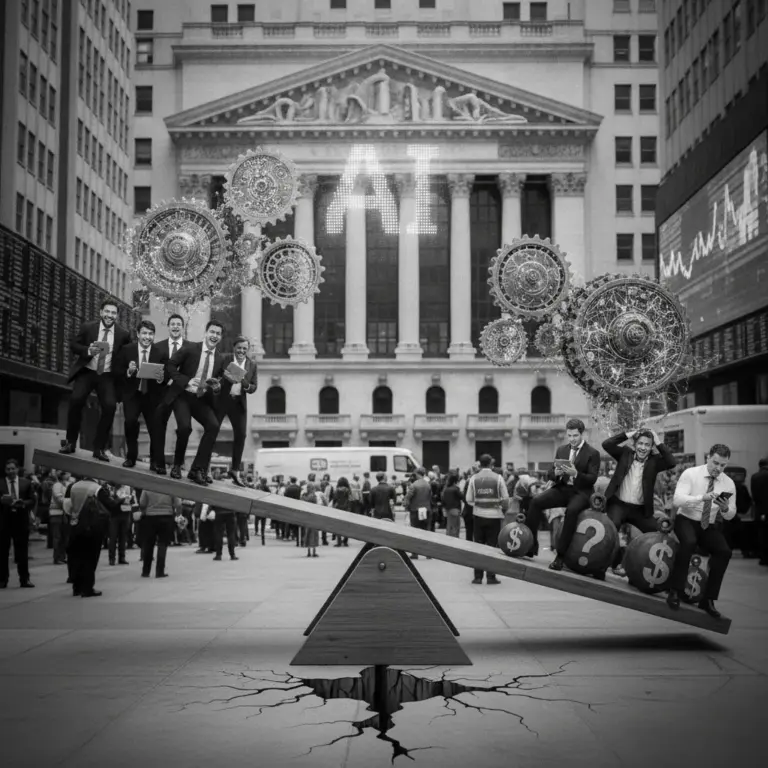
Investors experienced a whirlwind of emotion last week as the artificial intelligence boom continued to drive markets toward record peaks while simultaneously triggering sharp, sudden selloffs. It was a classic tug of war between optimism over future productivity gains and an increasing anxiety that valuations have climbed too high, too fast. For much of the trading session, tech giants seemed untouchable, pushing major indices into uncharted territory as fresh data suggested AI integration is finally beginning to show up on corporate balance sheets.

However, the momentum didn’t hold steady throughout the week. As soon as stocks hit these psychological ceilings, profit taking set in, leading to steep declines that caught many traders off guard. This volatility highlights a growing divide among analysts who wonder if we are seeing a sustainable shift in the global economy or simply a speculative bubble waiting for a catalyst to burst. The swings were particularly violent in semiconductor shares, where massive gains one day were erased by cautious outlooks the next.

Ultimately, the market seems to be searching for a new equilibrium. While the long term promise of generative AI remains the primary engine for growth, investors are now demanding more concrete evidence of revenue rather than just conceptual potential. Until those results become consistent across the board, shareholders should expect this erratic behavior to continue, turning what used to be stable blue chip holdings into some of the most volatile assets in any portfolio.

The Dallas Cowboys suffered an inexplicable defeat at home on Thursday night, leaving fans and analysts stunned by a performance that felt more like a meltdown than a football game. Because the loss occurred during a short week, the team now faces a grueling stretch of downtime to dwell on their failures before they can seek redemption. The atmosphere at AT&T Stadium was one of disbelief as a roster brimming with talent failed to execute the most basic elements of the game, turning what should have been a manageable matchup into a complete disaster.

At the center of the storm is Brian Schottenheimer, whose leadership is under intense scrutiny after failing to prepare his squad for the quick turnaround. It has become increasingly difficult to ignore that since taking over, this team has rarely looked ready to compete, hovering around or below .500 for much of his tenure. While the defense has struggled consistently throughout the season, the responsibility ultimately falls on the head coach to find solutions, yet no answers seem to be coming from the sidelines.

The dysfunction extended across every unit of the team, starting with Dak Prescott who took far too long to ignite an offense touted as one of the league’s best. While some of his turnovers were unfortunate tipped balls, his inability to move the chains early allowed Tampa Bay to dig a hole that proved impossible to climb out of. On the other side of the ball, DaRon Bland continued a historically poor run of form, while Quinnen Williams failed to provide any meaningful pressure against an undrafted rookie quarterback despite being paid as a premier defensive anchor.

Even special teams contributed to the misery, with Nick Sorensen’s group struggling so significantly that it may have influenced coaching decisions regarding field goal attempts late in the game. A critical fumble by KaVontae Turpin further dampened any hopes of a comeback. Amidst the wreckage, only rookies Ryan Flournoy and Malachi Lawrence provided any glimmer of hope through individual effort, but those small victories offered little comfort in a game defined by systematic failure.