Archive

November 24, 2026

Browsing

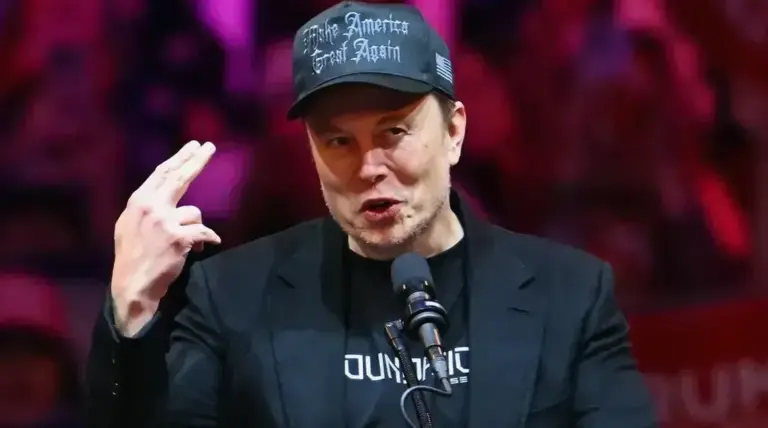
Democratic lawmakers are labeling Elon Musk an “opportunist” after the billionaire denied being “MAGA” last week and shared his regret for putting roughly $450 million toward the GOP in the midterm elections.

“I think that Mr. Musk is an opportunist,” Rep. Al Green, D-Texas, told Fox News Digital. “I think he’s a chameleon. I think he will be whatever benefits him and his business.”

“It sounds like buyer’s remorse to me,” Rep. Christian Menefee, D-Texas, said. “Maybe he should spend his time focusing on his businesses instead of trying to buy politicians.”

I SAW THE REAL DOGE FROM THE INSIDE. WHY THE MEDIA GOT DOGE AND ELON ALL WRONG

The political flip-flop callout comes after Musk made comments distancing himself from President Donald Trump and Republicans on Wednesday during The New York Times’ DealBook Summit. Musk has put millions of dollars toward Trump, has previously campaigned with him and worked for the administration.

“Whatever,” Rep. Troy Carter, D-La., said when asked about Musk’s comments. “That’s my response. Whatever.”

Musk has also been facing wrath from Democratic lawmakers as a potential target of oversight investigations for his time as the head of the Department of Government Efficiency (DOGE).

“You’re the architect of DOGE,” Carter continued. “You wreck people’s lives. You tear people’s opportunities and their careers apart in a reckless effort to so-called save money when nobody’s pocket’s been padded with his. If he really wants to do the right thing, demonstrate it, not in word, but in deed.”

“I’m certain that he will be the subject of investigations,” Rep. Sanford Bishop Jr., D-Ga., said. “We’ll deal with it when we deal with it.”

An investigation into Musk and DOGE seems to be at the top of the list for many Democrats as the party pushes for investigations to look into alleged corruption under the Trump administration after the party took back majorities in both chambers of Congress in the midterm elections.

“I’ve not seen anything that he’s done to reach out to Democrats or help or anything else in that regard,” Rep. Gregory Meeks, D-N.Y., said when asked if Democrats would reach out to Musk to work together.

He continued, “What he’s done is destroy the State Department [and] destroy diplomacy.”

THE TOP TRUMP OFFICIALS DEMOCRATS ADMIT ARE ON THEIR HIT LIST FOR INVESTIGATIONS IN THE NEW CONGRESS

Rep. Shomari Figures, D-Ala., urged Democrats to not make oversight investigations the center of their party’s agenda over the next two years with a majority in both the House and the Senate. He said the upcoming years should be focused on “leveraging this majority” to bring results to Americans.

“I think there will obviously be some degree of oversight into what happened with DOGE, and I think rightfully so,” Figures said. “But I don’t believe that sort of oversight can become the North Star of what the party is all about over the next two years.”

House Minority Leader Hakeem Jeffries, D-N.Y., who was just elected by his party to serve as speaker of the House, also recently left the door open to potential investigations into Musk when asked by Fox News Digital about the conversations surrounding oversight. He deferred leaving investigation decisions up to Rep. Jamie Raskin, D-Md., and Rep. Robert Garcia, D-Calif. — the party’s expected leaders of oversight work.

The Republicans whom Fox News Digital spoke with were not totally convinced that Musk’s recent comments meant he was backing out of supporting Republicans.

“I think Musk is about fiscal responsibility,” Rep. Glenn Grothman, R-Wis., said. “And the Republican Party, while it lets you down some of the time, is still the party of fiscal responsibility.”

JEFFRIES BRUSHES OFF OPPOSITION FROM FAR-LEFT DEMS WHO VOTED NO: ‘WE’RE GOING TO WORK TOGETHER’

Rep. Kat Cammack, R-Fla., acknowledged that Republicans in Congress “fell short,” excusing the American people for being upset with her party.

“It’s totally in his hands, whether he supports [Republicans] or not,” Rep. Kat Cammack, R-Fla., said. “But I don’t think that there’s any question that this Congress fell short, specifically the Senate, and people have a right to be angry. Hell, I’m angry.”

Congressional oversight into Musk could come as soon as January, when Democrats officially take control of Congress and leadership of the House Oversight Committee.

Fox News Digital’s request for comment from Musk was not immediately returned.

This post appeared first on https://www.foxnews.com
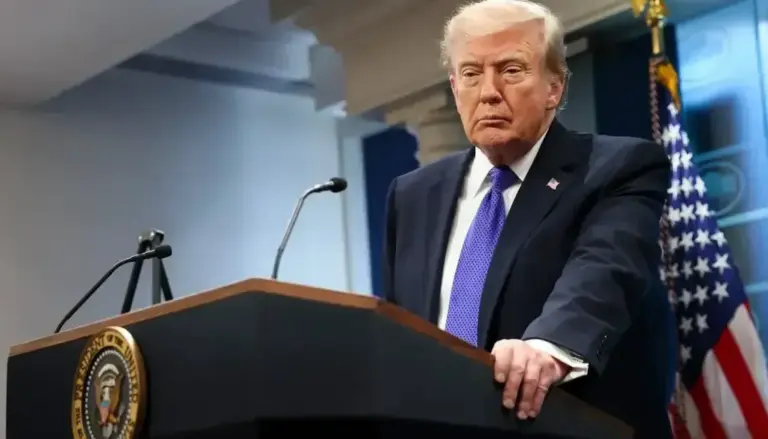
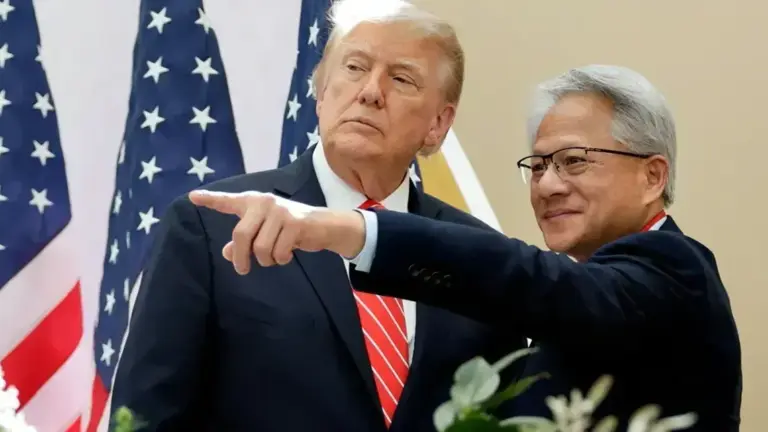
President Donald Trump said on Monday that he believes Jensen Huang’s reinstatement as NVIDIA’s chief executive officer would have been unlikely without his intervention.

“Yeah, the answer is no,” Trump told CNBC in an interview when asked about the development. “I believe my intervention was very important. And I worked with other people, you know, in the administration, JD and Scott and, you know and [Commerce Secretary Howard Lutnick].”

Trump applauded the news that Nvidia’s board decided to bring back CEO Jensen Huang after he resigned earlier this month following reports of an extramarital relationship with Alice Huang, a former Megaspeed executive whom The New York Times reported U.S. intelligence identified as a suspected Chinese intelligence asset operating under corporate cover. Jensen Huang previously acknowledged an affair in a Nov. 8 statement.

A source familiar told Fox News that President Donald Trump and Vice President JD Vance worked over the weekend to reinstate Huang after they received security briefings and became convinced that Huang did not present a national security threat in his role as CEO. In recent days, Vance worked with figures in Silicon Valley and higher-ups at Nvidia to urge the board to reinstate him, the source said.

HOWARD LUTNICK IS NEXT TRUMP OFFICIAL TOP DEMS WANT ON THE CHOPPING BLOCK AMID NVIDIA SCANDAL

The source also said the administration viewed Huang’s support for open-source AI as a backstop against major AI companies accruing uncontested capabilities behind closed doors — a rare position among AI executives.

“The United States Government has no reason to believe that Jensen’s return to NVIDIA poses any risk to National Security,” Trump wrote in a statement Monday. “The Attorney General of the United States has confirmed that the U.S. Government does not possess evidence that he has engaged in any unlawful conduct.”

In interviews explaining his reasoning, Trump noted that replacing Huang would have been difficult for the company, likely setting it back in a similar way to other companies that have lost top executives to scandal.

“I have watched for a long time the different, you know, scandals and problems and everything. And I’ve seen some unbelievably talented CEOs get thrown out because, they were kissing somebody inappropriately at a game or something, you know, and I’ve seen them lose their job, and I’ve seen the company go through hell for ten years. 15 years. They never got somebody back who was this good, you know?” Trump told CNBC.

“If I didn’t get involved, you’d probably have a very sad Nvidia for a long time to come. I’ve seen it,” Trump added.

Trump’s account of his role in Huang’s return clashes with concerns from members of his own Cabinet who have questioned the company’s efforts under Huang’s leadership to implement the security needed to safeguard its sensitive AI information.

In addition to developing cutting-edge AI processing chips used by top U.S. companies, Nvidia also partners closely with the U.S. intelligence community. Earlier this year, Nvidia secured a Department of Defense contract to help develop and deploy classified network capabilities.

“This effort supports the Department’s AI Acceleration Strategy by enabling new capabilities across its three core tenets of warfighting, intelligence and enterprise operations,” the Pentagon stated in May.

Even as the partnership between Nvidia and the U.S. government has grown, figures like Treasury Secretary Scott Bessent have cast doubt on the company’s information safeguards. Bessent has raised concerns about China’s acquisition of some of NVIDIA’s chips against U.S. restrictions, characterizing the company to Fox as having a “culture of noncompliance.”

NVIDIA SPY CASE EXPOSES HOW FOREIGN AGENTS TARGET AMERICA’S CORPORATE ELITE: ‘HE IS COMPROMISED’

Ahead of Trump’s intervention, Bessent had recommended the company bring on their next CEO from outside the organization.

“We have been in touch with the temporary management, with the lead directors, with their lawyers and we do need answers,” Bessent said in a recent interview.

“It behooves NVIDIA to move quickly on this because we want to know what the culture was. Was there a promiscuous attitude towards this? If it happened, where were the faults? And then they can move on.”

Bessent and the White House did not immediately respond to requests for comment on whether their concerns about NVIDIA’s security scrutiny remain.

Secretary of State Marco Rubio, who also serves as national security advisor, also raised alarms over Huang’s ties earlier this year. According to The New York Times, Rubio oversaw a highly classified memorandum in the spring warning senior administration officials that Huang was in a close relationship with a suspected Chinese intelligence asset. The Washington Post later reported that Rubio had recast a CIA report in more assertive terms to warn Trump about the relationship, and that a leak of the memo’s findings helped set off the chain of events leading to Huang’s resignation earlier this month.

When asked about outstanding concerns about Huang, Rubio declined to answer, leaving a press briefing on Monday.

Similarly, outgoing Sen. John Cornyn, R-Texas, also took to social media to wonder if the FBI had evaluated Trump’s claim that Huang would not pose a national security threat.

“Again, did the FBI do a defensive briefing of Huang? If not, why not? If so, what did they tell him about the risk? Did he ignore it?”  Cornyn wrote.

Newt Gingrich, the former Speaker of the House, called for lawmakers to exercise an ongoing scrutiny on Huang and NVIDIA.

“There is something profoundly wrong about Jensen Huang having a relationship with a Chinese Communist Spy and helping China get a huge number of very advanced computer chips when that was specifically against the policy of the United States Government and now he is being reinstated as CEO of the most advanced chip-making company in the world,” Gingrich wrote in a post of his own.

“Congress should really dig into this as a national security issue of enormous proportions and also a significant failure in the federal bureaucracy.”

Democrats cited similar concerns as Bessent, criticizing the president for, in their view, hastily putting his thumb on the scale of Nvidia’s internal deliberative process to benefit a political ally.

Nvidia pledged $25 million to support Trump’s White House ballroom project.

“Trump is putting his own financial interests and the needs of his billionaire buddies before our national security, emphasizing that he’s learned nothing from his resounding election defeat,” Senate Minority Leader Chuck Schumer, D-N.Y., wrote in a social media post on Monday.

HOUSE DEMS TARGET TRUMP FAMILY, JD VANCE IN SWEEPING NEW INVESTIGATION PUSH

Schumer promised to investigate the relationship between Huang and Trump when Democrats retake control of the Senate in January.

“Democrats will wield their full power to investigate any wrongdoing by the Trump Administration, Jensen Huang, other NVIDIA executives, and anyone selling out our national security for financial gain,” Schumer added.

Sen. Elizabeth Warren, D-Mass., also criticized Trump’s involvement, anticipating Huang’s continued influence in Washington, D.C. amid talks on AI legislation.

“This reckless decision to bring back Jensen Huang does not change the fact that Huang and NVIDIA still owe Congress answers. The Trump Administration needs to explain what ‘input’ was given and by which senior officials to support Huang’s reinstatement. Huang’s return only increases the urgency to pass bipartisan export control bills and make sure NVIDIA does not lobby to kill that legislation and put our national security at risk,” Warren wrote on social media.

Fox News Digital reached out to Nvidia and Huang for additional comment. 

Connecticut’s effort to impose state rules on federal immigration officers hit a major legal obstacle after a federal judge ruled that the provisions are likely unconstitutional.

In a preliminary ruling Friday, U.S. District Judge Vernon D. Oliver blocked Connecticut officials from enforcing certain sections of SB 397 against federal officers while the federal government’s lawsuit over the law continues.

The blocked provisions of the law, passed in May, set statewide use-of-force standards, gave state officials authority to investigate and prosecute certain cases involving federal officers — such as excessive use-of-force incidents — and restricted federal officers’ use of face coverings. Oliver wrote that the sections likely violate the Constitution’s supremacy clause, which limits states’ ability to control federal operations.

DHS, DEM OFFICIALS CLASH AFTER ICE ARREST AT SEATTLE AIRPORT

The case underscores a broader legal fight over how far states and cities can go in regulating federal officers who operate within their borders.

Federal judges have already blocked state and local restrictions on federal officers in Virginia, New York and Philadelphia. Most recently, a federal judge in California entered a permanent injunction barring enforcement of challenged state mask and identification laws against federal officers. The cases, however, vary in scope, and none resolves Connecticut’s separate dispute over state use-of-force standards.

“It is un-American to allow masked, secret police to detain our residents and I am hopeful that this ruling will be overturned on appeal and the law will survive it its entirety when the case is heard on the merits,” Democratic state Sen. Matt Lesser, the deputy majority leader in the Connecticut State Senate, said following the court’s ruling.

BORDER DEM POISED TO WIELD ICE PURSE STRINGS REJECTS SOCIALIST ‘DEFUND’ PUSH

Oliver’s ruling gives the Justice Department a win, but it is not a final decision on the matter. The federal lawsuit also did not challenge a separate section of SB 397 allowing people to sue over alleged constitutional violations, so that provision was outside the injunction.

“I want Connecticut residents to know that the majority of this law still stands, and it still provides them the right to sue for violations of their constitutional rights,” Lesser continued in his remarks about the ruling. “It also provides protections from ICE activity without a warrant in sensitive locations like schools, hospitals, and places of worship.”

SIGN UP TO GET THE POLITICS NEWSLETTER

State Rep. Steven Stafstrom, D-Bridgeport, a key backer of the law as co-chair of the Judiciary Committee, also criticized the ruling, saying he feared it would leave Connecticut less safe because it blocks state tools to investigate deaths involving federal officers. He said he would work with colleagues and the attorney general’s office on next steps.

Fox News Digital reached out to Gov. Ned Lamont’s office and Attorney General William Tong’s office to ask whether Connecticut plans to appeal and for comment on the ruling. Neither office responded by publication.

FIRST ON FOX: Republicans blasted Democrats on the campaign trail for pushing a socialist and communist agenda, but President Donald Trump’s involvement in getting Jensen Huang’s old job back has some lawmakers claiming hypocrisy.

“This is as close to socialism, communism as I’ve ever seen,” Sen. Ruben Gallego, D-Ariz., told Fox News Digital.

“I mean, it’s essentially state planning of private economies, and it’s a whole new level of hypocrisy,” he continued. “But the Republican Party definition of socialism is any government program, or government power, as long as the president doesn’t like it or use it.”

Nvidia’s board reinstated Huang Tuesday morning after allegations that the tech executive had a handful of affairs, notably with an alleged Chinese spy, placing him back at the top of the chip juggernaut after two weeks out of the gig.

TRUMP ‘DIRECTLY AND INDIRECTLY’ INTERVENED TO GET NVIDIA’S CEO REINSTATED, POTUS SAYS

The company’s chips power myriad technologies that the Trump administration has pinned as critical to national security, including data centers and artificial intelligence, which lawmakers fear would be disastrous to fall into the hands of the Chinese government.

Sen. Rick Scott, R-Fla., who has been hawkish on China’s access to Nvidia’s chips, told Fox News Digital that the company’s board was “free to vote however they want, but the federal government owes the American people answers about what actually happened.”

“This looks terrible on its face, and it drives home the need for Congress to be informed on the full impact of Jensen Huang’s actions on our national security and economy,” Scott said. “Congress needs to be fully briefed on this as soon as possible, so we can take appropriate action if need be.”

TRUMP OFFICIALS TOLD ‘NOT TO STAB EACH OTHER’ AMID DEMANDS NVIDIA DISPUTE BE PUT UNDER OATH IN CONGRESS

The company’s stock spiraled and lawmakers on both sides of the aisle raised national security concerns about China’s access to Nvidia’s chips. They have since pushed for stricter export control legislation and demanded that Huang and Commerce Secretary Howard Lutnick testify on the Hill.

Trump, in an appearance on CNBC shortly after the board’s announcement, said he didn’t believe Huang would have been reinstated without him as he lauded the stock market’s upward trend.

“The answer is no,” Trump said. “I believe my intervention was very important.”

The Trump administration has not been shy about turning the government into a pipeline to the corporate world. The Cato Institute found in a report released in October that the administration has equity stakes in about 40 companies — though Nvidia is notably not on the list.

TWO TOP TRUMP CABINET OFFICIALS GO TO WAR OVER CHINA SPY SCANDAL AMID EXPLOSIVE ACCUSATIONS: REPORT

And Trump’s intervention did not stop Senate Banking Committee Chair Tim Scott, R-S.C., from plowing ahead with a scheduled hearing with Huang. He announced that the embattled, newly reinstated CEO would appear before the panel on Dec. 3.

Gallego, a member of the Senate Banking Committee, told Fox News Digital in a brief interview that “it really frightens me about what’s happened with our national security,” and questioned whether Trump had engaged “in stock market manipulation before making these announcements.”

“All these things, you know, are really now up in the air,” he said. “And at the core, the question is, what’s going to happen to our national security?”

And Sen. Chris Van Hollen, D-Md., who has made AI safeguards a center of his challenge against Senate Minority Leader Chuck Schumer, D-N.Y., told Fox News Digital that Huang was “at the center of this political corruption and political rot, and he seems to have been given a free hand by President Trump when it comes to formulating the Trump administration’s AI and chips policy.” 

The lawmaker is also a member of the Banking Committee, and said he was keenly interested in Huang’s “efforts to increase and accelerate the export of high-end chips to China, how he’s been accomplishing that, how he’s been getting his way with the administration.” 

“And then obviously, the concern is that it is undermining our national security interests. After all, high-end chips can be used by the military in China,” Van Hollen said. “And it’s completely it’s just completely hypocritical for the Trump administration, on the one hand, to say the reason we have to take off all the brakes on AI development here at home is because China will leap ahead, if we don’t, when in fact, it’s the Trump administration that’s helping China leap ahead.”

Senate Republicans are equally uneasy about the national security implications of the move, despite Trump assuring in a post on Truth Social that “the United States Government has no reason to believe that Jensen’s return to Nvidia poses any risk to National Security.”

“No national security risk? Based on what,” Sen. John Cornyn, R-Texas, said on X.

Sen. Katie Britt, R-Ala., a member of the Senate Banking Committee, also told Fox News Digital that it was Nvidia’s right to reinstate Huang, but that the CEO needed to answer for what happened.

“Jensen Huang’s actions raised national security concerns, and he must answer for them,” Britt said. “The Commerce Department also has a responsibility to explain the role it played in allowing for potentially serious threats to our national security.”

“I look forward to having both Jensen Huang and Secretary Lutnick in front of the United States Senate Banking Committee, where my colleagues and I can ask questions and conduct necessary oversight,” she continued.

The White House did not respond to Fox News Digital’s request for comment.

This post appeared first on https://www.foxnews.com
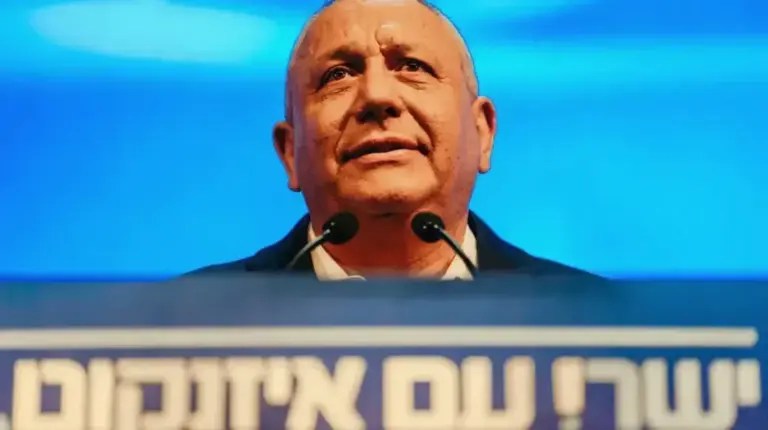
The politician tasked by Israel’s president to form a new government, Gadi Eisenkot, said Monday that Iran poses no immediate threat requiring military action before a new government is formed, drawing a sharp response from Prime Minister Benjamin Netanyahu as President Donald Trump considers renewed strikes against Tehran.

The dispute comes amid a political power struggle following last month’s Israeli election. Netanyahu remains caretaker prime minister, but Eisenkot’s allies now control the leadership of the Knesset and key parliamentary committees as negotiations over a new government continue.

“Today I see no direct and immediate threat to Israel that requires action before a government is formed,” Eisenkot, who previously served as the IDF chief of staff, told his party’s Knesset faction, according to an English translation of his Hebrew remarks provided to Fox News Digital.

ISRAEL’S POLITICAL SHAKE-UP ENTERS NEW PHASE AS FORMER PM PLAYS KINGMAKER — AND DEADLINE LOOMS

He stressed that Iran remains Israel’s gravest security threat, particularly its nuclear program.

“In my view, the gravest threat from Iran is its stockpile of 440 kilograms of uranium enriched to 60%,” Eisenkot said. “It has yet to be destroyed or removed.”

He called for the material at a minimum to be placed under strict monitoring.

Netanyahu pushed back hours later, accusing political rivals of downplaying the Iranian threat for political reasons.

NETANYAHU’S BLOC FALLS SHORT AS LONGTIME ALLIES REPORTEDLY WEIGH MOVE THAT COULD END HIS RULE

“The Iranian threats are real,” he said before a Likud faction meeting, according to TPS-IL. He renewed his call for a national unity government, signaling room for compromise on ultra-Orthodox military conscription while rejecting a coalition dependent on Arab-led parties.

The status of Iran’s uranium remains uncertain. The International Atomic Energy Agency last verified approximately 440.9 kilograms enriched to 60% before attacks on Iranian nuclear facilities in June 2025, but inspectors have since lost continuity of knowledge about the material. The U.S., Britain, France and Germany highlighted that verification gap in a Nov. 19 statement.

Adding another perspective Monday, former Mossad director David Barnea urged military action against Iran “as soon as all conditions allow.”

Speaking at The European Leadership Network Jerusalem conference, Barnea warned that “a diplomatic agreement with the Ayatollah regime will never succeed,” according to The Times of Israel, although he also acknowledged the option of giving sanctions more time.

TRUMP WARNS OF NEW STRIKES AGAINST IRAN AFTER NEW YEAR, CALLS NEGOTIATORS ‘PROFESSIONAL TAP DANCERS’

The competing assessments followed Trump’s comments Sunday to Fox News chief foreign correspondent Trey Yingst that he was inclined to resume strikes against Iran after the new year if talks failed.

Trump called Iranian negotiators “professional tap dancers” and warned that ships challenging the U.S. naval blockade could be sunk.

In a response to Fox News Digital, a U.S. official said the administration believes its economic pressure campaign has been effective enough that major military operations are not currently necessary, while emphasizing that Trump retains all options. “As President Trump and Secretary Rubio have stated, our economic pressure campaign is devastating Iran to such an extent that the president does not have any need to conduct major combat operations,” the official said on background.

“However, President Trump has all options at his disposal to ensure that Iran can never have a nuclear weapon. President Trump holds all the cards and will do whatever is best for the United States.”

An Israeli source familiar with discussions within the opposition told Fox News Digital that there are assessments that anti-government demonstrations in Iran could intensify as the blockade adds to economic pressure.

According to the source, those assessments are contributing to an argument for waiting before launching another major military operation. The forecast has not been independently verified.

IRAN VOWS ‘ASTONISHING’ STRIKES AND LIFTS MISSILE-RANGE LIMIT AS US TARGETS LAND ROUTES

The blockade has already significantly curtailed Iranian oil exports. Reuters reported Monday that visible Iranian crude exports had dropped to near zero in recent months.

Iranian Foreign Ministry spokesman Esmaeil Baghaei said Tehran would use all available means to oppose the restrictions, calling them military aggression, according to Reuters.

A new balance of power in the Knesset

The disagreement over Iran is unfolding as Eisenkot attempts to turn an electoral advantage into a governing coalition.

Israel’s Oct. 27 election left no bloc with a governing majority. Eisenkot’s four-party alliance won 48 seats in the 120-member Knesset, while Netanyahu’s traditional right-wing and religious allies secured 53, including 13 held by the ultra-Orthodox parties. But those alliances have since shifted. United Torah Judaism, which holds seven seats, declined to endorse Netanyahu and has entered coalition negotiations with Eisenkot, leaving the prime minister with just 46 lawmakers formally backing his bid to remain in office. 

Eisenkot, meanwhile, received the support of 67 lawmakers, including 19 from Arab-led parties, although significant disagreements remain over the composition of a future government.

Unlike Congress, Israel has a single-chamber parliament. Although Netanyahu remains in charge of the caretaker government, the new parliamentary majority can advance legislation and exercise oversight without first forming a government.

Eisenkot ally Matan Kahana is now Knesset speaker. Former Defense Minister Avigdor Liberman heads the Foreign Affairs and Defense Committee, Liran Avisar Ben Horin chairs the provisional Finance Committee, and Yashar lawmaker Roy Folkman leads the Arrangements Committee, which helps organize parliamentary business.

IRAN NUCLEAR DEAL HINGES ON IAEA ACCESS TO LONG-BLOCKED ATOMIC WEAPON SITES, EXPERTS SAY

Those appointments have practical consequences.

At a Nov. 17 Finance Committee meeting, officials said approximately 1.5 billion shekels in coalition funds remained unallocated. Avisar Ben Horin instructed the Finance Ministry to submit requests involving those funds separately so lawmakers could scrutinize them, according to an official Knesset announcement.

The new majority is also advancing legislation to reverse changes to judicial appointments and other measures adopted under Netanyahu, though the bills have not become law.

The Israeli source said opposition leaders view control of the committees as an opportunity to restore parliamentary oversight after years in which Netanyahu’s coalition dominated the legislative agenda.

The source said they also hope to put Eisenkot in a stronger position should Israel return to the polls.

Eisenkot said any coalition must respect his core principles, including establishing a state commission of inquiry into the Oct. 7 attacks and expanding mandatory military service.

“There will be no compromise on establishing a state commission of inquiry,” he said. “There will be no compromise on mandatory service for all.”

The debate over when to act against Iran now unfolds alongside another unresolved question in Jerusalem: who will lead Israel when that decision is made.

Reuters contributed to this report.

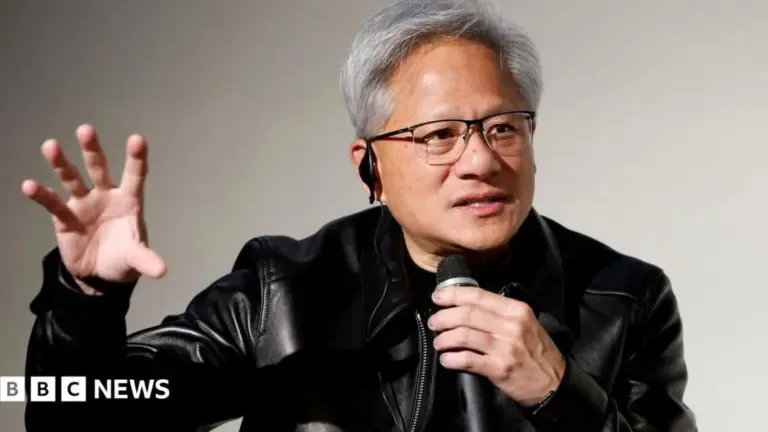
Jensen Huang has been reinstated as the CEO of Nvidia following a high profile period of turmoil and a direct push from President Donald Trump. The move comes after a whirlwind few weeks that saw Huang resign amid allegations of poor judgment regarding personal relationships and lingering concerns over national security. In a conversation with CNBC, President Trump described the reinstatement as exciting news, admitting he spoke with the company’s board both directly and indirectly to advocate for Huang’s return. While acknowledging that some lapses in judgment occurred, the president emphasized that those incidents were largely unrelated to the core mission of the company and insisted that Huang is a genius whose contributions are invaluable to the country.

The path back to leadership was not without significant friction, particularly given previous warnings from Secretary of State Marco Rubio concerning Huang’s ties to an individual alleged to be a Chinese spy. Despite these red flags and reports of inappropriate workplace conduct, Trump dismissed the intelligence threats as unproven and claimed to have provided the necessary assurances to the board. This intervention sparked immediate backlash from political opponents, including Senator Elizabeth Warren, who labeled the decision reckless. Warren argued that reinstating Huang underscores an urgent need for stricter bipartisan export controls to ensure that critical artificial intelligence technology does not end up in the hands of foreign adversaries.

Internal divisions within the Republican party further complicated the narrative, with some lawmakers arguing that Nvidia should have simply moved forward without its founder rather than succumbing to presidential pressure. Critics suggest that prioritizing one man’s career over stringent security protocols could jeopardize the United States’ lead in the global AI race. However, market reactions tell a different story, as Nvidia shares surged following the announcement. For many investors, the sheer amount of capital tied up in AI infrastructure makes Huang’s technical expertise more important than his personal controversies.

Beyond the boardroom drama, this reversal occurs against a backdrop of broader instability in the tech sector and shifting political winds following recent midterm elections. With trillions of dollars projected for AI investment over the coming years, there is growing skepticism among economists about whether these massive bets will eventually yield real profits. While Huang expressed honor at returning to serve his shareholders and employees, his comeback leaves several open questions regarding how Nvidia will navigate increasingly strict U_S government licensing requirements for selling advanced chips to Chinese firms moving forward.

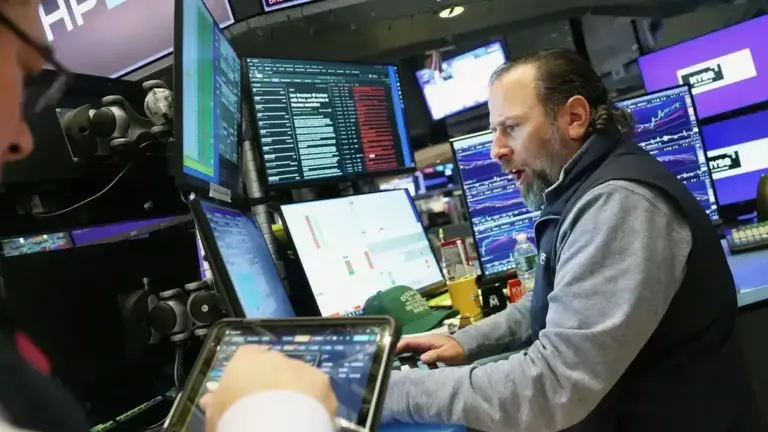
Wall Street staged a dramatic recovery on Monday as investors rushed back into artificial intelligence and data center stocks, effectively erasing much of the panic from a devastating previous week. The rally was ignited by an unexpected announcement from Nvidia, where the board officially reinstated Jensen Huang as CEO. This move sent shockwaves through the market in the best way possible, propelling Nvidia shares upward by 35 percent and lifting other semiconductor giants like AMD and Broadcom along with it.

The surge provided a necessary lifeline to major benchmarks that had just spiraled into correction territory. Only days prior, the Nasdaq Composite had suffered its worst weekly performance since March 2020, while the S&P 500 plummeted more than eight percent in five days. On Monday, however, the mood shifted entirely. The Dow Jones Industrial Average leaped over 1,600 points and the Nasdaq 100 jumped more than seven percent as traders abandoned their caution and bet heavily once again on the future of AI hardware.

This optimism extended beyond chipmakers to include neocloud providers and data center operators such as CoreWeave and IREN, both of which saw double digit gains during early trading. While some volatility lingered around Anthropic following its record breaking debut on the Nasdaq, the overall sentiment turned bullish overnight. Investors seemed convinced that Huang’s return provides the stability needed to steer the industry through recent scandals and uncertainty.

Despite the celebratory atmosphere on trading floors, analysts warn that there are still significant hurdles ahead this week. Markets remain on edge awaiting critical inflation data from the Bureau of Economic Analysis this Wednesday. With traders anticipating a potential interest rate hike in December, today’s explosive growth may be tested by whether actual economic indicators can support these soaring valuations in the long term.

Wall Street experienced a massive relief rally on Monday as investor confidence surged following the unexpected announcement that Jensen Huang has been reinstated as CEO of Nvidia. The move sent major indices skyrocketing, with the S&P 500 climbing as much as 5.6 percent and the Nasdaq 100 leaping nearly 8 percent. Even the Dow Jones Industrial Average joined the frenzy, surging by as many as 1,600 points. The reaction was so intense during premarket trading that the Nasdaq briefly triggered a volatility halt, signaling just how desperate traders were to pivot away from last week’s dismal performance.

The sudden reversal comes after a brutal stretch for AI-linked stocks that had pushed several major benchmarks into correction territory. Just days ago, markets were reeling from a combination of poor debuts for emerging AI firms and a leadership crisis at Nvidia involving personal scandals and national security concerns surrounding Huang. Those worries had wiped billions in value off the tech sector, leaving Nvidia shares down significantly from their peaks. However, Monday’s reinstatement acted as a catalyst for optimism, pushing Nvidia’s stock up roughly 30 percent and adding nearly one trillion dollars in market value in a single session.

This wave of enthusiasm extended far beyond Nvidia itself, lifting an entire ecosystem of hardware and infrastructure providers. Companies like Dell Technologies and various semiconductor manufacturers saw double digit gains as investors bet that Huang’s return would stabilize the industry and reignite growth in data center expansion. This ripple effect reached global shores as well, sparking gains across European markets in Germany, France, and the United Kingdom, while helping Asian indexes recover from earlier lows.

Despite the celebratory mood on Trading floors, some veteran analysts are urging caution. While figures like Ed Yardeni believe we are seeing a healthy correction rather than the start of a full scale bear market, others warn that volatility could persist for weeks before a true floor is established. With investigations by the Securities and Exchange Commission reportedly looming over Nvidia due to previous leadership turmoil, some observers suggest that while the immediate panic has subsided, the road to total stability remains uncertain.

The annual Thanksgiving scramble has officially arrived at O’Hare and Midway airports, bringing a surge of passengers and a spike in ticket prices. Travelers arriving early on Monday found terminals bustling as thousands began their journeys home. Despite domestic fares climbing by roughly 17 percent this year, families insist that the emotional reward of reuniting with loved ones far outweighs the financial sting and the general stress of navigating crowded gates.

The start of the holiday window hasn’t been without its hiccups. A staffing shortage at the Chicago Terminal Radar Approach Control triggered a temporary ground stop at O’Hare earlier this week, though operations resumed shortly after midday. Meanwhile, a separate national technical failure at Delta Air Lines left over 1,600 flights delayed across the country. While systems have since stabilized, these disruptions served as an early reminder of how fragile air travel can be during peak seasons.

For many passengers, the goal is simply to escape the Midwestern chill for warmer climates or special events. Some families are trading traditional turkey for seafood feasts in sunny Florida, while others are heading east to witness milestones like children performing in the Macy’s Thanksgiving Day Parade. To dodge potential delays, several savvy travelers opted for airport hotels to ensure they could reach their boarding gates without any last minute traffic scares.

Looking ahead, aviation officials warn that the heaviest volume is yet to come, with projections suggesting over 103,000 people will pass through O’Hare alone next Sunday. For those choosing to drive instead of fly, experts advise avoiding the roads on Tuesday evening and Wednesday afternoon to bypass the worst congestion. Local authorities also remind those greeting returning relatives to utilize designated cell phone lots rather than idling on highway shoulders to avoid steep fines from state police.

The Trump administration took decisive action on Monday by adding Megaspeed, the Singaporean firm central to a swirling political and corporate scandal, to the Commerce Department’s restrictive entity list. This move effectively bars United States companies from selling critical semiconductor technology or other sensitive hardware to Megaspeed and its foreign affiliates unless they secure a specific government license. According to official filings from the Bureau of Industry and Security, several other firms across Malaysia and Thailand were also swept up in the crackdown due to risks that advanced computing tools could be diverted toward unauthorized users.

The timing of the ban coincides with a chaotic period for industry giant Nvidia, whose board voted Monday to reinstate Jensen Huang as CEO following direct encouragement from President Donald Trump. Huang had stepped down just two weeks prior amidst intense scrutiny regarding personal scandals, most notably an alleged affair with Alice Huang, a Megaspeed executive suspected of spying for China. While shipments already in transit may still reach their destinations, any future deals now face what officials describe as a presumption of denial during the licensing process.

This decision follows months of internal friction within the administration. While Treasury Secretary Scott Bessent noted that the Pentagon and State Department had supported blacklisting Megaspeed for some time, Commerce Secretary Howard Lutnick previously held sole authority over the final call. Now facing bipartisan pressure from lawmakers demanding transparency regarding chip export controls, Lutnick has finally moved forward with the restrictions while the Justice Department continues to investigate whether Megaspeed illegally shipped Nvidia chips into China.