Archive

October 2026

Browsing

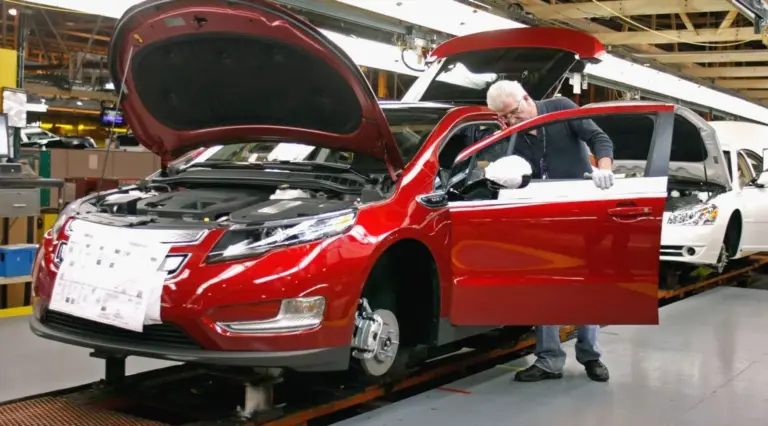
General Motors is preparing to bring hybrid vehicles back into its United States lineup, acknowledging that consumers aren’t yet ready to make a full leap into all-electric driving. Mike Anderson, GM’s vice president of propulsion engineering, recently emphasized that the company is listening closely to its customers and intends to provide the variety of powertrains that drivers are actually asking for. This shift comes after years of the automaker focusing almost exclusively on battery-electric vehicles, a strategy that left them sidelined while competitors capitalized on the surging popularity of gas-electric blends.

The decision reflects a broader trend in the American auto market where hybrids have become the primary growth engine for electrification. Recent data from Cox Automotive shows a significant spike in hybrid sales, which far outpace the adoption rate of fully electric cars as buyers grapple with high gas prices and lingering concerns over charging infrastructure. While GM maintains that its ultimate destination remains an entirely electric future, leadership admits that reaching that goal requires a diverse technological bridge to keep drivers satisfied in the interim.

Despite the confirmation that hybrids are returning, GM remains tight-lipped about specific release dates and models. Industry analysts suggest that plug-in hybrids could start appearing across various portfolios, from SUVs like the Equinox to heavy-duty trucks like the Silverado, potentially arriving between late 2027 and early 2028. Company executives have historically been cautious about these intermediate technologies due to their added complexity and cost, but current market pressures and evolving emission standards are making a return to hybrids inevitable.


Thousands of consumers across more than two dozen states may need to check their refrigerators after the U.S. Food and Drug Administration announced a voluntary recall of over 122,000 cases of Gatorade. The alert centers on specific batches of Lemon Lime, Lemon Lime Zero, Orange, and Orange Zero flavors sold in 28 ounce bottles. According to officials, these particular drinks contain Yellow No. 5 and Yellow No. 6 food dyes that were not properly listed on the product packaging.

The FDA has categorized this as a Class II recall, which suggests that while the risk is generally low, consuming the affected beverages could lead to temporary or reversible health issues. For most people, these dyes are harmless common additives used to maintain consistent coloring in processed goods. However, those with known sensitivities or allergies to aspirin may be at a higher risk for experiencing an allergic reaction, such as a mild rash or asthma symptoms.

To determine if their drinks are part of the recall, customers should look for lot dates falling between April and June of 2027. The agency recommends checking the official FDA website for a comprehensive list of impacted dates and distribution locations. While PepsiCo has been contacted for further comment regarding how the labeling error occurred, the company’s primary focus remains removing the mislabeled stock from store shelves nationwide.

Lucid Group is feeling the pinch of a cooling electric vehicle market, reporting a 6.7 percent dip in year over year deliveries for the third quarter. The luxury automaker delivered 3,806 vehicles between July and September, falling short of the 4,078 units moved during the same period last year. This decline comes as the company intentionally throttles its manufacturing process to avoid piling up unsold inventory in an environment where consumer appetite for high end EVs has slowed.

The shift marks the first full quarter since Lucid implemented an operational reset under new CEO Silvio Napoli, who took the helm in June. As part of this strategic pivot, the company reduced operations at its Arizona plant from two shifts down to one. While overall annual deliveries remain slightly higher than they were a year ago, the recent drop highlights the difficulty Lucid faces in balancing aggressive growth targets with actual market demand.

To stabilize its finances, Lucid is hunting for roughly 1.4 billion dollars in cash flow improvements throughout the current year. These efforts involve slashing capital expenditures and reducing operating costs, while also aggressively managing existing vehicle inventory to free up hundreds of millions of dollars. Despite these internal shakeups and heavy backing from Saudi Arabia’s Public Investment Fund, investors remain cautious; shares have plummeted more than 60 percent so far this year.

Wall Street remained largely unfazed by Monday’s specific delivery numbers, with shares ending the day nearly flat despite the volume drop. Market analysts will be looking for deeper insights into the company’s recovery trajectory when Lucid releases its comprehensive third quarter financial results on November 9th after the closing bell.

Elon Musk has officially returned to the trillion dollar club following a sharp climb in SpaceX shares on Monday. The stock jumped nearly eight percent to reach its highest point since mid June, pushing Musk’s total net worth to approximately one point zero three trillion dollars when combined with his Tesla holdings. This financial rally comes on the heels of a bullish note from Morgan Stanley analysts who described the current share price as cheap and set an ambitious price target of three hundred dollars per share.

The surge in investor confidence follows a whirlwind period of operational success for the aerospace giant. Just last week, SpaceX executed several historic missions in a single day, transporting a NASA crew to the International Space Station while simultaneously launching Google AI chips into orbit. Much of the excitement now centers on the upcoming test flight of Starship, the massive reusable rocket that promises to revolutionize satellite deployment and deep space travel. Analysts suggest that if SpaceX can successfully catch the Starship upper stage during its next landing attempt, it could trigger another massive wave of growth for the company.

Beyond rockets, SpaceX is leveraging its expanding footprint in artificial intelligence to drive revenue. By integrating xAI and acquiring Cursor, the company has turned itself into a critical infrastructure provider, renting out immense computing capacity to rivals like Google and Anthropic despite its own Grok model struggling to gain market dominance. These technological strides are bolstered by Musk’s strengthening relationship with the federal government, evidenced by his recent appointment as co lead of Project Meridian, a Pentagon initiative focused on future military capabilities.

While Wall Street celebrates these gains, some political figures are voicing concerns over the concentration of such vast wealth. During a recent New York City Council hearing on AI regulation, Councilmember Shekar Krishnan pointedly noted that AI has inflated corporate valuations and increased the fortunes of executives like Musk at the expense of public resources. Despite these criticisms and his absence from the regulatory hearings, Musk continues to align himself closely with current political trends, recently announcing plans to rename his AI division to SpaceXSI in keeping with new branding preferences from President Trump.

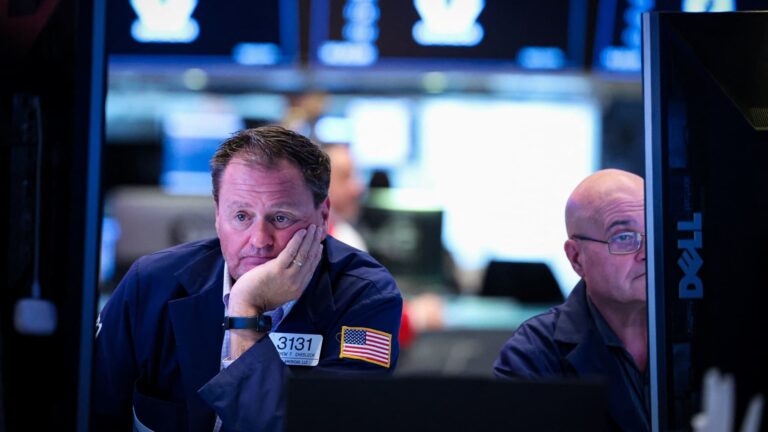
Wall Street is stepping into a new trading month with cautious optimism as stock futures ticked higher on Wednesday evening. This modest recovery comes after a turbulent close to the third quarter, characterized by a volatile September that saw the Dow Jones Industrial Average struggle significantly while the Nasdaq managed to hold its ground. Traders are now balancing a slightly cooling inflation picture against the pressure of surging Treasury yields, which have recently climbed toward levels not seen in nearly two decades.

The tension in the market centers largely on the Federal Reserve and its upcoming interest rate decision at the end of October. While recent data suggests inflation may be easing, the 10 year Treasury yield recently breached 5.3 percent and the 30 year yield reached heights unseen since 2002. These rising borrowing costs are creating a challenging environment for investors, raising questions about whether strong corporate earnings can continue to buoy the market as financing becomes more expensive for businesses and homeowners alike.

Looking ahead to the remainder of the week, all eyes are on critical labor market data. Investors are bracing for Thursday’s initial jobless claims followed by Friday’s comprehensive September jobs report, both of which will provide essential clues regarding the health of the economy and potential Fed policy shifts. Beyond government data, Nike is expected to report its quarterly results after the closing bell, adding another layer of anticipation for analysts tracking consumer spending trends.

Meanwhile, global markets remain fragmented as geopolitical tensions play out in real time. In Asia, indices showed mixed results while mainland China remained closed for holidays. Energy markets have stayed relatively stable despite ongoing friction between the U.S. and Iran, finding some relief as Saudi Arabia resumed crucial oil tanker loadings via its East-West Pipeline. As these various economic threads intertwine, investors remain in a holding pattern, waiting for concrete employment figures to dictate their next major move.

Micron Technology has managed to clear a high bar once again, reporting fiscal fourth quarter results that surpassed even the most optimistic expectations. The semiconductor giant beat both top and bottom line estimates, signaling a robust recovery in the memory market and a surging demand for specialized hardware. This latest victory comes at a time when investors have been closely watching how chipmakers handle the volatile shift toward artificial intelligence integration across various industries.

The company did not stop at beating current targets, however, as it issued forward guidance that climbed well above analyst projections. By raising its outlook for the coming months, Micron suggests that the momentum behind High Bandwidth Memory is more than just a temporary spike. Management indicated that the appetite for AI servers continues to accelerate, creating a supply environment where their advanced products are highly coveted by cloud service providers and tech titans alike.

Industry observers view these numbers as a bellwether for the broader health of the silicon sector. While some feared a plateau in spending after last year’s massive infrastructure build outs, Micron’s performance implies there is still significant room for growth. The ability to outperform lofty goals while simultaneously guiding higher reflects a strong pricing power and operational efficiency that few competitors can match right now.

As the market digests these figures, the focus shifts to whether this trajectory can be sustained through next year. With new product cycles looming and geopolitical tensions affecting chip distribution globally, Micron faces an uncertain landscape, yet its financial footing remains firmer than ever. For now, shareholders are celebrating a quarter defined by precision execution and an aggressive vision for the future of computing memory.

Investors who have enjoyed a relentless climb in stock prices may want to keep a closer eye on the fine print. While major indexes like the S&P 500 continue to hover near all-time highs, analysts at Ned Davis Research are sounding an alarm over a rare and troubling disconnect known as market breadth. Essentially, while the big numbers look great, far fewer individual companies are actually participating in the rally, suggesting that the current bull market could be entering its final stretch.

According to data from NDR, the internal health of the market is deteriorating rapidly. In recent weeks, fewer than 25 percent of stocks in the S&P 500 have traded above their 50 day moving averages, and less than half remain above their 200 day marks. This creates a stark contrast where a handful of massive mega cap stocks are propping up the entire index, effectively masking deeper troubles beneath the surface. Strategists describe this as some of the worst breadth ever recorded while an index remains so close to its peak.

This specific type of divergence is historically ominous. Since 1980, these exact conditions have occurred only six times, often serving as a precursor to significant market tops, including downturns seen in late 2014 and 2021. When price action stays high but participation drops off, it typically introduces a downward bias for several weeks and often leads to a total market peak within about five months.

While some experts are still giving bulls the benefit of the doubt for now, others agree that there is severe damage under the hood. Analysts at HSBC noted that spiking bond yields have contributed to this decline in breadth. For many investors, the prudent move may soon be reducing equity exposure if upcoming year end rallies fail to bring more stocks back into the fold and prove that this growth is sustainable across the board rather than just limited to a few giants.

Grace Groner spent most of her life blending into the background of Lake Forest, Illinois. To her neighbors and colleagues, she was simply a soft spoken secretary at Abbott Laboratories who lived modestly in a small house shared with a friend and preferred shopping for secondhand clothes. Having been orphaned at a young age and raised in a children’s home, Groner led a quiet existence characterized by frugality and generosity, giving no outward sign that she was harboring one of the most successful investment strategies in history.

The foundation of her fortune began in 1935 with an unremarkable transaction. Using $180 of her earnings, Groner purchased three shares of Abbott Laboratories stock at sixty dollars per share. While many investors today chase rapid gains through frequent trading, Groner did something far more rare: she did absolutely nothing. For the next seventy five years, she never sold a single share and meticulously reinvested every dividend check back into the company. Through a combination of corporate stock splits and the compounding power of those reinvested dividends, her tiny initial stake grew exponentially while she remained oblivious to the world’s obsession with market timing.

When Groner passed away in 2010 at the age of one hundred, the true scale of her patience was revealed. Her estate was valued at approximately 7.2 million dollars, a staggering sum derived from those original three shares. The discovery stunned those who knew her best, as she had managed to keep her multimillionaire status a complete secret throughout her entire adult life. Rather than spending the windfall on luxury during her lifetime, she chose to leave the bulk of her wealth to Lake Forest College, ensuring that students who faced hardships similar to her own could afford an education through scholarships funded by her lifelong discipline.

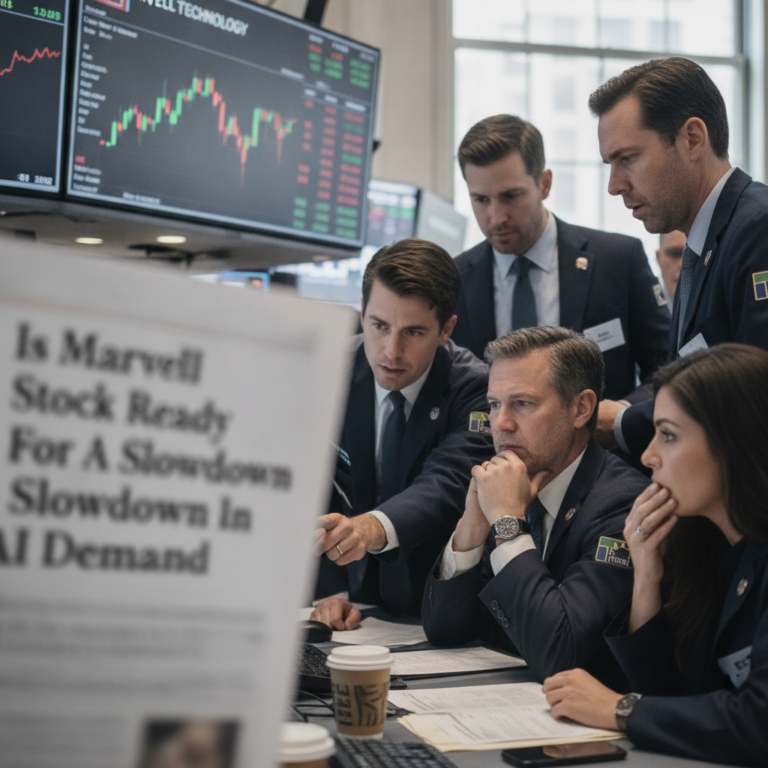
Investors are beginning to wonder if Marvell Technology is braced for a potential cooling period in the artificial intelligence boom. While the company’s stock has more than tripled over the last twelve months, recent ripples in the sector have raised red flags. Reports suggesting that OpenAI may have paused the training of its newest models sent shivers through AI stocks, leaving analysts to question whether Marvell’s current valuation can withstand a dip in demand. With data centers accounting for nearly 80 percent of its second quarter revenue, any shift in the AI landscape hits Marvell directly where it hurts most.

The primary concern lies in the steep premium investors are currently paying for the stock. Trading at over 25 times its sales, Marvell is priced significantly higher than the broader market average of around 3 times sales. This suggests that much of the current share price is built on future growth expectations rather than present reality. Management has projected ambitious revenues reaching 18 billion dollars by fiscal 2028, driven largely by an expected 60 percent surge in data center business. If those forecasts fail to materialize due to a market slowdown, shareholders could face a sharp correction similar to the volatility seen during previous economic shocks.

Despite these pricing concerns, Marvell remains financially resilient on paper. The company generates strong free cash flow, producing about 1.7 billion dollars over the past year, which comfortably exceeds its net debt of 1 billion dollars. This means that while a slowdown would likely devastate the stock price long before it threatened the company’s survival, Marvell possesses enough liquidity to weather a lean year without facing a credit crisis. It is essentially a battle between fundamental solvency and speculative valuation.

Moving forward, all eyes are on upcoming financial milestones for concrete evidence of a trend change. Investors will be scrutinizing the third quarter revenue figures closely; anything falling below 2.99 billion dollars would serve as a warning sign that momentum is fading. Additionally, the upcoming Investor Day provides another critical window into whether leadership stands by its aggressive multi-billion dollar targets or begins to walk back its optimism in light of changing industry headwinds.

Walmart is turning its aisles into a high tech scavenger hunt to solve one of the oldest frustrations of big box shopping: finding a single item among 120,000 different products. The retail giant is expanding a series of tools linked to its digital shelf labels designed to guide both shoppers and staff toward specific items using flashing lights. A new feature called Shop to Light allows customers to search for a product on the Walmart app and then trigger the corresponding shelf label to blink once they arrive in the correct aisle, essentially creating a visual beacon for their purchase.

The innovation extends beyond the customer experience through two companion systems known as Pick to Light and Stock to Light. These tools assist store associates in quickly locating merchandise for digital orders and streamlining the restocking process. According to Greg Cathey, Walmart’s senior vice president of digital transformation, the goal is to leverage AI and automation not to replace humans but to free up employee time so they can focus more on direct customer service rather than wandering aisles searching for misplaced inventory.

This rollout arrives as Walmart aggressively modernizes its infrastructure ahead of the busy holiday season, with plans to implement these features companywide by winter. Digital labels were originally introduced primarily to handle systemic price updates without the need for manual paper replacements, but they have now become central to a broader strategy involving AI agents and automated supply chains. Early results suggest strong adoption, with five million flashes already recorded during limited pilot tests this summer.

However, the transition from paper to pixels hasn’t been without friction. Some critics and state legislators have expressed concerns that digital labels could pave the way for dynamic pricing or surveillance based on shopper data. In response, CEO John Furner recently issued an open letter clarifying that the company intends to price products rather than people, asserting that factors like income or shopping history will not influence the cost displayed on those screens. For now, Walmart remains committed to its vision of a tech powered environment where blinking lights simplify the chore of grocery shopping.