Archive

October 2026

Browsing

President Trump has spent much of his second term boasting that his return to office ended the era of runaway egg prices, frequently pointing to the dramatic drop in costs as a victory for his administration. Federal data supports the claim that prices have plummeted, falling from an average of 4.95 dollars a dozen in January 2025 to just 2.27 dollars by August. However, agricultural experts argue that the reality behind these numbers is far more complex than political rhetoric suggests, noting that market forces played a larger role than any specific white house policy.

The primary driver of the volatility has been avian flu rather than legislation. Massive outbreaks starting in 2022 and peaking again in early 2025 decimated millions of laying hens, creating a supply shock that sent prices soaring to a record high of 6.23 dollars a dozen in March 2025. Because eggs are considered an inelastic product—meaning families continue to buy them regardless of price due to their versatility in cooking and baking—consumers felt the pinch acutely. As the virus subsided and farmers successfully rebuilt their flocks during a milder winter season, supply naturally increased and prices corrected themselves.

The Trump administration did take steps to stabilize the industry, including providing hundreds of millions of dollars for biosecurity enhancements and cutting some regulatory red tape for farmers. There was also a significant spike in imports to help bridge the gap while domestic production recovered. While these efforts provided some support, analysts suggest that roughly ninety percent of the price decline can be attributed to simple luck regarding the cycle of bird flu and basic biological recovery rather than government intervention.

Despite the lower grocery bills for consumers, some farmers find themselves in a precarious position. Economics professors note that while certain regulations were loosened, new burdens have emerged under current policies. Tariffs on foreign trading partners and geopolitical tensions involving Iran have driven up essential operating costs, such as diesel fuel, eating into farm profits. As midterm elections approach and food affordability remains a top concern for voters, the debate continues over whether today’s cheaper eggs are a result of strategic leadership or merely a fortunate break in nature’s patterns.


It was a tug of war on Wall Street this Thursday as investors grappled with rising treasury yields and mixed corporate reports. The Dow Jones Industrial Average drifted lower, slipping about 0.1 percent, while the S&P 500 struggled to maintain its footing. Technical analysts noted that the S&P 500 dipped below its critical 50 day moving average, a sign that suggests some growing hesitation among traders as they weigh macroeconomic pressures against individual company successes.

The primary headwind for the broader indices came from the bond market, where surging yields created an environment of uncertainty despite signs of cooling inflation elsewhere in the economy. This volatility pushed several major benchmarks into negative territory during afternoon trading, though energy markets provided a slight counterweight as oil prices saw a noticeable jump throughout the session.

Despite the general gloom across the boards, certain companies managed to carve out their own winning streaks. Accenture emerged as a standout performer, vaulting higher after delivering earnings results that beat analyst expectations. While not every tech giant fared as well, with Micron Technology seeing some downward pressure following its report, others like Lumentum surged, proving that strong fundamentals can still drive gains even when the overall market sentiment is fragile.

Micron Technology has sent shockwaves through the semiconductor industry after reporting a staggering revenue surge of 379 percent, a jump that underscores the explosive demand for artificial intelligence infrastructure. As tech giants race to build out massive data centers capable of handling complex generative AI models, the need for high bandwidth memory has shifted from a luxury to an absolute necessity. This windfall positions Micron as one of the primary beneficiaries of the current hardware supercycle, proving that the AI boom is translating into tangible balance sheet growth rather than just speculative hype.

The company’s recent performance highlights a critical shift in how investors view chip stocks. While much of the initial excitement surrounding AI focused heavily on processors and GPUs, Micron is demonstrating that memory chips are equally vital components of the ecosystem. By specializing in the high speed storage required to feed data into powerful AI accelerators, Micron has carved out a dominant niche that allows it to command premium pricing during this period of scarcity and rapid scaling.

Industry analysts suggest that this trajectory places Micron among a small group of elite AI chip stocks currently dominating the NASDAQ. The sheer scale of their revenue increase suggests that we are still in the early stages of an infrastructural overhaul across global computing systems. For observers watching the sector, Micron serves as a bellwether for broader enterprise spending on AI, signaling that companies are now moving past experimentation and into heavy capital investment to secure their digital futures.

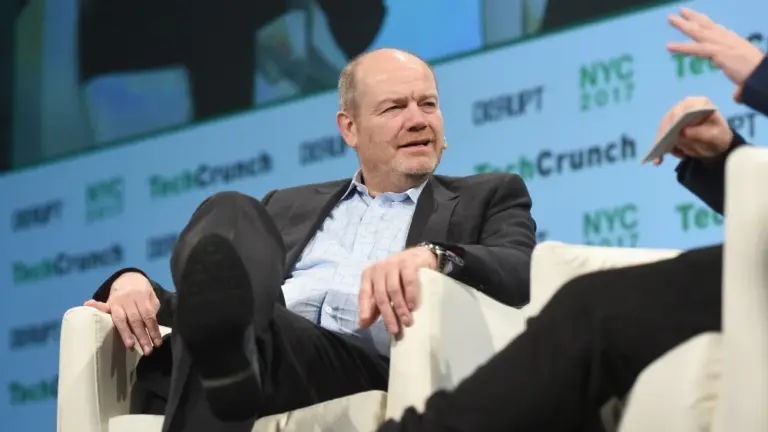
The future of CNN’s leadership appears slightly more stable as Paramount Skydance enters early stage discussions to keep Mark Thompson in his post. This development suggests that the merging media entities intend to keep CBS News and CNN operating separately for the time being while they navigate the complex acquisition of Warner Bros. Discovery. While neither company provided an official comment, these talks signal a potential continuity in management that could soothe nerves across one of the world’s most prominent newsrooms.

For CNN staffers, the possibility of Thompson remaining at the helm brings a measure of relief amidst significant uncertainty. Employees have voiced concerns over whether Paramount CEO David Ellison is fully committed to traditional, credible newsgathering, especially following recent scrutiny regarding appointments at CBS News. There are also lingering questions about how Paramount intends to handle CNN’s pivot toward digital growth and its evolving streaming strategy after years of shifting corporate directions under previous ownership.

Thompson himself has expressed a strong desire to lead the network forward, telling employees during a recent town hall meeting that he is enthusiastic about staying. However, he admitted to staff that he still lacks clarity on exactly how Paramount plans to manage its news assets once the deal closes. Despite this ambiguity, Thompson has remained steadfast in calling for CNN to maintain total editorial independence from corporate interference.

To address those concerns and satisfy legal requirements, Paramount has already agreed to establish a dedicated board tasked with safeguarding the independence of its news properties. This move comes as part of a settlement with several state attorneys general who had initially sought to block the merger. As Thompson continues to push content toward younger audiences through initiatives like the All Access subscription service, his long term fate remains tied to how well these independent safeguards can coexist with Paramount’s broader business goals.

Wall Street is holding its breath as investors brace for the latest nonfarm payrolls report, leaving stock futures largely unchanged heading into Friday morning. S&P 500 futures edged up slightly by 0.1 percent, while Dow and Nasdaq futures saw modest gains as the market enters a cautious waiting game. This hesitation follows a rocky week where major indices have generally trended downward despite some marginal recoveries during the first trading day of October.

The upcoming employment data is critical for those trying to predict the Federal Reserve’s next move regarding interest rates. While analysts expect job growth to land around 84,000 with unemployment remaining steady at 4.1 percent, economists suggest that even a robust report might not be enough to trigger another rate hike in October given the current stability of the labor market. Currently, fed funds futures indicate a high probability that the central bank will choose to stand pat during its next meeting.

Beyond the domestic labor market, global volatility is weighing on investor sentiment. Asian markets took a hit on Friday, with Japan’s Nikkei 225 and Hong Kong’s Hang Seng both seeing declines fueled by rising inflation fears. These concerns are being driven largely by a spike in energy costs after reports surfaced that the United States is deploying a third aircraft carrier strike group to the Middle East. Brent crude surged past 102 dollars a barrel as geopolitical tensions between the U.S. and Iran threaten to disrupt regional stability further.

In other financial news, treasury yields recently touched multiyear highs before pulling back, reflecting ongoing uncertainty in fixed income markets. Meanwhile, the Securities and Exchange Commission is attempting to modernize financial regulations by proposing new rules that would make it easier for investment advisers and regulated funds to hold cryptocurrency assets on behalf of their clients. These moves come as regulators seek to fill legislative gaps left by stalled congressional action on digital asset oversight.

Investors may want to keep a close eye on their portfolios as one of Bank of America’s most respected market gauges edges closer to a warning sign. The bank’s Sell Side Indicator, which functions as a contrarian tool, is currently teetering on the brink of a sell signal. This specific metric operates on the logic that when sentiment becomes excessively bullish, it often signals that the market is overextended and due for a correction. According to a recent note to clients, the indicator climbed to 57.2 percent in September, leaving it just 0.3 percentage points away from officially entering sell territory.

This current reading marks the highest level seen since March 2022, raising alarms among those who track long term performance trends. Historical data analyzed by Bank of America suggests that once this signal flashes red, the S&P 500 tends to underperform significantly. While the index hasn’t always crashed immediately, it has averaged gains of only 3 percent over the ensuing twelve months compared to its typical ten percent historical average. In fact, looking back at data starting from 1985, there were times when the benchmark actually saw negative returns more than a third of the time after hitting these levels.

The caution comes at a time when broader economic pressures are mounting across Wall Street. Rising bond yields have become a primary concern for analysts, with both 10 year and 30 year yields hitting twenty four year peaks this week due to various fiscal worries. Higher yields typically act as a drag on riskier assets like stocks, making equities less attractive by comparison. Even though major indices remain near all time highs, experts warn that this strength is deceptive because it is being driven by a handful of artificial intelligence and tech giants rather than broad growth.

Beneath the surface of these record breaking numbers, signs of fragility are appearing throughout the rest of the market. Analysis from firms like Ned Davis Research indicates that market breadth has hit record lows relative to where the S&P 500 stands today. Furthermore, research from Rosenberg Research shows that the median stock within the index has actually dropped fifteen percent from its fifty two week high. Together with Bank of America’s looming sell signal, these factors suggest that while the headlines look positive, many individual companies are already feeling the strain_

Capitol Hill remains a place where rhetoric often clashes with reality, particularly when it comes to the promises of transparency and fairness for the average American. In a move that critics say exposes a deep hypocrisy within the party’s platform, Senate Democrats recently blocked a bill aimed at restricting members of Congress from purchasing new stocks in publicly traded companies. While the measure had previously found some bipartisan support in the House, it fell short in the Senate by a vote of 53 to 47, with not a single Democrat voting in favor of the restriction.

The legislation, known as the Stop Insider Trading Act and sponsored by Senator Pete Ricketts of Nebraska, sought to prohibit lawmakers from initiating new positions in public companies and required them to give advance notice before selling existing holdings. Though it allowed members to keep current investments and deal in private equity, supporters argue it was a necessary first step toward ending a culture of perceived corruption. Senator Ricketts pointed out during floor debates that public trust in congressional institutions has plummeted to around 15 percent, largely due to suspicions surrounding how lawmakers manage their personal wealth while drafting national policy.

Data suggests those suspicions are grounded in significant activity. Recent analyses indicate that about twenty five percent of legislators have traded individual stocks during this term, with combined totals for members and their families ranging between 160 million and over 600 million dollars since early 2025. Despite these figures, leadership on the Democratic side dismissed the bill as insufficient. Senate Majority Leader Chuck Schumer characterized the proposal as feeble and described it more as a permission slip for corruption than an actual ban, arguing that any reform must be far more comprehensive to be meaningful.

However, opponents of the vote suggest that waiting for a perfect bill provides convenient cover for those who wish to maintain their portfolios. Critics like U.S. Senate candidate John Deaton have questioned why certain senators voted no, suggesting that political distractions regarding presidential ownership or unrelated issues like voter ID were used as excuses to kill a viable piece of legislation. By rejecting a foundational law that could have been amended and strengthened over time, Congress has missed another opportunity to align its interests with those of its constituents, leaving the door wide open for continued high stakes trading on Capitol Hill.

The rise of AI agents is fueling a massive surge in global web traffic, turning the quiet work of internet infrastructure into a lucrative frontier for investors. On a recent episode of Mad Money, CNBC’s Jim Cramer highlighted how the explosion of automated AI activity requires specialized services to keep the internet stable and fast. This shift has put a spotlight on three primary players known as internet traffic cops, namely Cloudflare, Akamai Technologies, and Fastly, all of whom have significantly outperformed the S&P 500 so far this year.

While these companies are all riding the AI wave, Cramer warns that not every stock is currently priced for success. He noted that Cloudflare has seen staggering growth, with CEO Matthew Prince revealing that AI agent traffic has already overtaken human traffic on their restwork. However, because Cloudflare is trading at roughly 279 times its expected earnings, Cramer suggests that patient investors wait for a price pullback before jumping in. Similarly, he views Fastly as too volatile and expensive at 50 times earnings despite its strategic pivot toward an edge cloud platform designed to reduce latency for AI users.

In contrast, Cramer believes Akamai Technologies represents the best value play in the sector right now. The company recently secured a massive eleven point six billion dollar commitment from Anthropic to expand computing capacity over the next seven years. Despite this major win and a strategy focused on processing AI workloads closer to end users through smaller data centers, the stock remains relatively affordable at less than sixteen times expected earnings. According to Cramer, the current price effectively gives investors the Anthropic partnership for free, making it the only stock among the trio he feels confident recommending as an immediate buy.

When artificial intelligence first burst onto the scene as a transformative global force, investors were quick to predict the demise of several legacy industries. For a while, it seemed that consulting firms were doomed to be replaced by algorithms, leading to sharp and unforgiving losses in their stock prices. However, recent market movements suggest that these predictions were premature. Instead of being erased by automation, the consulting sector is finding its footing again, proving that high tech still requires a significant amount of human intuition and guidance to be effective.

Accenture has emerged as the primary example of this resilience. Following a strong earnings report that beat expectations across the board, the company saw its stock surge sixteen percent in a single day. This rally comes on the heels of reports that over four hundred clients launched advanced AI projects during the fiscal year. Rather than replacing consultants, businesses are actually paying them more to figure out how to implement these complex technologies at scale. This trend is ripple effecting through the industry, with other IT services firms like Cognizant seeing similar rebounds as investors realize that AI creates a massive demand for installation and integration expertise.

This shift mirrors a larger pattern seen in the software industry, where early fears of an apocalypse have turned into opportunities for growth. Companies specializing in critical data and cybersecurity have leveraged AI to enhance their offerings rather than being cannibalized by them. The common thread among these winners is their ability to act as connective tissue between raw software tools and practical application. Businesses cannot simply buy a bot and expect total efficiency; they need experts to redesign workflows, integrate digital agents into old systems, and retrain their workforce.

Ultimately, Accenture’s success suggests that we are entering an era of AI survivors—companies capable of turning technological disruption into a new revenue stream. While the rush to automate continues unabated, there remains a fundamental necessity for humans to ensure those automated systems actually work within the messy reality of corporate operations. As long as enterprises struggle to bridge the gap between owning AI and using it effectively, the human touch will remain a premium service that shareholders are happy to bet on.

FIRST ON FOX: The escalating battle over what children should be taught in public schools continues to drive America’s culture wars, and a new report ranks every state on some of the most contentious issues affecting today’s classrooms.

Red states dominated the ranking, which measures all 50 states and Washington, D.C., on issues spanning parental rights, diversity, equity and inclusion (DEI), gender and sexuality, teacher and union policies, and foreign influence, according to Defending Education’s first-ever Rankings on Integrity in State Education, released Thursday.

Tennessee claimed the top spot, followed by Alabama, Florida, North Carolina and Iowa, while Washington, D.C., ranked last, followed by Rhode Island, California, Oregon and Illinois.

The rankings do not account for test scores or graduation rates. Instead, the report said it is designed to show how states are approaching hot-button issues as parents demand greater transparency in their children’s education.

DOJ LAWSUIT TARGETS ALLEGED SCHOOL ‘SECRET GENDER TRANSITIONS’ POLICIES THAT KEEP PARENTS IN THE DARK

“For the first time, parents have a single resource to see how their state handles the issues they’ve voiced concerns about over the last five years, empowering them to evaluate local schools and hold leaders accountable at the ballot box,” Paul Runko, senior director of strategic initiatives at Defending Education, said in a statement to Fox News Digital.

Of the report’s five categories, the parental rights category ended in a four-way tie, with North Carolina, South Carolina, Tennessee and West Virginia earning the top spot. Each was awarded points for policies that give parents more say over student gender transitions, sex education instruction and whether their children participate in those lessons.

Georgia, Mississippi, North Carolina and South Carolina, all red states, received perfect scores on teacher policies. According to the report, laws governing teacher unions, strikes and collective bargaining, along with work authorization requirements, were key factors in the scoring.

TRUMP ADMINISTRATION PROPOSES STRIPPING TAX-EXEMPT STATUS FROM SCHOOLS USING RACE-BASED PROGRAMS

Iowa, Missouri and West Virginia topped the report’s DEI category after receiving high marks for laws restricting DEI initiatives and other policies related to restorative justice, teacher diversity and antisemitism.

Another major flashpoint in education has been a growing conversation on gender identity and transgender athletes competing in women’s sports. The report examined state policies blocking LGBTQ-specific curriculum, restricting transgender athlete participation, and state nondiscrimination and anti-bullying laws related to gender identity, finding Alabama, Florida and Indiana tied for the highest scores.

But the report went further than policies shaping the classroom. Seven red states received perfect scores for laws limiting Chinese government influence in education, including Confucius Institutes, China-backed language and cultural education centers. Alabama, Florida, Indiana, North Carolina, Ohio, Tennessee and Texas aced the category.

In another statement to Fox News Digital, Dr. Terry Stoops, director of government affairs at Defending Education, congratulated the frontrunners.

EXCLUSIVE: HOUSE COMMITTEE PROBES CHICAGO PUBLIC SCHOOLS OVER HIDING ‘GENDER AFFIRMATION’ FROM PARENTS

“If your state is at the top of Defending Education’s rankings, congratulations!” he said. “You live in a state with public school policies that prioritize sound academics over shameless antics.”

Stoops also blamed elected leaders for the lowest-scoring states, accusing them of having “sacrificed educational excellence at the altar of social justice.”

“For parents in bottom-feeder states who value rigor over ridiculousness, the choice is either fight or flight,” he said.

Despite more blue states embracing DEI and social justice policies, the report said it wants parents to have a clearer picture of where their state stands on education and how those policies could impact their children and future generations.