Archive

November 5, 2026

Browsing

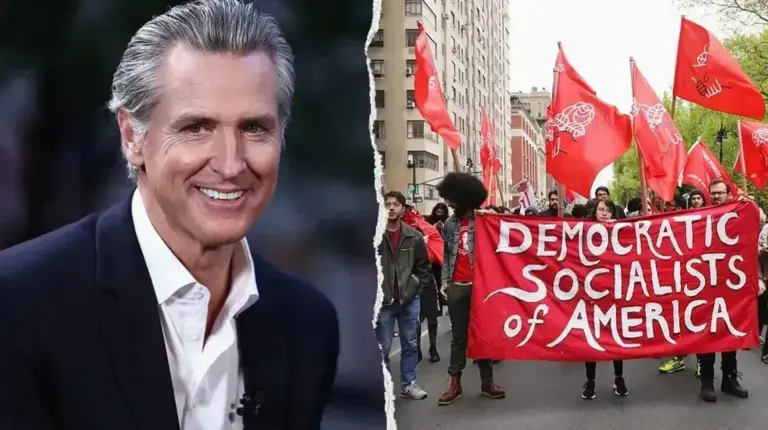
In the lead-up to the November midterms, the Democratic Socialists of America (DSA) put its support behind California’s Proposition 40, a measure that would impose a one-time 5% tax on billionaires in the state. 

Although the secretary of state’s election results show it on the path to defeat as of Wednesday afternoon, the DSA’s support for the policy has created a flashpoint for larger discussions about socialism’s redistributive aims and the capital flight critics say could follow.

“In their mind, every tax they do is some attempt to get money from people who create wealth and move it to the state,” Richard Stern, an economics scholar with Advancing American Freedom (AAF), said in an interview with Fox News Digital.

The DSA’s stance on Proposition 40 has also brought it into conflict with other Democratic figures, including Gov. Gavin Newsom, who opposed it.

SHOCKING PERCENTAGE OF DEMOCRATS IDENTIFY AS ‘DEMOCRATIC SOCIALISTS’ ACCORDING TO NEW POLL: ‘TOXIC POLICIES’

The proposition would have applied a 5% tax on assets like businesses, securities, art, collectibles and intellectual property while excluding select pensions, real estate and retirement accounts.

To prevent billionaires from simply leaving the state, Proposition 40 was designed to retroactively apply to billionaires who were residents of California on Jan. 1, 2026.

On the website for its California chapter, the group offered a PowerPoint slideshow supporters could use to argue its merits.

“We have the money in California to pay for the quality schools and healthcare that we need. It just needs to be transferred from the wrong pockets to the right ones. We can do that by taxing the rich,” the slideshow reads.

The DSA argued the policy would help cover up to a projected $100 billion shortfall in federal funding for the state’s Medi-Cal program that provides health insurance for low-income individuals, seniors and people with disabilities. The proposition also outlined that 90% of the generated revenue would go to healthcare, while the remaining 10% would be set aside for education, food assistance and administration of the tax.

As part of its argument in favor of the policy, the DSA framed it as a scaled-up version of something that already exists: a progressive tax, a kind of tax that scales relative to income.

“It calls for a temporary 5% wealth tax on just 250 Californians — the very richest people in the state — who together own $2 trillion in wealth,” its materials explain.

“Let’s be clear: if the Billionaire Tax passes, none of the billionaires will actually lose money. They have been averaging a growth rate of 7 or 8 percent per year in their wealth. Thus, a 5% hit doesn’t even cut into what they have; it just slightly slows down the growth of that wealth.”

But to experts like Stern, the AAF economist, the policy reflects a fundamental misunderstanding of wealth.

“The left looks at a billionaire, and they assume that they’re sitting on $10 billion, $100 billion in cash. I hate to break it to them: There’s no cash,” Stern said.

“They have no idea that we’re talking about a trillion-dollar company, we’re talking about a trillion dollars’ worth of factories and warehouses and delivery trucks and machinery.”

LET SOCIALISTS ROB FROM THE RICH 100%, AND YOU STILL WON’T BE ABLE TO PAY THE BILLS

Notably, Newsom has said he is opposed to the measure, arguing it would put California at a competitive disadvantage.

In an interview with Fox News Digital, Newsom cited opposition from a number of different groups.

“The firefighters opposed it. The teachers opposed it. Planned Parenthood opposed it. The vast majority of labor opposes it. I think the majority of Californians oppose it. So, we all have our reasons why,” Newsom said ahead of the election.

“I don’t think it’s a good idea to do [it] at a state level. It’s a badly written initiative. It focuses just on one part of the state’s budget. It’s one-time money and the impact is already being felt. People have left the state.”

Instead, Newsom called on voters to adopt a poison pill countermeasure. Proposition 42 was designed to prohibit new state taxes on personal property and restrict certain retroactive taxes. That measure looks to be on track to succeed.

Even so, Newsom noted that his views on a 5% tax might change if implemented at the federal level.

“Looking at that from a national prism, very different conversation than a state-by-state prism. That’s been the debate in California. I think the majority of Californians see that distinction even though they absolutely believe that we need a new tax bracket in this country,” Newsom said.

Stern noted that Newsom’s openness to considering such a policy nationally comes with many of the same difficulties, but on an international scale.

‘CASTRO’S PLAYBOOK’: EX-AG WARNS DOZENS OF CONGRESSIONAL BILLS ARE PUSHING SOCIALIST IDEAS

“You can more easily leave California, but you could give up American citizenship and move abroad,” Stern said.

“[It] gets back to the old half-joke about communism and the wall in Berlin, which is, as Reagan said, they build walls that keep people in where normally we build walls to keep people out.”

When asked what distinguishes Proposition 40 from a simple tax increase, Stern pointed back to the policy’s implications for businesses, in his view, the main source of most billionaires’ wealth.

“We’re taking the means of production out of the hands of people that built those businesses, that manage those businesses, and giving them to Bernie Sanders and AOC and politicians to run them,” Stern said, referring to two of the country’s most well-known congressional figures who have received backing from the DSA in the past.

“That’s socialism.”
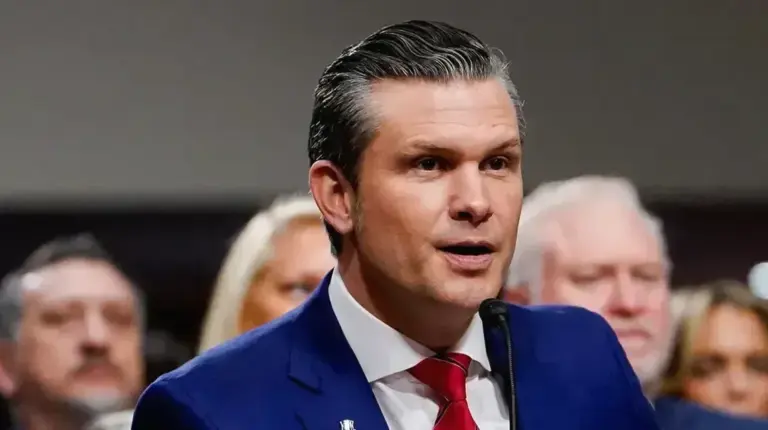
President Donald Trump stood by War Secretary Pete Hegseth Wednesday, saying he was doing “a very good job” even as current and former administration figures continued to question how long the Pentagon chief could remain in his post after Republicans’ bruising midterm losses.

“I think he’s doing a very good job,” Trump said Wednesday when asked by the media whether he was considering replacing Hegseth.

The public support came a day after Democrats secured majorities in both chambers of Congress in Tuesday’s midterm elections, setting the stage for a shift in power on Capitol Hill in January. 

The Iran war and its economic fallout loomed large in the election, with Hegseth among the administration’s most vocal advocates for the campaign. His future remains the subject of speculation among current and former administration figures despite Trump’s public backing.

TRUMP PLEDGES TO VETO ‘INSANE’ DEM BILLS, PINPOINTS ISSUE PARTIALLY TO BLAME FOR REPUBLICAN LOSSES

A White House official told Fox News Digital Tuesday that the election results “would have looked very different without the Iran War.” The official predicted Trump would ultimately hold Hegseth, a former Fox News host, accountable, saying, “That will play out in the lame duck.”

“Hegseth is on the chopping block,” a former White House staffer told Fox News Digital later Tuesday of Hegseth’s future.

An administration official said there were “signs” Hegseth could be ousted but added that “Trump can turn on a dime.” The official said the possibility had been discussed for some time, though “only Trump knows what he’s gonna do.”

“It was clear Bessent became the go-to after Pete couldn’t deliver an Iran victory,” the source said, referring to Treasury Secretary Scott Bessent, who led the sanctions campaign against Iran known as Operation Economic Outcast.

Beyond the Iran war, Hegseth also championed a plan to livestream the firing-squad execution of Nidal Hasan, the former Army major who killed 13 people and wounded 32 others at Fort Hood in 2009. The proposal drew bipartisan backlash before Trump ultimately scrapped the livestream, while leaving Hasan’s execution in place.

A foreign policy source with ties to Hegseth expressed doubt to Fox News Digital that the secretary will remain in the job through the end of the year. The source said Republican Kentucky Rep. Thomas Massie’s impeachment push could force Republicans eyeing 2028 re-election bids to “saddle themselves with a pro-Hegseth vote.”

GOP SEN THOM TILLIS URGES TRUMP TO REPLACE PETE HEGSETH, BLASTS PENTAGON LEADERSHIP

Hegseth has faced criticism over his prominent role in the Iran war, which has continued to generate political and economic fallout long after the White House’s initial three- to four-week timeline. He was among the administration’s most vocal defenders of the campaign, declaring in March that the U.S. was carrying out “our retribution” against Iran.

Although sustained U.S. strikes have ended, tensions with Tehran remain unresolved with lingering concerns about Iran’s nuclear and missile capabilities and the possibility of renewed military action.

Renewed U.S. military strikes against Iran remain under serious consideration by the White House, sources told Fox News Digital.

That possibility could weigh against an immediate change at the Pentagon. Installing new leadership as the administration considers renewed military operations would create uncertainty at a critical moment, while Hegseth has already demonstrated a willingness to move quickly in carrying out Trump’s military directives.

Chief Pentagon spokesperson Sean Parnell told Fox News Digital Hegseth remains “100% committed to leading the Department until the end of President Trump’s term in office.”

“Secretary Hegseth will not back down or be deterred by politicians seeking to score partisan points or launch phony investigations where no wrongdoing exists,” Parnell said.

“The Department of War has followed the law, and our secretary will continue to stand and fight every single day to support and defend the Constitution, lead our troops and protect America. We will continue to drive President Trump’s agenda at the Department of War despite threats of sham witch hunts from Democrats.”

Democrats have signaled that Hegseth will be a focus of the incoming Congress. Before the election, House Minority Leader Hakeem Jeffries said Democrats would “run Pete Hegseth out of town” if they won the House. Democrats have also discussed investigations into the Iran war and Pentagon leadership, with impeachment among the options.

Scrutiny from Democrats could keep Hegseth and the war he has championed at the center of the administration’s political troubles.

Massie, R-Ky., has separately vowed to force a vote on his impeachment resolution during the lame-duck session if Hegseth remains in office.

DEM FLIPS KEY SENATE SEAT IN BATTLEGROUND NORTH CAROLINA AS COOPER DEFEATS TRUMP ALLY

As war secretary, Hegseth pushed sweeping changes to military culture, including banning transgender service members; eliminating diversity, equity and inclusion programs; and imposing uniform combat fitness standards for men and women. He also sought to overhaul the Pentagon bureaucracy by consolidating Army commands, cutting senior military leadership and expanding the use of artificial intelligence and advanced weapons technology.

His tenure has also been marked by controversy, including the sharing of sensitive details about planned strikes against Houthi militants in Signal chats that inadvertently included a journalist. Internal infighting, leak investigations and the dismissal of several top aides have fueled scrutiny, though Trump has repeatedly defended his leadership.

The political pressure on Hegseth echoes a past moment when midterm losses and an unpopular war put a defense secretary’s future in question.

On Nov. 8, 2006, President George W. Bush announced Defense Secretary Donald Rumsfeld’s resignation, one day after Republicans suffered major midterm election losses amid growing criticism of the Iraq War.

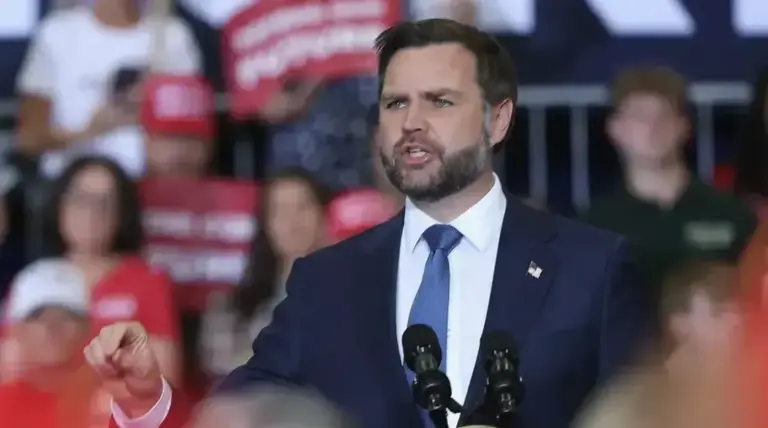
EXCLUSIVE: Vice President JD Vance is seeking to forge a new alliance with disaffected Trump voters ahead of the 2028 election cycle, Fox News Digital has learned.

Vance took control of his own messaging Wednesday morning in the wake of a brutal Republican midterm beatdown, breaking with President Donald Trump on foreign policy and America’s relationship with Israel.

A source familiar with post-election happenings told Fox News Digital that there was a White House meeting Wednesday morning aimed at aligning the entire administration officials on post-midterm messaging. A second source familiar described the meeting as a regular senior staff meeting.

After that huddle, the vice president posted a lengthy admonishment to X where he squarely blamed the Iran war for the Republican Party’s losses in the 2026 midterms. Trump made a similar claim after calling into Fox News during Tuesday night’s election coverage, saying the upsets were “partly” due to the Iran war.

VANCE’S SCATHING IRAN WAR POSTMORTEM PUTS POTENTIAL 2028 GOP SHOWDOWN IN FOCUS: ‘EVERYONE KNOWS WHY’

“The reason we lost is the war,” Vance’s post said. “The president himself said so last night.”

“If you’d like to argue it was worth it, that losing the Senate for the next 6 years was worth it, then do so. Argue it was a worthwhile cost to pay. Agree or disagree, that’s at least honest,” he went on.

“But everyone knows why we lost. And any honest conversation about where we go from here must start there.”

In the post, Vance said a pollster and “one of the smartest people I know in politics” laid out four tasks that would bring voters back to the GOP — end the war in Iran, focus on the cost of living and inflation, put America first, and “change our relationship with Israel.”

JD VANCE DECLINES TO ENDORSE NETANYAHU DESPITE TRUMP’S STRONG BACKING

A Trump administration official who spoke with Fox News Digital said that the four tasks are Vance’s rallying cry to the “new right,” broadly defined as a coalition of Republicans that aligns with the president’s original “America First” movement — staying out of foreign conflicts, making America an affordable place for Americans to raise families, and closing the borders.

But those voters, they said, also believe that Trump is too aligned with Israel on foreign policy matters.

Among some on the political right, the war in Iran is intrinsically tied to Israel’s influence in the Middle East, and Trump’s relationship with Israeli Prime Minister Benjamin Netanyahu.

TRUMP TOLD DONORS ‘WE NEED TO ELECT JD,’ SOURCE CONFIRMS, AS HE WEIGHS VANCE OR RUBIO IN 2028

The official made it clear that Vance’s message is not a separation from Trump, à la former Vice President Mike Pence who denounced Trump after the Jan. 6, 2021, riot at the capitol. Rather, they said, he is aiming to send a clear message to Republicans who support Trump and disagree with or feel betrayed by his foreign policy.

And that message is: “Vance is our guy.”

The White House did not return Fox News Digital’s request for comment at time of publication on the meeting or Vance’s post-election messaging.

The vice president has not strayed much from Trump and the White House’s preferred messaging for the past two years — though he has been one of the few voicing concern over the ongoing war in Iran.

Despite his friendship with Secretary of War Pete Hegseth, reports and comments from the vice president himself have expressed how his stance on the Iran conflict differs.

Trump acknowledged earlier this year that Vance was “maybe less enthusiastic” about attacking Iran from the jump.

TRUMP ‘COULDN’T TRANSFER THE LOVE’ OF HIS SUPPORTERS TO OTHER REPUBLICANS AMID HISTORIC MIDTERM LOSS

Vance is widely considered a top GOP presidential candidate in 2028 — along with Trump’s Secretary of State Marco Rubio.

So far, Democrats stand at 54 Senate seats to Republicans’ 44, after sweeping wins in typically red Texas, ruby-red Kansas and other Republican strongholds like South Carolina.

DEMS SEIZE THE SENATE AS BLUE TIDAL WAVE CRASHES DEEP INTO TRUMP COUNTRY, TOPPLES GOP STRONGHOLDS

Votes are still being counted into Wednesday in a tight race in Alaska, that could see Democrats winning yet another seat in the Senate and widening their majority over the GOP.

The outcome of the midterms could have massive implications for the 2028 election, and Republicans are grappling now with how to face one of their biggest-ever challenges in trying to flip back the upper chamber despite a widened gap throwing them deep into a minority in January.

Needing only 218 to control the House, Democrats on Wednesday afternoon had won 237 seats, with more projected to filter in as ballots are counted and races are called.

This post appeared first on https://www.foxnews.com

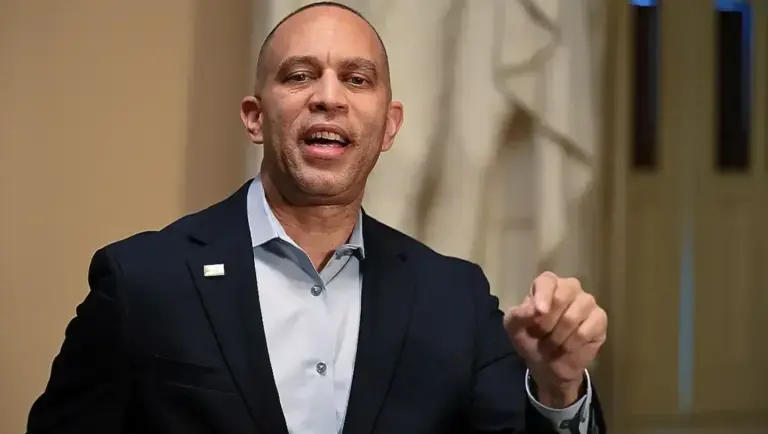
Minority Leader Hakeem Jeffries, D-N.Y., is officially running to be Speaker of the House in the next Congress.

It comes after Democrats made historic gains in Tuesday night’s midterm elections, taking back both the House and Senate for the remainder of President Donald Trump’s term.

Jeffries sent a letter to fellow House Democrats on Wednesday afternoon congratulating them on their victories and adding, “I write to humbly request your support in connection with my candidacy to serve as the next Speaker of the House of Representatives.”

Jeffries told reporters that he intended to run for the top job in the House during a press conference with his top deputies on Wednesday, House Minority Whip Katherine Clark, D-Mass., and House Democratic Caucus Chairman Pete Aguilar, D-Calif.

DEMOCRAT SEIZE HOUSE CONTROL IN STUNNING BLUE TSUNAMI, VOW RETRIBUTION AGAINST TRUMP ADMIN

Clark and Aguilar also signaled they would run for the No. 2 and No. 3 positions in the House.

And despite a small group of far-left socialists elected to Congress who are expected to pose a headache for Jeffries and other establishment Democrats, he will likely have little trouble winning the speaker’s gavel given the wide majority his party won on Tuesday.

At the time of writing this story, Democrats were projected to win 237 seats compared to 139 for the GOP. 

But 59 races are still too close to call, and Jeffries told reporters earlier that he anticipated a total of 255 or more Democrats in the House next year.

In his lengthy letter to colleagues on Wednesday, Jeffries touted past victories and outlined his vision for the next two years.

He pledged to “try to find bipartisan common ground whenever and wherever possible” on the issue of affordability while also criticizing the right’s handling of high cost-of-living.

“Donald Trump and House Republicans promised to lower costs on Day One. They failed. Instead, toxic GOP policies like the Trump tariffs and war in Iran have done the exact opposite,” he wrote.

AMERICA SAW THE BLUE WAVE COMING — BUT DRASTICALLY UNDERESTIMATED THE EXTENT OF THE DEM TSUNAMI

Jeffries also vowed “accountability” for the Trump administration, writing the House “will assume its place as a check and balance on an out-of-control executive branch.”

He suggested Democrats would seek to undo Republicans’ Medicaid cuts, extend enhanced Obamacare tax credits that expired at the beginning of this year, and end Trump’s war in Iran.

“Finally, we must restore classic American values like liberty and justice for all, equal protection under the law, the unfettered right to vote in a representative democracy and our heritage as a nation of immigrants. To that end, I look forward to drawing upon the insights and perspectives of every single part of the Caucus in the days and weeks ahead. House Democrats must deliver dramatic change,” Jeffries wrote.

House Democrats are slated to hold their leadership elections in mid-December.

Meanwhile on the right, House Judiciary Chairman Jim Jordan, R-Ohio, and House Majority Leader Steve Scalise, R-La., will be vying for the role of minority leader in the next Congress.

CVS Health is planning a massive structural overhaul that will see the healthcare titan split into two independent public companies by the first half of 2028. This decision effectively dismantles the vertically integrated empire the company spent years building, most notably reversing the logic behind its 2018 acquisition of Aetna for 78 billion dollars. Under the new plan, approximately 9,000 retail pharmacies will be separated from the company’s insurance operations and its pharmacy benefit manager, Caremark.

The reorganization marks a dramatic shift in direction for a company that long sought to become a seamless one stop shop for patient care. While current CEO David Joyner argues that creating two focused entities will better serve consumers and improve affordability, investors reacted with immediate skepticism, sending shares down roughly 10 percent following the announcement. Despite this dip, Joyner has overseen significant progress in his turnaround efforts, including billions in cost cuts and a surge in market value since taking over late last year.

Under the proposed structure, Joyner will continue to lead the entity retaining the CVS Health name, which will house the insurance business, Caremark, and specialized services like Oak Street Health and Signify Health. Meanwhile, Prem Shah will head the newly independent CVS Pharmacy. Current shareholders will hold stakes in both businesses once the transition is complete. The timing coincides with strong overall quarterly revenue reaching 108 billion dollars, though performance varied wildly between the surging insurance sector and struggling pharmacy services.

Industry analysts suggest this retreat may be as much about politics as it is about profit. By separating its retail stores from its insurance and PBM arms, CVS may be attempting to evade intensifying government scrutiny regarding vertical integration in healthcare. Bipartisan critics in Washington and various state legislatures have grown increasingly hostile toward PBMs over opaque pricing practices and perceived conflicts of interest when one corporation controls every step of a drug’s journey from negotiation to dispensing.

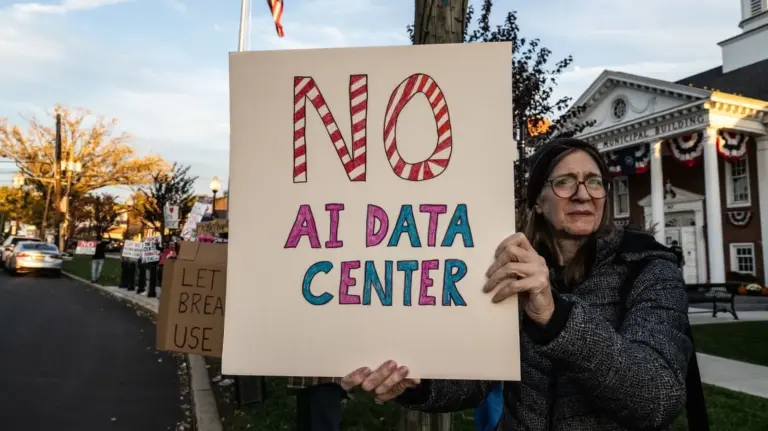
Voters across the United States sent a clear message on Tuesday by rejecting data center expansions in a wave of ballot measures that could derail the current artificial intelligence boom. In more than thirty localities spanning nine different states, residents opted for strict moratoriums and outright bans, signaling a growing grassroots resistance to the massive industrial footprints required for high-speed computing. From Florida to Ohio, citizens are pushing back against the sudden arrival of these facilities, with some cities even voting to bake permanent prohibitions directly into their municipal charters.

The political climate surrounding big tech has shifted dramatically over the last election cycle. Democratic candidates leaned heavily into anti-tech messaging in over a hundred federal and gubernatorial races, creating a ripple effect that forced even pro-industry Republicans to pivot. In Texas, Governor Greg Abbott attempted to distance himself from his previous role as an AI cheerleader by promising tighter regulations, but the strategy failed to save his seat as voter sentiment turned sour toward the rapid buildout of digital infrastructure.

This widespread opposition is now manifesting as a tangible financial risk for the banks and asset managers funding these projects. Investors who were once eager to capitalize on the AI gold rush are beginning to view local zoning battles as significant credit risks. As hyperscale providers scramble to manage the fallout, many are hiring community liaisons in hopes of repairing damaged relationships with skeptical neighbors.

In an attempt to soften their image, several tech giants have tried rebranding their sprawling warehouses as compute campuses, hoping a change in terminology would soothe public anxiety. However, early reports suggest these efforts have seen mixed results at best. With voters increasingly wary of the environmental and social costs associated with these hubs, the industry faces a daunting challenge in convincing local communities that the benefits of AI outweigh the disruption caused by its physical presence.

CVS Health is preparing to dismantle its massive corporate structure, splitting its sprawling network of retail pharmacies from its insurance and benefits operations. This strategic retreat marks a significant shift away from the trend of creating all encompassing healthcare conglomerates. Under the new plan slated for completion by 2028, the company will divide into two distinct entities. One will be known as CVS Pharmacy, overseeing approximately 9,000 stores, in store clinics, and mail order prescriptions. The remaining entity will retain the CVS Health name and manage the Aetna insurance arm alongside Caremark, the pharmacy benefits manager.

The decision follows years of mounting pressure from both regulators and lawmakers who argue that a handful of giants have stifled competition and driven up medical costs for millions of Americans. Along with UnitedHealth Group and Cigna, CVS helps control about 80 percent of the market, generating staggering revenues that have drawn accusations of monopolistic behavior. Political resistance has already manifested in states like Arkansas and Tennessee, where new laws seek to prevent single companies from controlling both prescription benefits and retail pharmacy services. Critics have characterized this concentration of power as crony capitalism that prioritizes profit margins over patient welfare.

This move represents a dramatic reversal for a company that once fought tooth and nail against breakup efforts, previously warning that such moves could leave the healthcare system vulnerable to private equity vultures. For several years, CVS pursued an aggressive expansion strategy highlighted by its seventy billion dollar merger with Aetna in 2018. However, those ambitions failed to translate into consistent investor confidence, leaving shareholders frustrated as stock prices dipped throughout much of late 2024.

Chief Executive David Joyner believes this separation is necessary to evolve with the modern landscape by focusing on affordability and accessibility. While federal legislators continue to push for broader antitrust crackdowns through bills supported by senators like Josh Hawley and Elizabeth Warren, CVS is attempting to get ahead of the narrative. By carving out its retail side from its clinical and insurance arms, the company hopes to simplify its user experience while easing the regulatory heat currently focused on healthcare gigantism.

CVS Health is preparing to dismantle its massive corporate structure, announcing plans to spin off into two separate public companies by the first half of 2028. Under the proposed arrangement, the organization will divide its expansive network of roughly 9,000 retail pharmacies from its powerhouse insurance arm, Aetna, and its pharmacy benefit manager, Caremark. This decision marks a dramatic reversal from just two years ago when the company explored a similar breakup but decided against it because the retail side of the business simply wasn’t strong enough to stand on its own.

Chief Executive David Joyner insists that this move is being made from a position of power rather than desperation. After leading an aggressive turnaround effort that included billions in cost cuts and targeted store closures, Joyner notes that the company now possesses the financial flexibility and operational stability required to execute such a complex divorce. With eight consecutive quarters of beating earnings expectations and a projected surge in cash flow for 2026, the executive argues that the current timing allows for a strategic choice rather than a forced reaction to distress.

Market analysts suggest that the landscape for neighborhood drugstores has shifted significantly in CVS’s favor. As competitors like Walgreens and Rite Aid shuttered numerous locations, CVS found itself capturing more market share while simultaneously updating how it handles prescription reimbursements through programs like CostVantage. While retail pharmacies remain low margin compared to insurance services, they have evolved into a steady engine of profit that no longer drags down the rest of the enterprise. By separating these units, investors may finally be able to see the true value of Aetna and Caremark without them being overshadowed by the slower growth of physical stores.

Beyond internal finances, external pressures may also be playing a role in the decision. Pharmacy benefit managers are currently under intense regulatory scrutiny, with some states passing laws specifically designed to prevent a single entity from owning both a PBM and a retail pharmacy chain. Although leadership denies that regulation is driving the split, experts point out that keeping these disparate businesses under one roof has become increasingly precarious legally. Despite these logical arguments for the breakup, Wall Street reacted with immediate skepticism on Wednesday, sending shares tumbling nearly twelve percent as investors digested what this means for the future of integrated healthcare.

The ambitious expansion of the artificial intelligence industry hit a formidable wall on Tuesday night as voters across ten states overwhelmingly rejected ballot measures favoring data center development. Out of forty one local initiatives designed to restrict these massive facilities, only one passed in Harwood, North Dakota. This sweeping rebuke suggests a growing public anxiety over the environmental and social costs of the AI boom, turning what was once a corporate gold rush into a volatile political liability.

Ohio emerged as the epicenter of this movement, hosting more than half of all the contested measures. The anti data center sentiment translated directly into electoral victories for Democrats in the Buckeye State, including Senator Sherrod Brown and Governor elect Amy Acton. Acton, a physician who defeated Vivek Ramaswamy, has already signaled her intent to implement a conditional moratorium on new projects unless developers guarantee union labor and cover all associated utility costs. These shifts threaten high profile ventures like the PORTS Pike Technology Campus, a project backed by OpenAI and SoftBank that aims to be the largest AI hub in history with potential costs exceeding five hundred billion dollars.

The ripple effect extended far beyond Ohio, influencing critical races in Texas where Governor Greg Abbott was unseated by Gina Hinojosa after she campaigned heavily against the rapid buildout of tech infrastructure. Despite staggering financial investments from Silicon Valley and Elon Musk, whose contributions totaled hundreds of millions of dollars, the money failed to sway a public increasingly wary of big tech’s footprint. A recent poll indicated that fifty six percent of voters viewed data centers as a primary driver in their voting decisions, highlighting a disconnect between corporate spending and community priorities.

As Democrats secure control of the House, the victory lap is quickly turning into a legal summons for tech executives. Representative Greg Casar and other progressive leaders are already calling for AI CEOs to testify under oath regarding their impact on American jobs and resources. With analysts noting that many hyperscalers have seen their cash flows turn negative due to astronomical infrastructure spending, the combination of financial strain and political hostility may force a fundamental pivot in how AI giants approach physical expansion in the United States.