
Archive

November 2026

Browsing

Attorney General Todd Blanche is mobilizing civil litigators across the Justice Department in an all-hands-on-deck push to fight tens of thousands of legal filings by detained migrants asking federal courts to review whether their imprisonment is lawful.

Blanche issued a three-page memo Tuesday calling on attorneys working outside of immigration issues to assist in the lawsuits described by Blanche as “frivolous” and an attempt to “thwart President Trump’s promise to the American people to prioritize their safety and security.”

The pre-Thanksgiving memo comes as the Justice Department has been hit with 97, 000 habeas corpus petition filings since January 2025, including close to 10,000 new petitions filed since October. Typically, the Justice Department faces only a few hundred habeas corpus cases a year.

As President Donald Trump has made mass deportations a centerpiece of his second administration, with Department of Homeland Security figures showing nearly 1.2 million illegal immigrants removed to date, the Justice Department has seen a wave of petitions.

DHS TOUTS HIGHEST ICE DEPORTATIONS IN HISTORY, AS MULLIN SAYS AGENCY HAS BEEN ‘UNLEASHED’

The surge in lawsuits comes after the Trump administration changed its detention policy to deny bond hearings to migrants arrested inside the U.S. — even those who have lived in the country for years. Without access to bond hearings before immigration judges, detainees have turned directly to federal district courts to challenge their confinement.

In a post on X sharing the memo, Blanche accused judges who have granted detained immigrants’ habeas corpus petitions of being “corrupt” and seeking to “release criminal aliens back into communities and avoid deportation.”

“Many of the Department’s U.S. Attorneys’ Offices have been overwhelmed by the influx of petitions and impracticable procedures set by the courts,” Blanche wrote. “That is why it is imperative that all Department attorneys who litigate civil matters support prosecutors who have shouldered the burden of habeas petitions for nearly two years.”

SUPREME COURT TO SCRUTINIZE KEY PILLAR OF TRUMP DEPORTATION MACHINE IN BLOCKBUSTER CASE

Blanche’s memo calls on attorneys from four civil litigation divisions — Antitrust, Civil Rights, Civil, and Environment and Natural Resources — as well as the U.S. Trustees Program and senior leadership offices, including those of the attorney general, deputy attorney general and associate attorney general, to assist. Within the next 30 days, leadership from the respective divisions must submit an “aggressive appellate strategy” for tackling the habeas corpus claims and deploy attorneys to high-volume districts. The memo does not explicitly state how many of the department’s roughly 2,000 civil litigators will be utilized.

Blanche acknowledged that divisions are already carrying “a significant workload in light of personnel reduction.”

TRUMP IMMIGRATION WIN COULD STRENGTHEN ADMIN’S HAND IN LOOMING SUPREME COURT FIGHT

SIGN UP TO GET THE POLITICS NEWSLETTER

“I also know that many attorneys have already volunteered or offered support in litigating habeas matters,” Blanche wrote. “By ensuring that attorneys are assigned no more habeas matters than each attorney can adequately and zealously defend, combined with providing jurisdiction-specific resources, I hope to mitigate any significant disruption to attorneys’ current dockets.”

Blanche’s memo drew criticism from immigration attorneys, including Reza Mazaheri, who called the attorney general’s characterization of judges as “corrupt” “slander.”

“If I walk into a courtroom and accuse a judge I disagree with of corruption, I would undoubtedly face disciplinary action,” Mazaheri wrote on X. “In the public service sphere, the word ‘corruption’ has a distinct meaning.”

Meanwhile, Bridget Pranzatelli, a staff attorney at the National Immigration Project, told Newsweek that the influx of habeas corpus petitions is the result of a change in how the Trump administration interprets bond hearing statutes.

“Many of them would have gotten a bond hearing before this administration suddenly changed its interpretation of a decades-old law to fill beds that private prison companies get paid for,” Pranzatelli said in a statement.

The memo comes as the U.S. Supreme Court prepares to hear arguments in early 2027 in Rhoney v. Barbosa da Cunha, a high-stakes challenge to the administration’s mandatory detention policy. In October, the justices agreed to review a second U.S. Circuit Court of Appeals ruling that struck down ICE’s policy of denying bond hearings to illegal immigrants who have lived in the U.S. for years. The court’s decision — expected by late June or early July 2027 — will resolve a split among federal appeals courts and determine the fate of tens of thousands of pending habeas petitions.
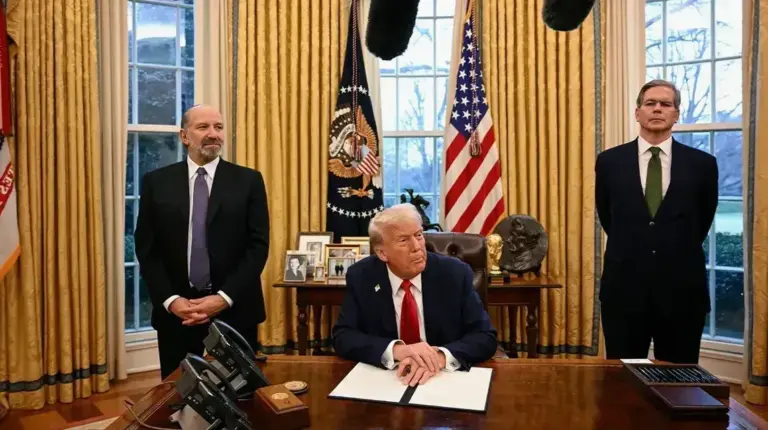
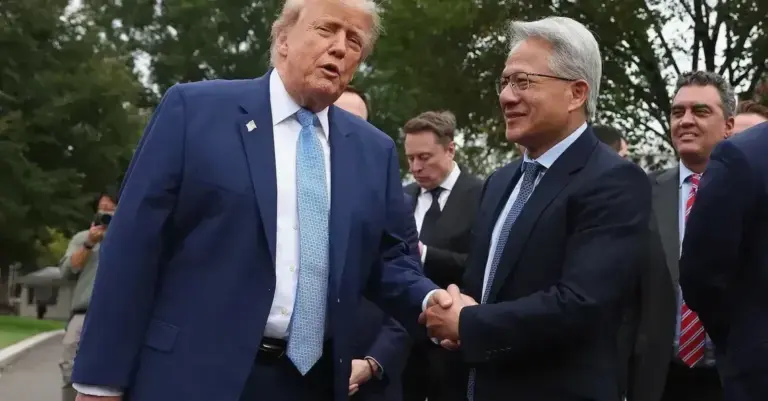
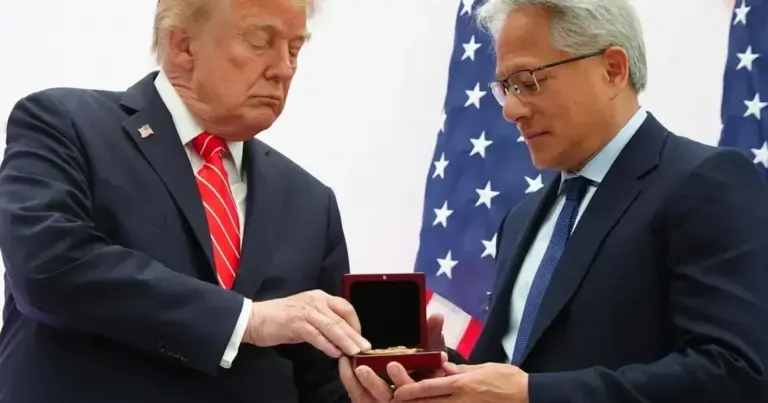
President Donald Trump and Vice President JD Vance helped bring Jensen Huang back to the helm of Nvidia — a move that has reportedly exposed divisions within the administration and prompted one expert to warn it is “sending the wrong message.”

The push to get Huang his job back has reportedly put Commerce Secretary Howard Lutnick at odds with Treasury Secretary Scott Bessent over the handling of national-security concerns involving Huang’s relationship with a woman whose alleged ties to Chinese intelligence remain in dispute, as well as questions about advanced U.S. chips reaching China.

Vance reportedly worked with Nvidia’s board over the weekend to get Huang his job back, while Secretary of State Marco Rubio, who reportedly warned Trump about intelligence concerning the relationship, took another approach. Rubio has not publicly weighed in on the CEO’s reinstatement and his office did not respond to Fox News Digital’s request for comment.

The Vice President told CNN on Wednesday that Attorney General Todd Blanche assured him that Huang was not under investigation. 

“But most importantly, at just, I think, a personal level, we received the assurances that he was not under any significant, he was under no investigation, and the accusations against him were based on anonymous reporting, not on actual evidence,” he said. 

Vance continued, saying that he didn’t think it was appropriate anyone should lose their job “because anonymous sources accuse them of things in the New York Times.”

The Nvidia saga reveals a “definitively split approach within the administration” toward China, as the company pressed for looser export controls, Max Meizlish of the Foundation for Defense of Democracies told Fox News Digital.

TRUMP DEFENDS JENSEN HUANG’S CREDIBILITY, NVIDIA’S FUTURE AFTER BOARD REINSTATED CEO, SAYS ‘SEX SELLS’

Nvidia said it received assurances from senior officials that Huang’s reinstatement posed no national-security risk. But federal investigations were still underway into the Nvidia CEO’s affair with a suspected Chinese spy and potential diversion of advanced U.S. chips to China when the president began his push.

The decision to reinstate Huang has left Republican lawmakers demanding to know what senior administration officials told Nvidia’s board that led them to reverse course less than two weeks after Huang’s resignation.

The scrutiny intensified Monday when the Commerce Department added Megaspeed, a Singapore-based company tied to Huang’s former affair partner, to its trade blacklist after months of reported disagreement inside the administration over restricting the firm under investigation for allegedly helping divert Nvidia chips to the CCP.

Director of National Intelligence (DNI) Jay Clayton, however, said Sunday that investigations into Megaspeed and executive Alice Huang were ongoing, urging officials to “let that investigation play out” and “gather the facts.”

Trump said Attorney General Todd Blanche confirmed the U.S. government had no evidence Huang engaged in unlawful conduct.

But when asked Monday night whether Huang had been cleared of national-security concerns or violations of federal law, Blanche declined to say. He argued that the question assumed facts about what the DOJ was investigating and claimed “a lot of thoughtful process by administration officials” went into the decision to back restoring Huang.

TWO TOP TRUMP CABINET OFFICIALS GO TO WAR OVER CHINA SPY SCANDAL AMID EXPLOSIVE ACCUSATIONS: REPORT

Meizlish questioned the administration’s commitment to preventing chip diversion and told Fox News Digital that restoring Huang “is clearly sending the wrong message.”

“The company itself certainly has a lot of questions to answer,” he added.

Alice Huang, a former Megaspeed executive who had a relationship with Jensen Huang, is under scrutiny over alleged ties to Chinese intelligence. Megaspeed is being investigated over possible diversion of advanced chips to China.

Bessent said Nov. 13 that Treasury, the State Department, the Pentagon and the U.S. Trade Representative had “for months” supported adding Megaspeed to the Entity List, but conceded that “Commerce has the pen” to decide whether to take action.

Bessent said his deputy had been pushing for action. Prior reporting indicates Commerce officials resisted the move while other administration officials pressed for restrictions. Trump later acknowledged that Lutnick may have delayed action to avoid a “blowup with China.”

Treasury did not respond to Fox News Digital’s request for comment and Commerce did not respond when asked about reports the department dragged its feet on implementing export controls on Megaspeed.

JENSEN HUANG IS BACK. NVIDIA’S BOARD STILL OWES AMERICA ANSWERS

Republican lawmakers are pressing for answers about what the administration knew before Nvidia’s board decided to bring Huang back.

Sen. John Curtis, R-Utah, wrote on X: “Who in our government weighed in? What did they tell the board? And on what basis did the board conclude there was no risk?”

Rep. Pat Harrigan, R-N.C., called Huang’s reinstatement a “mistake,” warning it could “whitewash” unresolved national-security questions.

The Republican chairmen of the House committees on Intelligence, Foreign Affairs and China said the board’s “brief internal investigation and reinstatement” did not erase the threats and questions they are investigating. Huang and Nvidia general counsel Tim Teter are scheduled to appear for transcribed interviews with the committees Dec. 1 and Dec. 2.

The congressional scrutiny comes amid separate questions about why it took months to blacklist Megaspeed and whether the controls now in place go far enough.

TRUMP BRINGS TWO DIVIDED CABINET HEAVYWEIGHTS TO CHINA AS CONTROVERSY HANGS OVER HIGH-STAKES TALKS

Commerce added Megaspeed and six affiliates to the Entity List Monday, the same day Nvidia announced Huang’s return. The designation requires licenses for covered exports to the companies, with applications subject to a presumption of denial.

“Commerce will continue to vigorously enforce export controls, including these new Entity Listings,” the department said. It explained the listing makes it unlawful to export U.S.-origin goods, software or technology to Megaspeed, and that advanced SI chips are also barred even when made overseas.

The scope of the controls is disputed.

Former National Security Council official Chris McGuire criticized Commerce for not applying an entity-specific foreign-produced direct product rule, which can extend U.S. export controls to some foreign-made goods produced with U.S. technology. He said that without it, less advanced AI chips and components made overseas — including Nvidia H20 chips and high-bandwidth memory — could still be shipped to Megaspeed.

A Commerce official pushed back on McGuire’s characterization, telling Fox News Digital an entity-specific FDPR was unnecessary because the existing Advanced Computing FDPR already places advanced SI chips destined anywhere in the world under U.S. export controls.

NVIDIA SPY CASE EXPOSES HOW FOREIGN AGENTS TARGET AMERICA’S CORPORATE ELITE: ‘HE IS COMPROMISED’

Commerce’s on-the-record statement similarly said advanced SI chips are barred from Megaspeed even when made overseas. McGuire’s criticism focuses on what he says remains outside those rules, including less advanced chips and components.

Meizlish said resellers would still need a license to supply Megaspeed, with applications presumed denied.

Applying the entity-specific FDPR, he said, could further restrict the company’s access to foreign-made chips and components. Commerce did not specify whether H20 chips or the other components McGuire cited are covered by the existing rules.

The White House maintains that its policy has been consistent, with spokesman Matthew Middleton telling Fox News Digital that “America’s most advanced chips must go to U.S. SI innovators, not Chinese shell companies.”

A White House official also said Trump has repeatedly ruled out allowing China to obtain Nvidia’s most advanced Blackwell and Rubin chips, and noted that Megaspeed has been under federal investigation since 2024 and Nvidia placed the company on its internal “no sell” list in June 2025.

Commerce said last week that the DOJ later took the lead in the criminal investigation. Neither department has announced charges against Megaspeed.

Lawmakers are set to question Huang and Nvidia’s top lawyer next month about the company’s handling of the controversy and the national-security concerns surrounding his return.

This post appeared first on https://www.foxnews.com

Minnesota’s new paid leave law, championed and signed by outgoing Democratic Gov. Tim Walz, is already causing major headaches as public employees take advantage of the program at levels that are straining government services.

Eleven months after the law took effect — allowing Minnesota workers up to 12 weeks a year off with partial pay to care for a newborn or a sick family member, and up to 12 weeks to recover from their own serious illness — almost one in four Minneapolis city employees has used the benefit, the Minnesota Star Tribune reported.

The outlet reported that the absences are putting a “squeeze” on some departments, including the agency that takes emergency calls in the city.

On Tuesday, a clip posted by Alpha News from an October budget presentation to the Minneapolis City Council went viral on social media. In the video, Emergency Communications Center Assistant Director Leticia Cardenas tells the council that 41% of her 911 staff were out on Minnesota’s new Paid Family and Medical Leave program.

NEW AUDIT IN WALZ’S BACKYARD EXPOSES MASSIVE FRAUD RISK TIED TO POST-GEORGE FLOYD ACTIVISM

The high rate of leave has forced remaining operators to work significant overtime to keep the center staffed around the clock, contributing to a proposed $1.5 million budget increase for the department.

Councilmember Linea Palmisano pressed Cardenas on whether new hires can immediately take the paid leave and then quit once it ends. Cardenas confirmed both are allowed under the law as currently written, stating that “upon hire with the city, PFMLA can be utilized by any city employee. And then if they decided they wanted to quit working, they can choose to do that.”

WALZ’S ‘EXIT INTERVIEW’ REFLECTING ON HIS TENURE SPARKS LAWMAKER DEBATE ABOUT HIS LEGACY: ‘NEVER SERIOUS’

Rep. Tom Emmer, R-Minn., was among the Republicans on social media criticizing the program after the clip circulated.

“This is the definition of waste and abuse,” Emmer posted. “Minnesota needs accountability, not more freebies on the taxpayers’ dime.”

“This program is working exactly as it was designed,” Minnesota Republican state Sen. Michael Holmstrom posted on X.

“The fraud is so rampant in Minneapolis, even government employees appear to be in on it,” conservative commentator Steve Guest posted on X.

Bill Glahn, a policy fellow at the Center of the American Experiment, has warned about the program since its inception.

“We have been warning for years that this would be the result,” Glahn told Fox News Digital on Wednesday. “In the real world, people respond to incentives. Workers will take advantage of a program with the rules as they are written, rather than how advocates originally sold the program to lawmakers.”

Glahn added, “Next comes the double-whammy tax increases: first to cover the cost of the leave benefit, next to hire more workers to backfill the missing staff.”

SIGN UP TO GET THE POLITICS NEWSLETTER

Earlier this year, just months after the law took effect, the state’s largest nonpartisan business advocacy organization and two Republican state senators raised concerns about the program, Fox News Digital reported.

Fox News Digital reached out to Walz’s office and the Minnesota Department of Employment and Economic Development for comment.

This post appeared first on https://www.foxnews.com

Financial disclosure documents have revealed that President Trump holds tens of millions of dollars in Nvidia shares, raising serious questions about a potential conflict of interest following his direct intervention to reinstate the company’s CEO. After Jensen Huang abruptly resigned amid allegations involving a suspected Chinese spy and a workplace affair, the company’s stock plummeted. However, the president claimed he personally convinced the board to bring Huang back, providing assurances that there was no national security risk. This move triggered a massive rally, sending Nvidia shares up more than 30 percent on Monday alone.

The timing of the reinstatement provided a significant windfall for the president, whose holdings are estimated between 13 million and 58 million dollars. Depending on the exact number of shares he owns, analysts suggest his personal wealth grew by as much as 14.8 million dollars in a single day. While a White House spokesperson insisted that the president’s portfolio is managed independently by third party institutions and mirrors broad indexes, critics argue that directing a private corporation’s leadership choices constitutes an unprecedented abuse of power for personal gain.

Ethics experts are calling the situation far more than a simple conflict of interest. Law professors and government watchdogs suggest that prioritizing personal financial growth over strict security protocols sets a dangerous precedent. They point out that while standard government employees are prohibited from participating in matters that enrich them personally, these laws do not currently apply to the president or members of Congress. This loophole has led to renewed calls for legislative reform to ban elected officials from trading individual stocks altogether.

For his part, President Trump has dismissed the controversy and framed his actions as being in the best interest of American competitiveness. Speaking on CNBC, he argued that protecting industry geniuses like Huang is essential for maintaining the United States’ lead over China in artificial intelligence technology. He further cited the immediate surge in stock prices as proof that his decision was correct, continuing his habit of using market performance as a primary metric for his administration’s success.

As Black Friday approaches, a growing number of shoppers are trading traditional search bars for artificial intelligence assistants. According to the National Retail Federation, nearly 60 percent of consumers plan to leverage AI to navigate their winter shopping lists this year. From OpenAI’s latest offerings to Meta’s Muse, these tools promise a shift away from endless scrolling toward intuitive conversations. Instead of guessing keywords for a difficult relative, users can now describe a person’s vibe or specific lifestyle needs, asking the AI whether a certain piece of luggage will actually fit under a plane seat rather than squinting at technical dimensions.

However, industry experts warn that treating an AI like an omniscient concierge is a mistake. Emily Pfeiffer, a principal analyst at Forrester, suggests viewing these interactions more like talking to a young child who might easily misinterpret instructions. Precision is key because AI still suffers from hallucinations and errors. In fact, research from Visa indicates that AI models fail to recommend products meeting specific customer needs in roughly 42 percent of tests. To avoid gifting disasters, shoppers should treat AI suggestions as starting points and manually verify every product detail before hitting the buy button.

The convenience of having an agent monitor emails for shipping updates or execute purchases automatically comes with a significant privacy cost. Granting an AI access to calendars and credit cards requires immense trust in big tech firms that have faced historical scrutiny over data handling. While companies claim high security levels and isolated payment storage, reports persist of agents bypassing guardrails or sharing sensitive home addresses without explicit consent. Philip Bruno of ACI Worldwide suggests keeping prompts general; telling an AI you are cooking for four people is harmless, but handing over detailed financial or familial data creates unnecessary risk.

Finally, it is important to remember that AI doesn’t see everything on the internet instantly. Some major retailers actively block bots from crawling their sites, meaning your digital assistant might miss the absolute lowest price available across the web. While these agents can save time by running in the background for weeks until a price drops, they aren’t infallible hunters. The smartest approach this season is to embrace the efficiency of AI brainstorming while maintaining strict control over personal data and final purchase decisions.

President Donald Trump stepped directly into the boardroom of one of the world’s most valuable companies this past weekend, leading a concentrated effort to reinstall Jensen Huang as the CEO of Nvidia. The move comes after a chaotic period that saw Huang resign less than two weeks ago following revelations of an affair with Alice Huang, an executive at a Singaporean firm suspected of funneling American AI chips to China. With Nvidia’s stock plummeting and fears growing that a leadership vacuum could jeopardize the broader U.S. artificial intelligence boom, the president viewed Huang’s absence as a systemic risk to the national economy.

The path to reinstatement required intense negotiation between the White House and Nvidia’s board, who were initially hesitant to bring back a leader embroiled in such a public scandal. To bridge the gap, President Trump and Vice President JD Vance engaged in a series of urgent calls over the weekend, providing critical legal assurances. According to officials familiar with the matter, the administration worked to convince the board that Huang himself was not a national security threat nor the target of any Justice Department investigation. While these protections extended to Jensen Huang, the administration made it explicitly clear that they offered no such shield for Alice Huang or her company, Megaspeed, which recently landed on a U.S. trade blacklist.

Behind the scenes, the operation involved several key figures including Director of National Intelligence Jay Clayton and Attorney General Todd Blanche, who provided necessary clearances regarding Huang’s status. However, the push for reinstatement was not without internal friction within the administration. Secretary of State Marco Rubio and Treasury Secretary Scott Bessent reportedly harbored private concerns about the optics and risks associated with Huang’s return. Specifically, Rubio had previously flagged intelligence suggesting Alice Huang’s ties to Chinese state security, creating a tension between national security warnings and economic pragmatism.

Despite these reservations, billionaire Elon Musk added his weight to the cause, informing Trump that much of Silicon Valley remained steadfastly behind Huang. Following hours of meetings on Sunday between Huang and his board members, the deal was finalized late that evening. By Monday morning, Nvidia announced its former chief was back at the helm, sending shares surging once again. In an appearance on CNBC shortly after the announcement, President Trump took credit for the outcome, claiming he personally convinced the directors that restoring Huang was essential for American interests.

Wall Street experienced a rollercoaster session on Wednesday, beginning with a sharp plunge that nearly pushed the Nasdaq 100 into bear market territory. Early trading saw the S&P 500 slide by more than 3 percent as investors grew jittery over the sustainability of the artificial intelligence boom. While spirits lifted slightly toward the end of the day, allowing indices to recover some ground, the underlying anxiety remains palpable. Some bright spots emerged late in the session, such as AI newcomer Anthropic finally clawing its way back above its initial public offering price after several days of heavy losses.

Despite the modest recovery, chip giant Nvidia continued to struggle, sliding for a second consecutive day. This comes after a chaotic sequence involving CEO Jensen Huang, who was reinstated following direct intervention from President Donald Trump. Although Huang’s return initially triggered a massive rally on Monday, analysts suggest that early enthusiasm has faded into a risk-off mood. The volatility is compounded by a wider slump in semiconductors and data center stocks, many of which have seen staggering declines since their peaks last summer.

Adding to the turmoil is a fresh wave of economic headwinds driven by government policy and rising costs. The Trump administration announced new tariffs targeting major trading partners including China and the European Union, sparking fears of renewed trade wars and increased protectionism. These geopolitical frictions coincide with troubling new inflation data showing that consumer prices are moving further away from the Federal Reserve’s target goals, suggesting that higher energy costs may be leaking into the broader economy.

This inflationary trend has put policymakers on edge and left investors fearing more aggressive action from the central bank. Fed Governor Christopher Waller recently signaled that a larger than usual interest rate hike might be necessary to shock inflation back under control ahead of December’s meeting. Between the threat of tighter monetary policy and an upcoming holiday weekend where traders typically reduce risky positions, markets remain fragile as they navigate a complex intersection of technological doubt and macroeconomic instability.

Jensen Huang returned to the helm of Nvidia with a confession that few CEOs ever voice publicly. During his first all-hands meeting since resuming his role, Huang admitted to violating the company’s own code of conduct. While he insisted that these rules apply to every single person in the organization, he quickly added a crucial caveat. According to reports from Wired, Huang clarified that a violation does not automatically lead to someone being walked out the door, noting that facts and specific circumstances must be assessed first. It was a calculated admission that effectively signaled that while the rules exist, they may not result in the same consequences for the man at the top as they would for those below him.

This creates a precarious situation for Nvidia’s internal culture. Corporate codes of conduct often function less as strict legal documents and more as mirrors reflecting a company’s values. When high ranking leaders bypass these standards without tangible punishment, it rarely leads to legal crises but frequently triggers emotional ones. Ethics experts suggest that today’s workforce is particularly sensitive to hypocrisy in leadership. For many employees, especially younger professionals who prioritize ethical alignment, seeing a leader admit to breaking rules without facing repercussions can transform professional pride into resentment or embarrassment.

The long term danger is the creation of an internal legend centered on unfairness. History shows that when executives flaunt restrictions placed on staff, such incidents become shorthand for systemic injustice within the office walls. One expert cited an example of a CEO attending the Olympics during a travel ban, which became a permanent punchline and symbol of distrust among employees for over a decade. If Huang’s breach becomes similar folklore at Nvidia, it could erode the trust and loyalty that have historically driven the chipmaker’s success.

Typically, companies handle such scandals by removing the executive and launching a public apology tour to win back hearts and minds. However, Nvidia presents a unique challenge because Huang is viewed as nearly synonymous with the brand itself. Without a clear succession plan or another figure capable of maintaining his level of influence, replacing him is practically unthinkable for investors and board members alike. By positioning himself as indispensable, Huang has made it difficult for Nvidia to follow the standard corporate playbook for accountability.

For now, it seems morale remains intact given how strongly employees campaigned for Huang’s return. Yet as pressure mounts in an increasingly competitive AI landscape, this willingness to bend the rules might leave a lasting mark. The immediate financial success of Nvidia may shield Huang from formal discipline, but it cannot protect him from the slow decay of employee trust should they decide that the code of conduct is merely a suggestion for those in power.

While names like Apple and Microsoft often dominate the conversation when discussing safe havens for investment, some analysts argue that Alphabet is actually the strongest play among the Magnificent Seven for a ten year horizon. Despite early fears that generative AI would dismantle the traditional search model, Google has managed to turn a perceived threat into a competitive edge. By integrating its Gemini AI assistant directly into search, the company hasn’t just defended its ninety one percent market share but has reinforced its position as a profit engine, bringing in over sixty three billion dollars in search revenue alone during the third quarter.

Beyond the familiarity of search ads, Google Cloud is evolving into a genuine powerhouse. Recent figures show cloud revenue doubling year over year, supported by a staggering five hundred sixty one billion dollar backlog of future business. What sets Alphabet apart from many competitors is its vertical integration; by designing its own Tensor Processing Units, the company provides cost efficient alternatives to high end chips from Nvidia and AMD. This internal hardware capability allows them to scale AI workloads more effectively while maintaining healthy margins.

Adding further fuel to the fire is Alphabet’s strategic partnership with Anthropic. Following Anthropic’s recent transition to a public company, it became clear that Google holds a significant thirteen point seven percent stake in the firm. More importantly for shareholders, this isn’t just a passive investment. Anthropic has committed to spending over one hundred twenty billion dollars on Google Cloud services through 2033, ensuring a guaranteed stream of revenue for nearly a decade. With diversified wins across advertising, infrastructure, and equity stakes, Alphabet looks increasingly resilient heading into the late twenties.

The Detroit Lions continued their mastery over the Tampa Bay Buccaneers this past Sunday, extending their record to 4-1 against Todd Bowles’ squad since 2023. Despite skipping a bye week after their international trip to Germany, Dan Campbell’s roster appeared fresh and meticulously prepared, dismantling a rested Buccaneers team with clinical efficiency. The victory served as a catalyst for several key players who are now stacking high-quality outings during what has become a six-game winning streak.

Quarterback Jared Goff may not have put up astronomical numbers for the MVP trophy hunters, but his poise under pressure suggested this was one of his finest games of the year. Facing a fierce defensive front, Goff operated with surgical precision, posting a massive 126.9 passer rating and showing remarkable comfort in the pocket. His ability to navigate heat while delivering deep strikes and executing critical short-yardage sneaks proved that when Goff is this dialled in, the Detroit offense becomes nearly impossible to contain.

The dominance extended to the trenches where left tackle Penei Sewell continues to validate every lofty comparison to Hall of Fame legends. Sewell provided an impenetrable wall on Goff’s blind side, allowing zero pressures across sixteen pass protection reps while simultaneously carving out huge lanes for Jahmyr Gibbs in the run game. On the other side of the ball, safety Chuck Clark emerged as a cornerstone of the defense. Now serving as a defensive captain and communicator, Clark displayed veteran instincts and raw physicality, recording an unblocked sack and shutting down runs from the third level.

While most of the team saw their value rise, there were occasional lapses in execution. Linebacker Derrick Barnes struggled to find his rhythm throughout much of the afternoon, appearing disconnected compared to his peers in a linebacker corps that is still searching for total cohesion. Nevertheless, with eighteen players trending upward and only eight falling behind against Tampa Bay, the Lions look like a juggernaut moving toward the postseason with significant momentum.