
Archive

November 2026

Browsing

American motorists are seeing some long awaited relief at the pump this week as the national average for regular gasoline slid below four dollars a gallon for the first time since last July. According to data from AAA, prices hit roughly three dollars and ninety eight cents on Tuesday, marking a significant drop of nearly forty cents over the last month alone. This downward trend follows a noticeable cooling of energy inflation in October, which saw a modest increase compared to the dramatic surges experienced throughout September.

Industry experts suggest that while current market conditions are helping, timing is also playing a major role in the price dip. Bespoke Investment Group noted that fuel costs typically soften during this season regardless of broader economic trends. They argued that failing to see a decline at this point in the year would actually be more concerning than the drop itself, suggesting that these changes are partly just a result of predictable seasonal patterns.

Beyond seasonality, global politics and supply chains have provided further momentum for lower prices. Crude oil benchmarks recently dipped as tensions between Washington and Tehran appeared to ease following comments from President Donald Trump, reducing the perceived risk of disruption in the Middle East. Additionally, oil flows from the Persian Gulf have largely recovered toward prewar levels, easing fears regarding global supply shortages.

Despite the welcome news for consumers, some officials remain cautious about the long term outlook for inflation. Federal Reserve Governor Christopher Waller acknowledged the recent decline but cautioned that energy shocks might behave differently now than they did prior to the pandemic. He suggested that while current drops are positive, the lasting impact on the economy will depend entirely on whether these lower prices can be sustained through the coming months.


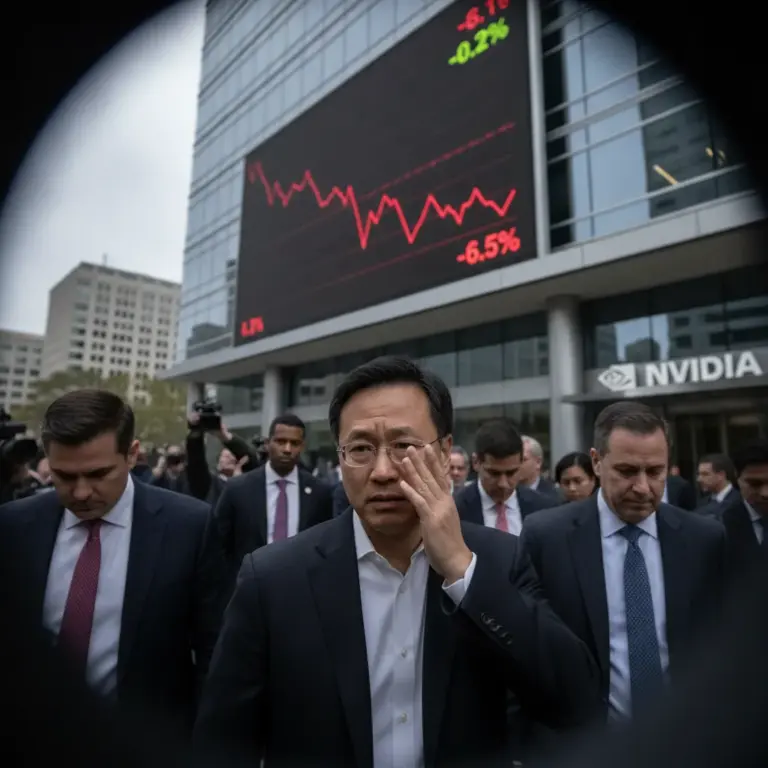
Nvidia is facing a corporate and geopolitical crisis following revelations that CEO Jensen Huang engaged in a romantic relationship with a woman alleged to be a spy for the Chinese government. To manage the fallout, the semiconductor giant has enlisted Wachtell, Lipton, Rosen & Katz, one of the most prestigious law firms in the United States. Former U.S. Attorney Joon Kim will spearhead what the company describes as a thorough and independent investigation into the matter, while the FBI simultaneously conducts its own federal probe.

The situation centers on Alice Huang, an executive at Megaspeed, a Singaporean firm and Nvidia customer previously scrutinized for allegedly diverting chips to China. While Nvidia maintains it was never warned by the U.S. government about intelligence concerns regarding Megaspeed, reports indicate that Secretary of State Marco Rubio had flagged Huang’s relationship to Washington officials as early as this spring. Despite these warnings, President Donald Trump stated he believes Jensen Huang’s claim that he was entirely unaware of her alleged espionage activities.

The scandal has sent shockwaves through the financial markets, wiping nearly 500 billion dollars off Nvidia’s market value since Friday as shares plummeted toward a yearly low. Given that Nvidia produces the essential hardware powering the global artificial intelligence boom, US officials view the company as a pillar of national security. Any potential breach of confidence involving its leader could have significant implications for the American effort to maintain technological superiority over Beijing in the AI race.

As internal investigators scramble for answers, political pressure is mounting on Capitol Hill. Leaders of the House Committee on Foreign Affairs have requested that Jensen Huang appear for a closed door briefing next week to address potential vulnerabilities. Although Nvidia’s board insists there is currently no evidence that company secrets were compromised, they acknowledge that because Huang is so inextricably linked to the brand’s identity, resolving this controversy is an urgent priority for survival.

Shares of Advanced Micro Devices climbed higher today following a wave of positive momentum driven by a strategic partnership with Google Cloud and a fresh endorsement from analysts on Wall Street. Investors reacted enthusiastically to the news that AMD will integrate its high performance computing capabilities into Google’s infrastructure, signaling a significant step forward in the company’s bid to capture a larger slice of the artificial intelligence market.

The rally was further bolstered by a notable upgrade from financial experts who now see more room for growth in AMD’s valuation. Analysts pointed toward the company’s strengthening product roadmap and its ability to challenge dominant competitors in the data center space. This shift in sentiment suggests that institutional investors are becoming increasingly confident in AMD’s long term strategy to diversify its hardware offerings beyond traditional processors.

Industry observers note that these developments come at a critical time as cloud providers seek alternatives to current chip monopolies to manage costs and increase efficiency. By securing deeper ties with a giant like Google, AMD positions itself as a primary beneficiary of the ongoing surge in generative AI demand. The stock’s upward trajectory reflects broader optimism that the firm can translate technical milestones into sustained revenue growth throughout the coming year.

A recent shift in the U.S. equity market has left several high profile companies trading well above their estimated intrinsic worth. According to the latest analysis from Morningstar, thirty stocks officially entered overvalued territory during the week ending November 6, moving into the one or two star rating categories. While the broader U.S. market actually remains undervalued overall due to a slight dip in the total market index, specific sectors and heavy hitters have seen prices climb faster than their fundamental values can justify.

Among the most notable shifts were some of the biggest names in American business. Warren Buffett’s Berkshire Hathaway slipped into a two star rating after gaining about five percent last week, now trading at roughly a twelve percent premium to its fair value estimate. Other major players like Bank of New York Mellon and Royal Caribbean Cruises also saw their ratings drop as their stock prices pushed beyond reasonable limits according to analyst models. These movements suggest that even established giants with strong economic moats aren’t immune to becoming overpriced when investor enthusiasm peaks.

Even more concerning for cautious investors are the stocks that plummeted to a one star rating, signaling they are significantly overvalued. Retail giant Costco is among them, currently trading at a staggering thirty seven percent premium over its fair value estimate of seven hundred seventy dollars per share. Insurance provider Allstate and diagnostics firm Idexx Laboratories followed suit, joining a small group of highly priced assets that may be vulnerable to corrections if market sentiment shifts.

Despite these individual warnings, the wider landscape offers a mixed bag for traders. Roughly forty percent of Morningstar tracked stocks remain undervalued and another forty one percent are considered fairly priced. With only eighteen percent of total coverage falling into the overvalued category, analysts suggest there is still plenty of room for growth in the general market even as certain blue chip favorites become too expensive for comfort.

The semiconductor market opened the trading week with an aggressive burst of energy, signaling a strong recovery for investors who had recently weathered a period of volatility. By mid morning, the industry’s primary benchmarks showed significant growth, with both the Philadelphia Semiconductor Index and the iShares Semiconductor ETF jumping six percent. This sudden upward swing provides some much needed relief following a sharp downturn that left many wondering if the sector’s rapid ascent had finally hit a ceiling.

Interestingly, this latest rally is characterized by a broadening base of support rather than reliance on a single powerhouse. While Nvidia has long been the undisputed engine driving the artificial intelligence trade, today’s gains are being distributed across a wider array of hardware providers and toolmakers. It suggests that traders are now looking beyond the most obvious winner to find value in other companies providing the essential infrastructure required for the generative AI revolution.

Market analysts suggest this shift indicates a growing confidence in the entire ecosystem of silicon production. Rather than betting solely on GPUs, capital is flowing into various stages of the supply chain, from fabrication equipment to specialized networking chips. As these diverse players climb together, it creates a more stable foundation for the tech sector at large, proving that the appetite for AI integration remains voracious even when its biggest star takes a breather.

The recent volatility in the technology sector has left many investors questioning whether the artificial intelligence gold rush has finally hit a wall. According to David Sekera, chief US market strategist at Morningstar, the latest market turmoil is less about a failure of technology and more about a sudden shift in political winds and investor sentiment. Following a decisive Democratic sweep in the midterm elections, concerns have mounted that new regulations could stifle data center expansion, triggering a sharp rotation where traders dumped high flying growth stocks in favor of steadier value plays.

This transition was exacerbated by a wave of forced liquidations and panic selling that swept through margin accounts late last week. Despite the chaos, analysts suggest that the underlying long term thesis for AI remains intact for the true innovators of the space. While commodity oriented hardware companies that benefited from temporary supply shortages may still be overpriced and prone to further declines, those leading the charge in actual technological breakthroughs continue to offer significant potential.

For patient investors, this period of instability creates a window to acquire quality assets at a discount. During a recent discussion on The Morning Filter podcast, Sekera highlighted several opportunities emerging from the wreckage, identifying four specific growth stocks currently trading below their fair value estimates. By focusing on these undervalued entries rather than chasing short term momentum, investors can position themselves to benefit when the market eventually stabilizes and recognizes the enduring value of AI leadership.

Shares of Nvidia took a sharp dive today following revelations that the company has launched an internal investigation into its chief executive, Jensen Huang. The sudden volatility comes after reports emerged linking the leadership of the world’s most prominent AI chipmaker to serious allegations involving national security and personal misconduct. Investors reacted swiftly to the uncertainty, sending shockwaves through the tech sector as market confidence wavered.

The turmoil centers on two distinct but equally damaging fronts. According to recent updates, Huang has admitted to having an affair, while simultaneously facing scrutiny over alleged connections to foreign espionage. While Nvidia remains the dominant force in providing the hardware necessary for the artificial intelligence boom, these claims have raised urgent questions about corporate governance and whether any sensitive technology was compromised during these episodes.

Industry analysts suggest that the timing could not be worse for Nvidia, which has seen its valuation skyrocket due to the global rush toward generative AI. The intersection of private scandal and potential state-level spying creates a precarious situation for a board tasked with maintaining trust among government contractors and international partners. For now, shareholders are left waiting to see if this crisis will result in a change at the top or if Huang can navigate his way out of the storm.

The worlds largest gold producers saw their free cash flow dip in the third quarter as a combination of heavy capital investments and climbing operating costs ate into profits. While the price of gold generally trended upward during the period, ending the quarter up slightly more than two percent, volatile market swings created a challenging environment for miners. Prices were heavily influenced by shifting expectations surrounding U.S. interest rates and geopolitical tensions in the Middle East, which kept investors on edge throughout the summer.

Industry giant Newmont felt these pressures clearly, reporting a thirteen percent drop in free cash flow compared to the previous quarter. Much of this decline was driven by increased capital spending and significant working capital requirements. Despite this, Newmont achieved a record third-quarter adjusted net income of 2.3 billion dollars, bolstered by stronger production at sites like Cadia and Brucejack. However, the company is preparing for a major financial commitment in the coming months, with nearly two billion dollars earmarked for a payment to Barrick Mining following an agreement regarding their Nevada joint venture.

Other major players faced their own set of operational hurdles. Agnico Eagle Mines reported a notable slide in free cash flow from its record highs in the second quarter, partly due to a precautionary suspension of operations at its Canadian Malartic site following a rock mass movement. This incident has forced the company to revise its future production expectations toward the lower end of its projected range. Meanwhile, Kinross Gold lowered its output forecasts for 2026 and 2027, citing extreme winter weather in Chile and recovery issues at its Nevada operations.

Despite these headwinds, there are signs of underlying strength across the sector. Central banks continued to stockpile gold aggressively during the third quarter, adding over three hundred metric tons to their reserves, while ETF holdings reached record levels. For many majors, average gold prices remained high enough to maintain healthy profit margins overall, allowing some firms like Kinross to actually increase the amount of cash they plan to return to shareholders even as production targets tightened.

Gold prices managed a quick recovery early Monday morning after a volatile finish to last week saw the metal slide under the weight of robust economic data. On Friday, the market faced significant pressure following a U.S. jobs report revealing that employers added 165,000 positions in October and the unemployment rate dipped slightly to 4.1 percent. This strength sparked a rally in the U.S. dollar and pushed Treasury yields higher, making gold more expensive for international buyers and less appealing compared to interest bearing assets.

The dip served as a brief correction after an impressive run fueled by political shifts in Washington. Earlier in the week, gold surged following Democratic gains in both houses of Congress, hitting a peak of 4,146.63 dollars per ounce on Thursday. While the subsequent selloff brought spot prices down toward the 4,063 dollar mark by late Friday afternoon, bulls quickly returned to the fray on Monday morning, pushing prices back up toward 4,119 dollars in pre trading hours.

Industry experts suggest that these short term fluctuations are merely noise within a larger upward trend. Jeff Clark, founder of The Gold Advisor, notes that current price action shares a striking correlation with the massive bull market seen between 1976 and 1980. While he stops short of guaranteeing a move toward 10,000 dollars per ounce, he argues that history shows gold often advances even during periods of monetary tightening and rising interest rates, contrary to popular belief among some traders.

Beyond the immediate volatility of spot prices, analysts are encouraging investors to keep an eye on the fundamental health of mining operations. Senior analyst Jeff Valks suggests focusing on exploration results and drilling progress among junior miners rather than reacting to every Federal Reserve announcement or election result. With gold finding strong support around the 4,000 dollar threshold and global demand for mining necessities remaining high, many believe the long term trajectory for precious metals remains firmly pointed upward.

A gathering of seasoned financiers at the New Orleans Investment Conference recently sounded a loud alarm over the current state of artificial intelligence investing, suggesting that the sector is exhibiting all the classic symptoms of a market bubble. During a panel titled Booms, Busts and Bubbles, experts including mining financier Frank Giustra and analyst Jim Iuorio observed that skyrocketing valuations and speculative capital flows have pushed the market into dangerous territory. With some stocks surging hundreds of percent in mere weeks, there is a growing fear that investor enthusiasm has completely detached from economic reality.

The numbers backing these concerns are stark. Moderator Albert Lu highlighted that AI infrastructure now consumes nearly ninety percent of corporate capital expenditures and drives eighty percent of S&P 500 earnings growth. To put this in perspective, Frank Giustra pointed to the Buffett Indicator, which measures total market value against GDP. Currently sitting at around 240 percent, this figure dwarfs the levels seen during the peak of the dot-com crash, signaling that prices may be unsustainable regardless of how transformative AI actually is for society.

One of the most pressing warnings from the group was not just that a crash is coming, but that investors are psychologically unprepared for it. Grant Williams compared the situation to an approaching hurricane, noting that while people prepare for physical storms, they rarely plan an exit strategy for financial ones. Many traders operate under the illusion that they can spot the exact moment a bubble bursts and sell their shares seconds before the plunge, ignoring history where even winners like Amazon saw massive temporary losses during previous tech corrections.

Navigating this volatility requires different strategies depending on an investor’s goals. While some suggest staying in the market with caution, others like Giustra advocate for moving to the sidelines entirely to preserve wealth rather than chasing risky returns. The consensus among these veterans remains clear: while AI might change the world, owning a piece of that revolution doesn’t guarantee profit if you buy in at an irrational price. The real challenge now isn’t identifying the bubble, but having the discipline to leave before it pops.