Archive

November 2026

Browsing

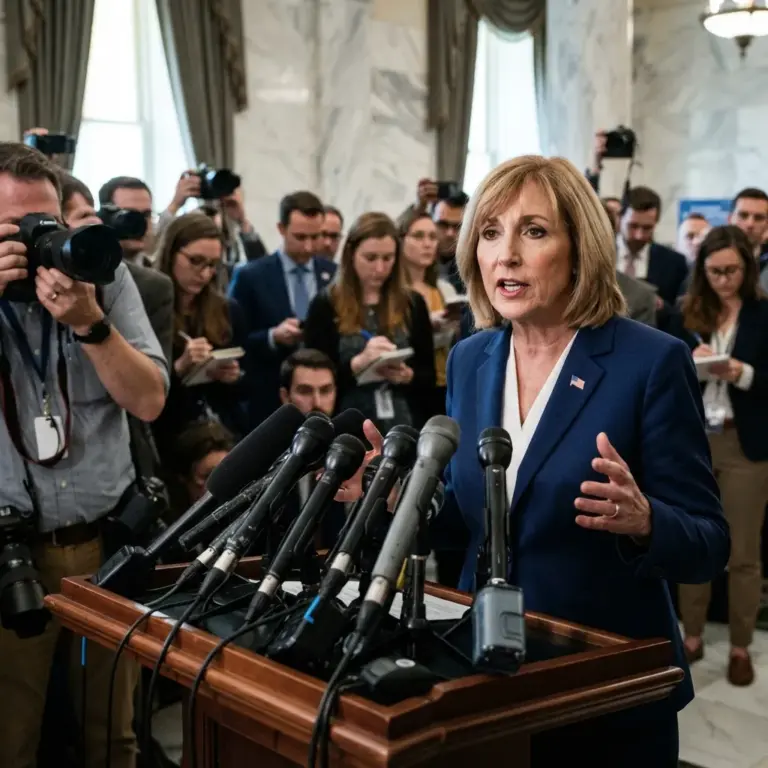
Senator Maggie Hassan is preparing to take a hard line against financial conflicts of interest in Washington. The New Hampshire Democrat announced Friday that her upcoming role as chair of the Homeland Security and Government Affairs Committee will provide the platform necessary to spearhead legislation banning members of Congress and executive branch officials from trading individual stocks. By prioritizing this measure, Hassan aims to address public frustration over lawmakers profiting from the markets while holding positions of immense regulatory power.

During her announcement, Hassan emphasized that the goal is simple: ensuring those in government remain focused exclusively on the people’s business rather than their own portfolios. While acknowledging that several different proposals currently exist, she stressed that any final bill must be definitive in its prohibition of individual stock trades. For Hassan, this move is an essential step in draining a specific corner of the political establishment where wealth accumulation can appear tied to inside information.

The senator noted that previous attempts at reform, such as the STOCK Act of 2012, were insufficient because they relied more on transparency and existing insider trading laws than on total prevention. As she moves toward leading these efforts in January, Hassan intends to use committee hearings to scrutinize potential loopholes and workarounds that could undermine the law. She believes the legislative process must include mechanisms to identify and close gaps quickly once they surface.

One of the most contentious parts of the upcoming debate will likely center on whether these restrictions extend to the spouses and children of government officials. Hassan admitted there are varying perspectives on how to handle family members without creating undue hardship, but she pledged that her committee would examine every detail to ensure the resulting law is actually effective and cannot be bypassed through relatives.

Copper markets took a bruising hit this week, plunging to their lowest levels since April as investors abruptly walked away from high stakes bets on the artificial intelligence boom. In New York, copper futures suffered their worst single day of trading in nearly two years, marking a steep decline from the records set back in September. This sudden exodus reflects a growing nervousness among traders who had previously wagered that the massive build out of AI data centers would drive an insatiable need for the red metal.

The shift in sentiment seems tied to broader political and corporate anxiety. Market players are reportedly rattled by leadership instability at chip giant Nvidia and fears that new regulations on AI infrastructure could emerge following recent shifts in U.S. congressional power. Even seasoned bulls are switching sides, with prominent investor Stan Druckenmiller revealing that he has moved to a short position on the metal. While AI served as the initial catalyst for the selloff, analysts suggest that deeper concerns over persistent inflation and potential interest rate hikes from the Federal Reserve are truly driving the pessimism.

Data shows that hedge funds and managed money accounts have been quietly exiting their positions for weeks, slashing their long holdings significantly ahead of this latest crash. At the same time, expectations regarding U.S. tariffs on refined copper have dimmed, further eroding price support. Technical breakdowns triggered waves of automated selling, accelerating a trend that saw copper slide roughly sixteen percent from its peak just two months ago.

Interestingly, there is a stark divide between these financial paper markets and the actual physical supply of copper. On the ground, indicators remain tight; import premiums in China have surged to record highs while warehouse inventories in Shanghai have plummeted to their lowest levels since late last year. With production forecasts in Chile expected to drop significantly by 2026, some experts wonder if we are seeing a genuine collapse in industrial demand or simply a correction of an overcrowded trade where too many investors chased the same growth story.

The world is witnessing a dramatic pivot back toward nuclear power as geopolitical instability forces nations to rethink their energy security. According to the latest World Energy Outlook from the International Energy Agency, a massive supply shock centered on the Strait of Hormuz has acted as a catalyst for an industry revival reminiscent of the oil crises seen in the 1970s. With cumulative losses of billions of barrels of oil and record breaking diesel prices, officials warn that there is no returning to the old status quo.

Projected growth figures suggest a significant climb in global capacity, potentially reaching 886 gigawatts by 2050 under certain policy frameworks. This surge is being driven largely by heavy investments in China, Europe, and the United States, with some estimates suggesting that nuclear output could actually grow faster than overall electricity demand. China currently leads the charge, accounting for over forty percent of all capacity under construction and poised to become the world leader in operating capacity within several years.

Beyond traditional large scale plants, there is a burgeoning interest in small modular reactors. These compact systems are attracting attention from over fifty countries and are increasingly sought after by American tech firms looking to provide reliable power for hungry data centers. In fact, dozens of gigawatts of these smaller reactors are already linked to various procurement deals as industries seek stable alternatives to volatile fossil fuel markets.

While the IEA frames this movement as a resurgence, leaders at the World Nuclear Association argue that atomic energy never truly left; rather, it has always been a pillar of decarbonization that is finally receiving proper recognition. Whether viewed as a comeback or a long overdue realization of value, the sheer volume of current construction across seventeen different nations suggests that nuclear energy will play a central role in the future global grid.

Panama is stepping back to the negotiating table with Vancouver based First Quantum Minerals in an effort to restart the Cobre Panama mine. Once a powerhouse in the global copper market, the site has been dormant since late 2023 after a wave of intense national protests led the country’s Supreme Court to declare its operating contract unconstitutional. To lead these delicate discussions, President José Raúl Mulino has appointed an interministerial team headed by Minister of Commerce Julio Moltó, tasked with finding a path forward that satisfies both corporate interests and public demand.

President Mulino has made it clear that any return to operation will look very different from the previous arrangement. He has established five core pillars for the negotiations, focusing heavily on national sovereignty, strict environmental protections, and ensuring that mineral resources remain under Panamanian ownership. Rather than granting another traditional mining concession, the government aims to build a fresh legal framework that maximizes economic returns for the nation while remaining strictly compliant with constitutional law.

For First Quantum, the stakes are high given that Cobre Panama once accounted for roughly 1.5 percent of global copper production. The company believes reviving the project could bring back thousands of jobs and support thousands of local suppliers who were displaced by the shutdown. While they have expressed a willingness to work constructively within Panama’s legal systems, they are also advocating for a transparent public consultation process so that citizens can be fully informed before any final deal is signed.

As part of this transition, Panama is exploring more aggressive ownership models. There is talk of creating a state owned mining company to partner with First Quantum or implementing significantly higher taxes and royalties to capture more value. Analysts suggest the government may push for up to half of the mine’s economic benefits. These efforts come on the heels of a recent environmental audit intended to ensure that any potential restart meets rigorous ecological standards and resolves long standing arbitration disputes between the firm and the state.

Sen. Ted Cruz, R-Texas, criticized the “hypocrisy” of his Democratic counterparts over their selective outrage stemming from Republican senators’ push to confirm President Donald Trump’s judicial appointees before Democrats take control of the Senate in January.

“And what did the same Senate Democrats who just gave sanctimonious speeches do? They rammed through 22 federal judges in November and December before leaving,” Cruz said of Democrats, referring to their actions following the 2024 elections.

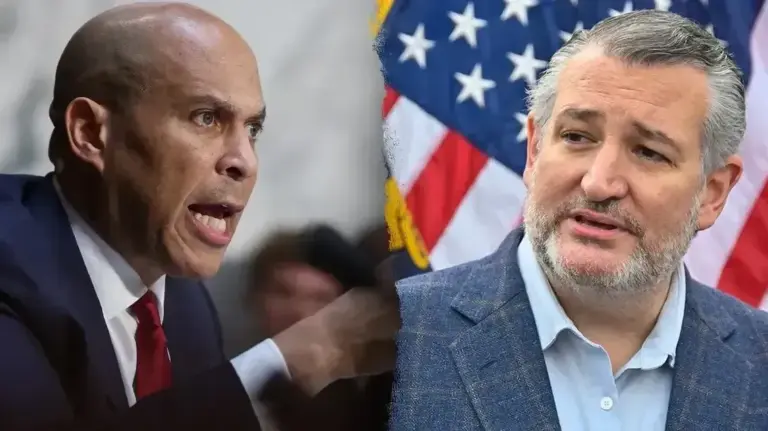
Cruz’s remarks came during a Senate Judiciary Committee nomination hearing on Wednesday, where seven judicial nominees were introduced to committee. The Texas senator was responding to accusations from Sen. Cory Booker, D-N. J., who said Republicans were “rushing” the judicial hearings and in his 13 years in office, he has never seen the committee hold “back-to-back” hearings without the minority’s consent.

MAJORITY LEADER THUNE SAYS SENATE GOP WON’T ‘STAND IDLY BY’ AS DEMOCRATS TAKE CONTROL OF CONGRESS

“You know, you don’t need a particularly long memory to recognize the hypocrisy in what Senator Booker said,” Cruz said, comparing Booker’s “lecture” of Republicans to the theatrics of Captain Renault in the movie “Casablanca.”

“He is shocked, shocked to find gambling in this institution,” Cruz said.

Cruz pointed out that after President Joe Biden lost the White House and Democrats lost control of the Senate in the 2024 election, Senate Democrats “rammed through” 22 federal judges before Republicans took control in January 2025.

“You know, there’s an old adage that hypocrisy is the tribute that vice plays to virtue,” Cruz said.

Booker argued that Republicans were disregarding the election results and suggested that the committee wait until the next term to continue with the nomination process.

“This is not a left or right thing because I’ve watched both parties do this in the 13 years that I’ve been here,” Booker said. “I’m just simply saying that this is yet another step at a time where we could have paused and done this a right way.”

DEMS SEIZE THE SENATE AS BLUE TIDAL WAVE CRASHES DEEP INTO TRUMP COUNTRY, TOPPLES GOP STRONGHOLDS

But Cruz noted that Booker and every other Democrat on the committee voted in favor of approving all 22 judges before the new congressional term started in 2025.

In November 2024, then-Senate Judiciary Chair Dick Durbin, D-Ill., issued a statement after the election pushing for Biden’s judicial appointees to be confirmed before the end of the congressional term.

SIGN UP TO GET THE POLITICS NEWSLETTER

“The Senate must confirm every one of these highly qualified, diverse nominees before the sun sets on the 118th Congress. The American people deserve nothing less,” Durbin said in a press release at the time.

There are currently 27 federal judicial vacancies with 13 nominees still waiting for approval, as Republicans work to fill the seats. Sen. Chuck Schumer, D-N. Y., who is poised to become Senate majority leader when the new Congress convenes in January, vowed to block any of Trump’s “crappy nominations” from being approved once Democrats take the gavel.

U.S. adversaries have spent years developing ways to disrupt the country’s critical infrastructure in a conflict, and the wave of technology disruptions affecting everything from banks to the National Security Agency has offered a reminder of how detrimental those failures could be even without a cyberattack.

The string of outages has fueled speculation about whether the incidents are connected, though Trump administration officials have ruled out a coordinated cyberattack.

National security experts caution that while the outages do not establish malicious activity, they underscore the stakes of protecting systems that underpin everything from financial transactions to military operations.

TIMELINE: AMERICA HITS A TECH WALL AS OUTAGES CRIPPLE EMAIL, GROUND FLIGHTS AND DISRUPT MAJOR BANKS

“We know that our adversaries use that domain to attack our critical infrastructure,” Tommy Waller, a national security expert with the Center for Security Policy, told Fox News Digital. 

“Modern warfare, our people and our critical infrastructures are a prime target for all of our adversaries.”

In a span of six days, technical disruptions affected Microsoft 365, commercial air travel, payroll and human resources software, banking transactions and the National Security Administration’s highly classified internal communications network. 

Some led to massive impacts on everyday life, including only the second-ever nationwide ground stop on all commercial flights since the September 11, 2001, terrorist attacks.

“This is not a cyberattack, and this is not a coordinated effort by a nation-state,” Director of National Intelligence Jay Clayton said Tuesday on Fox Business’ “The Claman Countdown.”

Department of Homeland Security Secretary Markwayne Mullin similarly insisted the disruptions had “nothing to do with cyberattacks,” suggesting that technical failures could become more common as new technology is introduced.

“I believe we’re going to see more of this as new technology rolls out,” Mullin said Tuesday. A day earlier, he sought to reassure Americans during an appearance on Fox News’ “Hannity,” saying, “Well, breathe. The homeland is secure. Our banking system is secure.”

PRESIDENT TRUMP DOWNPLAYS PANIC OVER TECH OUTAGES: ‘NOBODY’S GOING TO PLAY GAMES WITH US’

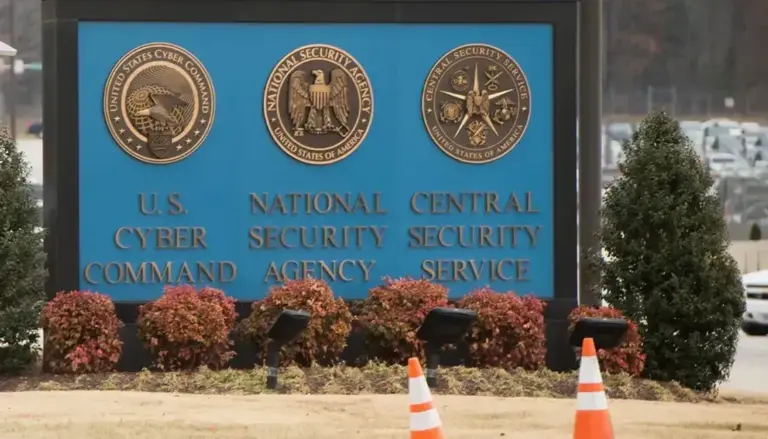
But the disruption at the NSA, one of the nation’s most sophisticated intelligence agencies, has drawn particular scrutiny.

The agency’s highly classified internal communications network, known as NSA Net, went down Tuesday, disrupting employees’ ability to communicate classified information internally. Employee attendance at the agency’s Fort Meade, Maryland, campus was “staggered” throughout the week to ease systems’ use, and the network did not resume operations until Friday.

“This latest thing at the NSA is more problematic because their systems are generally not tied to anybody else, particularly their classified ones,” national security and cybersecurity expert Steve Bucci told Fox News Digital. 

“And, so, that being coincidentally, you know, in this sequence makes it a little harder to just write off.”

A U.S. official attributed the disruption to routine maintenance, saying the NSA experienced temporary interruptions to some internal systems but that its critical operations and national security capabilities remained fully functional.

Waller said the NSA outage could have been “self-induced” by efforts to patch vulnerabilities but questioned whether the broader string of disruptions was coincidental.

“The widespread and persistent nature of it and the types of infrastructures that are being targeted — appear to be targeted — that, to me, says that it’s more than just a coincidence,” he said.

Daniel Hoffman, a former CIA station chief and Fox News contributor, warned the institutions experiencing outages are already prime targets for foreign adversaries and cybercriminals.

“Every single one of these entities is a target, and so are you and I,” Hoffman told Fox News Digital. “Every single day, 24 hours a day, China, Russia, North Korea, Iran, criminals, hackers are trying to target the banks. They’re trying to target Microsoft, obviously.”

Fox News Digital has reached out to the White House for comment.

The threat has already reached American infrastructure. In July, hackers targeted more than 30 municipal water systems in Minnesota, part of a broader wave of cyber intrusions across multiple states that forced some utilities to switch to manual operations and disrupted water service. Federal investigators examined possible Iranian involvement, though the attacks were not definitively attributed.

The Pentagon is also preparing for the possibility of widespread infrastructure failures during a major conflict. Under its FORTRESS initiative, military bases across the continental United States are being directed to prepare to sustain essential operations for at least 90 days without outside support, according to documents previously reviewed by Fox News Digital.

“We don’t want to rely on standard civilian municipal infrastructure to run our national defense. We just simply can’t. It’s an intolerable risk,” Pentagon chief spokesperson Sean Parnell previously told Fox News Digital.

Waller pointed to longstanding Chinese military writings that contemplate attacks on civilian communications and infrastructure during a conflict, arguing that the United States must consider the broader threat even when individual outages appear unrelated.

“Again, I am not saying that China did this. But if China wanted to, this is in their doctrine, right?” Waller said.

GROCERY STORE CYBERATTACKS ARE ‘PSYCHOLOGICAL WARFARE’ THAT COULD STRIKE US, FORMER FBI AGENT WARNS

In 2024, U.S. intelligence and law enforcement agencies warned that Chinese state-sponsored hackers known as Volt Typhoon had infiltrated American communications, energy, transportation and water systems, positioning themselves to potentially disrupt critical services during a conflict with the United States.

New research published last month found that the group had continued targeting government, defense and critical infrastructure networks through a separate hacking operation, even after U.S. authorities moved to dismantle parts of its infrastructure.

Bucci, however, noted that an adversary seeking to compromise American infrastructure might have little incentive to cause widespread, visible failures that could expose its activities.

“They might want to go in and do things to implant stuff for later use,” Bucci said when asked whether foreign adversaries could be testing vulnerabilities in critical U.S. infrastructure.

“But you usually don’t do a weight test where you make stuff fail or get glitchy because that can then warn the target,” he added.

The disruptions have also prompted calls for greater transparency from federal officials and private companies responsible for critical systems.

“For our economy to function, people need to have some confidence in banks, among other things,” Hoffman said. “So, kind of need to tell us what’s going on.”

Waller also urged greater transparency about infrastructure vulnerabilities and the steps being taken to address them.

“Number one, just tell the truth and be transparent,” Waller said.

This post appeared first on https://www.foxnews.com

Former President Joe Biden’s new memoir has drawn sharp criticism and opened a debate about how Biden’s choices — and his account of them — will shape his legacy.

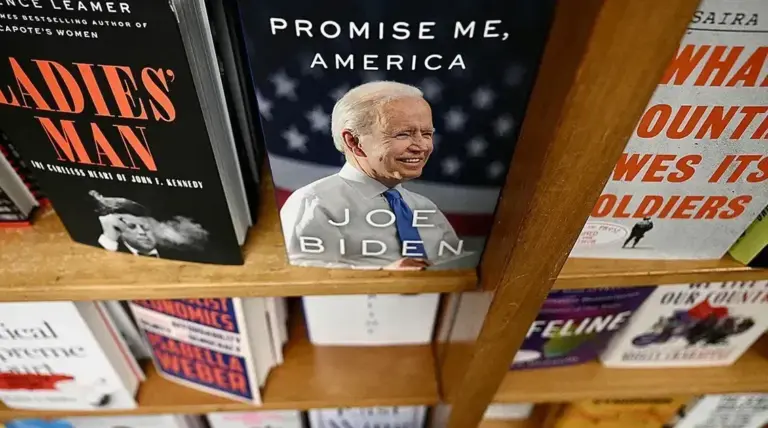
Released Nov. 17, “Promise Me, America” defends Biden’s presidency and his decision to seek re-election in 2024. The memoir drew a sharp verdict from The New Yorker writer Amy Davidson Sorkin, who said Biden remains “stubbornly in denial,” while other critics scrutinized the book’s account of Gaza and what it left out about racial equity. Sorkin’s criticism centers on Biden’s response to questions about his age and his continued insistence that he could have won.

“The true test of a book like this is whether its author will own his losses, too. Biden, for his part, does not,” added New York Times nonfiction critic Jennifer Szalai. “He is so preoccupied with burnishing his legacy that he gets awkward and defensive when addressing the two issues many readers will be most curious about: his handling of the war in Gaza, and his decision to run for a second term.”

“The news of the memoir, in short, is that there is no real news: Biden is as stubbornly in denial as ever, ” Sorkin wrote.

BIDEN ADDRESSES INFAMOUS ‘WE BEAT MEDICARE’ DEBATE MOMENT IN NEW MEMOIR

The dispute around Biden’s recollection of his tenure centers on two consequential decisions — his choice to seek another term and his administration’s policy toward Israel during the Gaza war.

In its review of the memoir, the Associated Press reported that Biden says he believed he was the best person to defeat President Donald Trump and that the Democratic primaries gave him no warning he was in trouble. Meanwhile, Sorkin and Szalai argued in their reviews that Biden gives too little weight to concerns about his age and fitness when recounting that period, despite acknowledging that his debate performance was poor.

“Biden’s voice gets passive; he portrays himself as the helpless victim of events,” Szalai wrote. “He gets similarly defensive when recounting the war in Gaza,” she added.

BIDEN ACCUSES PELOSI OF WORKING ‘FURIOUSLY’ BEHIND SCENES TO DERAIL HIS 2024 CAMPAIGN

Self-described socialist website Jacobin and other reviewers, including Sorkin and Szalai, criticized Biden’s accounting of his relationship with Israel and Israeli Prime Minister Benjamin Netanyahu, arguing he described it in the book as if it were much more adversarial than in actuality.

Szalai wrote that Biden gets “awkward and defensive” when addressing both Gaza and his decision to seek another term, and faulted him for how he described Israeli victims and suffering versus Palestinian victims and suffering. She specifically noted that Biden used names to identify Israeli victims but “no names” for Palestinian victims, while calling his language about Palestinian suffering “passive.”

“The only consistent position is inconsistency,” Israeli journalist and political commentator Amit Segal said of Biden’s account of Israel policy, calling it “devoid of doctrine or strategy. “

Separately, Semafor politics reporter David Weigel noted that Biden recounts signing 17 executive orders on his first day but does not mention his order establishing a government-wide approach to racial equity that mandated every executive agency to develop a DEI action plan. Weigel wrote that the word “equity” does not appear in the memoir once.

SIGN UP TO GET THE POLITICS NEWSLETTER

“Biden argues instead that ‘every one of my legislative accomplishments had justice baked in,’ including ‘equal access to vaccines,'” Weigel wrote.

“Gender gets the same treatment,” he continued. “Biden, who had called anti-transgender discrimination ‘the civil rights issue of our time,’ never uses the word ‘transgender’ in his memoir. He doesn’t mention his Day 1 executive order that banned discrimination on the basis of gender identity.”

FIRST ON FOX: President Donald Trump and UFC President and CEO Dana White will announce six-figure personal contributions to one of America’s oldest musical institutions.

The President’s Own United States Marine Band played a key role in America’s 250th birthday celebrations and official state business this year — and a White House official tells Fox News Digital that the pair want to “express their appreciation for the band’s exceptional talent, professionalism and commitment to excellence.”

Trump and White are scheduled to announce Friday afternoon that they will each donate $100,000 of their own money, which will give each member of the band approximately $1,000. No taxpayer dollars will be used for the $200,000 gift.

The announcement will be made during the first-ever event on the new White House helipad on the South Lawn.

All 135 members of the band will attend alongside senior military leaders, including Secretary of War Pete Hegseth, Acting Navy Secretary Hung Cao and Commandant of the Marine Corps General Eric Smith.

TRUMP TAPS ‘TRUE WARRIOR’ HUNG CAO AS NAVY SECRETARY AFTER 4 MONTHS AS ACTING LEADER

“‘The President’s Own’ United States Marine Band proudly embodies American excellence and tradition – and their melodies have accompanied defining moments in our nation’s history,” White House spokeswoman Olivia Wales told Fox News Digital.

“President Trump will partner with Dana White to generously celebrate their elite musical talent and unwavering dedication, conveying his gratitude to some of our Nation’s finest musicians.”

The band performed at UFC 250 on the South Lawn of the White House in June, learning each fighter’s song in a first-of-its-kind event featuring seven fights.

It also performed at the White House in September when Chinese President Xi Jinping came to Washington for bilateral talks with Trump.

DANA WHITE SAYS ‘I DON’T GIVE A S—‘ IF TRUMP FRIENDSHIP COSTS HIM BUSINESS, 250TH EVENT WAS TRUMP’S IDEA

Band members serve as musical ambassadors for the Marine Corps at national and international venues.

The Marine Band is the oldest continuously active professional musical organization in the United States. It was founded by an act of Congress in 1798 and has served every U.S. president except for George Washington.

Thomas Jefferson gave the band its nickname, “The President’s Own.” It traveled with Abraham Lincoln to his 1863 Gettysburg address.

For the first time ever, the Marine Band has been nominated for a 2027 Grammy Award. Specifically, the nomination is for Best Orchestral Performance.

There are 10 active Marine Corps Fleet Bands. Members of those bands attend Marine Corps Recruit Training and earn the title United States Marine, and are held to the same standards of discipline, physical fitness and professionalism.

Jennifer Lagner won the election for Atlantic Beach city commissioner in Florida via a coin toss after successive recounts left her tied with her opponent, according to the New York Post.

Lagner and Lisa Herrold each sat at 3,162 votes after Duval County’s Supervisor of Elections Jerry Holland initiated both a manual and a machine recount.

The deadlock initiated the unique tiebreaker last week in which each candidate would have the chance to win two of three coin flips.

THREE HIGH SCHOOL FOOTBALL TEAMS HAVE THEIR PLAYOFF FATES DECIDED BY A MIDNIGHT PARKING LOT COIN TOSS

Under the city’s election rules, each candidate had a chance to call the coin’s landing. Herrold went first, calling heads, but the coin landed tails, giving Lagner a 1-0 lead.

Lagner went next, accurately predicting heads to win the contest, securing her election victory to become city commissioner.

“This shows how great and free our country is,” Lagner told a local news outlet.

“I am honored to have the opportunity to serve as your next City Commissioner for Seat 4,” she wrote on Facebook. “A coin toss was certainly an unexpected and unforgettable way to bring an election to a close! Thank you to Jerry Holland and his entire team for their work throughout this election process.”

“Jen and I have been a part of this community for years … It was meant to be … We’re going to look back at this and realize how unbelievable this was,” Herrold told the local outlet.

SOUTH DAKOTA MAYORAL CANDIDATES SEPARATED BY JUST TWO VOTES IN SHOCKINGLY CLOSE RACE, RECOUNT EXPECTED

Supervisor Holland added, “It’s remarkable, really … the meaning of that is every vote matters, you know, and one vote can make a difference.” 

Last Friday’s coin flip wasn’t the first time in Duval County history that an election tie was broken in an unconventional manner.

FLORIDA POLLING PLACES IN 7 COUNTIES ARE MOVING LOCATIONS DUE TO FLOODING

In the 2014 Neptune Beach City Council race, Rory Diamond and Richard Arthur broke their tie by choosing from a series of numbered ping pong balls. Arthur, who selected the ping pong ball with a higher number, won.

Lagner, Herrold and the Duval County’s Supervisor of Elections did not immediately respond to Fox News Digital’s request for further comment.

Reuters contributed to this report.

Anthropic has cemented its place in financial history after underwriters fully exercised their greenshoe overallotment, pushing the total funds raised in its initial public offering to a staggering 93.5 billion dollars. This final tally surpasses the previous record set by SpaceX earlier this year, marking one of the most ambitious entries into the public market ever seen. The company initially brought in 81.3 billion dollars on Wednesday before adding another 12.2 billion through the exercise of these additional share options.

The fundraising frenzy didn’t stop with the public float. In a concurrent move, Anthropic secured an additional 26 billion dollars through a private placement involving some of the biggest names in technology, including Nvidia, Google, Microsoft, and AMD. When combining the IPO and the private investment, the company’s total gross proceeds reached nearly 120 billion dollars, providing a massive war chest for the creators of the Claude AI models to continue their expansion against rivals like OpenAI.

Despite the sheer scale of the capital raise, the stock’s debut on the Nasdaq was characterized by significant volatility. While shares opened strong at 111.50 dollars, they dipped toward 97 dollars by Thursday’s close and faced further pressure on Friday amid a wider sell-off across the tech sector. Investors appeared jittery not only due to broader economic concerns regarding interest rates but also following leadership turmoil at Nvidia and political headwinds stemming from recent midterm elections.

For founders Dario and Daniela Amodei, who left OpenAI years ago to start their own venture, the milestone is viewed as a means to an end rather than a victory lap. Celebrating alongside Nasdaq CEO Adena Friedman in New York City, Daniela Amodei told reporters that while the IPO is an incredible moment for their mission, it represents just one stop on a much longer journey toward advancing artificial intelligence safely and effectively.