Archive

November 2026

Browsing

Economists and financial titans are locked in a heated debate over whether the United States is drifting toward a formal recession. Recent proposals to overhaul global trade via aggressive tariffs have reignited anxieties, as analysts worry that increased business costs and disrupted supply chains could stifle spending. This atmosphere of uncertainty has led firms like Goldman Sachs to fluctuate on their predictions, raising the probability of a downturn to twenty five percent as geopolitical tensions and trade policies cloud the horizon.

Adding to the tension, BlackRock CEO Larry Fink has pointed toward volatile energy markets and potential stalls in artificial intelligence infrastructure as hidden triggers for inflation. He warns that if data center construction slows, it could create unexpected economic pressures. On the other side of the aisle, leaders such as Bank of America CEO Brian Moynihan argue that these fears are overstated, citing a resilient American consumer who continues to spend despite high interest rates and stubborn inflation.

Defining a recession remains a complex task since experts rarely agree on which metrics matter most. While some focus strictly on two consecutive quarters of negative gross domestic product, others prioritize rising unemployment or an inverted bond yield curve as more reliable warnings. Historically, shocks ranging from asset bubbles to runaway debt have sparked crashes, but today’s primary concern centers on whether government policy will act as a catalyst for contraction or if existing economic strength can absorb the blow.

For those navigating this instability, the prevailing sentiment echoes a famous mantra from former GE chief Jack Welch regarding the opportunities found within downturns. Rather than panicking, savvy investors are studying historical patterns and diversifying into safe havens like gold to protect their wealth. Whether the U.S. manages to dodge a slump depends largely on how trade wars evolve and whether consumer confidence holds steady heading into 2027.

Molten Industries has officially launched a groundbreaking demonstration plant in Oakland, California, marking a significant step toward reducing American reliance on foreign battery materials. The facility represents the first of its kind globally, utilizing a specialized process to convert natural gas directly into battery grade graphite. According to the company, a single modular reactor can produce 300 metric tons of anode material annually, which is enough to power roughly 4,300 electric vehicles.

The strategic goal for the startup is to break the dominance of Chinese suppliers who currently control nearly all synthetic graphite production. Co founder and CTO Caleb Boyd noted that while current output reaches cost parity with Chinese supplies when U.S. tariffs are factored in, future facilities aim to match those prices even without government protections. This ambition comes as the United States struggles with a total dependence on overseas sources for these critical components.

To achieve this efficiency, Molten employs a method developed by Stanford materials scientists that splits methane into carbon and hydrogen using electrical resistive heating. By avoiding traditional combustion and eliminating the need for expensive graphitization furnaces, the company claims its process uses significantly less electricity and cheaper feedstock than conventional methods while generating zero process emissions. What began as an effort to create clean hydrogen eventually pivoted toward graphite when the team discovered how to manage carbon buildup within the reactor.

Despite the technological breakthrough, Molten enters a volatile market where long term demand remains uncertain. Some industry analysts warn that alternative materials like silicon or lithium could displace graphite as the preferred anode choice over the next decade. For now, however, Molten is focused on scaling its Oakland design and providing samples to undisclosed customers who are currently testing the domestic material in their battery cells.

South Korea’s POSCO Group has solidified its role in the green energy transition by signing a comprehensive long term supply deal with Contemporary Amperex Technology, better known as CATL. This agreement ensures that the world’s largest electric vehicle battery manufacturer will have a steady stream of lithium from 2026 through 2028, though some shipments have already begun moving between the two firms. While specific details regarding pricing and exact volumes remain confidential, the partnership represents a significant win for POSCO as it leverages its industrial expertise to move beyond traditional steelmaking.

By aligning itself with CATL, which currently controls roughly forty percent of the global battery market, POSCO is strategically positioning itself within China’s massive automotive ecosystem. The company has spent years utilizing its experience in raw material sourcing to secure high quality lithium assets early on. According to leadership at POSCO Holdings, this move fits into a broader corporate vision spearheaded by CEO Chang In Hwa to build durable relationships with top tier global clients while locking in essential resource chains before competitors can react.

This latest arrangement comes amid an aggressive expansion streak for CATL, which has recently inked several other strategic deals across various sectors. From collaborating with Seres Group on large scale factory projects to developing specialized aviation batteries for Blue Vector and exploring electrified logistics with Kuehne plus Nagel, the battery giant is rapidly diversifying its footprint. For POSCO, however, this particular alliance serves as a critical anchor in Asia, reinforcing its status as a primary supplier in an increasingly competitive race to power the next generation of electric vehicles.

Gold prices tumbled to a fourteen month low on Thursday, leaving traders questioning if the metal’s recent bull run has finally lost its steam. Spot gold dipped toward 3,668 dollars per ounce as the market reacted to a surging US dollar and mounting fears that the Federal Reserve may implement another interest rate hike before the year concludes. This downward trend has extended to silver as well, which plummeted through several key thresholds to trade below 45 dollars per ounce.

The current slump represents a significant correction from the peak seen in late January when gold hit a record high of over 5,500 dollars. Much of this volatility stems from the Federal Reserve’s commitment to bringing inflation back down to two percent, with recent meeting minutes suggesting that most policymakers favor further tightening. Because gold is priced in dollars, the currency’s climb to its highest level since early 2025 has made the asset more expensive for international buyers, effectively dampening global demand.

Market strategists remain divided on where the floor currently sits. Some analysts warn that if gold breaks below certain support levels, prices could slide as far as 3,500 dollars. However, others view such a dip as an ideal entry point for long term investors, citing massive ongoing purchases by central banks in China and Poland as a stabilizing force. There is also hope among some experts that soaring government debt and expanding money supplies will eventually push prices back toward record highs by next year.

Despite the immediate pessimism fueled by rate hike expectations, observers are keeping a close eye on geopolitical risks and legislative developments within the US Congress. While short term turbulence seems inevitable given the Fed’s hawkish stance on inflation, many believe that systemic economic weaknesses and institutional buying patterns will provide a safety net for precious metals moving into 2027.

The Trump administration scored another win in court Thursday over a House progressive who was accused of assaulting federal immigration agents at a facility in New Jersey in 2025.

Rep. LaMonica McIver, D-N.J., was denied her request that the U.S. Court of Appeals for the 3rd Circuit reconsider its August 2026 decision that would have her face at least two of the three charges related to a confrontation between Democrats and Immigration and Customs Enforcement (ICE) at Delaney Hall in Newark, New Jersey.

McIver previously tried to invoke the Constitution’s Speech or Debate Clause in order to evade the charges, but the federal court’s three-judge panel denied that motion in a 2-1 decision earlier this year. Thursday’s order upholds that decision.

EXCLUSIVE: DHS SECRETARY MULLIN SLAMS SANCTUARY POLITICIANS AS ATTACKS ON ICE OFFICERS SKYROCKET

“Donald Trump continues to send warning shots to Democrats in Congress and in all levels of power — but their case against me right now, in broad daylight, goes well beyond a warning. Because of a weaponized Department of Justice and because I dared to do my job and conduct oversight of ICE, I am facing 17 years in prison,” McIver said in a statement. “Now, due to the disappointing decision by the Third Circuit, we are all one step closer to a world in which the President of the United States can try to imprison people simply because he does not like what they stand for.”

McIver called the result “disappointing” and said she and her lawyers “are looking at every possible option for what comes next.”

WATCH: AMERICA’S FIRST ‘FORMERLY UNDOCUMENTED’ CONGRESSMAN DELIVERS ULTIMATUM AT BESIEGED ICE FACILITY

An unannounced visit to the Delaney Hall detention center by a group of Democratic officials devolved into chaos in May 2025 that culminated in a physical standoff between federal lawmakers and ICE agents and the arrest of Newark Mayor Ras Baraka. McIver was charged with three counts, including assaulting and impeding federal officers.

McIver initially argued that her actions fell under her constitutionally protected duties as a member of Congress and, therefore, she could not be prosecuted.

But a 2-1 decision issued in August 2026 by Biden-appointed Judge Cindy Chung and Trump-appointed Judge Stephanos Bibas stated that McIver’s argument of legislative immunity would not stand for two of the three counts, while the third count was sent back to a lower court for further review.

Court documents say McIver allegedly “slammed her forearm” into a federal officer trying to arrest Baraka. On that count, the federal appellate court agreed with a lower court decision that her “alleged intervention into the Mayor’s questionable arrest had no cognizable connection to any legislative function” protected by the Constitution.

NEW JERSEY AGITATORS BITE, KICK AND PUNCH ICE AGENTS AS DELANEY HALL CLASHES CONTINUE; 9 MORE ARRESTED: DHS

The second count alleged that McIver used both of her forearms to “strike [an officer] as she returned inside of the secured area of Delaney Hall.”

The two judges wrote, “Like the acts charged in Count One, the acts of pushing past and forcibly striking someone are unambiguously non-legislative: they are not integral to the legislative process.”

Judge Thomas Ambro wrote in dissent, “When an Executive Branch official prevents a Member from entering a DHS facility, she is denied effective access to an oversight inspection.”

The case could make it all the way to the Supreme Court if McIver continues fighting against the charges.

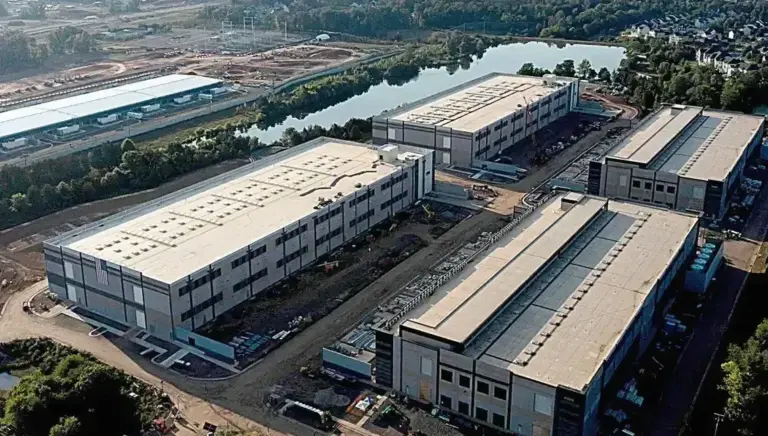
FIRST ON FOX — Rep. Pat Harrigan, R-N.C., wants to close a glaring national-security loophole that allows Chinese entities to cohabitate the same data centers where critical American services also run.

The North Carolina lawmaker is proposing the Digital Infrastructure Act of 2026 to address the potential risk with a $1 million-per-day fine for violators. Meanwhile, the U.S. has experienced a series of outages and incidents this week that have put a microscope on the potential for foreign cyber threats and have prompted skepticism regarding U.S. readiness to defend against digital weaknesses.

“Look, the federal government already determined that companies like China Telecom and China Unicom posed a threat to our national security and revoked their licenses to operate here,” Harrigan said in an interview with Fox News Digital.

“But those companies were still able to maintain connections inside of American data centers. So, if we think about that, we determined that they were too dangerous to operate here, but we left them with a foothold in the very infrastructure that carries Americans’ information.”

CHINA IS BUILDING AN AI WAR MACHINE. WASHINGTON MUST WAKE UP BEFORE IT’S TOO LATE

Despite the cascade of outages — including in U.S. air traffic control systems, Microsoft and banking services —Harrigan did not directly draw a line between Chinese companies and the disrupted services. There is also no proof that any of the incidents were the result of cyberattacks.

Harrigan, instead, argued that preventing cyber vulnerabilities in the future requires lawmakers to eliminate what they know to be weaknesses now.

“What we’re talking about is the infrastructure that supports our banks, our hospitals, our businesses and our communication systems,” Harrigan said.

He declined to elaborate on whether the existing loophole has already led to cyberattacks or stolen data but noted that he was made aware of the liability when American businesses approached him with concerns.

His bill would prohibit high-risk carriers from owning or operating a data center in the U.S. or offering cloud services to Americans. The measure would be enforced by a $1 million fine for every day of a continuing violation — a penalty that would extend to affiliates and even American venture partners doing business with Chinese entities.

The bill also includes a time-limited exception for companies approved by American communications officials.

CHINA’S GREAT AI CHIP LOOPHOLE: HOW AMERICAN ESPIONAGE STOPPED CHINA — THIS TIME

“We talked to a lot of companies, frontier labs and data center owners, as well as operators that are concerned about this,” Harrigan said. “And it’s also part of folks from our national security apparatus within government.”

As part of its mission, the Federal Communications Commission (FCC) reviews foreign communication companies and green-lights their operation in the U.S. When identifying a security risk, the FCC issues a denial of application, a power granted to it under Section 214 of the Communications Act of 1934.

In China’s case, companies like China Telecom Corporation, China Unicom Operations Limited and Pacific Networks Corp. have all failed to secure FCC authorization for security reasons.

“The Commission finds that due to several factors related to China Mobile USA’s ownership and control by the Chinese government, grant of the application would raise substantial and serious national security and law enforcement risks,” the FCC wrote in its evaluation of China Mobile USA, a Delaware-based company.

Even so, the FCC order does not address what the company needs to do with its hardware.

“A Section 214 order is a license to sell regulated telecom service, not a physical eviction order,” Harrigan’s office noted.

Asked if he believes Republicans will be able to address the legislation before the end of the 119th Congress, Harrigan said he believes the issue will likely have to be left to the next session, which begins in January.

FOREIGN ADVERSARIES RUNNING ‘PSYOP’ TO FUEL ANTI-AI AND ANTI-DATA CENTER MOVEMENT, WAR OFFICIAL SAYS

He voiced optimism that the incoming Democratic majorities in the House of Representatives and the Senate might recognize his bill as part of a larger interest in AI security.

“This is a bipartisan problem. And there’s a lot of work that I have done with my Democratic colleagues over this last year on artificial intelligence and the next generation of technology in our market economy and how that intertwines with our nation’s defense,” Harrigan said.

“They are very willing to lend a hand because they know it’s a structural problem for our country,” he added.

A California federal prosecutor embroiled in a legal battle over his own authority is heading to Florida to investigate the FBI’s 2022 raid on President Donald Trump’s Mar-a-Lago estate.

Two sources familiar with the investigation confirmed to Fox News Digital that First Assistant U.S. Attorney Bill Essayli will serve as a special assistant tasked with investigating whether Biden Justice Department officials broke federal law when executing their search warrant on Mar-a-Lago. Essayli will continue to hold his position as first assistant U.S. attorney, splitting his time between Florida and Los Angeles, a source familiar said.

Essayli’s inquiry into the Mar-a-Lago search, which initiated former special counsel Jack Smith’s classified documents case, is a part of a broader Justice Department probe. 

Attorney General Pam Bondi initially launched the “grand conspiracy” investigation in August 2025 to target Obama-era officials, but its scope has since expanded to examine allegations that Biden officials also conspired to unlawfully prosecute Trump.

Essayli is the latest prosecutor tapped to oversee the investigation after the resignations of two other attorneys in the past few months. Just a few weeks ago, Jason Reding Quiñones, the U.S. attorney for the Southern District of Florida, resigned abruptly. His departure came two months after he took over from Joe diGenova, a lawyer selected by Attorney General Todd Blanche to supervise the investigation who resigned in September.

PROSECUTOR JOSEPH DIGENOVA RESIGNS FROM DOJ ROLE INVESTIGATING TRUMP-RUSSIA PROBES

DiGenova’s resignation in September came just five months after he was tapped to oversee the investigation amid growing frustration within the White House and Justice Department over the lack of criminal charges. Fox News Digital previously reported that diGenova had effectively been sidelined before his departure, while sources told the New York Post he had lost the confidence of administration officials over concerns he was “slow-rolling” indictments and pursuing dead-end leads.

Essayli’s involvement in the inquiry adds another layer of controversy to the investigation for two reasons.

TRUMP-FIRED US ATTORNEY LAUNCHES UNPRECEDENTED COURT FIGHT AFTER JUST 54 MINUTES ON THE JOB

For one, Essayli’s authority to lead the U.S. Attorney’s Office in Los Angeles is already under judicial scrutiny. In October, U.S. District Judge J. Michael Seabright ruled that Essayli was unlawfully serving as a “de facto” U.S. attorney, finding that the Justice Department had effectively circumvented restrictions on temporary appointments by allowing him to continue exercising the powers of the office without Senate confirmation.

Essayli was initially appointed interim U.S. attorney in April 2025, a position generally limited to 120 days. When that period expired, the Justice Department appointed him to other positions, including first assistant U.S. attorney, while allowing him to continue overseeing the office. 

Seabright concluded that changing Essayli’s title did not resolve the underlying legal problem and disqualified him from supervising two criminal prosecutions. On Monday, the judge rejected the Justice Department’s request to suspend that ruling while the government pursued an appeal.

Although that decision does not automatically invalidate Essayli’s separate assignment in Florida, it raises questions about his continuing authority in Los Angeles as he takes on another politically sensitive investigation.

SIGN UP TO GET THE POLITICS NEWSLETTER

Essayli’s close ties to Trump have also drawn scrutiny from Democrats and defense attorneys over whether he can remain impartial in an investigation involving the president’s political adversaries.

A former Republican California state lawmaker and vocal Trump supporter, Essayli has pledged to work “tirelessly” to carry out the administration’s priorities at the Justice Department, prompting House Democrats led by Rep. Dave Min, D-Calif., to demand an ethics probe over alleged “politically-motivated investigations.” 

Meanwhile, H. Dean Steward, a veteran Newport Beach federal defense attorney and former directing attorney of the Orange County Federal Public Defender Office who successfully challenged Essayli’s authority in California, has accused the Trump administration of violating federal law “in an effort to install minions as chief federal prosecutors.”

Fox News Digital reached out to the U.S. Attorney’s Office for the Central District of California for comment but did not immediately receive a response.

Fox News’ Jake Gibson and David Spunt contributed to this report. 

FIRST ON FOX: A bipartisan group of lawmakers is eyeing adding a tax to internet usage throughout the country to help subsidize telecommunications services in rural areas.

Sens. Deb Fischer, R-Neb., and Ben Ray Luján, D-N.M., have quietly been working on draft legislation that would add up to $100 extra on Americans’ internet bills to bolster the Universal Service Fund (USF), a decades-old program meant to subsidize broadband access, a source shared with Fox News Digital.

Fischer and Luján formed a bipartisan and bicameral working group for USF reform last year with Reps. Doris Matsui, D-Calif., and Richard Hudson, R-N.C. to find fixes for the program, which was first launched in 1996.

FCC LAUNCHES SWEEPING REVIEW OF $3B SCHOOL INTERNET SUBSIDY PROGRAM OVER SCREEN TIME CONCERNS

The draft legislation, which has yet to be officially filed in the Senate and is still subject to change, included proposals to create a USF tax on households and businesses with broadband connections. The draft legislation, which was reviewed by Fox News Digital, would also increase the current USF tax on cell phone lines and impose no cap on USF spending — meaning there’s wiggle room to raise the tax down the line.

“I’m not commenting on gossip intended to undermine USF reform, particularly when a bill hasn’t even been filed,” Fischer said in a statement to Fox News Digital.

Another source familiar with the negotiations around the yet-to-be revealed legislation told Fox News Digital that they had “no reason to believe” that the fee had been removed from the draft bill. 

“My understanding is it just adds a tax on broadband,” they said. 

Luján’s office told Fox News Digital that discussions were still ongoing, that the “bipartisan working group continues to evaluate options to modernize the Universal Service Fund, ensure its long-term sustainability, and keep internet and communications services affordable for all Americans.” 

“No proposal has been finalized, and any claims otherwise are premature,” they said. 

Congress does not directly fund the program, which instead relies on user fees from telecommunications and broadband companies to stay afloat in order to subsidize broadband services in rural areas.

FCC CHAIRMAN CARR SAYS SPECTRUM AUCTION WILL MAKE WIRELESS FASTER, CHEAPER WHILE RAISING BILLIONS FOR TREASURY

Last year, according to data from the Congressional Research Service, the USF doled out over $8 billion in subsidies.

Part of the problem with the program is that the stream of funding that props USF up is shrinking, according to a report from the Computer & Communications Industry Association.

The report found that “the current contribution base for USF fell 41% between the first quarter of 2018 and the first quarter of 2026, from $12.9 billion to $7.6 billion.” That is spurred by shifts in the industry and contribution base, like more communications happening over the internet through WhatsApp, FaceTime and Zoom instead of phone calls, for example.

And tacking on a new tax to bolster the program is a touchy subject, particularly for outside groups.

TOP SENATE DEM’S NEW TAX IDEA GETS TORCHED AS CRITICS WARN NEARLY EVERY AMERICAN COULD PAY

Over two dozen outside groups led by Grover Norquist’s Americans for Tax Reform demanded in a letter to Congress sent in August that lawmakers “oppose any attempts to impose new taxes on broadband service, including by assessing broadband for contributions” to the USF.

“Rather than impose new taxes on broadband providers, raising costs yet further for consumers, Congress should reform eligibility for the program and retire the broadband subsidies, if not the entire program,” they wrote. “USF is outdated and ill-suited for its purpose. Passing off its ballooning costs is not a solution.”

Congress did enact a new infrastructure-expansion focused internet program under former President Joe Biden in 2021 as part of his Infrastructure Investment and Jobs Act.

That program, called the Broadband Equity, Access, and Deployment (BEAD), included a one-time pot of just over $42 billion to spread internet access across the country.

The Trump administration overhauled the program, removing hurdles and adding new guidelines for states and territories to gain access to the funding.

This post appeared first on https://www.foxnews.com

An imam who was scheduled to deliver the invocation at a city commission meeting Monday evening in a southwest Florida town was interrupted by Christian protesters — who had a prayer of their own to share.

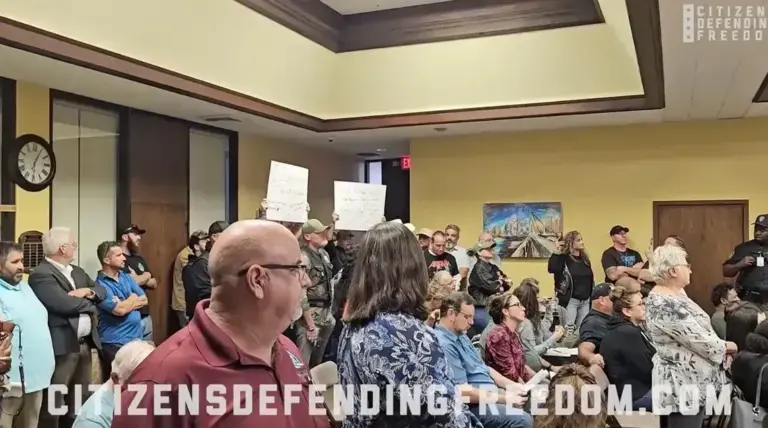
Footage from inside the meeting obtained by Fox News Digital shows dozens of Christian activists crowded into the back of a Bartow, Florida city commission meeting room. As Imam Sajid Bhuiya of the town’s Masjid Al-Nur Mosque stepped up to the lectern to give the invocation, they began reciting the Lord’s Prayer in unison. Some chants of “USA!” broke out, as well.

According to Robert Goodman, the southeast regional director of the conservative activist group Citizens Defending Freedom, news of Bhuiya’s scheduled appearance began making the rounds on social media last weekend. He was among those who shared the news on social media. Goodman said about 100 people from different groups ended up attending the meeting.

IOWA CITY COUNCIL MEETING ERUPTS AFTER FORMER MEMBER OPENS WITH SATANIC PRAYER AND ‘HAIL SATAN’

“Citizens Defending Freedom believes Christian voices deserve to be heard on matters affecting our communities, families, and freedoms, which is why we joined many other concerned citizens and organizations Monday night,” Goodman told Fox News Digital.

He said the Quran teaches forced submission and permits men to strike their wives, while viewing the opinions of women as lesser than the opinions of men.

“We have every right to challenge teachings we believe conflict with human dignity, equality, religious liberty and America’s founding principles, because we must be intolerant of intolerance while respecting every person’s right to believe differently,” he said.

Video from the city’s official livestream of the event quickly went viral online.

PASTOR UNLEASHES ON DEARBORN AS RELIGIOUS TENSIONS ERUPT AT CITY COUNCIL MEETING: ‘ENOUGH IS ENOUGH’

Some protesters made off-color comments, including telling Bhuiya to go back to his own country, which Goodman clarified that neither he nor his organization support.

“The disrespectful remarks made by two or three individuals Monday night do not represent me or Citizens Defending Freedom, because as Christians, we are called to speak truth with conviction and respect, not insults,” Goodman said.

Goodman said Bhuiya was invited to deliver the invocation by a city official. Members of the commission mostly sat quietly, observing the commotion while police handled the crowd.

Police eventually escorted the Christian protesters out of the building, though no arrests were made.

Bhuiya then spoke, quoting passages from the Quran that he said are meant to unify people. “This is a reminder that our differences in background, culture and faiths should not prevent us from treating one another with dignity,” he said.

Fox News Digital reached out to the Masjid Al-Nur Mosque for comment on the disruption of Bhuiya’s invocation.

SWING STATE MAYOR SUED AS CITY’S MUSLIM HOLIDAY DISPLAYS IGNITE RELIGIOUS-FAVORITISM FIGHT

The city of Bartow released a statement explaining the Imam’s appearance at the meeting.

The statement said that residents, “joined by individuals from other cities, attempted to prevent the imam from speaking and the Mayor from proceeding to conduct the business at hand.”

“For years, it has been tradition to open Bartow City Commission meetings with a prayer offered by either a faith-based leader or one of the City’s elected officials,” it said. “While historically the opening invocation/prayer is one based on Christian traditions, the opportunity is open to all faiths. This is consistent with the United States Constitution.”

In the statement, city officials called for residents, “including religious leaders of all faiths, to come together to ensure that Bartow continues to be a welcoming place for all who live, work and play in Polk County’s capital city.”

Gold and silver mining stocks fell sharply Wednesday as a round of hawkish comments from Federal Reserve officials lifted the U.S. dollar and rattled investors across the metals complex. The selloff hit major producers hard, with Newmont, Agnico Eagle Mines, Barrick Mining, Wheaton Precious Metals and Franco-Nevada all dropping between 4% and 7%.

Spot gold slid in a dramatic reversal, while silver, copper and platinum also came under pressure as traders reassessed the outlook for interest rates. A firmer dollar tends to make dollar-priced commodities more expensive for overseas buyers, and that dynamic quickly turned a cautious session into a broad retreat.

The move served as a reminder of how sensitive metals markets are to the Fed’s tone. Even with demand stories and supply concerns still in the background, a sudden shift in rate expectations can overwhelm those factors and force investors to unwind positions in a hurry.

For mining equities, the damage was amplified because the stocks often rise and fall with the underlying metals. With the dollar surging and prices sinking, shareholders were left looking for a reason to stay in names that have recently been among the market’s more volatile corners.