Archive

November 2026

Browsing

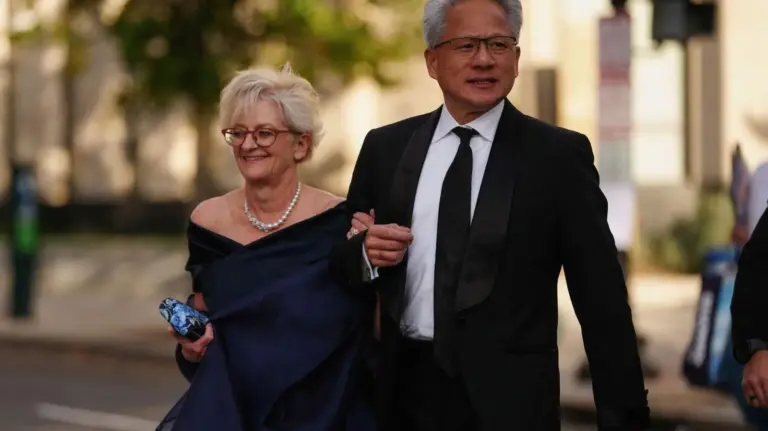
The sudden resignation of Jensen Huang from Nvidia has sent shockwaves through both Silicon Valley and the halls of power in Washington, marking a dramatic end for the leather jacket clad visionary who built the world’s most pivotal chipmaking empire. Huang stepped down on Thursday following explosive allegations that he engaged in an affair with Alice Huang, an executive at the Singaporean firm Megaspeed who is suspected of being a Chinese spy. While the corporate transition sees Colette Kress stepping in as interim chief, the political storm surrounding the former CEO is only just beginning to intensify.

Lawmakers on both sides of the aisle are now scrambling to determine if this personal entanglement compromised U.S. artificial intelligence dominance or leaked critical national security secrets. Republicans, currently holding control of Congress for a few remaining weeks, have moved quickly to summon Huang to Capitol Hill, with Senate Banking Committee Chair Tim Scott threatening subpoenas to ensure the ex-CEO provides answers regarding protected technology. The scrutiny extends beyond Huang himself, reaching deep into the Trump administration as questions arise about why Commerce Secretary Howard Lutnick may have stalled crackdowns on firms smuggling Nvidia chips into China.

The timing of the scandal creates a volatile political landscape, as Democrats prepare to seize control of the House and Senate in January. Figures like Senator Elizabeth Warren and Minority Leader Chuck Schumer are already signaling that Nvidia will be a primary target for oversight once they take power. They are demanding full transparency concerning export control compliance and have ordered federal officials to preserve all communications related to advanced AI shipments destined for China or diverted entities.

As the legal pressure mounts, Huang appears to be coordinating his initial responses with House committees led by Representative Brian Mast, including panels focused on intelligence and China relations. These upcoming testimonies, conducted under oath, aim to uncover whether the intimacy between a titan of industry and an alleged foreign agent created a backdoor for adversaries to bypass strict trade restrictions. For now, what began as a tabloid scandal has evolved into a sweeping probe into the intersection of private profit and global security.

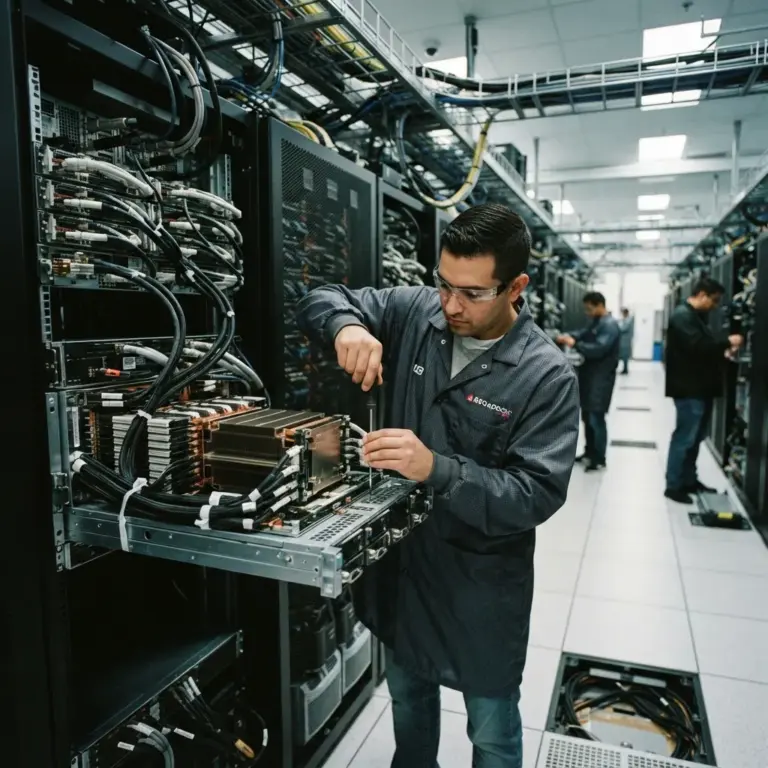
When you ask an AI like Claude to solve a complex problem, there is a good chance the processing power comes from Tensor Processing Units developed by Google in partnership with Broadcom. As Anthropic prepares to go public on November 18, investors are looking closely at how this transition affects Broadcom, which views Anthropic as a cornerstone of its future custom chip business. The relationship is defined by staggering numbers, including five year equipment leases totaling roughly 161.2 billion dollars in rent, a figure that dwarfs Broadcom’s recent annual sales.

Until now, these massive commitments were tied to a private entity, but the upcoming IPO changes the financial landscape. By raising approximately 84.6 billion dollars through the offering and private placements, Anthropic will have enough liquidity to cover more than a year of its immediate obligations. While Broadcom often uses third party financing partners like Apollo and Blackstone to manage hardware costs rather than lending directly, having a publicly funded customer provides a level of credit security that was previously absent.

Despite the bullish outlook for AI revenue, which analysts expect could hit 230 billion dollars by 2028, Broadcom faces significant concentration risk. The company relies heavily on a small group of giants for its custom silicon growth, meaning any stumble by Anthropic would ripple directly through Broadcom’s valuation. Recent stock volatility highlights this tension, with prices swinging wildly as the market weighs immense potential against the danger of being overly dependent on one or two major clients.

As the industry watches for the final IPO pricing and Broadcom’s upcoming December results, the overarching lesson is that a supplier is only as strong as its customer’s wallet. With Anthropic moving into the public markets, it gains the ability to replenish its coffers far more efficiently. For shareholders, this shift turns a private promise into a public balance sheet, potentially lowering the risk profile for one of the most aggressive infrastructure bets in the history of computing.

The rail industry is seeing a surge of optimistic momentum as stubbornly high diesel prices force logistics managers to rethink their transport strategies. With trucking costs remaining elevated, many shippers are pivoting back toward trains to move goods across the country, providing a significant tailwind for several major railroad stocks that now appear poised for technical breakouts.

Adding to the volatility and excitement in the sector is the potential for a massive consolidation event. Investors are closely watching an eighty five billion dollar merger proposal involving Norfolk Southern and Union Pacific, a deal that would fundamentally reshape the landscape of American freight. Market participants expect critical regulatory updates within the next few days that could either accelerate or derail these ambitions.

Current trading patterns reflect this anticipation, with Norfolk Southern already showing strength by edging upward past the 334 mark. This movement suggests that traders are positioning themselves for both increased volume from shifting shipping preferences and the possibility of a transformative corporate marriage between two of the nation’s largest carriers.

Berkshire Hathaway is navigating its first full year under the leadership of CEO Greg Abel with surprising momentum, as the stock climbs toward record highs. Despite early uncertainty regarding the transition away from Warren Buffett, investors appear increasingly comfortable with Abel’s stewardship. Much of this confidence stems from Berkshire’s unique position in today’s market; unlike many other trillion dollar companies whose valuations swing wildly based on artificial intelligence trends, Berkshire offers a diversified sanctuary that doesn’t live or die by the AI trade.

The company’s latest quarterly results presented a mixed bag, showing operating profits of roughly 12.7 billion dollars, a slight dip from the previous year. This decline was driven largely by headwinds in the insurance sector, particularly within GEICO, where higher claims and increased spending on advertising weighed on the bottom line. However, these struggles were offset by stronger performances across other core pillars of the empire, including its energy holdings and the BNSF railroad. Meanwhile, the firm continued to build its legendary war chest, growing its cash reserves to over 377 billion dollars.

Perhaps the most telling signal of Abel’s outlook is his aggressive approach to share repurchases. During the third quarter alone, Berkshire bought back a staggering 9.6 billion dollars of its own stock—a volume not seen since 2020 and far exceeding any activity during Buffett’s final years as chief executive. Because Berkshire strictly avoids buying back shares unless they are trading below their intrinsic value, this move suggests that Abel views the current stock price as a bargain despite recent rallies.

As Abel settles into his role, he faces the daunting challenge of managing one of history’s largest piles of capital without the automatic trust afforded to Buffett. While some analysts wonder if high valuations will eventually slow these buybacks, others suggest that returning capital to shareholders may become a primary tool for Abel if attractive external investments remain scarce. For now, however, his willingness to bet big on his own company indicates he believes there is significant growth left on the table for those holding onto Berkshire shares.

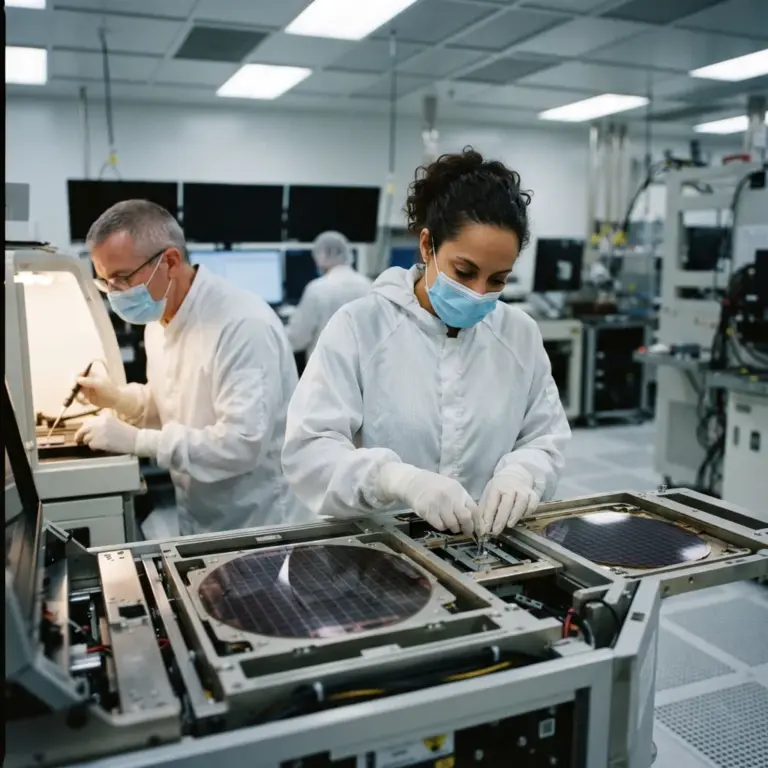
Cerebras Systems is making waves in the semiconductor industry after delivering third quarter results that comfortably beat analyst expectations. The company reported strong financial growth driven by a surge in demand for its specialized artificial intelligence hardware, signaling that there is still plenty of room for competition in a market often dominated by established giants. This latest performance suggests that the firm’s unique approach to chip architecture is resonating with high scale computing needs.

Beyond the numbers, the chipmaker revealed it has successfully expanded its portfolio of big ticket clients. By securing several major new customers, Cerebras is moving deeper into the enterprise sector, proving that its technology can handle the massive workloads required by global corporations. These partnerships are seen as a critical milestone for the company as it attempts to carve out a sustainable niche in the race to power next generation generative AI models.

Industry observers note that these gains come at a pivotal time when many organizations are looking for alternatives to traditional GPU clusters to reduce costs and increase processing speeds. While much of the spotlight usually remains on Nvidia, Cerebras is positioning itself as a viable heavyweight alternative capable of scaling rapidly. If this momentum continues through the end of the year, the company could fundamentally shift how large scale AI infrastructure is deployed across various industries.

Nebius entered the trading day with strong momentum after reporting fiscal third quarter results that beat analyst projections. The AI focused cloud computing firm managed to keep losses lower than expected while driving revenue past estimates, signaling robust demand for specialized infrastructure. This positive trend was mirrored earlier in the week by rival CoreWeave, which also posted figures that outperformed market expectations.

However, any gains from these financial wins were quickly erased as investors reacted to a sudden leadership vacuum at the heart of the industry. Shares of neocloud providers began to slide following reports that Nvidia CEO Jensen Huang has resigned amidst personal scandal. Because companies like Nebius rely heavily on their relationship with Nvidia for high end hardware and strategic backing, the departure of such a pivotal figure sent ripples of uncertainty through the sector.

The broader market felt the impact immediately, with indices including the Dow Jones dipping as traders processed the instability at Nvidia. While the underlying business fundamentals for these emerging cloud players remain strong, cautious investors are now weighing those growth metrics against the volatility of an unstable supply chain partner. For now, the euphoria surrounding earnings beats has been eclipsed by a crisis of confidence in AI governance.

At the recent New Orleans Investment Conference, a group of seasoned market experts gathered to tackle a pressing question facing modern investors: has the process of buying into precious metals become unnecessarily convoluted? Moderated by Kerry Stevenson, the panel featuring Dana Samuelson, Alasdair Macleod, Rich Checkan and Omar Ayales explored whether the current noise surrounding gold prices is obscuring its primary purpose as a reliable store of value.

While many newcomers treat gold like any other volatile stock to be traded for quick profits, Alasdair Macleod argued that this mindset is where things get overly complicated. According to Macleod, gold remains essentially constant; it is the purchasing power of paper currencies that fluctuates and erodes. By reframing gold as money itself rather than just an asset class, investors can ignore short-term swings and focus on preserving their wealth against a backdrop of decaying fiat currencies.

However, the path forward isn’t without obstacles. Technical analysts on the panel offered more cautious perspectives regarding immediate price action. Dana Samuelson noted significant technical setbacks for both gold and silver, while Omar Ayales cautioned that we might be entering a period of downward consolidation that could last a year or two. This dip is partly driven by a strong US dollar supported by high oil prices, creating a temporary headwind for metals that usually thrive when the greenback weakens.

Despite these near-term hurdles, the consensus among the panelists was rooted in a deep skepticism toward global fiscal policy. Rich Checkan pointed to the staggering scale of US government debt—now around 40 trillion dollars—as an insurmountable problem for politicians to solve through spending cuts alone. With debt-servicing costs reaching astronomical levels, the panel suggested that traditional safe havens like government bonds may no longer offer the protection they once did. In this climate of systemic risk and persistent inflation, treating gold as essential wealth insurance appears less like a complex strategy and more like a common sense necessity.

The pharmaceutical landscape currently finds itself in a complex tug of war. While the industry is grappling with aggressive government price caps and a cooling demand for pandemic era vaccines, deeper systemic drivers continue to fuel growth. With the prevalence of chronic illnesses and cancer on the rise, the United States remains the global epicenter for medical breakthroughs, continuing its streak of dozens of FDA approvals annually. Though big pharma typically dominates the headlines, a select group of smaller players on the NASDAQ are carving out significant niches through high risk, high reward innovation.

Leading this charge is AN2 Therapeutics, which has seen a massive surge in share price thanks to its specialized boron based medications. Their lead candidate is making waves in the fight against stubborn lung infections and rare blood cancers, recently securing FDA clearance for pivotal trials across three continents. Similarly, Turn Therapeutics is redefining how we treat inflammatory skin conditions by focusing on localized surface treatments rather than systemic drugs. Recent phase two data suggests their eczema treatment could significantly reduce symptom severity within just a month, signaling a potential shift in dermatological care.

Other innovators are pushing the boundaries of genetic medicine and organ transplantation. Korro Bio is pivoting toward RNA editing to fix cellular messaging without altering DNA, while Opus Genetics is showing promising results in restoring vision for patients with rare retinal diseases. Meanwhile, Eledon Pharmaceuticals is working to revolutionize transplant medicine with antibodies designed to prevent organ rejection more effectively than current standards. Together, these firms demonstrate that despite broader economic volatility, targeted scientific breakthroughs remain a powerful engine for investor interest and patient hope heading into 2027.

The aftershocks of last week’s midterm elections are still being felt by Senate Republicans, but another political reality is beginning to set in: The GOP may not regain control of the chamber for years to come.

This year’s Senate map was, initially, favorable to Republicans in their quest to maintain and possibly grow their 53-seat majority in the Senate. But the next election cycle’s map in 2028 is tough, perhaps even insurmountable, for Republicans to conquer.

The Senate GOP’s newly minted campaign chief, Sen. Bernie Moreno, R-Ohio, acknowledged that the map to reclaim the majority in 2028 is “very tough.”

Democrats only have three incumbents up for re-election in battleground states, while Republicans have to defend seats in a slew of once-safe, deep-red states, including both Carolinas, Kansas and Iowa, among several others.

His home state, which just turned a shade of purple with Sen.-elect Sherrod Brown’s victory over Sen. Jon Husted, R-Ohio, is in play again, too.

Moreno, when asked to sketch a 30,000-foot view of what the future fight for power would look like, told Fox News Digital that Republicans had “dealt with tough situations before.”

“Look, it is an absolutely brutal map, but, politics, things change pretty quickly,” Moreno said. “So we’ll see how it is, but we’re gonna be extraordinarily disciplined, we’re gonna be extremely honest with our data. We [will] make certain that we hold our incumbents and our candidates accountable, and we’re gonna make an appeal to donors as to how we should win.”

SENATE GOP REBELS MOVE TO DELAY LEADERSHIP VOTE, DEMAND RECKONING AFTER MIDTERM DISASTER

Others were less optimistic.

Sen. Steve Daines, R-Mont., who chaired the National Republican Senatorial Committee during the 2024 campaign, when Republicans flipped the Senate, compared the situation to getting down early in a baseball game: Republicans would have to “chip away” at Democrats’ lead, but it would take time.

“Now the Democrats can’t help themselves, but they’ll overreach in the next couple of years,” Daines told Fox News Digital. “They’ll be out of step with where America is, and they’ll provide an opportunity for us to win some Senate seats. But I think this will take a few cycles before we’ll probably get back to the majority if I have to honestly interject and look at it.”

Senate Majority Leader John Thune, R-S.D., who had just secured his position as the incoming minority leader after weathering a marathon venting session from Senate Republicans who are disgruntled and frustrated after the midterms, agreed that Democrats could overreach and create a “different shooting match” for Republicans.

SENATE GOP REBELLION FIZZLES AS THUNE KEEPS POWER DESPITE HISTORIC MIDTERM MASSACRE

But history has a way of repeating itself.

Thune shared the anecdote of how when he first arrived in the Senate in 2005, Republicans had clinched a 55-seat majority — “the high watermark for Republicans in the Senate, historically,” he told Fox News Digital.

“We were very bullish about getting to 60 for the first time and having a filibuster-proof majority for the first time ever for Republicans in the Senate in 2006,” Thune said. “And by 2006, we were back in the minority.”

“The map matters for sure, but the mood of the country also really matters,” he continued. “And there are a number of races this next cycle that have historically elected Republicans. Now there’s Democrats sitting in those seats now, but every cycle is a little bit different, and as we saw this time around, the mood was moving against us.”

The blowout losses across the map for Republicans do open up an opportunity for the next two years: running for their states and themselves, not for Trump, given that his time in office is winding down.

Sen. Thom Tillis, R-N.C., whose home state flipped after his decision to retire last year, and who has become a vocal critic of the administration, argued that 2028 was likely out of reach for Republicans and said the environment wouldn’t be ripe again until “at least 2030.”

When asked if during the meeting that led to the eventual re-election of Thune as leader there was any reflection on the impact that Trump and his administration’s unpopularity with voters had, Tillis said, “I think there’s probably a growing awareness of what I warned folks about in April of last year.”

“And it wasn’t really having that feedback loop,” Tillis told Fox News Digital. “And I think we’ll probably see a much healthier, more productive, more beneficial to the president feedback loop, where these people realize their performance is going to be what’s going to be the driving force behind their re-elect.”

“That’s for the ones here,” he continued. “And absent that, you know, I don’t see any pickups. So I think everybody has to be realistic.”

This post appeared first on https://www.foxnews.com

Secretary of War Pete Hegseth on Thursday awarded a medal to the Army soldier who reprimanded him and his entourage at the Tomb of the Unknown Soldier after laughter was heard from the group on Veterans Day.

“We love soldiers. We love standards,” Hegseth wrote Thursday in a post on X. “Well done, Specialist.”

“Carry on Patriots,” he added.

A Pentagon official confirmed to Fox News Digital in a Thursday statement that Hegseth had “proudly” awarded Spc. Thomas Iglesias the medal for “the execution of his duties.”

TRUMP DEFENDS PENTAGON CHIEF AS MASSIE TARGETS HIM: ‘HEGSETH SHOULD BE PRAISED, NOT IMPEACHED’

“As shown in the photos, Secretary Hegseth welcomed the 3rd U.S. Infantry Regiment, the Old Guard, to the Pentagon where he proudly awarded Specialist Thomas Iglesias the Joint Service Commendation Medal for the execution of his duties at the Tomb of the Unknown Soldier on November 11, 2026,” the official said.

The Joint Service Commendation Medal is awarded to members of the military who distinguish themselves through meritorious achievement or service, typically while serving in joint military operations or activities.

The award comes after video from Wednesday showed Iglesias reminding visitors to remain silent and maintain decorum after laughter was heard as Hegseth and his entourage walked away from the Tomb of the Unknown Soldier following a Veterans Day ceremony.

“All visitors will maintain an atmosphere of silence and respect at all times,” the soldier commanded to the entourage at the time.

TUNNEL TO TOWERS PAYS OFF MORTGAGES FOR 30 MILITARY FAMILIES IN VETERANS DAY TRIBUTE: ‘A GREAT SACRIFICE’

Following the incident on Wednesday, Pentagon spokesman Sean Parnell told CBS News that Hegseth and “the entire Department have always honored-and will always honor-the sacrifices our military men and women have made to keep America safe.”

“While commemorating this solemn day, a soldier correctly and respectfully reminded everyone to maintain decorum,” Parnell added.