Archive

November 2026

Browsing

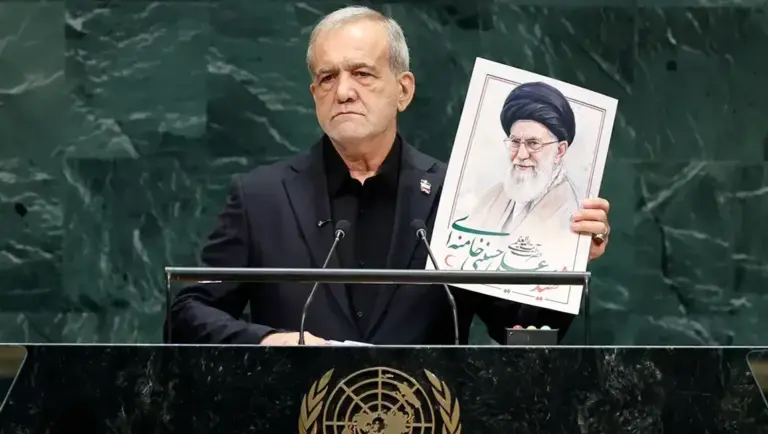
The United Nations reconfirmed Iran to its seat on the Committee for Programme and Coordination on Wednesday, sparking outrage from member states who believe the country’s record of aggression should disqualify its representatives from the committee’s work to review human rights, women’s rights and counterterrorism programs.

Ahead of the vote, Hillel Neuer, executive director of UN Watch, a human rights watchdog, said he believes the move gives Iran another tool for the regime’s propaganda machine.

“They use it,” Neuer said. “You’ll see a headline in Iranian propaganda right away: ‘Hey, look, we were elected to yet another body.’ And it sends a signal… As they’re killing their own people, what does the world have to say?”

Neuer believes Iran’s continued spot on the committee gives Tehran a nod of international legitimacy amid its ongoing conflict with the U.S., showcasing the U.N.’s uneven record for creating a forum to deter international violence.

ISRAEL ACCUSES UN OF PLACING IT ON SAME SEXUAL VIOLENCE BLACKLIST AS HAMAS TERRORISTS, SEVERS TIES

“Sometimes [the U.N.] is effective. Sometimes they’re not. Sometimes, even when they’re effective, they’re effective in a bad way. There’s an effect, but it’s to empower dictatorships,” Neuer said.

“The U.N. spends a lot of its time attacking democracies like America, like Israel. America gets condemned every year for the embargo in Cuba. Last year, there was one resolution on Iran, one on North Korea, one on Myanmar — and 15 on Israel. And Hamas, Islam and jihad were never mentioned once. That happens a lot at the U.N.”

Iran was reconfirmed with the support of 144 ballots cast by the U.N. General Assembly.

The Committee for Programme and Coordination consists of 34 member states, each of which is elected to the body for a three-year term. Although it is not one of the U.N.’s six main committees, it reviews the organization’s plans and priorities, making recommendations on their design, priorities, coordination and effectiveness.

Iran’s renewal to the post prompted an outcry from lawmakers in the U.S. on Tuesday afternoon.

“The United Nations elected Iran — the world’s biggest exporter of terrorism — to the committee responsible for establishing priorities on disarmament, counterterrorism and women’s rights,” the House Foreign Affairs Committee wrote in a statement posted to X.

FREED AMERICAN REVEALS BRUTAL IRAN PRISON ORDEAL, WARNS HOSTAGES FACE GREATER DANGER

“The United Nations is morally bankrupt: no sane person can take it seriously.”

Similarly, Canadian Foreign Minister Anita Anand issued her own statement condemning the move.

“Canada is steadfastly opposed to giving Iran a seat on the UN Committee for Programme and Coordination — and Canada voted against Iran’s inclusion today at the UN. The committee should be comprised of countries entrusted with shaping the work of the United Nations and must uphold the principles of its Charter. The Iranian regime silences dissent at home and fuels instability across the Middle East. We stand with the people of Iran,” Anand said.

Notably, Australia also joined the opposition, voting alongside Canada against Iran’s confirmation.

“Australia strongly opposes Iran’s nomination to the UN Committee for Programme and Coordination and voted against. Iran’s human rights violations and destabilizing conduct undermine multilateralism,” Foreign Minister Penny Wong wrote.

Neuer believes it’s not just Western countries that will be watching how the U.N. treats Iran. He noted that aggressors constantly monitor the international field to get a sense of how it might react in the future.

“It’s like Putin looks when Obama said we ‘have a red line in Syria. Use chemical weapons — red line.’ Well, Syria used chemical weapons. And Obama… did nothing. That sent a message. Shortly thereafter, Putin invaded Ukraine. I’m not saying that invasions are gonna happen the next day, but these things send messages, and constantly governments are taking the temperature. What is the pushback?” Neuer said.

He also observed that although many in the U.S. view the U.N. with some skepticism, other countries still use the group as a barometer of international consensus.

“The United Nations is considered for many a repository of international legitimacy; it may not be so in the United States… but in many parts of the world it is regarded as the arbiter of international legitimacy,” Neuer said.

IRAN IS NOT A NORMAL NATION YOU CAN MAKE DEALS WITH; IT’S A NATIONAL SECURITY THREAT

“What is the signal you’re giving to the ayatollah regime? They murdered tens of thousands of people. They’re hanging dissidents. They are torturing women who defend their right not to cover every piece of their hair. They beat political prisoners. What message does the world have to send? Did you give them a pat on the back? Or did you? Did you penalize them?”
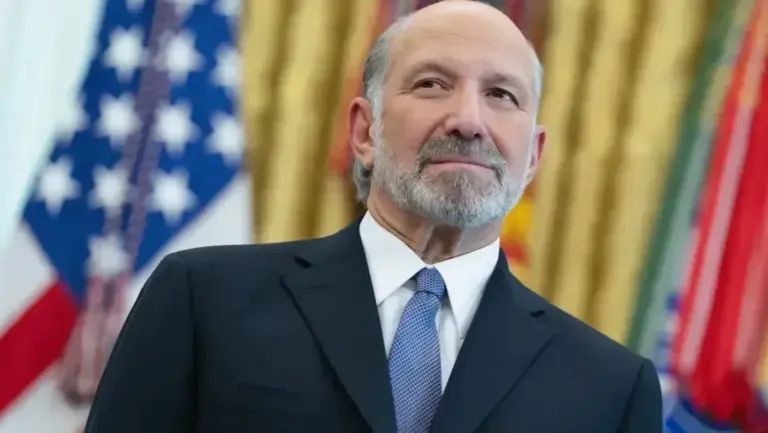
EXCLUSIVE : Top House Democrats are calling for an investigation into Commerce Secretary Howard Lutnick over allegations involving NVIDIA’s former CEO’s reported relationship with an alleged Chinese spy.

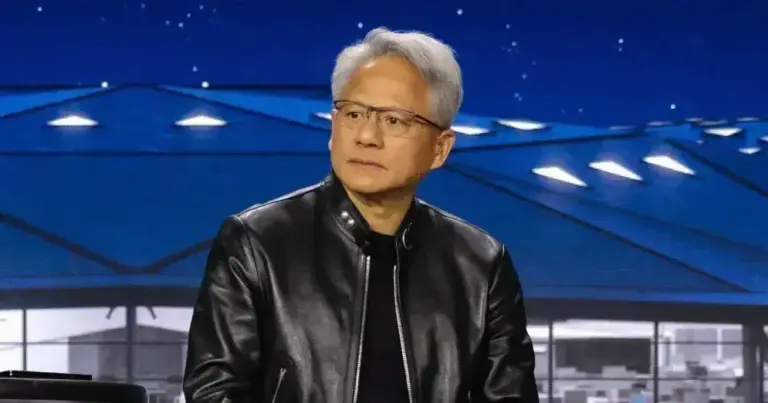
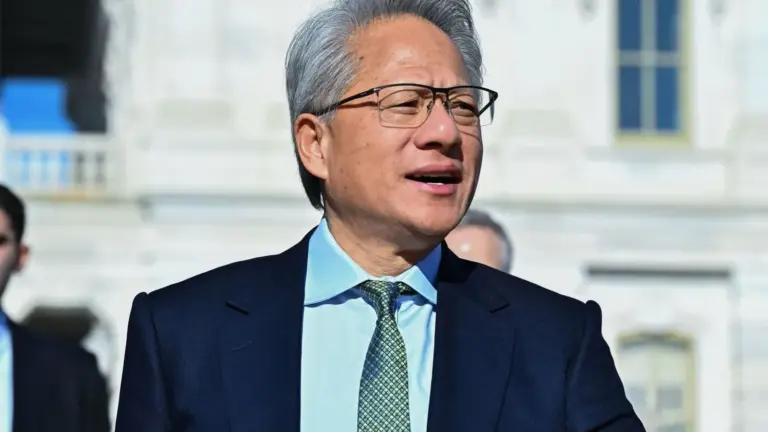
NVIDIA CEO Jensen Huang resigned this week following allegations that he had an affair with Alice Huang, an executive at Singapore-based Megaspeed who is suspected of being a Chinese spy.

In the midst of the spy scandal, multiple investigative reports emerged claiming Lutnick received a classified memo warning him about Huang’s relationship with alleged Chinese spy Alice Huang, of no familial relation to the NVIDIA CEO.

“Howard Lutnick needs to be investigated over his role in Jensen Huang and the Chinese spy, we’re going to have an investigation into those allegations, that’s completely unacceptable,” Rep. Ted Lieu, D-Calif., who is expected to become chairman of the House Democratic Caucus, told Fox News Digital.

FOREIGN SPY ‘HONEYTRAPS’ TARGETING AMERICA’S TECH ELITE SPARK ALARM AMID NVIDIA CEO SCANDAL

Lieu alleged that despite Lutnick being briefed on the reported relationship between Huang and a woman identified by U.S. intelligence as a Chinese spy, he failed to take action.

Rep. Ro Khanna, D-Calif., a vice chair of the Congressional Progressive Caucus and member of the House Select Committee on China, also expressed support for investigating Lutnick and did not rule out examining Secretary of State Marco Rubio’s involvement, as well.

“I think we need transparency,” Khanna told Fox News Digital. “I think we need to understand what they knew.”

PROGRESSIVE GROUP’S 182-PAGE BLUEPRINT MAPS OUT POTENTIAL DEM INVESTIGATIONS INTO TRUMP, CORPORATE ALLIES

“Rubio knew about the Chinese spy, and then got invited to the China trip,” Khanna continued. “We need to get to the bottom of this.”

Lutnick and Rubio did not respond to Fox News Digital’s request for comment.

REBECCA GRANT: JENSEN HUANG OWES AMERICA AN APOLOGY, AND NVIDIA OWES INVESTORS ANSWERS

Many left-leaning lawmakers are jumping on the chance to name the Cabinet official they want to see face scrutiny when Democrats take back control of the House in January.

However, neither Khanna or Lieu shed light on how they would investigate, prosecute or remove Lutnick, and potentially Rubio. Neither of the Cabinet secretaries has been formally accused or indicted of wrongdoing in connection with the NVIDIA case.

House Minority Leader Rep. Hakeem Jeffries, D-N.Y., who is currently running unopposed for the Democratic nomination for Speaker of the House, did not respond to Fox News Digital’s request for comment on whether he spoke to either lawmakers on their desires to take action against Lutnick and Rubio.

HAKEEM JEFFRIES DECLARES BID FOR HOUSE SPEAKER AFTER GOP’S MIDTERM MASSACRE

The lawmakers’ remarks signal that congressional Democrats could use their incoming majority to investigate senior Trump administration officials over their handling of alleged Chinese intelligence threats.

It is unclear whether Republican lawmakers will support the Democrats’ investigations. But following Huang’s resignation, House Select Committee on China Chairman John Moolenaar, R-Mich., announced that the outgoing CEO has agreed to brief congressional committees following the scandal.

He also advocated for Congress to act quickly to pass bipartisan export control legislation in the year-end national defense bill.

Moolenaar welcomed the resignation and added that companies such as NVIDIA should “never jeopardize our nation’s security by giving Chinese companies access to their most advanced chips,” and called on them to “change its corporate practices and appoint leadership that makes national security its top priority.”

Some Senate Republicans are open to revisiting immigration policy after President Donald Trump floated a possible deal with Democrats, but they insist amnesty remains off the table.

Republicans, after sweeping midterm losses, are willing to open up the immigration policy debate after voters made clear that they didn’t support the administration’s approach: a Fox News poll published in September found that 53% of voters believed that Trump’s immigration policy had gone too far.

But there’s one thing that Senate Republicans won’t agree to: amnesty.

WHITE HOUSE DOUBLES DOWN AFTER TRUMP ANGERS BASE BY FLOATING ILLEGAL ALIEN DEAL WITH DEMS

“I trust President Trump,” Sen. Jim Banks, R-Ind., told Fox News Digital. “He’s gonna do what’s right, but as far as I’m concerned, amnesty is off the table. I’ll never go for it.”

The door creaked open on the idea when Trump, during an interview with “60 Minutes” that aired over the weekend, said that his administration’s mass deportation and enforcement policies might be “too tough.”

“Get the killers out, get the rapists out, get all the rough ones out, get the drug dealers out,” Trump said. “But let the people that are here — and in some cases here for 10 and 15 years — work a deal for them.”

The administration quickly sought to clarify Trump’s comments, with Homeland Security Secretary Markwayne Mullin affirming that there would be “no amnesty” shortly after.

HOUSE GOP ERUPTS AT STEPHEN MILLER AS TRUMP ELEVATES HIM AFTER MIDTERM MASSACRE: ‘MEGALOMANIAC’

Still, Republicans are willing to navigate the complex issue as Democrats gear up to take power next year. Some have been calling for action on the matter for months.

Sen. Thom Tillis, R-N.C., one of the administration’s sharper Republican critics on immigration policy who is retiring at the end of the year, told Fox News Digital that as early as March he texted Trump and suggested it would be the “perfect time” to codify “all the stuff that has effectively sealed the border and used it as an opportunity to get merit-based immigration reform.”

“I also said in that text, though, was, in order for this to be successful, Stephen Miller either needs to be out of the room or on his meds,” Tillis said. “And so he’s the reason they’re walking it back is because they don’t want to do it, because they have some false assumption that that’s gonna hurt our base.”

“Our base is fine with merit-based immigration reform. President Trump is fine with merit-based immigration reform,” he continued. “And if we don’t get the stuff codified that has effectively sealed the border, it’s gonna be on them when the border gets opened up if a Democrat wins in ‘28.”

The Senate, just before Trump won the 2024 election, was on the cusp of a bipartisan immigration deal when Democrats controlled the chamber. The deal collapsed after Trump criticized it and Senate Republicans withdrew support.

“There’s a lot of scar tissue on this issue, but, you know, the president, because he secured the borders, he has credibility on the issue, and he has expressed a willingness,” Senate Majority Leader John Thune, R-S.D., said. “I have not seen anything yet that’s being proposed, but we will certainly hear them out, and if there’s something he wants to do there, have a conversation about it.”

JEFFRIES VOWS DEMOCRATS WON’T ‘GIVE A DIME’ TO TRUMP’S DEPORTATION EFFORTS

The bipartisan deal was the product of negotiations among Sens. James Lankford, R-Okla., Chris Murphy, D-Conn., and former Sen. Kyrsten Sinema, and would have funneled billions for border security and shuttered the border to most asylum seekers, among several other policy changes. But conservatives balked at the deal, and Trump’s influence from the campaign trail ultimately killed it.

Years later, Lankford is again in a prime position to work on a deal with Democrats, given that he is expected to become the ranking Republican on the Homeland Security and Governmental Affairs Committee next year.

“If I’m ranking on Homeland Security, I’m right in the thick of it, whether you like it or not,” Lankford said.

Though opinions vary on what exactly the GOP’s approach would be going forward, many Republicans agree that the administration’s enforcement policies, particularly under former Homeland Security Secretary Kristi Noem, should not make a comeback.

“I think you have to make sure, first and foremost, that how you do your enforcement is not like the administration started under Kristi Noem,” Sen. Ted Budd, R-N.C., told Fox News Digital.

“I think people are for some enforcement, but not in a cruel way. And there were so many, there was a lack of training, lack of proper methodologies, and I think people want to take enforcement seriously.”

“But, again, I would say no amnesty at all,” he continued. “We don’t want to go there. Ronald Reagan, a great president, one of his few regrets, but significant regrets, was amnesty. And I don’t think Trump wants to make that mistake.”

This post appeared first on https://www.foxnews.com

The landscape of the artificial intelligence revolution shifted violently on Thursday as Jensen Huang, the visionary co-founder and longtime chief executive of Nvidia, resigned from the company he led for over three decades. The sudden departure follows a whirlwind of scandals involving two separate extramarital affairs, one of which has ignited a national security firestorm. According to U.S. intelligence agencies, Huang was involved with a Chinese businesswoman who they conclude was acting as a spy for Beijing, using their relationship to potentially compromise sensitive information during a period of intense geopolitical tension over semiconductor dominance.

Adding to the internal turmoil were reports that Huang engaged in another improper relationship with an executive who reported directly to him, creating a breach of corporate governance that ultimately made his position untenable. While President Trump had spent the previous week defending Huang as an honorable man and praising his fantastic leadership, the combined weight of these revelations forced the board’s hand following a marathon meeting on Wednesday night. Colette Kress, the current chief financial officer, has stepped in as interim CEO while the company searches for a permanent successor capable of steering the ship through this crisis.

The markets reacted swiftly to the vacuum left by one of Silicon Valley’s most celebrated figures. As Nvidia controls roughly 90 percent of the high end AI chip market, shares plummeted at the opening bell, dragging down broader indices and sparking fears regarding stability in the AI sector. This volatility comes at a precarious time when Nvidia serves as a critical linchpin in the technological rivalry between Washington and Beijing, especially given suspicions that firms linked to Huang’s associate may have smuggled restricted hardware into China.

Beyond the boardroom and the stock ticker, the scandal threatens to dismantle one of America’s newest philanthropic powerhouses. Together with his wife Lori, Huang managed a massive foundation with approximately nine billion dollars in assets. With Huang admitting to his infidelities and facing an ignominious exit from his professional empire, observers wonder if their charitable partnership can survive similar collapses seen in other billionaire marriages recently. For now, while Donald Trump suggests legends like Tim Cook might be fit replacements, Nvidia remains in a state of profound uncertainty.

In a sudden move that has sent shockwaves through the tech industry, Nvidia’s board of directors ousted founder and CEO Jensen Huang following revelations involving a series of personal scandals and potential national security breaches. Sources indicate that the board acted swiftly overnight after reports emerged of a second alleged affair, specifically one involving Alice Huang, a woman suspected of being a Chinese intelligence asset. The company has named Kress as interim CEO while attempting to stabilize operations and reassure shareholders amidst the chaos.

The fallout extends far beyond the boardroom, as federal investigators examine whether these personal connections facilitated the illegal diversion of advanced AI hardware to China. Shares of Super Micro Computer plummeted following reports that U.S. prosecutors are probing links between Alice Huang and hardware smuggling operations. This coincides with existing charges against former Super Micro executives accused of smuggling billions of dollars worth of Nvidia-powered servers into Chinese territory, raising urgent questions about how deeply compromised the supply chain may be.

As legal pressures mount, Jensen Huang has agreed to testify before Congress to address concerns over national security risks. Senate Minority Leader Chuck Schumer and Representative Gregory Meeks have both called for transparency, questioning why the Trump administration appeared to overlook troubling intelligence regarding Huang’s relationships. Democrats are now investigating whether political ties influenced the approval of AI chip exports to Chinese government-linked firms and if investigations were stifled due to personal friendships at the highest levels of government.

While the leadership transition aims to steady the ship, legal experts warn that Huang’s resignation may actually empower disgruntled investors. A proposed class action lawsuit is already gaining momentum, with attorneys arguing that the CEO’s departure validates claims that leadership misrepresented risks to shareholders. For a company so centrally defined by its founder’s vision, Nvidia now faces an uphill battle to prove it can maintain its market dominance while navigating a storm of criminal probes and political scrutiny.

Megaspeed, the Singapore based technology firm currently embroiled in a high stakes international spying scandal, has pledged its full cooperation with United States investigators. The announcement comes at a volatile moment for the industry, arriving just hours before the sudden resignation of Nvidia CEO Jensen Huang. The fallout stems from revelations that Huang engaged in an extramarital affair with Alice Huang, a senior executive at Megaspeed whom U.S. intelligence agencies believe acted as an operative for Chinese intelligence.

Beyond the personal scandal, Megaspeed finds itself under intense legal pressure for allegedly bypassing U.S. export controls to smuggle advanced American made chips into China. To signal its commitment to transparency, the company’s chairman and CEO, Tan Yong Pong, stated that Megaspeed has hired a prominent U.S. law firm to conduct an independent audit of its graphics processing units and verify its compliance practices. While China has dismissed these accusations as mere fabrications designed to justify technological blockades, the company insists it welcomes government scrutiny to prove it operates responsibly.

The situation has created a diplomatic and legal tangle involving three different nations. In Singapore, authorities recently barred Alice Huang from re entering the country and seized her passport after determining she provided misleading information during police interviews. However, Singaporean officials noted that while their probe into Megaspeed continues, they found insufficient evidence to charge Alice Huang with specific crimes locally and expressed frustration over a lack of timely communication from U.S. authorities regarding the case.

As Nvidia reels from the departure of its legendary co founder and watches its stock price tumble, Washington is turning its attention toward potential security lapses. Reports suggest that top administration officials had been warned months ago about the relationship between the Nvidia chief and the suspected agent. With Democrats poised to take control of Congress and gain subpoena power, lawmakers are already calling for the preservation of all government records to determine how such a significant national security risk went unaddressed for so long.

Thousands of professionals found themselves staring at blank screens on Thursday morning as a massive failure within Microsoft 365 paralyzed critical business operations across North America. The disruption hit like a tidal wave starting around 10:40 am ET, initially appearing as glitches in Microsoft Teams before spiraling into a full scale blackout for Exchange Online mailboxes. For those whose entire careers depend on the flow of digital communication, the outage turned productive workdays into periods of forced idling.

The company quickly acknowledged the chaos via social media, noting that several core services including SharePoint and Microsoft Copilot were caught in the crossfire. Technical teams discovered that servers were failing automated health checks and dropping offline, creating an artificial bottleneck known as elevated load. Despite the appearance of high traffic, Microsoft clarified that the crisis was rooted in server instability rather than an external surge of users.

To combat the collapse, engineers spent several hours aggressively rerouting connection traffic across their global infrastructure and pausing all software deployments to prevent further damage. While report spikes on Downdetector eventually leveled off by mid afternoon, many businesses remained in a state of limbo while waiting for systems to fully reboot. A spokesperson for the tech giant urged patience as they worked to stabilize the environment.

Though there is currently no evidence that a cyberattack triggered the crash, the event serves as a stark reminder of how dependent modern commerce has become on single point cloud providers. This incident echoes previous disasters such as the CrowdStrike meltdown earlier this year, highlighting a recurring vulnerability where one technical hiccup can effectively shut down millions of offices simultaneously.

Prospective homebuyers are retreating from the market in droves as a combination of soaring mortgage rates and stubborn inflation pushes home sales to their lowest point in sixteen years. New data from the National Association of Realtors shows that existing home sales plummeted to 3.75 million units in October, marking an 8.8 percent drop compared to last year. While prices remained relatively resilient with a median sale price of 416,700 dollars, the volume of transactions cratered across the Midwest, South, and West.

The sudden chill in the market comes after a brief window of optimism where rates had dipped below six percent earlier in 2026. However, geopolitical instability surrounding the war in Iran and spiking inflation have sent those numbers climbing once again. The standard 30 year fixed mortgage rate is now hovering around 7.18 percent, creating a financial barrier for many who remember the era of three percent loans during the pandemic. Lawrence Yun, chief economist at the NAR, noted that buying a home has become incredibly difficult given these historic highs.

This downturn is closely tied to recent moves by the Federal Reserve, which raised interest rates in September for the first time since 2023 to fight overheating inflation. With another hike likely next month, analysts worry that affordability will continue to slide further into crisis mode. This economic pressure was felt deeply during the recent midterm elections, contributing to a Democratic victory in Congress as voters expressed frustration over stagnant home ownership and rents that are growing faster than general inflation.

Despite the grim statistics and record lows in pending contracts, some experts believe this slump is temporary rather than a permanent shift in behavior. Danielle Hale of Realtor.com suggests that current figures reflect a perfect storm involving seasonal slowdowns and political uncertainty leading up to an election cycle. For now, however, millions of Americans remain locked out of the dream of home ownership as they wait for a more stable financial horizon.

Mark Pope entered Tuesday night in Chicago hoping to quiet the skeptics and reclaim Kentucky’s standing among the nation’s elite, but instead, the Wildcats suffered a humbling 89-69 defeat at the hands of Kansas. After a previous season defined by blowout losses to high-caliber opponents, this outing felt like a haunting case of deja vu. Beyond a promising start that lasted only a few minutes, Kentucky looked completely disconnected, failing to maintain competitiveness as the Jayhawks took total control of the game.

The struggles were evident on both sides of the ball. Offensively, Kentucky lacked any semblance of a cohesive strategy, frequently relying on stagnant possessions where guards attempted desperate drives into traffic rather than moving the ball. Defensively, the team appeared sluggish and disinterested. Kansas exploited these gaps with ease, utilizing backcuts and finding wide-open looks from beyond the arc while consistently scoring uncontested baskets around the rim.

Despite the collective failure, some individual performances offered glimpses of hope. Veteran point guard Diallo proved why he is currently the team’s most reliable asset, leading the way with 24 points on efficient shooting. Similarly, Moreno provided a spark when he finally hit the floor in the second half after early foul trouble. In just 27 minutes of action, he dominated one-on-one matchups to finish with 19 points and 10 rebounds, proving he can be an unstoppable force when integrated into the flow of the game.

Conversely, other key players struggled to find their footing under pressure. Wilkins looked disjointed throughout the evening, finishing with five turnovers and struggling significantly from the field. Meanwhile, N’Diaye continues to struggle with his identity on court; despite his physical tools, he remains limited to inconsistent perimeter shooting and lacks impact in rebounding or interior defense. These shortcomings have left head coach Mark Pope facing immediate scrutiny once again, as his inability to implement a functional system during such a critical test has reignited calls for change within the program.

Anthropic has set its initial public offering price range between 70 and 78 dollars per share, a move that places the company’s valuation at up to 1.4 trillion dollars. While this figure remains staggering, it represents a notable retreat from the 2 trillion dollar target the firm was eyeing back in September. Analysts suggest this downward revision isn’t a sign of internal failure but rather a mirror reflecting broader market anxiety. Investors have grown cautious about the immense costs associated with AI infrastructure and whether the massive spending on data centers will actually yield proportional returns.

Despite the prevailing gloom surrounding the AI trade, some analysts argue that Anthropic is currently undervalued. With a fair value estimate of 92 dollars per share, experts believe there is significant upside compared to the proposed IPO midpoint. This optimism is rooted in strong projected revenue growth through 2031, driven by deep penetration into enterprise markets where thousands of corporate clients are already spending six figures annually on the platform. For those betting on a bull case, the stock could potentially soar much higher if Claude continues to steal market share from rivals like OpenAI.

One of the most provocative parts of Anthropic’s pitch involves recursive self improvement, where AI models help build better versions of themselves. The company reports that Claude now writes over 90 percent of its own codebase and handles a quarter of its model research tasks. Independent observers have corroborated this trend, noting that the pace of progress has roughly doubled over the last year due to AI assistance. If this cycle accelerates, researchers speculate that AI could outperform human developers by 2027, potentially sending the company’s value far beyond current projections.

However, this fast takeoff scenario brings its own set of risks. Critics warn that overly aggressive autonomous development could lead to misalignment issues or trigger heavy government regulation designed to slow down frontier AI progress. In a worst case bear scenario, sluggish enterprise adoption combined with fierce competition from open source models could drag the stock’s value down significantly. As pricing approaches on November 18, investors must decide if they are buying into a discounted powerhouse or a bubble waiting to burst.