Archive

November 2026

Browsing

President Donald Trump said he has ordered the Department of Justice to open an investigation into instances of Democratic lawmakers “threatening” to impeach Attorney General Todd Blanche, among others.

The announcement, which was made via a Truth Social post Saturday afternoon, came after the Democrats retook control of the House and Senate in the midterm elections, winning strong majorities in both chambers of Congress.

“The Democrats are going around threatening a lot of people, including the Attorney General of the United States, and others, with Impeachment and many other forms of punishment, even though they admit they have no reason to do so,” Trump wrote.

Since Election Day, two House Democrats — Reps. Hank Johnson, D-Ga., and Deborah Ross, D-N.C. — have publicly said they would support impeaching Blanche.

HOUSE GOP ERUPTS AT STEPHEN MILLER AS TRUMP ELEVATES HIM AFTER MIDTERM MASSACRE: ‘MEGALOMANIAC’

“I personally believe that the offenses of Todd Blanche demand that he be impeached and convicted and removed from office,” Johnson said Thursday in an interview on SiriusXM’s “The Dan Abrams Show.”

Ross went on host Dan Abrams’ radio show shortly after Johnson and said she supported impeaching Blanche as well, but thought Democrats “should start with Hegseth.”

In his post, Trump denied that any “impeachable acts” had been committed by Blanche or any other administration officials. He didn’t mention Johnson or Ross by name, nor did he mention the fact that Thomas Massie, R-Ky., will likely reintroduce impeachment articles against Secretary of War Pete Hegseth on Monday.

Trump named only one Democratic politician, Sen. Elissa Slotkin of Michigan, in his post. He accused her of saying she would “go after all young people that believe in Republican Values.”

TRUMP CALLS OUT SENATE REPUBLICANS AFTER MIDTERM LOSSES

Trump appears to have been referring to comments Slotkin made on Oct. 13 at the University of Chicago about wanting to pursue “signature cases” against people who “enabled” Trump.

“I want young people coming out of school to say, ‘Should I go work for the Trump administration? Like, that sounds fun, I might get an opportunity.’ I want them to be like, ‘Lord, that might be buying myself a ton of problems that I don’t want, and so let me avoid participating in that,'” Slotkin said. “I want that deterrence message sent.”

Trump also said that Democrats have been threatening Republican donors “with imprisonment” because of their views.

The president did not identify the donors that have allegedly been threatened. Democrats have, however, signaled they plan to investigate some major Republican donors and corporations when they assume control of Congress, Reuters reported this week. This could include donors to the White House ballroom.

Trump concluded his post by saying “these EXTORTIONISTS” should be imprisoned and that he wanted the DOJ to investigate the alleged actions as a “criminal act.”

A Biden-appointed federal judge ordered ICE’s Denver field office director to appear in court Monday amid concerns that immigration authorities violated judicial release orders by immediately re-arresting detainees, including at least one instance outside a detention facility.

Nathan Rasper has been summoned as part of an inquiry involving 14 people who were re-arrested after being released from immigration detention. The Department of Homeland Security (DHS) maintains that ICE complied with lawful court orders and that a judicial release order does not permanently shield individuals from immigration enforcement.

“When an illegal alien is ordered released by a judge, that does not immunize the alien from immigration enforcement for all time,” DHS said in a statement to Fox News Digital. “ICE may seek to re-arrest the alien in a way that complies with the judicial decision. To suggest that ICE cannot do this is nothing short of sabotage.”

The Nov. 5 order issued by U.S. District Judge Charlotte Sweeney followed an earlier ruling requiring the government to identify every case in Colorado since Oct. 27 in which ICE re-detained someone within 12 hours of a court-ordered release. Federal officials subsequently identified 14 petitioners who had been re-arrested after being released, but the filing did not provide the precise timing of when the re-arrests occurred. She directed officials to provide the exact dates and times of those releases and re-arrests and identify any additional individuals immediately detained following court-ordered releases.

OBAMA, BIDEN JUDGES DRAW FRESH FIRE AS TRUMP’S IMMIGRATION COURT CLASHES HEAT UP: ‘ALMOST IMPOSSIBLE’

The additional reporting requirements followed a Nov. 4 hearing in which Sweeney questioned whether ICE was circumventing judicial orders by briefly releasing detainees before immediately taking them back into custody. At that hearing, she ordered Rasper to appear at a follow-up hearing Monday to address the agency’s practices.

The inquiry stems in part from the case of Ramon Quintero Alvarez, who was released from immigration detention on Oct. 27 before ICE immediately took him back into custody, according to a government court filing.

In a Nov. 3 court filing, federal government attorneys said they would not submit a legal brief defending the lawfulness of Alvarez’s continued detention.

The filing prompted Sweeney to convene the Nov. 4 hearing at which Assistant U.S. Attorneys Andrew Soler and Kevin Traskos appeared alongside ICE Assistant Field Office Director Nichole Black, who testified under oath about the circumstances surrounding Alvarez’s re-arrest.

APPEALS COURT BLOCKS TRUMP ADMIN FROM HOLDING MIGRANTS WITHOUT BOND FOR OVER 90 DAYS

At a Nov. 4 hearing, Sweeney ordered Alvarez be released and barred immigration authorities from detaining him again unless the government demonstrated, by clear and convincing evidence at a bond hearing, that he posed a flight risk or danger to the community.

The government must submit the additional information requested by Sweeney by 8 a.m. Monday, ahead of Rasper’s scheduled court appearance later that morning. The proceedings could shed light on ICE’s compliance with judicial release orders, but Sweeney has not indicated whether she intends to pursue contempt proceedings.

The dispute comes as ICE faces similar legal challenges across Colorado, where other Biden-appointed federal judges, including U.S. District Judges Nina Wang and S. Kato Crews, have presided over cases involving disputes over immigration detention and court-ordered releases.

Fox News Digital reached out to the U.S. Attorney’s Office for the District of Colorado for comment.

Some troops have gone a year without hot water. Others are sleeping in their cars to escape barracks without air conditioning. And some are asking for little more than drywall, spackle and paint so they can make repairs themselves.

Those are among the conditions Medal of Honor recipient Dakota Meyer says he has encountered while touring military installations on a mission from War Secretary Pete Hegseth: Fix a barracks system plagued by decades of neglect.

“I would tell you that there’s only a couple that I’ve seen that are good,” Meyer told Fox News Digital in an interview Thursday.

DAKOTA MEYER TALKS SERVICE, BLASTS CONTROVERSIAL DESIGN FOR GLOBAL WAR ON TERROR MEMORIAL

Meyer, who serves as a senior advisor to the Pentagon’s Barracks Task Force, has visited more than eight installations across the Army, Navy, Air Force and Marine Corps since taking on the assignment and plans to visit 30 before the end of the year.

“What I thought was gonna be a professional job very quickly turned into personal,” Meyer said.

At one installation, Meyer recalled asking a 19-year-old service member what she would change about her living conditions if she could “wave a magic wand.”

“If she could just have a hot shower,” Meyer recalled. “It’s absolutely heartbreaking.”

The Pentagon’s barracks problems long predate Hegseth and have survived repeated attempts at reform. 

A sweeping 2023 Government Accountability Office investigation documented serious health and safety hazards and found that the department lacked reliable information about the condition of its own barracks, could not determine how much of its facilities spending went toward them and provided insufficient oversight.

Congress and the military services have since committed billions toward improvements, including initiatives ranging from the Marine Corps’ Barracks 2030 to a Navy overhaul of unaccompanied housing. Yet serious problems persist. As of this year, 12 of GAO’s 31 recommendations remained outstanding.

Hegseth has sought to centralize the effort under a department-wide task force and accelerate improvements, and Meyer said the secretary has made clear that identifying problems is no longer enough.

“The secretary has made it clear to me he doesn’t expect me to observe this, study it or to make it better. He expects me to fix it,” Meyer said. “And that’s exactly what we’re going to do.”

Meyer, the only Medal of Honor hero to reenlist after receiving the award, said one of his first requests was for Hegseth to give the task force an “authoritative role,” rather than simply create another layer of oversight.

The goal, he said, was to give the team the ability “to go out and make decisions, to be able to have impact, to be able to make change and to be able to direct where that funding goes and how fast it gets to our service members.”

EXCLUSIVE: HEGSETH TO DOUBLE CUTS TO GENERALS, ADMIRALS IN MAJOR PENTAGON SHAKEUP

Meyer argued the problem is not simply a lack of money. Funding shortfalls, continuing resolutions and years of deferred maintenance have all contributed, he said, but so have layers of contracting rules and bureaucracy that can slow even relatively basic repairs.

A separate watchdog review found the Pentagon facing a $285 billion maintenance backlog across its broader military facilities’ portfolio, underscoring the scale of the department’s infrastructure challenges.

“When you look at the contracting aspect, it’s easier for people to say no,” Meyer said.

Funding is also part of the problem, according to Meyer, who pointed to Congress’ failure to enact full-year defense appropriations for fiscal 2027. The Pentagon is operating under a continuing resolution through Dec. 11, which generally funds ongoing programs at prior-year rates while lawmakers negotiate a broader spending package.

“When you can’t get a budget, when you’re waiting on Congress to pass a budget, to be able to get the funding there, I mean, that is a huge issue,” Meyer said.

But he also argued that the Pentagon has too often measured progress by how much money has been obligated or put under contract, rather than whether troops actually see improvements in their living conditions.

“Our service members don’t, they don’t live in our budget lines,” Meyer said. “They live in the rooms that those budget lines are there to impact.”

For Meyer, that has meant getting out of Washington and hearing directly from the troops living with the consequences.

“You can’t fix these problems or understand these problems by standing on the carpet of the Pentagon,” he said. “You’ve got to go out there and talk to these service members.”

What he has heard, Meyer said, is striking partly because of how little troops are asking for.

“They’re asking for a hot shower. They’re asking for a place to wash their clothes. They’re asking for a door that locks. They’re asking to be able to go to sleep in a place that doesn’t have mold. I mean, they’re asking for light bulbs.”

“They’re willing to be part of the solution,” he added.

Meyer stopped short of placing the blame solely on installation commanders, saying many want to improve conditions but have been constrained by a system that has normalized poor barracks for years.

“I think this is a multidimensional problem, and it’s complex,” he said. “I think that you have commanders out there that want to take care of their service members. I’ve seen that across the board. But … they still have to have the ability to do that.”

Meyer was far less forgiving of previous Pentagon leadership, arguing that years of investments and reform initiatives had failed to translate into adequate living conditions for troops.

“Don’t kid yourself,” Meyer said. “In the past … it wasn’t a priority to the leadership.”

Previous administrations and military leaders did launch barracks improvement efforts and devoted billions of dollars to construction, renovation and maintenance, even as government watchdogs continued to document serious deficiencies.

Meyer said Hegseth has made the issue a personal priority.

“We have the secretary of war who is putting people first, and he’s not just saying that. He’s doing it through his actions,” Meyer said.

Meyer has put his own name on whether the latest effort succeeds, saying previously that if the barracks aren’t fixed, there is “only one person to blame” — himself.

Asked what “fixed” would actually look like, Meyer offered a simpler standard than any Pentagon metric.

“People are living in places that I would be OK for my daughters living in,” he said.

Anthropic is stepping into the public spotlight at perhaps the worst possible moment for the artificial intelligence industry. The company is currently preparing for a massive Nasdaq debut slated for mid-November, but it does so against a backdrop of intense political hostility. While early whispers suggested a valuation as high as two trillion dollars, current estimates have cooled to between one and 1.5 trillion dollars, reflecting a broader market downturn that has hammered chipmakers and cloud infrastructure providers alike.

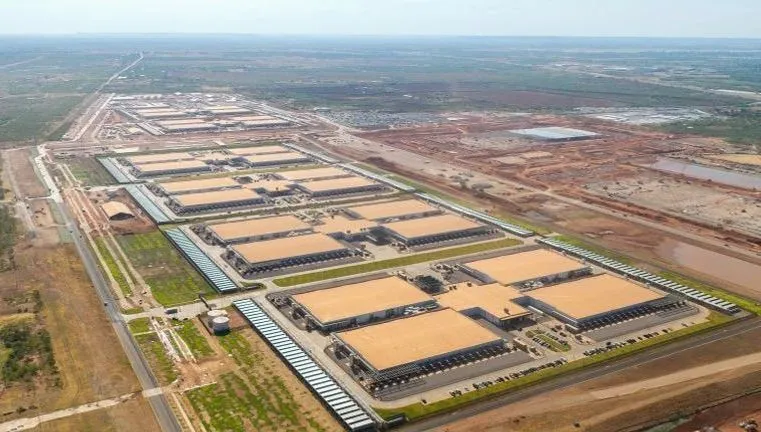
The timing is particularly precarious following Tuesday’s midterm elections, where American voters delivered what can only be described as a stinging rebuke of the AI boom. In key states like Texas, Georgia, Ohio, and Michigan, candidates running on platforms of strict AI regulation won decisively. Most tellingly, local communities crushed data center initiatives in 40 out of 41 contested cases. According to an NBC News exit poll, more than half of voters cited these sprawling facilities as a primary driver in their choice of congressional candidates, viewing them less as hubs of innovation and more as monuments to corporate greed that threaten local utilities and environments.

For years, Anthropic has attempted to distance itself from the brash image of its rivals by positioning itself as the safety conscious alternative to OpenAI. By focusing primarily on business contracts rather than consumer apps, CEO Dario Amodei managed to keep his company out of the daily headlines. However, going public changes the math entirely. Transitioning to a listed company forces a level of transparency and visibility that makes anonymity impossible, effectively turning Anthropic into the public face of an industry that millions now view with suspicion.

This friction is physically manifested in the enormous cost of compute power required to run modern AI models. In updated filings, Anthropic revealed staggering purchase commitments totaling nearly nine hundred billion dollars for infrastructure and compute resources. This astronomical spending coincides with a period where average citizens are struggling with inflation and rising energy costs, making the construction of thirsty data centers feel like an affront to those living in their shadow.

While some analysts argue that being a public company provides an opportunity to build trust through accountability, others warn that Anthropic is walking straight into a storm. With seventy one percent of people surveyed recently stating they do not trust big tech to act in society’s best interest regarding data centers, the path from private startup to public giant may be fraught with more volatility than any stock chart can predict.

When the results rolled in on Election Night, few expected the map to shift as dramatically as it did, particularly in traditionally deep red territories like Texas. In Kaufman County, located just southeast of Dallas, the arrival of massive data center projects created a flashpoint of local resentment that Democrats expertly leveraged. A strategic effort by the Lone Star Rising PAC targeted voters living within five miles of these facilities, sending personalized warnings that linked the industrial expansion directly to Republican leadership. This hyper local approach helped James Talarico carry the county by a slim margin and contributed to a historic statewide victory for Democrats in Texas for the first time since 1994.

This trend was mirrored across other battlegrounds where once ignored zoning issues became central campaign pillars. In Michigan, Representative elect Will Lawrence successfully flipped a Republican House seat by framing tech billionaires as intruders threatening home values and hiking energy bills. Similarly, in South Carolina, candidate Annie Andrews secured a stunning upset by branding her opponent as Data Center Darline, managing to win over pockets of voters who had previously supported Donald Trump by wide margins. These wins suggest that while inflation and corruption remain top tier concerns for most citizens, the physical encroachment of artificial intelligence infrastructure has become a powerful proxy for broader economic anxiety.

Republicans now find themselves grappling with a fragmented identity on the issue, caught between their desire to maintain American technological dominance over China and a growing grassroots rebellion among their own base. Even former President Trump attempted to soften the blow late in the cycle by suggesting AI be rebranded as super intelligence to distance it from current controversies. Internal memos from conservative policy groups now warn that failing to recalibrate their strategy regarding land use and energy costs could leave them vulnerable heading into 2028.

The backlash extended beyond individual candidates to actual lawmaking at the municipal level. In Ohio, where Senator Sherrod Brown successfully painted his opponent as the face of data centers, voters in ten different cities passed charter amendments to ban large scale facility construction entirely. One community saw support for such bans reach eighty percent, signaling that opposition transcends partisan loyalty. As industry trade groups scramble to prove that these hubs provide tangible tax relief for residents, political strategists agree that the fight over where we house our data has evolved into a defining cultural and economic conflict for rural America.

For decades, the 4 percent rule has served as the gold standard for retirees trying to navigate the daunting question of how much they can safely spend without running out of money. The premise is elegantly simple: withdraw 4 percent of your total nest egg in the first year and adjust that amount for inflation annually thereafter. While this formula provided a sense of security for generations, modern economists and financial advisors are warning that relying solely on this math could be a dangerous gamble in today’s volatile economic climate.

One of the primary threats to this strategy is the hidden erosion caused by advisory and management fees. When investors pay a percentage to a wealth manager alongside internal mutual fund expenses, these combined costs can easily eat into two percent of their annual returns. This creates a significant gap between theoretical growth and actual available cash. Furthermore, critics argue that the rule relies too heavily on historical American market data from the mid twentieth century. With firms like Vanguard projecting lower future yields, there is little guarantee that tomorrow’s markets will mimic the exceptional booms of the past.

Beyond market fluctuations, personal longevity and health present unpredictable hurdles. The 4 percent rule was built around a thirty year retirement window, but many Americans are retiring earlier than planned while simultaneously living longer lives. If a person retires at 62 and reaches 100, they face nearly four decades of withdrawals rather than three. This timeline shift is further complicated by cognitive decline, which can impair an individual’s ability to manage complex portfolios or leave them vulnerable to predatory financial scams that can wipe out entire life savings in an instant.

Finally, the rigid nature of the rule fails to account for the erratic spending patterns inherent in aging. Most retirees experience a u shaped spending curve where they splurge on travel early on, settle into a quieter middle period, and then face massive spikes in costs due to long term care toward the end of their lives. Between expensive assisted living facilities and nursing homes, these late stage medical bills can dwarf any inflation adjustment programmed into a simple withdrawal formula, proving that flexibility is often more valuable than following a strict mathematical rule.

Medical researchers are grappling with a surprising setback after an experimental drug designed to prevent heart attacks and strokes failed to deliver promised results. The medication, known as pelacarsen, was specifically engineered to target lipoprotein(a), a cholesterol-carrying protein linked to cardiovascular risk in roughly twenty percent of the global population. For millions of people who maintain healthy diets and exercise routines yet still suffer from heart disease, this drug represented a potential lifeline.

Led by Dr. Steven Nissen of the Cleveland Clinic, the extensive five year study tracked over eight thousand adults who already suffered from heart disease. While the drug successfully slashed levels of the targeted protein by nearly eighty percent, that biological victory did not translate into actual health benefits. Patients taking the medicine fared no better than those given a placebo when it came to avoiding serious cardiovascular complications, leaving researchers stunned by the disconnect between lowering blood markers and improving survival rates.

The pharmaceutical giant Novartis, which sponsored the trial, acknowledged that the primary goals were not met but suggested that the data will still help refine how doctors manage heart disease in the future. This outcome has sparked a debate among cardiologists regarding whether high levels of lipoprotein(a) truly cause heart disease or simply serve as a warning sign for other underlying issues. Some experts suggest that treating patients earlier in life or focusing on those with even higher baseline risks might yield different results.

Despite the disappointment surrounding pelacarsen, specialists emphasize that this is not necessarily the end of the road for similar therapies. Other pharmaceutical companies continue to develop and test competing drugs targeting the same protein, with more results expected in coming years. While this specific chapter ended in failure, members of the medical community remain hopeful that they can eventually unlock a way to protect those genetically predisposed to heart disease regardless of their lifestyle choices.

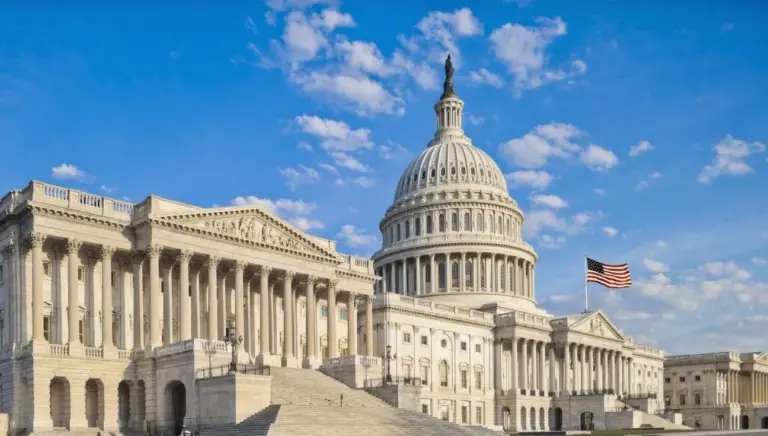
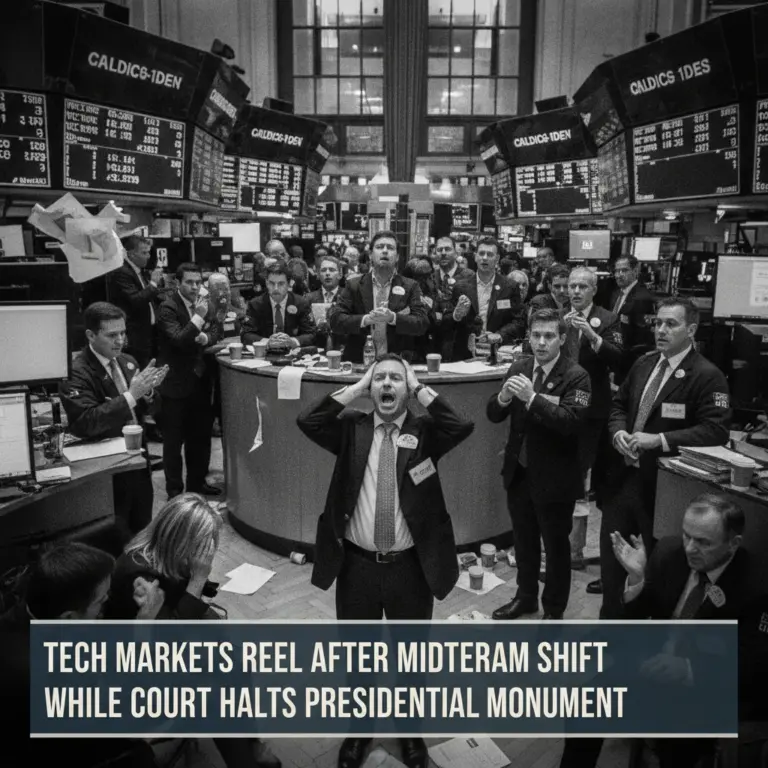
Wall Street experienced a whirlwind of emotions following the midterm elections, where voters handed Democrats control of both the House and the Senate. While the initial reaction was positive, sending the Dow to its largest daily gain of the year, the optimism evaporated quickly. By November 5, investor nerves frayed and the tech-heavy indices plummeted as fears mounted over potential regulatory crackdowns on artificial intelligence infrastructure. This sudden spike in volatility left many wondering if the usual political playbook still applies to a modern economy dominated by silicon and software.

Historically, however, there is plenty of reason for confidence. Over the last eighty years, the S&P 500 has risen in every single twelve month period following a midterm election since 1946. Interestingly, whether government is unified or divided seems to matter very little to the bottom line, with average gains hovering around fourteen percent regardless of who holds power. In fact, the specific scenario we face now—a Republican president paired with a Democratic Congress—has actually yielded an even higher historical average return of sixteen percent, largely because legislative gridlock often prevents drastic policy shocks that spook markets.

Despite these comforting statistics, current market dynamics introduce a wild card that didn’t exist in previous decades. Artificial intelligence firms now comprise more than thirty percent of the S&P 500, making the broader market hypersensitive to sector-specific regulations. There are growing concerns that Democrats may target the massive amounts of electricity and water consumed by data centers, potentially slowing expansion through aggressive committee hearings and stricter permitting processes. This explains why tech trusts have seen significant declines recently while more traditional industrial stocks have remained relatively stable.

Ultimately, analysts suggest that macro fundamentals like GDP growth and Federal Reserve interest rates will carry more weight than ballot boxes over the long term. Investors should keep a close eye on upcoming corporate earnings reports and congressional appointments to see if cloud giants maintain their spending levels or pull back in anticipation of new rules. If volatility subsides soon, this recent dip may be viewed simply as a brief repricing event rather than a fundamental shift in fortunes for American equities.

Wall Street experienced a staggering decline this week as a combination of disappointing corporate earnings and political instability rattled investors. The Nasdaq and S&P 500 saw their steepest single day drops since early 2025, wiping out trillions of dollars in market value. Much of the volatility is being attributed to a surge of Democratic victories in the midterm elections, specifically among candidates who have campaigned on platforms to restrict the expansion of artificial intelligence data centers. This political shift, coupled with lukewarm performance reports from chip giants Qualcomm and Arm Holdings, has sparked deep concerns about whether the massive investments fueling the AI boom will ever actually pay off.

While some analysts view the plummet as a crisis, other economists suggest that popping the AI bubble now might prevent a far more catastrophic collapse in the future. Amidst the financial turmoil, former President Donald Trump took to social media to blame Democrats for the slump, though he spent much of his time focusing on domestic proclamations rather than addressing Republican losses at the polls. Meanwhile, labor experts are keeping a close eye on upcoming government data, expecting modest job growth and a steady unemployment rate despite the current market anxiety.

In Washington, legal battles continue to stall the administration’s architectural ambitions. Federal Judge Tanya Chutkan issued a temporary restraining order blocking construction of President Trump’s proposed Triumphal Arch just hours after it received approval from a Trump-led planning commission. Opponents of the project expressed grave concerns regarding its proximity to Arlington National Cemetery and questioned its overall scale and safety. For now, all work on the controversial structure is frozen for at least two weeks while the court considers further challenges from Virginia and the District of Columbia.

Beyond these headlines, eyes are fixed on Mississippi where an incredibly tight Senate race remains undecided. Democrat Scott Colom currently holds a slim lead over Republican incumbent Cindy Hyde-Smith with only a few thousand ballots remaining. If successful, Colom would make history as Mississippi’s first Black senator since Reconstruction, marking a potential cultural turning point for the state regardless of howconstricted national markets may be feeling today.

The euphoria surrounding artificial intelligence reached a crashing halt this week as a sudden market correction wiped out an estimated 4.5 trillion dollars in combined valuation. What began as cautious profit taking quickly spiraled into a full scale retreat, leaving investors scrambling to find a floor in a sector that had previously seemed untouchable. Analysts suggest that the gap between massive infrastructure spending and actual revenue generation finally became too wide for the market to ignore.

While the downturn hit the entire tech landscape, three specific stocks bore the brunt of the carnage, seeing their share prices plummet far more aggressively than their peers. These companies, once heralded as the primary architects of the AI revolution, faced a brutal reckoning as shareholders questioned whether the promised productivity gains were arriving fast enough to justify sky high valuations. The resulting sell off triggered a domino effect across global indices, dragging down portfolios that had become overly reliant on these few heavy hitters.

Industry experts are now debating whether this implosion represents a healthy pruning of an overextended bubble or the start of a deeper systemic decline in tech sentiment. While some bulls argue that the underlying technology remains transformative and that current dips provide an entry point for long term holders, others warn that the era of easy money fueled by AI hype is officially over. For now, the mood on Wall Street remains tense as traders wait to see if these decimated stocks can stabilize or if further losses are inevitable.