Archive

November 2026

Browsing

The Justice Department is investigating allegations that Democratic operatives recruited Alaska Senate candidate Daniel J. Sullivan, dubbed “Decoy Dan,” to siphon votes from Republican Sen. Dan Sullivan—prompting liberal-leaning election-law experts to accuse the Trump administration of federal overreach.

But former Federal Election Commission member Hans von Spakovsky argued that the Biden-era Justice Department’s prosecution of Donald Trump over alleged efforts to overturn the 2020 election laid the groundwork for the Alaska probe.

“The Justice Department has talked about a potential conspiracy to defraud the voters of Alaska and people are saying, ‘Oh, he’s got no case. That’s a weak case,'” Spakovsky, senior legal fellow at Advancing American Freedom, told Fox News Digital. “Well, I suggest you do a Google search and pull up the indictment that Jack Smith got against Donald Trump in the District of Columbia. He set a precedent for this.”

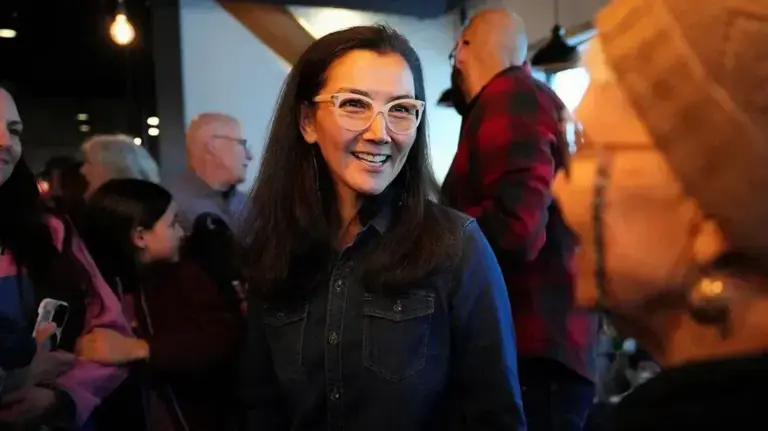
Joined by FBI officials and Alaska State Troopers, Alaska U.S. Attorney Michael Heyman announced at a Friday press conference that the Justice Department has been investigating whether Daniel J. Sullivan, a retired school teacher who will appear on the ballot without a party affiliation, was colluding with Democratic operatives tied to Democratic candidate Mary Peltola’s campaign.

The Justice Department previously sued Alaska election officials, seeking to block certification if Sen. Dan Sullivan loses re-election by fewer votes than those cast for Daniel J. Sullivan. The lawsuit was amended Friday to include reporting by The New York Times that the Democratic Senatorial Campaign Committee and senior aides of Peltola’s campaign allegedly worked to recruit candidates who could pull votes away from Sen. Sulllivan. Heyman mentioned the Times reporting repeatedly in the press conference.

MARY PELTOLA’S CAMPAIGN, DEMS BACKED COVERT SCHEME TO FIELD SPOILER CANDIDATES IN ALASKA SENATE RACE: REPORT

“We are taking that extremely seriously,” Hetman said.

Sources at the Justice Department told Fox News Thursday that the Trump administration had issued more than 30 subpoeanas in a span of 24 hours as part of its criminal investigation into the alleged collusion, but Heyman did not say at the press conference what criminal charges are being pursued.

“I’m not making any assumptions on whether a crime has been committed or not,” Heyman said. “That’s why we are conducting that thorough investigation.”

Von Spakovsky, a former Federal Election Commission commissioner, said potential indictments of Democratic operatives in the Alaska Senate race could rely on federal statutes similar to those Smith, the former special counsel, used in his 2023 indictment of Trump over alleged efforts to overturn the election.

Spakovsky pointed to charges of conspiracy to defraud the United States and conspiracy against rights. In Trump’s case, prosecutors alleged that he used fraud and deceit to obstruct the federal government’s process for certifying the 2020 election and conspired to deprive voters of having their lawful votes counted and honored.

Spakovsky said prosecutors could potentially apply similar theories in Alaska if they determine that Democratic operatives knowingly recruited Daniel J. Sullivan to confuse voters and divert votes from Republican Sen. Dan Sullivan.

ALASKA’S GOVERNOR ORDERS INVESTIGATION AFTER NYT REPORT ON ALLEGED DEM-LINKED SENATE ELECTION SCHEME

Smith’s “indictment is basically along exactly those same lines, claiming that that Donald Trump was trying to defraud U.S. voters from fair and honest elections. So Jack Smith and Democrats, they set the precedent for the kind of investigation Justice Department is doing now.”

Aubrey Wieber, executive director of 907 Initiative, a progressive advocacy group running critical ads against Sen. Sullivan, told Alaska Public Media that the press conference announcing the investigation “on the eve of the election” may be stemming from ulterior motives.

“One could say it appears that they are trying to interfere in an election and put their thumb on the scale,” Wieber said.

The Justice Department’s lawsuit was filed on Oct. 22, prompting a parade of condemnations from those who argued the federal government had “no authority” to intervene, with many pointing to the Alaska Supreme Court rejecting the state’s push to disqualify Daniel J. Sullivan from appearing on the ballot.

GOVERNOR PROBING ‘DECOY DAN’ SULLIVAN ELECTION SCANDAL WARNS SYSTEM FLAW HIDING IN PLAIN SIGHT

“DOJ’s theory: two candidates named Sullivan might confuse voters. The Alaska Supreme Court settled that in June and the ballot labels the incumbent. DOJ has no role in state election law,” Omar Noureldin, senior vice president of policy and litigation at Common Cause of Common Cause, a self-described no-partisan watchdog organization.

Spakovsky called recruiting a candidate with the same name as a political opponent a “dirty trick,” but said the recruitment itself was not necessarily a criminal violation. He said the legal analysis could change if operatives paid the candidate or provided services to help organize his campaign.

“The place you run into potential issues is not only if you just recruit a candidate, but you’re being paid to recruit that candidate, and you then provide services to help him run his campaign and organize it,” Spakovsky said.

Providing campaign assistance outside of being a volunteer is an in-kind contribution subject to federal reporting and contribution rules. Spakovsky said any failure to properly report such contributions could create a separate campaign-finance violation.
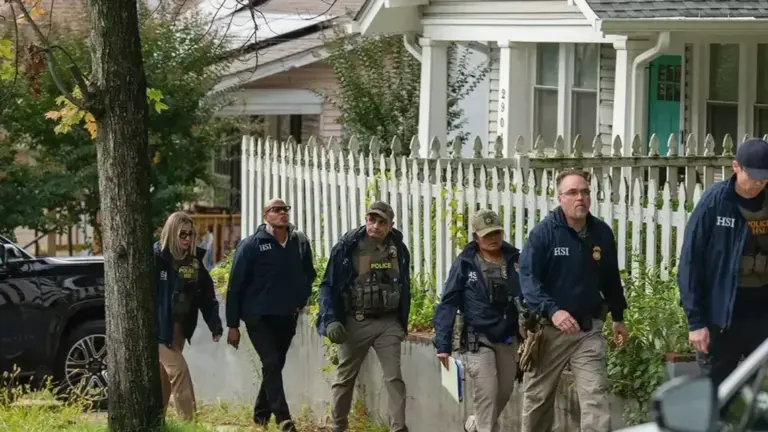

Rep. Ilhan Omar, D-Minn., has tapped two high-powered Washington, D.C.-based attorneys who have previously represented elected officials at the highest echelon of American politics.

Amid dueling federal investigations — one for immigration fraud and another for financial disclosure discrepancies — the embattled Somali-born lawmaker hired Amy Jeffress and Joshua Matz, according to a CBS report, both of whom are partners at Hecker Fink LLP.

The attorneys have in the past represented Democrat clients and taken on left-leaning cases — especially those taking aim at President Donald Trump, his administration and his supporters.

ILHAN OMAR’S TURBULENT WEEK EXPLAINED: THE DUELING PROBES THAT THREW THE SOMALI-BORN PROGRESSIVE INTO CHAOS

Amy Jeffress

Jeffress is a former federal prosecutor whose biography says she tried more than 40 cases during a decade in the U.S. Attorney’s Office in the District of Columbia, where she was Chief of the National Security Section. She has also been a Department of Justice (DOJ) Attaché.

She served as former President Joe Biden’s attorney in his lawsuit against the DOJ earlier this year. In that case, Biden sought to halt the release of audio recordings between himself and his “Promise Me, Dad” book ghostwriter, Mark Zwonitzer. The audio was recorded in 2016 and 2017, and were subject to a FOIA request from the Heritage Foundation in 2024.

They were cited during special counsel Robert Hur’s investigation into whether Biden illegally retained classified information from his term as vice president, and piqued the interest of conservatives demanding answers about Biden’s mental acuity.

The court declined to block the release of the recordings where Biden ad frequent memory lapses, and they were made public in July.

FEDERAL AGENTS SEIZE PHONE OF REP ILHAN OMAR IN RAID TIED TO IMMIGRATION FRAUD PROBE

Before her time at Hecker Fink, Jeffress, a Yale Law graduate from 1992, served as counsel for then-House Speaker Nancy Pelosi and the Democrat-led House January 6 committee, which spent two years investigating the riot at the U.S. Capitol on January 6, 2021. She represented the committee when it was sued by a Trump campaign spokesperson, Taylor Budowich, after the committee subpoenaed his bank records.

Jeffress also represented Trump foe and former FBI attorney Lisa Page — a key figure in the left’s Russiagate conspiracy theory — during congressional scrutiny into the FBI’s handling of the matter. Page later sued the DOJ for releasing her text messages with her then-FBI colleague and lover Peter Strzok.

In the messages, Strzok assuaged Page’s concerns that Trump would become president by vowing that the FBI would stop it, and referred to an “insurance policy” against his presidency. That case was settled in 2024.

ILHAN OMAR’S WEALTH SCANDAL TAKES A TURN JUST ONE DAY AFTER RAID OF HER DC HOME

Jeffress is married to U.S. District Judge Christopher Cooper of the District of Washington, D.C., who in May ruled that it was illegal for the the John F. Kennedy Performing Arts Center to add Trump’s name. Trump publicly criticized Cooper as “highly conflicted,” due to his relationship with Jeffress.

Joshua Matz

Matz is also a partner at Hecker Fink. He graduated from Harvard Law, and clerked for former Supreme Court Justice Anthony Kennedy.

“Joshua’s practice has long included a focus on democracy and elections,” his biography page says.

He represented the state of Pennsylvania in defending the certification of its election results, including arguing before the Supreme Court.

ILHAN OMAR’S EMBATTLED HUSBAND APPEARS AT SCENE OF HSI RAID IN MIDST OF CRIMINAL FRAUD INVESTIGATION

He was counsel to House Democrats during both failed impeachment attempts against Trump during his first term in office.

Matz also represented E. Jean Carroll in two separate civil cases against Trump related to his denial of her of sexual assault claims against him. He was never criminally charged. In 2022, Carroll accused Trump of defaming her in his denial of her account of an incident she claims happened in 1996. A New York jury found Trump liable for defamation and for sexual assault.

Prior to that case, in 2019, a jury awarded Carroll $83.3 million for defamation stemming from other comments made by Trump.

Matz represented students, parents and teachers who opposed Florida’s Parental Rights in Education Act, which his biography describes as the “Don’t Say Gay” law, which restricted teaching students about sexual orientation and gender identity.

He also successfully represented Democratic Kentucky Gov. Andy Beshear when he was sued for COVID-19 lockdowns, including school closures, and victims of the 2017 “Unite the Right” rally in Charlottesville.

Now, Matz and Jeffress are representing Omar as she seeks to battle two federal probes. In a video message posted to her social media earlier this month, the lawmaker pleaded with her supporters to keep sending money, noting that her fight against the investigations would be costly.

Omar’s attorneys did not respond to Fox News Digital’s request for comment. Neither did the White House.

WASHINGTON, D.C. — CodePink D.C. Coordinator Olivia DiNucci last month posted a TikTok video of herself in a home supporting an issue far afield from her usual battles supporting the Communist Party of Cuba and the Islamic Republic of Iran.

This time, she was backing a local ballot measure, “Initiative 86,” introduced in early February in the D.C. City Council to ban foie gras, a fine-dining delicacy made from duck liver, and other products made from birds. D.C. residents will vote on the measure on election day with early voting already started.

The campaign presents itself as a grassroots effort to advance animal welfare, but public financial filings reveal a far more heavily funded operation. A national animal-rights network has supplied hundreds of thousands of dollars in financial support, underwriting paid petition circulators, political consultants, staff salaries and advertising in a campaign that could reshape Washington’s restaurant industry. Far from a shoestring local initiative, the effort has reported nearly half a million dollars in contributions and expenditures, much of it backed by an organization that openly describes local ballot measures as stepping stones toward a broader “pro-animal future.”

WHO’S FUNDING AMERICA’S PROTEST UNREST? FOX NATION’S NEW ‘RIOT INC.’ FOLLOWS THE MONEY TO FIND OUT

A Fox News Digital investigation of campaign-finance records, nonprofit filings and the groups’ own organizing documents traces the people, money and long-term strategy behind Initiative 86 and raises questions about how a fight over one luxury menu item became part of a much larger political campaign over what Americans eat.

Pro-Animal Future, a 501(c)(4) nonprofit based in Portland, Ore., launched the campaign, nicknamed I-86, in D.C. and says its local ballot efforts are part of a broader push to change public attitudes toward common animal agricultural practices. Its IRS filing also lists its name as Pro-Animal DC.

In seven financial reports filed with the D.C. Office of Campaign Finance, Pro-Animal DC provides a window into a local political campaign’s operational, financial and logistical infrastructure.

According to its latest filings, Pro-Animal DC collected a whopping $474,190.62 between Sept. 23, 2025, and Oct. 26, 2026, for the local campaign, with Pro-Animal Future as its major backer, providing it $386,435.77.

Its largest expense is stipends totaling $126,780.36, or about one-quarter of the campaign’s expenses, to a paid professional protest organizer: Cady Witt, whose LinkedIn profile lists her as “community impact coordinator” at “DC Voters for Animals.” Witt is also listed as the treasurer of Pro-Animal DC in its campaign reports.

Pro-Animal DC reported another $89,224.00, or about 20% of its expenses, for 293 payments to 64 people described as “consultant – circulator” from September 2025 through October 26, 2026. They got an average payment of $1,394.13 per person.

‘TROJAN HORSES’ IN AMERICA: CONGRESS PROBES INFLUENCE NETWORKS TIED TO CHINA, IRAN AND CUBA

Also a professional organizer, CodePink’s DiNucci is typically a fixture at anti-Israel demonstrations and foreign affairs hearings. CodePink co-founder Jodie Evans is married to an American-born, China-based tech tycoon, Neville Roy Singham, whose funding of activist groups has drawn scrutiny from congressional lawmakers and is the subject of a federal investigation. Pro Animal Future said CodePink doesn’t have a role in its campaign beyond DiNucci’s appearance in her TikTok video.

Pro-Animal Future alleges that birds are “force fed” to gain the weight needed to produce foie gras, and it says its campaigns seek to end “force-feeding” birds and shift public views on animal agriculture. According to its latest available IRS 990 tax filing, Pax Fauna, a 501(c)(3) nonprofit based in Denver, says it’s related to Pro-Animal Future, which it described as doing “lobbying” work.

In 2024, Pax Fauna outlined a 10-year roadmap to build local ballot campaigns and eventually pursue statewide “factory-farming” bans and establish “animal freedom.”

The roadmap called such measures a way to “provoke a sort of identity crisis for the voting public” and “storm the nation”. The group sought to launch as many as 10 local chapters during the 2025-2026 election cycle.

An anonymous purchaser bought the web domain ProAnimalDC.org in April 2025, according to online records. Today, Pro-Animal Future lists its current campaigns as running in D.C. and Denver and says it worked with Portland’s City Council to ban foie gras sales this past June.

Pax Fauna’s founders said they have spent years organizing with Direct Action Everywhere, an animal-rights 501(c)(3) nonprofit based in Berkeley, Ca.

Last year, according to its filings, Pro-Animal Future spent $7,703.70 for Airbnb accommodations. This year, on July 31, it spent $22,418.69 for Airbnb accommodations. Pro-Animal DC has stated that the lodging was for about 60 out-of-town “volunteers” who came to Washington, D.C., in July for a signature-gathering effort called “Goosapalooza.” On its website, it promoted the “free housing.”

The measure’s language has raised questions about how far the ban could reach. Its definition of a “fattened bird liver product” covers food or byproducts made from birds’ livers when the birds were fattened “through any method or practice,” and specifically lists pâtés, spreads and processed meat products as products to be banned. The initiative separately defines “force-feeding” as causing a bird to eat more than it would voluntarily consume.

MAMDANI ACCUSED OF BETRAYING NYC WORKERS AS UNION BOSS BLASTS ‘ANTI-LABOR’ HORSE CARRIAGE BAN

Former D.C. Attorney General Karl Racine told City Cast DC, a local media outlet, that the text “includes le poulet,” which means chicken in French.

Hutchins said he would continue serving foie gras until the city resolves how to enforce the measure. He disputes the animal-welfare case for a ban, saying he doesn’t believe the feeding process that farms use to create foie gras hurts ducks. Pro-Animal DC’s findings say the practice causes pain and illness. Hutchins also said losing D.C. as a major market could threaten the country’s two commercial foie gras producers, Hudson Valley Foie Gras and La Belle Farm in New York state’s Catskills region.

The measure would regulate sales in D.C. The D.C. chief financial officer’s fiscal impact statement says, “The Office of Revenue Analysis is not aware of any bird farms or bird feeding operations in the District.”

The Catskill Foie Gras Collective, a producer group, says its member farms raise ducks cage-free and use small, flexible plastic tubes to deliver feed to a pouch in their throats. It argues the process causes no pain, citing ducks’ anatomy, and says feeding is skipped if a bird hasn’t finished digesting its previous meal. The collective also says Catskills foie gras farms employ about 400 people.

GET BREAKING NEWS ALERTS

Fox News Digital reached out to Pro-Animal DC, which disputed critics’ claim that Initiative 86’s wording could extend to poultry-liver products beyond foie gras. The campaign said the measure is intended only to prohibit force-feeding and foie gras sales. It said “fattened” refers to the extreme enlargement of birds’ livers associated with foie gras production, not ordinary poultry farming. The campaign pointed to the measure’s findings, which describe covered products as luxury foods made from diseased, enlarged livers, and said the broad definition of “bird” is meant to prevent producers from switching species.

SEND US A TIP

Pro-Animal DC said D.C. agencies and courts look to a law’s stated purpose when its wording allows more than one interpretation, and said it would welcome Council clarification if voters approve the measure. Asked what language could clarify the measure, spokeswoman Natalie Fulton didn’t elaborate.

The dispute leaves D.C. voters weighing a ballot measure presented as a foie gras ban while others raise broader questions about its wording, enforcement and the campaign’s long-term goals. For Hutchins, the stakes extend beyond one item on a restaurant menu; for Pro-Animal Future, Initiative 86 is one step in a larger effort to change farming practices at a national scale.

Fox News Digital’s Asra Nomani and Ava Palschakov contributed to this report.

This post appeared first on https://www.foxnews.com

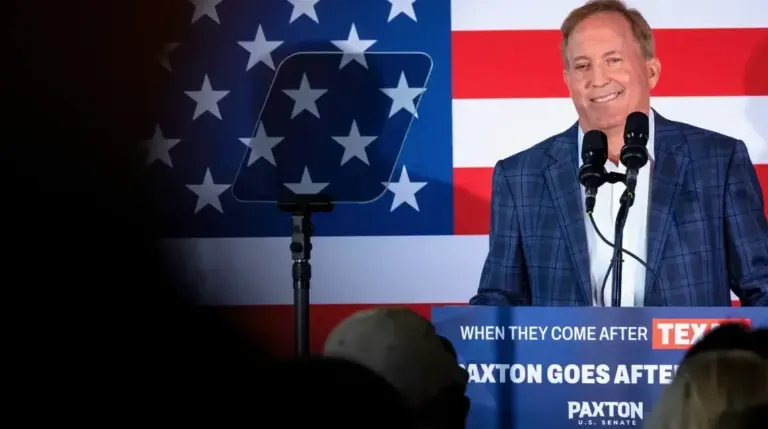
Texas Attorney General Ken Paxton announced Tuesday that the nation’s first-ever detransition clinic has opened at Texas Children’s Hospital following a $10 million settlement with the state.

The announcement comes after Paxton reached a settlement with TCH in May, finalized in August, requiring the hospital to pay $10 million to resolve government claims and separately establish and fund a detransition clinic. The new clinic provides “detransition-related medical care to patients through age 21, along with detransition-related obstetric and gynecologic care to patients older than 21,” according to Paxton’s office.

“In accordance with my settlement with Texas Children’s Hospital, the nation’s first-ever Detransition Clinic is now open,” Paxton said in a statement. “I will continue to ensure that this clinic provides the care and support that victims of the radical left’s gender ideology deserve.”

A LANDMARK TEXAS RULING BREATHES NEW LIFE INTO ONE DETRANSITIONER’S QUEST FOR JUSTICE

“Together, we will protect our children and defeat the dangerous ideology that has inflicted irreversible harm on innocent kids,” he continued.

Tuesday’s announcement comes as Paxton is running for election in Texas’ 2026 Senate race. President Donald Trump campaigned in two separate Texas cities, Corpus Christi and Lubbock, on Tuesday in an effort to boost Paxton’s Senate bid.

The Trump administration has been targeting initiatives related to transgender people in recent months. Trump announced in August that his administration will cease providing funding for gender transition surgeries using Medicaid for minors.

Paxton’s office did not respond to Fox News Digital’s request for comment.

A TCH spokesperson told Fox News Digital on Wednesday that the hospital prioritizes providing patients “the highest standard of care,” including through the detransition clinic.

“First and foremost, patients and families are at the center of all we do and we will always provide the highest standard of care, including through this clinic, which formalizes the supportive, multidisciplinary services we have and will continue to deliver,” the TCH spokesperson said. “Given the multidisciplinary approach, care may be delivered in multiple locations, depending on individual patient needs.”

“All services provided will be within our hospital’s existing licensure and scope,” the spokesperson added. “Services will include Endocrinology, Surgery, Primary Care, Fertility Counseling, Psychiatry, Psychology, Social Work/Case Management and Speech Pathology. The clinic is operational and we are complying with all requirements in the settlement agreement.”

The TCH spokesperson also told Fox News Digital that the hospital is “actively triaging prospective patients” for the detransition clinic.

“Protecting the privacy of our patients and their families is a top priority, thus we are unable to share patient information,” the spokesperson stated. “We are actively triaging prospective patients through our established intake process. We can tell you that thus far, we have not yet had clinical appointments with patients.”

INSURANCE COMPANIES PUT ON NOTICE FOR STRANDING TRANS PATIENTS WHO WANT TO REVERSE SURGERIES

TCH is required to fully fund services provided through the detransition clinic for its first five years, ensuring patients receive those services at no cost, and must also publicize the clinic on its website, per the settlement.

The May settlement also required TCH to pay $10 million to resolve claims brought under the Texas Health Care Program Fraud Prevention Act and the federal False Claims Act over allegations that the hospital improperly billed Texas Medicaid for gender-transition treatments, according to Paxton’s office.

Do No Harm, a medical advocacy organization critical of gender-transition treatments for minors, estimates that 13,994 minors received gender-transition-related medical interventions between 2019 and 2023, based on its analysis of insurance claims data.

A Fox News poll published on Oct. 21 found that Democratic candidate James Talarico and Paxton were tied at 49% each among likely voters in the Lone Star State.

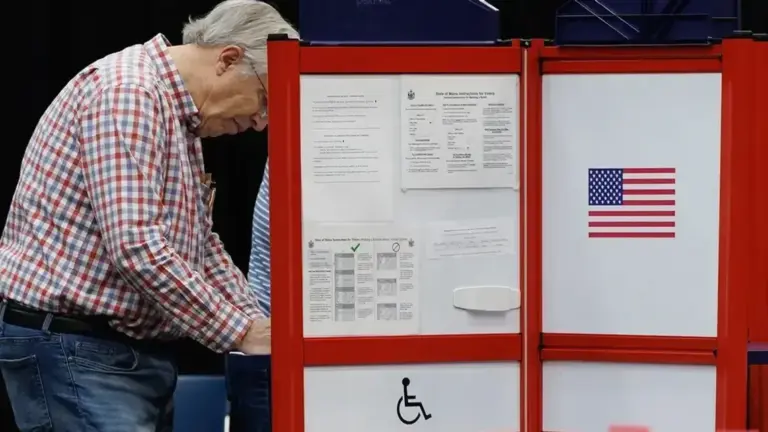
A conservative legal group filed an election complaint in Maine Tuesday, alleging that more than 3,000 potentially dead people and hundreds of duplicate registrations were discovered on the state’s voter rolls just days before the pivotal midterm elections.

The Public Interest Legal Foundation (PILF) said it identified 3,181 potentially dead voters and 693 duplicate registrations and urged the state to take action as Maine voters prepare to cast their ballots Tuesday.

“Now we know why they were hiding them because there were problems on them,” J. Christian Adams told Fox News Digital. “They have dead people, they have lots of duplicates and they have general problems. It’s something that should have been fixed a long time ago.”

The complaint, filed with Maine Secretary of State Shenna Bellows, argues election officials have not made a “reasonable effort” to remove ineligible voters from the official list.

TRUMP SCORES SUPREME COURT WIN IN ELECTION INTEGRITY FIGHT AS STATES GAIN NEW VOTER ROLL TOOL

Adams said the state, not his group, should have discovered the information.

“Why does it take a third-party group like the Public Interest Legal Foundation to find these duplicates?” Adams said.

The group is asking the state to take “additional corrective action,” warning it “may have no other recourse” but to appeal through the complaint process under the Help America Vote Act (HAVA), a 2002 election reform law, if nothing is done.

The group compared those findings with its previous investigation in 2025, which found 18,453 potentially dead voters and 1,498 duplicate or triplicate registration records in Maine. The state addressed many of the records identified that year, but PILF said some errors remain while “new problems have arisen.”

Several searches were used in the analysis to identify records that shared the same address, first and last names and birth year, as well as typos, punctuation errors, common nicknames and birth-year discrepancies.

DOJ GIVES CALIFORNIA 48 HOURS TO REVIEW LIST OF POSSIBLE NONCITIZENS ON VOTER ROLLS

The complaint requests that Maine review the group’s analysis, immediately remove ineligible voters and implement a plan to ensure the state complies with HAVA “now and in the future.”

“I hope she gets the job done and removes all these duplicates,” Adams said.

Adams said his group has been embroiled in an ongoing legal battle, and Bellows has a history of trying to “criminalize” the PILF for revealing what they found. The PILF sued Maine roughly six years ago over access to the state’s voter rolls and won a federal appeals court case in 2024 that required the state to make the records public.

“There’s a history here of Secretary Bellows not wanting the public to know what kind of job she’s doing,” Adams said.

Adams accused Bellows of focusing on “defending sort of blue theories” rather than keeping Maine’s voter lists accurate and up to date.

“Unfortunately, Secretary of State Shenna Bellows is not getting the job done,” he said.

MAP IT: DOJ ILLEGAL VOTING CRACKDOWN SWEEPS 17 STATES AS RAZOR-THIN ELECTIONS FACE SCRUTINY

One of Adams’ biggest concerns is that someone could use a dead person’s registration to illegally vote. He said progressive state officials are reluctant to immediately remove dead voters out of fear they could mistakenly remove eligible voters, potentially leaving the door open for fraud.

“The problem is that sometimes people vote for the dead people,” he said.

But Adams said he believes Maine has been trying to keep its problems out of the public eye for a long time.

“Maine has a longstanding problem trying to hide public information about whether or not they’re doing a good job,” he said.

Fox News Digital reached out to Bellows’ office for comment.

The legal filing comes just days before Mainers vote in a critical and tight U.S. Senate race between incumbent Republican Susan Collins and her Democratic challenger, Troy Jackson. The winner could determine the balance of power in the Senate.

The cryptocurrency world is reeling after a massive security breach at Binance resulted in the loss of roughly 6.3 billion dollars in client assets, marking the largest theft in the history of digital currencies. This incident, coupled with a separate attack on the prediction market Polymarket that drained millions from user wallets, has ignited a fierce debate among experts over whether keeping funds on an exchange is fundamentally unsafe. While Binance and Polymarket have pledged to reimburse affected users, the scale of the heist highlights a glaring vulnerability in an industry where rapid growth often outpaces security infrastructure.

Cybersecurity specialists warn that these attacks are becoming more frequent and sophisticated, partly driven by the rise of artificial intelligence which empowers hackers to find loopholes faster than ever before. Some academics argue that leaving significant sums on any exchange is dangerously risky because crypto lacks the institutional safety nets found in traditional finance. Unlike bank accounts protected by FDIC insurance, there is no government guarantee for lost tokens, meaning users are entirely dependent on the goodwill and solvency of the private companies managing their keys.

There is a notable divide between offshore platforms and those operating under strict regulatory oversight. Officials from the Commodity Futures Trading Commission pointed out that unregulated international exchanges lack the rigorous safeguards required in U.S. financial markets. However, some critics argue that registration alone cannot prevent every disaster, noting that this particular breach may have started with something as simple as a compromised employee laptop—a human error that transcends national borders or legal frameworks.

Despite the chaos, some industry leaders suggest these crises will eventually harden the sector and lead to more resilient systems. They argue that relying on large firms with deep pockets is actually safer than self-custody wallets, where a single lost password or personal hack means funds are gone forever without hope of recovery. For now, however, analysts caution that until comprehensive insurance becomes standard across all ecosystems, traders remain in a precarious position within an increasingly volatile digital landscape.

Automakers in Detroit are shifting gears toward a future where 3D printing is no longer just a tool for prototypes but a core part of the manufacturing process. Industry giants like Ford and General Motors, along with newcomers like Rivian, are integrating additive manufacturing across their operations to slash costs and accelerate production speeds. By layering materials ranging from plastic and ceramics to metal, these companies are producing everything from intricate engine components and interior trim to the specialized tools required to keep assembly lines moving.

For Rivian, the strategy is centered on accessibility. Jared Beck, the head of additive manufacturing at the electric vehicle maker, describes his goal as democratizing the technology throughout the organization. With over five million dollars invested in machinery, Rivian has implemented on-demand printing bays that allow engineers to hold physical versions of their designs in hours rather than waiting weeks for suppliers. While the initial investment is significant, Beck notes that the efficiency gains in logistics and tooling often allow the machines to pay for themselves within a single year.

Established players like Ford are taking a similarly aggressive approach by embedding 3D labs directly into their factories. In some locations, Ford has even introduced vending machines stocked with printed parts and custom tools designed by employees on the fly. This allows team leaders to grab necessary equipment immediately without cluttering laboratories or waiting for external shipments. Whether it is creating temporary fixes to prevent costly plant shutdowns or developing bespoke jigs for the F-150 line, the ability to iterate quickly is proving invaluable.

General Motors is also leveraging high-end industrial printers for its most exclusive offerings, utilizing dozens of 3D-printed components in luxury vehicles like the Cadillac Celestiq. As these technologies become more affordable and versatile, the boundary between research and development and final production continues to blur. What started as a niche method for making models has evolved into a strategic necessity that keeps cars moving off the lot faster while reducing reliance on complex global supply chains.

The cryptocurrency world has been rocked by what experts are calling the largest bank robbery in human history after hackers infiltrated Binance, the world’s largest digital asset exchange. In a lightning fast operation that lasted only twenty minutes, cybercriminals managed to siphon off a staggering 6.3 billion dollars from investor accounts. The sheer scale and speed of the theft have sent shockwaves through the financial sector, highlighting the extreme vulnerabilities of platforms that act as both marketplaces and custodians for digital wealth.

While investigators are still piecing together exactly how the security breach occurred, evidence strongly points toward a sophisticated hacking unit within the North Korean military known as TraderTraitor. This group has already established a fearsome reputation for state sponsored cybercrime, having previously stolen 1.5 billion dollars from another exchange. Analysts warn that this was not a simple quest for profit by independent criminals but rather a strategic operation likely intended to fund weapons proliferation and other destabilizing activities for the regime.

In the immediate aftermath of the heist, Binance has worked with research firms to freeze approximately 3 billion dollars of the stolen funds, preventing some of the assets from disappearing permanently into the depths of the blockchain. The exchange has publicly pledged to reimburse affected customers, though critics note that there is currently no clear roadmap for how those payments will be executed. Unlike traditional stock brokers who are heavily regulated by agencies like the SEC and required to carry insurance, crypto exchanges operate in a far more permissive environment.

This catastrophe has reignited fierce debates over whether the crypto industry remains a financial Wild West. Consumer advocates argue that allowing exchanges to hold customer funds without strict oversight creates an irresistible target for hackers and an incentive for corporate mismanagement. By contrasting this event with the collapse of FTX, critics suggest that without a rigorous regulatory framework to protect investors, the industry will continue to be defined by spectacular failures and devastating losses.

OpenAI appears to be scaling back its ambitions for its current funding round as investor enthusiasm hits a sudden speed bump. While initial reports suggested the company was eyeing a massive thirty billion dollar windfall at valuations reaching upwards of one trillion dollars, recent updates indicate a shift toward more modest goals. According to reporting from the Financial Times, the firm has lowered its primary target to twenty billion dollars, though early closing figures may fall even shorter than that revised mark.

The current effort is being spearheaded by a consortium of investors from the United Arab Emirates, with hopes that a secondary offering aimed at high net worth individuals will eventually bridge the gap to reach the twenty billion dollar goal. However, internal progress seems slower than anticipated. The Wall Street Journal notes that while eleven billion dollars has been secured thus far, responses from several major institutional players have been described as tepid.

This cooling effect likely stems from broader market volatility rather than specific failures within OpenAI itself. Many Wall Street investors have grown nervous about the staggering costs associated with AI infrastructure, sparking a wider sell off of technology stocks across the board. This trend suggests a systemic hesitation regarding the immediate return on investment for generative AI hardware and energy needs.

The struggle to secure top tier funding highlights a potential turning point for the sector, where hype is meeting financial reality. It is not just OpenAI feeling the squeeze; other industry leaders like Anthropic are also rumored to be facing hurdles with their own public offering plans. As the honeymoon phase of AI speculation fades, these companies must now navigate an environment where capital comes with much stricter scrutiny.

Binance is nearing the end of a grueling recovery process following a staggering security breach that saw 6.3 billion dollars in cryptocurrency stripped from its user base. The company’s chief executive announced that roughly 90 percent of those lost assets have already been replenished, marking a significant step toward making victims whole after one of the largest heists in digital asset history.

While the vast majority of the funds have been restored, a final slice of the losses remains outstanding. According to leadership, the remaining 10 percent consists primarily of less liquid tokens that are more difficult to source on the open market. Despite this hurdle, the exchange has pledged to cover every cent of the financial impact, ensuring that no customer is left bearing the cost of the attack.

Attention is now shifting toward restoring normal operations for millions of traders who have been locked out of their accounts. In a recent update shared on X, Binance confirmed that it is currently working to resume withdrawal services. If everything stays on schedule, users should regain full access to move their funds starting this coming Sunday.

Throughout the crisis, the firm has emphasized its dedication to transparency and accountability. By absorbing the loss directly rather than passing it onto stakeholders or insurance providers, Binance hopes to rebuild trust with a community shaken by such a massive vulnerability. Further updates are expected once withdrawal systems officially go back online.